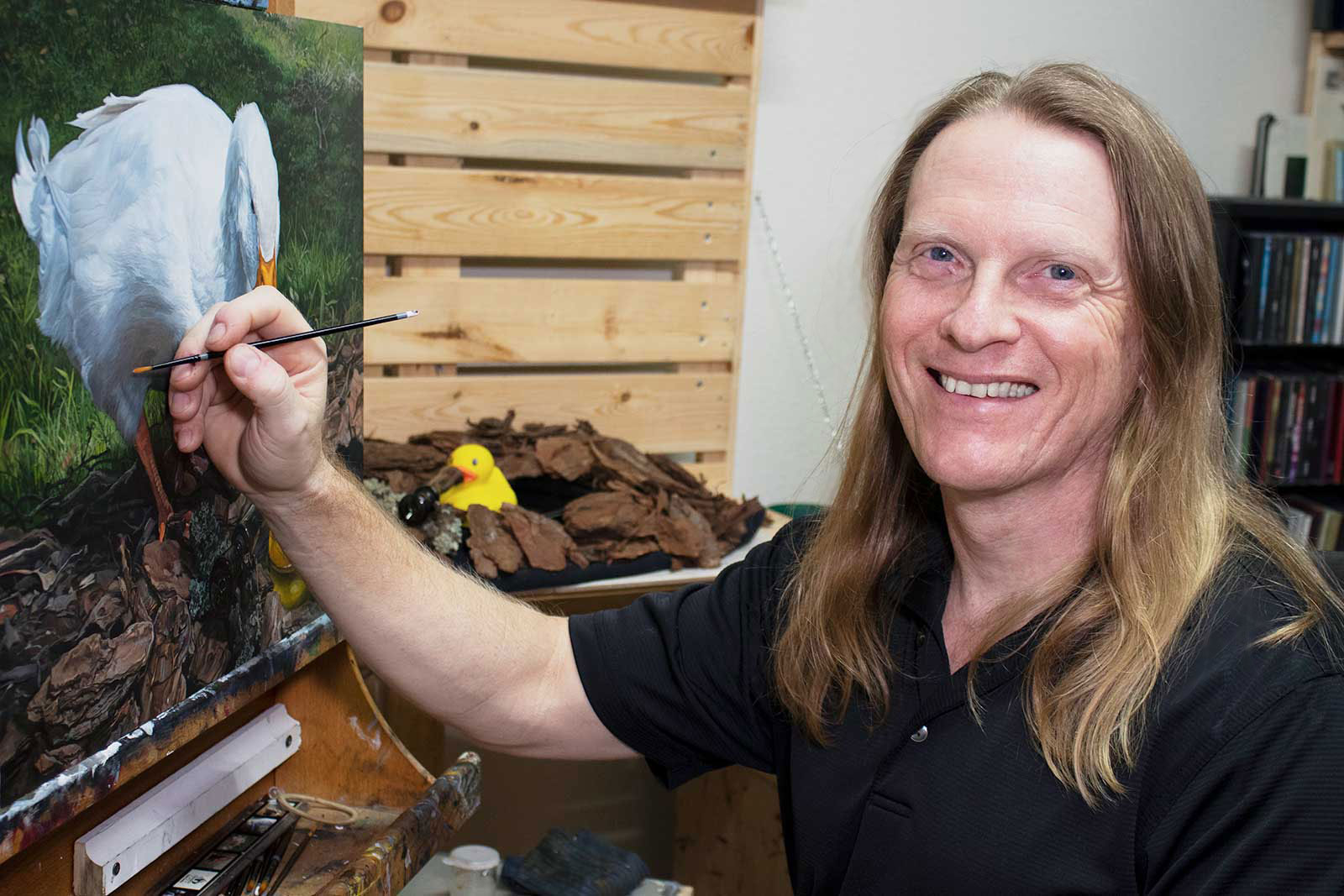
Kevin Grass
I have created commissioned artwork since middle school. My most common subjects are traditional portraits, landscapes and lettering for outdoor signs and as advertising on contractor trailers. My clientele has included individuals, private and public corporations, and local and state government facilities. My early commissions came via word of mouth. Commissions for corporate and public facilities were obtained via a public art consultant in Georgia and percent-for-art programs in Florida. I do not make a living from commissioned work. Commissions are a welcome supplement to my full-time college art teaching job, sales of original paintings and merchandise from my designs.
My experiences with commissions have been excellent because I use a system that sets up well-defined roles for the artist and client, creating the opportunity for client input throughout the process. This guarantees that clients will get exactly what they want, and it eliminates surprises and misunderstandings that often lead to either major re-working of the image or the loss of the commission. The following represents the system that I use when working with clients on painting commissions.

Air Ducks, acrylic on aluminum panel, 16 x 20" (40 x 50 cm)
Contract
This is the most important part of the commission process because it clearly defines the responsibilities of both parties in the creation of the artwork. I require a signed contract and initial down payment before I begin designing the image. Art commissions can be expensive, with the cost approaching the purchase price of a newer used automobile, so most clients appreciate the timelines and guarantees provided in a detailed contract. If a client refuses to sign your contract, it is not a good idea to work with them. The following are the most important items in my contract:
Contact Information
The names and contact information for the artist and client must appear at the top of the document, along with the date that the contract was signed.
Description of the Work
This must include the title, medium, size and price of the artwork. It should also address whether the artwork will be framed and the style and size of the framing.
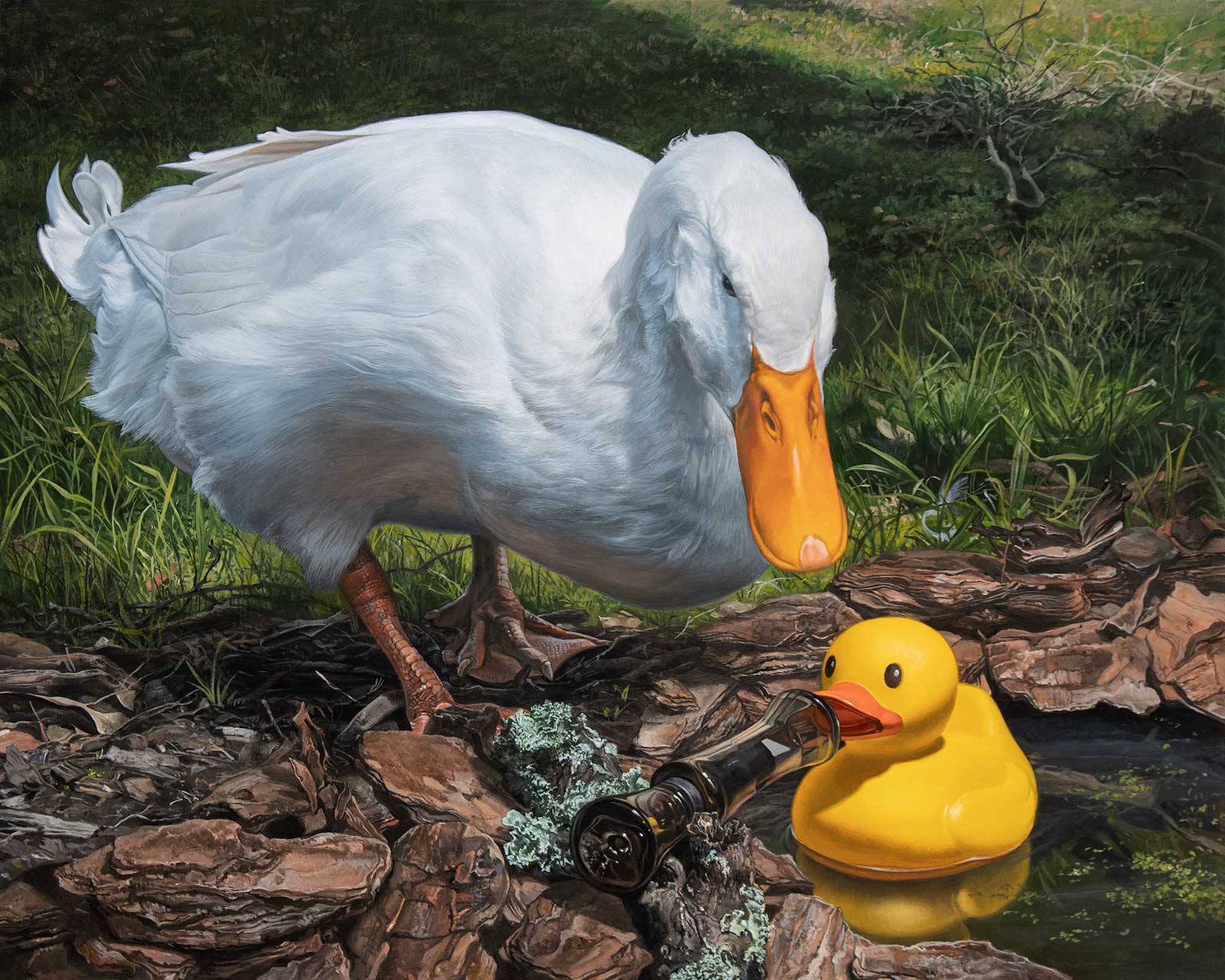
If It Looks Like a Duck, acrylic on aluminum panel, 16 x 20" (40 x 50 cm)
Progress of Payments
This should address how the payment for the commission will be broken down. For small commissions like the example in this article, Biker Chick, I expect 50 percent of the full amount upon the signing of the contract and 50 percent when the painting is completed and delivered. For larger commissions (over $5,000), I include a non-refundable design fee ($500-$1,000) upon the signing of the contract. The next installment is paid after the final design is approved, and the remainder is paid upon completion and delivery of the artwork.
Date of Delivery
Give yourself more time than you think you will need to complete the project. I usually estimate 60 to 90 days for larger paintings and about three weeks for smaller pieces. Having deadlines will show your client that their project is a priority.
Revisions
My clients have the opportunity for input at the following stages of the project: upon completion of several thumbnails representing various approaches to the design, after revising thumbnails to complete the final design, after the full-color block-in of the painting, halfway through the development of the painting, and upon completion of the painting. All changes are usually relatively minor and free of charge. If the client wishes to make major changes after the painting is blocked in, such as adding an additional figure to the composition or changing the color or style of clothing, it will increase the price of the commission.
Shipping
Will the client or the artist be responsible for shipping the work? To what address will the work be shipped upon its completion? Some artists include domestic shipping in the price of small commissions. Shipping large work and international shipping are very expensive and complicated, so it is usually best to make it the responsibility of the client.
Copyright
It is important to make it clear to your client that, while they will own the actual work of art, the artist still maintains all rights of reproduction and all copyrights to the image. If the client would like prints or merchandise that features the artwork, this should be purchased from the artist.
What Does the Client Want?
It is important to make sure that you understand exactly what the client would like for the commissioned work. Many artist/client relationships are made difficult by assumptions and miscommunication on both sides. Direct messaging and email make communication simple and immediate, so ideas can be fleshed out quickly. Getting a concrete notion up front makes the whole process much easier.
My client for Biker Chick was easy to work with because she is an artist who is co-owner of a local tattoo parlor. She liked my Lame Ducks series and wanted an image where a duck or ducks had tattoos. I suggested two themes—Vikings or bikers. She decided to go with bikers, and we eventually settled on the title Biker Chick for the painting.
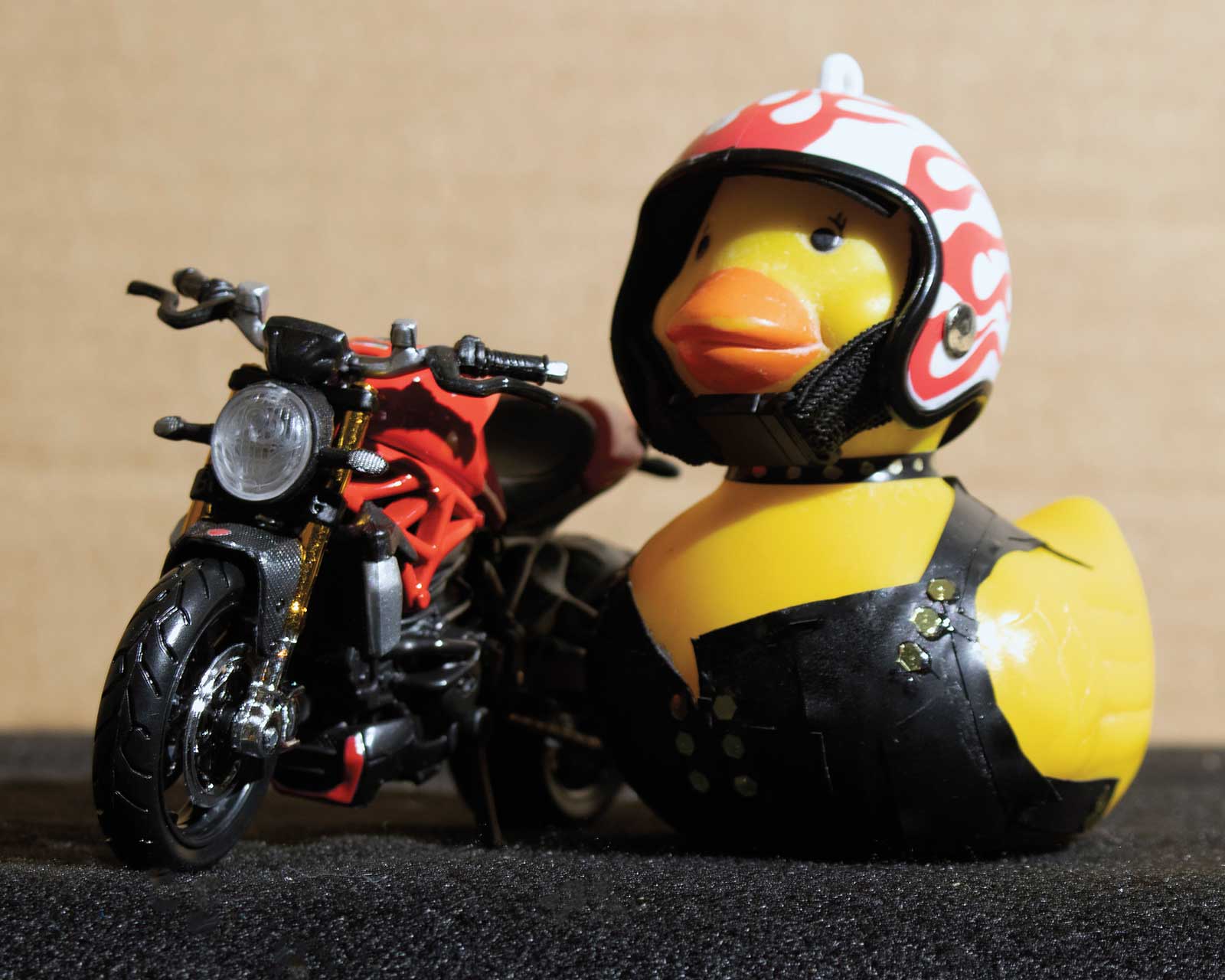
Still life set-up.
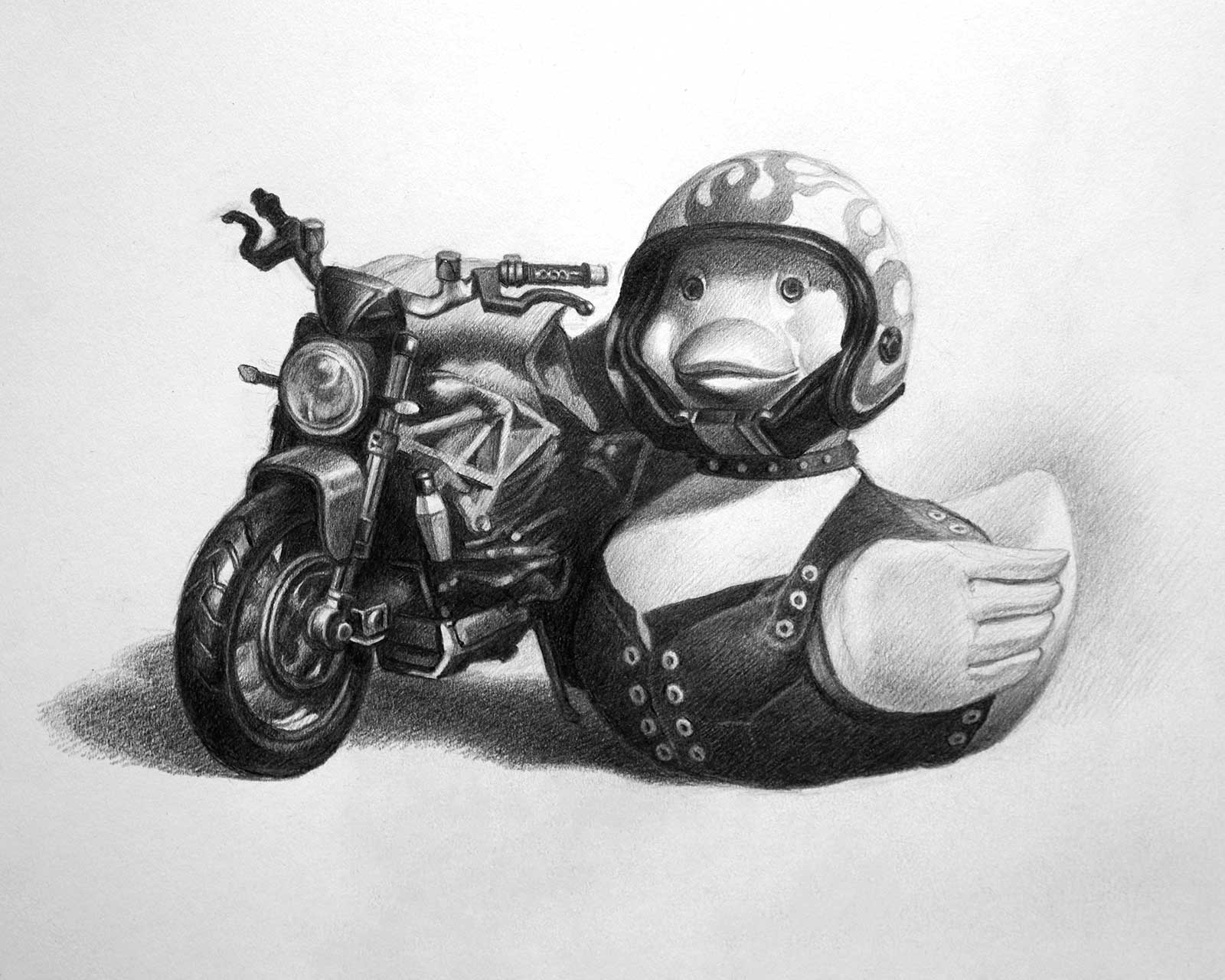
Graphite drawing.
Preliminary Drawing: The Main Subject
After the contract is signed and the first payment is received, it is time to develop the preliminary designs. The design process begins with research. For Biker Chick, this consisted of online searches of images related to motorcycle advertising and the term “biker chick.” Most of the images featured women clad in leather, either striding a stationary motorcycle or standing beside it on the open road or in alleys.
The next step was to set up the still life for the main subject. I purchased a pack of small toy motorcycles and experimented with various arrangements with the ducks and motorcycles, finally deciding to simply have a single rubber duck sitting beside one of the toys. I borrowed the helmet from a rubber duck light that I have on my road bike and made a “leather” outfit from black electrical tape, with golden sequins for the studs. I completed a careful graphite drawing of the small still life and sent it to my client for approval.
Once the image was approved, I asked my client if she had a specific tattoo design she would like for the rubber duck. She sent a complex image created by her uncle, noting the details that she liked the most. I drew these onto the wing of the duck in the preliminary drawing and sent it to her for final approval.
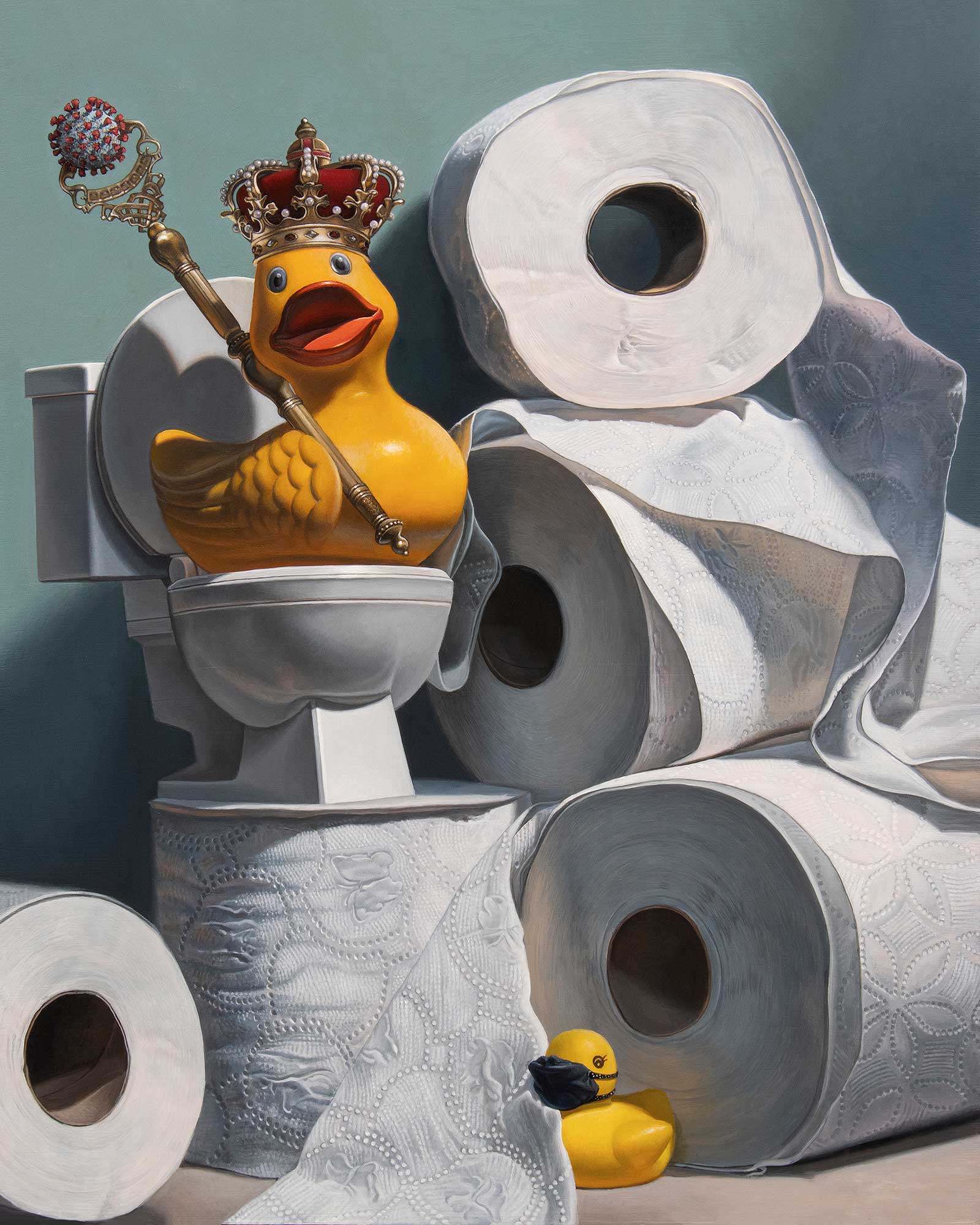
What the Duck, acrylic on aluminum panel, 20 x 16" (50 x 40 cm)
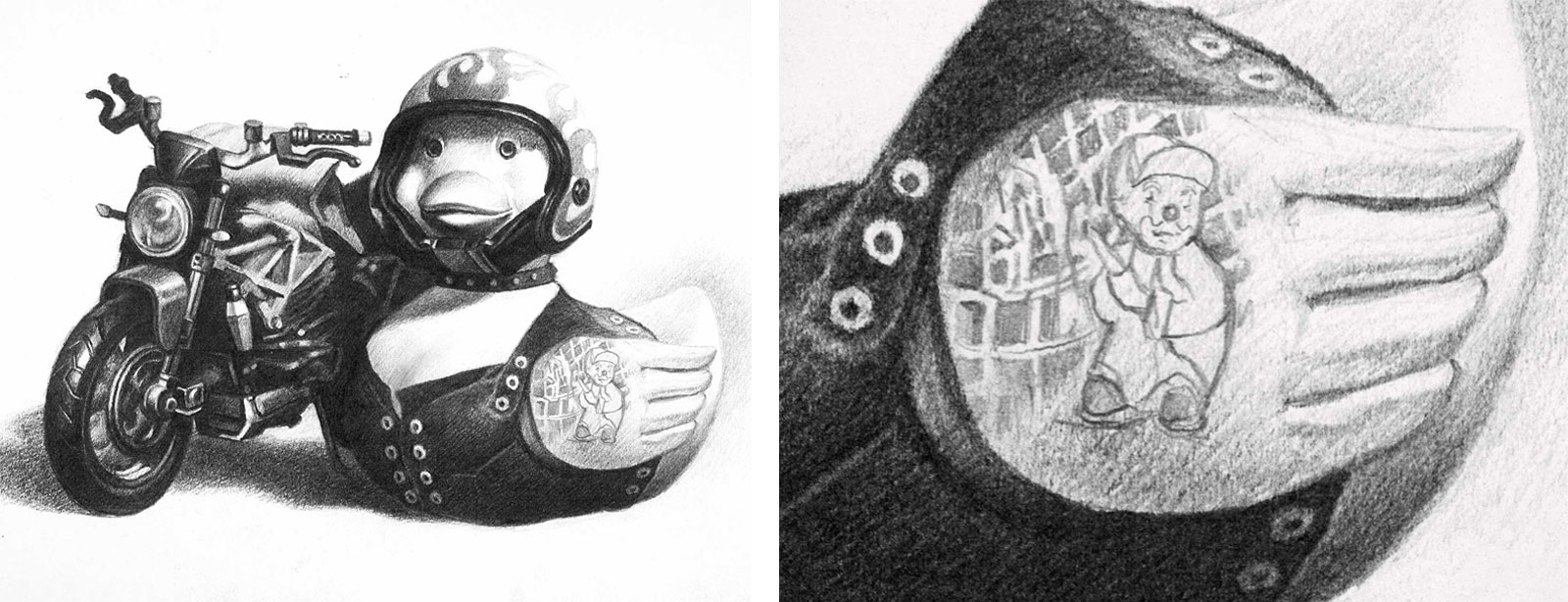
Left: Duck with tattoo. Right: Duck with tattoo (detail).
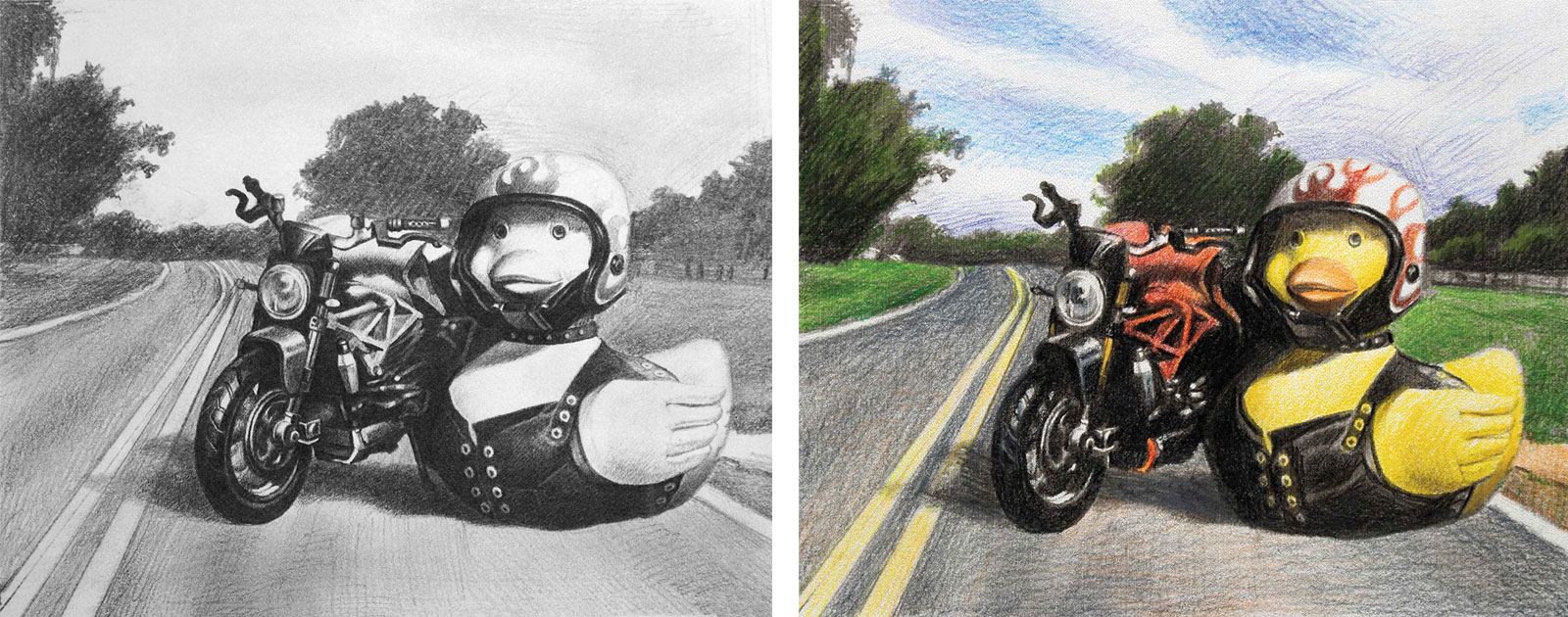
Left: Design 1, value study. Right: Design 1, color study.
Preliminary Designs
It is important to give your client several options regarding the overall design of the artwork. The images need to be clear, addressing a full range of value and color, so the client can see exactly what they will be getting in the finished artwork. Clarity is important because many clients are not visual thinkers. Accurate, clear preliminary designs will greatly reduce the chances for problems later, when the painting is being developed.
It is also important to offer options that are consistent in strength and quality. If you just throw something together so that you have a third option, it is possible that the client will choose that design, and you will be forced to work on a piece that you feel is sub-standard. I developed three different backgrounds for Biker Chick with graphite on small photocopies of the preliminary drawing. A full color range was added with colored pencils to photocopies of these full-value designs.
After seeing digital images of the designs, my client decided that she liked design 3 the best, and she came up with the suggestion of incorporating the storefront of a tattoo parlor. Because my client is a tattoo artist, this was a brilliant idea! I couldn’t believe that I hadn’t thought of it on my own, but that is why working closely with a client is important. The final design allowed me to include more of the design created by my client’s uncle within the window of the tattoo parlor, which added significantly to the content of the piece.
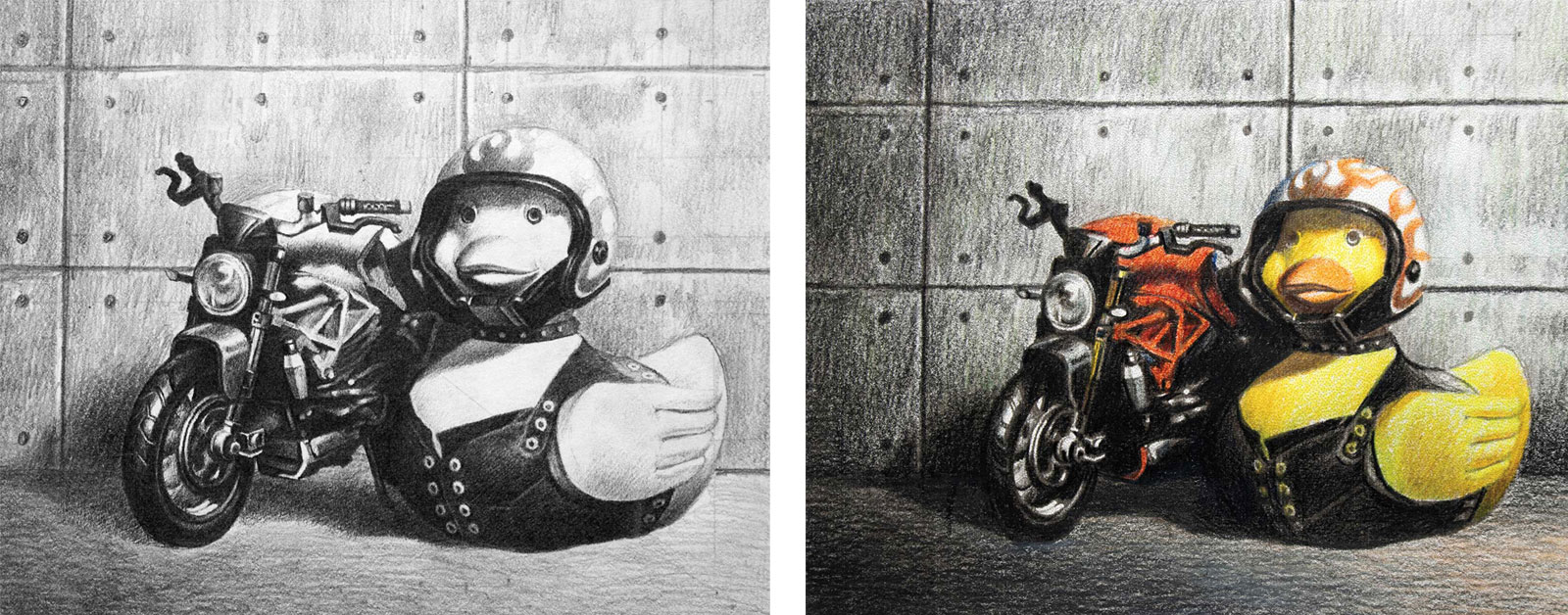
Left: Design 2, value study. Right: Design 2, color study.
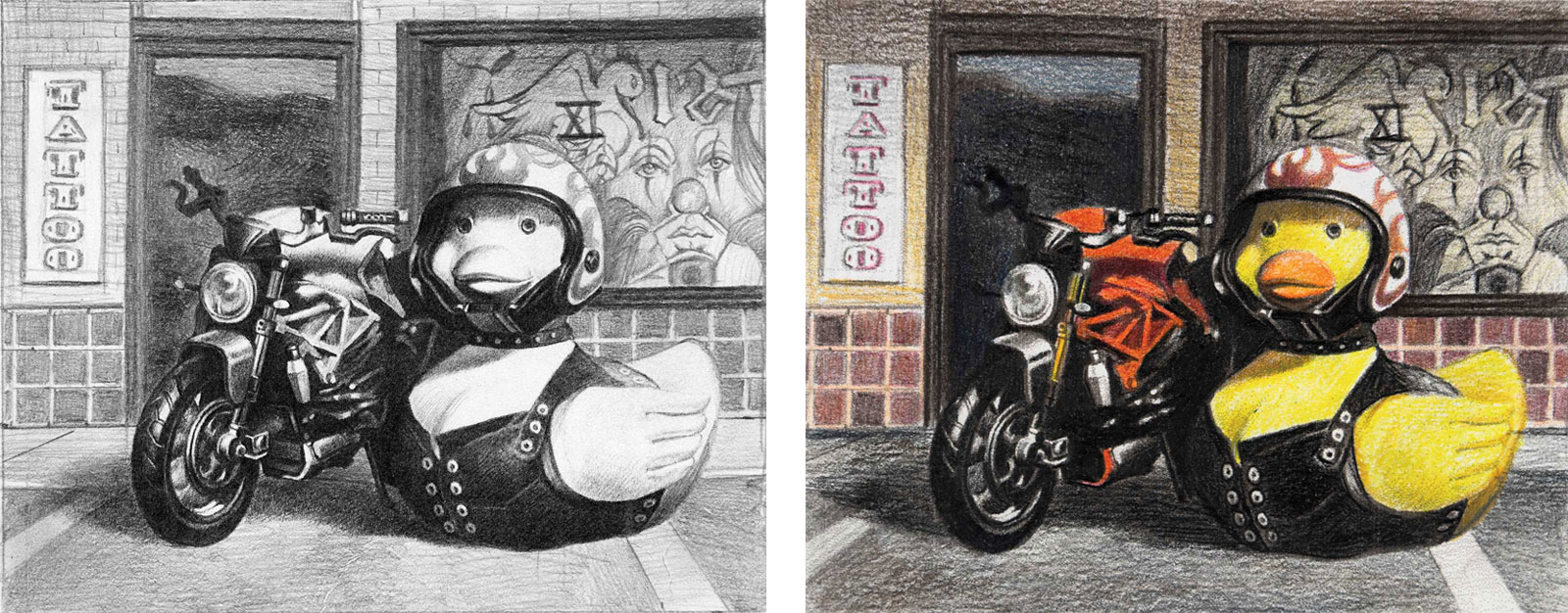
Left: Design 3, value study. Right: The final design.
Developing the Painting
For larger commissions, the work on the actual painting does not begin until a second installment of the payment is received. Biker Chick, however, was a small commission, so the remainder of the payment was not due until it was finished.
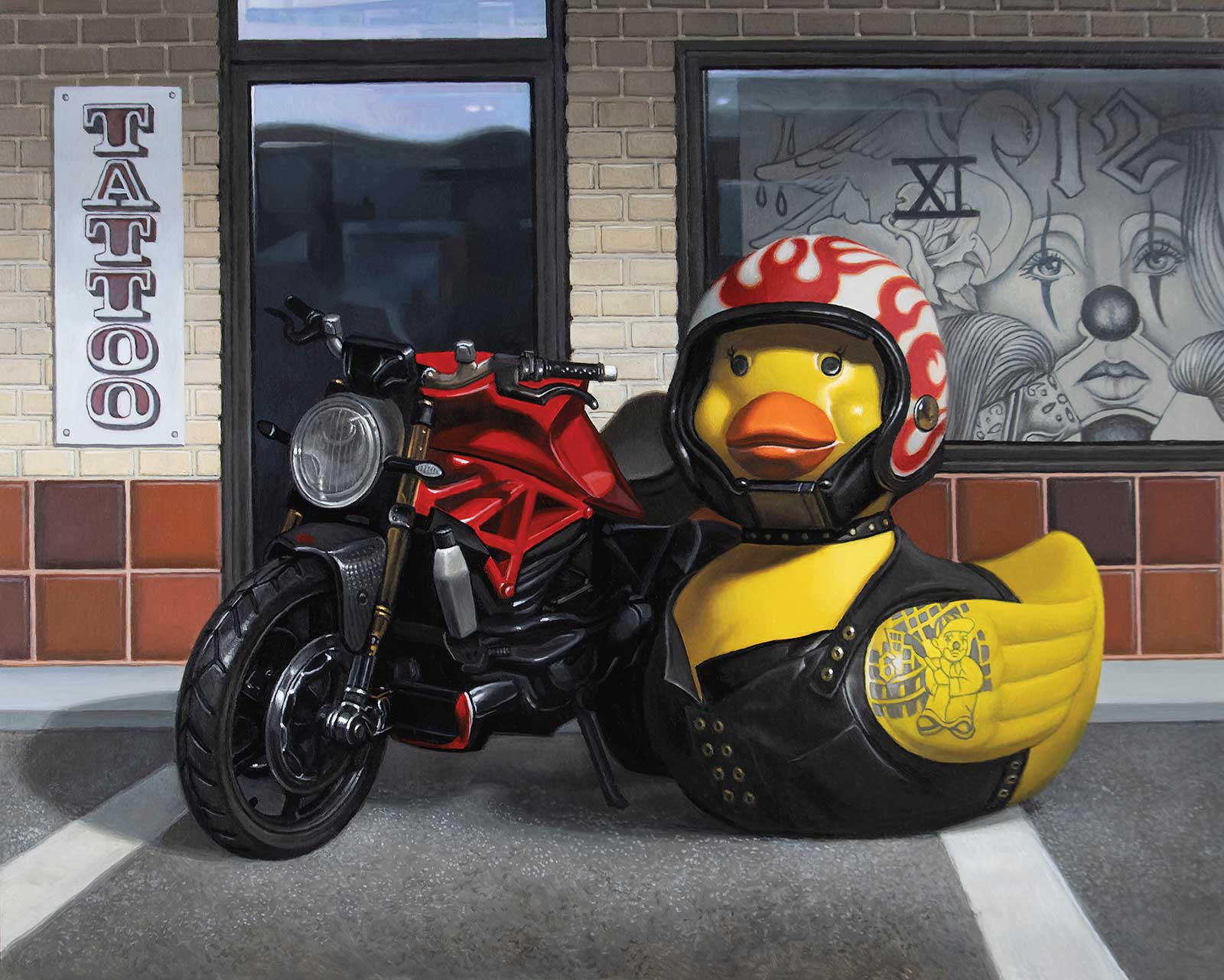
Biker Chick, acrylic, 8 x 10" (20 x 25 cm) After final approval when the painting was finished, I waited about two weeks to varnish the image and another two weeks before placing it into a frame. My client and I were both thrilled with the results. I feel that it is one of the strongest images in the Lame Ducks series and it was more successful because of the participation from my client.
Social media is a great tool for keeping the client up to date while the painting is being developed. With her permission, I posted digital images of my progress after each painting session on Facebook and Instagram. If the commission is meant to be a surprise for someone, the same kind of progress reports can be sent to a private email address instead. Because everything was clearly developed in the final preliminary design, no changes were required during the creation of the painting. —