In September of 2020 I painted the first of my One Hundred Heads—a personal project which involves creating 100 separate small oil portraits over a period of approximately six months. A large part of this particular project has been the opportunity to analyze my painting process, either through recording time-lapse videos or by taking a series of still images. This is of benefit both to me as an ongoing learning exercise but also to the viewer as a way of visually describing my specific approach to painting a portrait in oils.
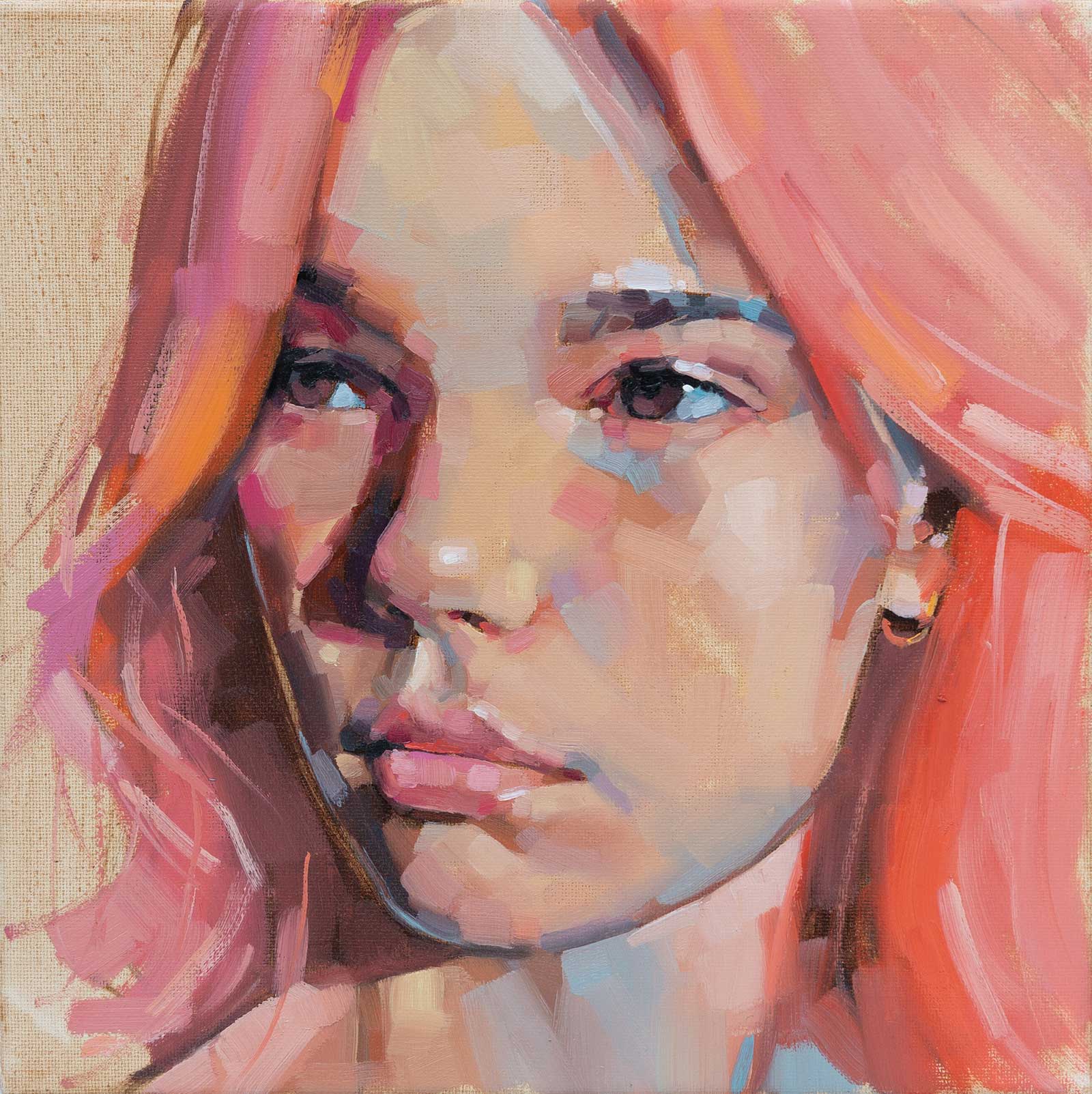
Veronica, oil on canvas, 8 x 8" (20 x 20 cm) The bright pink hair in the reference image of Veronica is the focal point of this painting. I enjoyed using other more saturated colors as well, such as reds, oranges and blues.
My style relies on a combination of precise, clear marks, alongside looser or more sketchy brushwork. The clarity is established in the drawing stage and reinforced throughout. The looseness helps me to always maintain a painterly quality. It is also important for me to combine “natural” or more believable skin tones with more saturated or unexpected colors. It is the values of a reference, however, that I try to adhere to the most. It is the values that can drastically—or sometimes subtly—affect whether the likeness of the sitter is correct or not.
Most of my commission portraits are based on photographs, although I love working from life too. In most cases I will try to sketch or make a study in oils initially and then take my own photographs as reference.
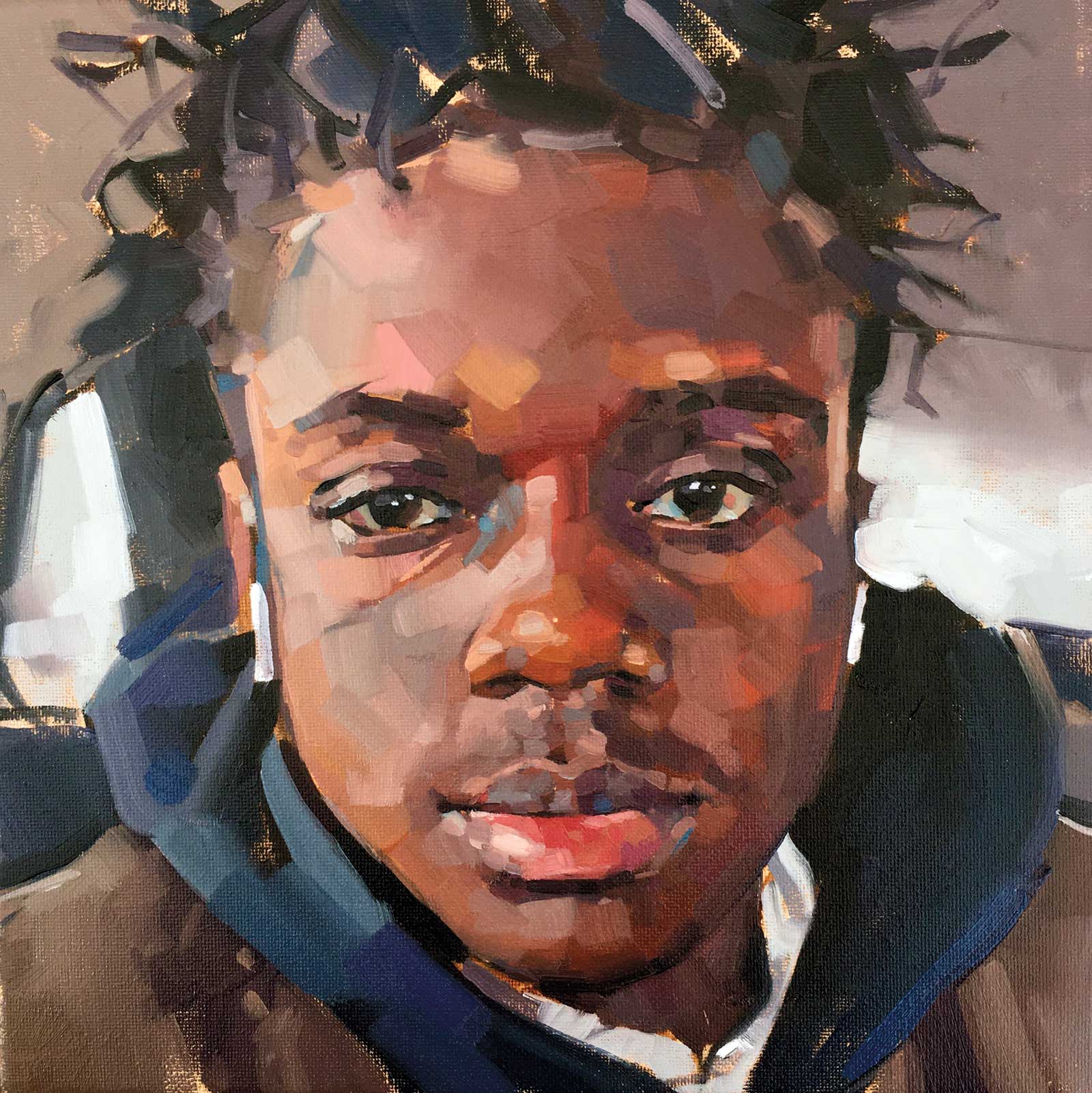
Paul, oil on canvas, 8 x 8" (20 x 20 cm) The direct gaze and composition of this photo reference was appealing. I felt that by including the clothing, earpods and background I have managed to create a narrative for this portrait.
My references for the One Hundred Heads project have been sourced in a number of ways; primarily through a public resource reference group but also through images sent by followers on Instagram, or through family and friends. I have also painted a few well-known faces from images found on the internet. When I select an image that has been taken by someone else, I look for a number of aspects that could result in an interesting end result. For example, there could be a strong degree of contrast, or a unique shape, such as a cast shadow or a contre jour. I am also drawn to an image because of a prop or a specific feature such as sunglasses, colored hair or a beard. Occasionally a photo reference can appeal to me because of a more simple focal point such as the highlights in the eyes or a gentle feature, such as an unusual angle of the head.
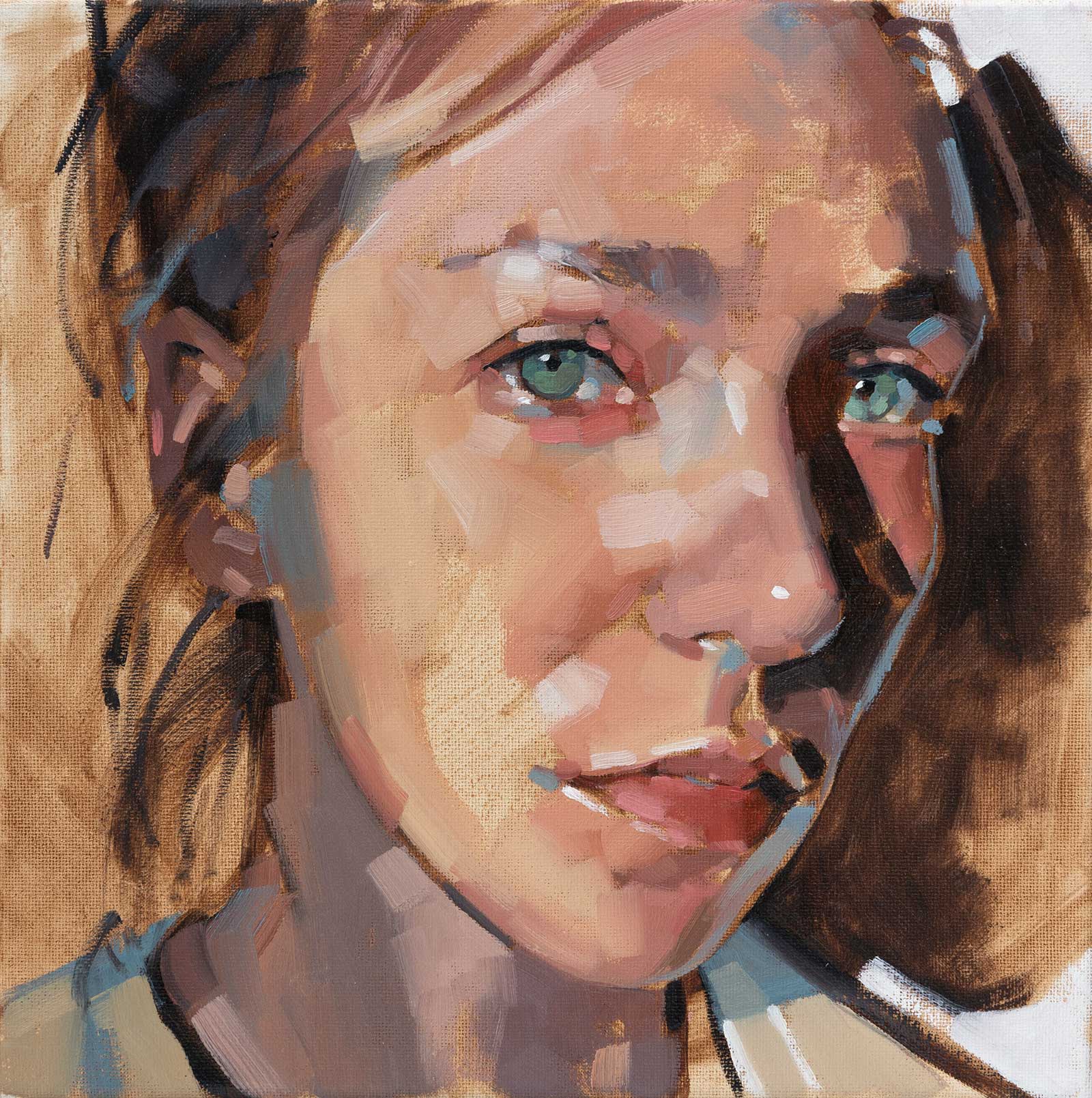
Bernadette, oil on canvas, 8 x 8" (20 x 20 cm) This portrait has been deliberately left slightly unfinished; I liked how the color of the background was the correct value for certain areas of the cheek and forehead.
The best aspect of oil paint for me is its slow-drying nature. I work from dark to light and my aim is to complete the painting (or a large section of the painting) in one session. This is a much faster and more immediate way of painting and is often referred to as a direct approach, or alla prima. It is about painting the right color directly and immediately onto the canvas, working while the paint is still wet. When painting directly, I prefer to find the right hue, value and saturation of the color before laying it down on the canvas in order to get the color and shape down correctly, or near enough correctly, the first time. The process may involve carefully mixing the color on the palette and taking the time to get it right, but working at a speed such that the paint remains wet. This is so that the paint I apply merges with any paint that is already on the surface. I will often “complete” a painting and then leave it for a short time before reviewing it again. It is at this stage that I will see any errors, but will still be able to amend before the paint dries.
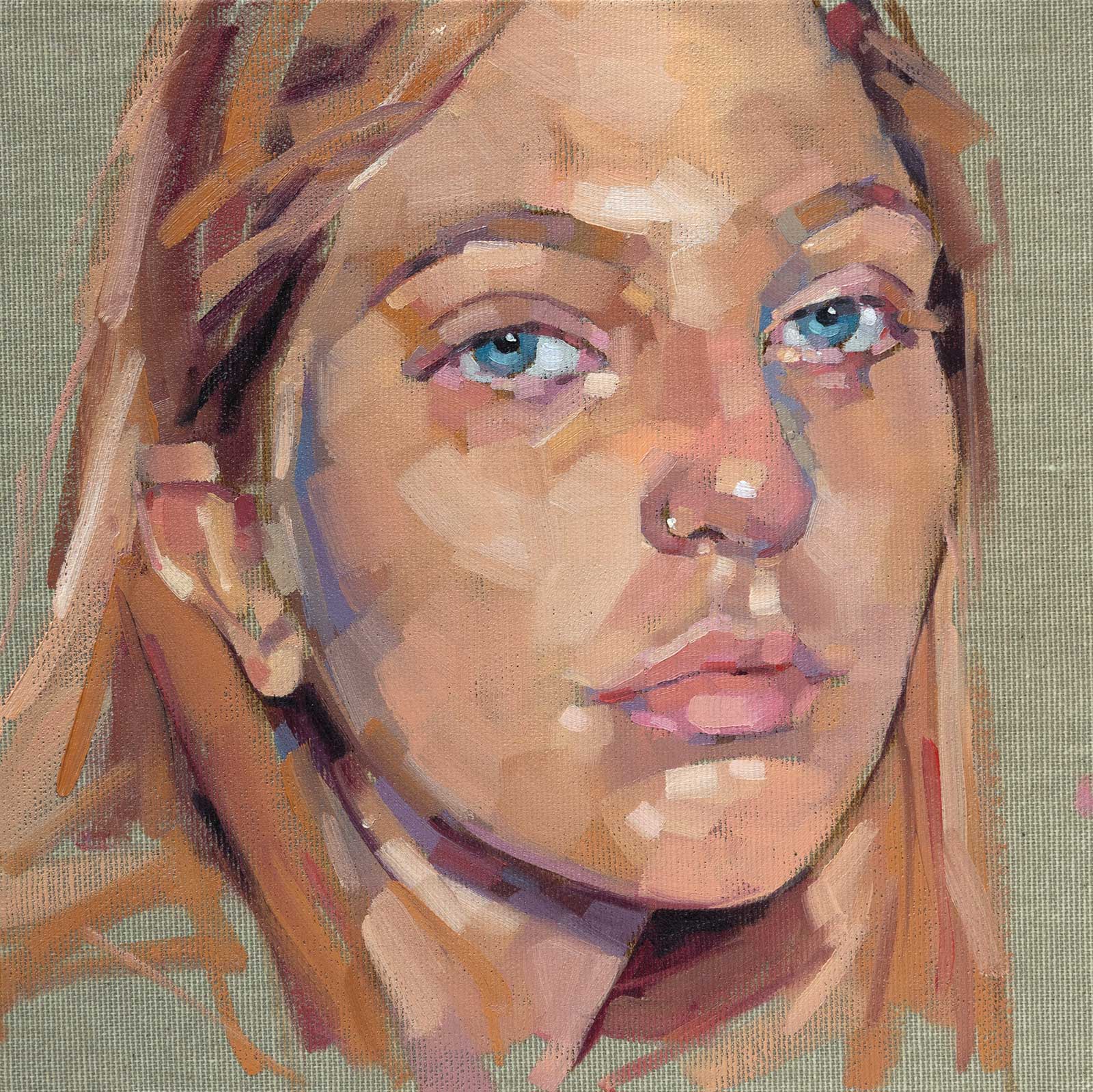
Sophie, oil on canvas board, 8 x 8" (20 x 20 cm) In this portrait I liked the simplicity of the pose and of the overall feeling of color. I felt that by leaving the natural canvas of the board still showing, this pared-back mood is reinforced.
I work from home in a converted spare bedroom. It is fairly large, and it has a big window that faces out to the garden so I benefit from plenty of light. My two children are both currently at university so I have long stretches of time in which to focus on my painting. I have taught oil painting at a number of local and national art centers as well as educational institutions. In the last year or so, due to the pandemic, I have been teaching online and have also produced a selection of streamed video demonstrations. I have occasionally been asked to paint demonstrations for art groups and societies, and just recently I painted two of my One Hundred Heads live at the Cass Art Store in London. I’m really looking forward to working on lots more portraits in this upcoming year!
My Art in the Making Mira
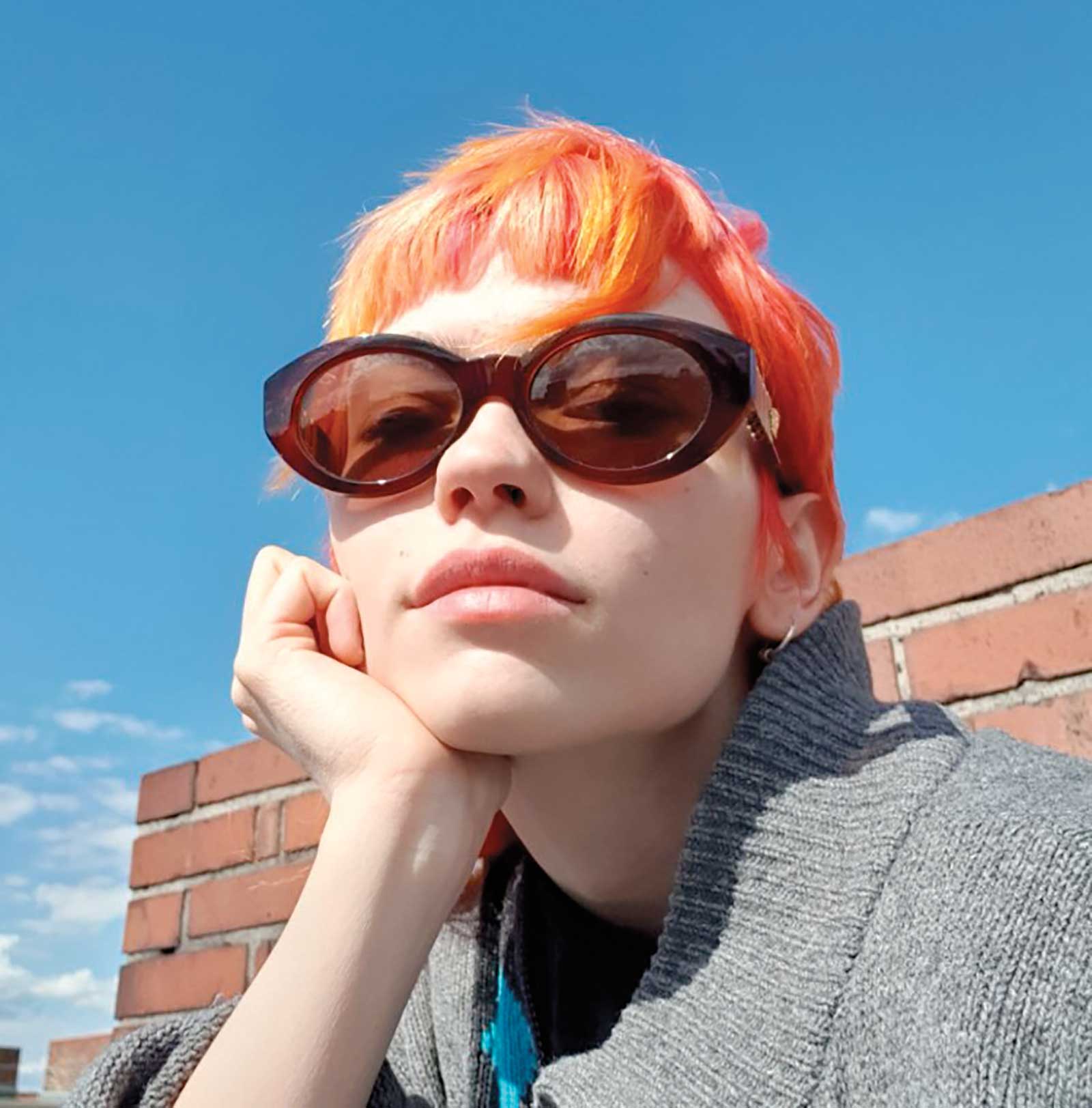 Reference photo
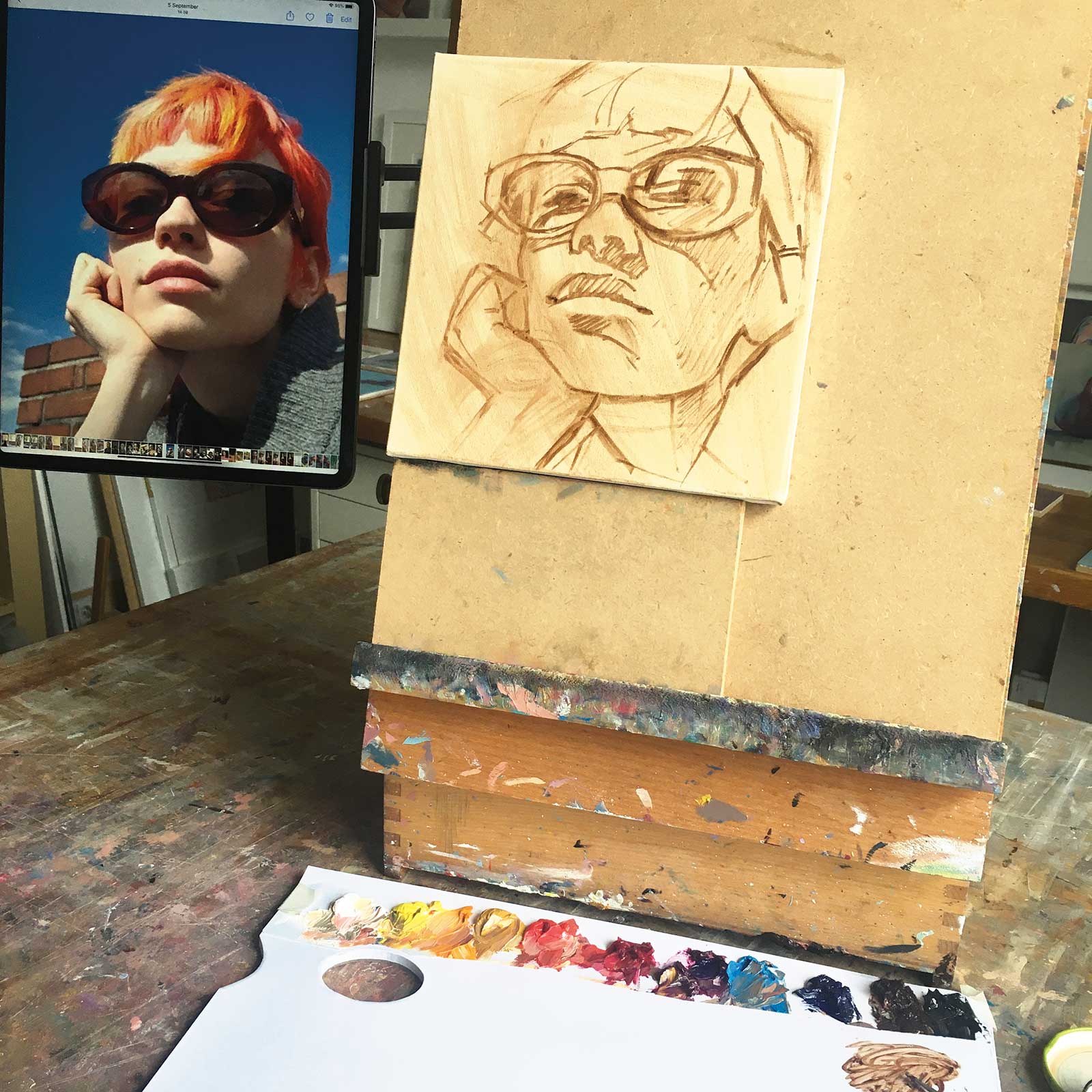 Stage 1
Stage 1 Portrait Set-up
This photo was used as reference for number 11 of my One Hundred Heads. I have applied a ground of burnt umber acrylic paint onto the surface of the canvas.
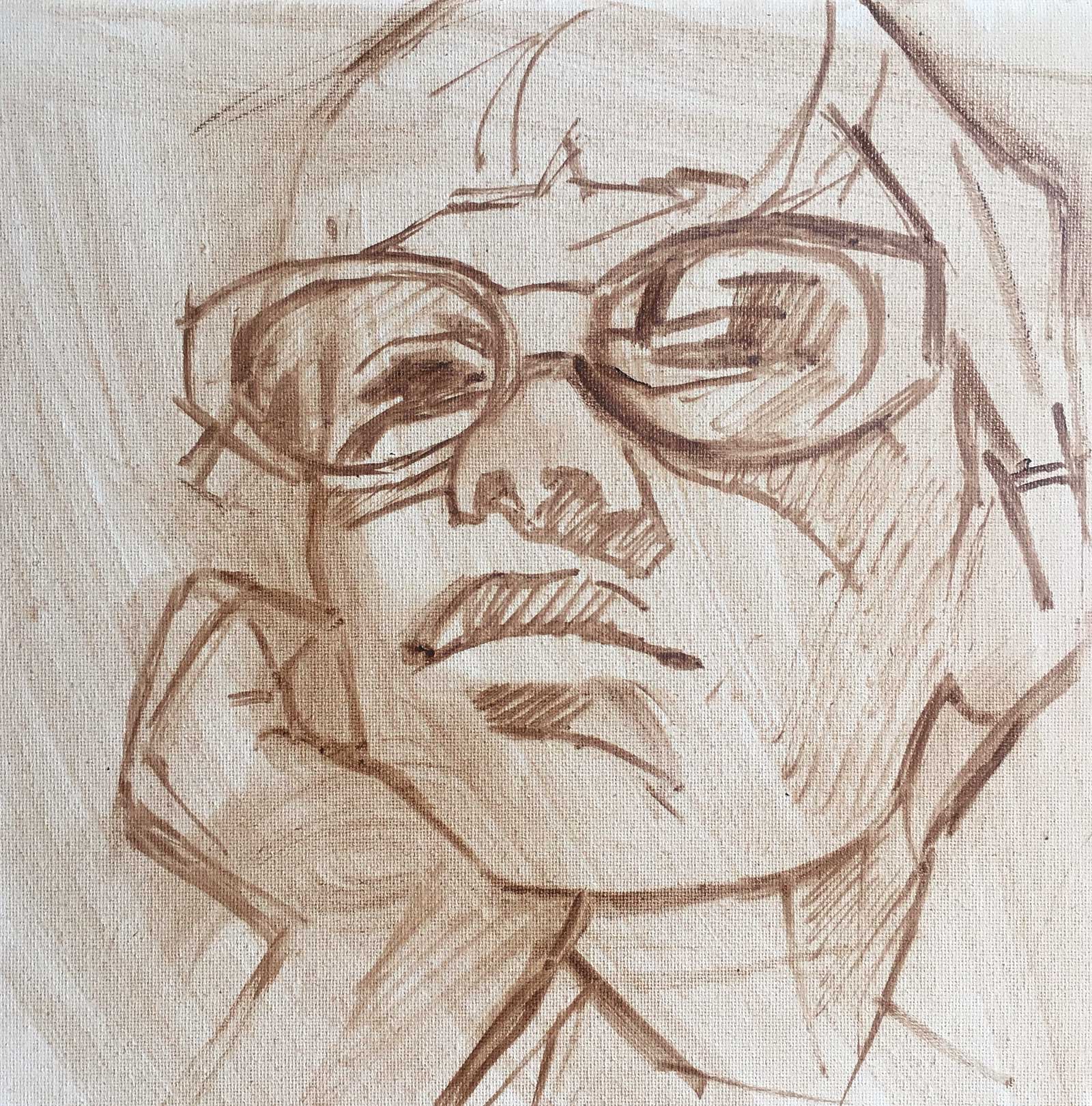 Stage 2
Stage 2 Drawing
Using thinned burnt umber, I use a size 0 short, flat (long-handled) brush to draw out the structure and features of the head. The medium is a low odor thinner with a small quantity of linseed oil, ensuring a satin finish.
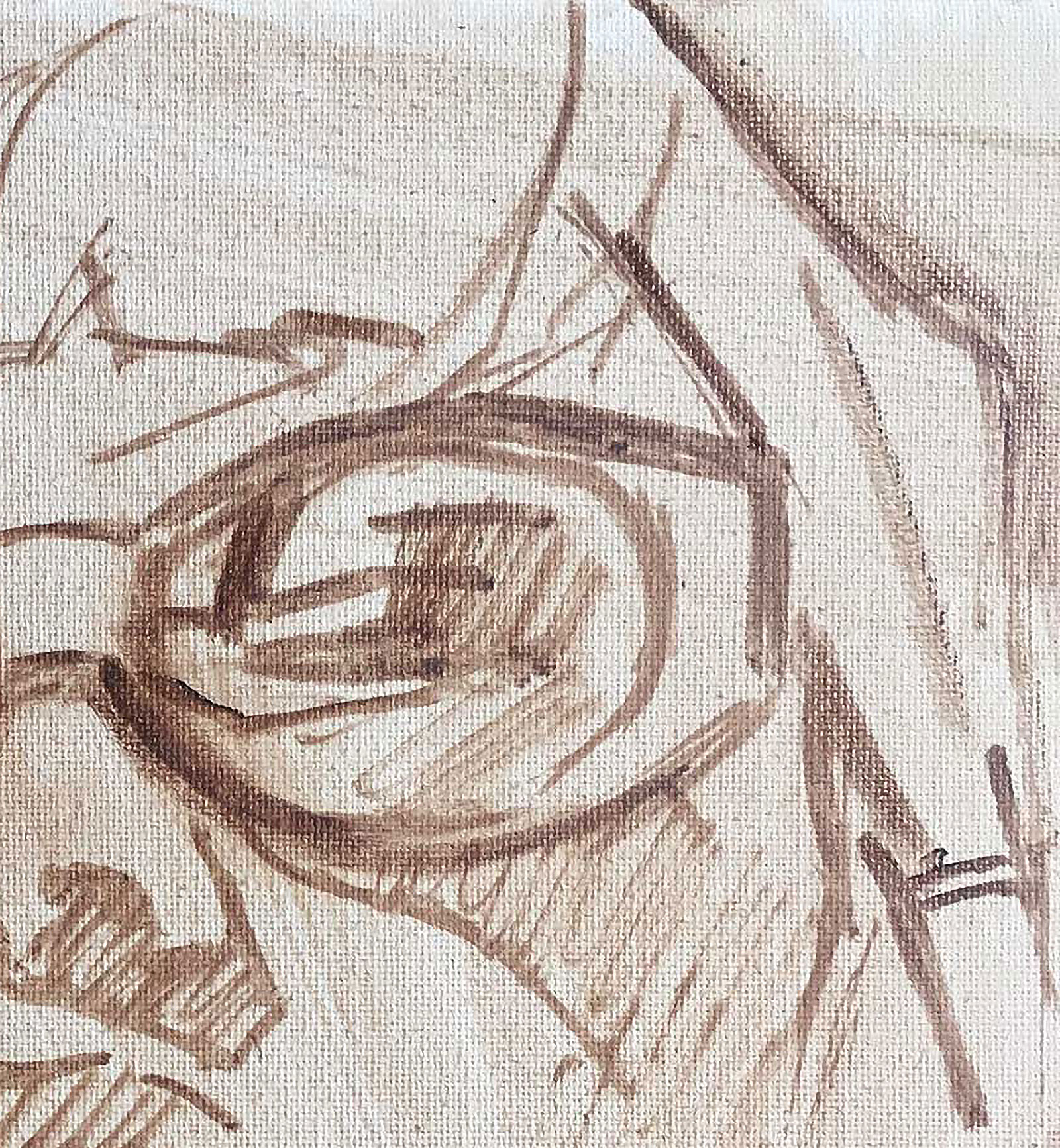 Stage 3
Stage 3 Drawing Close-up
In this image, you can see how I have used a form of cross-hatching to indicate where the larger areas of shadow are present on the face. I use a rag soaked in thinners to make amendments to my drawing.
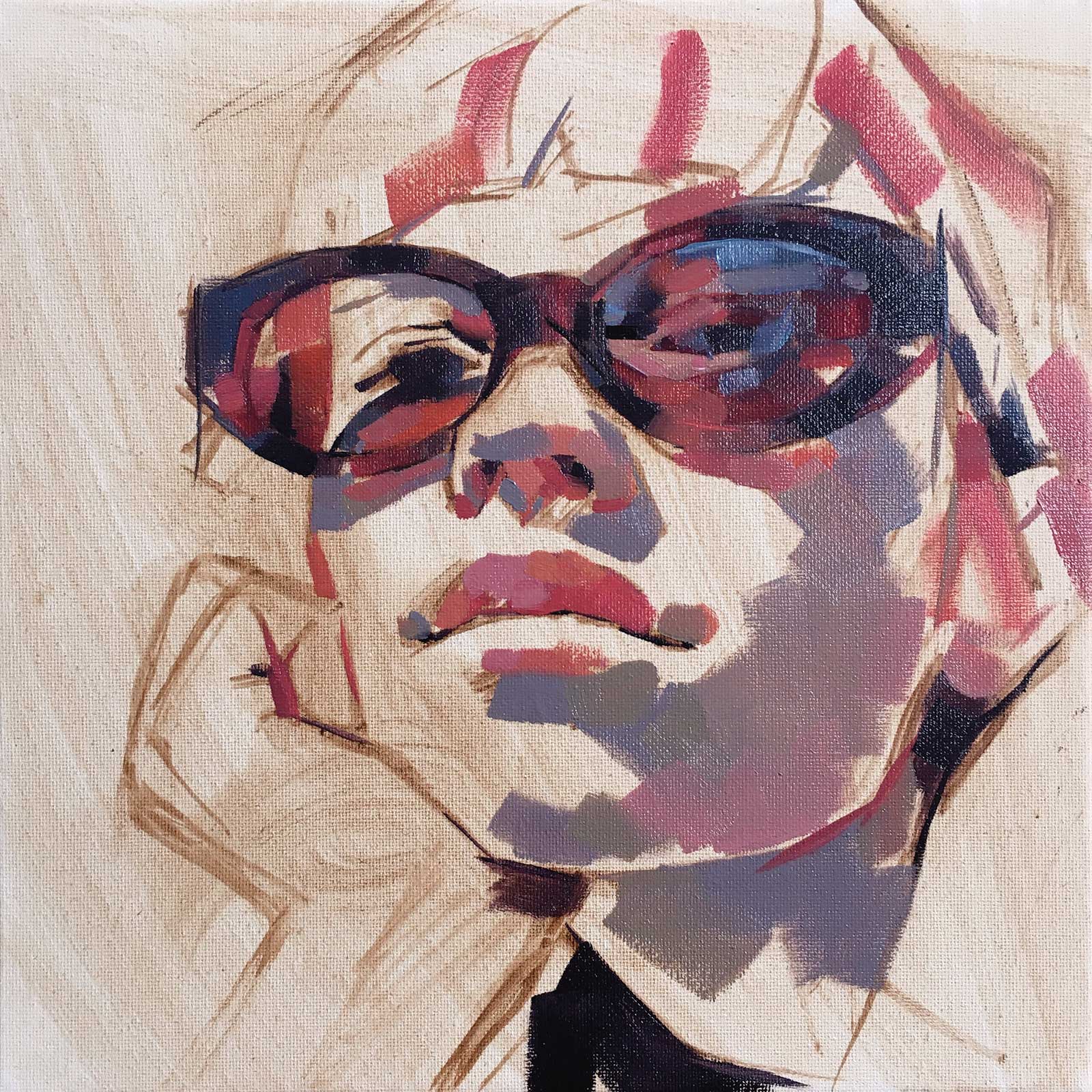 Stage 4
Stage 4 Applying Darker Values
Having mixed a selection of skin tone values on my palette, I start to apply paint of a thicker consistency. I begin with the darkest areas and gradually move towards dark to mid-tones.
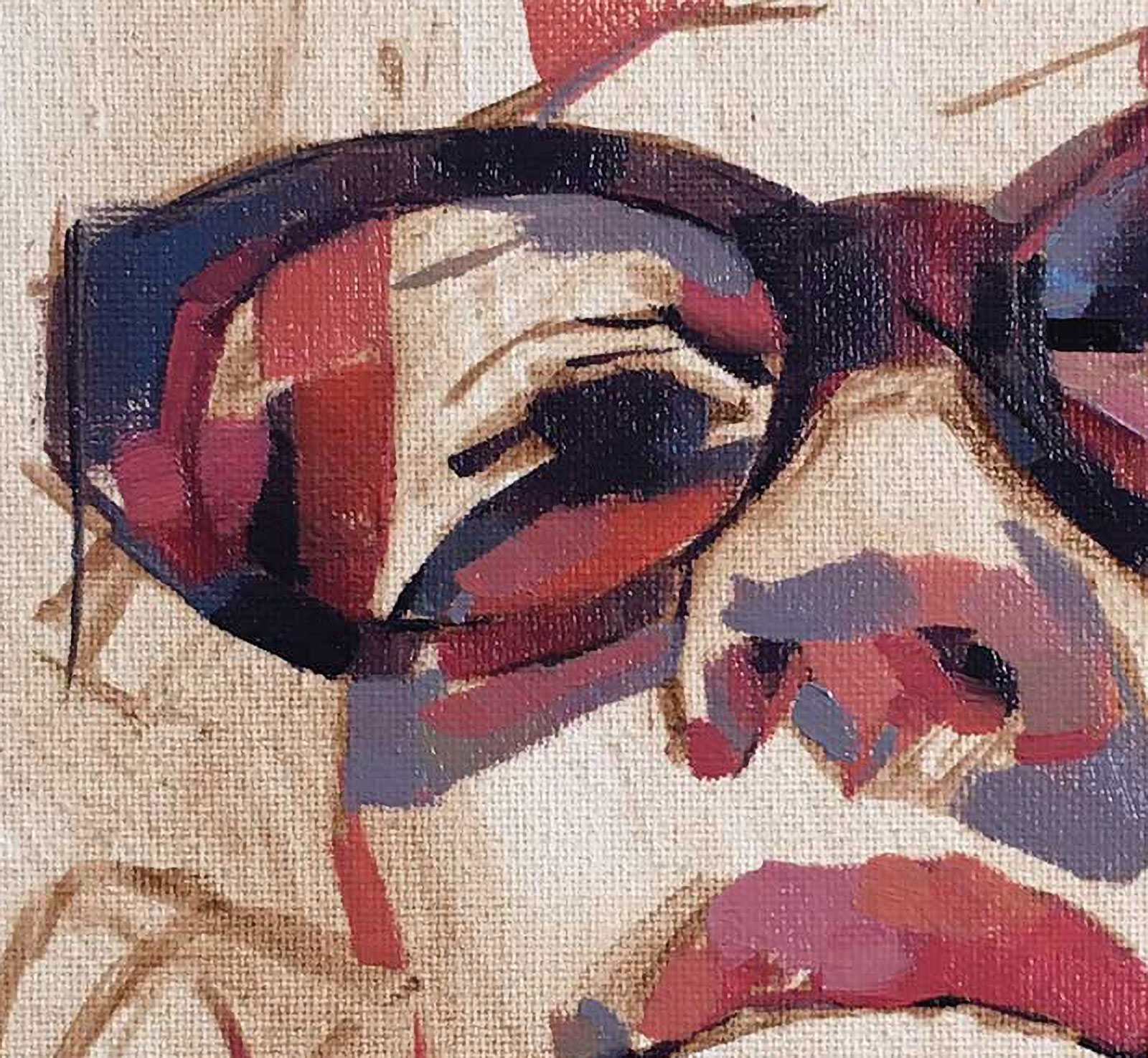 Stage 5
Stage 5 Reinforcing the Drawn Lines
It is clear in this close-up how the paint is not always applied perfectly according to the first stage drawing. It is important to constantly refer to the original reference so that any drawn lines and shapes are improved along the way.
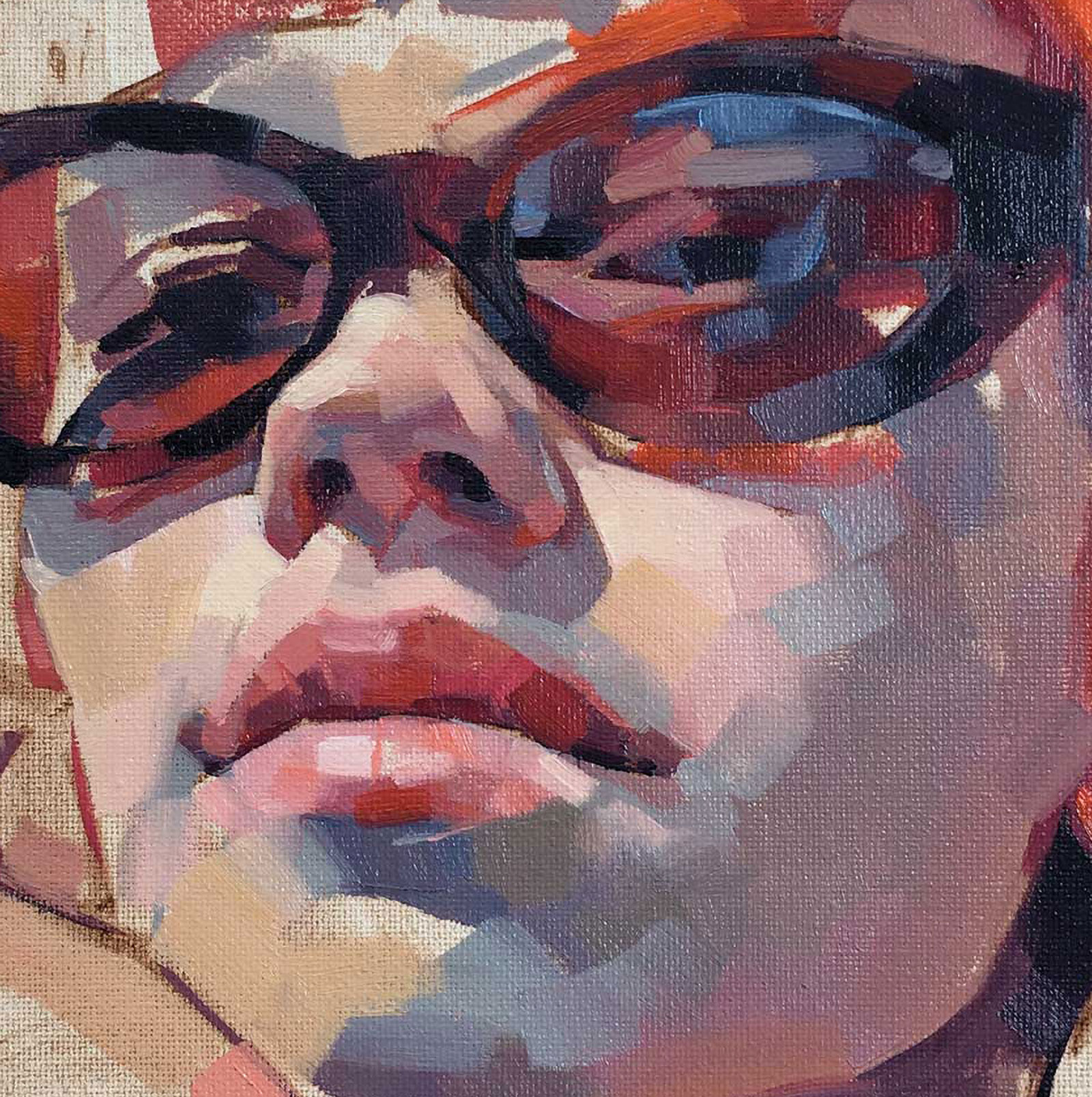 Stage 6
Stage 6 Blocking in the Face
All areas of the surface start to be blocked in and values are getting lighter as the painting progresses. I like to ensure I keep brush marks quite distinct as this helps to maintain vibrancy and avoid muddy colors.
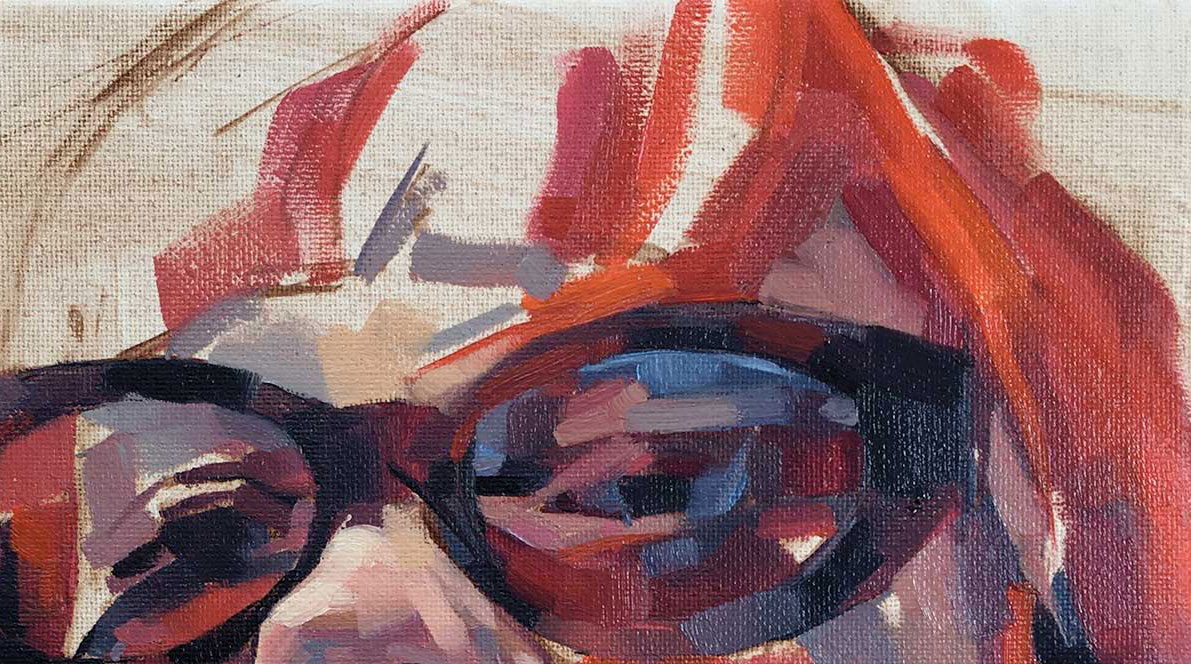 Stage 7
Stage 7 Blocking in the Hair
Although the hair of the model in the photo reference is very brightly colored, it is important to initially paint the darker and mid-tone areas of the hair. This will ensure that the highlights will be suitably vivid.
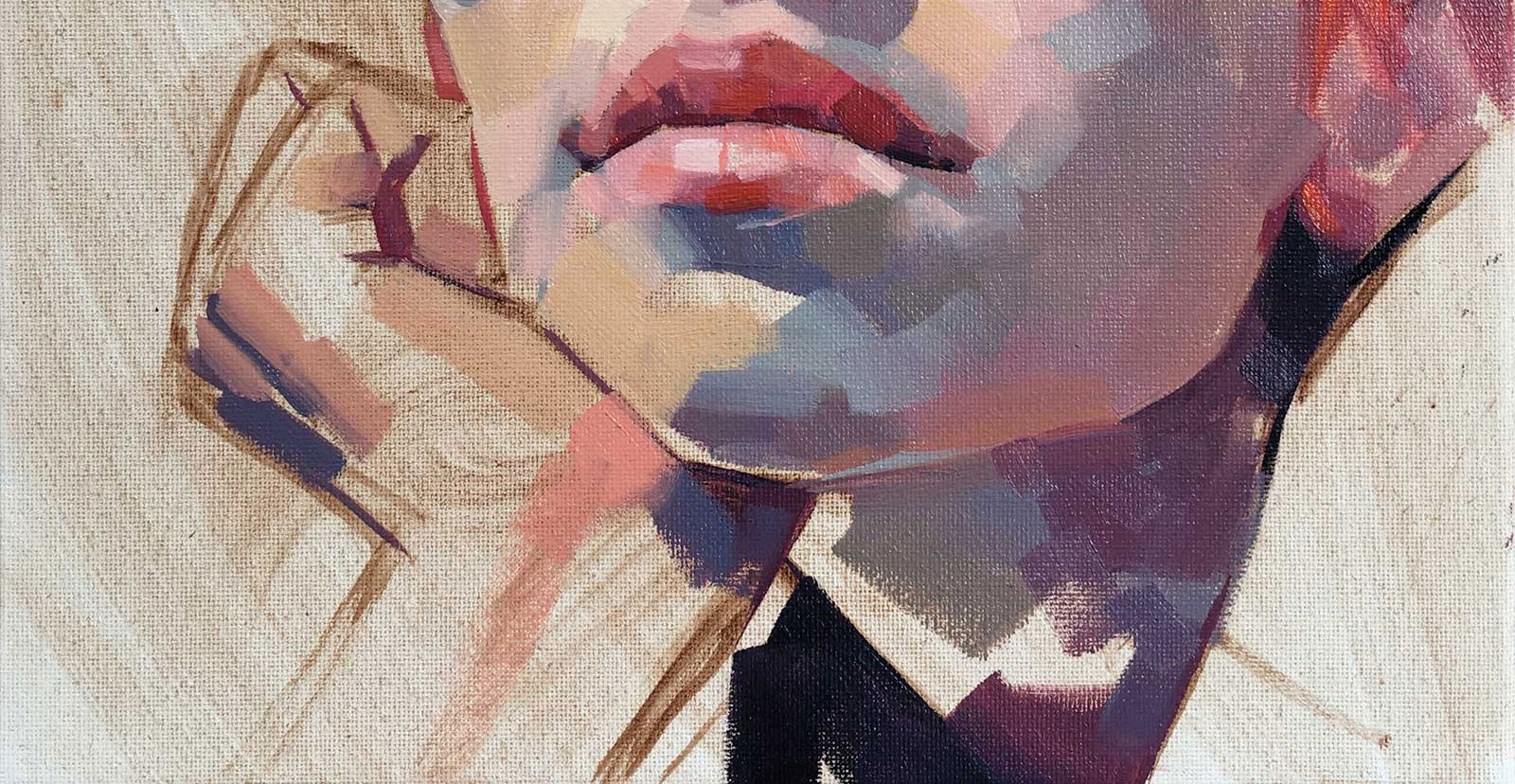 Stage 8
Stage 8 Blocking Other Areas
At this stage of the portrait, I have also started to block in other areas, such as the hand and the neck. I’ve not yet begun to add any highlights as it is important to establish the dark and mid-tones first.
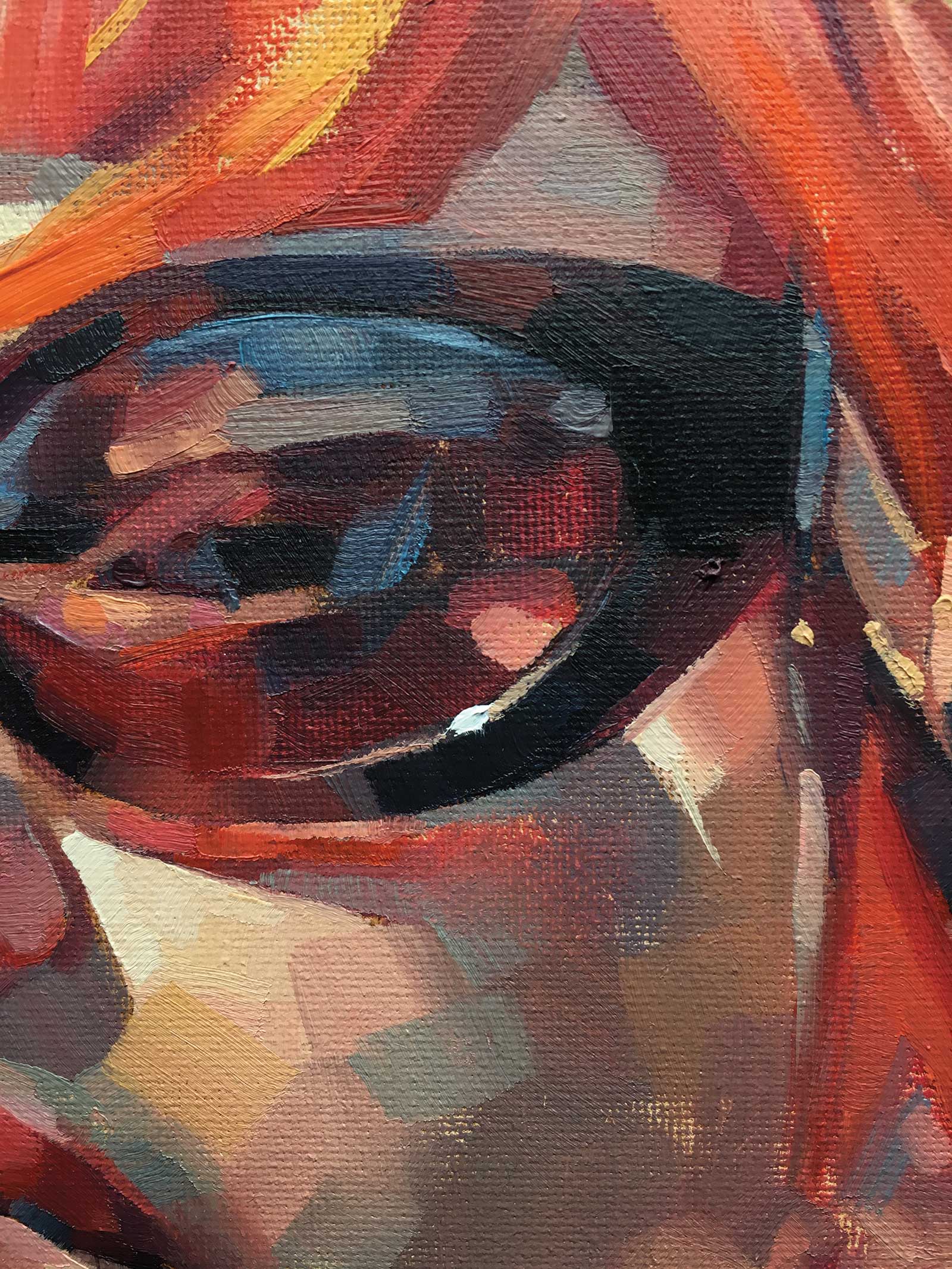 Stage 9
Stage 9 Adding Lighter Values
This is a detail that shows how the lighter, more saturated color of the hair has impact over the darker values underneath. I have also started to add highlights and more detail to the sunglasses.
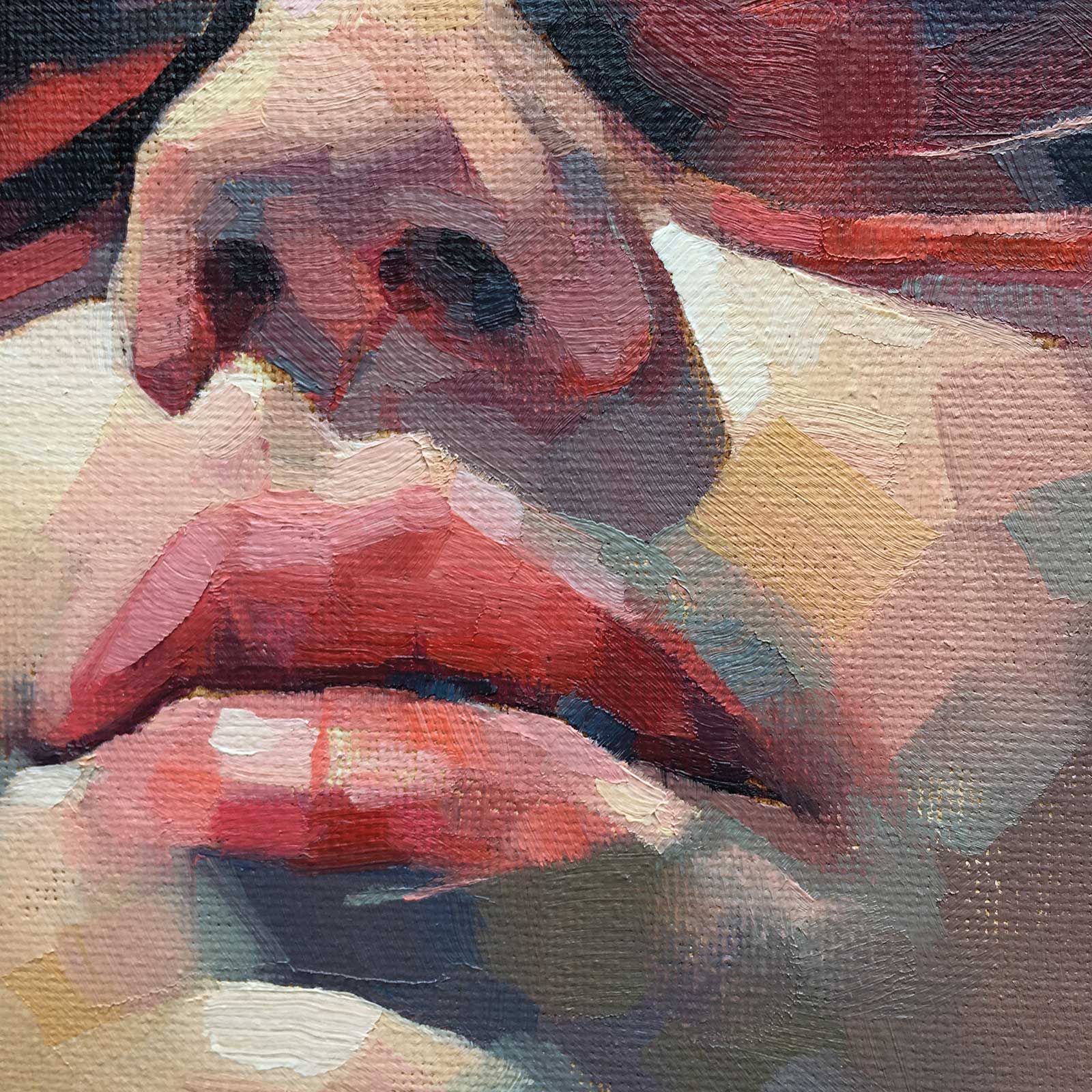 Stage 10
Stage 10 Filling in the Gaps
It is at this stage that I normally look at the painting as a whole and make sure that there are no gaps (that look out of place). I also start to fine-tune some of the details and continue to add highlights.
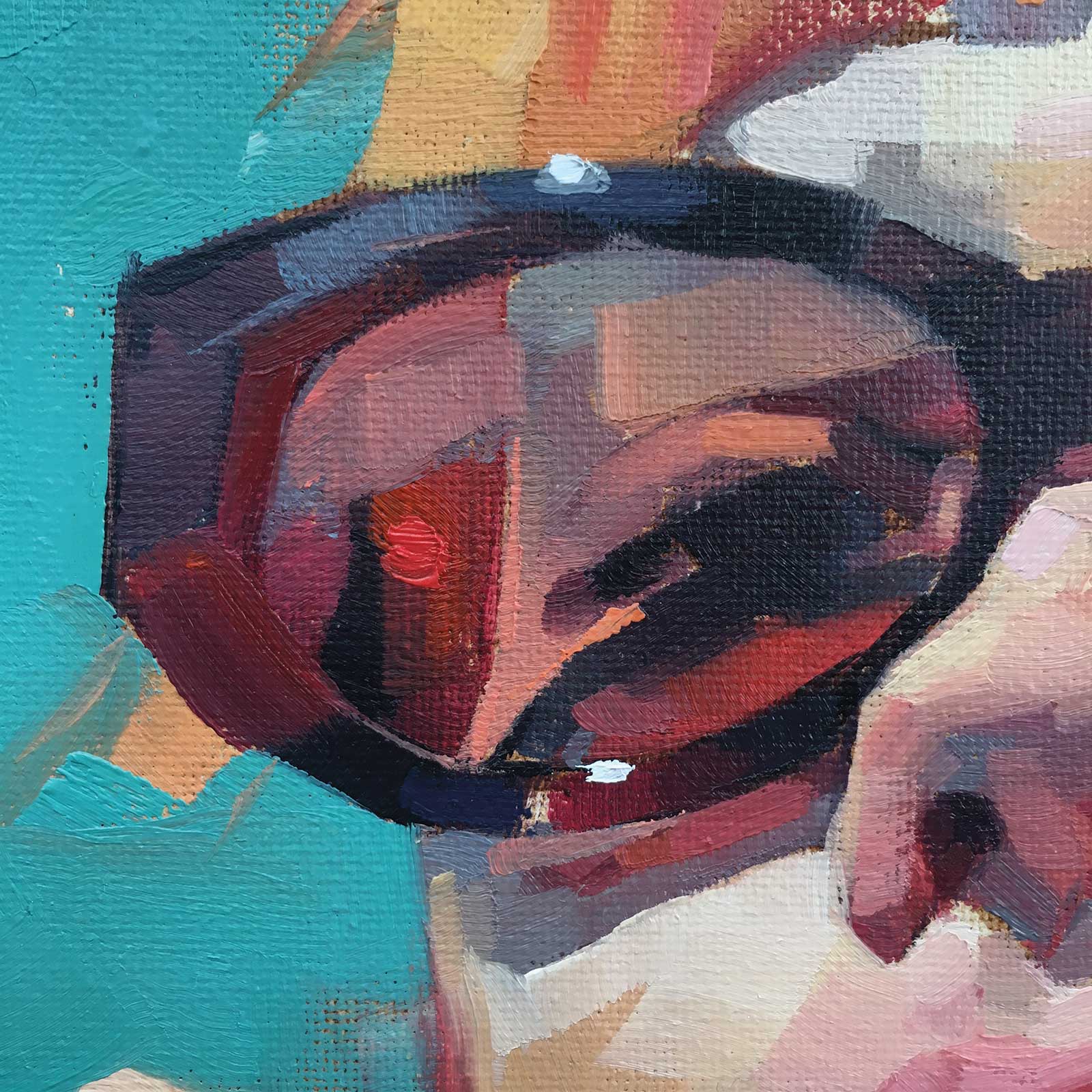 Stage 11
Stage 11 Background color
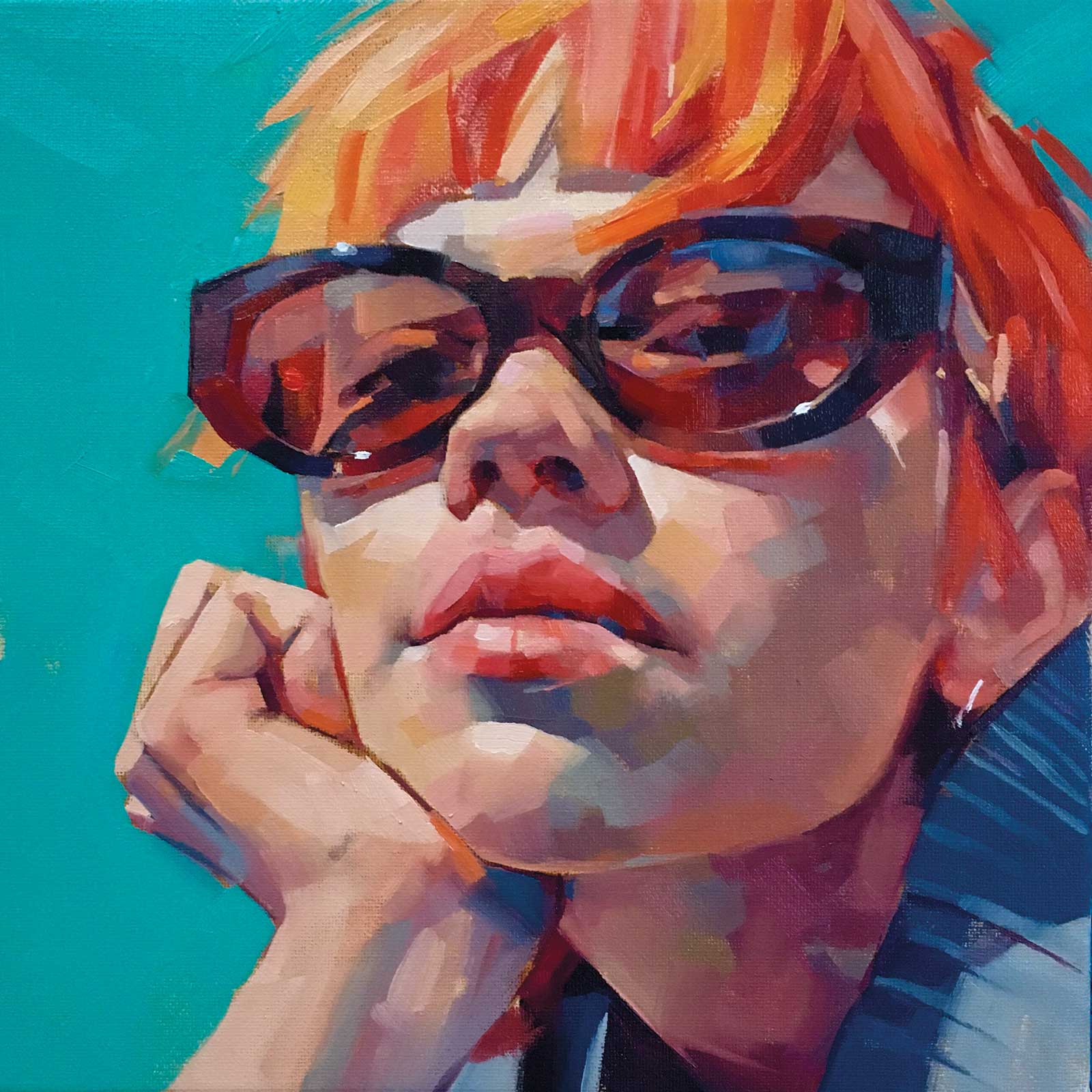
In this portrait, I have used the bright blue of the sky in the reference photo for my background color. If a reference doesn’t have a suitable obvious color, I will use a hue that suits the finished painting.
 Stage 12
Stage 12 Finished Artwork
Mira, oil on canvas, 8 x 8" (20 x 20 cm)
The finishing touches include blocking in the clothing and the earring, and checking that the dark areas are dark enough and that all the highlights have been carefully considered and applied.
About the Artist
 Jane French
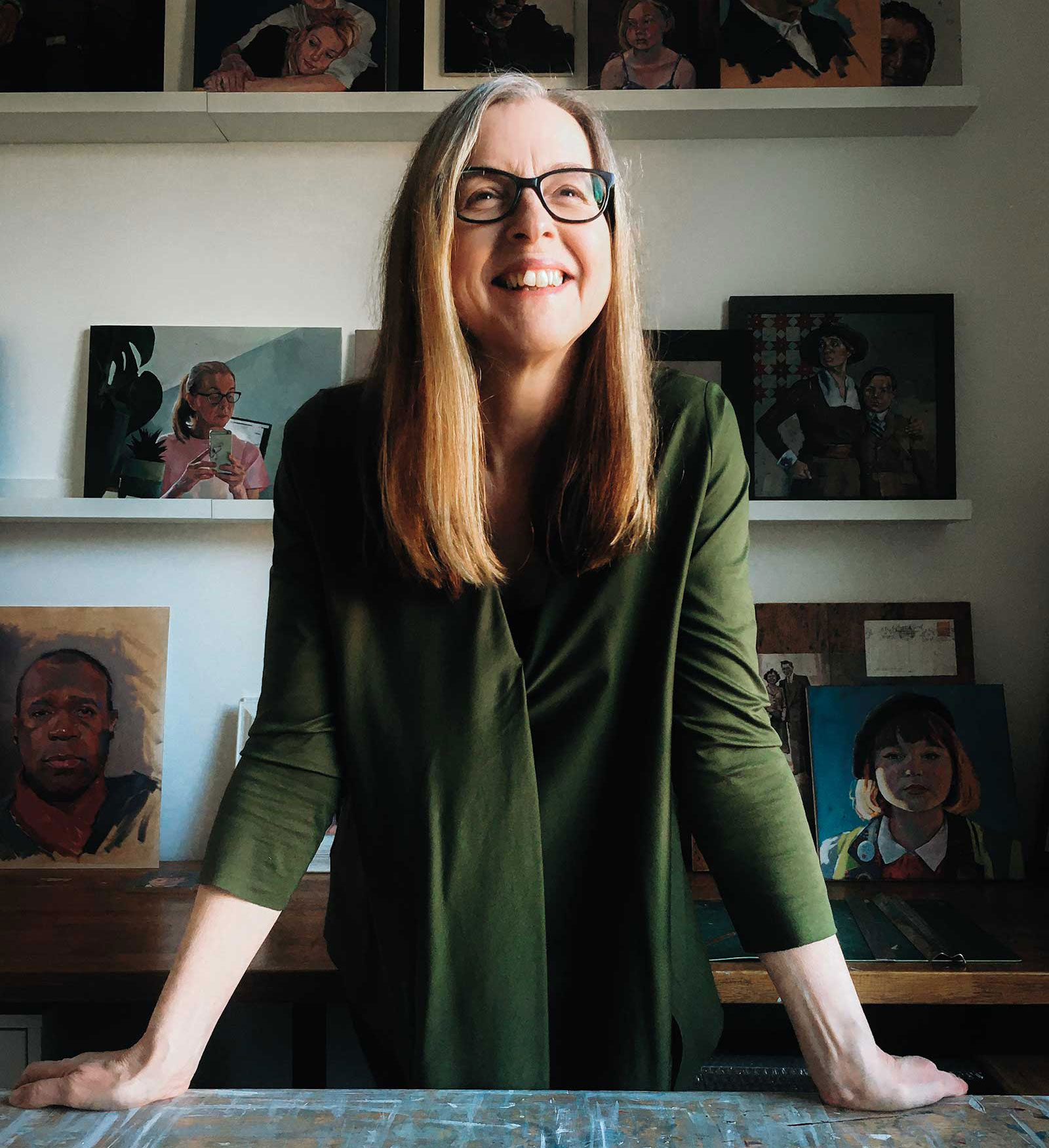
Jane French has been working as a professional artist, specializing in portraiture, for around 15 years. She completed a Bachelor of Arts degree in fine art at Newcastle University and a Master of Arts in design at De Montfort University in Leicester, England. She has completed many commissioned portraits and is also an experienced tutor, working at various institutions around the UK. She has shown work at the Royal Society of Portrait Painters and the Royal Society of Oil Painters Exhibitions at the Mall Galleries in London. She is a member of the Leicester Society of Artists and the Contemporary British Portrait Painters (CBPP). In June 2022, her One Hundred Heads set of paintings will be shown at the Cass Art Space in Islington, London.
Contact at
www.janefrench.co.uk