I don’t copy what I see, I do what I see. The difference is that my subject and I are melded together as one. That “one” being my painting or drawing deeply combining with my subject. My subject gives me visual information, which my mind and body apply to paper or canvas. All coming from years of doing.
And Thank Goodness for Art
There are times we feel life hitting us hard, and we’re not able to face the days ahead. I’ve had plenty of this, and each time I wonder how I can handle such moments. Then into my mind comes my saving grace: do art! Yes, those two words. I’ve mentioned this a number of times and I’ll keep repeating it. There’s not a reader out there who doesn’t have times of grief or turmoil. Strangely, I’ll sometimes not think of that “saving grace” route. That’s when my subconscious mind nudges my conscious mind to get with it and grab a pencil and paper.
We know that the art is not going to solve our problems, but we can face them stronger and better. My internal energy and durability come from creating. It helps me continue believing in myself. And that alone gives me confidence and a mighty will to push forth.
I’ll add this: There have been periods when I sold nothing; moments my life was in the ditch. I remember them well. I also remember even then, creating art kept me floating, generally with an eager grin on my face. Being at my easel has always been my power pill.
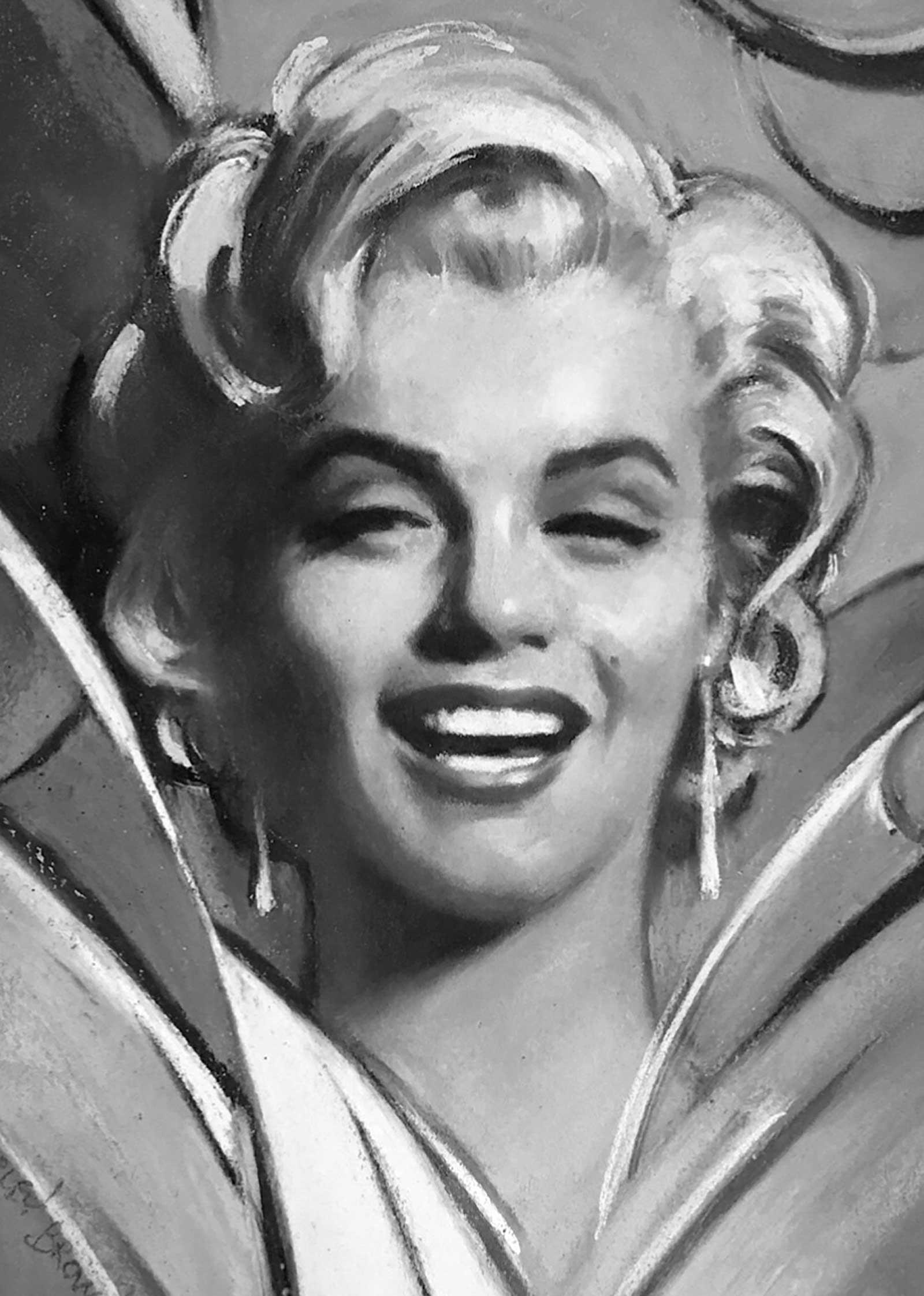
Marilyn Monroe
Live that Fantasy
One of the most important parts of my life was that in my early years, my father had me fully believe I could actually live my fantasy world. The best part is that when we’re young, we do believe in heartfelt fantasies. From childhood on, there was nothing that could alter my total belief in myself and where I was destined. Nothing got in the way of my dreams, just as my father foresaw. I also discovered that those fantasies could start at any period of life. I’ve had many students and friends of all ages who have shown it can really happen when they’re ready. It continues to amaze me what we can do with our lives, and really at any time. One student was 95 years old and said art has renewed her everyday life.
And the Winner Is…
I’m able to say that some of the art I’ve done over my lifetime are amongst the best created. This is not a moment of self-aggrandizement or the observations of art critics. I have sometimes seen it in my works when I observe them objectively.
There’s not one of you who can’t make the same claim. Of all the things you’ve done in your life, be assured that every once in a while you can make the claim: “Best ever!” Remodeling a house, a special day of teaching, working out a scientific problem at a laboratory, perfect family outings, a sketch just finished. “Best” covers every subject conceivable. We may never get an award, and the “best” may never be known publicly, but still, it’s a personal blessing. And the winner is each of us.
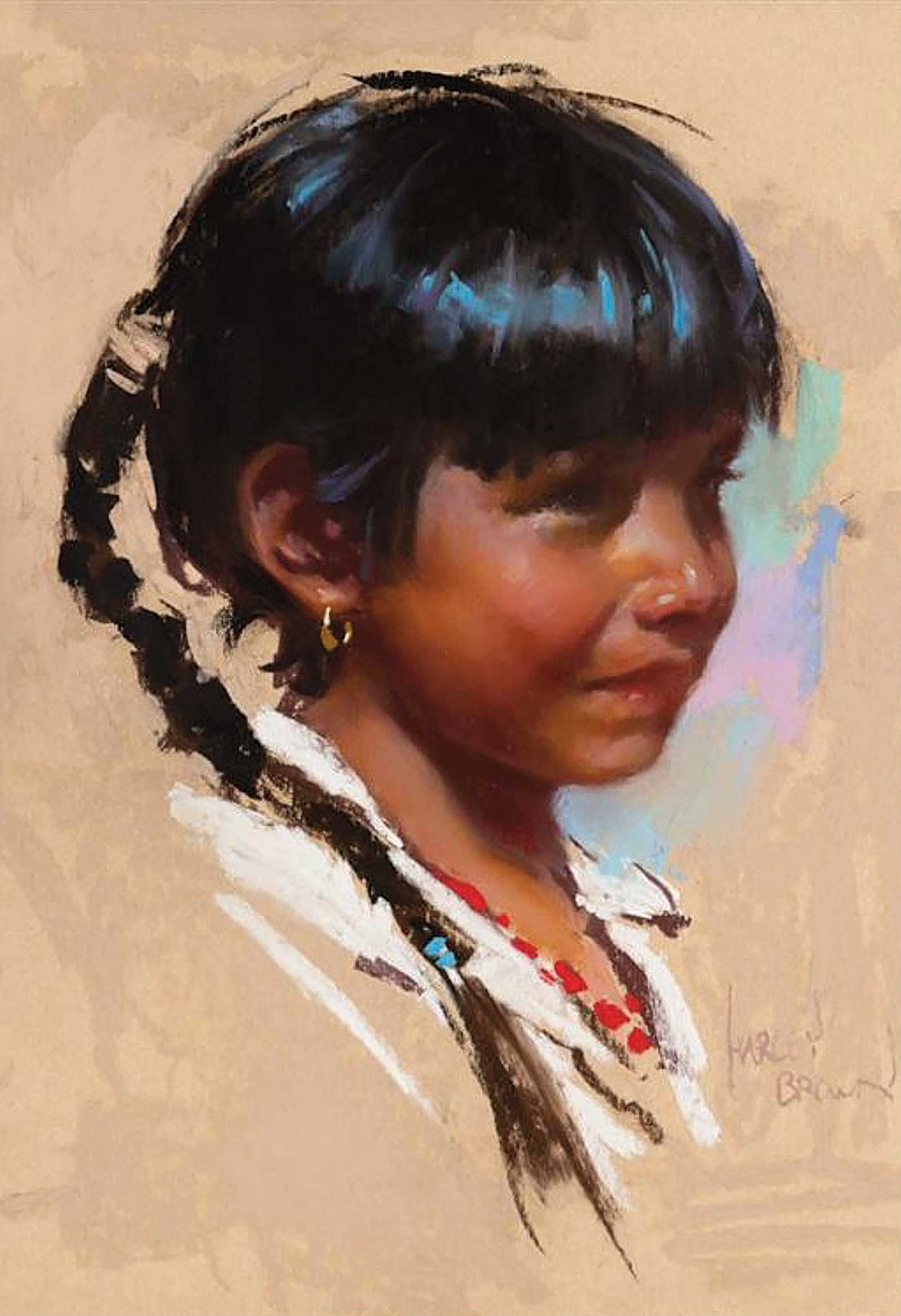 Annalise
• I joyfully trusted where my hand wanted to lay in each stroke.
• Facial features are in shadow yet her feelings are evident: content but questioning.
• Cast shadow down her neck is softer as the shadow gets further from her head.
• Accurately created…but far from photographic.
• Cast shadow under the nose; form shadows around cheek.
• Joyous strokes of cool highlights on her hair divulge everything needed.
• The braid from the back of her head adds an interesting visual informality.
• Cool background against the far edge of her face. Cool against warm.
• White blouse contrasts with rich skin tone.
• It says much about this dear child and reveals a lot about me.
You’re Quite Welcome
I’ll keep repeating: Learn the plain basics of the Munsell Color Theory in a day and see how color really can be understood and appreciated. A life changing day you’ll not regret. And if we meet, you’ll thank me personally.
Values and Center of Interest
When observing your subject, something to note is the relationship of values. For instance, the lighter an area is, the shadow next to it can seem to be darker than it really is. Keep this in mind when working out values with your art piece. I will sometimes quickly block out the light area to see the true value of the darker area. Yes, sometimes we purposely push the lights and darks on a work, but at the same time, we should first see their true values.
With your artwork, try not to put in all the values (light to dark) you see in the subject you’re painting. Instead, simplify. An extreme example: I have works of mine where there are two values—black and white—and those two values tell a visual story and make the design. Of course, most art pieces have more than two values. One reason to simplify is that it brings the artwork towards a stronger composition; look at a Rembrandt, a French impressionist, a Sargent. Let’s say you limit yourself to around eight values in your next art piece. See how it works—how you feel. Design depends on values; values can bring compelling drama to a work of art. My portrayal of Marilyn Monroe in this article will show you.
I do believe in the “center of interest.” In art, this is readily seen in Sargent’s Nonchaloir. A center of interest can also be our eye closing in on a single, minuscule star in the sky, a raven in a large field, or a mole on a person’s face. When we look at the face, a mole can be a momentary center of interest. Oh yes, Marilyn Monroe had a well-known mole on her cheek. You and I can discuss the importance of that mole and each of her interesting facial features.
What I like about art theories is we each can possess them—have our own daily interpretations of them.
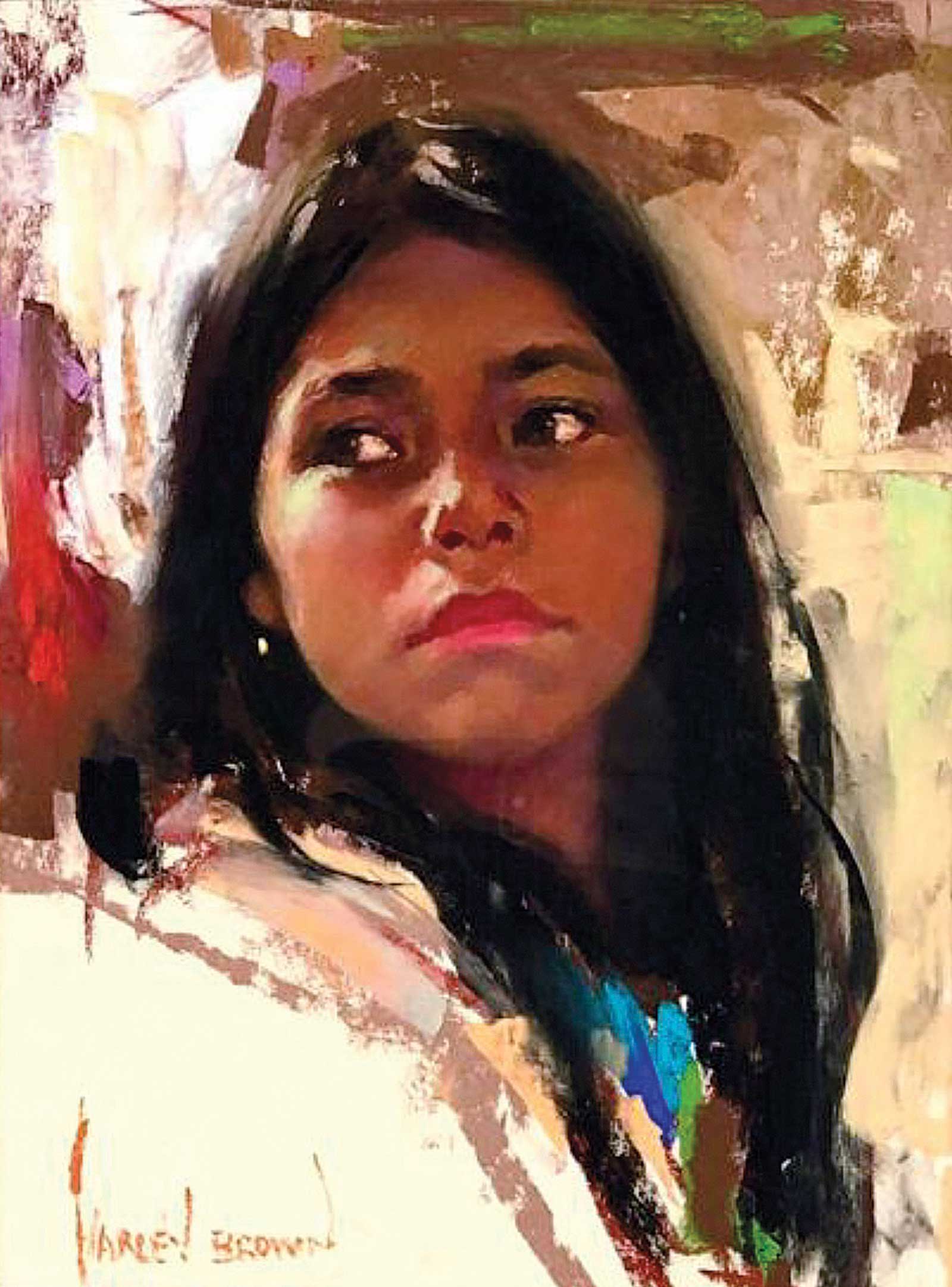 Hushed Moment
• Distinct portrayal where her face is mostly in shadow.
• Touches of light on her face, very carefully observed and laid in.
• Background casual and abstract; contrast to facial details.
• Dark hair surrounding her face brings visual spirit.
• The eyes…she has a private moment.
• A few dabs for hair highlights.
• The blending of angles gives flowing movement.
Approaches
We needn’t lay in fine details throughout our entire art piece. When we look at our subject, there are parts of great importance and other parts that are just fine as secondary interest or background. The more detailed areas can show where and why we are fascinated by our subject. This is most often my approach. At the same time, I have brilliant art friends who love to lay in details throughout, and their works are marvelous. In the arts, there are no boundaries.
We Become Ourselves
I have watched and studied under many great artists. Some people say that this is not a good idea; not if we want to have our own personal approach. Well, here’s how I see it: I and many of my art friends have studied with very talented artists; artists who continually demonstrated their inspired and distinct techniques to us. I can say that not one of my colleagues’ art looks anywhere close to their mentors. I’ll include myself.
Who wouldn’t want to be tutored in ballet with Margot Fonteyn or piano with Vladimir Horowitz? It is interesting—one artist I learned so much from painted mainly animals, and painted them magnificently. The more we understand and build confidence in what we’re doing, the more we become very much ourselves in art and life.
The Ambience
I do not see the deeper essence of my subjects, I see what is given to me. What I might add to it is my life’s experience and skills to translate what I’m looking at. There’s no artist who can dig into the core of a human subject. The complexity of each subject is too impenetrable to find anything other than the surface. Yes, I realize this goes against those who claim some of the great artists getting “into the soul” of their subjects. At best, the artist might get a broad feeling of what the subject is all about: outgoing, sly, humorous, morbid, stoic.
When doing a portrait, I like to go for the general ambience of the subject. Any more than that would take a few months of psychoanalysis. What many art critics are seeing are the quirks and approaches of the actual artist. They then attempt to translate those “artist quirks” as revealing the true character within the subject.
Oh, Maestro Inner Mind
An interesting reminder as to how our inner mind is so wondrously important to us. When I’m looking at my typewriter keys, I’ve no idea where the letters are—I have to search for each one. Well, when I put my hands over the keys, my fingers find the right keys as fast as I can think of sentences to type. In its way, that’s how my pencil works when sketching, or when I apply my brush to the canvas. Next time you’re having a coffee, please raise your cup to that close and very personal friend…your inner mind. —
BALINOFSKI
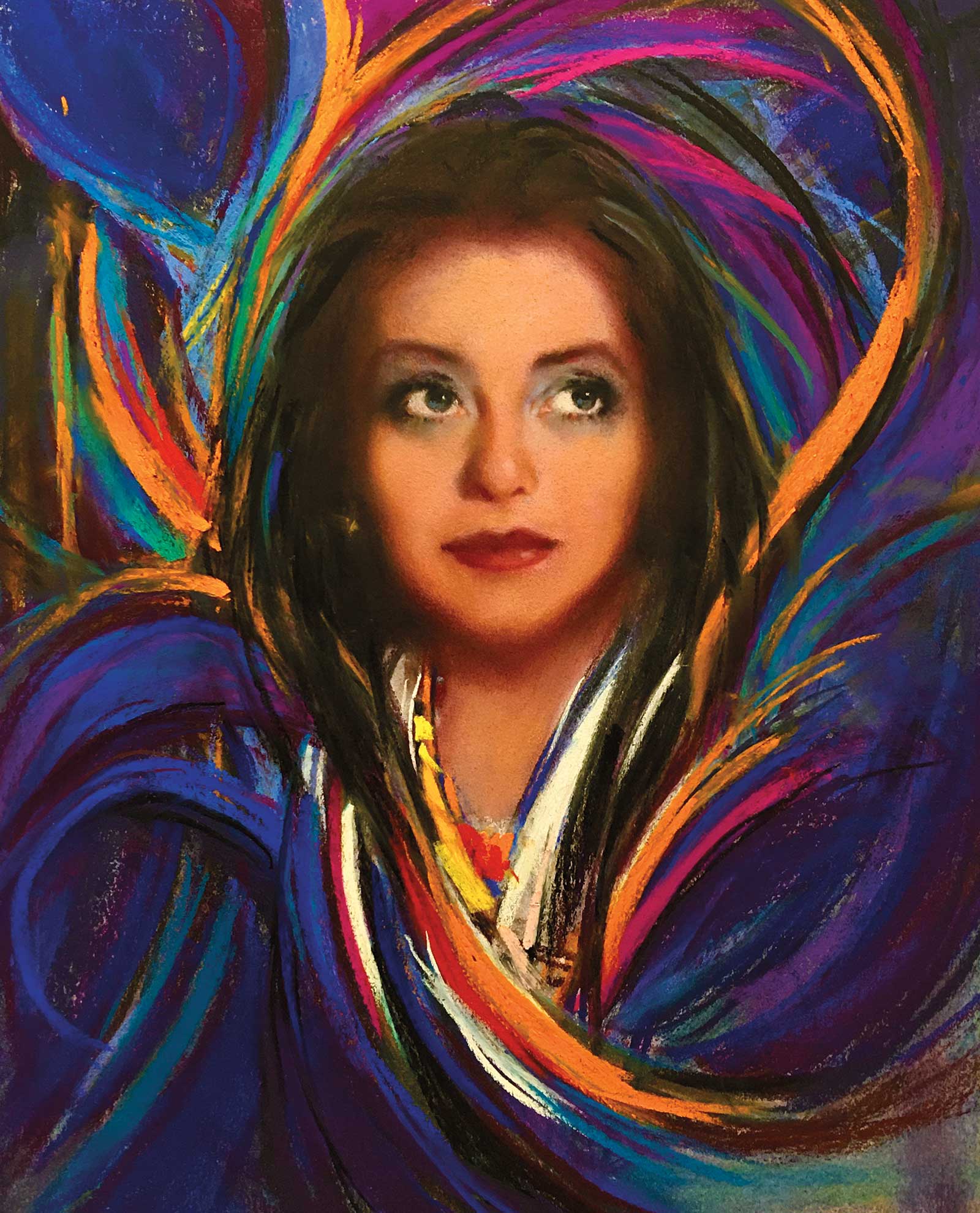
TIMELESS
This work had many impulses that came and went, sometimes one pushing another aside. Originally, I wanted vertical lines up against her mysterious face. Well, my inner mind said, no, she radiates with soaring curves. So, I went with that visual thought flowing through my mind and fingertips. As I felt the work coming to an end, I saw the flow of a ballerina appearing. That, along with the distant look of this lady who has, as the song goes, “Bette Davis Eyes.”
I feel her porcelain complexion lives well with the complexities of streaming blues. I will tell you that the gold lines came right from within and were not touched once committed. There’s a slight reminder of my vertical venture on the left side. My inner mind was right in what has happened here. To me, this lives throughout; her enigmatic presence controls her surroundings. I leave her now in her own distant but rather satisfied world.