I used to call myself an animal artist, and at the same time, I devote a lot of my creative passion to painting birds. For me, birds represent freedom and independence, lightness and swiftness. They inhabit the most amazing places on our planet, and they are probably one of the most adapted among wild animals for close coexistence with people. I also enjoy painting mammals, whether it be a rabbit or a lion.
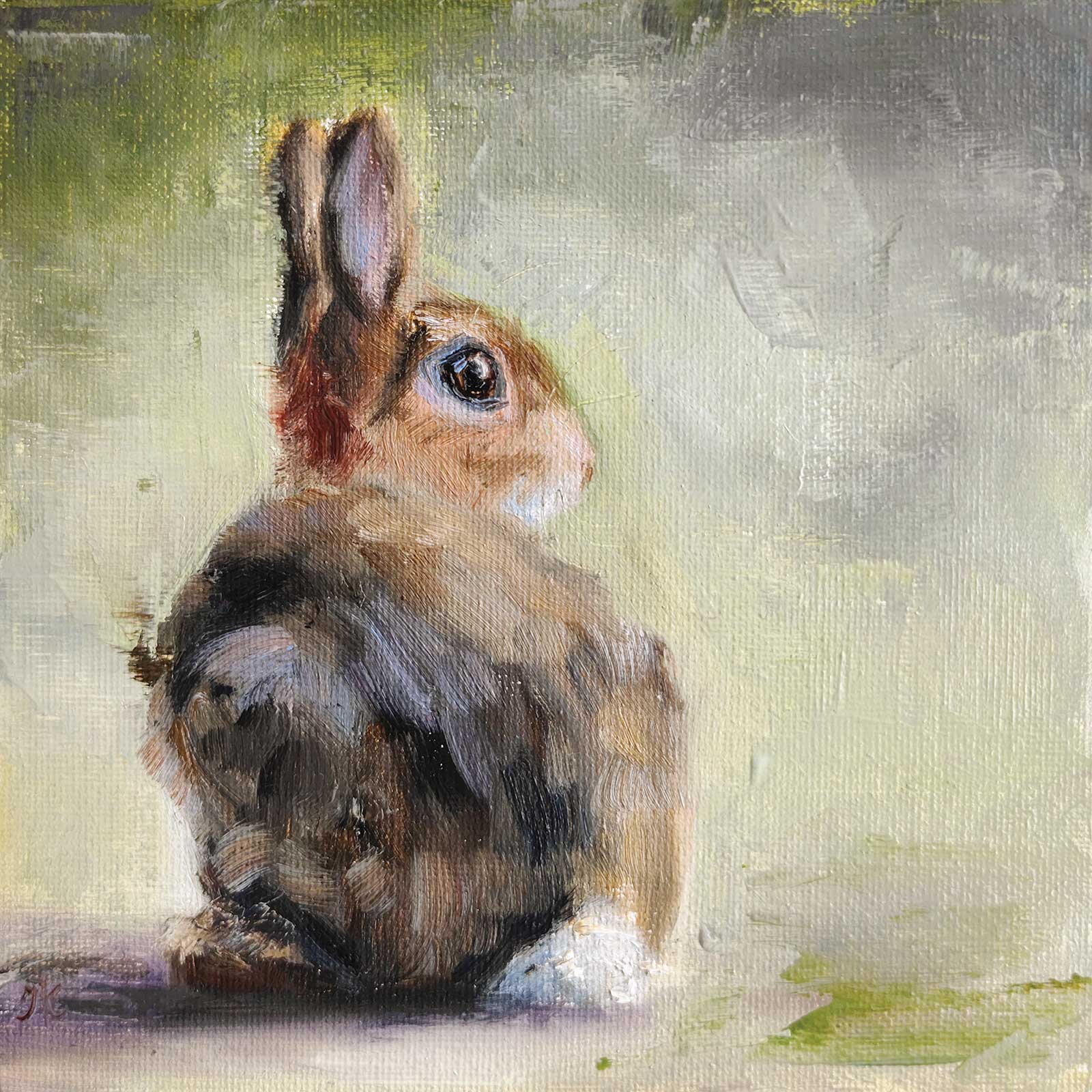
Delicate, oil, 6 x 6" (15 x 15 cm) I love hares and watch them almost every walk near my home. They take a significant place as an object in my art. I wanted to convey their fragility, cuteness and mobility in this sketchy painting.
I use the alla prima technique, which allows me to convey lightness and expression in my work. I paint wet-on-wet and solve all the tasks in one session. The wet technique requires a combination of good color mixing skills and the ability to elaborate and follow a precise plan. For instance, it is necessary to think over the tonality and placement of the main color spots in advance to achieve the desired impression.
I always start my work by looking for a suitable reference. When choosing a reference, the main element I pay attention to is a clear designation of light and shadow, as such works turn out to be the most picturesque paintings in the end. I do not have the goal of copying the image as accurately as possible, because the photo does not convey the richness and variety of shades that can be seen in real life. By the way, this is why I like watching birds in the wild, observing their habits and the play of light on their plumage.
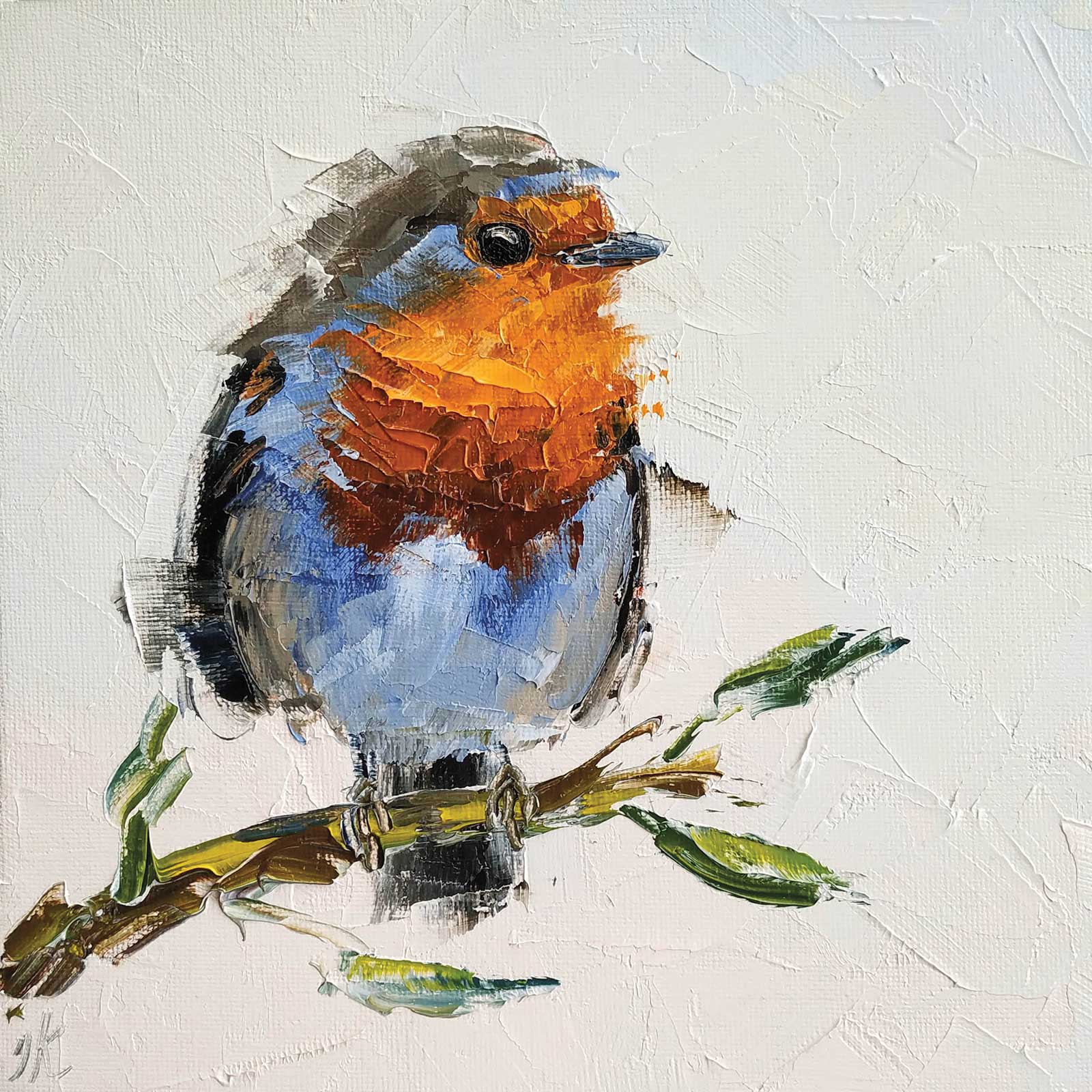
Just In Time, oil, 8 x 8" (20 x 20 cm) This European robin was painted with only a palette knife. I love the way it turned out, with thick strokes, lightness and freedom. It has a decorativeness, and at the same time the body of the bird has a sense of volume.
I try to convey the mood and feelings that I experience when looking at a bird. Using the tonal relationship of the object and the background, warmth and coldness, light/shadow of the object, and different brushstroke textures, I put together the vision and mood that I want to convey. Often, I deliberately enhance some emotion or perception of the work by changing the shape of the eyes of a bird or animal, increasing contrast, or by choosing the main color and location of the object in the picture. I like to create a certain atmosphere in the painting, whether it is something mystical and mysterious or sunny and cheerful.
Alla prima allows me to feel free and capture the moment here and now. Moreover, I often use a palette knife to add various effects, or I can paint the whole work with just a palette knife. The palette knife gives thick voluminous strokes, and the painting comes out with a convex texture, very similar to using texture paste but smaller. In addition to conveying the sensation of the volumetric body of birds or animals, I create a sense of space around the object.
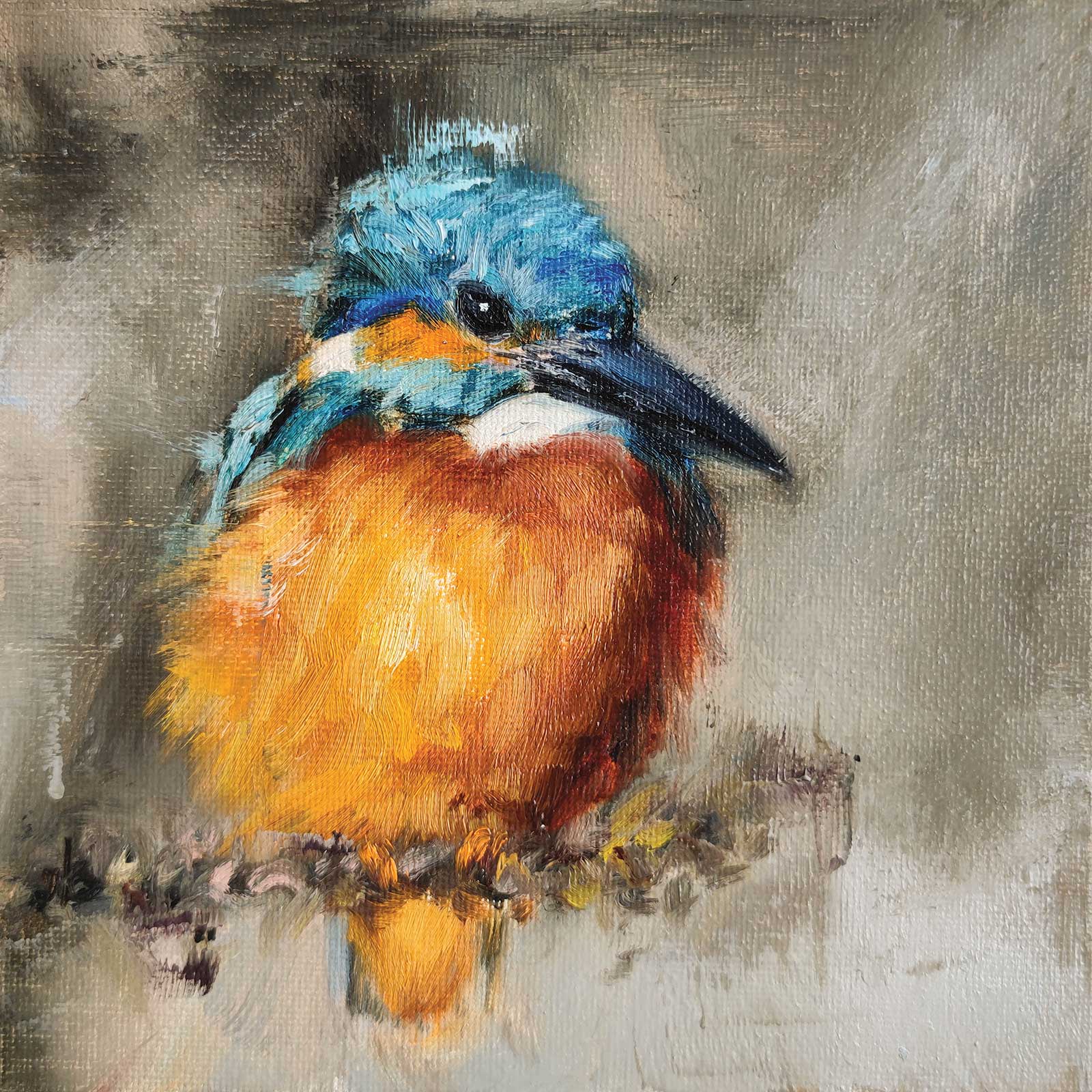
Patience, oil, 6 x 6" (15 x 15 cm) This is a great example of a sunny and cheerful painting. The palette knife helped me to make such a painterly background and the feeling of space. For creating this mood, I used warm colors for the illuminated part of the kingfisher bird and enhanced the radiance of plumage with a palette knife.
Oil paint has amazing properties. It mixes well, gives live shades and it can create both very thin translucent layers and thick dense structures. In my work, I move from thin layers to thicker ones, from dark to light. Since I do not wait for the first layers to dry, I leave unpainted areas of the canvas for the lightest parts of the work if it’s necessary and use a softer brush in the final stages. A soft brush can apply a fairly dense layer of paint without removing the previous one. The thinner the layer and the darker the tone, the further in space the object appears. That is, the shadows of objects, their own shadows, I paint with a thinner layer, and the halftone, light and highlight are thicker. For my palette, I use traditional colors—lots of browns, and I love complex mixes. Despite some realism in my works, I commit to an abstract background, to decorativeness. The brushes of different hardness and shapes, as well as palette knives in combination with the surface of the canvas help me to achieve different effects.
My Art in the Making Curiosity Seeker
 Reference Photo
Reference Photo
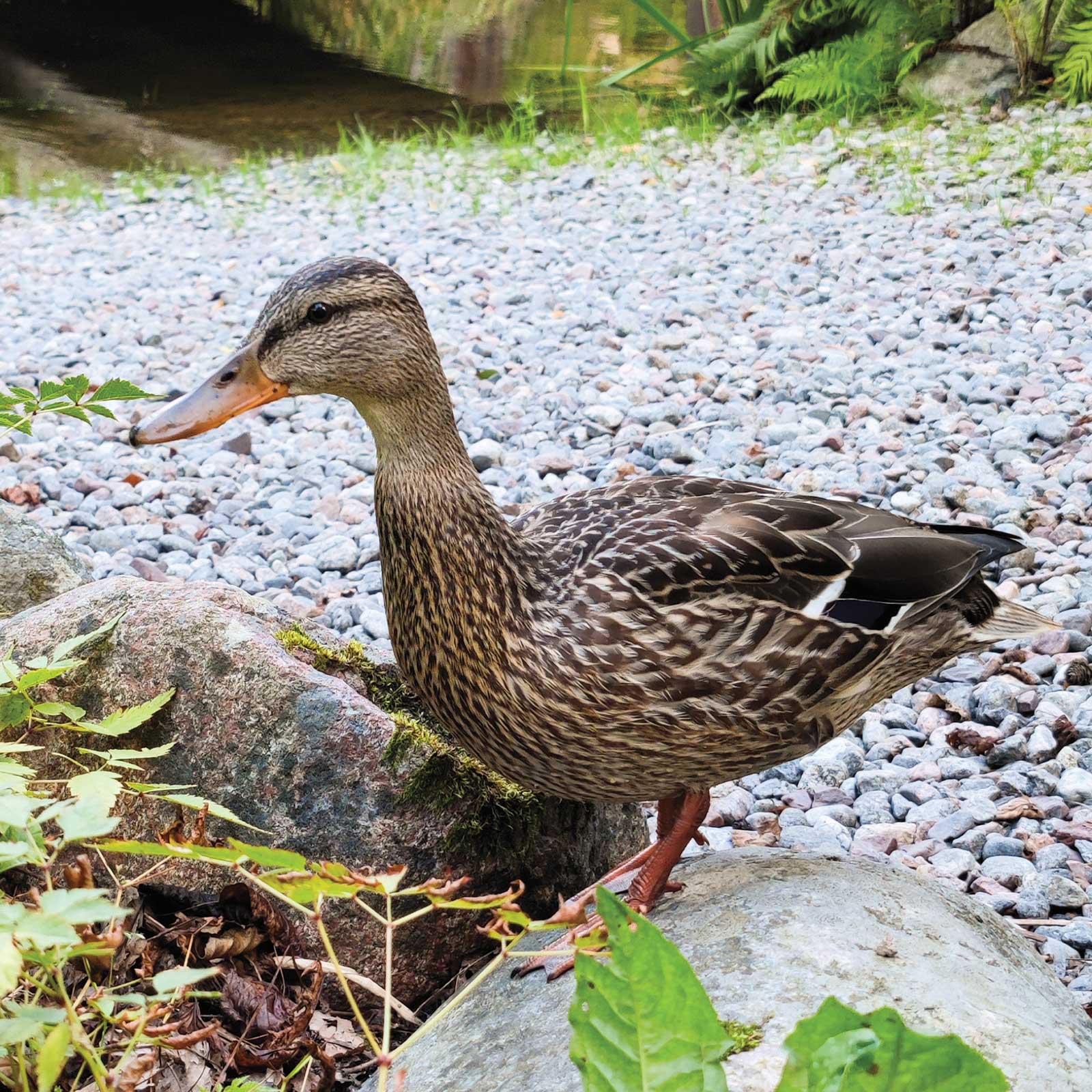
I took a shot of this female mallard last summer while walking. This is not the best reference for the picture, because there is no unambiguous designation of light and shadow. But I liked the duck with its curious pose; there are interesting dynamics like the position of the feet on the stone and an outstretched neck, so I chose her to paint. Image analysis: in the photo, we see daylight cold light, which means the shadows will be warm. The warm shadows can be enhanced by cold backgrounds.
 Stage 1
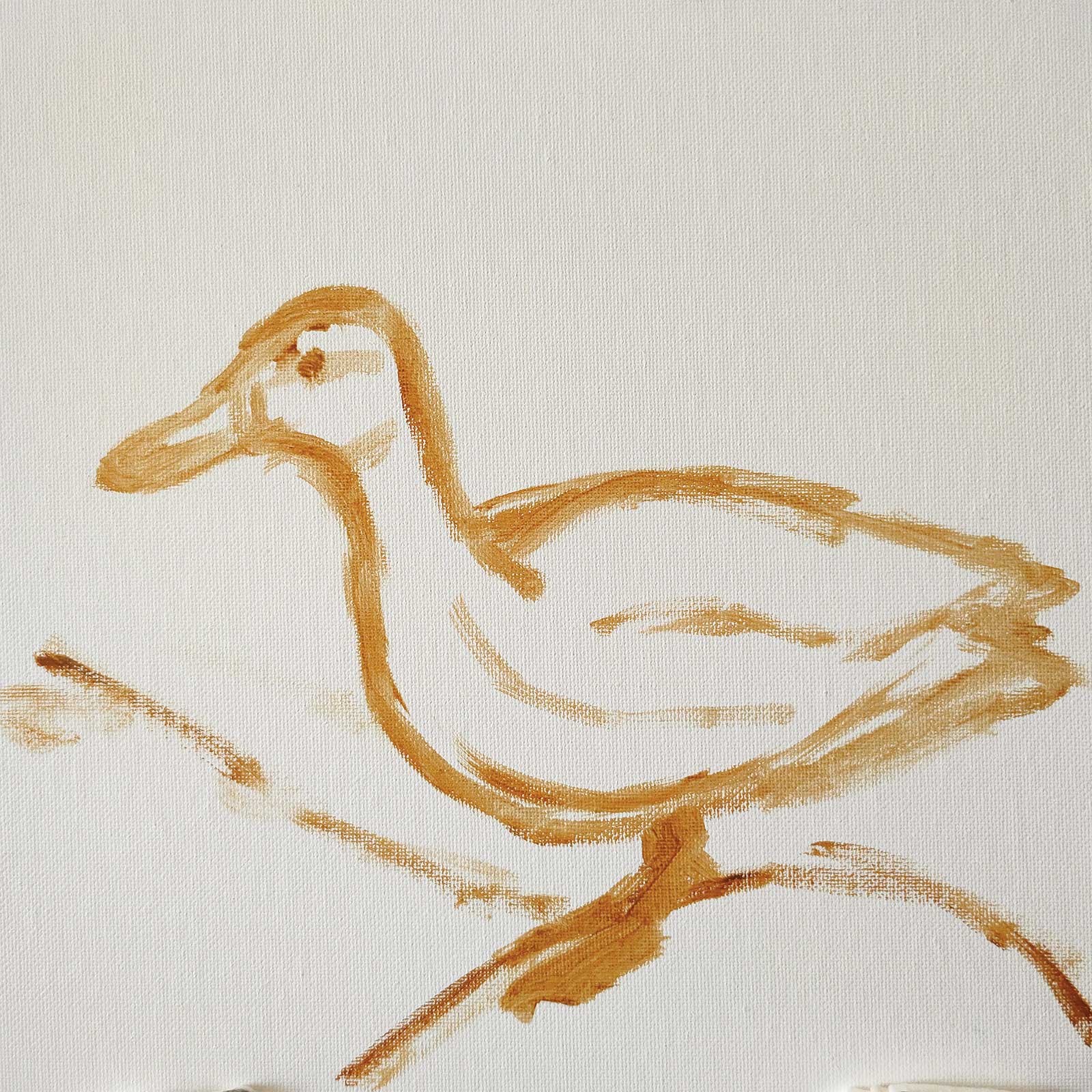
Stage 1 Sketch
At this stage, I make a duck draw using a soft brush and gold ochre. I sketch the duck schematically, without details, as the main idea is to place the drawing according to the compositional plan.
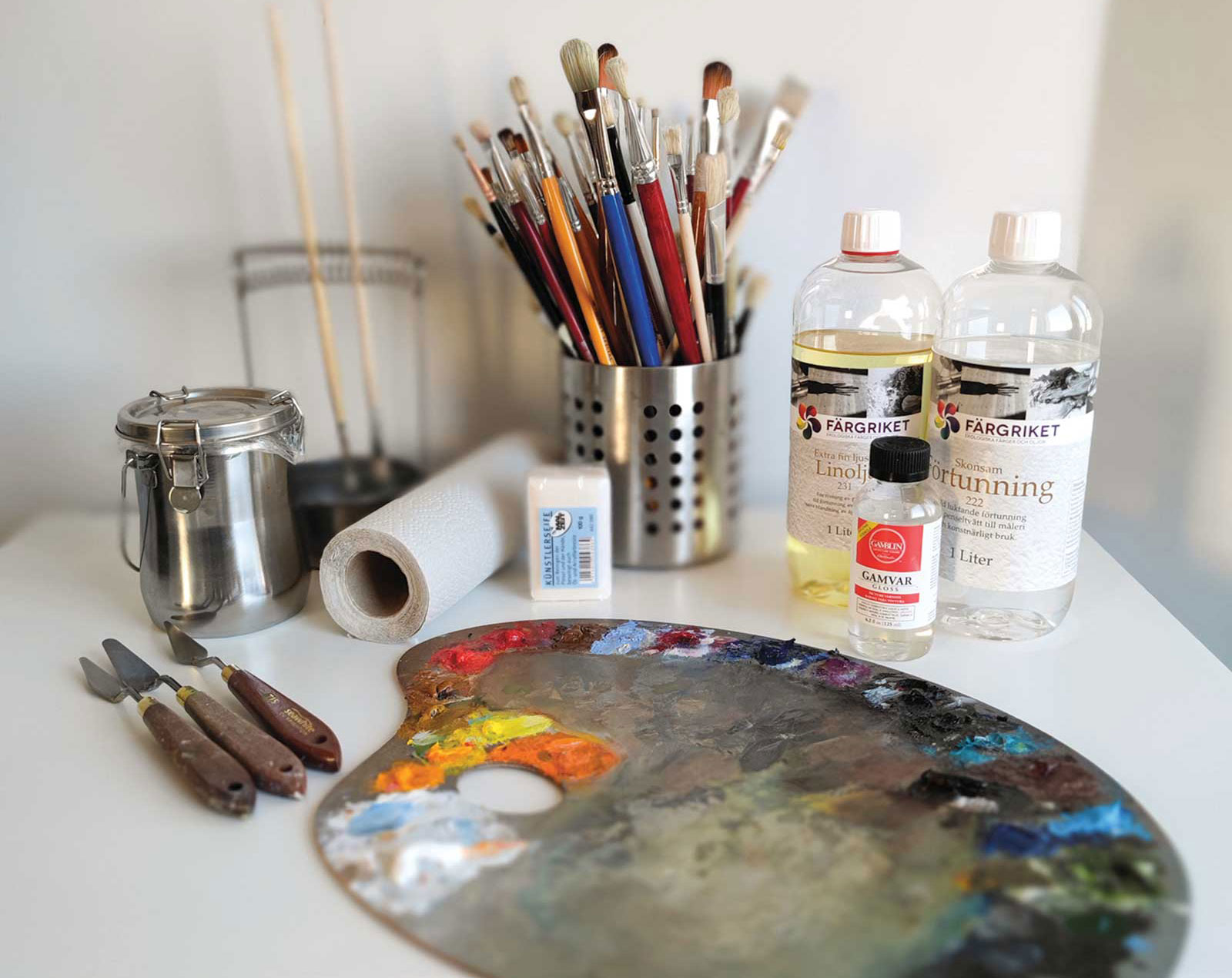
WHAT THE ARTIST USED
Primary Oils
Titanium white, Cadmium lemon, Cadmium yellow light, Cadmium yellow deep, Yellow ochre, Gold ochre, Cadmium orange, Cadmium red light, Cadmium red deep, Madder lake rose permanent, Cobalt violet light, Royal blue, Ultramarine light, Celestial blue, Ceruleum blue, Turquoise blue, Araratskaya green, Sap green, Raw sienna, Burnt sienna, Transparent mars brown deep, Raw umber, Ivory black
Additional Oils
Naples yellow, Naples flesh, Indian red, Primary magenta, Brilliant rose, Rose madder, Cobalt blue medium, Indigo, Prussian blue, Phthalocyanine blue, Phthalocyanine green, Viridian, Mars, brown light, Burnt umber, Mars black, Lamp black
Additional Supplies
Linseed oil, Thinner and soap for cleaning brushes, Steel paint brush cleaner and holder, Wooden palette, Palette knives, Brushes of different shapes and hardnesses, Napkins or paper towels, Varnish
 Stage 2
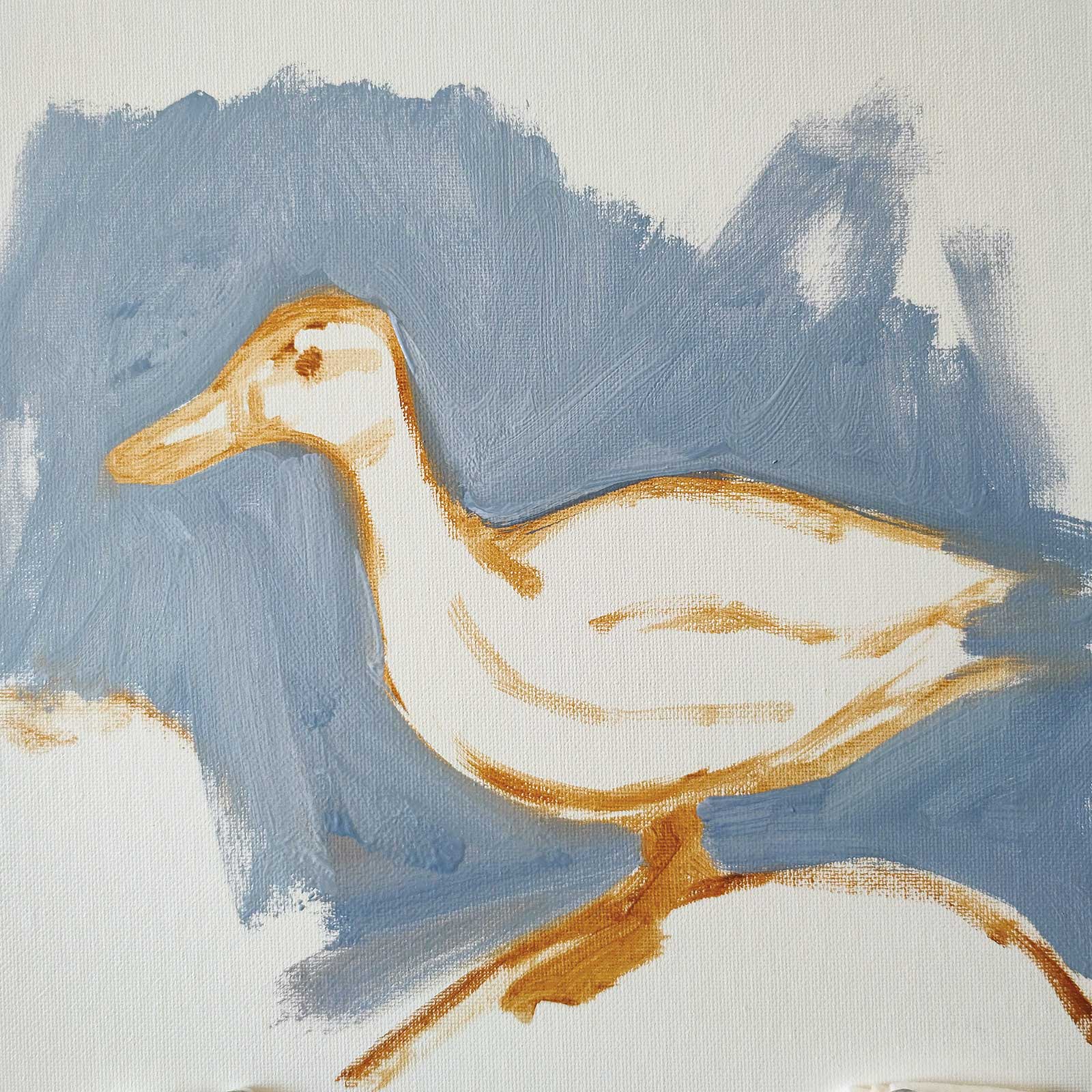
Stage 2 Adding Background Color
I begin to fill the canvas area starting in the background, using a cold mix of colors to enhance the warmer colors of the duck.
 Stage3
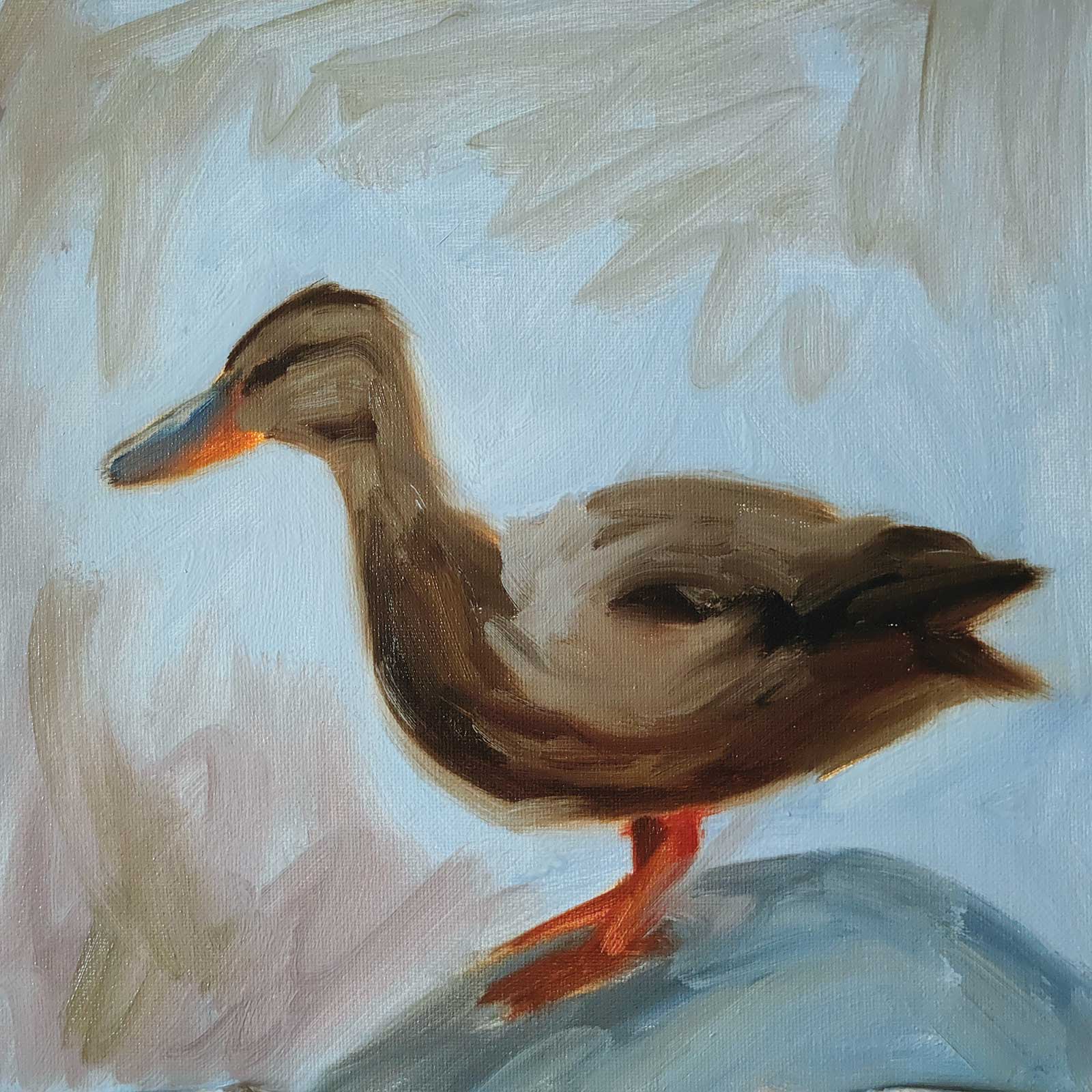
Stage 3 Highlights and Shadows
With large strokes, I fill all space on the canvas and immediately paint the shadows and lights on the duck, its feet and the stone.
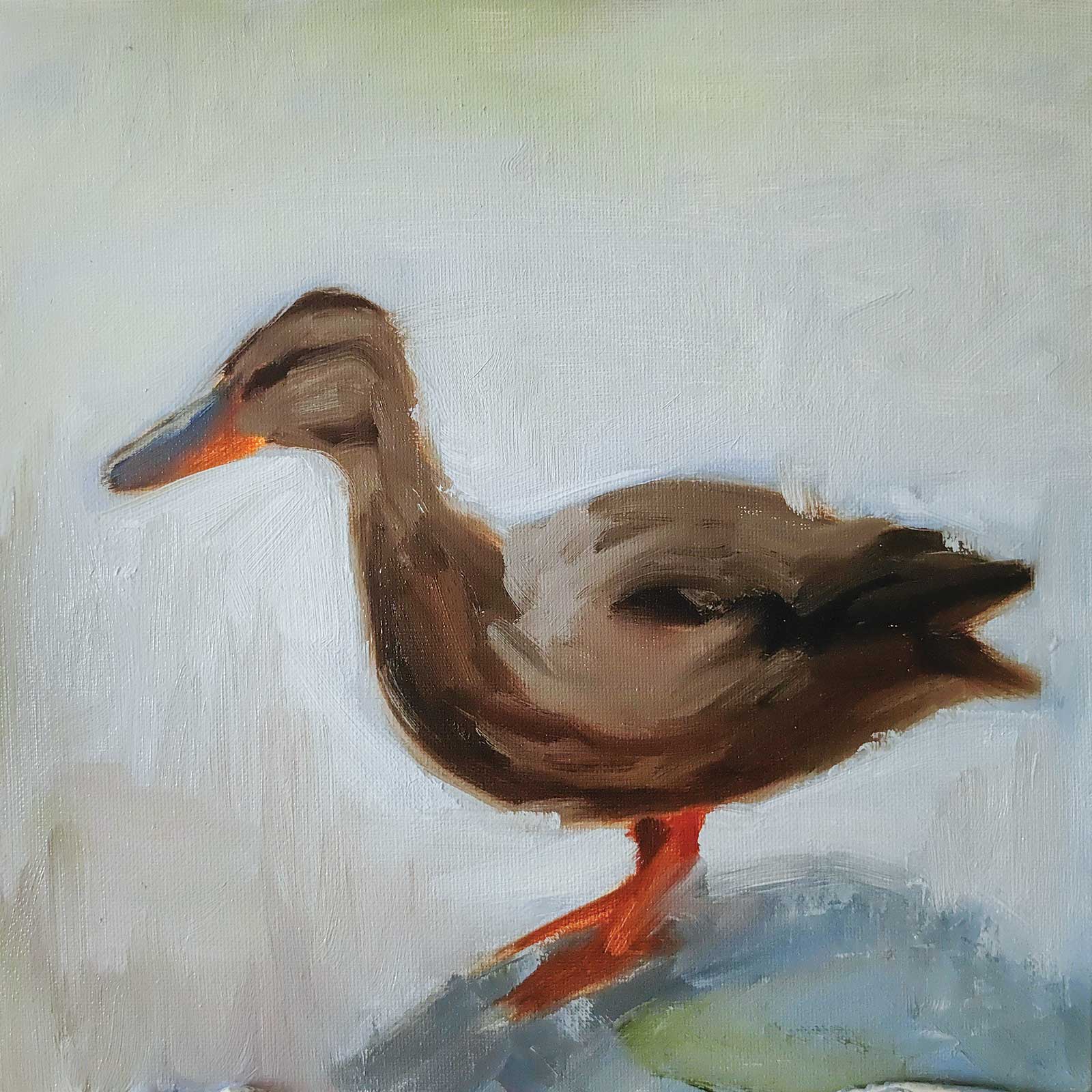 Stage 4
Stage 4 Finding Proper Background Colors
Now I can work with the background more attentively, searching for the right colors and tone. After working on the background, I will return to the duck.
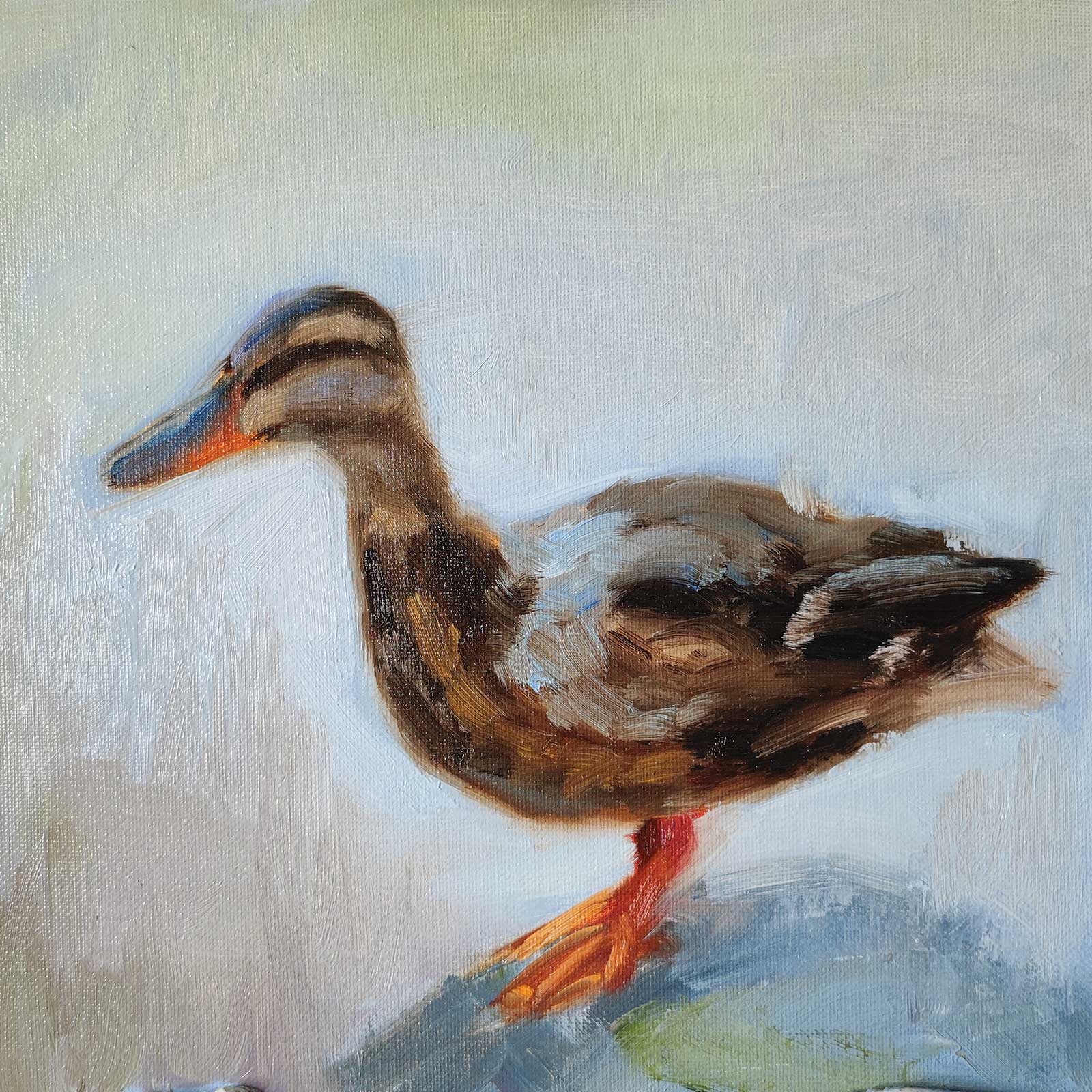 Stage 5
Stage 5 Details on Back, Head and Belly
The work must be carried out simultaneously on the entire space of the canvas. Here, I am adding the cold light on the bird’s back, as well as some details and reflections on the head and belly.
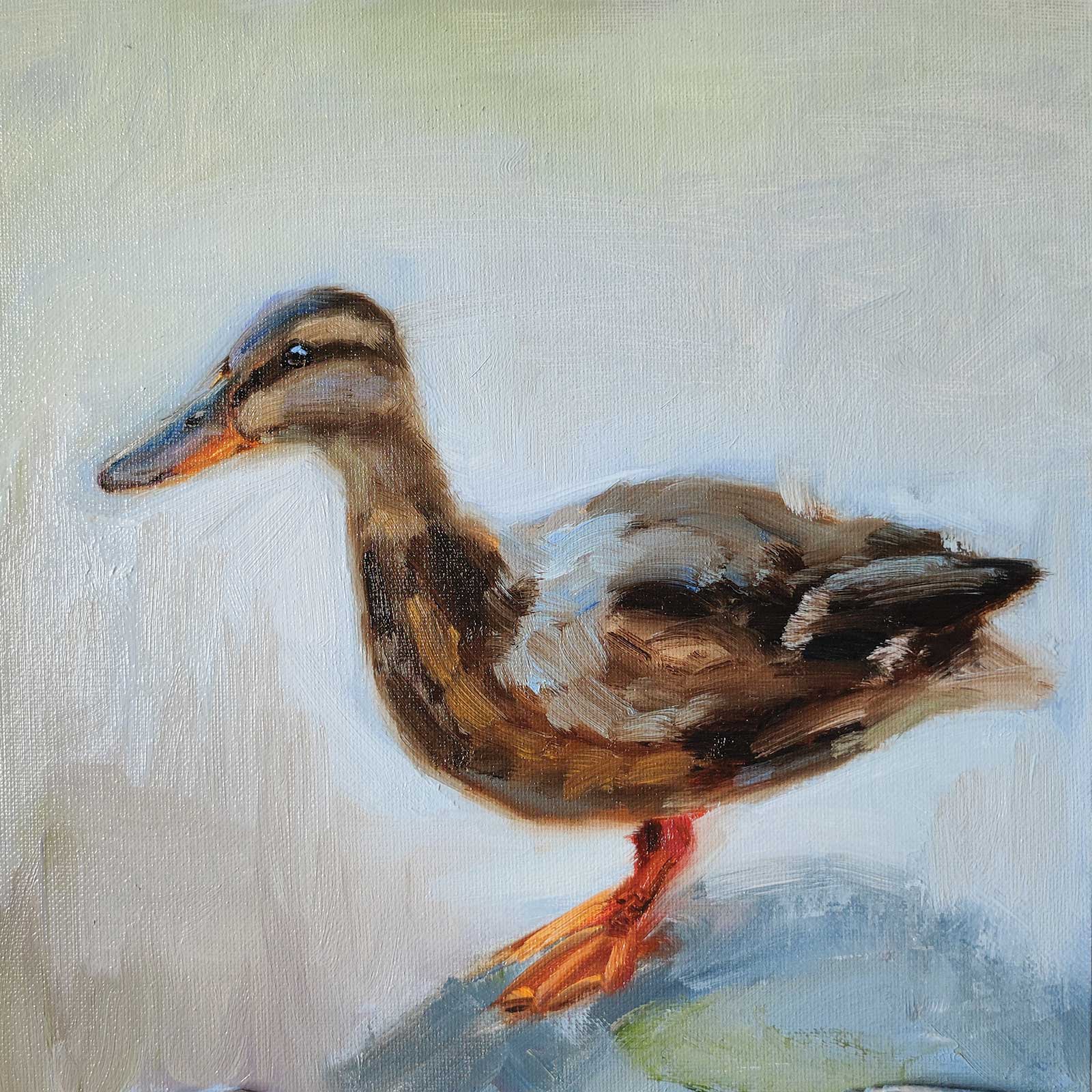 Stage 6
Stage 6 Fine Tuning
At this stage, I continue editing the duck, painting the beak, feet, glare and reflections on the back of the abdomen.
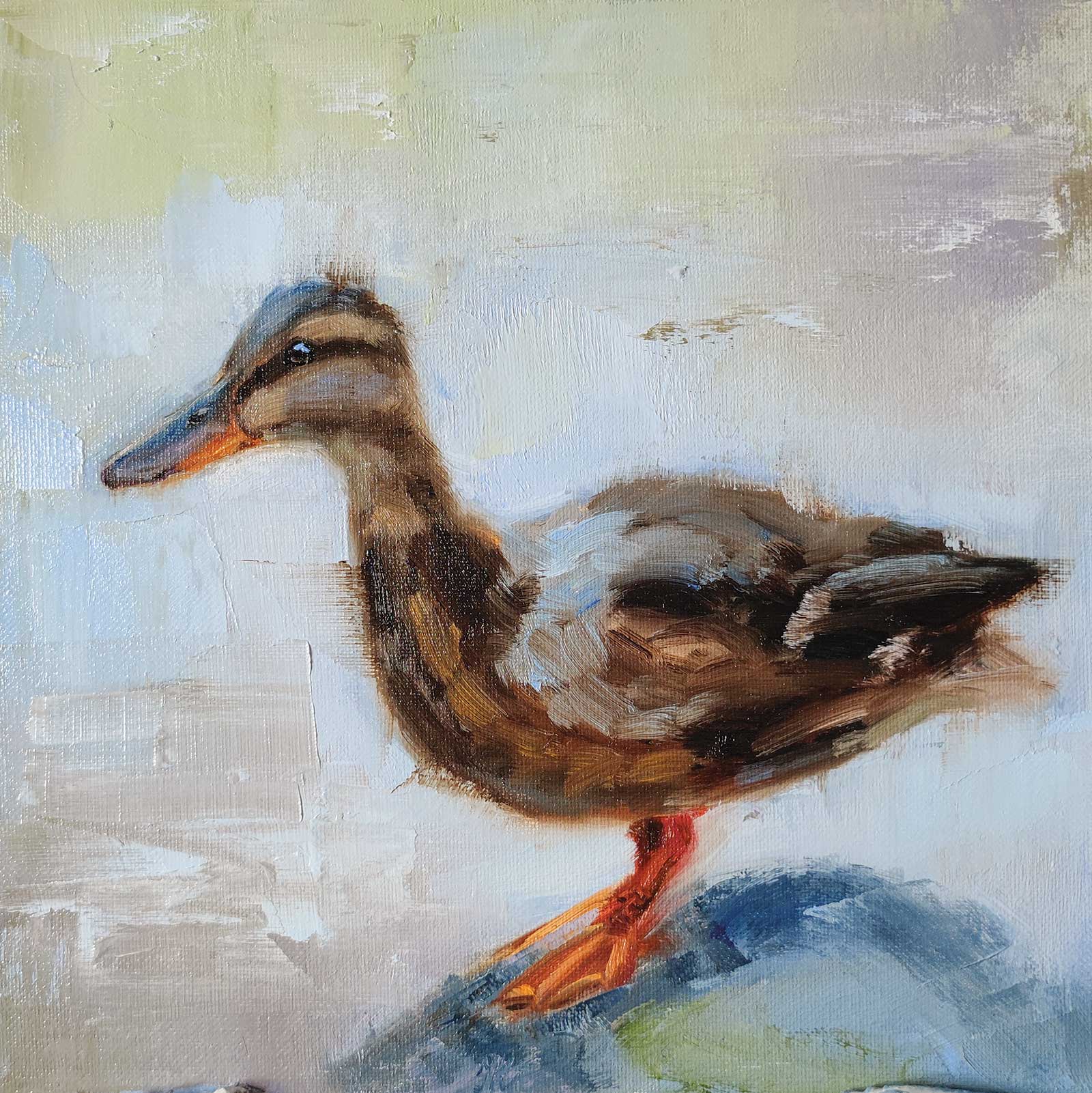 Stage 7
Stage 7 Palette Knife Work
I take a palette knife and start working with the background, putting in large strokes and mixing colors right on the canvas.
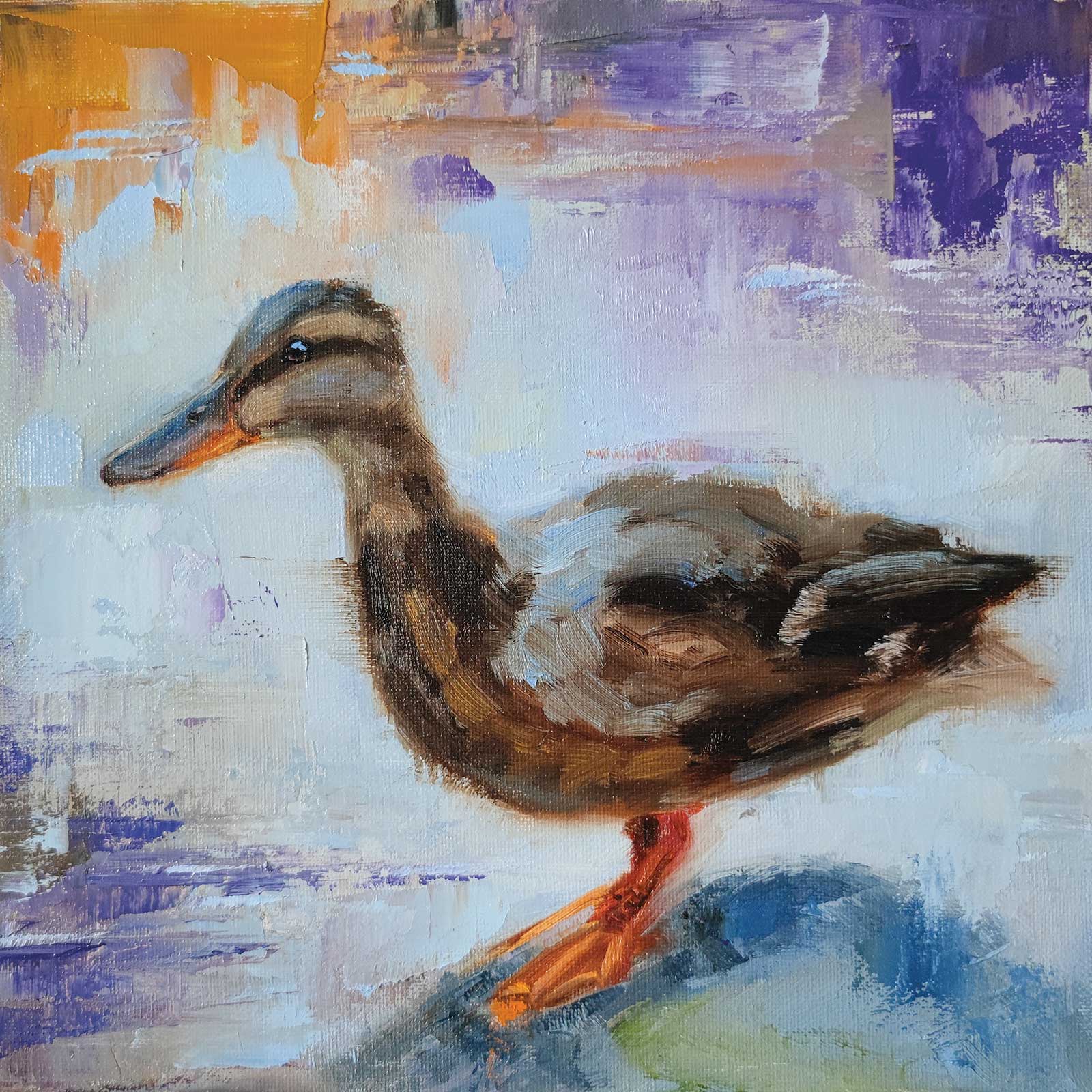 Stage 8
Stage 8 Finished Artwork
Curiosity Seeker, oil on canvas panel, 10 x 10"
I decided to make the background darker on the top, using complementary colors and adding abstract effects.
About the Artist
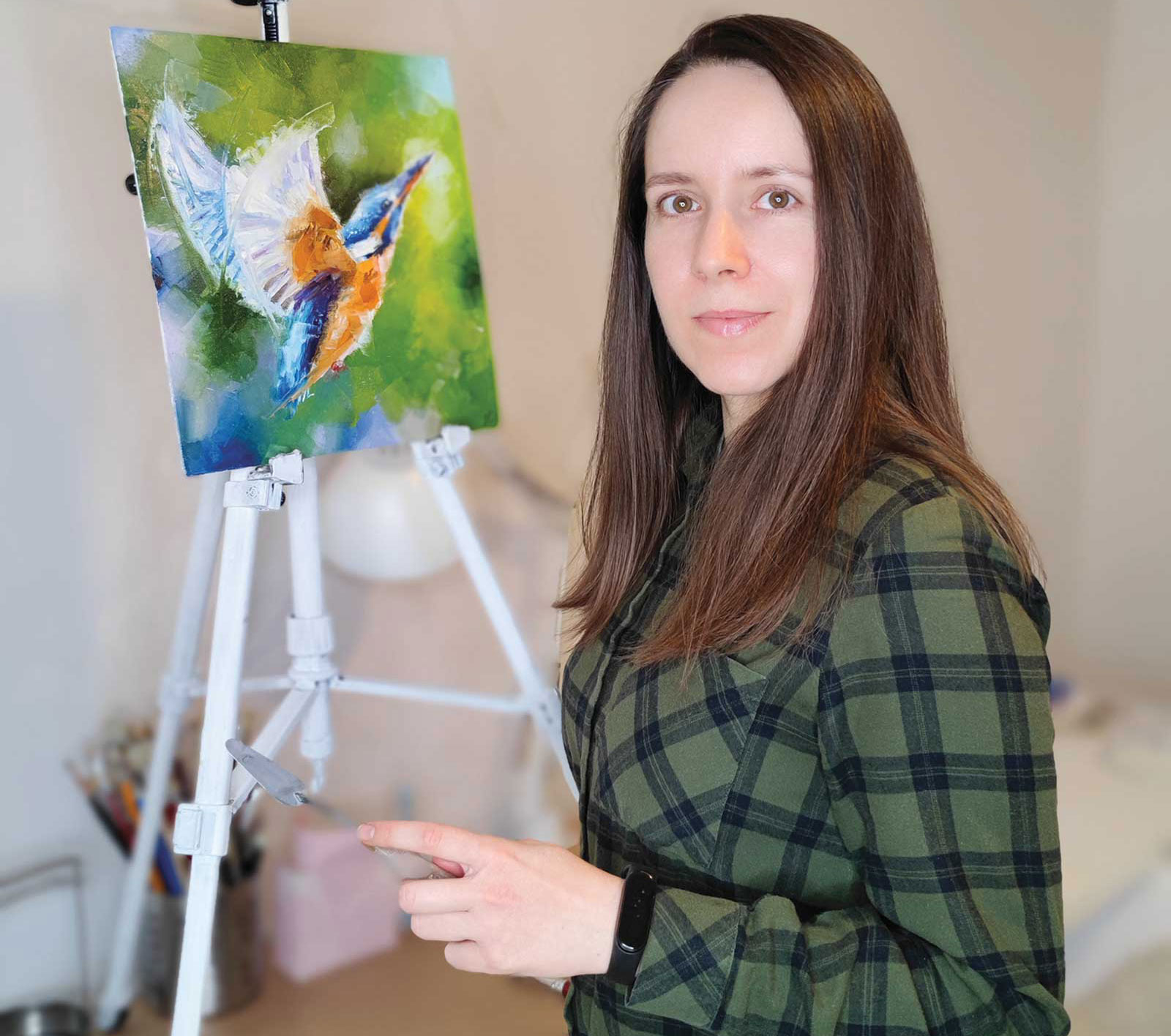 Iryna Khort
Iryna Khort finds inspiration and energy in birds, nature and people. She exhibits her works on the online gallery Daily Paintworks and has garnered a significant following on various social media platforms. In 2021, she won the Young Artist Award for the “Animals” category in the 2021 Malaysia International Online Juried Art Competitions. Her paintings are in private collections in more than 20 countries all over the world including the United States, Canada and the United Kingdom.
Contact at
khortview@gmail.com
www.khortview.com