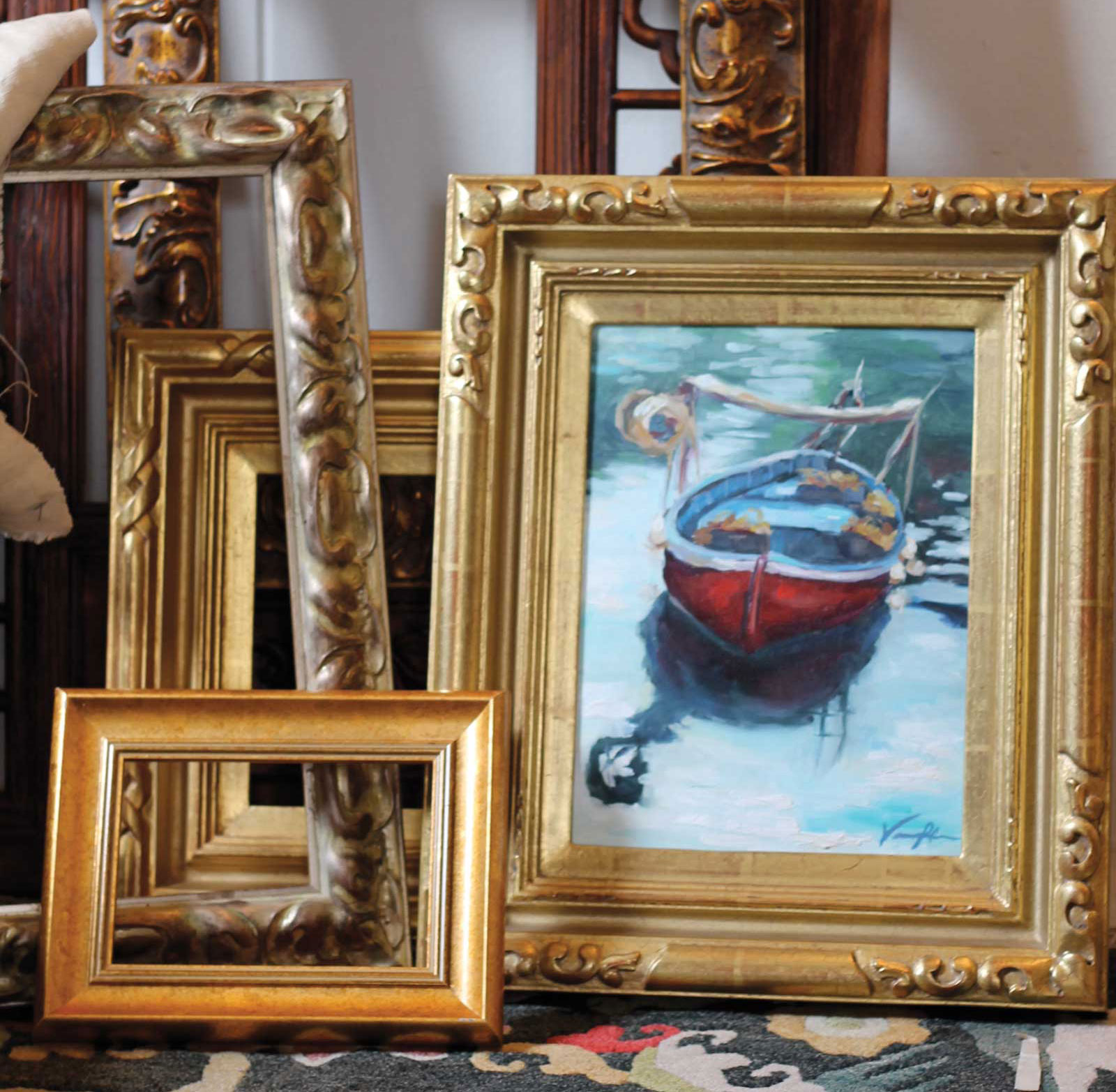
 One of the main aspects of being a painter is deciding how to frame your work. It’s an important part of the final product you are creating, however, it’s not always absolutely necessary to have a frame. Although a fine gilded gold frame is still quite important for landscape and impressionist works today, many modern artists are exhibiting and selling work that is unframed, often on wood, or stretched 1- to 2-inch canvas. For those of us who fall into the realism and impressionism categories, as well as some modern work, framing is still quite important.
Unless you are willing to spend a lot of time making your own frames, you will need to work with a framer. The best advice would be to have a frame shop in your own town, due to possible heavy weight and shipping costs that you do not want to incur to get the frames to your studio. I recommend doing a search online and interviewing a few shops, or asking friends and artists on Instagram in your area. You will right away need to negotiate prices as the cost of your frame will take income away from your profit.
Now, how to frame your work? There are thousands of options for framing from hand-carved Italian to minimal birch wood edge, and there is no one correct way to frame your work. It’s important to look at what is considered “normal” and accepted framing for each genre or style of work, as you don’t want the wrong frame to stand in the way of a sale. It is often the case that modern works are framed with very minimal frame edges or none at all such as the Dan McCaw oil figure and chair painting. John McCaw, his son, is an artist and a framer who creates fine minimalist frames to support the work.
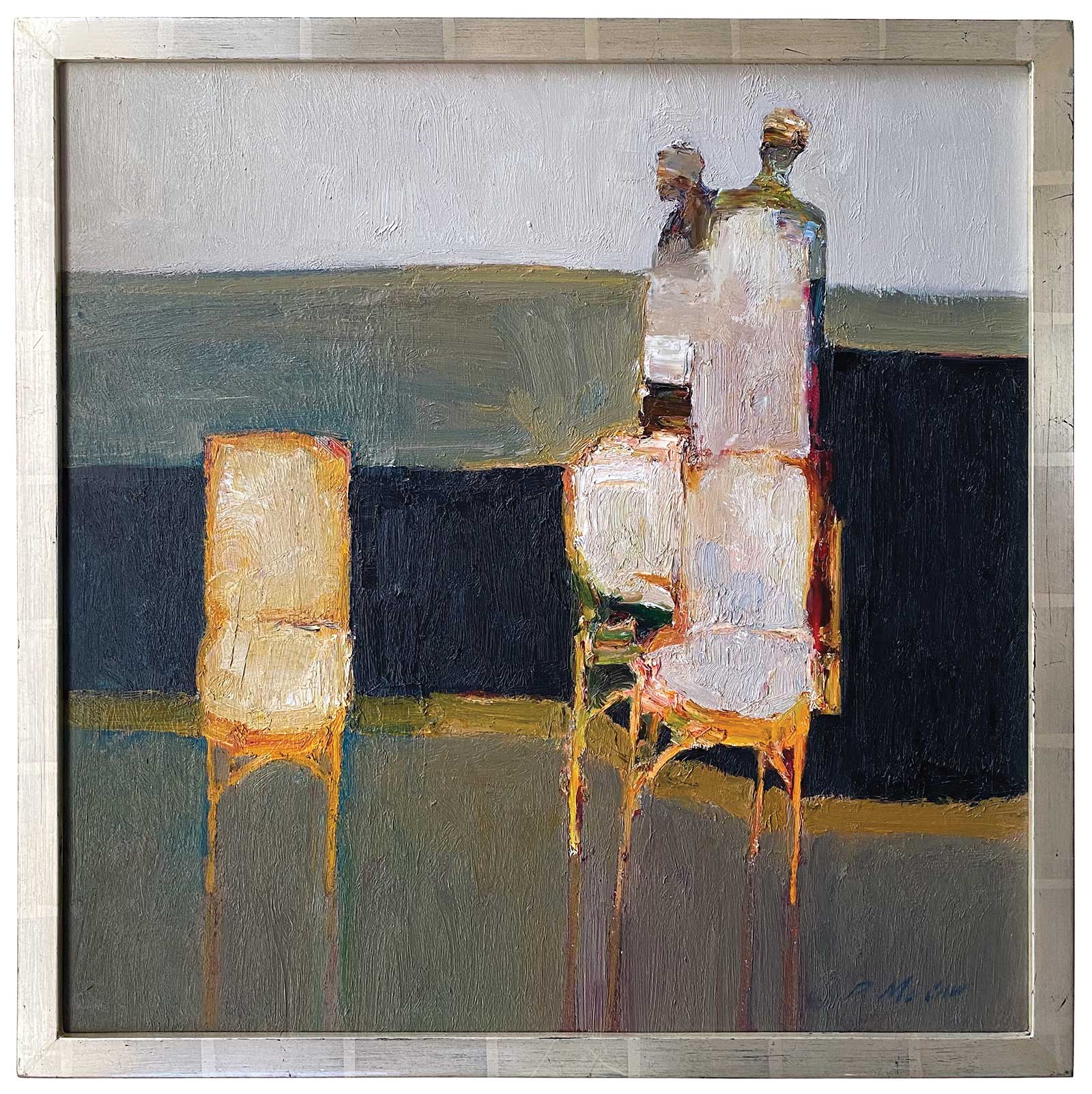
A modern, minimal silver frame with artwork by Dan McCaw.
Classical realism or impressionism work, painted in oil or acrylic, usually call for a gold frame or black plein air frame, carved from wood. These can range from “ready made” or “plein air” frames built already in standard sizes, such as 8-by-10, 9-by-12, 16-by-20-inch and so forth, which can be an inexpensive way to go on our journey to finer hand-made custom frames. These can be found online, or locally in your area. Note: Currently matting or oyster linen lining is not in style for oil or acrylic painting, in which works of art go right to the frame edge. White frames are also not widely used anymore. On the high-end side, there are stunning hand-carved frames made to order from soft wood with carved edge detail and gold or silver hand leafing. These frames are a work of art in and of themselves. See Ray Roberts’ ocean scene. Framers such as Mayen Olson and Rett Ashby are great examples of bespoke framers who have created frames for museums as well as top fine artists in these genres. Highly recommended for any museum show.
Of course framing can be something out of the ordinary as well, such as the painting by Vincent Xeus, framed with an old reused mirror gilded gold vintage frame. Or a custom painted and antiqued-distressed finish as on the frame created by Randy Higbee, shown on the Jesse Powell painting of the Eiffel Tower. These gorgeous shiny frames are often referred to as “Jewel frames” and work well on small pieces and encourage sales to collectors.
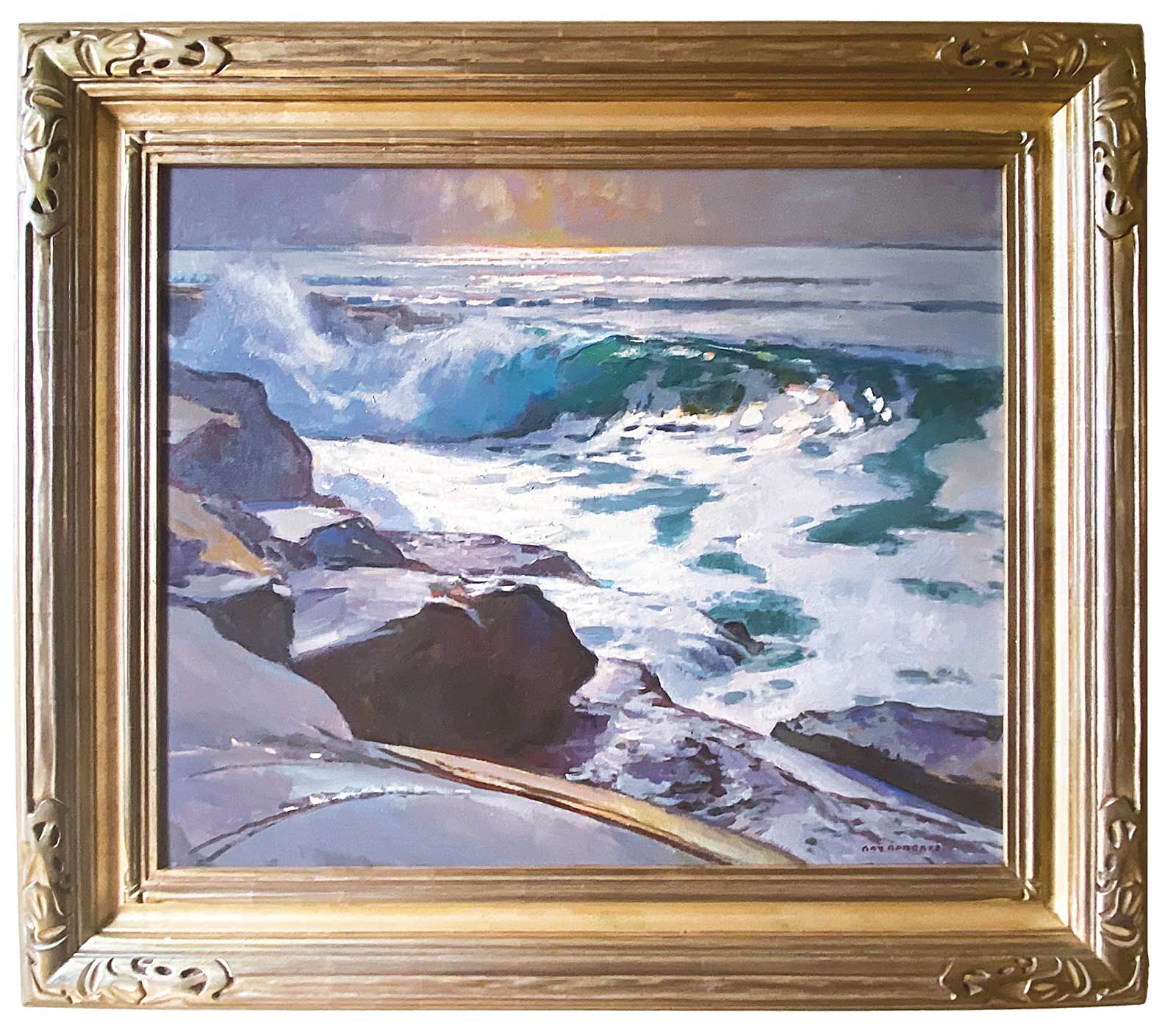
Hand-carved silver leaf frame with ocean scene by Ray Roberts. Detail on left.
Frame shops like Randy Higbee (www.kingofframe.com) in California offer two main ways to frame: both low-priced real wood ready-made frames, as well as a large array of custom-made size framing where artists or clients can choose from display walls of custom molding choices.
What about pastels, drawing and watercolor? We met up with Higbee to ask his professional advice on how to frame watercolors and pastels as they require special framing. Here’s what he had to say:
“For over 45 years my company has focused on wholesale art and picture framing services to artists, galleries, art consultants, restaurants, hotels and interior designers. I have been the Southern California past president and regional director for the Professional Picture Framing Association (PPFA). When it comes to picture framing, pastels offer a very special challenge. Due to the fragile nature of the media and the volatility of paper, a pastel must have glass. Although there is a rebirth of an old French concept of placing the pastel directly against the glass, that is not a concept I agree with.
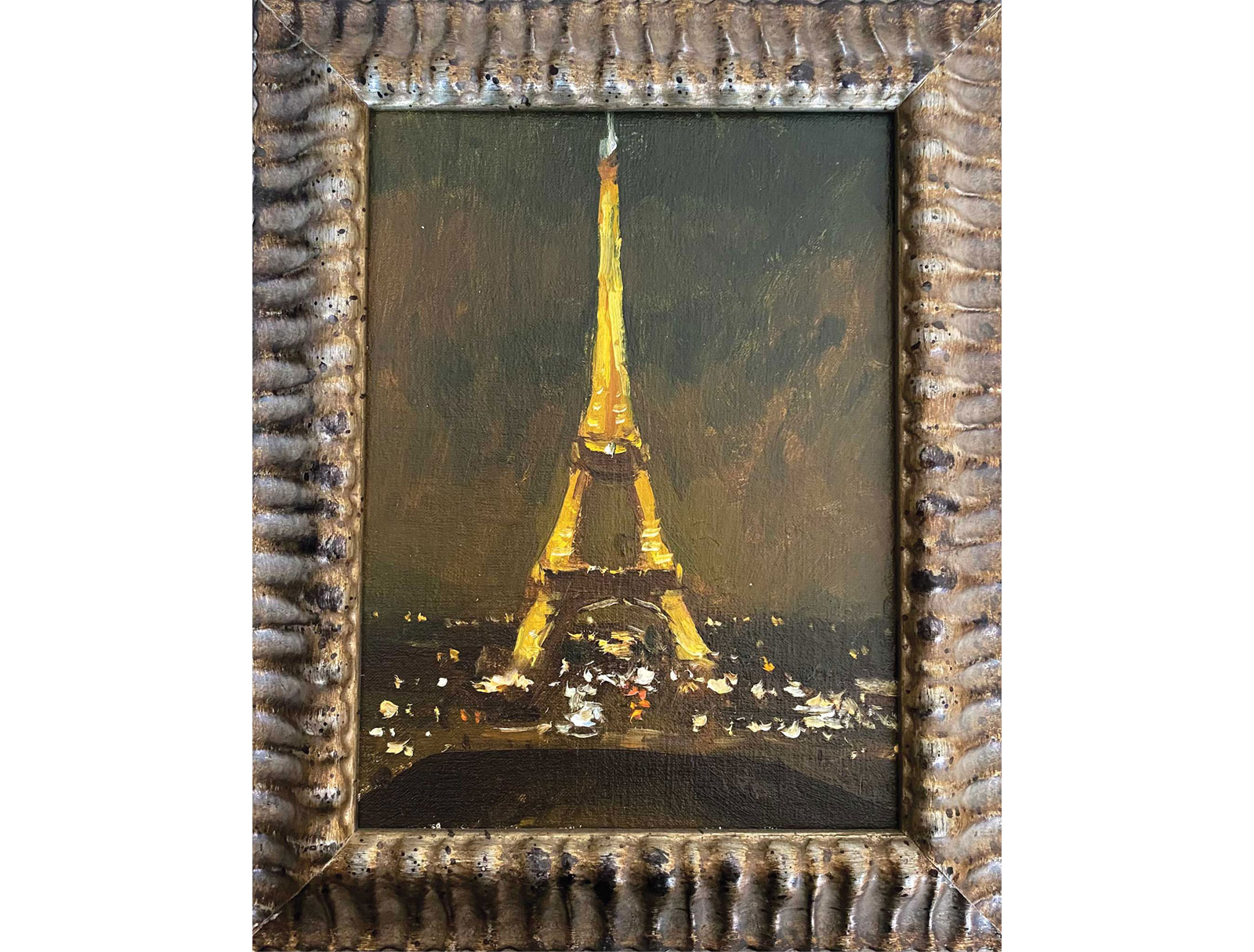
Detail of a hand-painted antique frame with artwork by Jesse Powell.
“My years of experience and all of my studies have shown that it is crucial to utilize an inner frame or spacer to separate the pastel from the glass. I have designed and I have had a very special inner frame manufactured specifically for that purpose. Although a cut mat has historically been the choice used to separate the pastel from the glass, there is a much larger movement in framing that eliminates the mat and allows the pastel to be framed more like an oil painting. Crucial to my thoughts on this, an inner frame or a spacer must be used to separate the glass from the pastel.”
Higbee also urges artists to find a framer who is aware of the archival needs of their works, and who uses quality long lasting materials. “I have seen many fine pieces of art ruined and left valueless due to a picture framer using incorrect backboards, mats and tapes on the art. So make sure they know what they are doing when framing paper,” he adds.
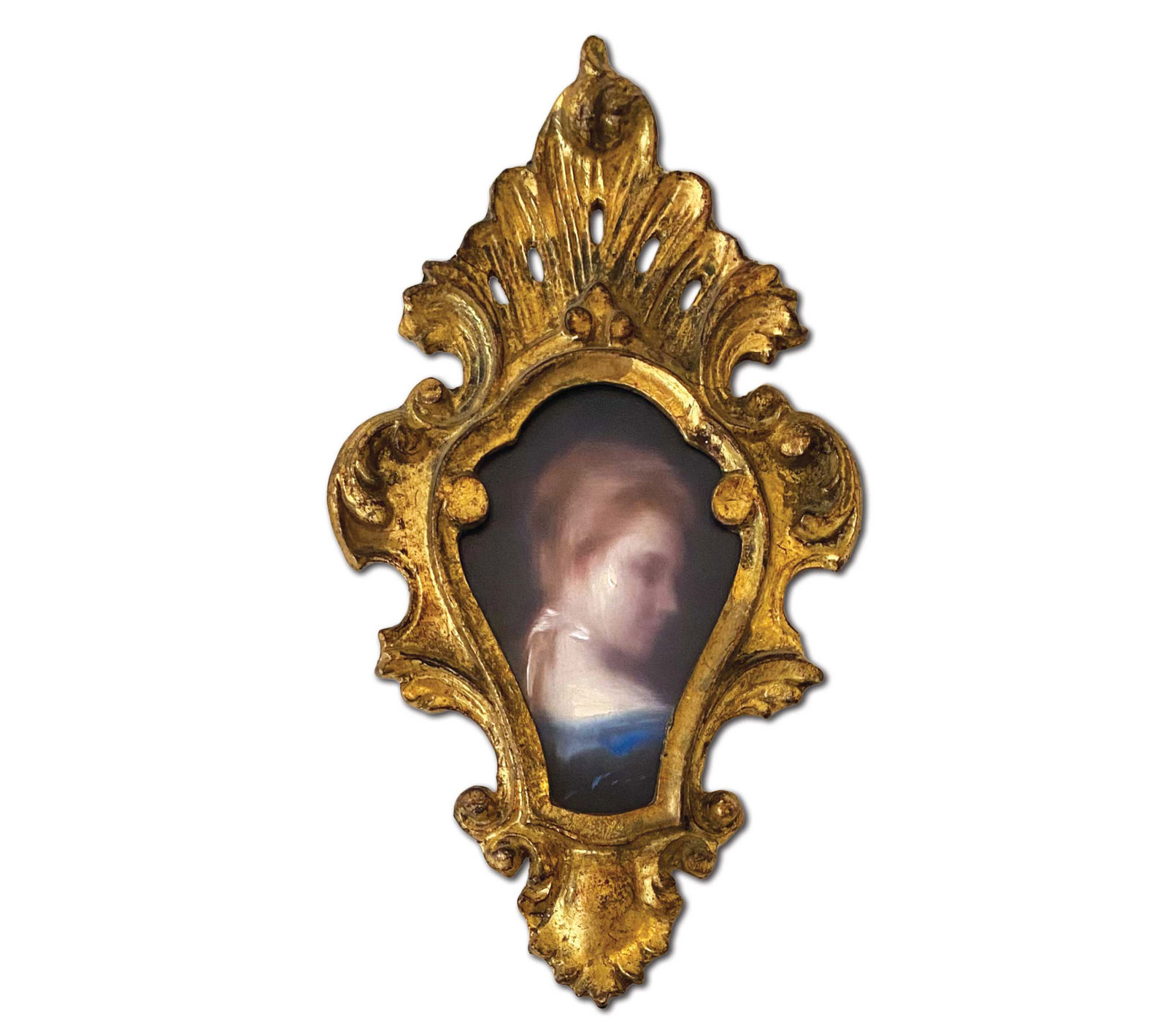
Reused gold mirror frame with artwork by Vincent Xeus.
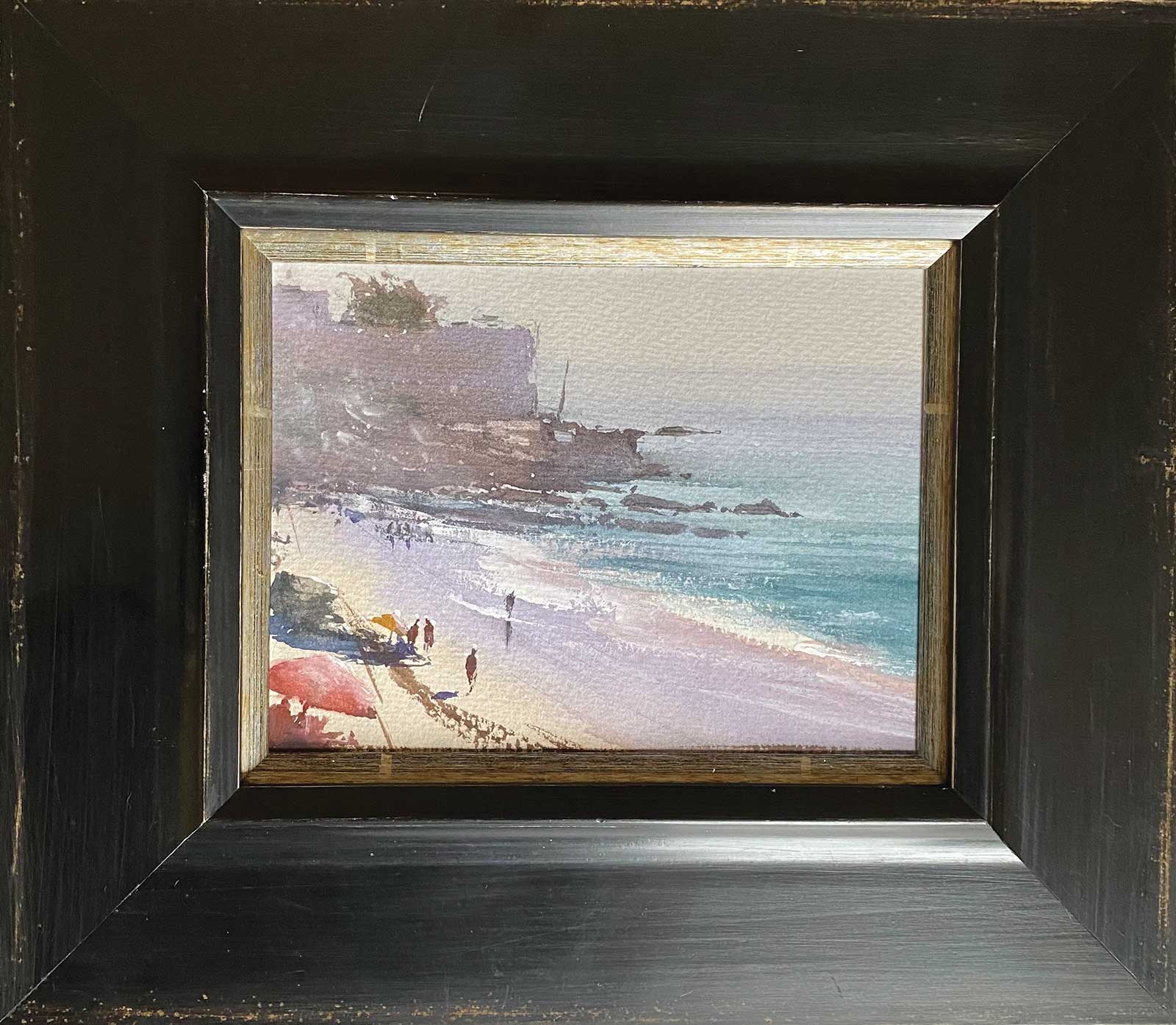
Framed watercolor of ocean with inside silver lip and glass on top.
We hope to have shed some introductory light on framing for you. A full discussion on the art of framing would take this entire magazine to convey, but hopefully some of the concepts outlined here will be useful to you as you explore these creative challenges in your art. —
About Vanessa Rothe
In addition to her curatorial, editorial and lecturing, Vanessa Rothe is a fine artist exhibiting the last 20 years alongside the nation’s top artists in galleries, art clubs, as well as museums. After majoring in business at USD and French literature at UCI, Rothe received classical fine art training at Laguna College of Art + Design and received honors throughout. Rothe has been working as an editor, graphic designer and artist in the publishing industry for 35 years.