Every year, The Portrait Society of America hosts an annual conference that brings together more than 800 artists from across the country for an unforgettable weekend of learning from our renowned faculty of over 30 artists. This year, we’re excited to hold our annual The Art of the Portrait conference in person again, April 21 to 24 in Atlanta, Georgia, with a nonstop schedule of demonstrations, lectures, drawing workshops, portfolio reviews and so much more! Recently, I had the pleasure of speaking with six of our new and returning faculty artists: Jeff Hein, Ron Hicks, Mary Qian, Quang Ho, Gregory Mortenson, and Adrienne Stein. Each artist shared a few words of wisdom about their teaching methods, traditional techniques, as well as their vision for the future of portraiture.
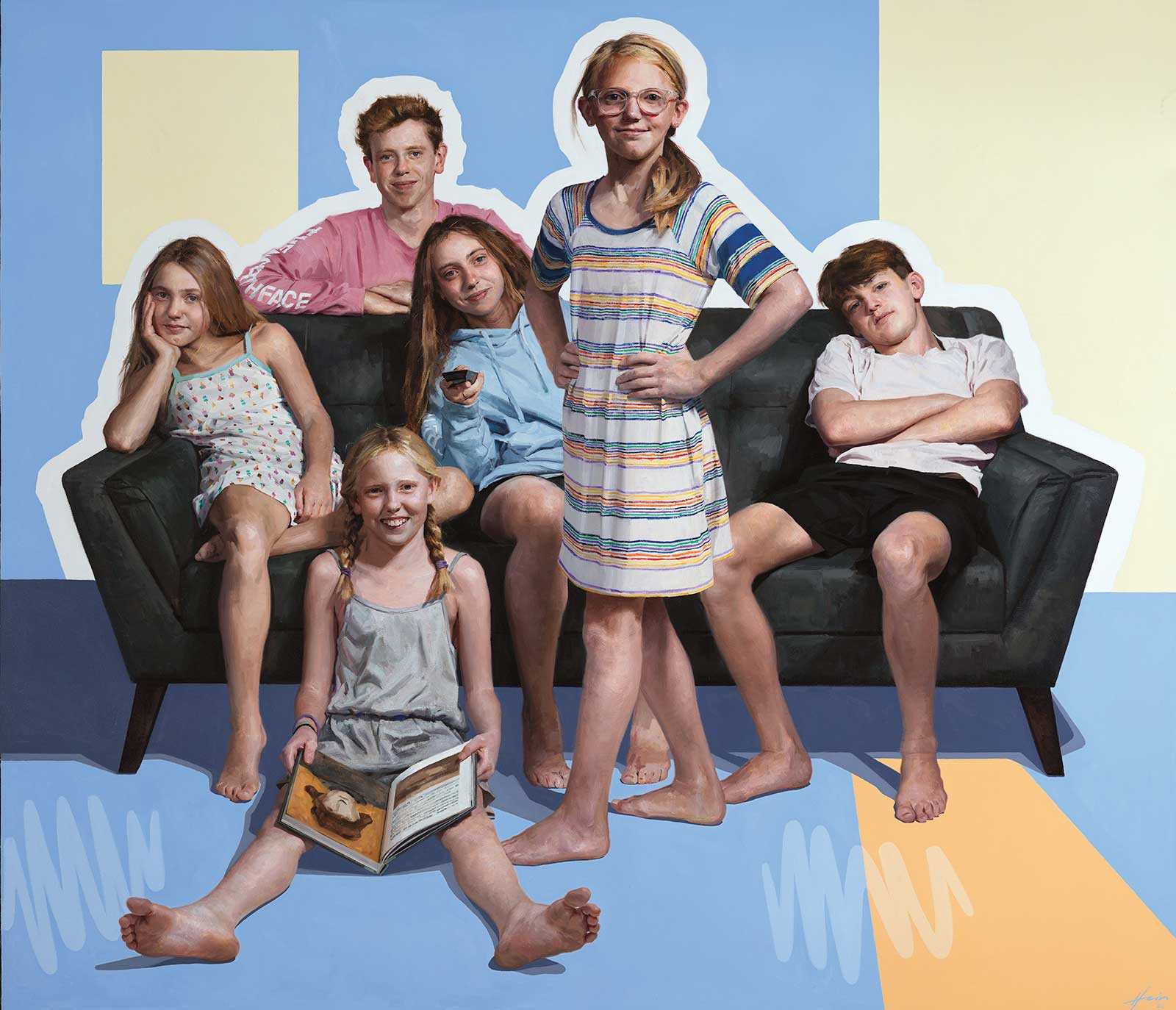
Jeff Hein, Gardiner Kids, oil on canvas, 9 x 10" (23 x 25 cm)
Azzarito: For much of modern history, artists began their careers as apprentices, learning from a master craftsman before venturing out on their own. Has this form of traditional study methods shaped your own development as a professional artist and if so, how?
Jeff Hein: I attended the art departments of two colleges and one university. I had a few good teachers who taught me a bit about drawing and painting, but I found that by the time I dropped out of school, I had more questions than answers. I wish I had been informed enough to seek out a master painter who I might have begged to apprentice under. Unfortunately, as a product of modern upbringing, going to college was what I understood to be the only “responsible” path. Since then, I have gleaned a great deal from the words and writings of both dead and living masters. I have learned so much through the generosity of my peers in the professional art world and continue to do so. I crave the opportunity to observe, paint with or just pick the brains of any of the many artists that I admire and respect.
Ron Hicks: My first post-secondary introduction to formal art instruction was at the Columbus College of Art and Design. They have a great program that covered everything from art history to three-dimensional design. Drawing and painting were a big part of my program. Those classes were taught like what you would see in a traditional atelier with the exception of the length of time before directly painting from life and in full color. I learned a lot during that period, but most of my growth as an artist happened after college. I met a number of artists, and I gained mentors who reinforced some of the traditional ideas and dropped nuggets of information that became very useful in the direction my path has taken as an artist. In hindsight, the information I found that piqued my interest the most was less about the technical aspects and more about the emotive.
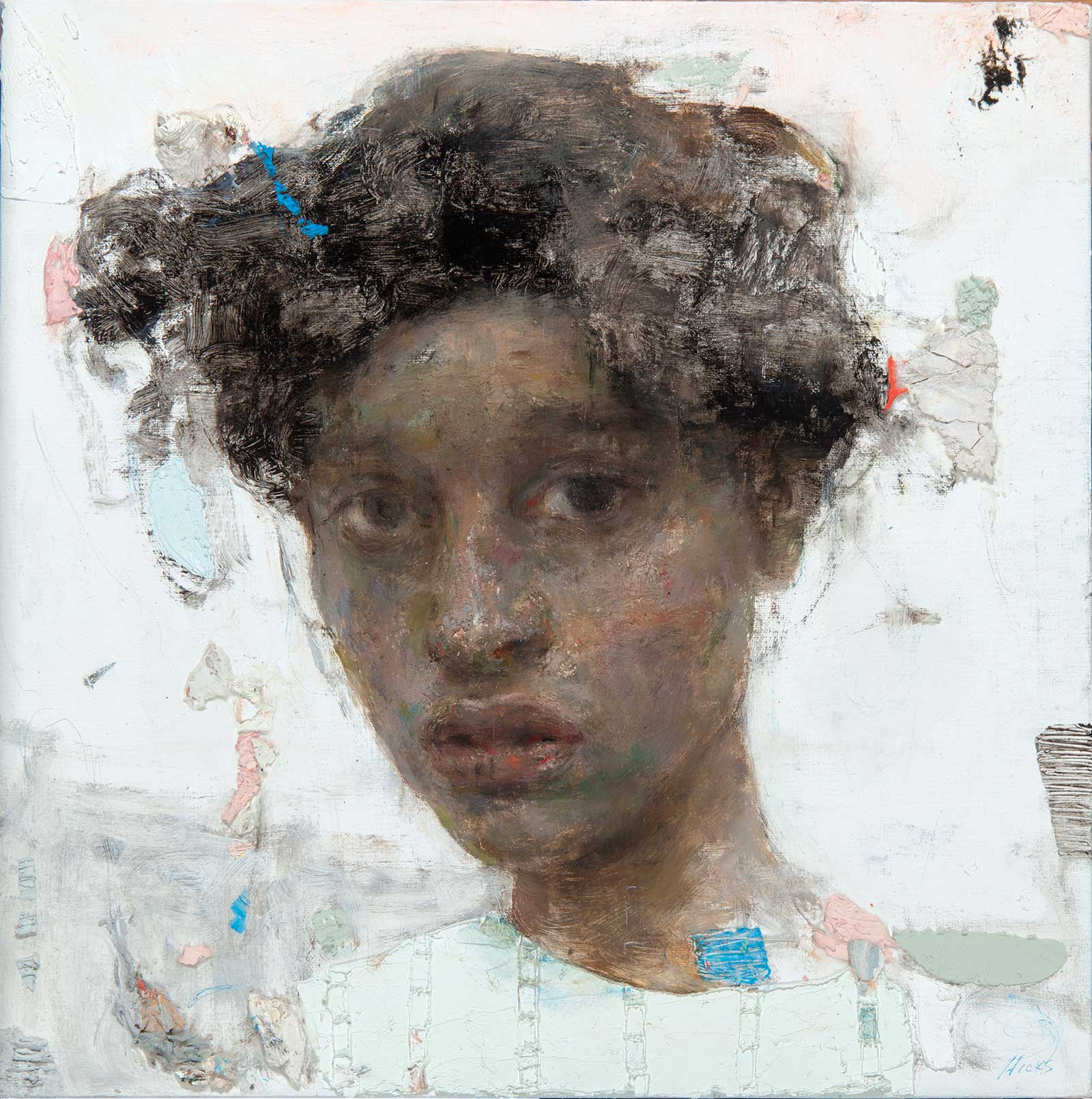
Ron Hicks, Fractured But Not Broken, oil on linen panel, 12 x 12" (30 x 30 cm)
Mary Qian: While in college, I met a professor in the art department named Bruce Smith. He was fascinated with traditional historic painting materials and methods. We even made our own pigments and black oil. He also introduced me to the great masters of Western art. He was certainly a primary influence on me. I can see how the master artist/craftsman, both now and in the past, had strong influences on their apprentices who were, in reality, students. It then becomes up to the fledgling artist to take this core of knowledge they have gained and develop a personal style as they mature.
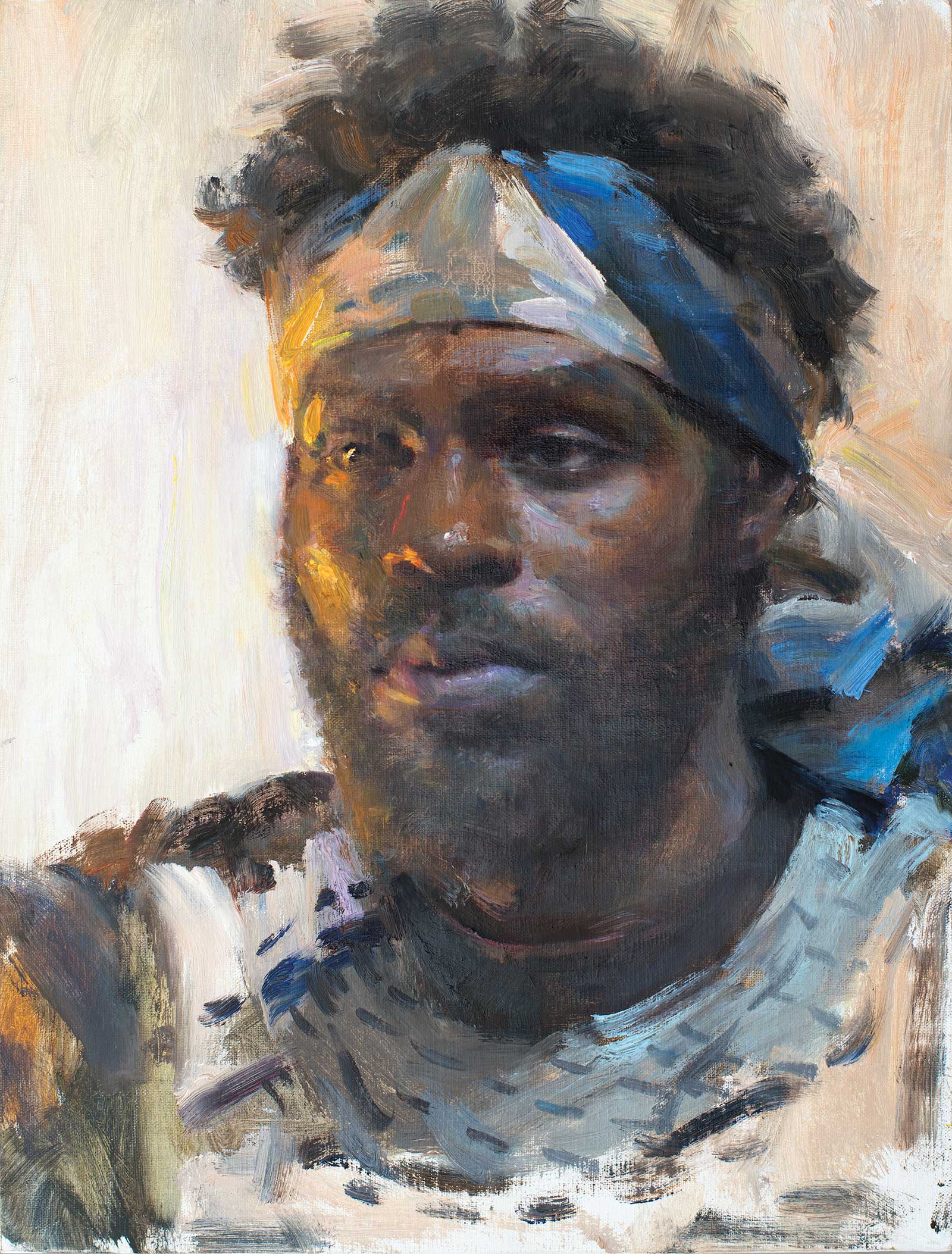
Mary Qian, James Blue, oil on linen, 16 x 12" (41 x 30 cm)
Quang Ho: I did not have this opportunity to apprentice under another artist. I believe in some way, that experience might have influenced my style too much, something that would require time to undo. But obviously, there would be tremendous benefits as well.
Gregory Mortenson: My classical art training began with two simultaneous apprenticeships. I trained under William Whitaker and Patrick Devonas for two years. Then I studied under Jacob Collins in New York for the next six (four at the Grand Central Atelier and then two at his private studio). It was great to paint in their studios alongside them. We would share models as we painted, and it was very helpful to see how a master craftsman would solve the same problems that I was struggling with. In addition to improving my craft, it was also invaluable to see them working the business side of art. I got to see them working with galleries and collectors as they developed bodies of work for exhibitions, and I was able to see the work ethic needed in the day-to-day life of an artist.
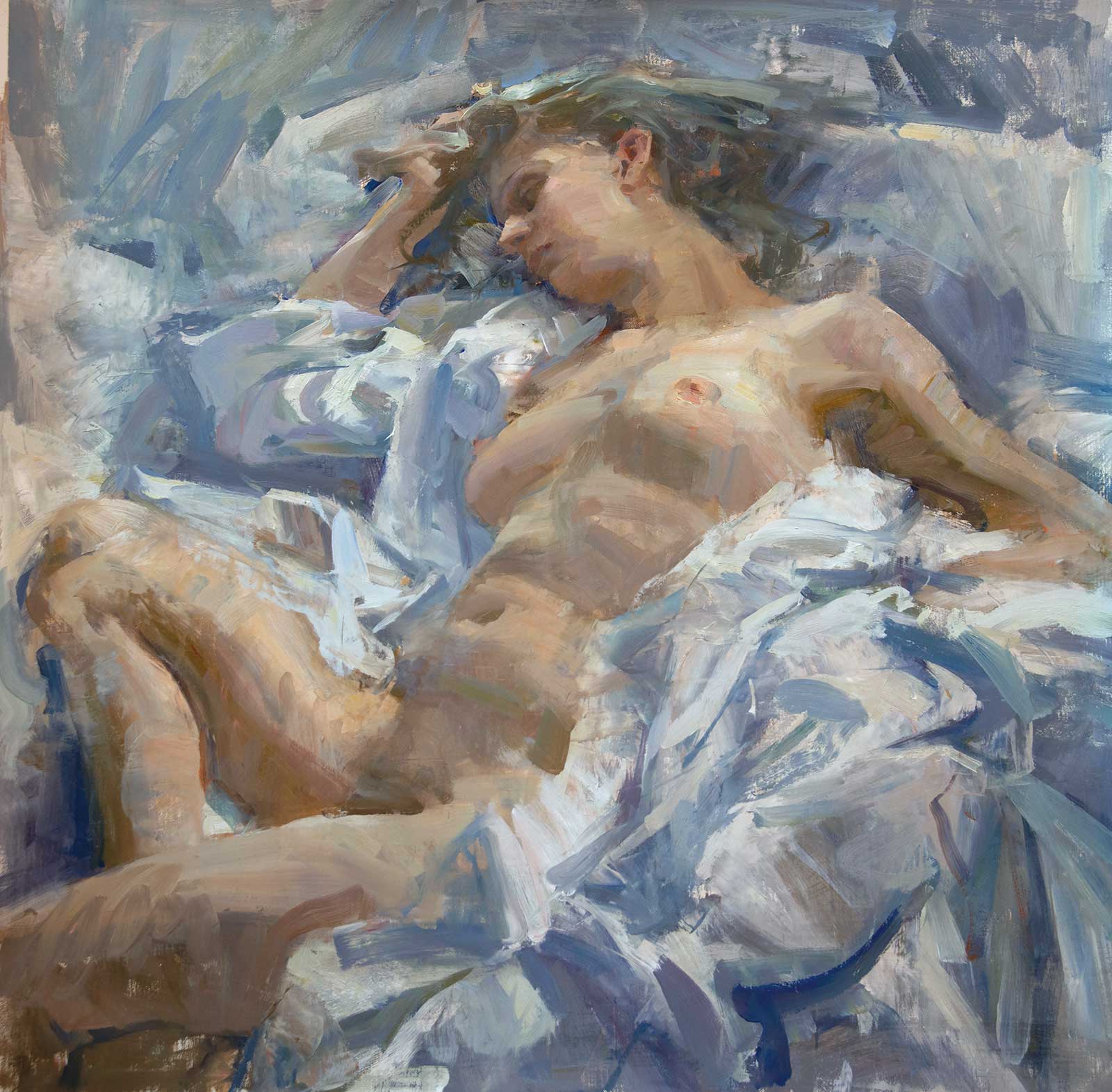
Quang Ho, White Cotton Robe, oil on linen, 24 x 24" (61 x 61 cm)
Adrienne Stein: I studied under one mentor in an atelier setting for seven years before I entered a degree program. Under my mentor’s instruction, I first had to draw for an entire year before I could even touch oil paint, and then it was painting master copies and painting exclusively from life. This essential training gave me the habits of focus, discipline, drawing from observation, and the structural foundation I needed to bring my creative vision to fruition successfully later.
Azzarito: When approaching your work, how do you balance traditional techniques with the need to create distinctive and contemporary pieces of art?
Hein: I try not to think about being distinctive for fear of being inauthentic or contrived. I believe that the best thing that I can do for myself, to set myself apart, is to just be me. I saw myself on video years ago and noticed that I walk a lot like my brother. It was rather surprising because I had never realized that I have a relatively unique walk. But it also reminded me that, much like a distinctive strut, we all have an innately unique way of mark making, a unique temperament and unique aesthetic tastes. Each decision that I make, if I manage to stay out of my own way by not trying too hard to be different, will be authentically unique to me. It’s ironic really.
Hicks: In my work, I’ve come to the conclusion that my voice is the most important thing to consider. My desire is to get to my truth in painting. At first, this was a big challenge—it required me to dig deep into understanding who I am and how that relates to my work. I believe painting is more than just transferring information. I don’t think a whole lot about balancing traditional techniques in my work. Over the years, it has morphed into what it is. I don’t try to create a distinctive, “contemporary-styled” work. I am an artist working in the 21st century, therefore I am a contemporary artist. My belief is that technique is one of the byproducts of understanding you. Finding who you are as an artist, finding your voice, and following your path.
Qian: I feel that traditional techniques are in reality a set of time-tested methods used to develop a painting. It can come in the form of a discipline (alla prima, classical method) or series of observations (color, value, edges) used to realistically depict three dimensions onto a two-dimensional surface. These fundamentals should be considered tools to be used to solve a creative problem. The key is to not be addicted to technique at the sacrifice of individualism. I believe that one can observe art fundamentals in every work from the abstract (design, color relationships, etc.) to classical realism.
Ho: I approach my work without regards to any past traditions now. In the beginning it was necessary to learn from the past masters as it saves a tremendous amount of time from having to reinvent the wheel. We have to remember that artists did what they could and tried their best to achieve whatever it was that at the time. The ones who find their own personal ways to paint is in the contemporary movement. That’s another way of saying I don’t look at what is trending in the contemporary styles either.
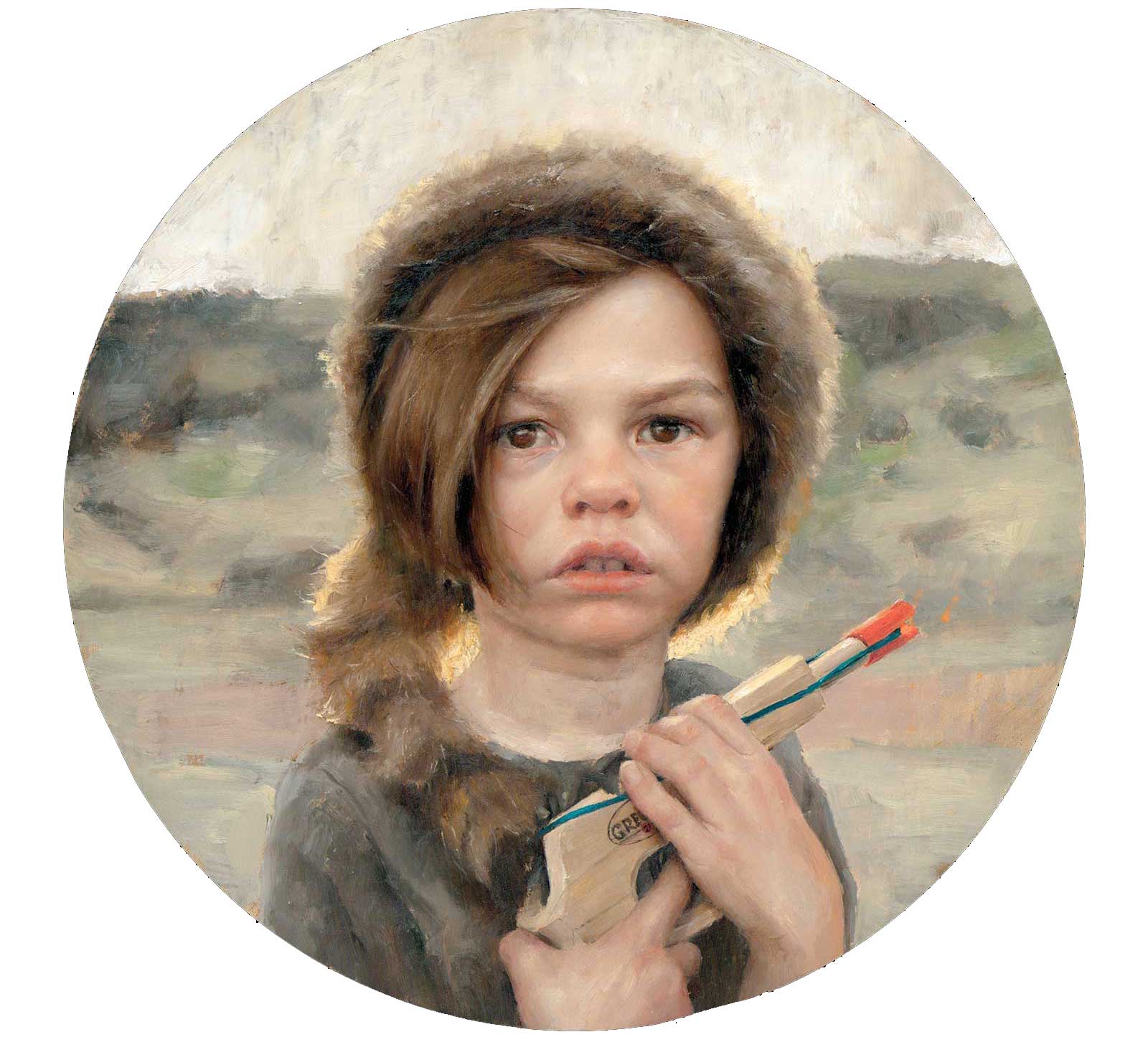
Gregory Mortenson, Davy Daydream, oil on linen, 13" diameter (33 cm)
Mortenson: I minored in creative writing so telling a story has always been important to me. I paint my life. I paint the ideas I care about and the people around me. What is more contemporary than that? I enjoy expressing that narrative with the language and tools that traditional techniques offer.
Stein: I try to look at a lot of contemporary art alongside that of the Old Masters. I look at fashion photography and pop art and interior design, so I appreciate the whole gamut of visual culture. It keeps me thinking outside the box and keeps my work from being stuck in the past.
Azzarito: If you teach, do you feel you pass on traditional techniques, and what do you feel are some of the most important lessons you can impart?
Hein: Because I wasn’t trained by one artist or institution, I feel that I have a bit of a Frankenstein approach to teaching. In my curriculum, I have borrowed a little from here, a little from there, and have added a bit of my own discoveries. I feel that my strength as a teacher actually comes from my struggle. In a way I’ve had to “reinvent the wheel,” so to speak. Because of this, I don’t only recognize a wheel but I deeply understand it. My approach focuses strongly on not just how to paint and draw, but why the principles work.
Hicks: For the past three or four years, I have moved away from teaching “technique.” I do think, however, that understanding the craft is one of the most important things a new artist should do. Most of the students I mentor are intermediate or advanced artists and have had some form of formal training. My contribution to these students is more about finding their voice and their path as an artist. Again, I believe one’s technique is a byproduct of understanding yourself. Your individual voice is more powerful than painting pretentiously. So, my advice is to seek to become oneself by first understanding oneself.
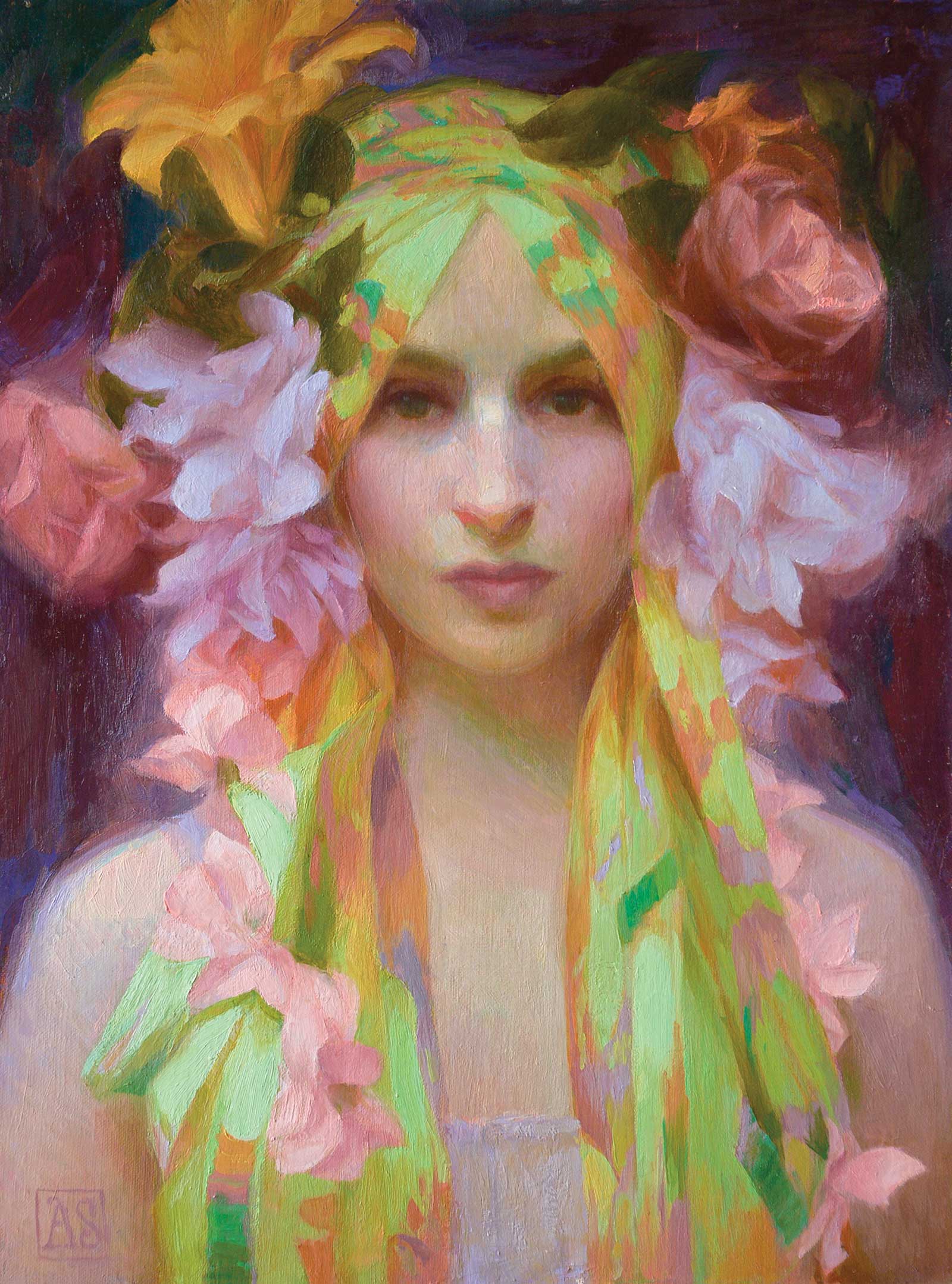
Adrienne Stein, Margaret Morris - Violet Bohemian, oil on linen, 12 x 9" (30 x 23 cm)
Qian: As outlined above, I strongly believe in teaching fundamentals and traditional techniques. They form a basis of practically everything we see in art even in the most outlandish contemporary work. They become the rules of the discipline even when meant to be broken to make a statement. It’s up to the instructor (and the student) to recognize the fundamental techniques for what they are, which is a solid foundation for the artist to build upon. As said before, a tool to be used if desired but not an addiction. The artist should above all be true to themselves. Even most outsider art created by the untrained when analyzed has a fundamental core.
Ho: When I teach, I pass on understanding rather than techniques—understanding of the visual world and how light works; understanding of visual structure and concepts on the canvas. Techniques are endless exciting possibilities after that. To teach someone my technique would be to put limitations on a student. The most important lessons begin with ability to draw. Hand-eye coordination has to be as fluent and as natural as breathing, and then understanding how the observable world works.
Mortenson: I teach once a week at the Grand Central Atelier where I studied. The most important thing to take away from classical training is the ability to see. To be able to see, you have to understand what to look for. That is where an understanding of anatomy, the physics of light and color theory become so important.
Stein: Yes, accurate drawing is always at the core of what I teach, as well as value structure. It always comes before any kind of creative individual expression. That comes later.
Azzarito: What do you see, or hope, is the future for traditional, fine art portraiture and the artists who create these works?
Hein: I hope to see a greater appreciation for good craftsmanship in the arts, in particular painting and drawing. While there has been a revival in traditional art, it still demands lower prices and less praise among the blue-chip art world.
Hicks: I believe the future of traditional art will live on forever. There are many artists globally who have picked up the torch and are creating amazing masterpieces. I also believe there will be just as many artists striving to take what they’ve learned from their formal training to deeper depths and higher heights. The possibilities are endless. My hope is that whatever path we take as artists is genuine, and that we continue to speak from our heart.
Qian: Every time portraiture and realism is either pronounced over or labeled the discipline of the dinosaurs, it rises from the dead and marches on through modernism, through abstract expressionism and through many “ism” past, present and into the future. I believe there will be a place for portraiture and realism in general. It may take different forms or maybe even different methods, but it will be part of the artistic community. There will be artists who create it and patrons who desire it. I also believe that painting realism, especially portraiture from life, will continue to be the best method to capture the inner essence as well as the artist’s psychological inner-action with the subject.
Ho: I think the future is bright. And that’s because of opportunities for artists to learn from sources such as the Portrait Society of America and from each other at a fast pace. I would have learned so much faster if I had these current doors into the art world.
Mortenson: Every year the bar seems to be rising on the quality of work that is expected from the artists that work in the traditional manner. Young artists are leaving the academies and ateliers better versed in their craft than they have been in decades. I look forward to the stories they will tell on their canvases.
Stein: Hopefully there will be less of a divide between the traditional fine art portraiture world and the contemporary art world and also the world of illustration and concept art. Artists in these categories often don’t know about one another, and I hope there is more fluidity and crossover. I hope to cross over these genres and categories in my own work. —
The Art of the Portrait
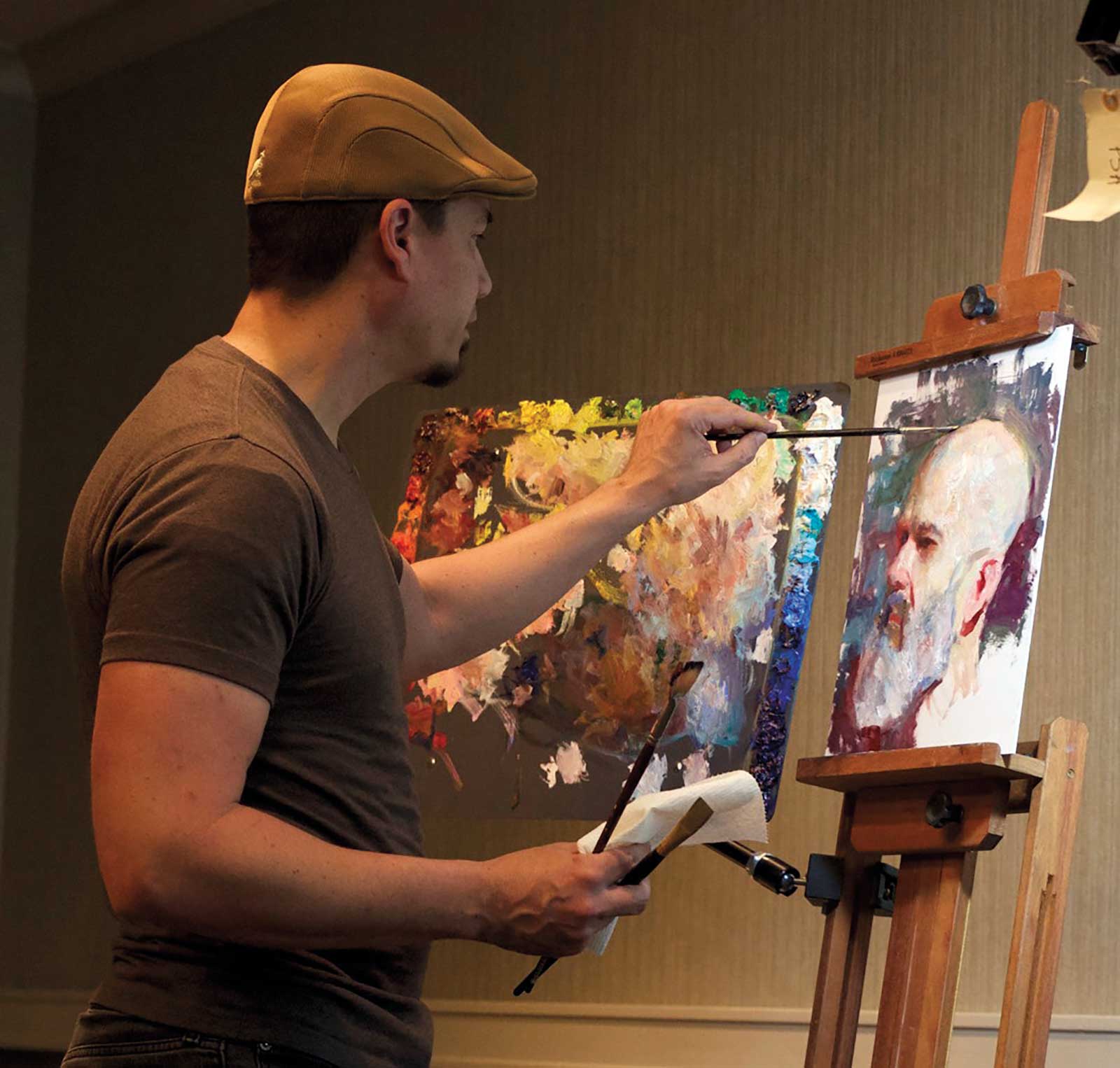 Jeff Hein demonstrating at The Art of the Portrait conference.
These words of wisdom shared by some of our faculty on these pages is just a preview of the information and teachings that will be shared by 31 renowned artists. Whether you are a full-time professional artist or looking to take your art to the next level, join us April 21 to 24, 2022, in Atlanta, Georgia, at the Grand Hyatt Atlanta in Buckhead where we’re providing the largest event in America today featured solely on portraiture and figurative work. For more information, visit www.portraitsociety.org.