I would like to share with you my recent paintings completed over the last year or two in preparation for my solo exhibition titled Social Realism in California. The show was delayed due to the pandemic and rescheduled during what seemed like more promising times. Eventually the show was held from May 22 to August 29, 2021. These paintings, along with falling into the theme and subject of the show, I think reflect the times we all live in. The last painting, titled Invisible People, is a painting that has been in the making for many years.
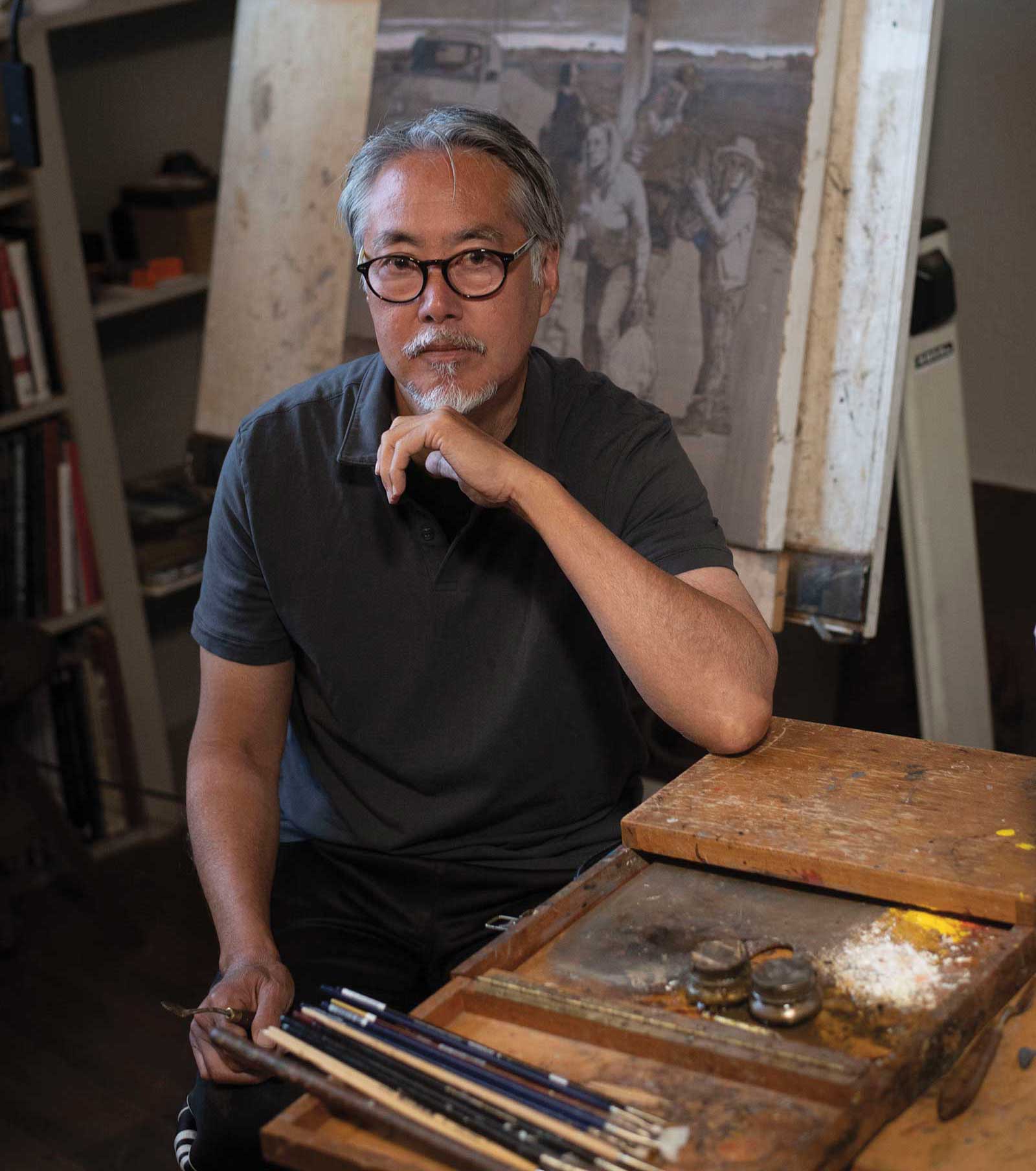
Courtesy Content Magazine. Photo by Daniel Garcia.]
Leading up to this major work, I completed several scenes of farmworkers in preparation for my exhibition at the Triton Museum of Art. This is a subject I have been painting for 20 years, inspired by many of the great painters of the past, such as Francois Millet (1814-1875) and Bastien Lepage (1848-1884). My painting Essential Workers is a scene I witnessed and then recreated for a painting. Other smaller works such as Rivers Edge at Dusk and Drawn into the Light are both scenes from Monterey County inspired by the novels of John Steinbeck, who resided and wrote about stories of the area. Also pictured is my painting Flower Stand, an everyday scene just off the freeways of Los Angeles. All of these paintings fall within the theme and subject of the exhibition. Throughout the following pages, I’ve commented on each piece in relation to the painting lessons that can be learned from each one.
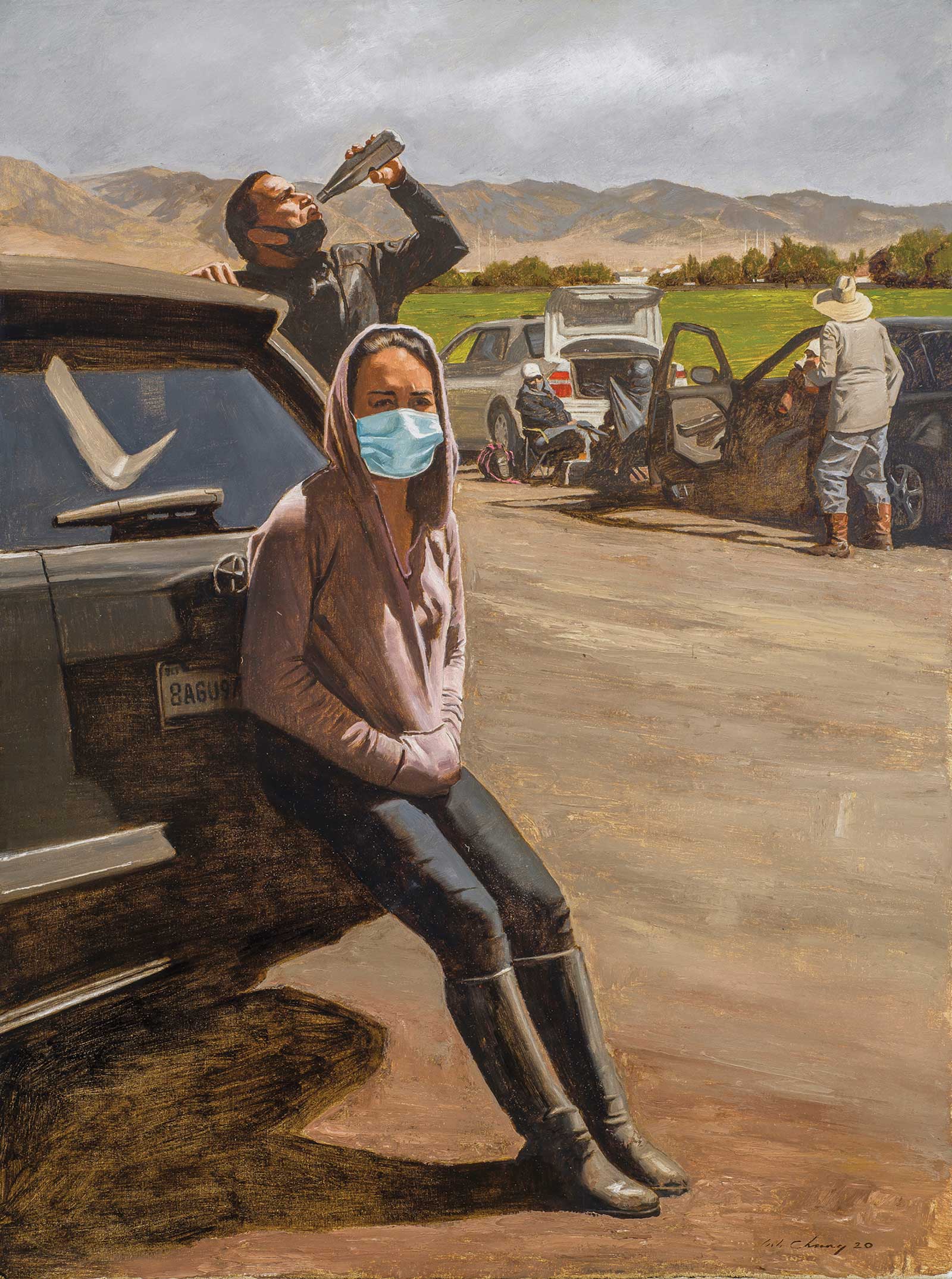
Essential Workers, oil on canvas, 34 x 24" (86 x 60 cm)
Essential Workers
In my painting Essential Workers, I recreated the scene with the aid of models, using my own car as a prop in the foreground. This painting is more of a portrait of the laborers within their work environment, and the presence of masks reveals its place and time. The foreground figures are the focus of attention and are painted in high contrast compared to the background figures, which are more subdued in both color and value. This serves to create layers of depth and the angled road a sense of perspective.
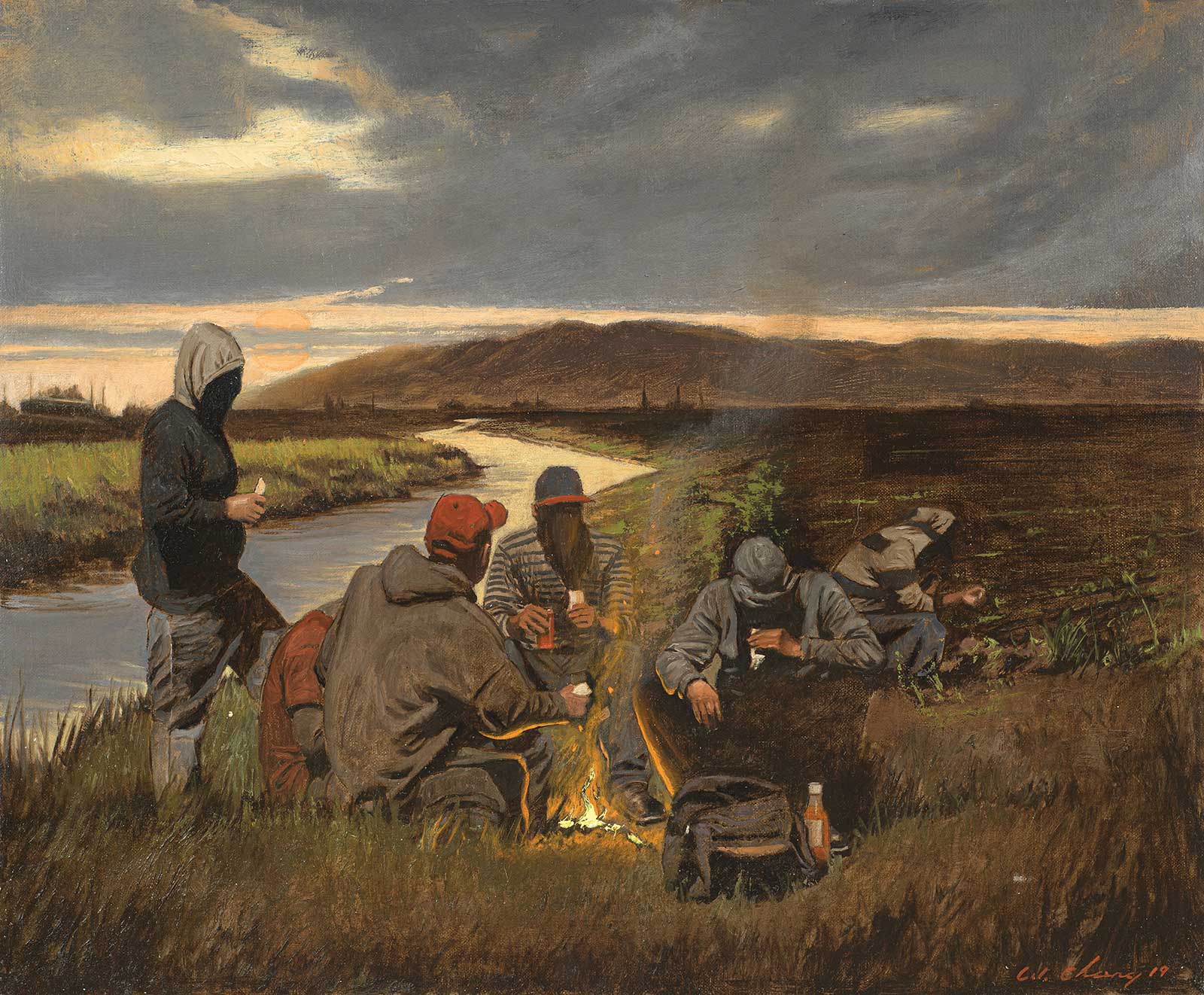
Rivers Edge at Dusk, oil on canvas, 16 x 20" (40 x 50 cm)
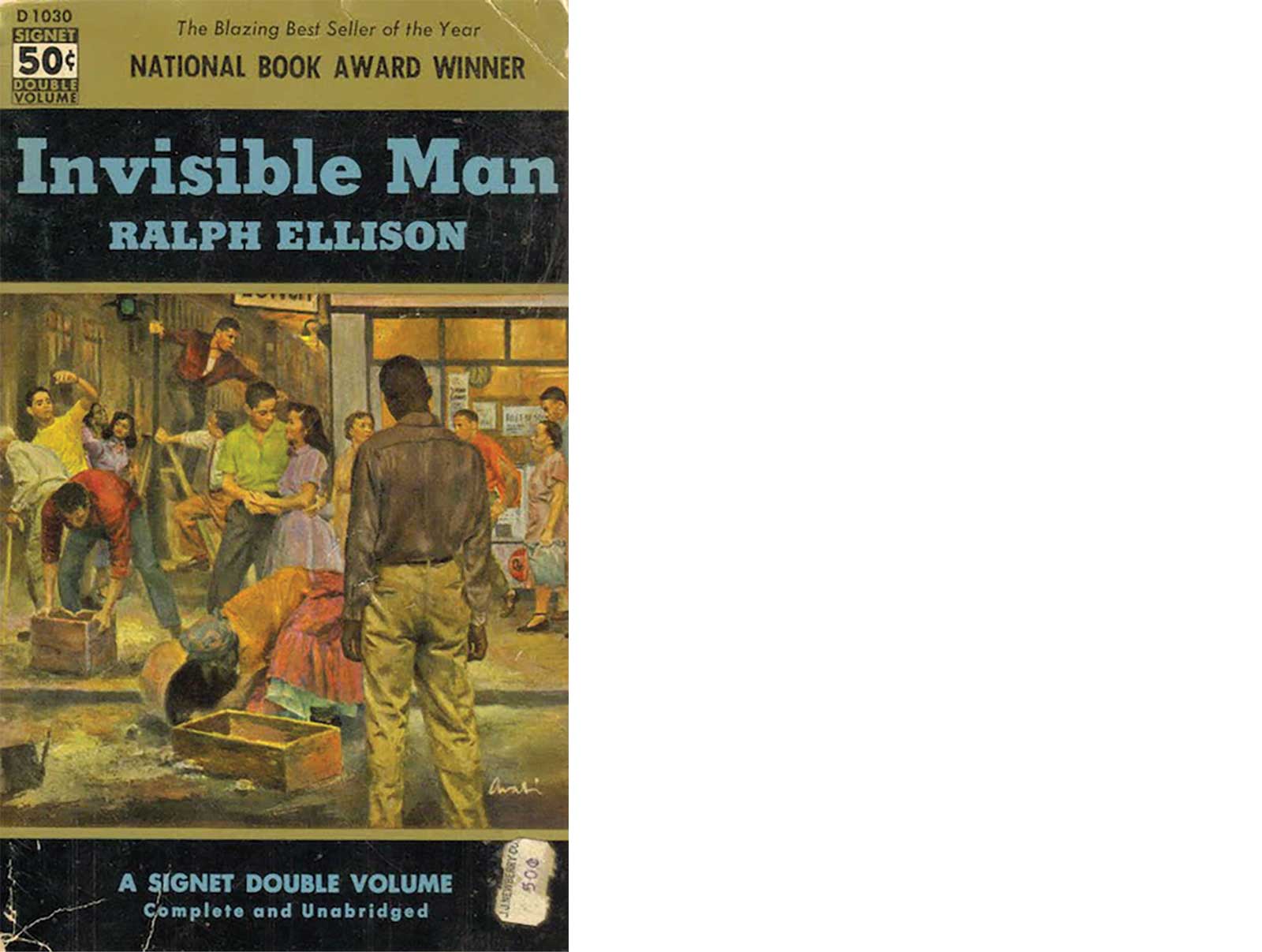
Invisible Man by Ralph Ellison. Signet, 1953. Cover illustration by James Avati (1912-2005).
Day Into NightIn Rivers Edge at Dusk, originally the scene was set in the day, but I changed the scene to a nocturne for an exhibit of nocturnes at the Bakersfield Museum. This is something I often do, which lends dramatic lighting and tonal mood.
Creating Layers of Depth
I often use a device of using three planes of depth: a foreground, middle ground and background. This along with the use of overlapping figures creates a sense of depth and atmosphere. My painting Drawn in the Light illustrates the use of three levels of depth. The area of foreground is in highest contrast, the middle slightly lighter, the background lightest of all as well as cooler, since the sky affects things as they recede.
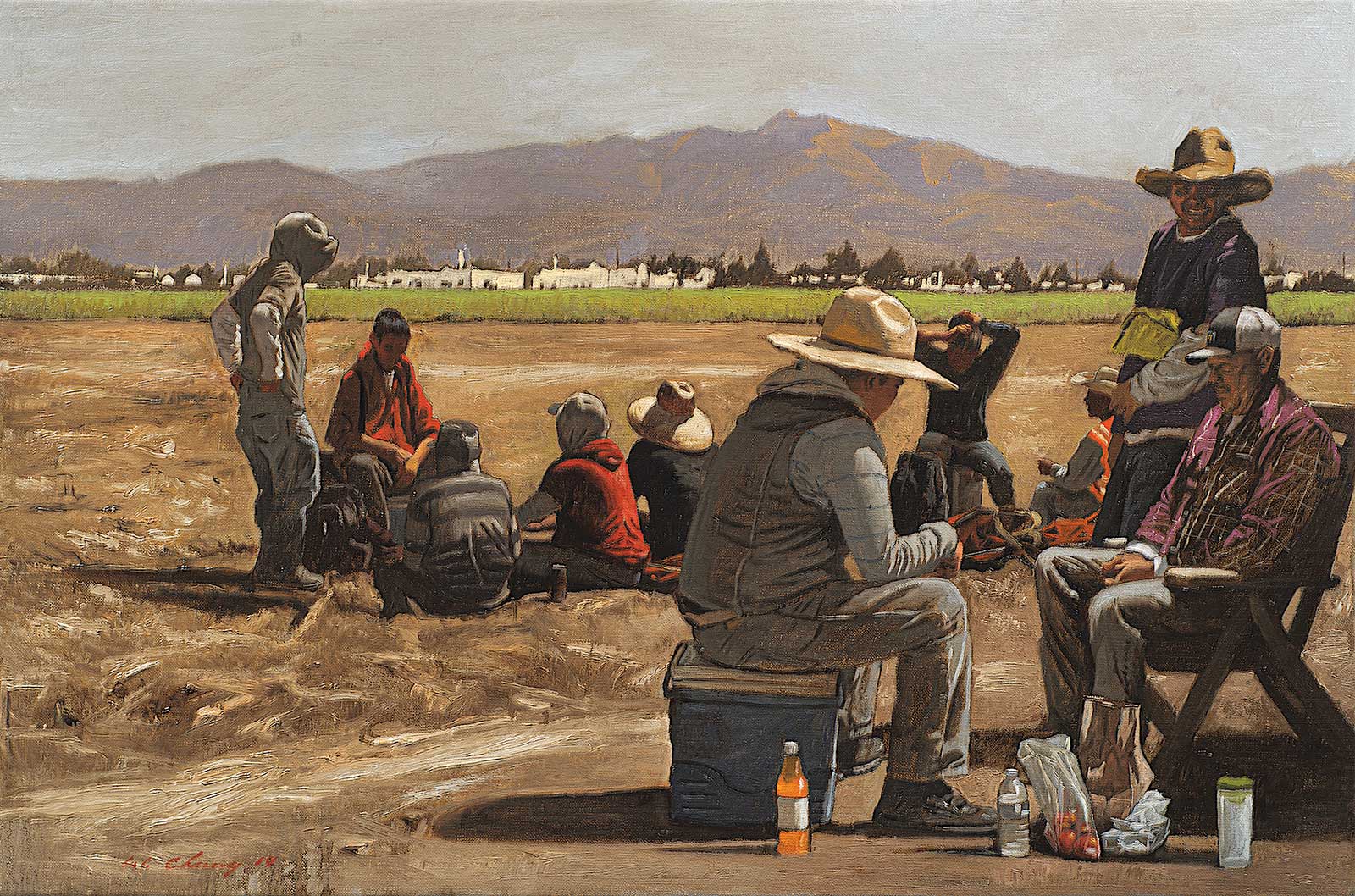
Drawn into the Light, oil on canvas, 16 x 24" (40 x 60 cm). Courtesy Winfield Gallery.
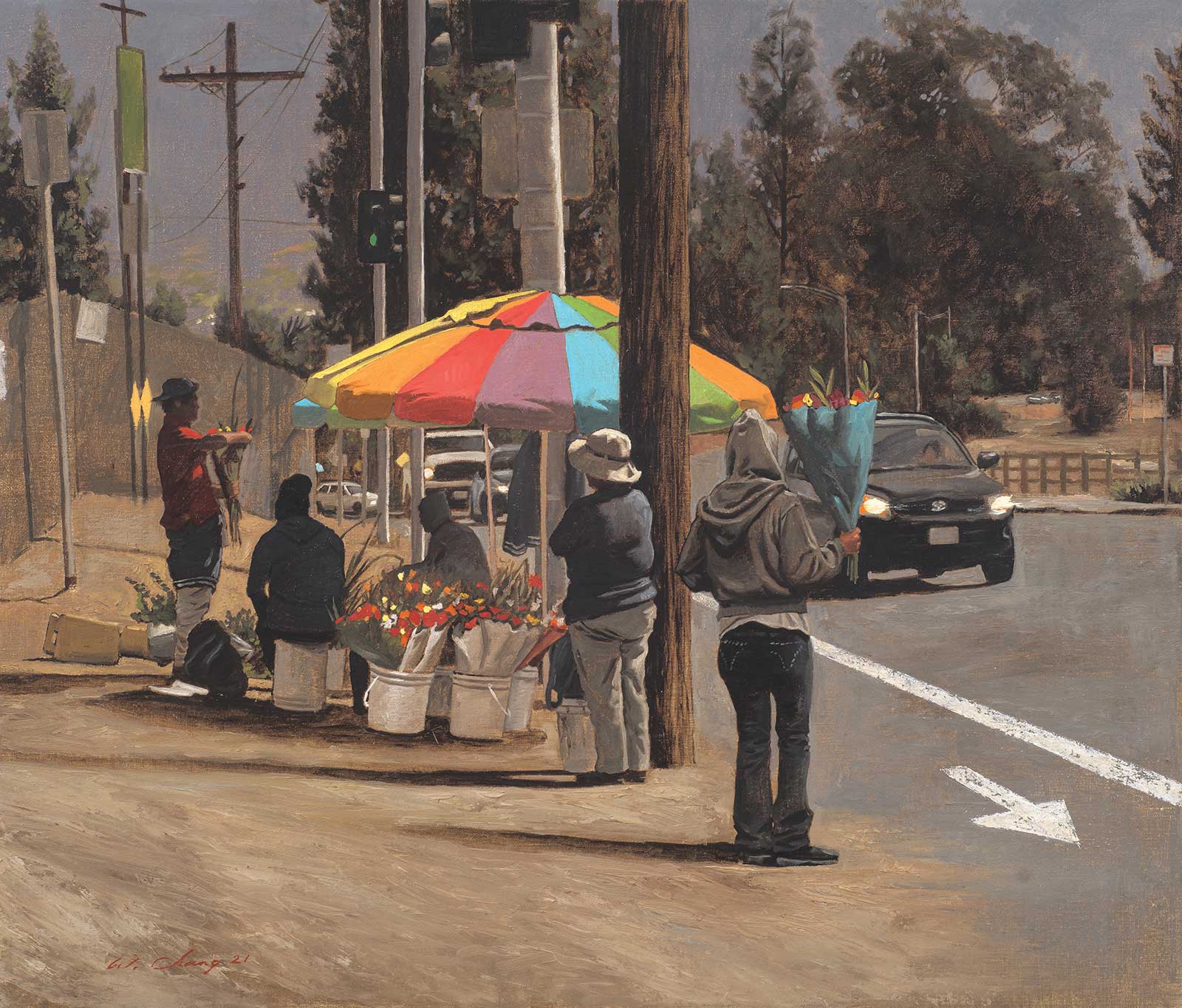
Flower Stand, oil on canvas, 20 x 24" (50 x 60 cm)
Color is Enhanced by Surrounding Grays
My painting Flower Stand illustrates the use of grays and earth tones surrounding the colorful umbrella, immediately enhancing these bright colors. The colorful umbrella screams from within the neutral surroundings, creating a focal point and center of interest.
When Inspiration Arises
This idea for my painting Invisible People was first sparked by the novel Invisible Man by Ralph Ellison, published in 1952. A novel some consider to be one of the most important books written in the 20th century. The story addressed the social and intellectual issued faced by an African American man. I recognized a correlation with the term “Invisible People,” which was how migrant workers in California are often perceived. People driving by the laborers every day hardly taking notice. I wanted to paint a migrant family alongside a road with cars passing by.
This particular edition of the book was illustrated by the incomparable James Avati (1912-2005), who painted scenes of the down and out, written by such authors as William Faulkner, Erskine Caldwell and J.D. Salinger to name a few. Sometimes referred to as the “Rembrandt of Paperbacks,” it seemed to me his pictures, though determined by the stories he illustrated, had the look of social realist work of the 20th century. I long admired this illustration and was determined to someday paint my version of this.
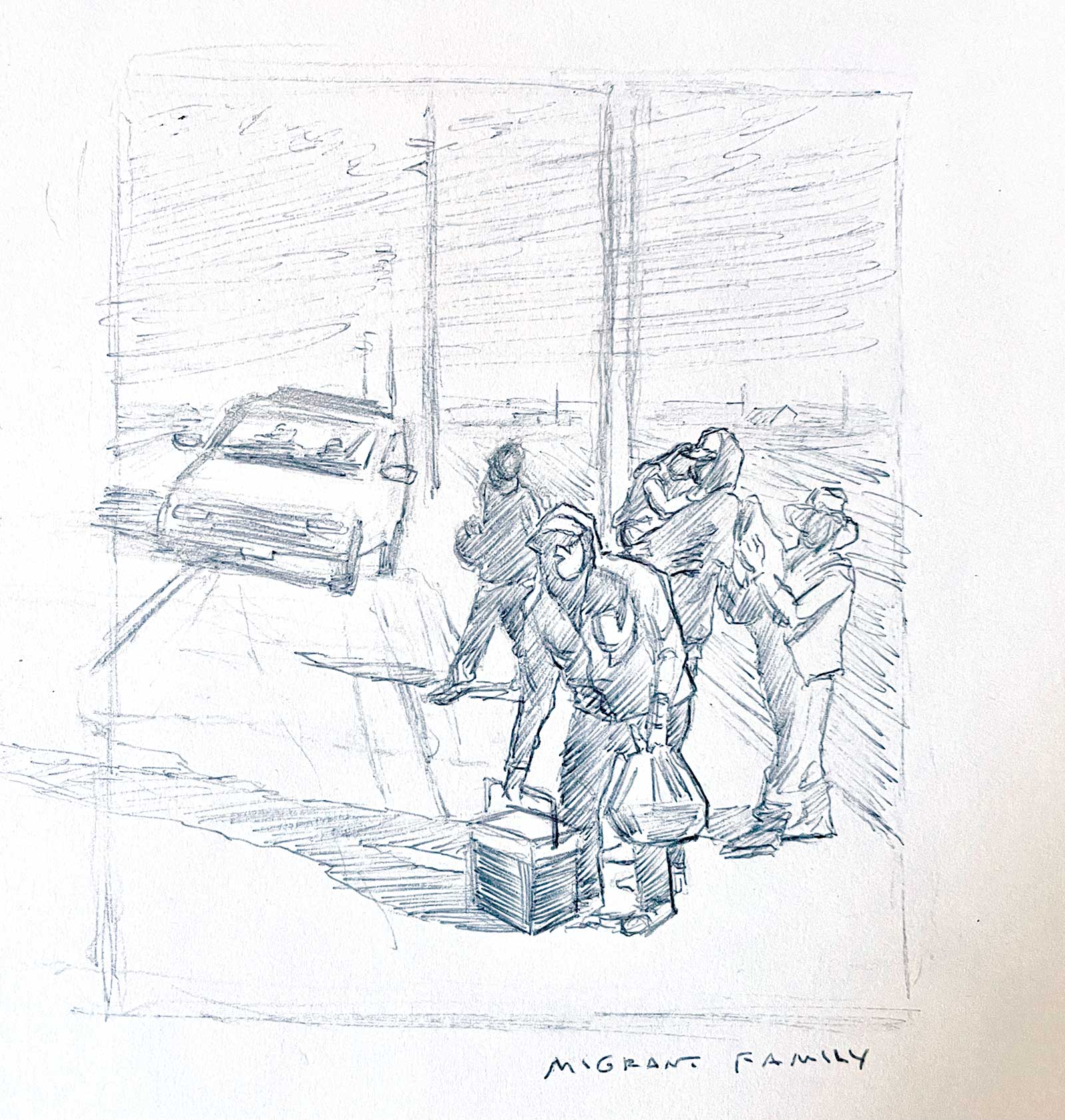
Thumbnail Sketch for Migrant Family, ballpoint pen on paper, 6 x 7" (15 x 17 cm).
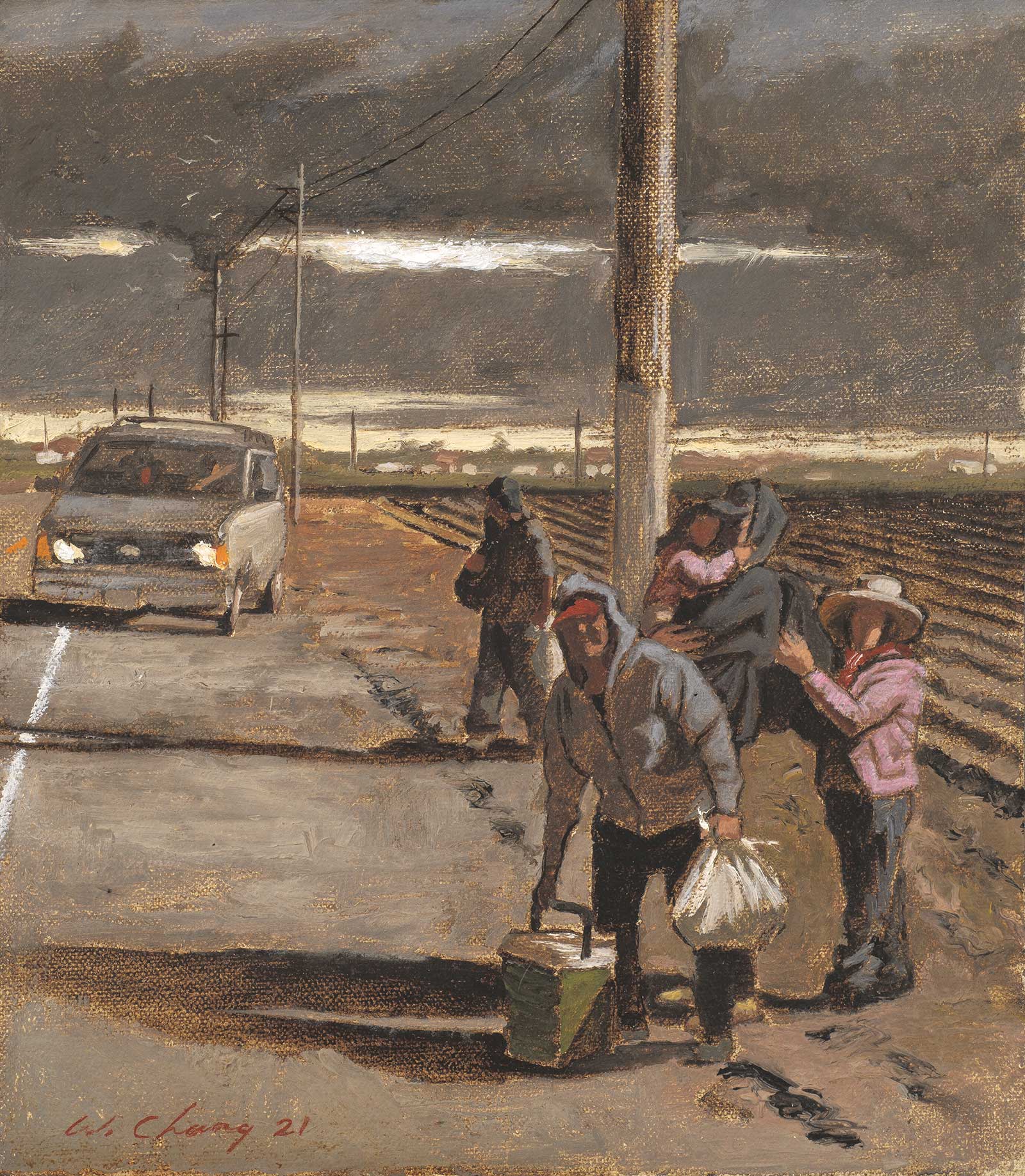
Color study for Migrant Family, oil on panel, 8 x 10" (20 x 25 cm). Courtesy Hauk Fine Arts.
Developing the Idea
Sometimes an idea may lay dormant in my mind for months, if not years, before I finally take action. My painting of a migrant family is one of these ideas. I eventually acted on this idea of painting a migrant family by hiring a family to pose. I paid them well for their time and was able to develop a compositional sketch in my sketchbook from the references. Unfortunately, I simply did not see a painting materialize from this idea. Sometimes this happens to the best of us. I put the project aside, only to revisit this project when I was limited in my research due to the lockdown. I found that letting some time pass allowed me to view this idea and references with a fresh eye, and I was able to envision the painting in my imagination.
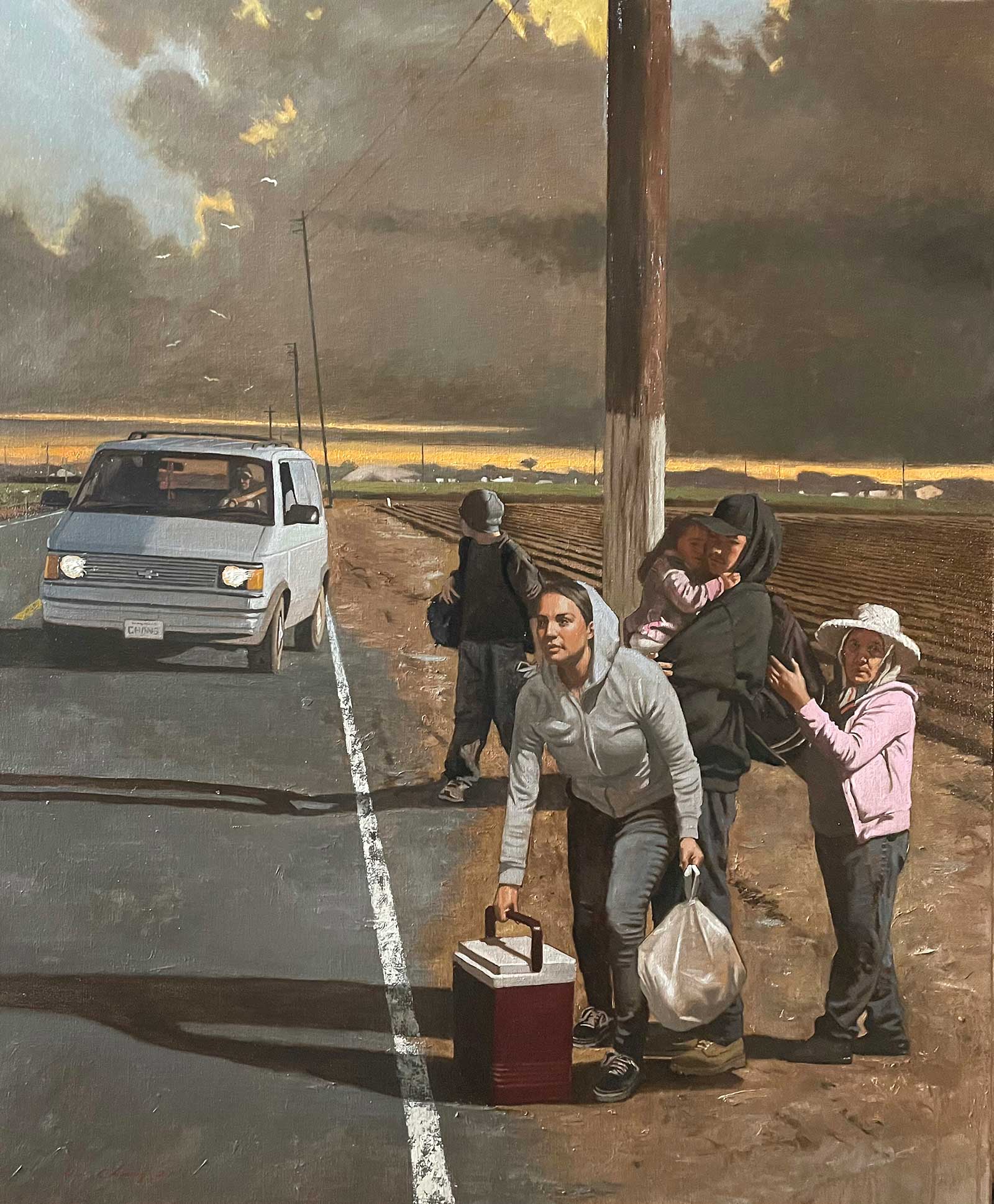
Invisible People, oil on canvas, 35 x 29" (88 x 73 cm). Courtesy Winfield Gallery.
I developed a color study as it is my habit to do for any of my larger works. Sometimes the studies are identical to the final finished paintings, but sometimes I will make adjustments and changes in the final painting. I ultimately decided to make some adjustments in the background and change the foreground figure, which is evident in the final finished painting. Regardless of the title, I believe the picture speaks for itself.
Color, Texture and Form are Properties of Light
Much like my previous painting Flower Stand, most of the painting is completed in gray and earth tones, which when color is introduced, heightens the effect of color. In Invisible People, the warm glow of the sunset is heightened by the surrounding grays. Also, I created a contrast of textures, keeping areas such as the ground heavily textured and the sky smoother to suggest depth and atmosphere. In painting, color, texture and form are the properties of light—while in contrast, areas of shadow are transparent in comparison and carry less color and texture. —