The beauty of great composition is that it captures you from a distance in its abstract beauty. I will be discussing my process of composition, best explained through this multi-figure composition I painted in my studio, seen in the demonstration in the pages to follow. Often when looking at Old Master works, viewers are drawn to the work just based on the interesting design of flat abstract values. It is only after having been past that point do the viewers move forward to see the true details within the artwork.
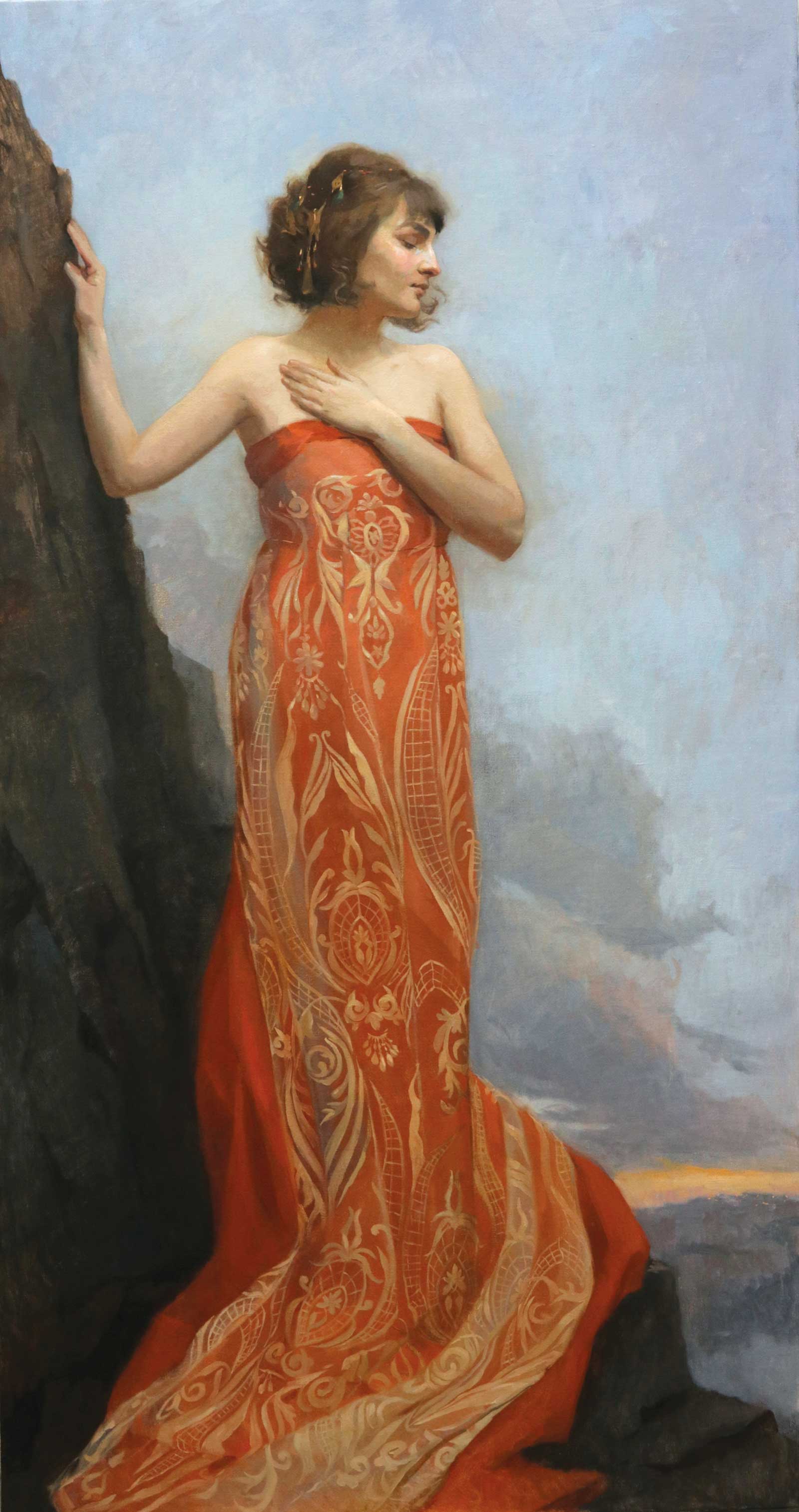
Her Ascent, oil on linen, 75 x 39" (190 x 100 cm) This painting was inspired by wanting to depict a person’s journey in life. The image shows a protagonist high up on a mountain perch, looking down at a low horizon.
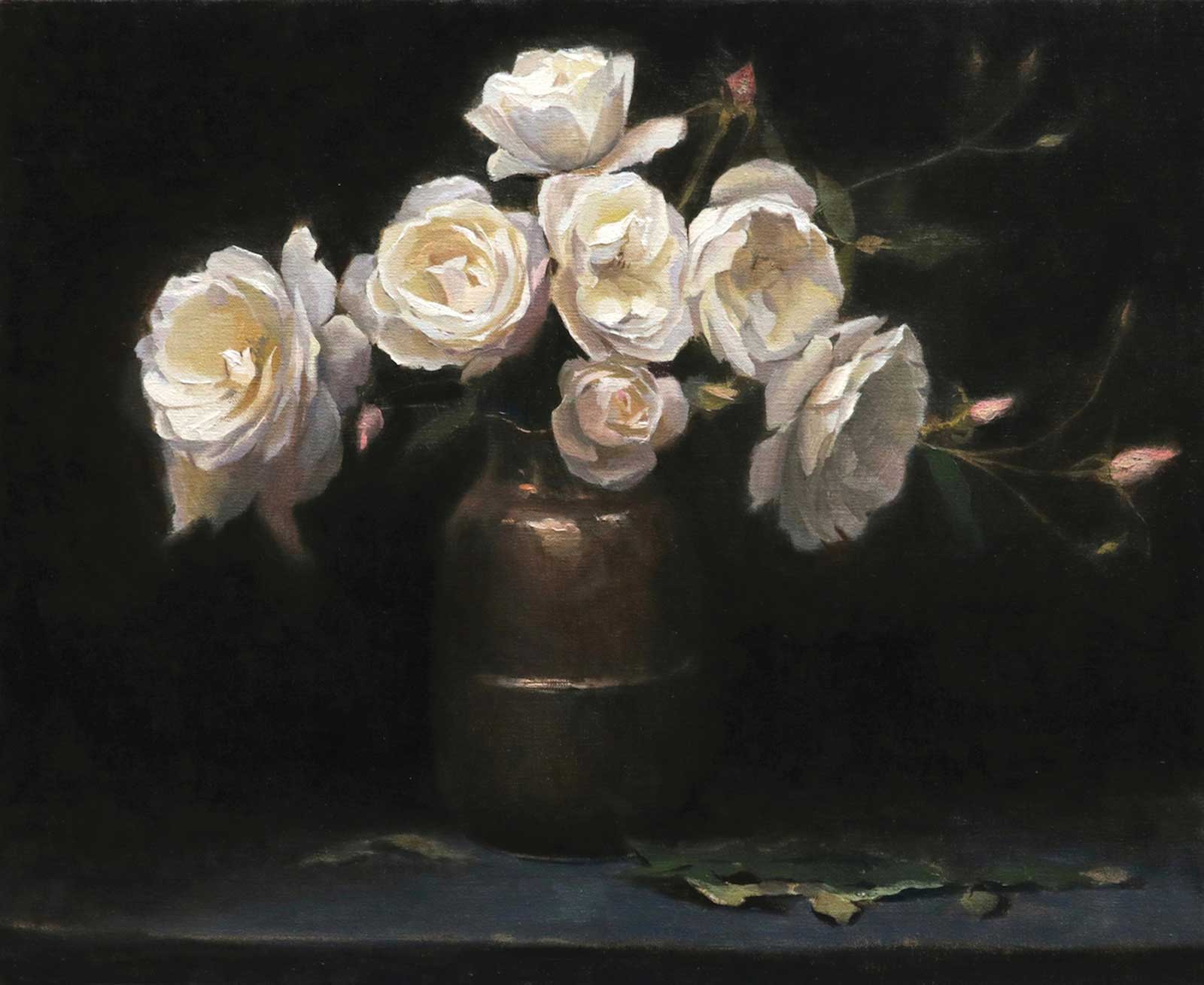
Winter roses, oil on linen, 18 x 21½" (45 x 55 cm) I was inspired by these very delicate white roses and found it an interesting juxtaposition against the deep atmospheric darker background.
I work in the medium of oil paint and use linen as my support. I paint from life, so I work with live models in my studio. The entire process of sketching an idea, in charcoal and paint, transfering the drawing and then completing the final work can take several months. Since I work from life, my work can be fairly impressionistic in the beginning, then later over many layers, it becomes a more fine-tuned, realistic impression.
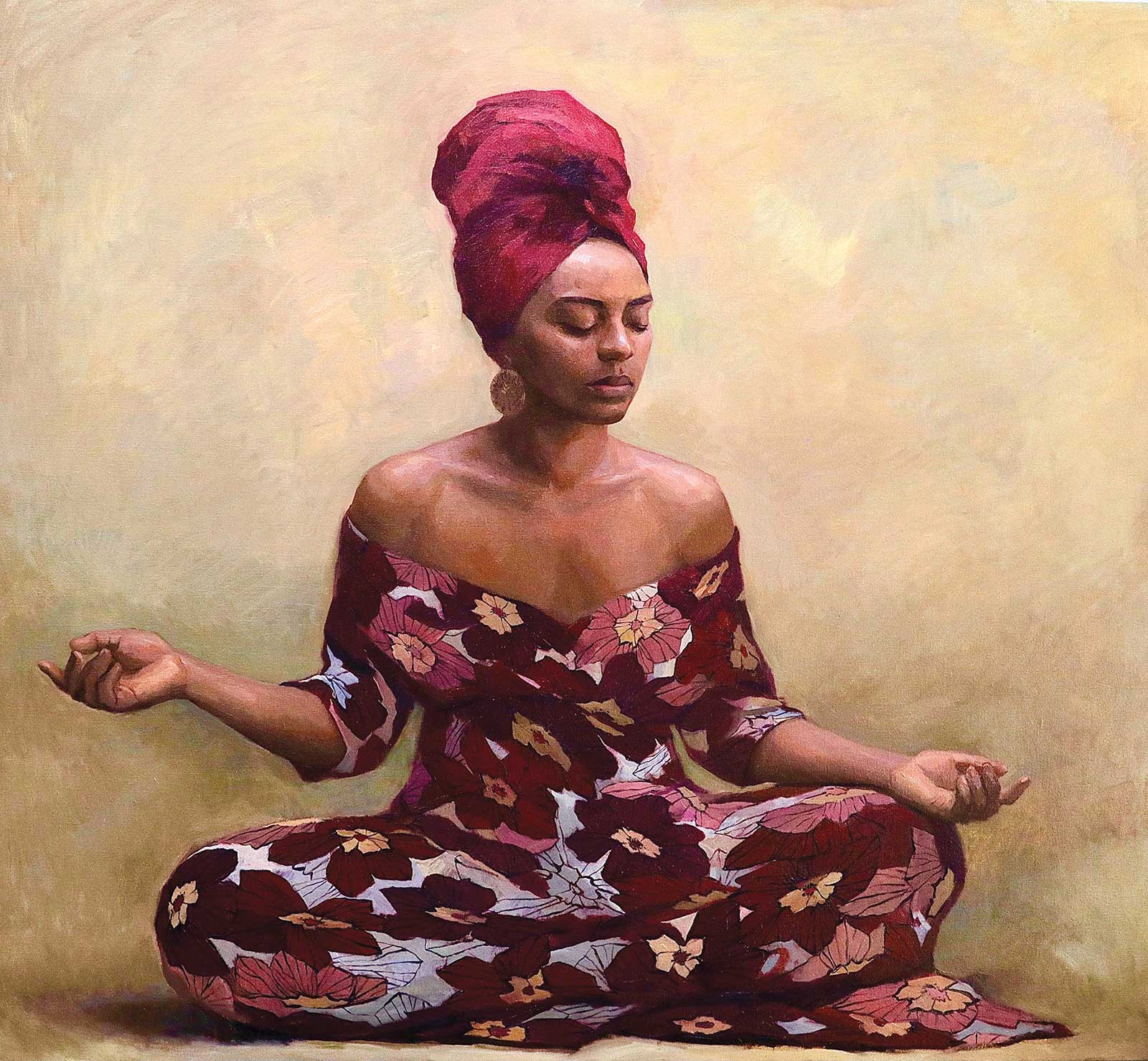
Within, oil on linen, 41 x 45" (105 x 115 cm) This painting was inspired by trying to capture the moment just before an artist creates a piece of music. The portrait is of a lovely musician, Arachel. In the times that I worked with her, I realized that she had a very lively and vivacious personality. This painting is a juxtaposition of her, with the meditative spiritual space of creating a new work of art.
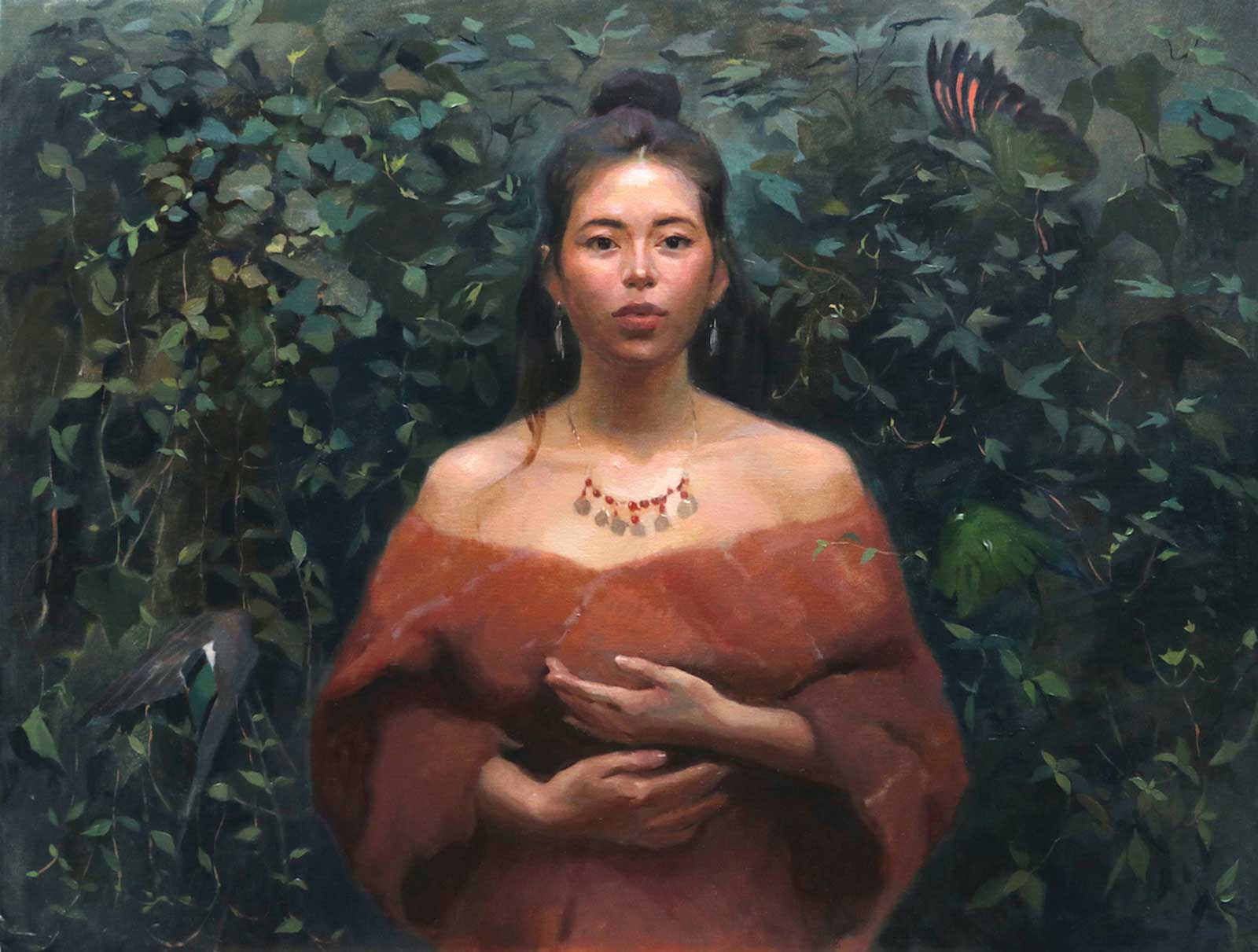
Earth, oil on linen, 31½ x 43" (80 x 110 cm) The concept of nature and Earth were the major inspirations for this piece. The model, Rominha, was the perfect energy for this work. I wanted to have the subject stand against a wall of green to balance the warms in the composition.
My Art in the Making Human Consciousness
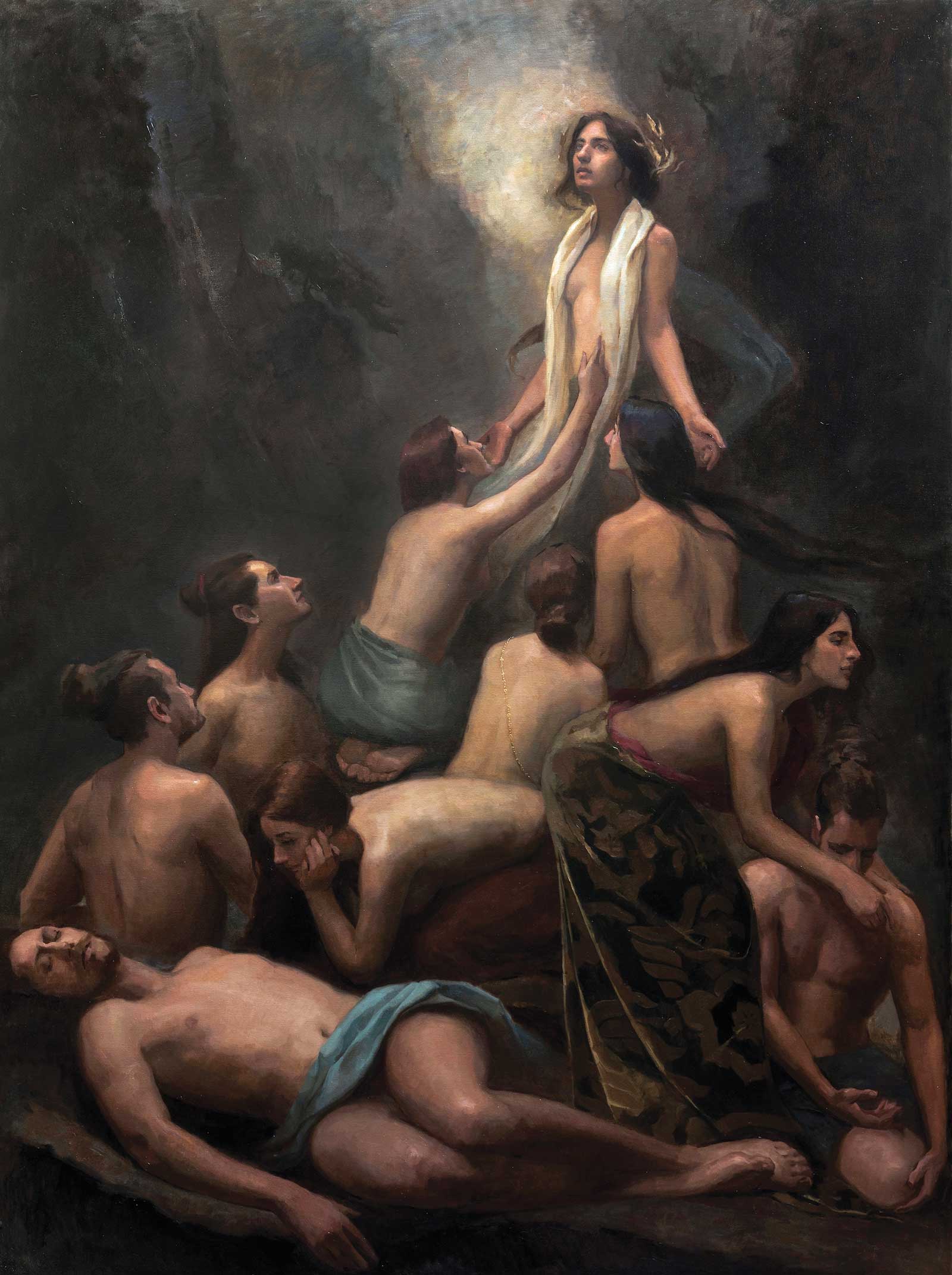
For this painting, titled Human Consciousness, I wanted to create a composition that captured the viewer, with its “pyramid” structure, or a tall triangular composition in a more abstract sense. The human figures that became part of the composition merged and flowed together to create this triangular impression. Inspired by the human condition, I wanted to explore the different reactions of human beings when faced with calamity. Some rise above others and lift the consciousness of all, some look to others for inspiration, and some look within themselves for a source of strength. I wanted to create a composition that ascended to the focal point, the central female figure, where the values also got lighter.
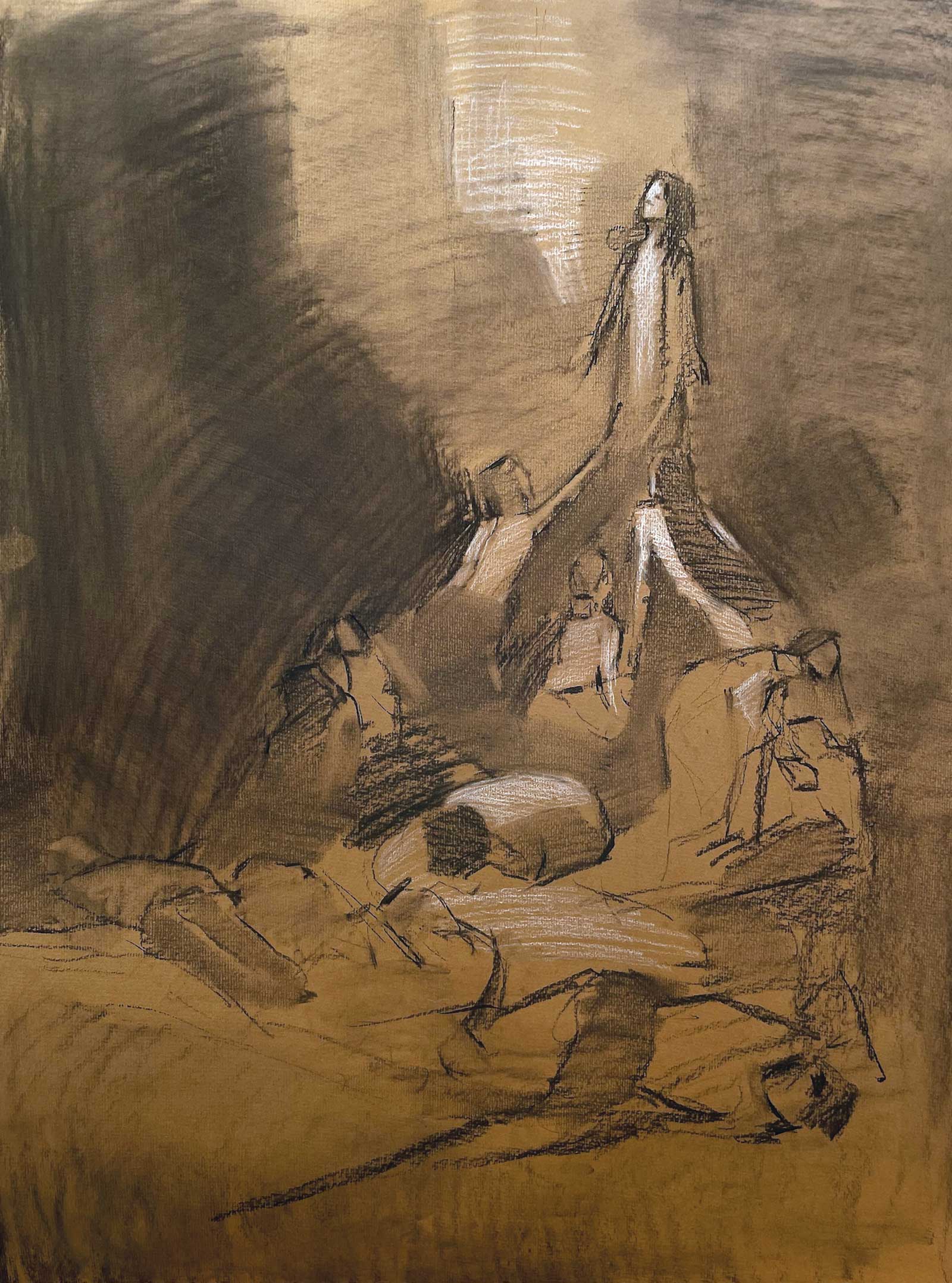 Stage 1
Stage 1 Blocking in Major Shapes
This first step involves just blocking the idea down. I’m purely thinking in terms of value—specifically three values of shadow, mid-tones and lights. At this stage it’s essentially a dance between shape and design. This stage is usually not precious at all and used just as a jump start into the composition with no inhibitions. I used charcoal and white chalk over a sepia-toned paper.
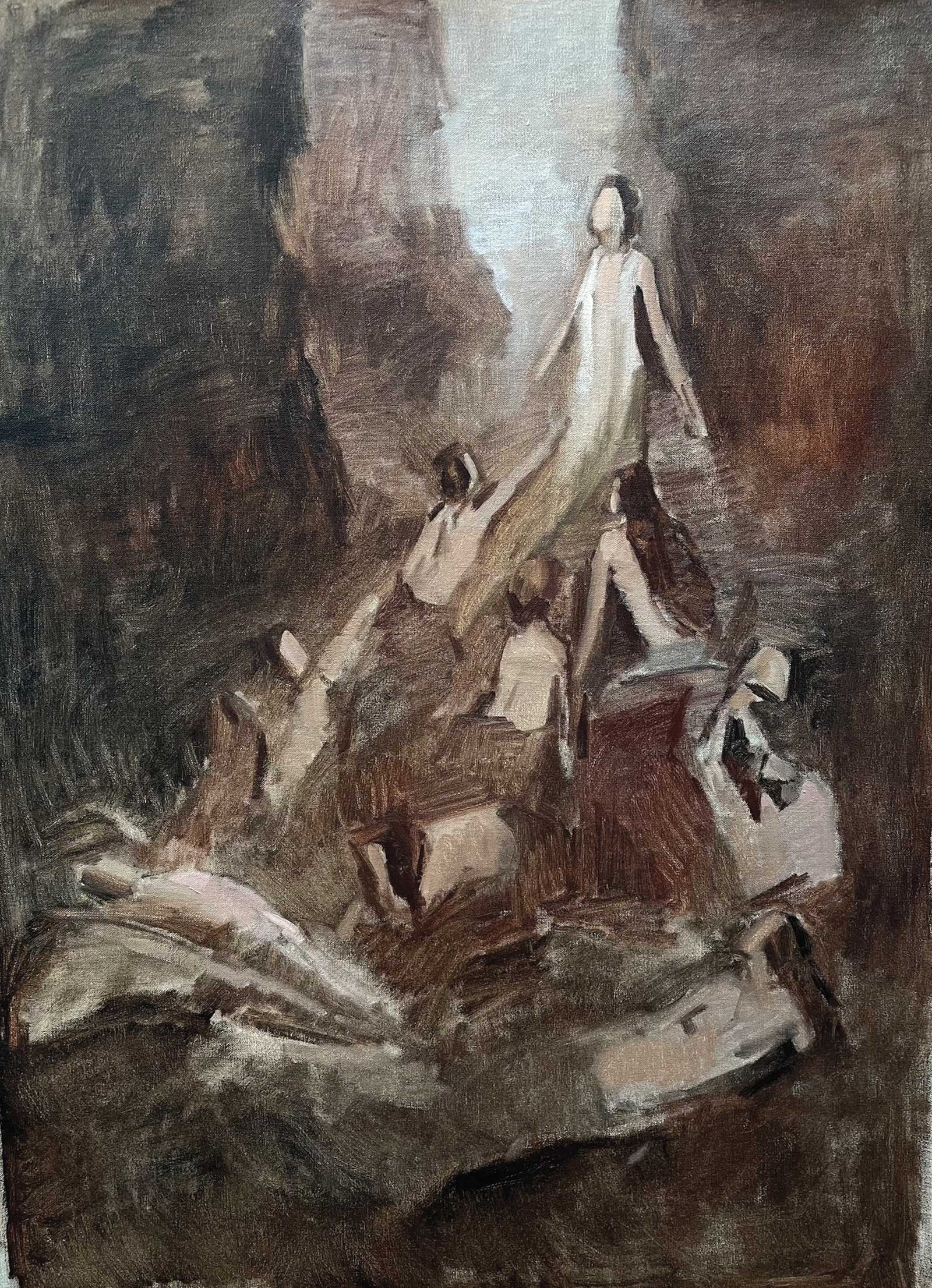 Stage 2
Stage 2 Color Study
The second stage is a color study. Here I start to establish some amount of color, cooler and warmer notes, while still continuing to evolve the design of flat value shapes.
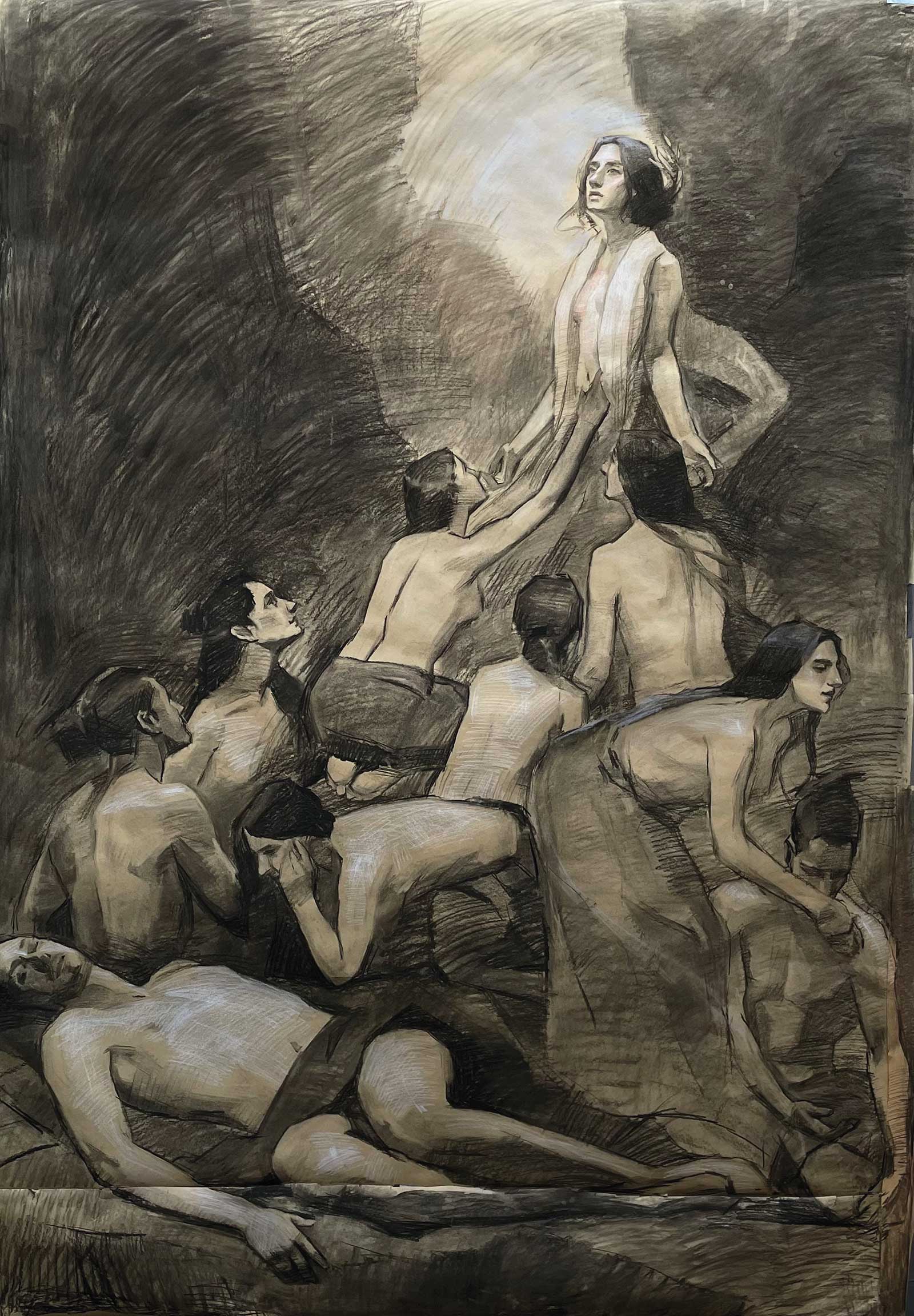 Stage 3
Stage 3 Life-Size Drawing
I start this phase with a life-size transfer drawing. The drawing is true to the scale of the final painting. I work with live models. The medium is charcoal and white chalk on a warm toned paper. As mentioned earlier, I’m really thinking about the triangular composition leading up to the focal point. After the drawing is complete, I transfer it onto the toned linen that has been stretched on stretcher bars.
 Stage4
Stage 4 Beginning to Paint
This is the first pass of paint on the linen. My goal at this phase is to essentially be able to get the same visual impression in my painting as it was in the transfer drawing. I’ll keep the paint pretty thin at this stage until I’m sure where all the forms are going to sit in space.
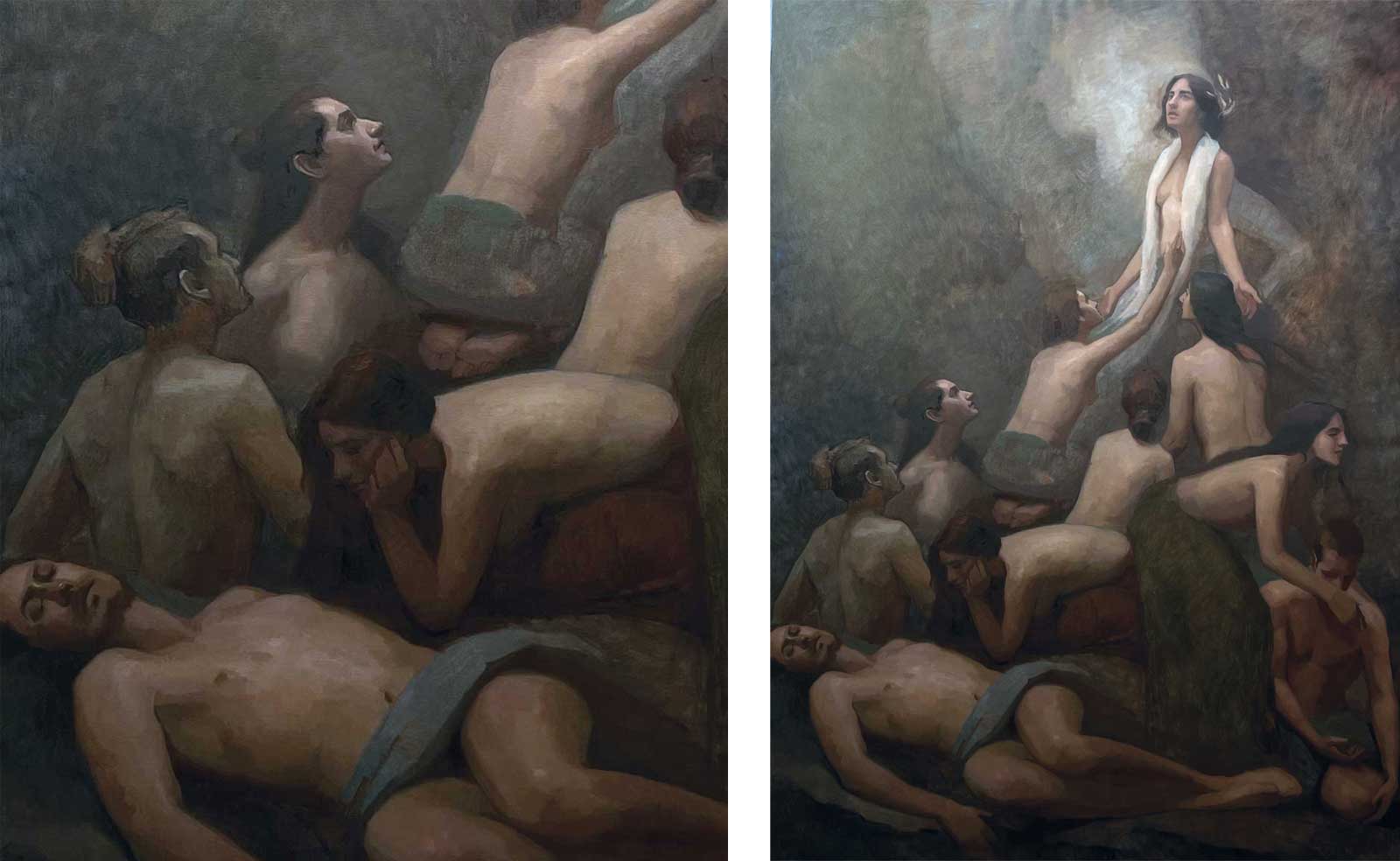 Stage 5
Stage 5 Adding More Color
At this stage, I slowly start to introduce more chroma. At this point, I’m beginning to work again with the live models in my studio, where I work with natural light. I’m definitely using the transfer drawing, but then making design decisions from life in order to improve the anatomy and sense of design.
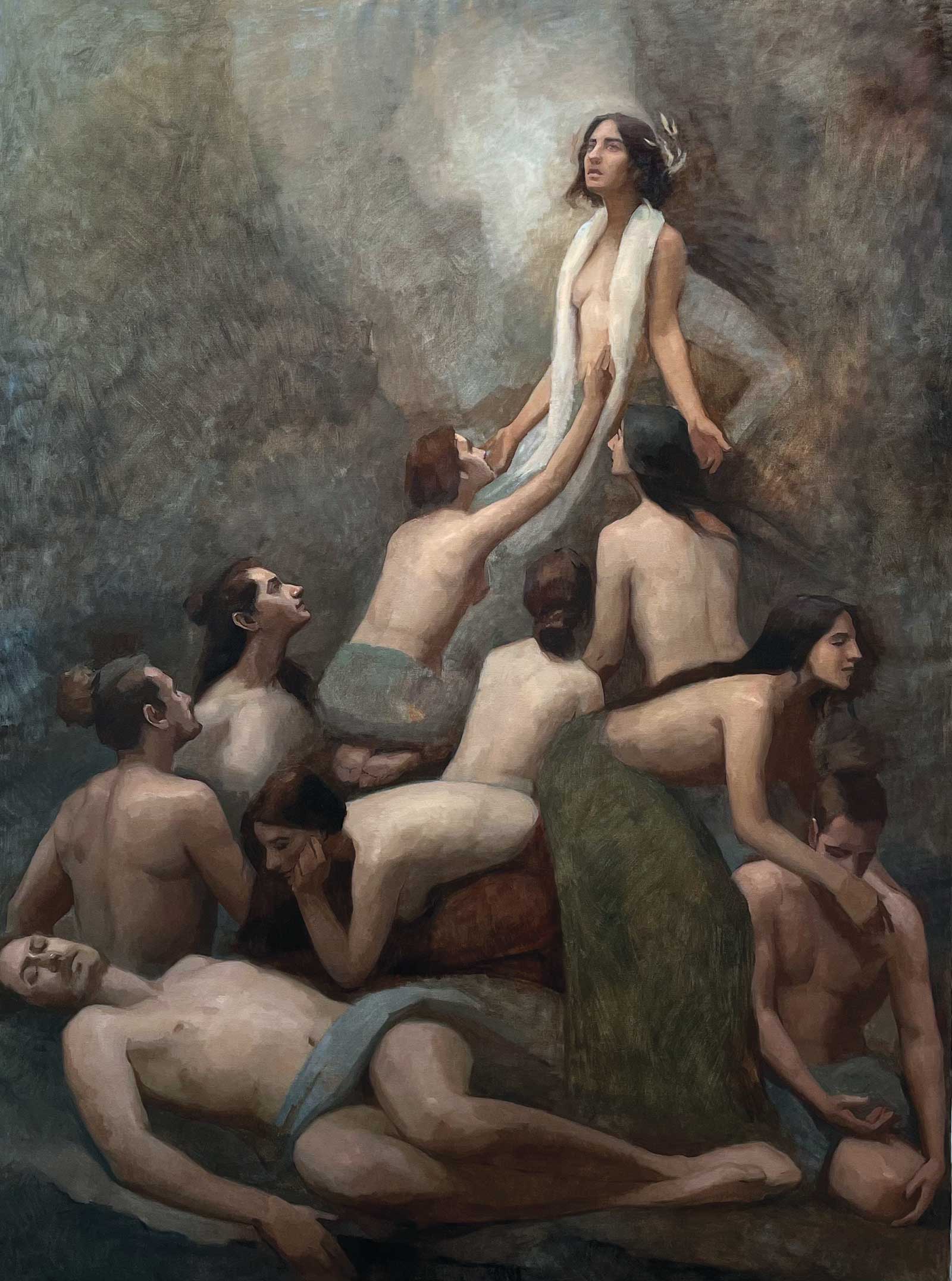 Stage 6
Stage 6 Temperature Shifts
Now, I’m looking for various temperature shifts, including warmer and cooler draperies to create variety in the composition, as well as rhythms that can help connect the painting.
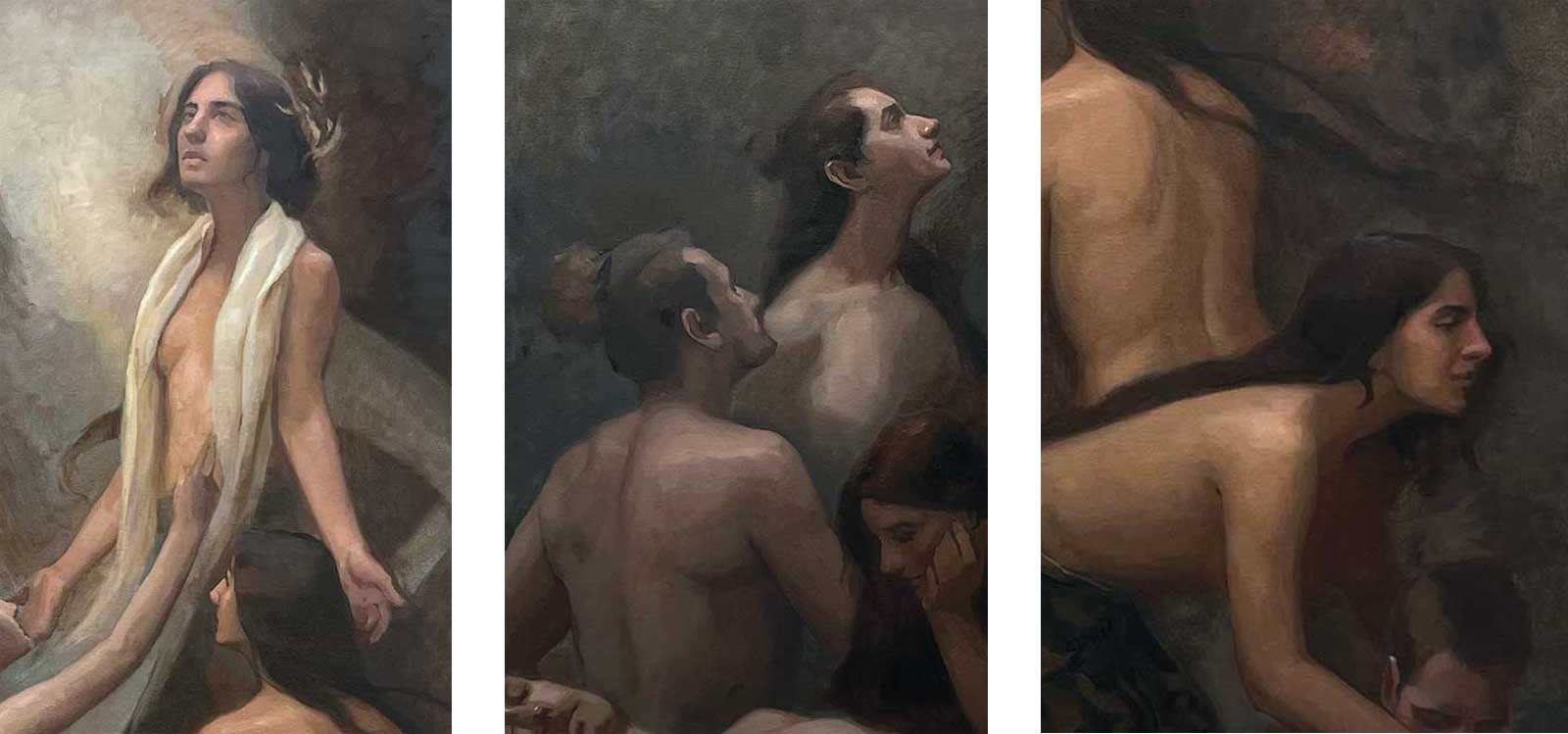 Stage 7
Stage 7 Figurative Forms
At this stage, I’m thinking about the sense of form on all the figures. I’m individually rendering each figure, from the shadow, dark half-tone, mid-tone, light and highlight values. I also start to key my lights lighter and darks darker.
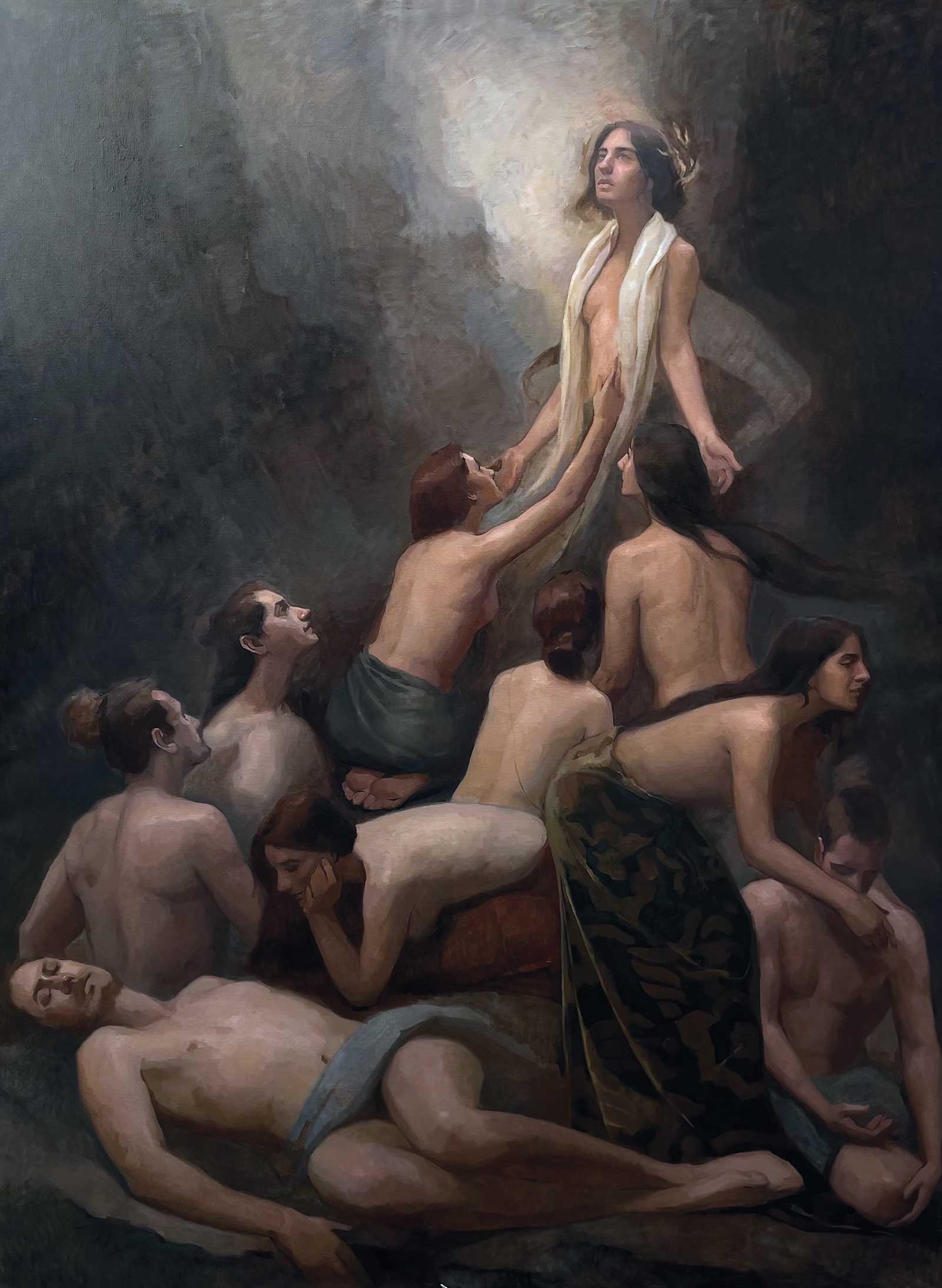 Stage 8
Stage 8 Details
I start to add small details, like different textures for the drapery, showing the difference between the velvet and cotton. This is the last pass on the work before the final stage. I’m considering the depth in the background and trying to create more varied and interesting negative shapes around the figures.
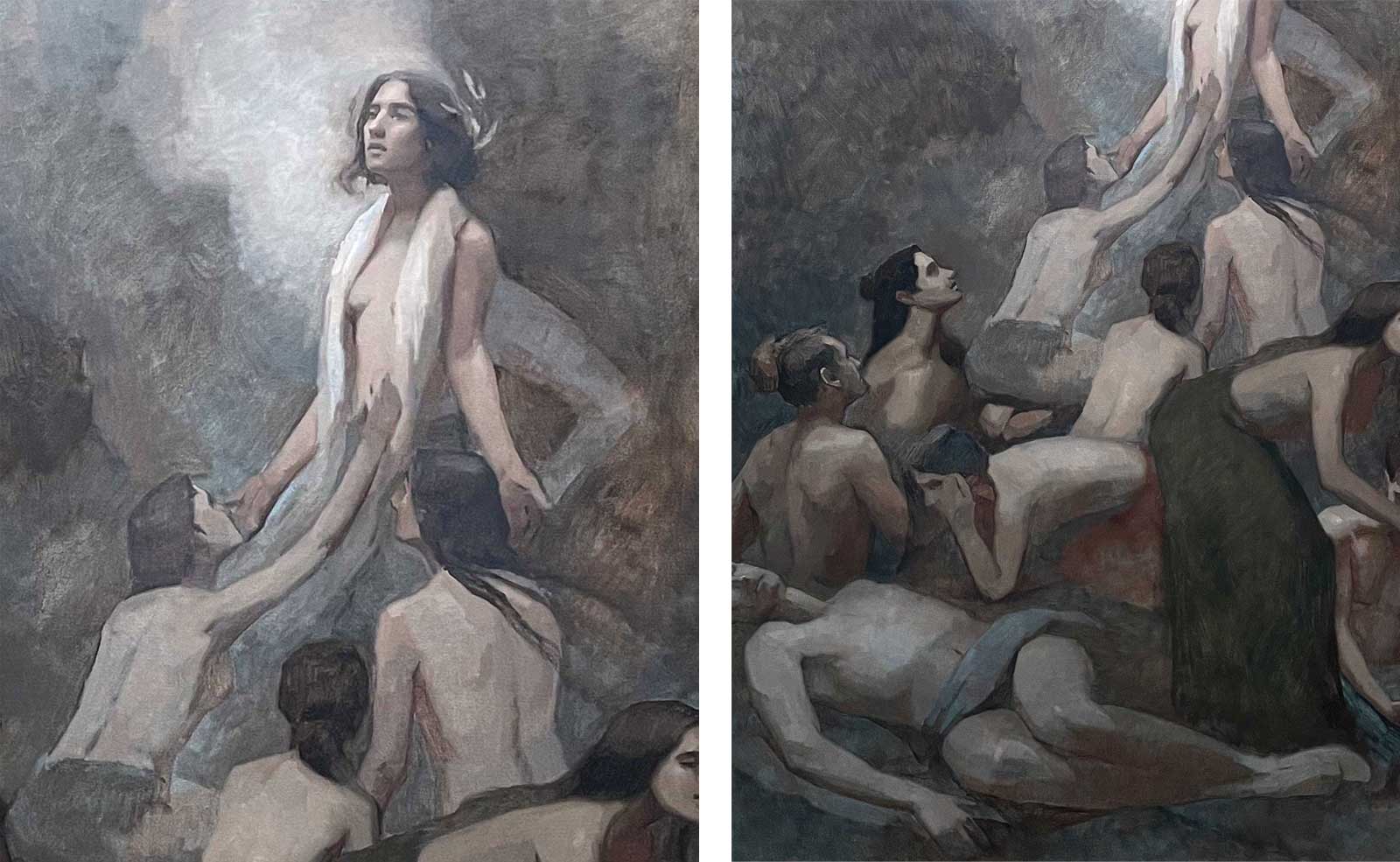
 Stage 9
Stage 9 Finished Artwork
Human Consciousness, oil on linen, 79 x 59" (200 x 150 cm)
About the Artist
 Tanvi Pathare
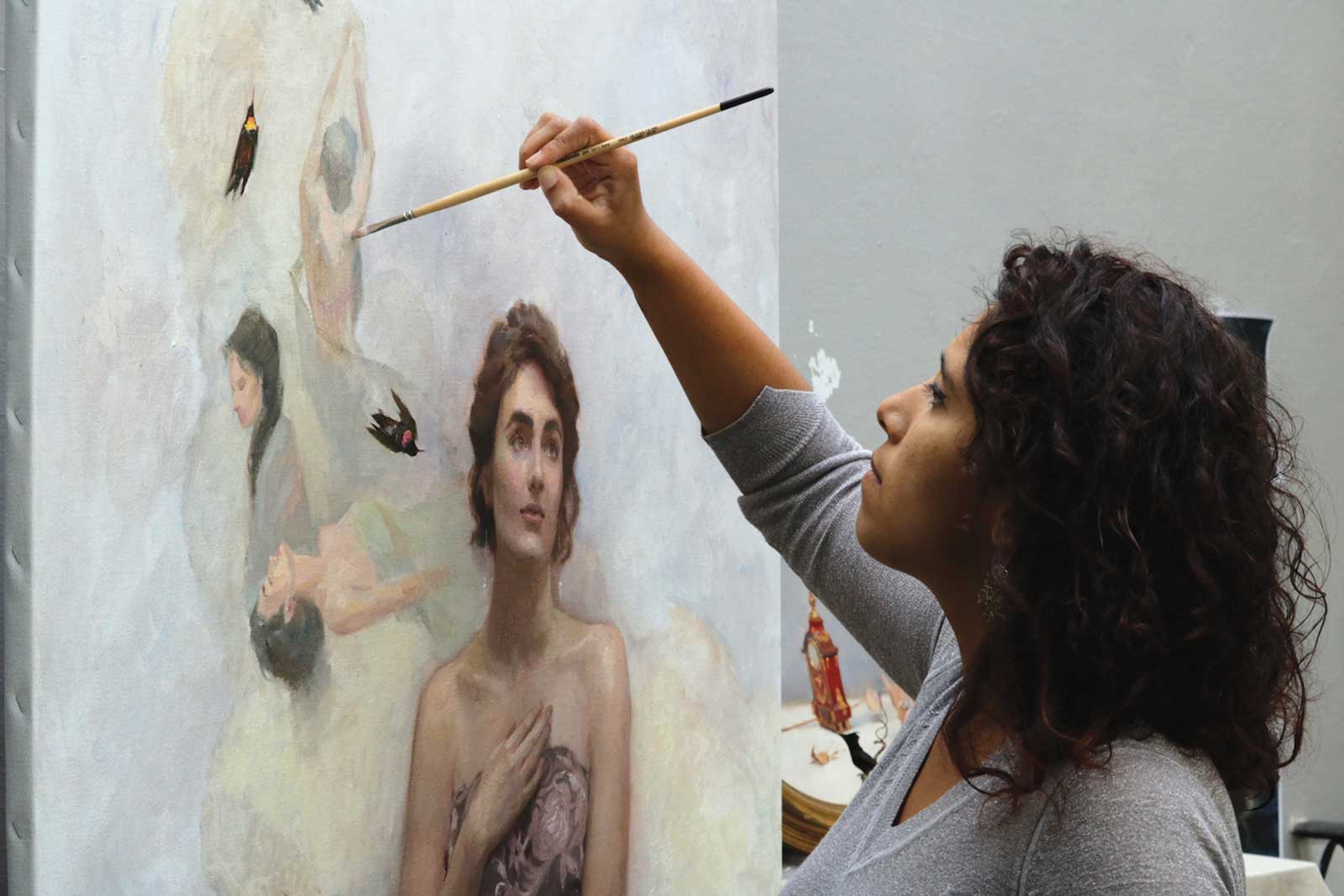
Tanvi Pathare, born in Mumbai, India, showed a growing interest in the fine arts from a very early age. She graduated with honors from Sir J. J. School of Art in Mumbai where she received a Bachelor of Fine Arts in painting. Following the allure of the realistic tradition of painting from nature, Pathare attended The Florence Academy of Art in Florence, Italy, graduating from the painting program in 2012.
During her second year, she won the award for Best Figure Painting in the Intermediate Program, and in her final year, she was awarded Honorable Mention for Exceptional Overall Performance in Advanced Painting. She is recipient of the prestigious Elizabeth Greenshields Foundation Grant for Painting (2012), and a finalist in the Figurative Category of the ARC International Salon 2012 to 2013. Pathare began teaching at The Florence Academy of Art as a student, and is presently a principal instructor in the intermediate drawing and painting programs at The Florence Academy of Art. She currently works privately in Florence.
Represented by
Hagan Fine Art Gallery, South Carolina, USA, www.haganfineart.com
Martin House Gallery, North Carolina, USA, www.martinhousegallery.com