When I first tried gouache, I had some issues with it. It just didn’t do what I wanted it to do. There were things I could do in oil (such as soft gradient blending) or watercolor (variegated washes) that didn’t work out for me when I used gouache. I found that dark colors shifted to lighter tonal values when they dried, and the final surface seemed chalky and delicate.
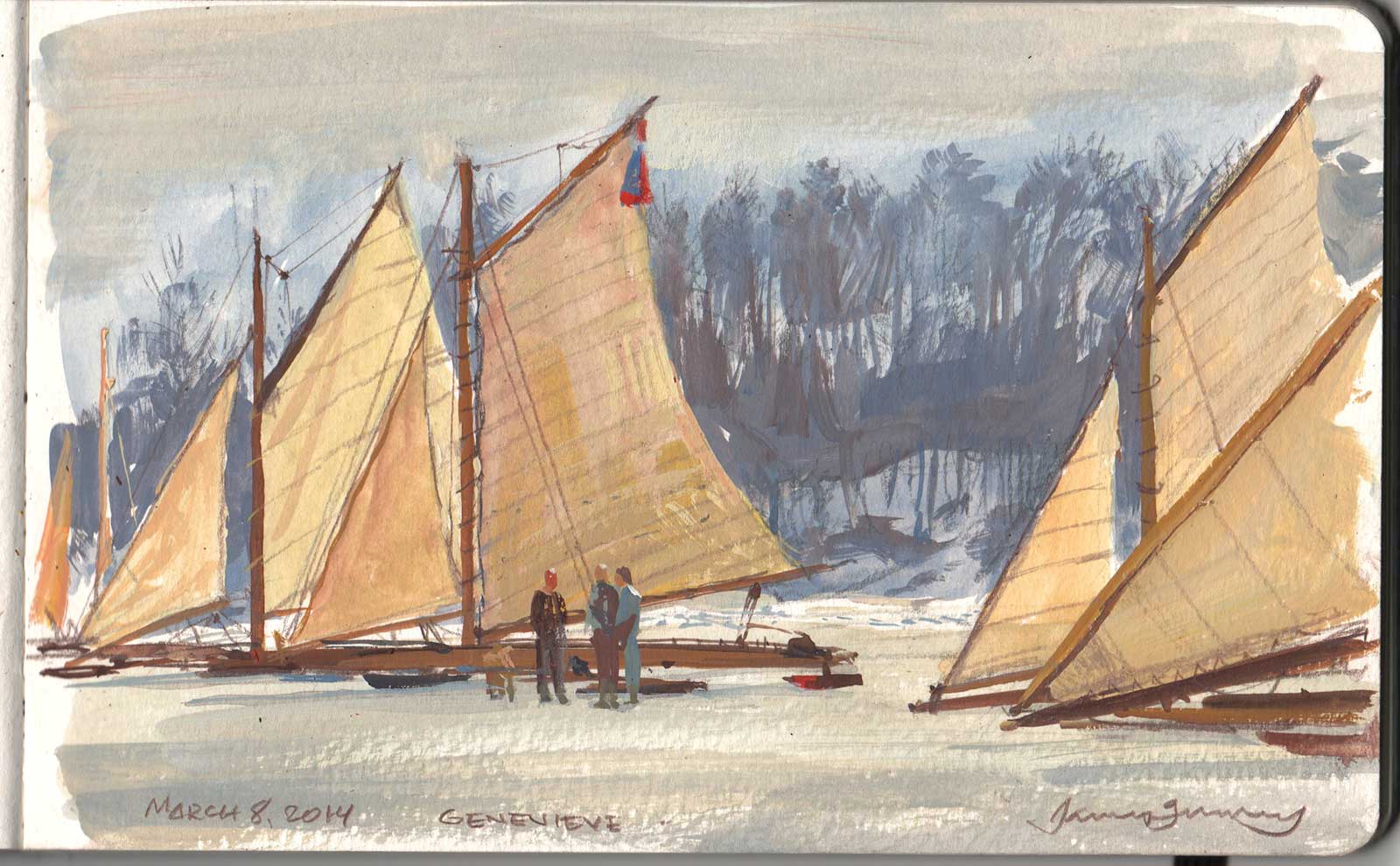
Iceboat Genevieve, gouache and watercolor, 5 x 8" (12 x 20 cm)
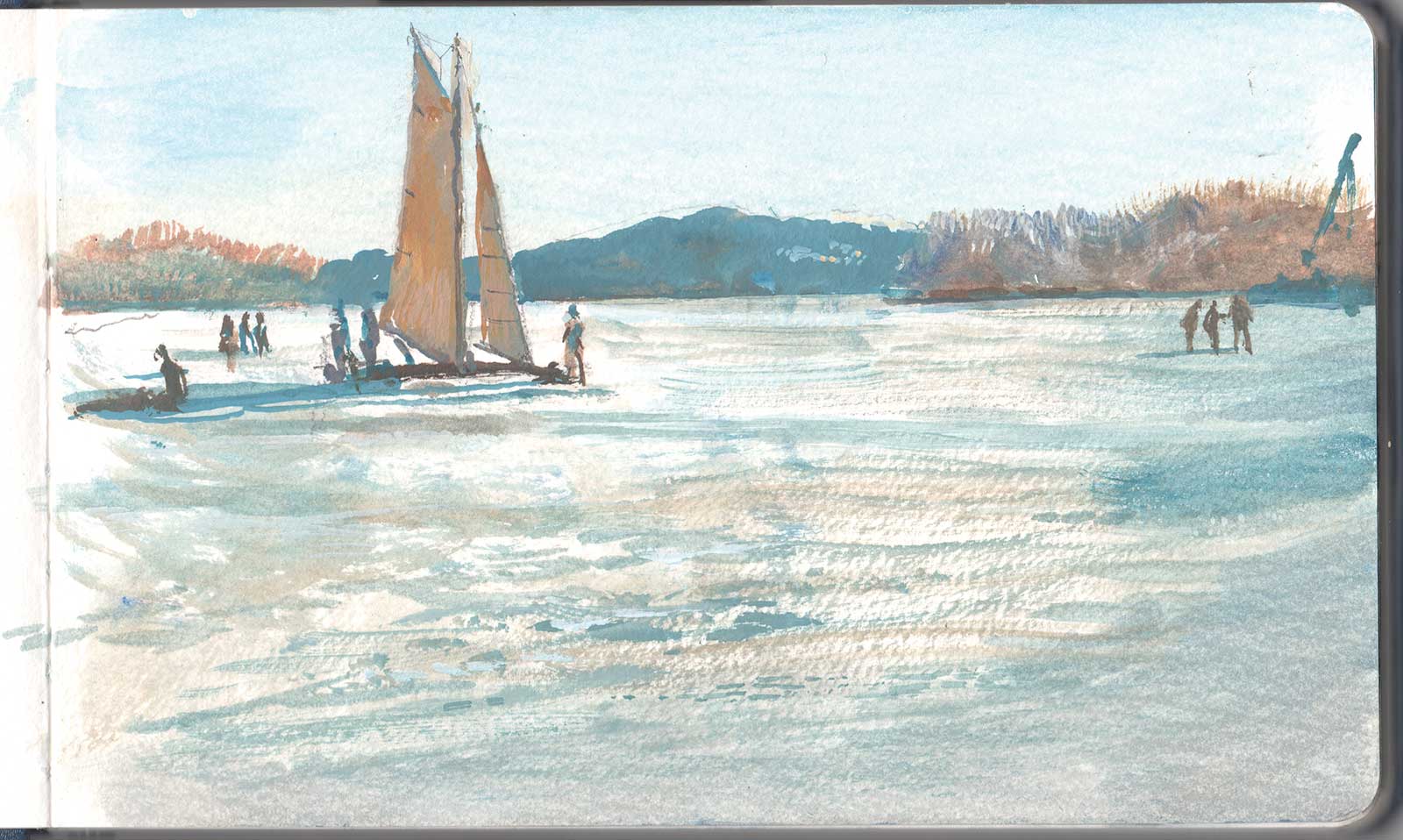
Greyhound, gouache and watercolor, 5 x 8" (12 x 20 cm)
Having now worked with gouache almost exclusively for the last few years, I find it versatile and forgiving, because what I thought were its limitations are really its strengths. I’ve learned a few ways to work around some of the problems, and have tried to turn other issues to my advantage. In this article I’ll share the challenges and the remedies that have worked best for me.
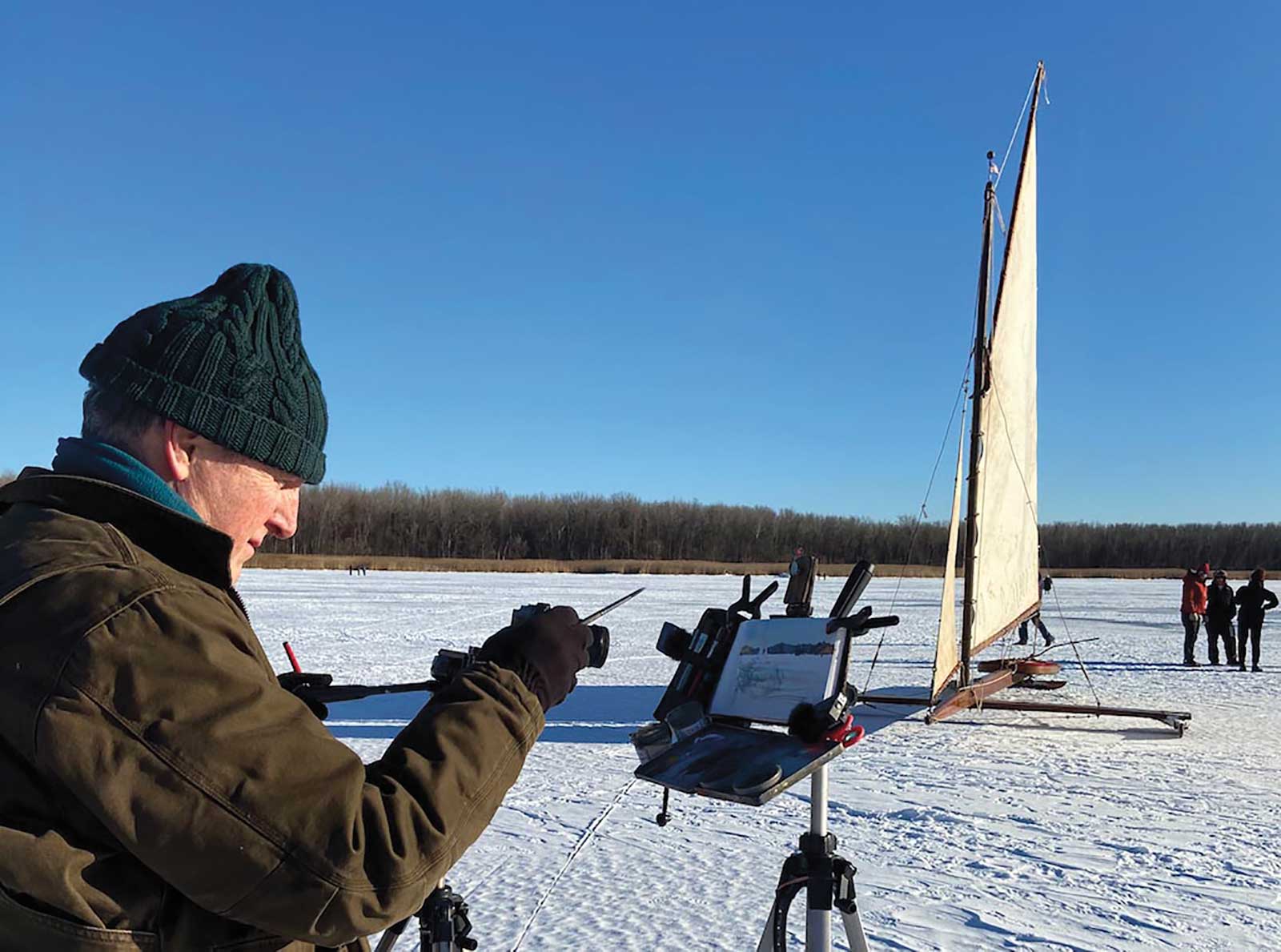
It was about 10° Fahrenheit (-12° Celsius) when I painted this iceboat, standing out on the frozen Hudson River. Instead of using plain water to dilute the paint, I used a cup with 50 percent water/50 percent isopropyl alcohol and another cup with 100 percent vodka. Both worked well.
It Freezes
Problem: Any water-based paint freezes at 32° Fahrenheit and 0° Celsius. That makes painting snow scenes difficult because the paint ices up on the palette, on the brush, and on the surface of the painting.
Solutions: Painting in gouache in sub-freezing temps (10° F, -12° C):
- Put a chemical hand warmer under the metal palette to keep squeezed paint alive.
- Instead of water, use vodka (40% alcohol) or a mixture of water plus isopropyl alcohol (50/50). Both stay liquid.
- Paint next to a campfire (see International Artist issue #130). There’s enough heat around a large open flame to keep the paint (and your hands) from freezing.
- Using a steering wheel attachment, you can hang your easel and paints from the comfort of your driver’s seat (preferably with the car parked).
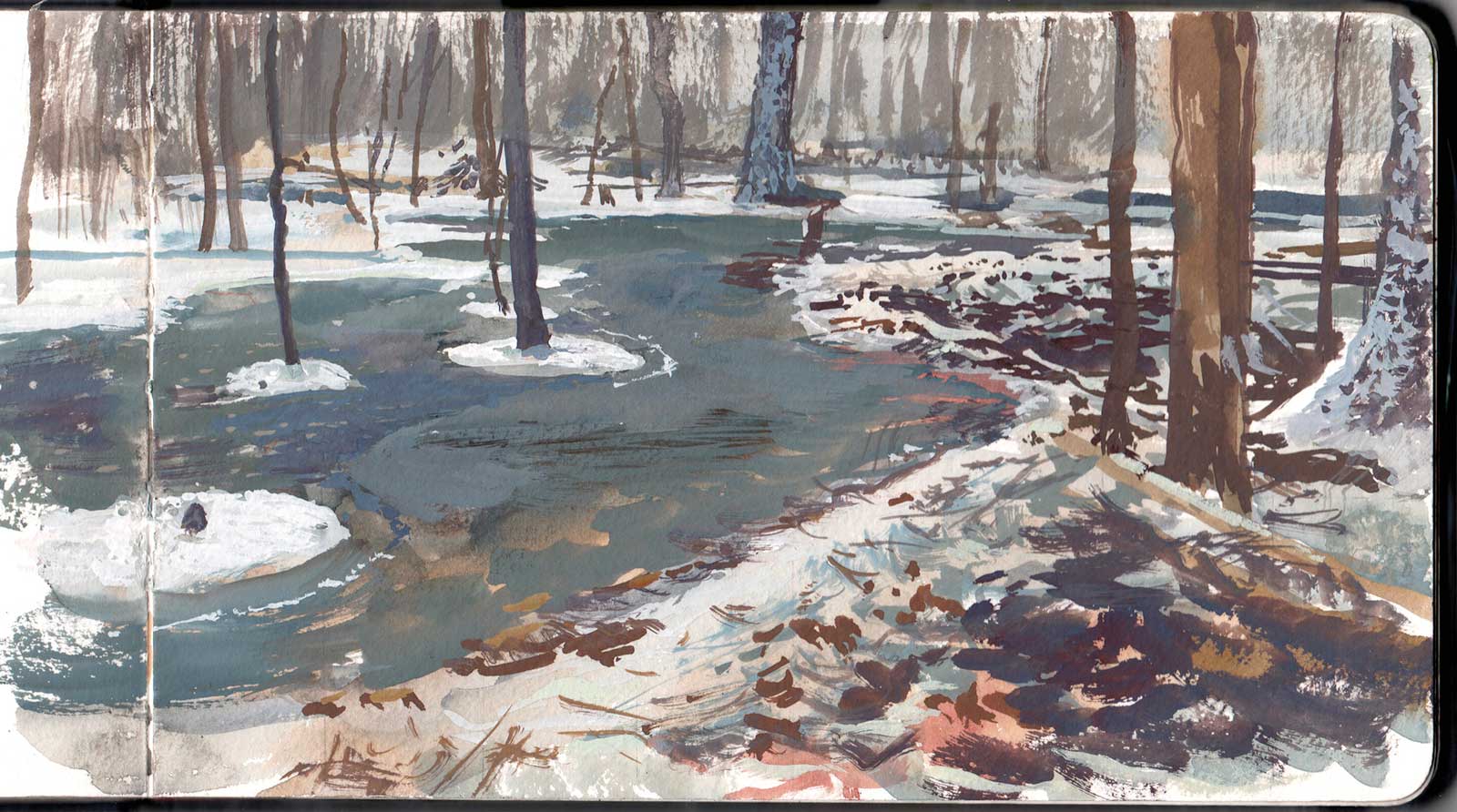
Beaver Dam, gouache, 5 x 8" (12 x 20 cm)
Because of its fast drying time, gouache is ideally suited to overlapping textural strokes, such as the ridge of mud and sticks making up this beaver dam.
It Dries Fast
Problem: Gouache dries within minutes, making smooth gradients difficult. In dry or hot climates it practically dries on the brush.
Solutions: You may have to squeeze out new paint more than once during a painting session.
- Put your dabs of paint on a damp paper towel on the palette to make it stay wet longer.
- If you don’t like to keep squeezing out new tube paint, try gouache in its rewettable pan form or in its jelly-cup form.
- Have a small misting sprayer to keep the palette paint from drying.
- As with transparent watercolor, it’s important to mix plenty of paint in advance for a given passage.
- To make blended gradients, paint quickly and directly. You have to have a decisive and systematic approach and plan ahead.
- The fast drying time is a real advantage for any forms that require overlapping strokes, especially patterned fabrics, architecture and foliage.
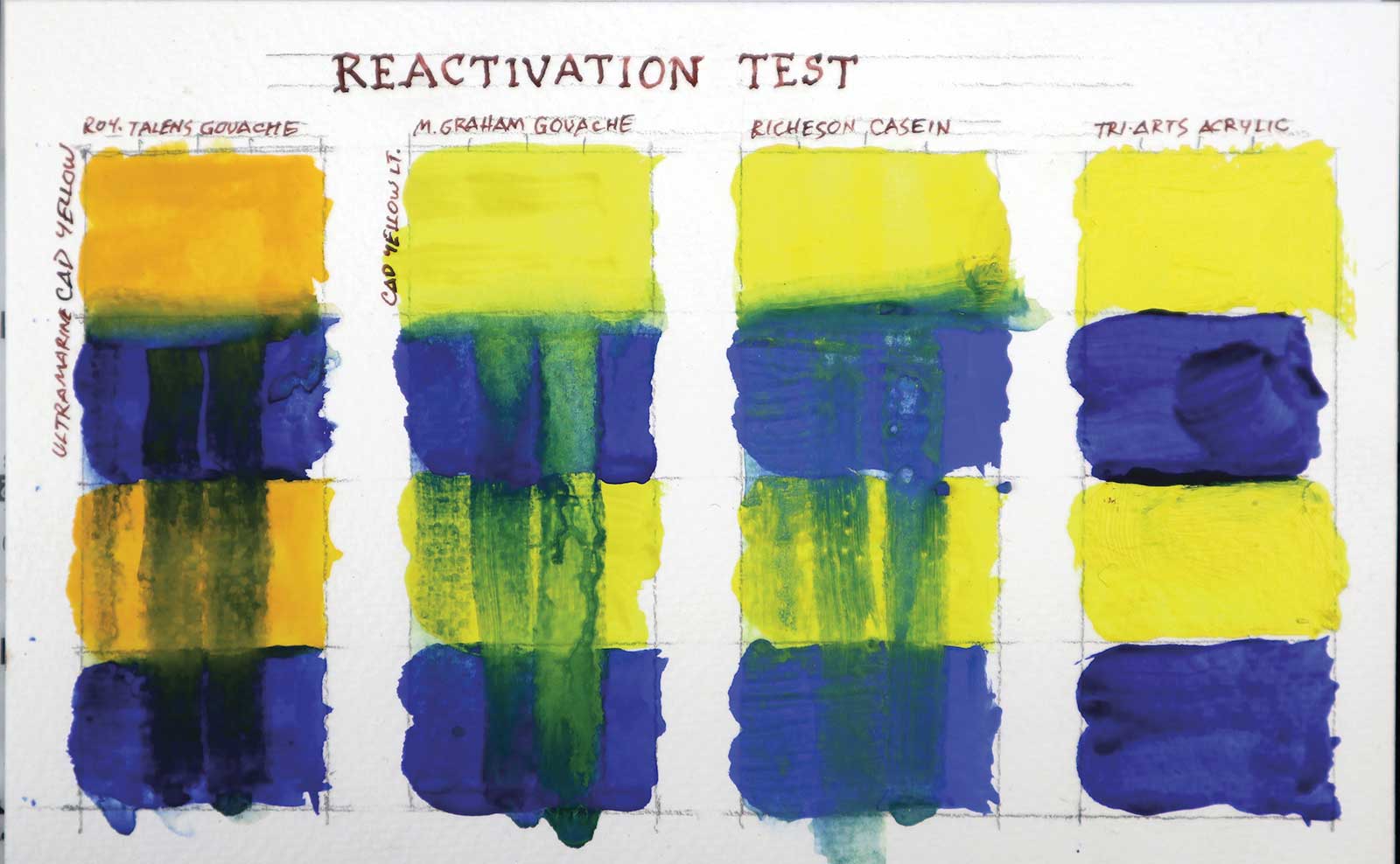
Reactivation test with two brands of gouache, casein, and acrylic I draw down wet strokes one, two, and three times making reactivation streaks in every paint but the acrylic.
Layers Reactivate
Problem: The binding medium of gouache dissolves each time it is rewet. Unless you have a light touch, later strokes can activate the colors below, which can lead to blotchiness or muddiness.
Solutions: Get to know your paints and how they behave when they’re rewet.
- Do a reactivation test to see what happens when you rewet dried layers. I alternate patches of cadmium yellow with ultramarine blue, using two brands of gouache, followed by casein, which is a stronger milk-based binder that becomes more resistant to reactivation as the proteins in the binder have time to develop. The paint patches in the right column are acrylic, which does not reactivate. Once the paints have fully dried, use a brush loaded with water to see how much the settled paint dissolves again.
- The consistency of gouache can range from watery, to milky, to creamy, to thick like butter.
- To reduce reactivation, start out wet, loose, and soft, and gradually make your strokes thicker and more opaque.
- Always lay down a stroke in one go, without second guessing.
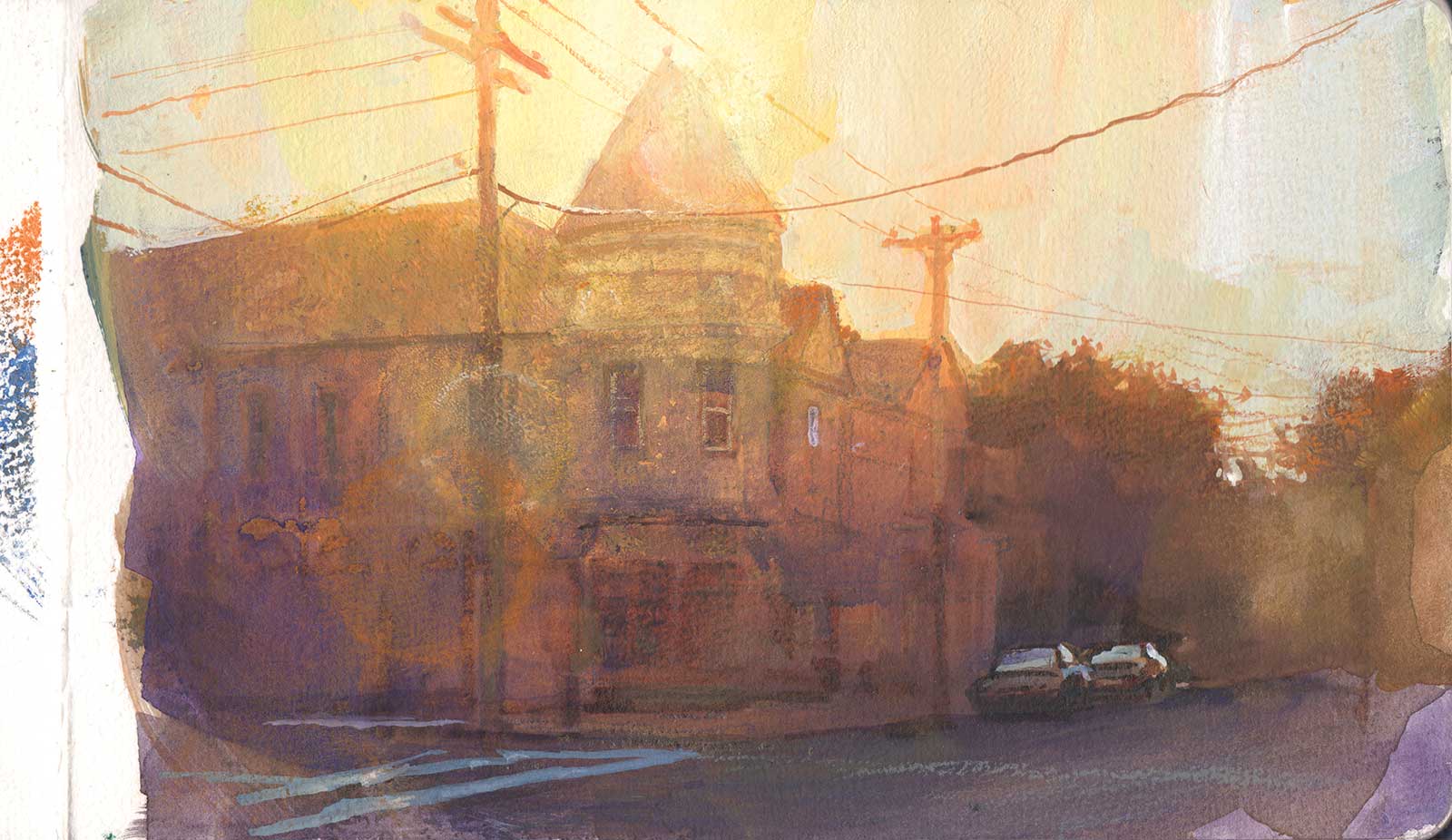
Furniture Shop, gouache, 5 x 8" (12 x 20 cm)
I took a chance and painted a big dark transparent glaze over the whole painting.
It Shifts Values When it Dries
Problem: Gouache sometimes gets lighter or darker when it dries. Dark colors in particular dry lighter in tone. The reason is that a matte surface diffusely reflects more randomly scattered light from the source back to the viewer’s eye.
Solution: Value shifting happens in every matte-surface paint.
- It’s something you just have to get used to. The only way to stop it from happening while you’re painting is to mix acrylic gloss medium into your paint, but then the painting becomes acrylic.
- If you want to restore the value relationships to the way they looked when wet, you can use varnish.
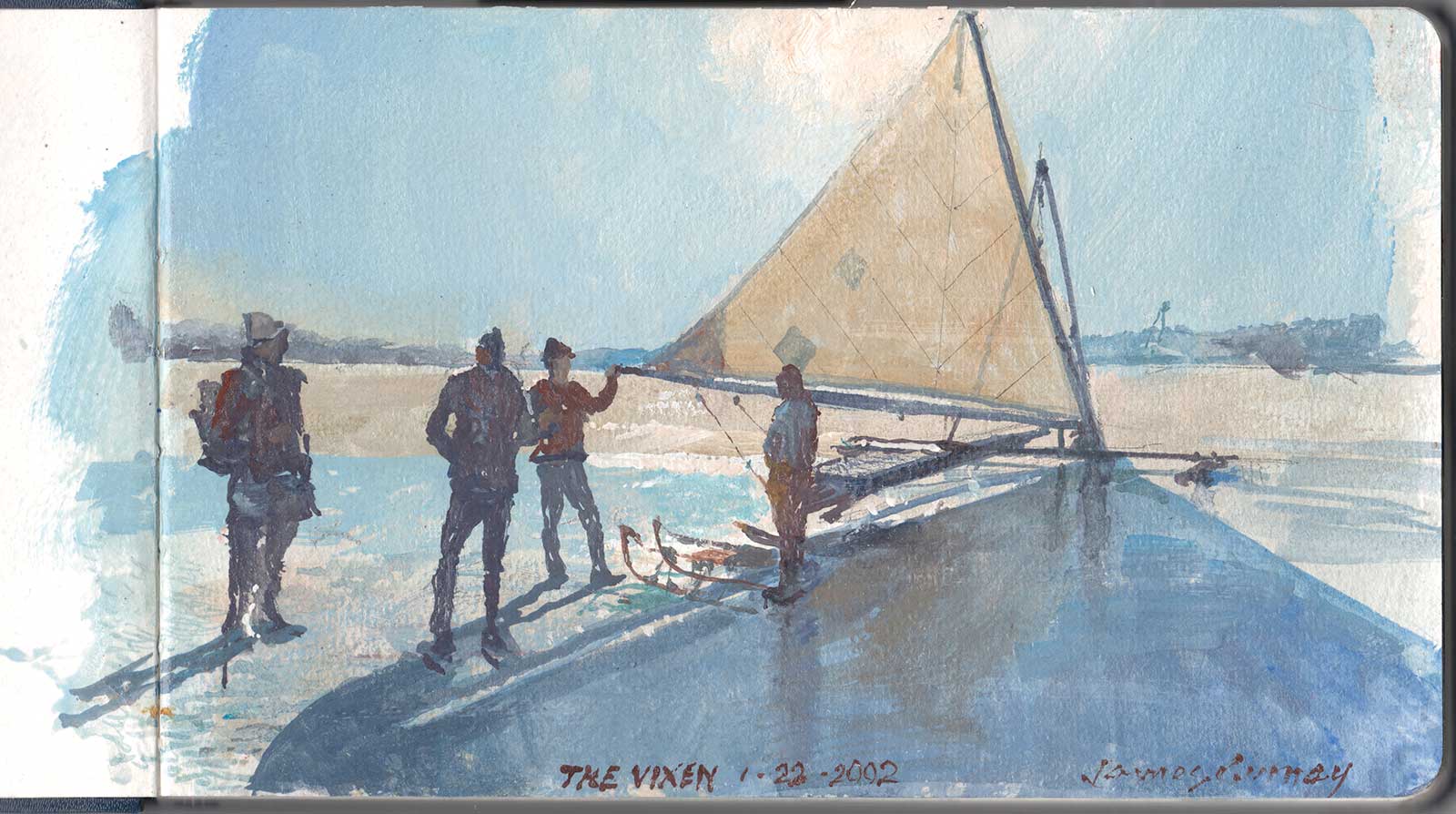
The Vixen, gouache, 5 x 8" (12 x 20 cm)
After establishing the light tones, I paint all the dark areas: figures, spars, shoreline and shadow on top of that. The key to avoiding muddiness is to consciously separate the light tones from the dark tones.
It Looks Chalky
Problem: The matte look of gouache, and its delicate, fragile surface, results in paintings that are relatively paler than oil, less durable, and more difficult to protect and clean.
Solution: This is more of a problem for dark-keyed paintings than for light ones.
- Avoid painting all your tones in a middle range. Separate your light values from your dark values. Make your pale light areas lighter and your darks darker.
- Paintings can be protected in a sketchbook, framed behind glass or varnished.
- For varnish, I use acrylic gloss medium or spray varnish, but I always lock the surface first using a workable spray fixative to make sure the wet gloss coat doesn’t reactivate the delicate layers.
- Look for subjects suited to gouache—ones that are more chromatic, pastel-tinted or delicate.
- Keep in mind that gouache paintings photograph well without glare because of their matte surface.
About the Artist
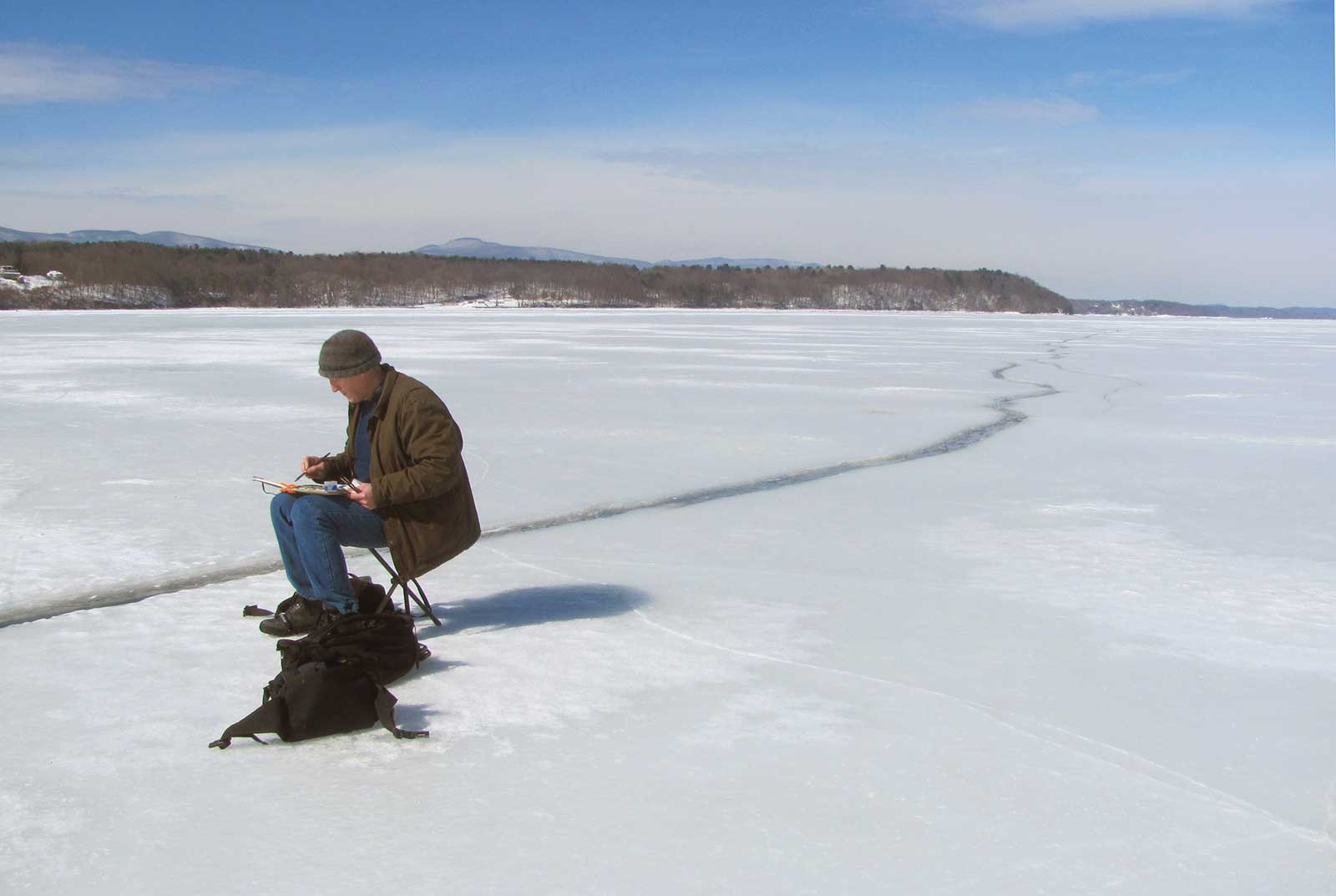 James Gurney
James Gurney is the author of Color and Light: A Guide for the Realist Painter and Dinotopia series. His newest long-form video from Gumroad and YouTube is called 5 Problems with Gouache...and How to Solve Them. The video tutorial includes tips for storing the paint, managing layers, how to safely glaze, dealing with value shifts, when and how to varnish, how to paint a reactivation test, including some of your questions and comments and a close look at Hudson River ice yachts.
Contact at
www.gurneyjourney.blogspot.com