Artists have always been influenced by the world around them and other artwork. Sometimes you are the creator of a new idea, subject or genre, other times you take color inspiration from one image, and subject matter from another. So much has been done in art, it’s hard to be completely original anymore, and we are all influenced by everything we have seen or learned in our life to this point. And we all use references.
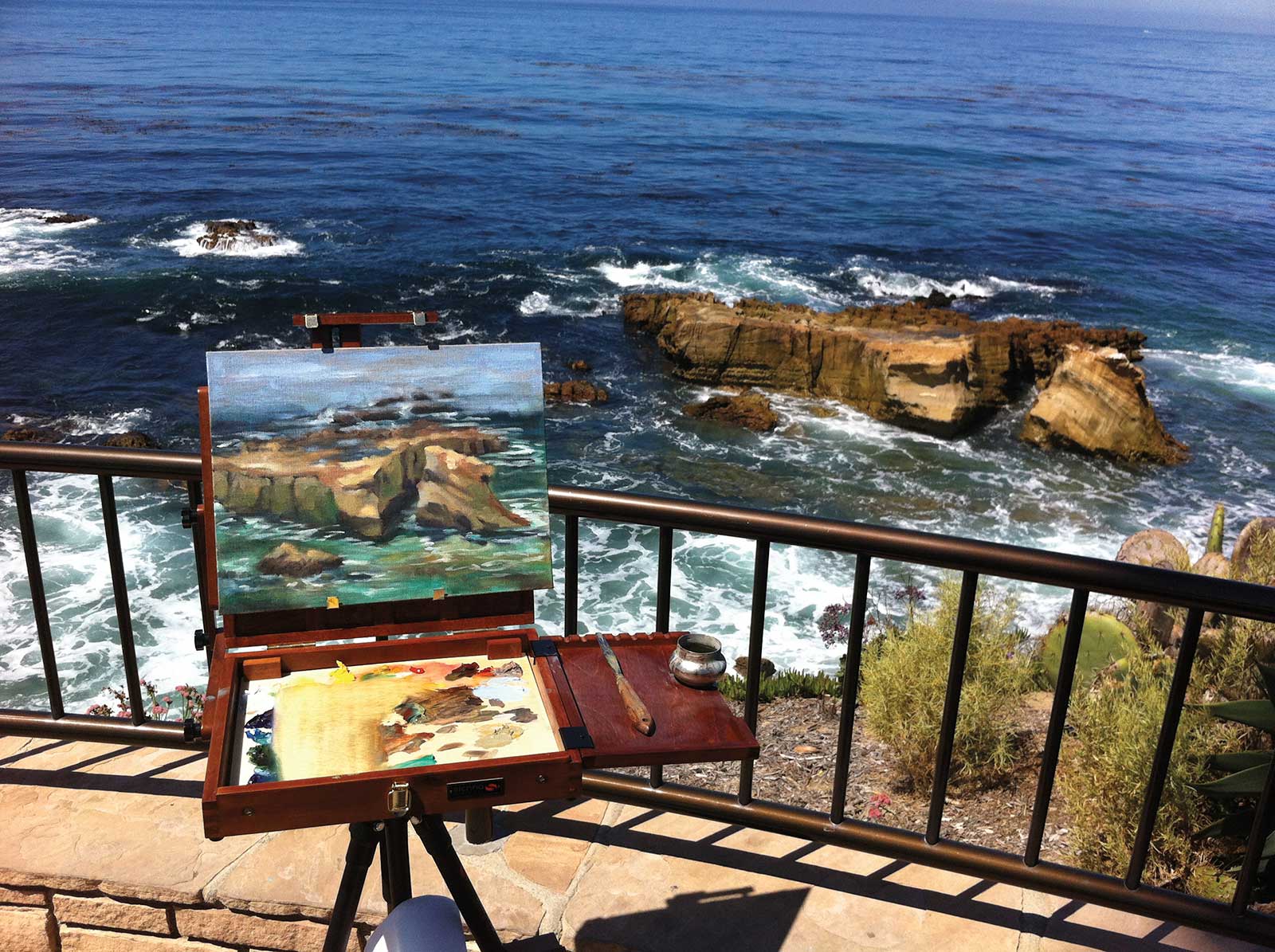
As artists, working with photos, books and other references is a way of life, but keeping track of all the things that influence and inspire us can be daunting and even frustrating. The creative process can sometimes be easy; you have a vision, you hire a model or you go out on location and you paint from life. Done. For others, works are created using a series of ideas from photo references or books on art. When we are getting ready to create or looking for inspiration, it’s best to have easy access to the things we need to make the transition from idea to canvas easier and fluid. We don’t want anything getting in our way. Brushes, canvas, paints and reference photos need to be ready. In this article I’m going to go over some simple ideas to help you organize, as well as show you a real life example of “how” to use multiple inspirational references in your work.
Where to Find Inspiration
Living life is the best source of inspiration as well as traveling, museums, reading books and looking at the world around you. The way the light hits a woman’s face, the blue of the ocean. An artist trying to capture the world around them. When you have a model or paint out on location, make sure to take lots of reference photos. Try to shoot the scene from many angles get close ups of each subject in your work and shoot images that are both horizontal and vertical as they could lead to different paintings of the same subject. We can’t always work from life. Luckily these days, the internet can pull up any image on a subject you type in. A great resource for finding inspiration is on Pinterest. Not only can you find great reference images and look at others’ artwork, you can make folders called “boards” to organize images your find there. Organize your subjects by theme and follow others themed boards for inspiration. I often pull up my Pinterest boards before I paint and look in a subject folder that contains 20 images of the same theme to fill my mind with images of it.
Respect Copyright
Remember that you can’t use their exact image or idea as that would be illegal and copyright infringement, but what you can do is take general inspiration from it. Each posted image is owned by another person. The idea is to get inspired by a photo, or landscape, and make it your own. Hire your own model to create a similar reference to work from. Find out where they painted that great ocean scene and make a plan to visit that area yourself.
A rule of thumb in the art world is to make sure you change at least 30 percent of the idea so that you don’t infringe on the author’s idea, but you will need to research art and photo copyright laws to be sure. Even if the artist has not copyrighted their work with this symbol © next to it and filed a form in the office, they are still somewhat protected. More on this can be found online and on YouTube; make sure you read up and respect copyright.
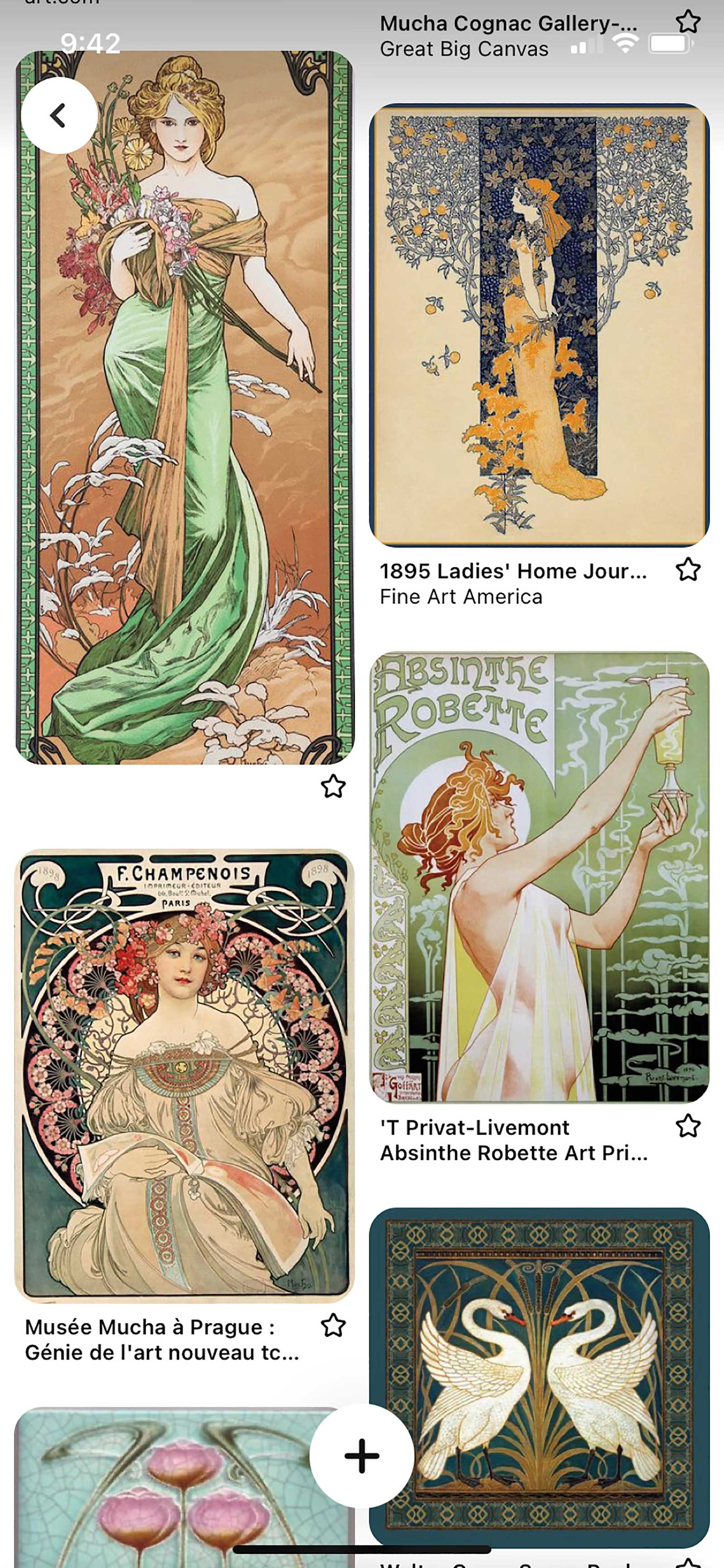
A screenshot from Pinterest containing old 1900s photos with no copyright infringement.
Organizing Your Photos
Today things are already much easier for creatives as our modern phones allow us to take, store and access our images quickly. On our phone and computer we can create separate albums to store each subject. I’m constantly organizing and adding images to my folders when I have free time. It’s become an important aspect of being a fine artist. On my computer I have a main folder called “REFERENCES,” and within it, categories such as portraits, fashion, kimonos, landscapes, France, Italy, boats, etc.
There are great practical software programs that us professionals often use to organize our references. One of them is called Picassa. In this program you can create visual libraries and even add metatags to each so the search can pull up any photos in that category. It’s used often by photographers and artists and has filters that are easy to apply to add even more reference ideas by changing lighting or adding filters.
Another simple creative board program is Pureref. This one makes a simple gray board on your computer screen that you can drag and drop images in, and it works as if they were printed photos on a corkboard. Interior and fashion designers use this type of program as they also like to organize visually.
Examples of How to Use Reference Photos
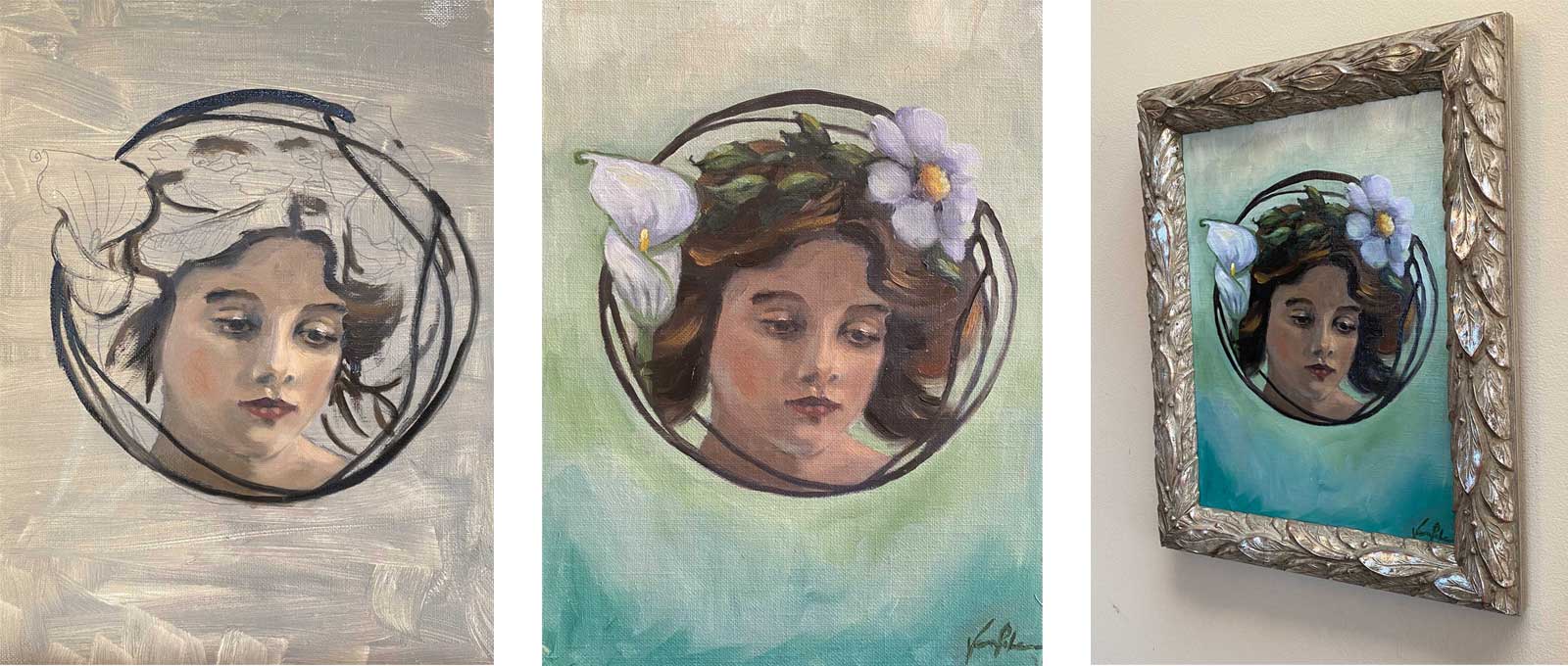
OK, so you have some great references, but how do you actually use them? In this example below I used four to five difference references to create an Art Nouveau inspired work of art for a themed show. I wanted to create a new work of contemporary art, but influenced by Alphonse Mucha, the most well-known art nouveau artist of the time. The final piece is a 12-by-9-inch oil titled Femme Nouveau.
Here is how I pulled from my references:
Face: For the portrait I used a vintage black-and-white photograph as reference that I found on Pinterest. The photo is old enough to not have any copyright rules on it, and I also changed it a bit, at least 30 percent, to make it my own art.
Decorative Circle: For the outer circle I found an old book on Art Nouveau black ink graphic illustration used in French poster art. I liked this simple ivy-like circle with the white calla lily on the left, so I drew it around the face and painted it in with a flat illustrative style as the old French posters from this time.
Background color: Now what to do with the background? As this work was for an art nouveau exhibition that takes inspiration from the 1900s when the metro stops and ironwork with copper in Paris turned a fine patina green, I decided to use this color as the background so the whole work would remain in the theme.
Frame: The frame was also inspired by art nouveau antiques I had seen at the museums in France. My frame shop found a similar moulding for me to use that repeats the laurel leaf in the model’s hair for the final effect.
So as you see, drawing inspiration from multiple references can help you create an exciting, new and unique work of art. I hope this has given you a few ideas on where to find inspiration and how to organize it once you have it. Always remember to honor and respect other artist’s works, to know general copyright rules and read up on what is accepted, as rules are getting stricter with the emergence of NFT’s and the internet. —
About Vanessa Rothe
 Vanessa Rothe
In addition to her curatorial, editorial and lecturing, Vanessa Rothe is a fine artist exhibiting the last 20 years alongside the nation’s top artists in galleries, art clubs, as well as museums. After majoring in business at USD and French literature at UCI, Rothe received classical fine art training at Laguna College of Art + Design and received honors throughout. Rothe has been working as an editor, graphic designer and artist in the publishing industry for 35 years.
She is a juried Artist Member of the Salmagundi Club New York and a Signature member of the American Impressionist Society. She is curator and founder of the Americans in Paris and Realism Without Borders art events and exhibitions. Rothe has exhibited and sold at over 25 galleries and museums worldwide such as: the Richard Schmid Fine Art Auction, Arcadia Contemporary, the Laguna Beach Art Museum and Galerie Prince de l’Oeil in Paris, France. Rothe currently owns and operates Vanessa Rothe Fine Art Gallery in Laguna Beach, California.