In the past, over 800 artists from across the country gather at our annual The Art of the Portrait Conference every spring for an unforgettable four-day experience of learning from our renowned faculty of over 30 artists. We’re excited to hold our conference in person again, April 21 to 24, 2022, in Atlanta, Georgia, with a weekend of demonstrations, lectures, workshops, portfolio reviews and so much more! Recently, I had the pleasure of speaking with six of our 2022 faculty artists—Suchitra Bhosle, Louis Carr, Michelle Dunaway, Pramod Kurlekar, Paul Newton and Elizabeth Zanzinger—who shared a few words of wisdom about their artistic journeys as well as the future of portraiture.
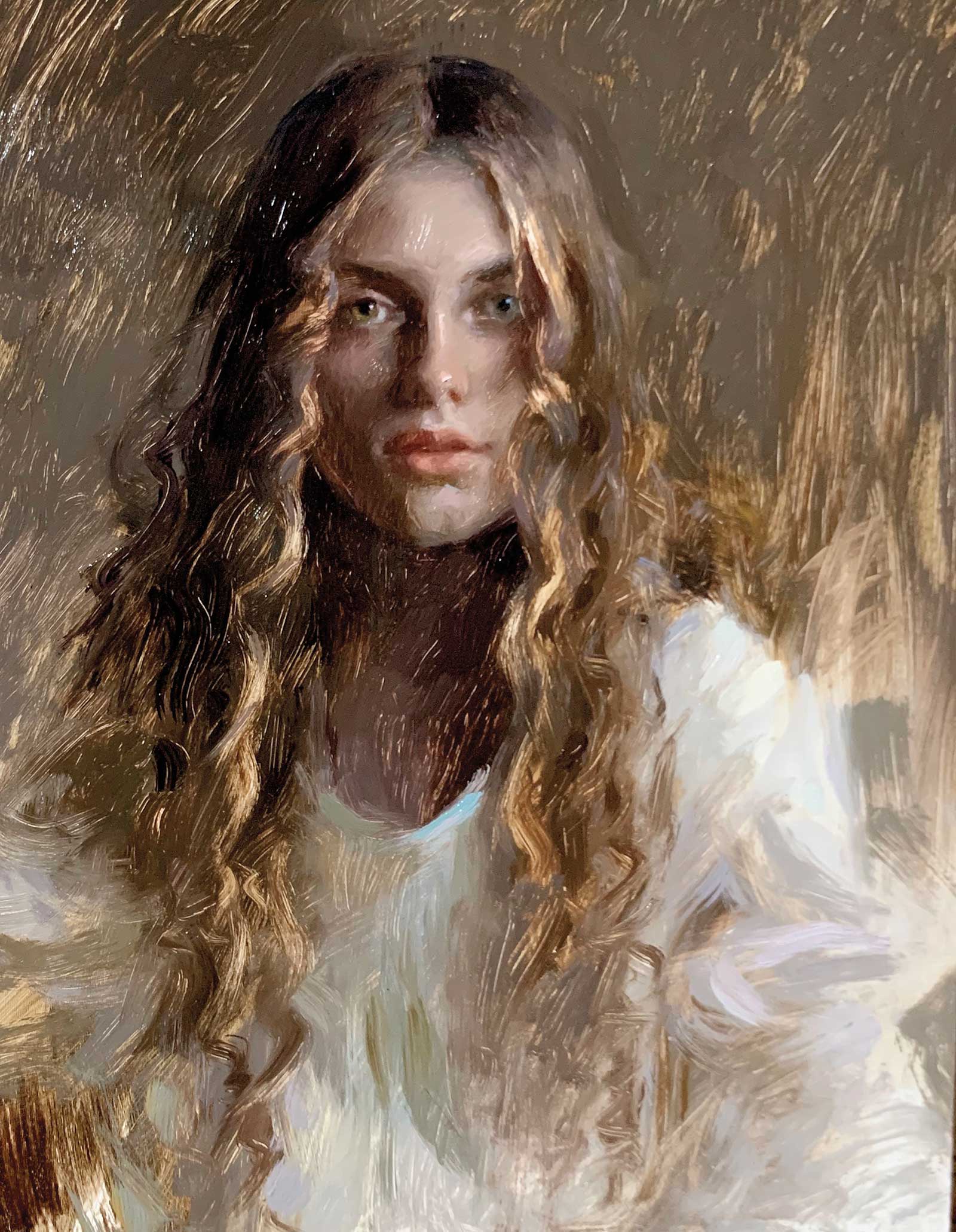
Suchitra Bhosle, The Golden Gaze, oil, 20 x 16" (50 x 40 cm)
Azzarito: For much of modern history, artists began their careers as apprentices, learning from a master craftsman before venturing out on their own. Has this form of traditional study shaped your own development as a professional artist, and if so, how?
Suchitra Bhosle: My learning has been shaped through taking a few workshops with artists whose work resonated with me, but for the most part, I took the path of self-study and self-analysis. Understanding the psychological side of myself, learning the patterns of my mind has helped me understand how distraction can take you away from what you are trying to see in the present when working from life.
Louis Carr: This is a subject I’m particularly passionate about. My learning was in a school setting; however, I believe the process would have been expedited in a mentorship format. In college, I had a life mentor who shared a very valuable lesson, “One should intentionally always have three people in your life’s journey.” A mentor, a peer and a mentee. The Mentor expedites your learning by bypassing the trial-and-error method and helps reveal your blind spots. They also introduce new paradigms to expand the spectrum in your mind faster than blind discovery. The Peer is the confidant. This is one of the most influential roles and should be chosen carefully. It is the person who is in a similar race to you. They need to be your challenger, your encourager, your empath. And, I believe The Mentee is just as important in the learning process as having a mentor. As a teacher, clarifying concepts to someone also sharpens your understanding. It forces you to distill ambiguity down to its fundamental truths. It builds confidence in what you know.
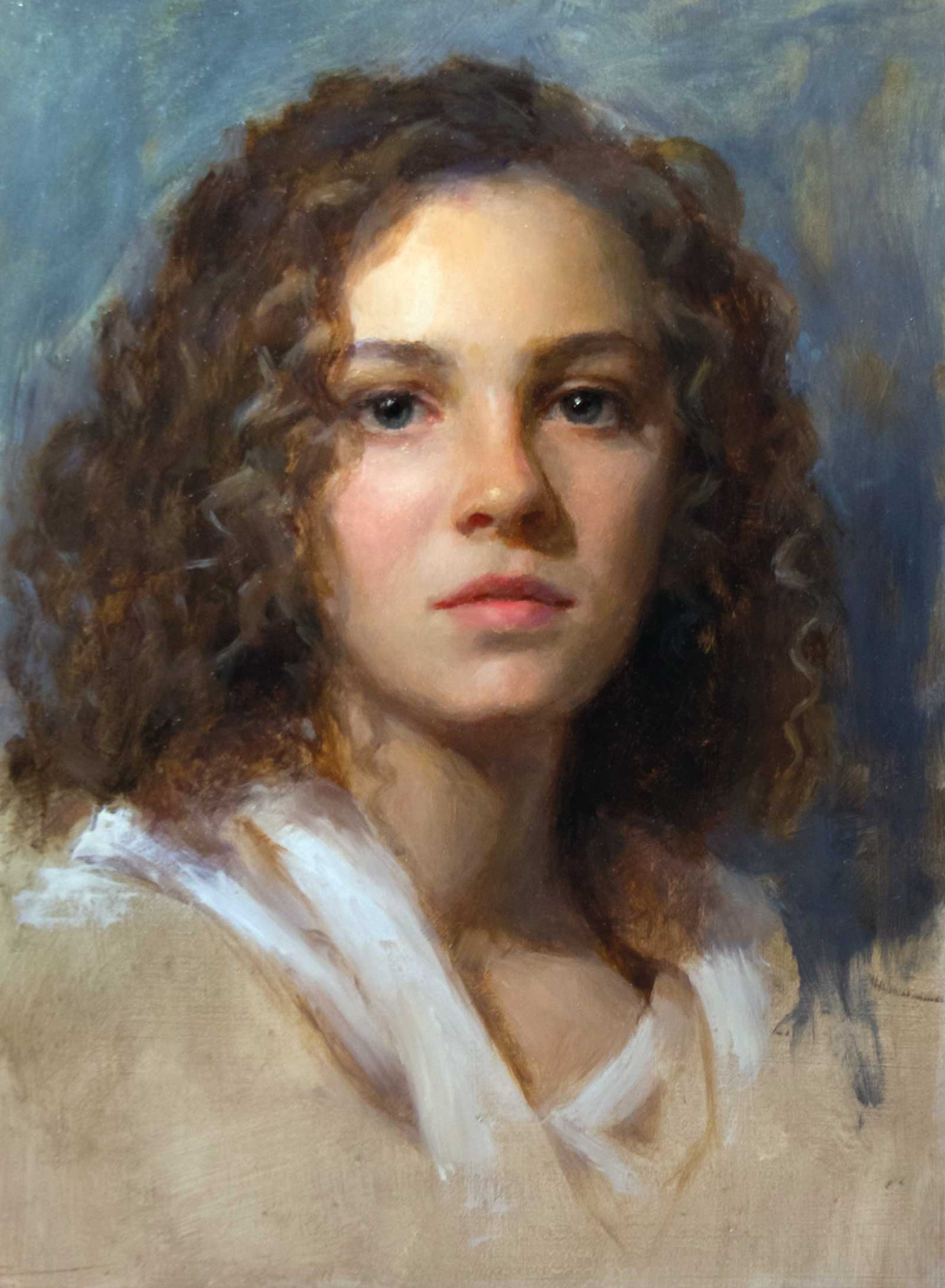
Louis Carr, Portrait of Ellie, oil, 12 x 9" (30 x 22 cm)
Michelle Dunaway: Apprenticeship is such a valuable learning legacy, and I am grateful to have experienced it in several instances. As a young artist out of high school, I studied with well-known New Mexico artist Louis Maestas. He took me under his wing, introduced me to oil painting and helped me prepare a portfolio for art school. He was the first person who encouraged me to show at a gallery and also to teach. In recent years Richard Schmid became a wonderful mentor. He invited me out to his studio to paint with him and his wife Nancy Guzik, and I visited them every spring and fall for the past 10 years. I am grateful for all the artists who have helped me on my journey, and I in turn try to pay it forward and help other young artists navigate their path.
Pramod Kurlekar: Studying painting through traditional study methods and under a mentor surely helps to deepen the understanding of the whole process of painting. It gives a sound technical base about the color schemes, tonal values, drawing potential, etc. To create a good painting, we need this kind of technical understanding, but when someone puts their heart and soul in to the painting along with technical understanding then that painting becomes a masterpiece. To create masterpieces, we need to understand our own psychology and unique existence of our self, and it will help us to connect with our spiritual roots to understand the true essence of life, cultural and social aspects of society.
Paul Newton: After training in art school, I worked for about nine years as an illustrator. In the studio where I worked, there were a number of other illustrators, artists, designers and photographers—a melting pot of creative talent! I spent a lot of time observing how they worked, learning their methods and techniques and in the process honing my own skills. It wasn’t exactly an apprenticeship, but it was similar because I was learning on the job from others who were far more skilled and experienced.
Elizabeth Zanzinger: We are so fortunate, as artists, to be actively engaged in the learning process over our entire lives! When I was a “student,” I studied in a full-time atelier setting for over four years and the absolute immersion in painting from observation is irreplaceable. Many aspects of working from life have become second nature, like fluency in a second language. Since then, I will occasionally work with another master artist to refresh my approach and provide a new perspective for my work. Regardless of approach or philosophy, a solid foundation in drawing and painting develops the control and stamina you need to make good visual work.
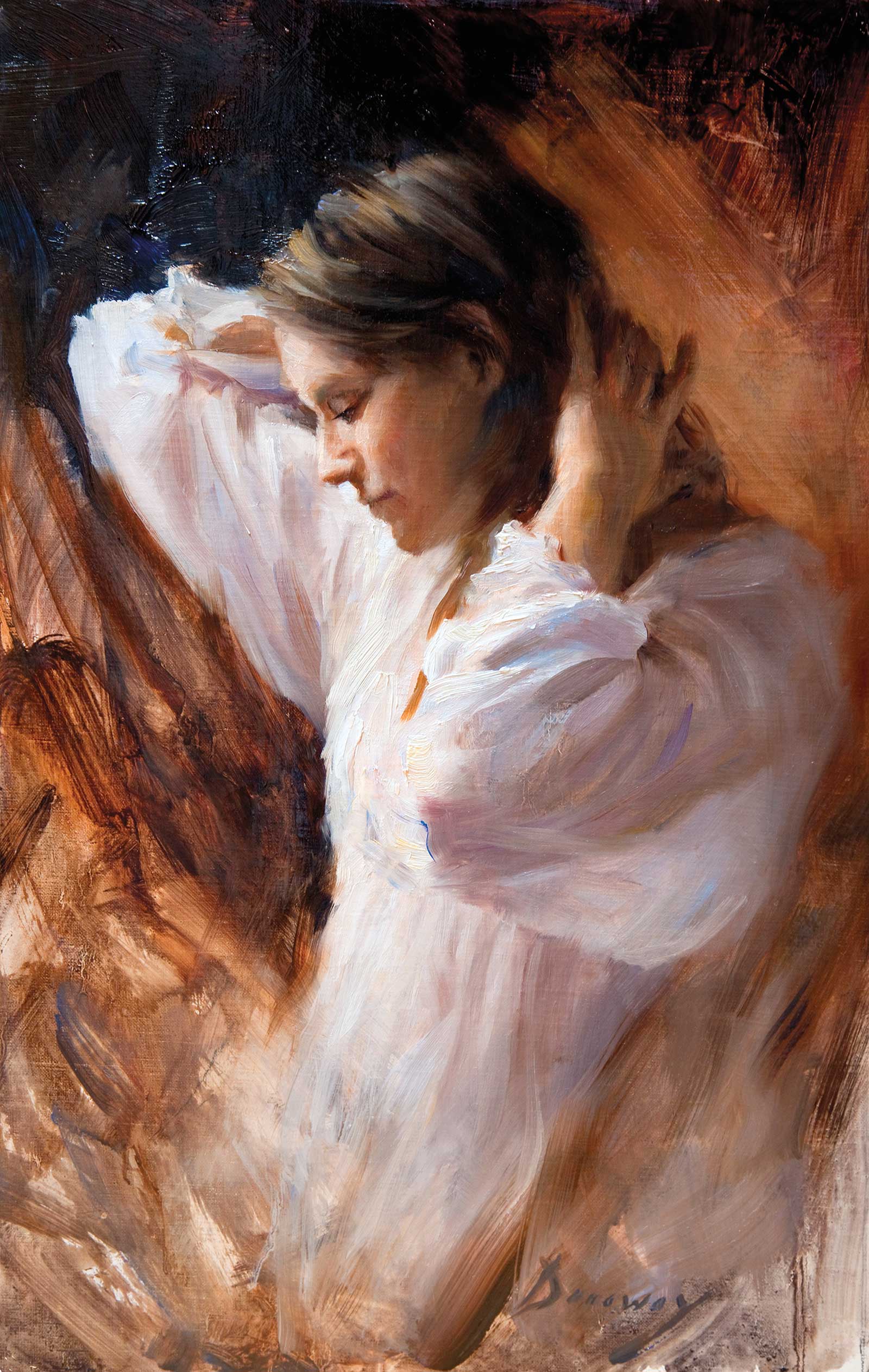
Michelle Dunaway, Luminous, oil on linen, 19 x 12" (48 x 30 cm)
AZZARITO: When approaching your work, how do you balance traditional techniques with the need to create distinctive and contemporary pieces of art?
Bhosle: I don’t make an extra effort to create that balance; I believe that when one wants to express a certain idea, the unfolding of the creative energy tends to push you in a direction to the unknown and from there emerges the result of one’s work. So, in that moment of expression, if the traditional way of painting helps tell the story, then I go in that direction. If not, it’s a moment to moment of existence and painting. Mostly I try and reflect my personality into the work, so usually it’s a marriage between the classical side and abstraction.
Carr: My training in technique was similar to the French 19th-century ateliers. In turn my foundations are traditional. I find where I explore the contemporary is through the advancements in media, as well as concept and narrative. Throughout history, artists’ curious natures tempt them to explore new technologies and find new ways of seeing the world. This hasn’t changed. I use digital media to explore color harmonies and design as a way to test preliminary ideas. I use old materials like lead white with new ones like alkyd gels. My subject matter is certainly a record of the present with an intention to connect to the past. Two questions I ask myself: “Does it feel fresh?”(contemporary) and “Does it feel timeless?” (traditional). If I can say yes to both, then I have found the sweet spot.
Dunaway: Utilizing techniques we have learned from studying the old masters to create our own artistic vision on canvas is absolutely essential. I think contemporary art can be defined as painting what is relevant to you in the time period you are living. We learn so much from those who have come before us and our job is to take that information and add our voice to it in an authentic way that is meaningful. I think if you are authentic with yourself and in what you choose to create, not giving in to trends of the art world, but truly painting what moves you as an individual operating in a collective society, then your artwork can’t help but be distinctive.
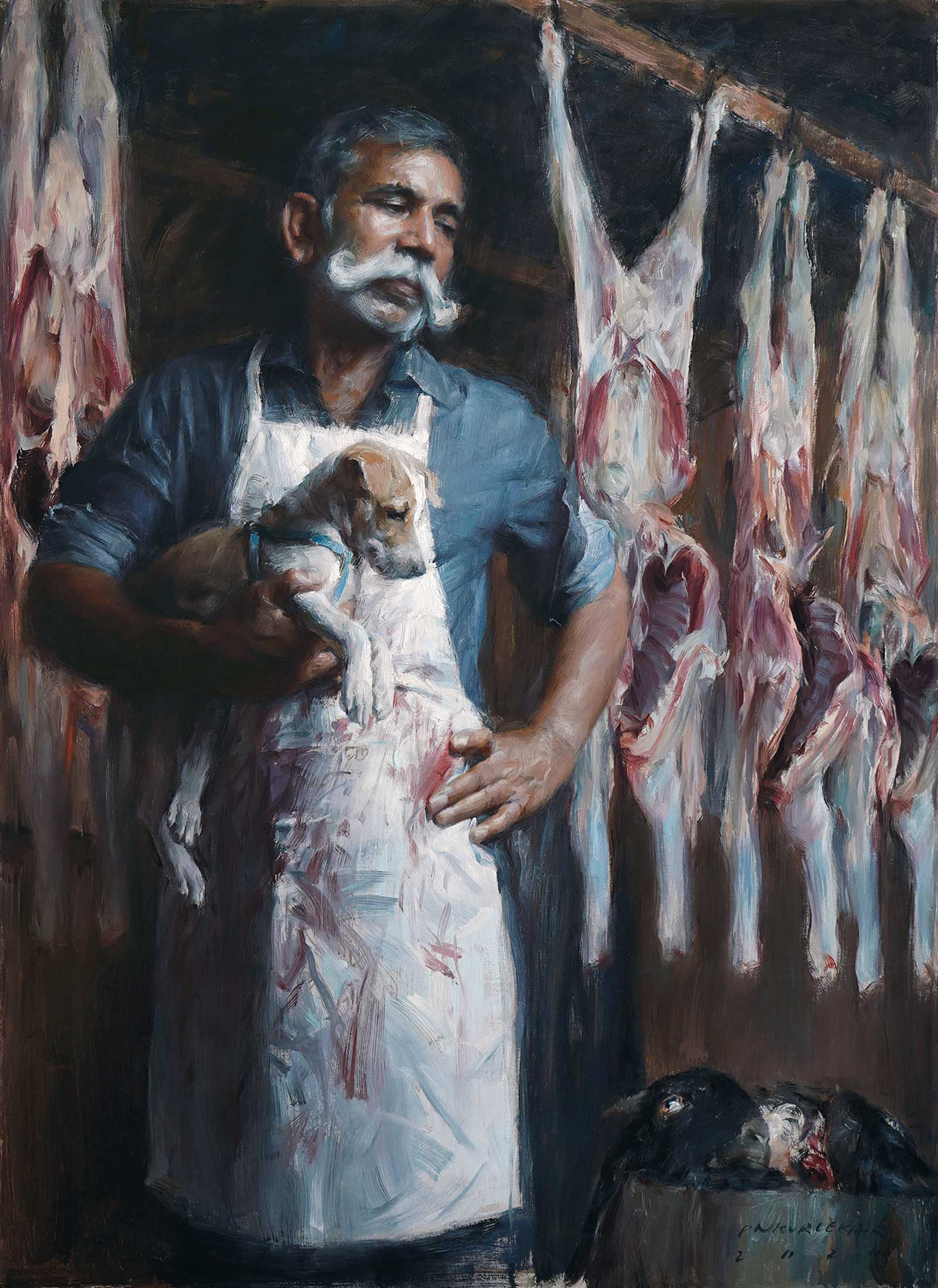
Pramod Kurlekar, Man Kind, oil on linen, 40 x 30" (101 x 76 cm)
Kurlekar: Every person has his own psychology and his own unique existence. Without understanding yourself, you cannot put any character in your paintings, but subconsciously you start imitating your mentor. And in doing so you can create only replicas. Each person’s life is enriched with different experiences and the ability to cope and celebrate in different situations. This impacts everybody’s method and ability to express, and we have to work within ourselves not just to understand it but to develop this potential.
Newton: Although my style of painting is quite traditional, I do try to paint in a way that is grounded in the present. It is helped by the fact that contemporary portrait subjects will usually be wearing modern day garb, hair styles, etc. Painting larger than life depictions, say an oversized portrait head, can look quite contemporary and is a departure from traditional portraiture but nonetheless relies on traditional painting techniques.
Zanzinger: I don’t see “being contemporary” as a need. I am alive in the 21st century. I have an iPhone and an Instagram account, but I also have an atelier education. I derive intellectual joy from making work founded in straightforward traditional techniques, but my perspective will always be wholly contemporary because I am alive right now. I’ve made mistakes in the past, where I’ve tried to alter my work with more trendy techniques, but thinking that way doesn’t produce honest work (even if I think I am being honest at the time). If I want my work to be contemporary, I need to paint with great honesty with regards to myself and my experience of the world.
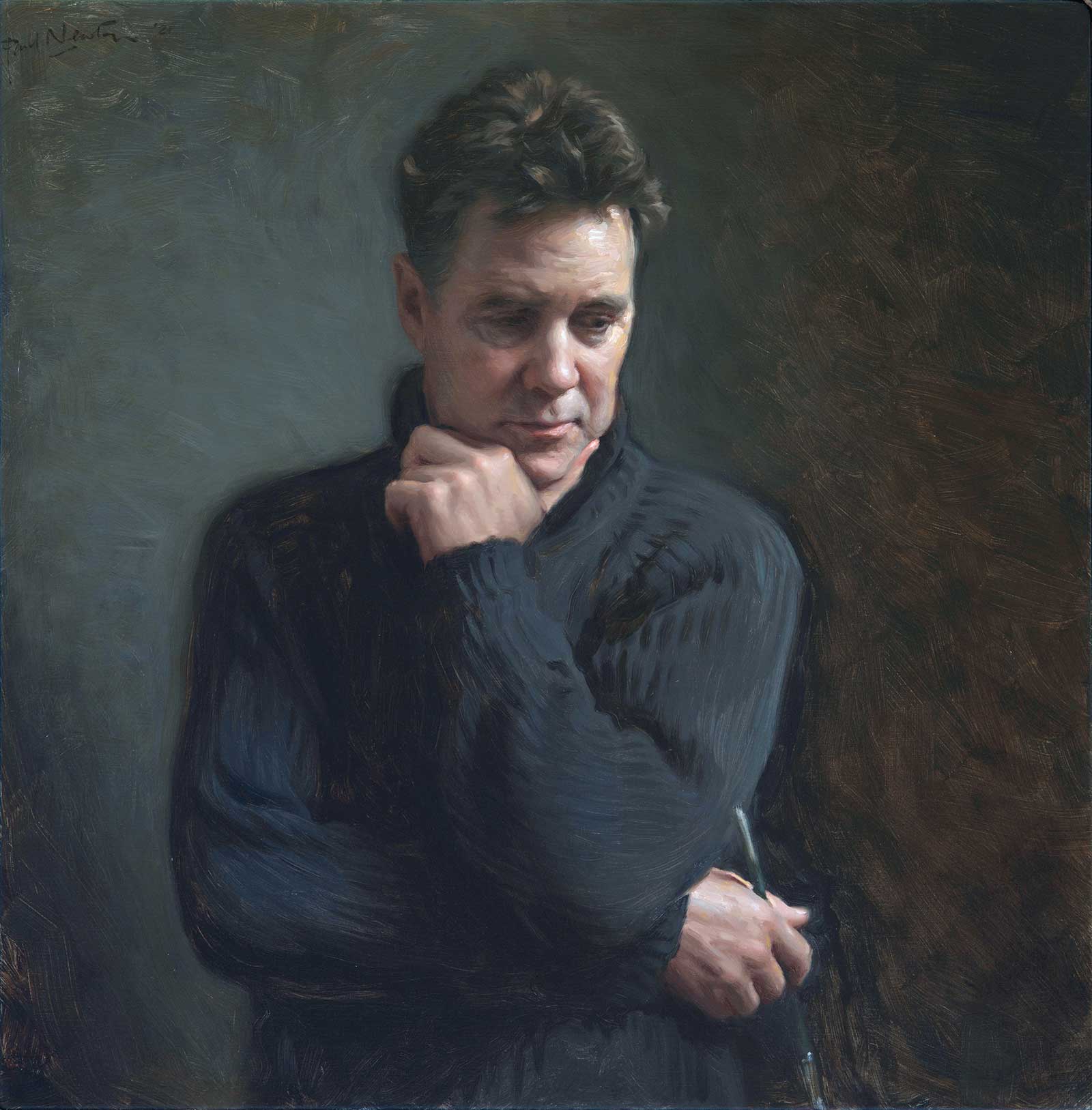
Paul Newton, Self Portrait in Lockdown, oil on Belgian linen, 34¼ x 33¾" (86 x 84 cm)
Azzarito: When you teach, do you feel that you pass on traditional techniques, and what do you feel are some of the most important lessons you can impart?
Bhosle: When I teach, I do refer to traditional concepts of understanding the importance of value, how to see their relationships, understanding color theory and how to paint the light that brings forth the dimension in paintings.
Carr: I certainly teach traditional techniques. However, if I have discovered a more effective learning tool, I will teach what I have also discovered myself. The most powerful lesson I have learned is how to see and translate what I’m seeing into a two-dimensional universe. I know this is a broad topic, but basically, how we originally see is through eyes of acceptance. Things are what they are, and we don’t spend time focusing on what they truly look like. We see people we know every day, but we have no idea what makes them look like them. Discovering how to see that way helps every facet of one’s painting.
Dunaway: Yes, traditional techniques are the bedrock of fine art, but with our present technology and new paints and materials we can expand upon traditional methods by experimenting with new tools. Some of the most important lessons I impart in a teaching session go beyond just technique and delve into the greater mindset of creating. We live in a fast-paced social media world, which can be a great tool, but often we need to remind ourselves to slow down when we create and really be in the moment, taking time to observe what you are seeing and processing visually, before you ever raise your brush to the canvas.
Kurlekar: While teaching students, I try to understand each and every student’s unique character. It has always been my continuous endeavor to awaken the individual uniqueness of each student and inspire them to work self-reliantly with confidence in the present moment through psychological and spiritual wisdom. I believe a good teacher should show the path and not spoon-feed. I try not to disturb the uniqueness of each student but rather enhance it.
Newton: The most important lesson I ever learned about painting from life models is to only ever attend to the biggest difference between your subject and your canvas. There will always be a myriad of differences, but by focusing only on the biggest, you’ll enable your painting to most closely resemble the subject in the fastest time, meaning that it won’t be overworked. It sounds almost trite, but it was a profound revelation for me.
Zanzinger: There are infinite ways to solve problems in painting. “Traditional techniques” can encompass many different views of art education pedagogy. My main goal when teaching is to help students learn how to see. Once they can see what they are looking at, we discuss how to control it. Then they can do whatever they want with the skills! Using traditional academic drawing and painting methods gives people a clear set of parameters to focus on so they may develop their craft with a sense of direction.
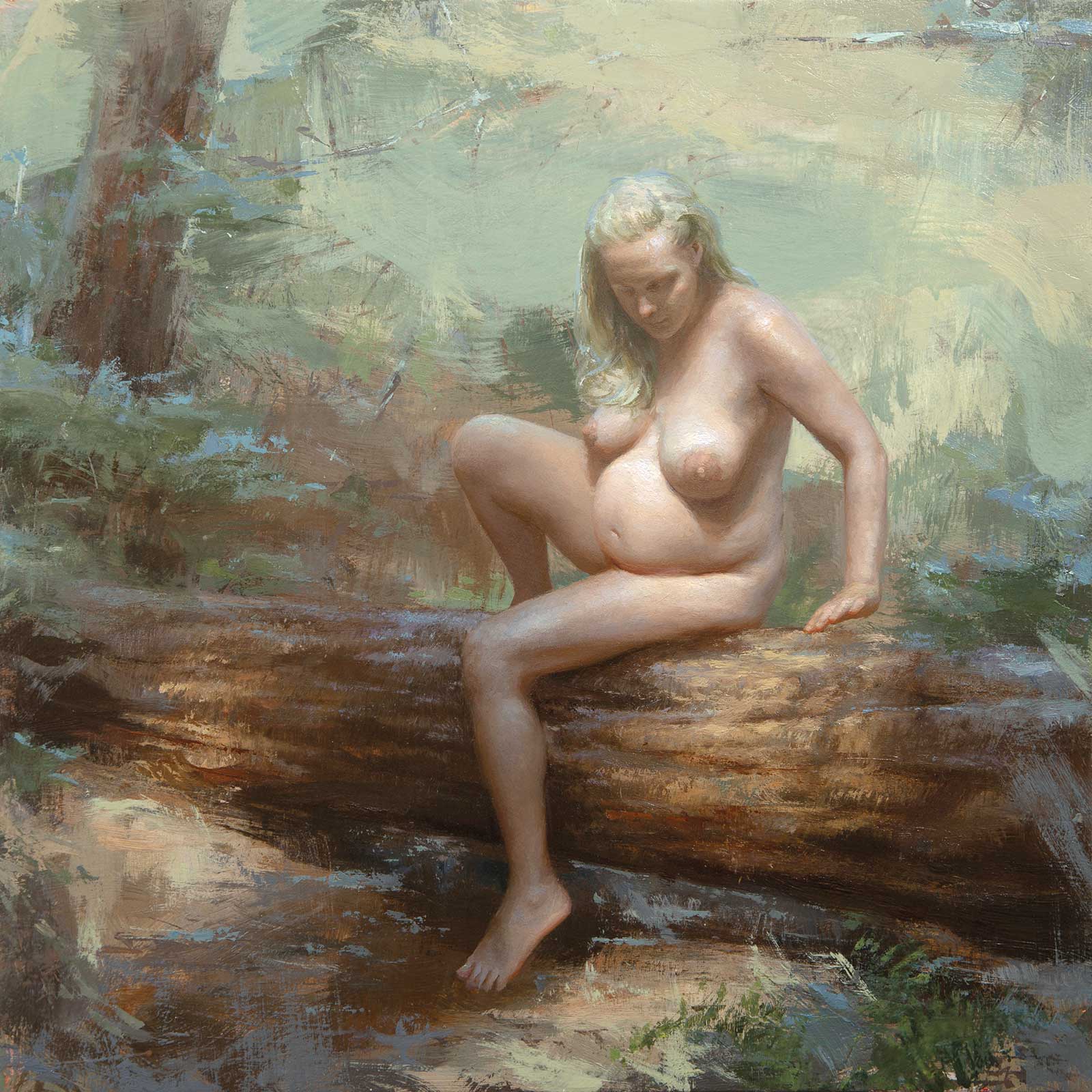
Elizabeth Zanzinger, Chrysalis, oil on panel, 12 x 12" (30 x 30 cm)
Azzarito: What do you see, or hope, is the future for traditional fine art portraiture and the artists who create these works?
Bhosle: Fine Art Portraiture is a classical form of art that will never cease to exist and amaze. Artists who, from the heart, pursue what they love will be supported by people who believe in acquiring a hand-painted portrait and will surely help continue this legacy.
Carr: As technology gets more advanced and we start exploring a digital world such as the Metaverse, I believe there will be a counter desire for something imperfect, unique. Something made with human hands with all of its mistakes and human intuitions recorded tangibly. We are already seeing it manifest itself in the artisanal movement on platforms like Etsy. It’s because we desire the unique, the one-of-a-kind. We live in a culture that values identity, and we see the identity of the creator in their art and each work won’t ever be recreated exactly the same.
Dunaway: My hope is that traditional fine art portraiture continues to flourish exponentially. The world needs great art because it inspires the soul of the individual, and an inspired soul is capable of anything; we need that inspiration in the world, especially today. I also think with great events like the Portrait Society conference where artists can gather together to inspire one another to do their best work, this legacy of creating great portraiture is assured. As artists we work many hours in solitude, and it’s incredibly beneficial to engage with others who understand and share similar struggles and triumphs. I see such a resurgence in traditional art and portraiture in recent years that is extremely uplifting to behold.
Kurlekar: The future of portraiture and traditional art was and will always be bright. After the discovery of the camera, it was thought that the existence of portraiture and traditional representational art was in danger, but nothing like this happened. Even in this digital age, where photography, digital art and painting software have developed so much, people have not lost their admiration for traditional art. The respect for portraiture and other traditional art will always be there. Even in this modern era, people like to see more traditional representational art by visiting museums and galleries. The visual strength in this art form will always attract people towards it.
Newton: Through the Portrait Society and its various forums and competitions, I’ve seen a new generation of talented young artists arising who have a love for traditional painting techniques and methods as evidenced by the quality of their work; and as such, I think the future of traditional portraiture is in very safe hands!
Zanzinger: Art is slow. The value of art will always be in its slowness. On top of that, portrait painting is such an oddly specific skill, but it’s one of very few professions where you can quietly record who a person reveals themself to be over a great length of time. That can be a transcendent experience and something a camera just can’t do. We may die off undervalued by the fast-food image-saturated culture that surrounds us, but that does not mean what we practice has no value. Art is its own language that speaks earnestly to one single person at a time, and for that reason I believe it will always have relevance. —