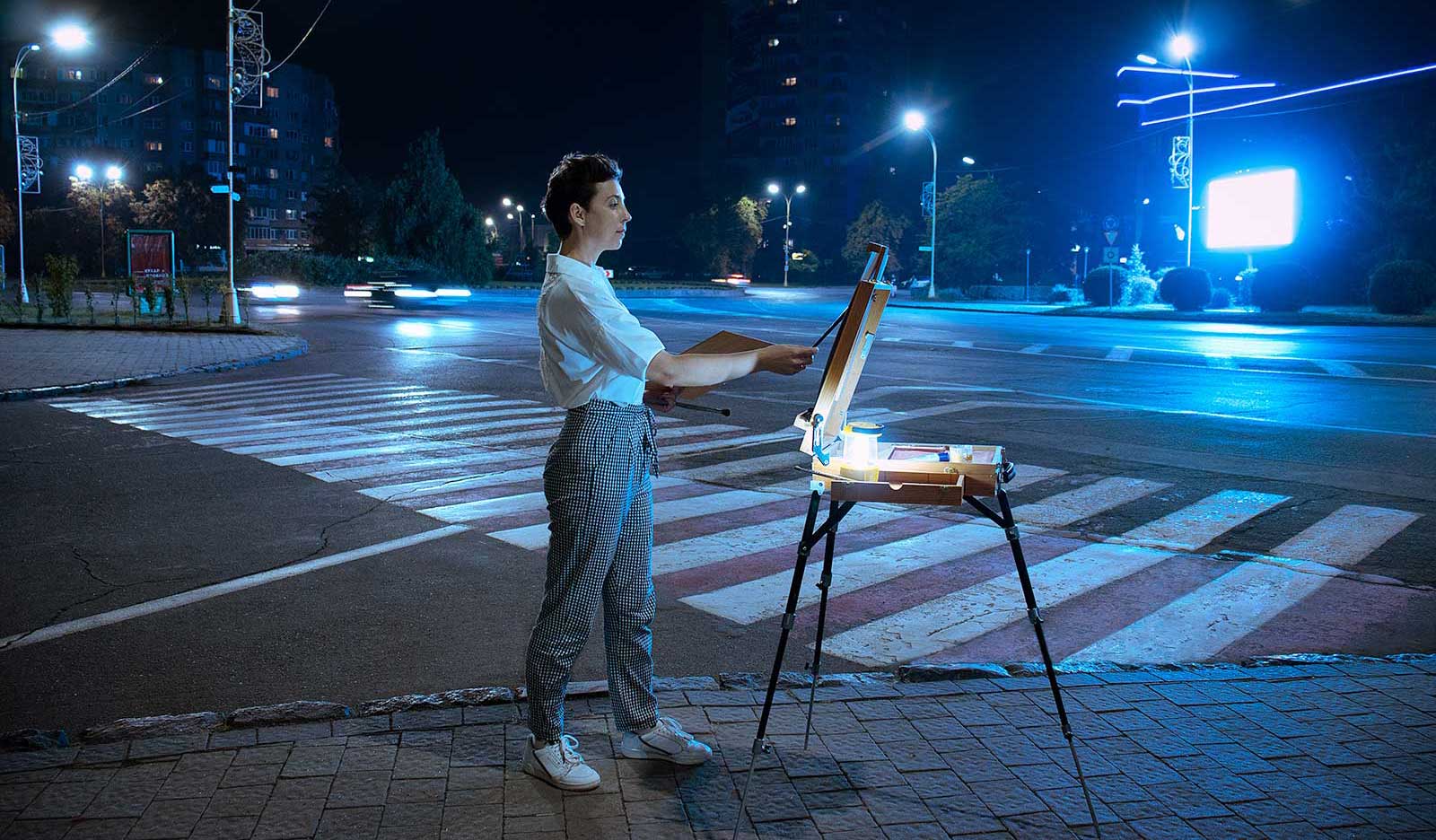
The light that surrounds us defines our reality, and it’s a part of everything we see, do, experience, and understand. Some of the most beautiful moments last only an instant. To catch the light and capture this moment in time is my goal, my passion, my inspiration.
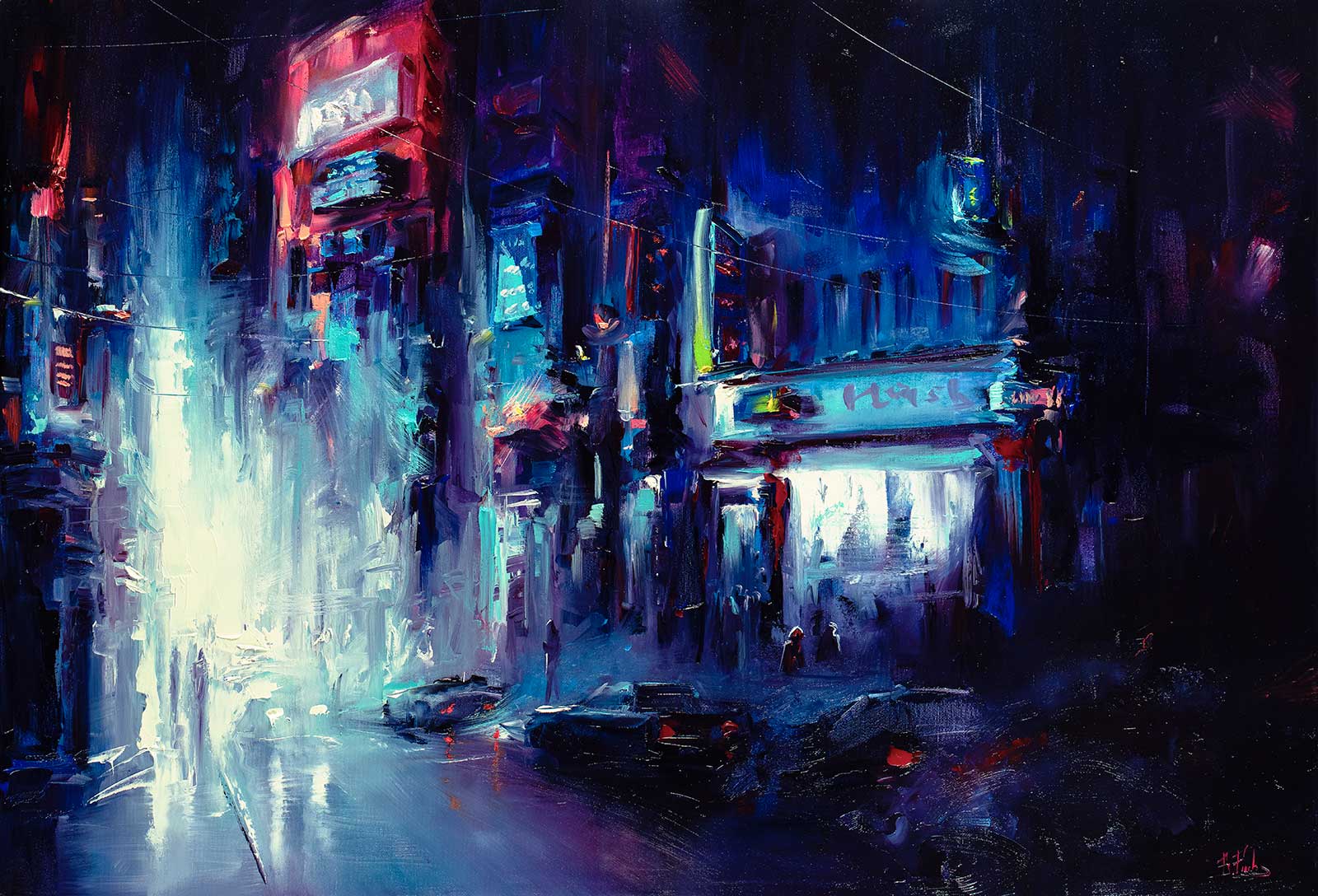
Urban Night Life, oil on canvas, 32 x 40" (81 x 101 cm) I try to convey the contrast and play of light and shadow. With a palette knife and large brushes, I create the silhouettes of architecture, cars and people. I want to capture a light that does not fade, a movement of people that does not stop even at night.
The painting process for me is always a push and pull between light and dark, warm and cool tones, detail and abstraction, a real and imaginary world. I use color contrast to convey the differences in light in the morning, evening and at night to show movement and life in my work. I am inspired by the first rays of the sun that bring a new day. I love the shine of the water at noon. I admire the wave transparency through which the light breaks through.
I’m incredibly inspired by the play of light and dark, be it at sea, on the ocean floor or in the city. I like to portray the atmosphere of the night city with the shimmering streets, filled with neon, with the smoke rising into the sky while the city is still awake. I want the viewer to experience the same energy and feeling that inspires me.
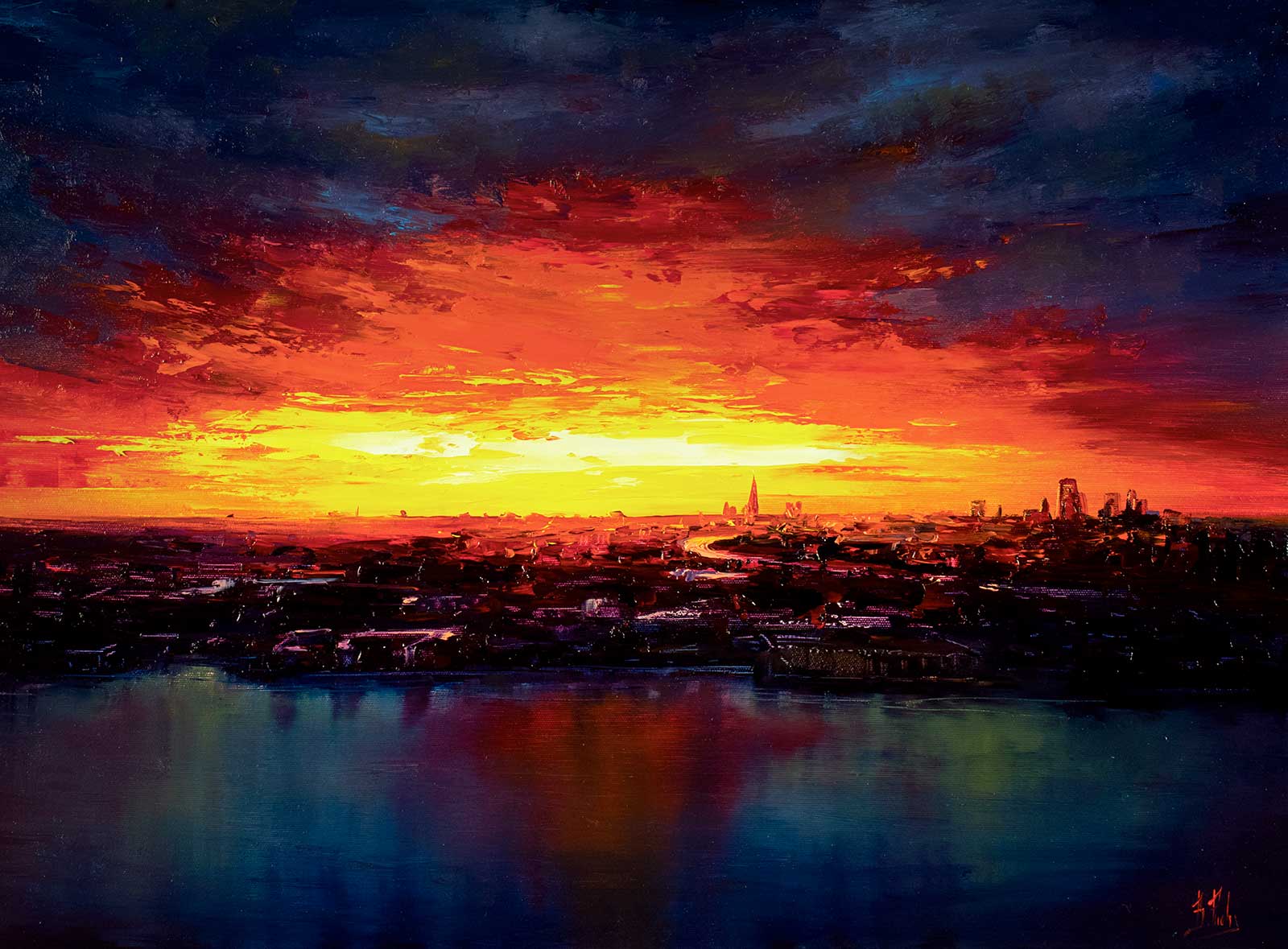
London skyline painting, oil on canvas, 20 x 28" (50 x 71 cm) The bright light of the sunset over London touches parts of our soul and adds a sense of drama. The city is tired by the end of the day but still full of life. This painting was a commission for a client who wanted the piece “to be quite dramatic and artistic.” A key tactic for achieving this is painting from dark to light.
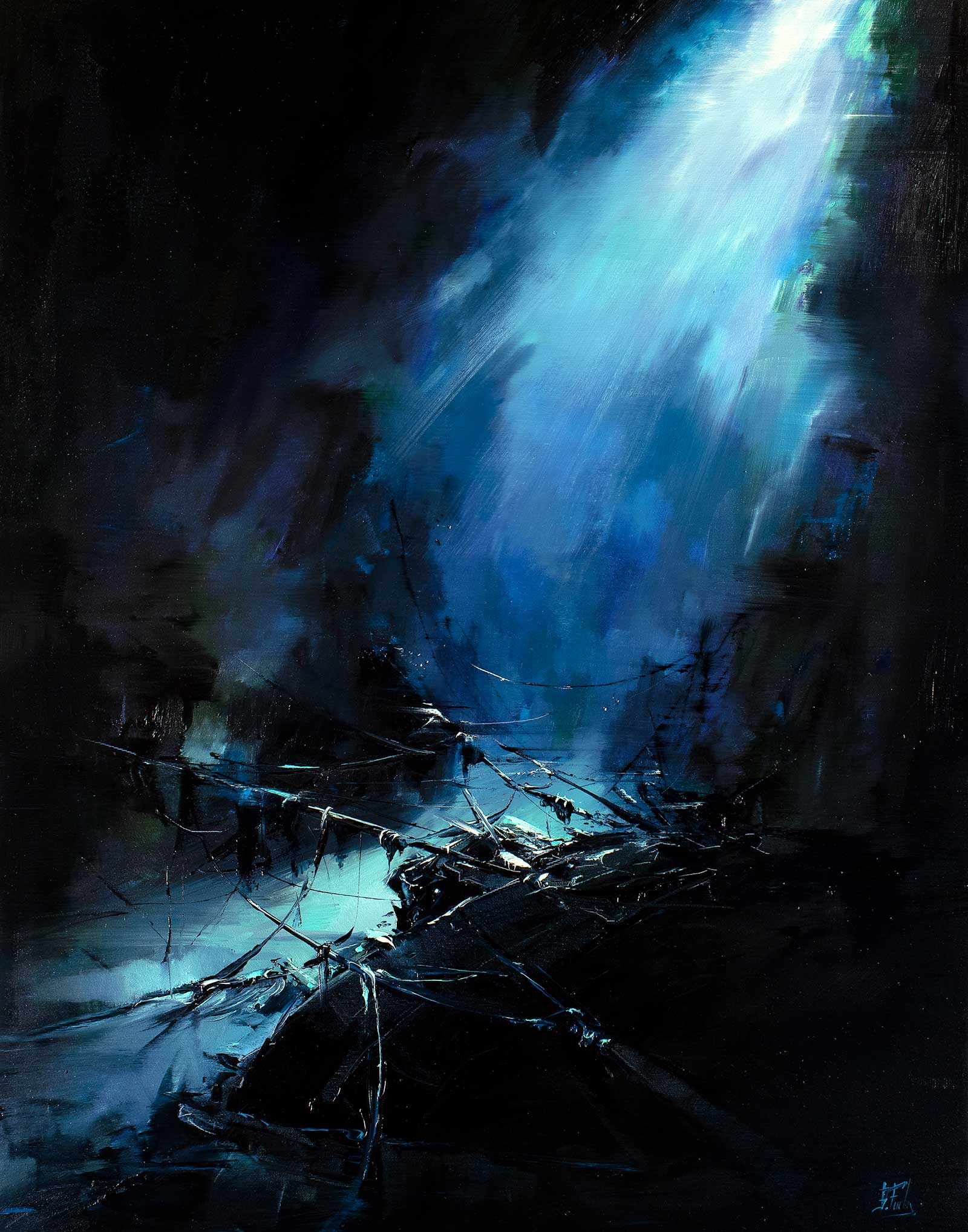
The underwater shipwreck, oil on canvas, 40 x 32" (101 x 81 cm) The mood frozen in time, the deep peace and the quiet life of the ocean, where the sunlight barely reaches, are shown in this piece. I love the way the light breaks through the water column without reviving the lost underwater world. Only shadows convey the movement and breathing of the ocean.
I work in oil, but do not always make my paintings in the same way. I usually begin by toning my canvas to knock down the bright white and give an overall color tone. Using a soft large brush and while the background is still wet, I quickly develop the essential lines of the composition to define the main objects to be included in the painting. Working from dark to light, I keep layers thin and transparent at this stage. I give my paints freedom and allow them to live and play, directing and organizing them into some kind of composition to revive my idea and convey the mood I’m aiming toward. I must work fast to express it while I am full of energy and ready to go.
Once I establish the darkest darks in the painting, I move forward to bring life and light to the midground. Using large brushes and palette knives, I paint quickly and vigorously to create form with light and shadow and express what I feel. I often step back to look at the painting from a distance to avoid getting hung up on details that don’t matter. Next, I apply a thick paint to the light areas and finish with impasto for the highlights.
This approach helps me to be focused and productive. The most important thing is not to get bogged down in details and keep the painting fresh.
My Art in the Making Bar 1401 Praha
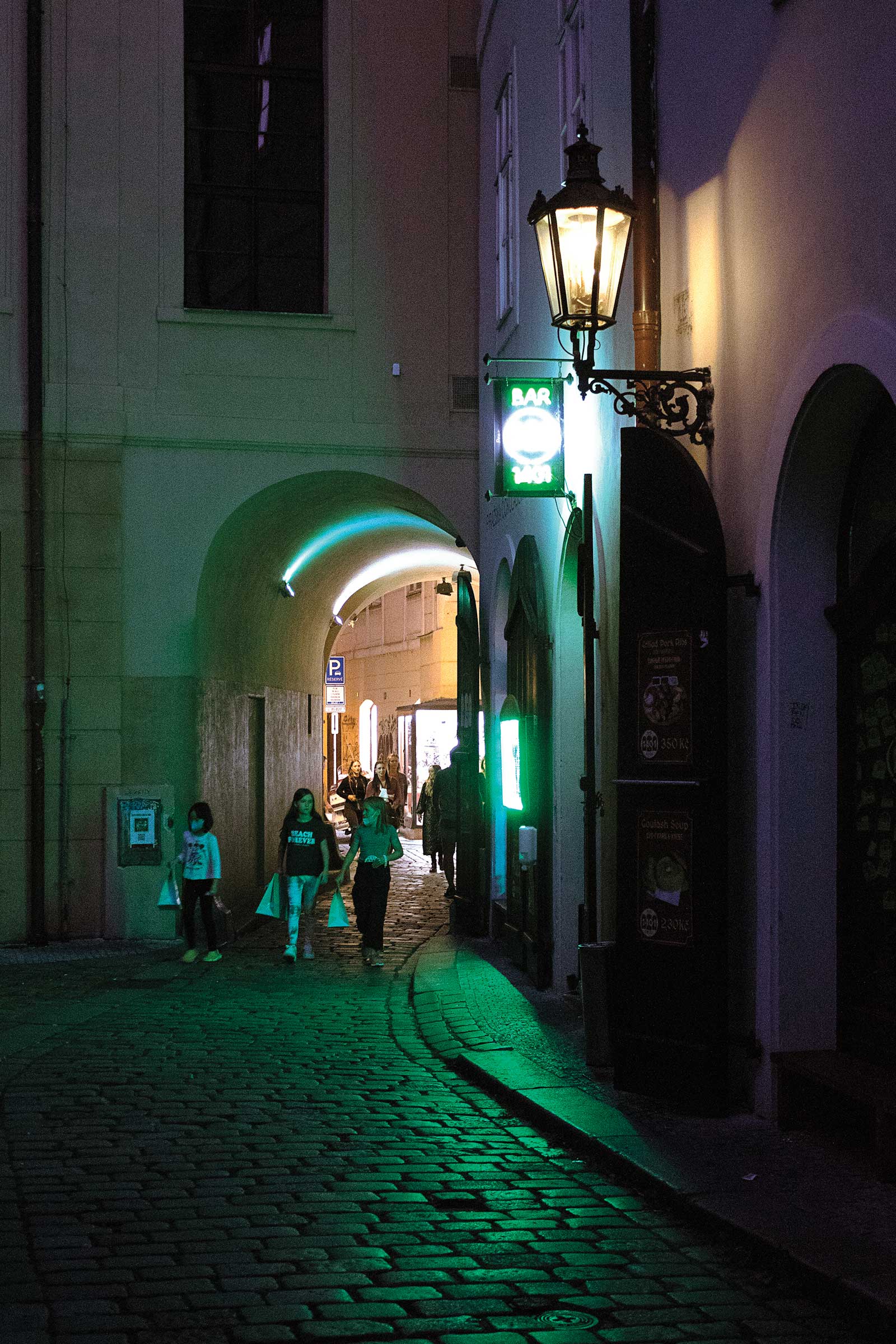
Reference Photo
In this demonstration I show how to capture the play of artificial light and shadow to convey the magic evening mood of this European street. The reference photo was taken near the popular Bar 1401 Praha in Prague, Czech Republic. It’s a wonderful place with beautiful lighting, great atmosphere and live music.
WHAT THE ARTIST USED
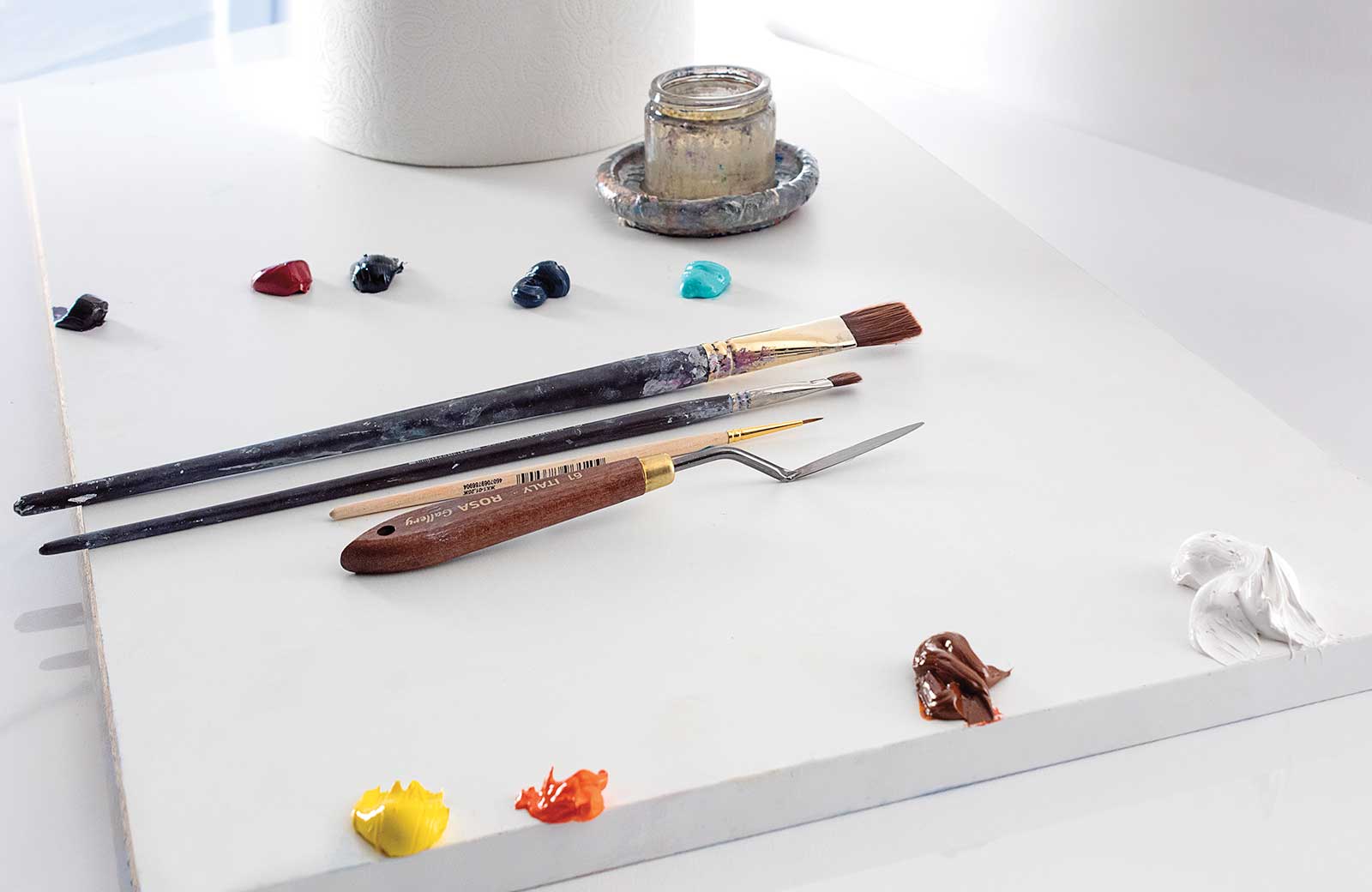
Oils
Indian yellow, Prussian blue, Quinacridone rose, Cobalt blue, Azo yellow light, Azo red light, Violet, Turquoise bluish, Coral pink, Titanium white
Brushes & Tools
Synthetic flat brushes no. 10 and no. 20, Round brush no. 1, Palette knife no. 61
Medium
Mix of linseed oil, turpentine and damar varnish
Additional Materials
Stretched canvas, Paper towels
 Stage 1
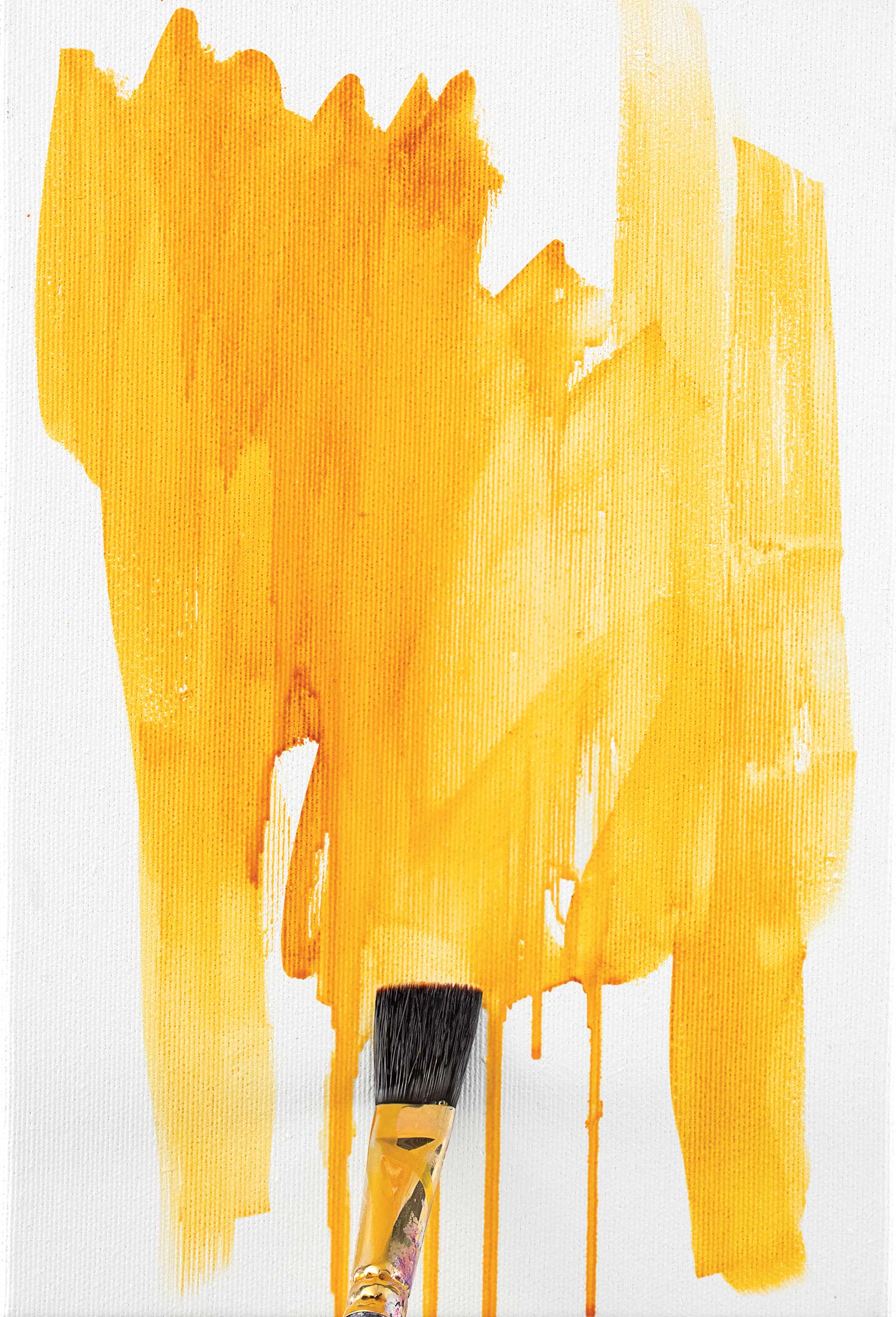
Stage 1 Toning the Canvas
This stage is quick. I tone the canvas with a wash of Indian red to give this painting a warm undertone. I wipe the surface with a paper towel to remove the excess paint.
 Stage 2
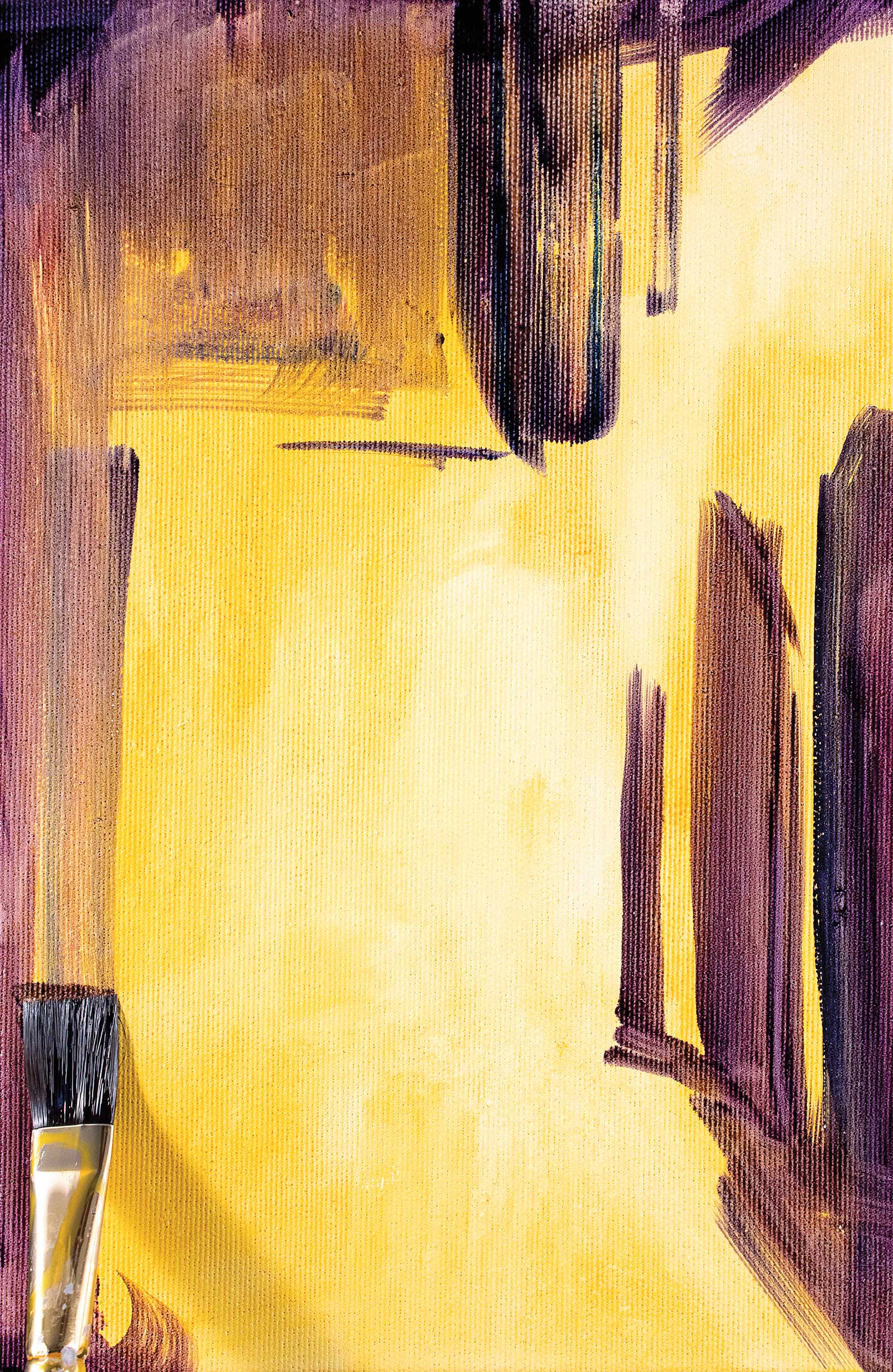
Stage 2 Defining the Light Areas
I remove the orange tone with the tip of my index finger covered by the towel. It will be the lightest lights of my painting.
 Stage 3
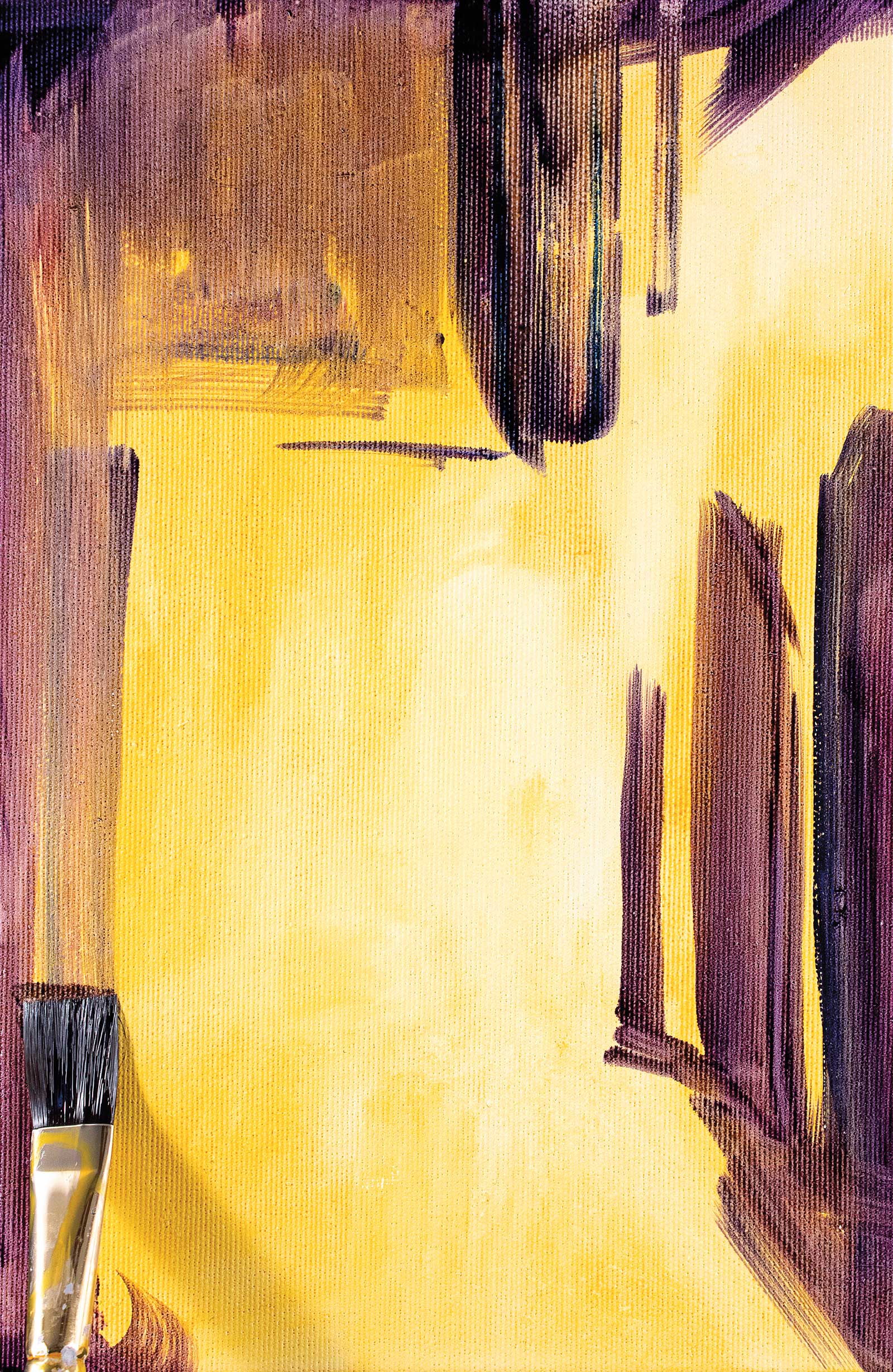
Stage 3 Building Composition
Using a soft large brush and a mix of Prussian blue and Quinacridone rose, I paint the essential lines of the composition to define main objects to be included in the painting.
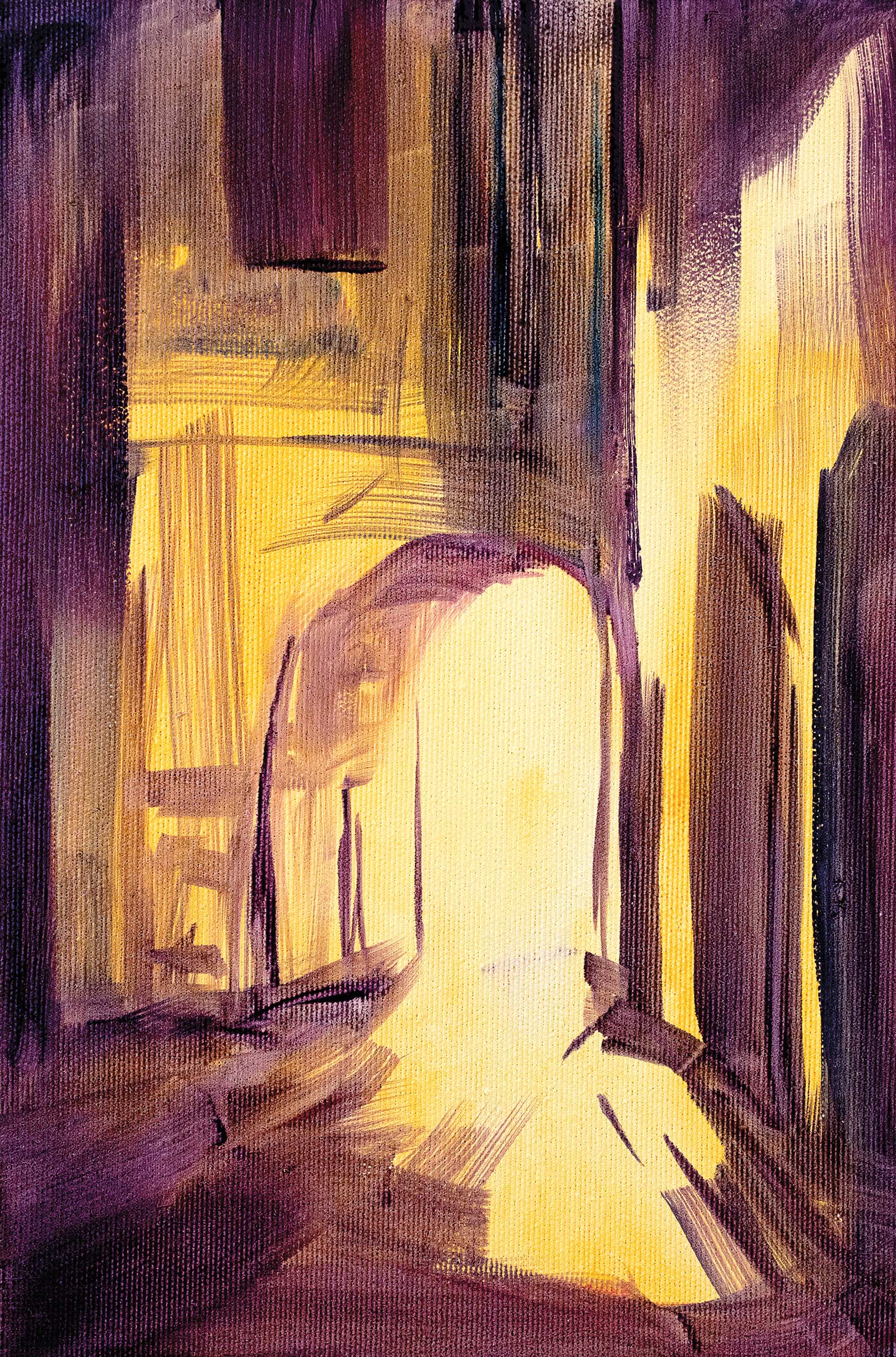 Stage 4
Stage 4 Oil Sketch
At this point I create an oil sketch intentionally allowing some areas of the toned canvas to peek through. Thin paint and the texture of the canvas simulates old architecture.
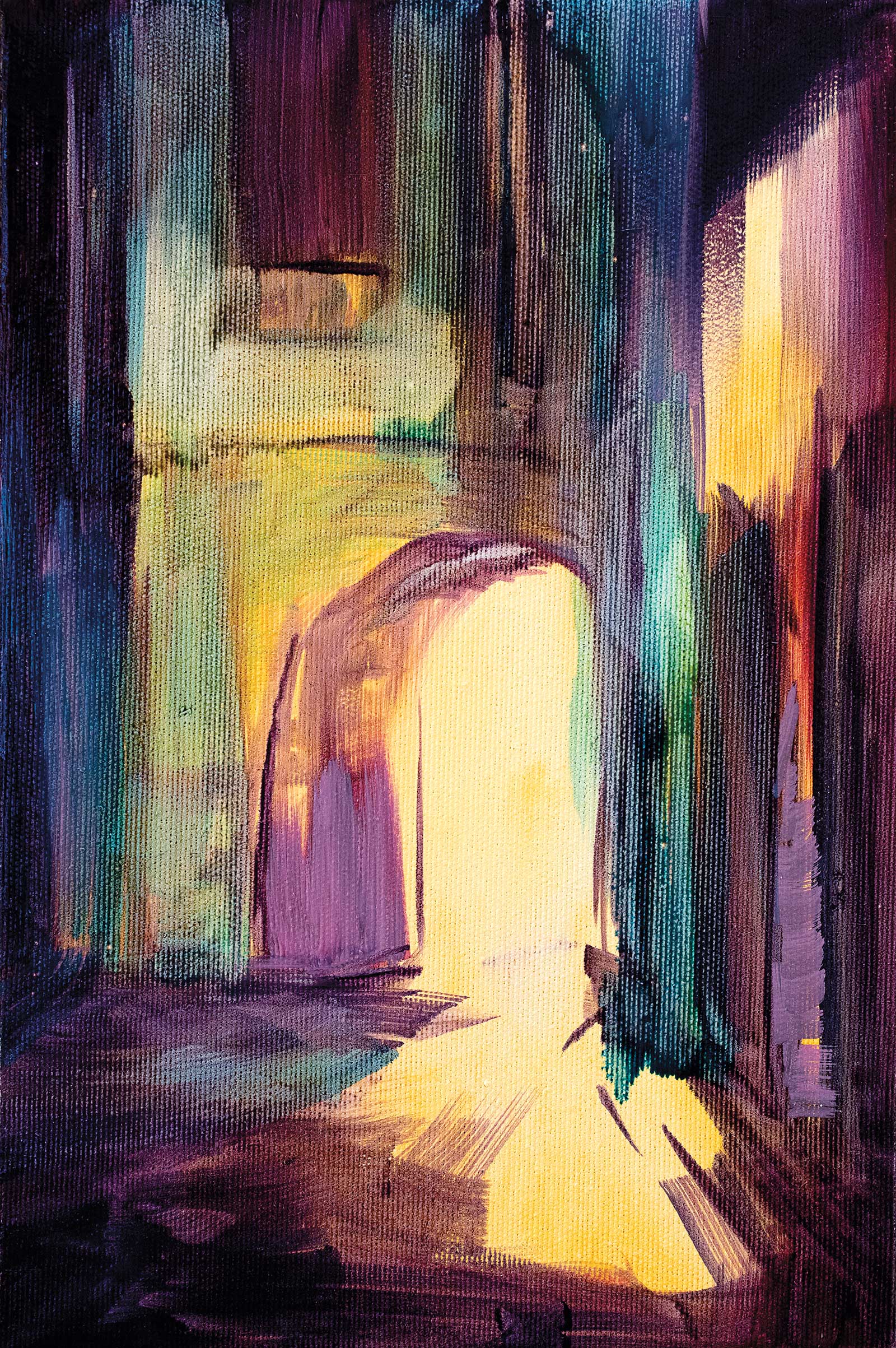 Stage 5
Stage 5 Adding Darker Values
Next, I’m using violet, azo red light, Prussian and cobalt blue to create the darkest darks in my painting. Working from dark to light, I applied the paint in a semi-transparent way to create a good balance of cool and warm color on the wall. I didn’t use any green colors.
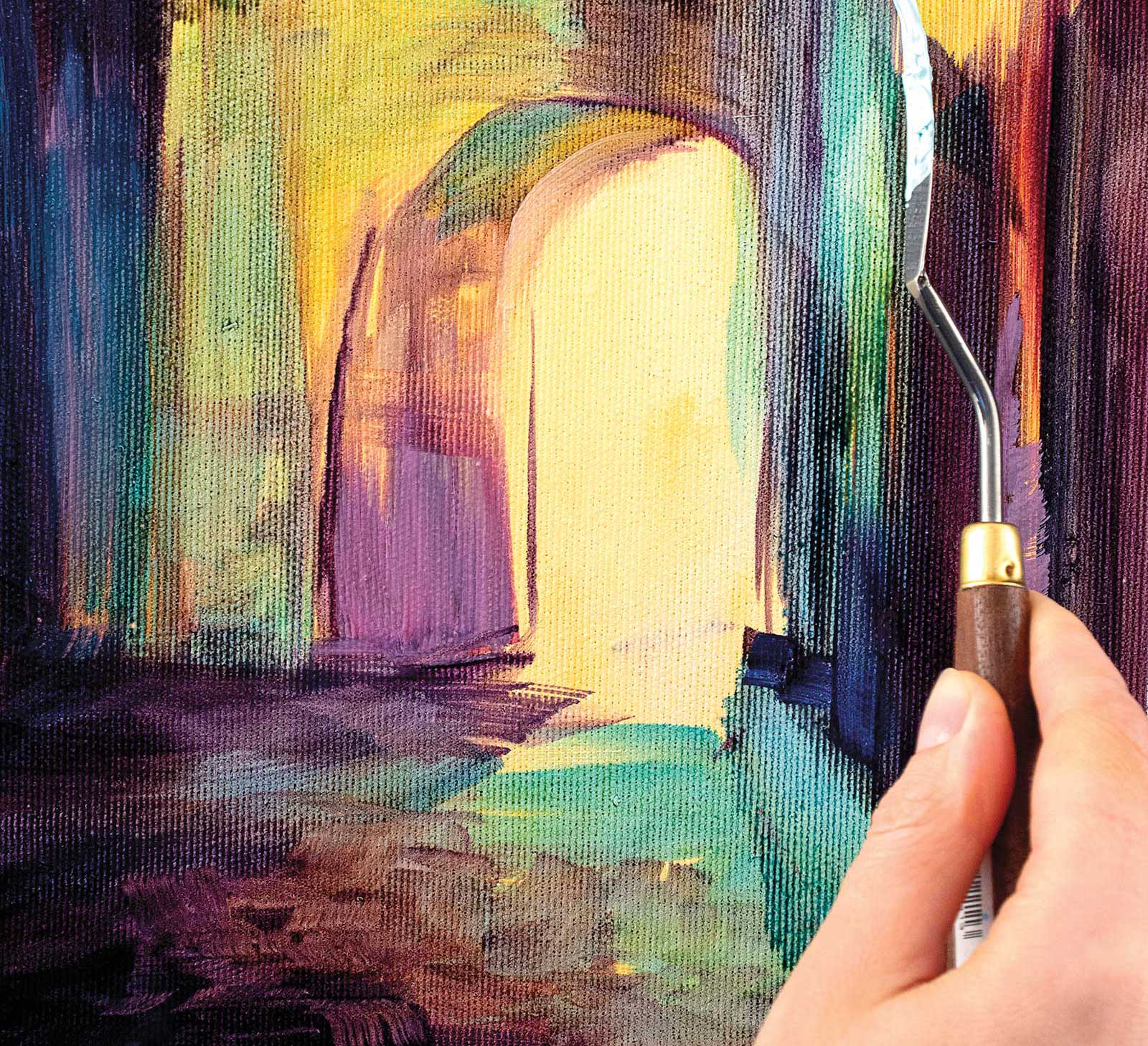 Stage 6
Stage 6 Adding Bright Color
Now I am ready to bring turquoise bluish to the wall using a palette knife. The toned canvas serves as the lightest area at this stage.
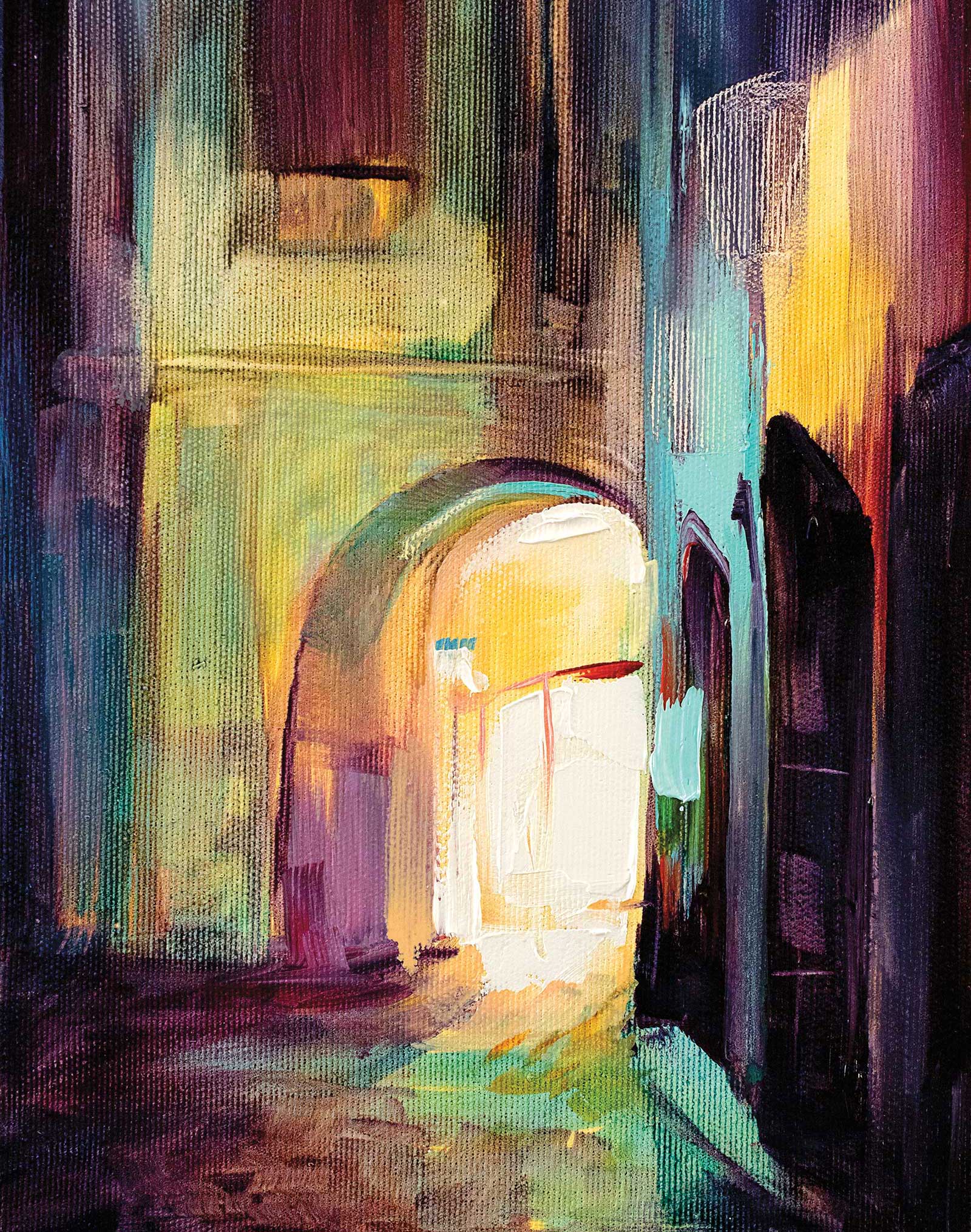 Stage 7
Stage 7 Scraping Off Excess Wet Paint
I’m using a palette knife to scrape off unwanted paint on the canvas and create the gate opening with titanium white.
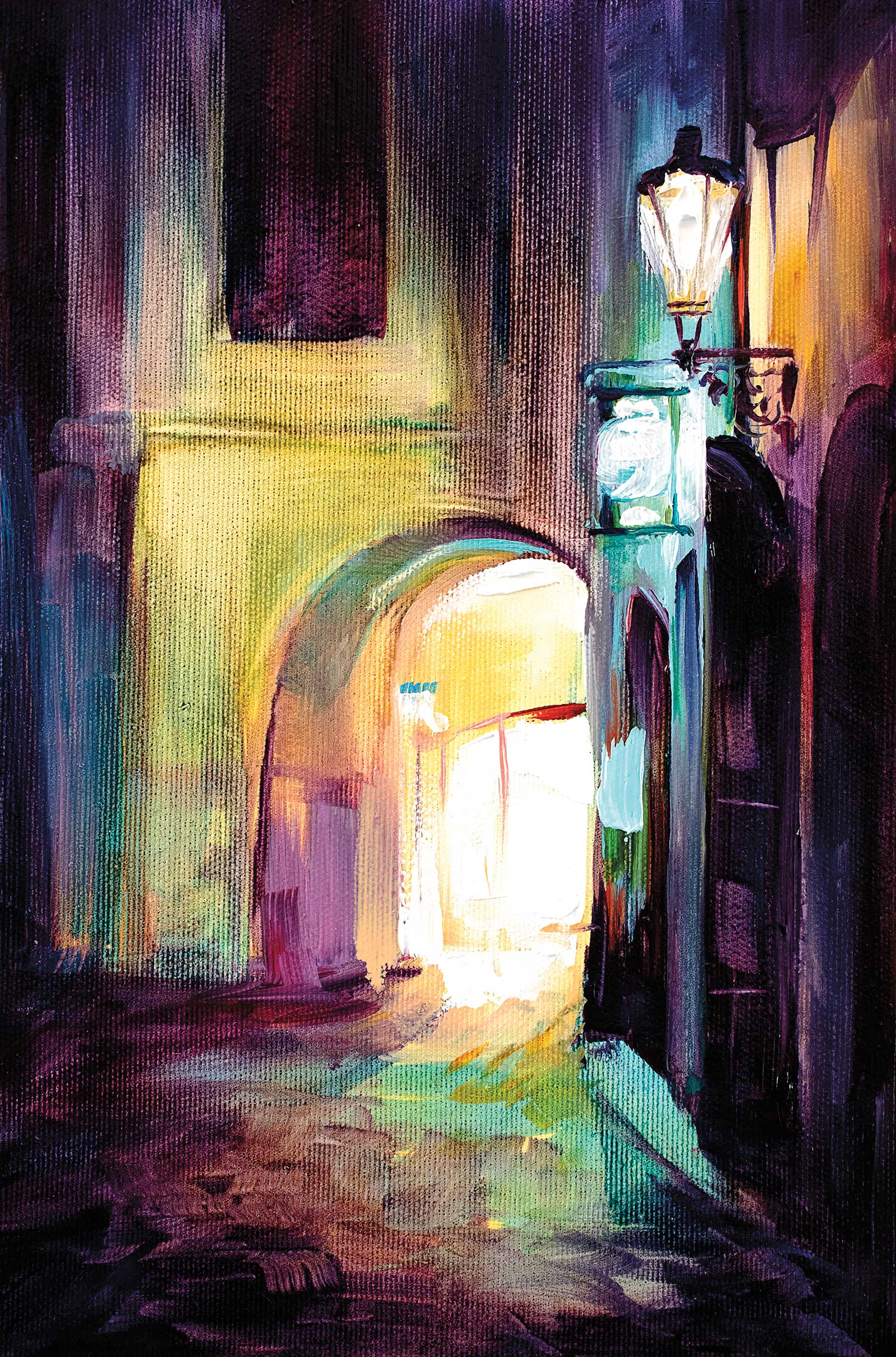 Stage 8
Stage 8 Luminous Objects
A solid amount of paint is applied over luminous objects. I work with a palette knife, refining shapes and adding bright values and temperatures. I use titanium white to paint the lamp with the addition of a bit of azo yellow light in the shadow areas.
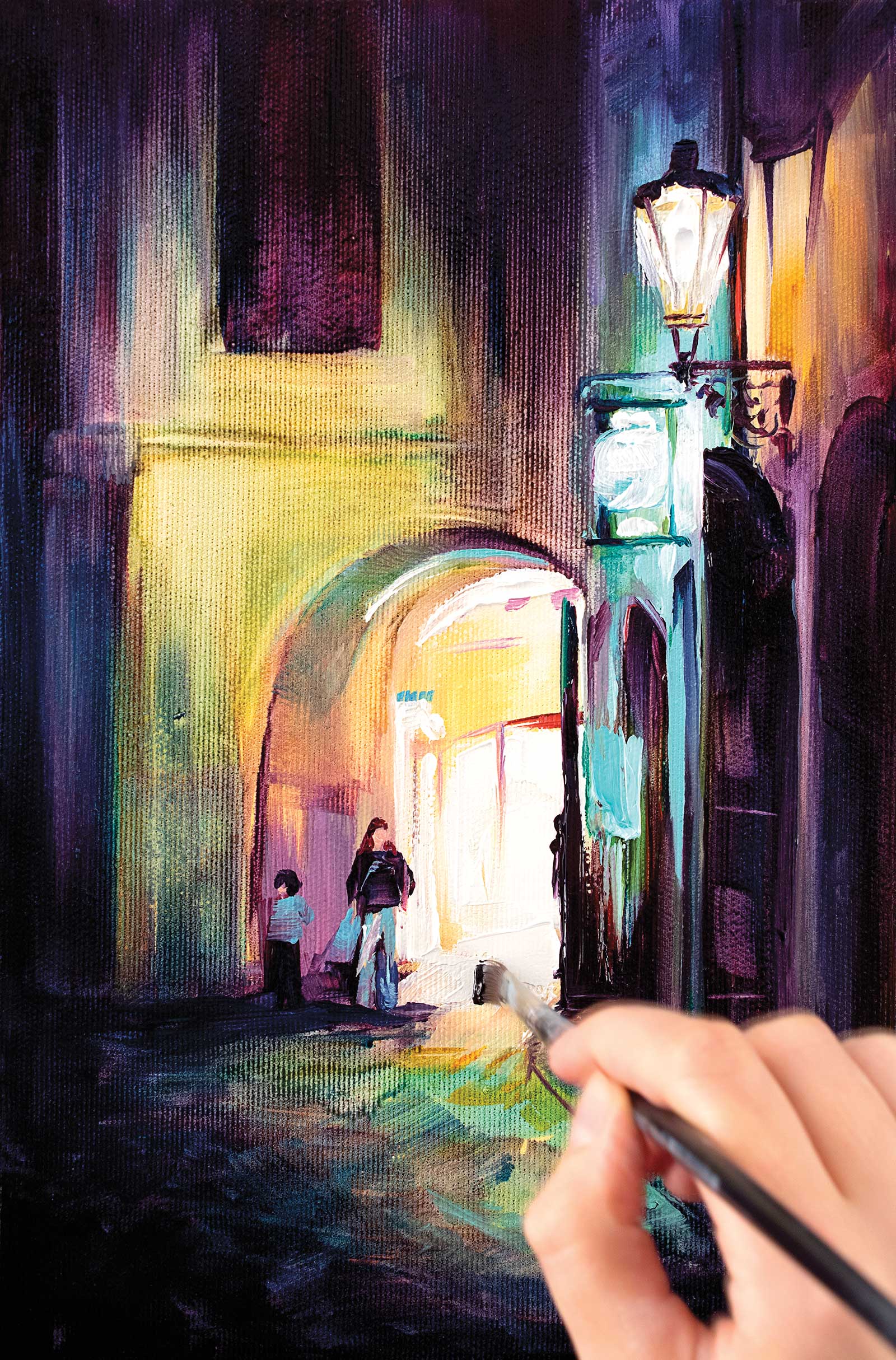 Stage 9
Stage 9 People
Using a medium flat brush, I paint the people in a few steps and bring a mixture of coral pink and azo yellow light to their faces. I am finally ready to add details with a small round brush.
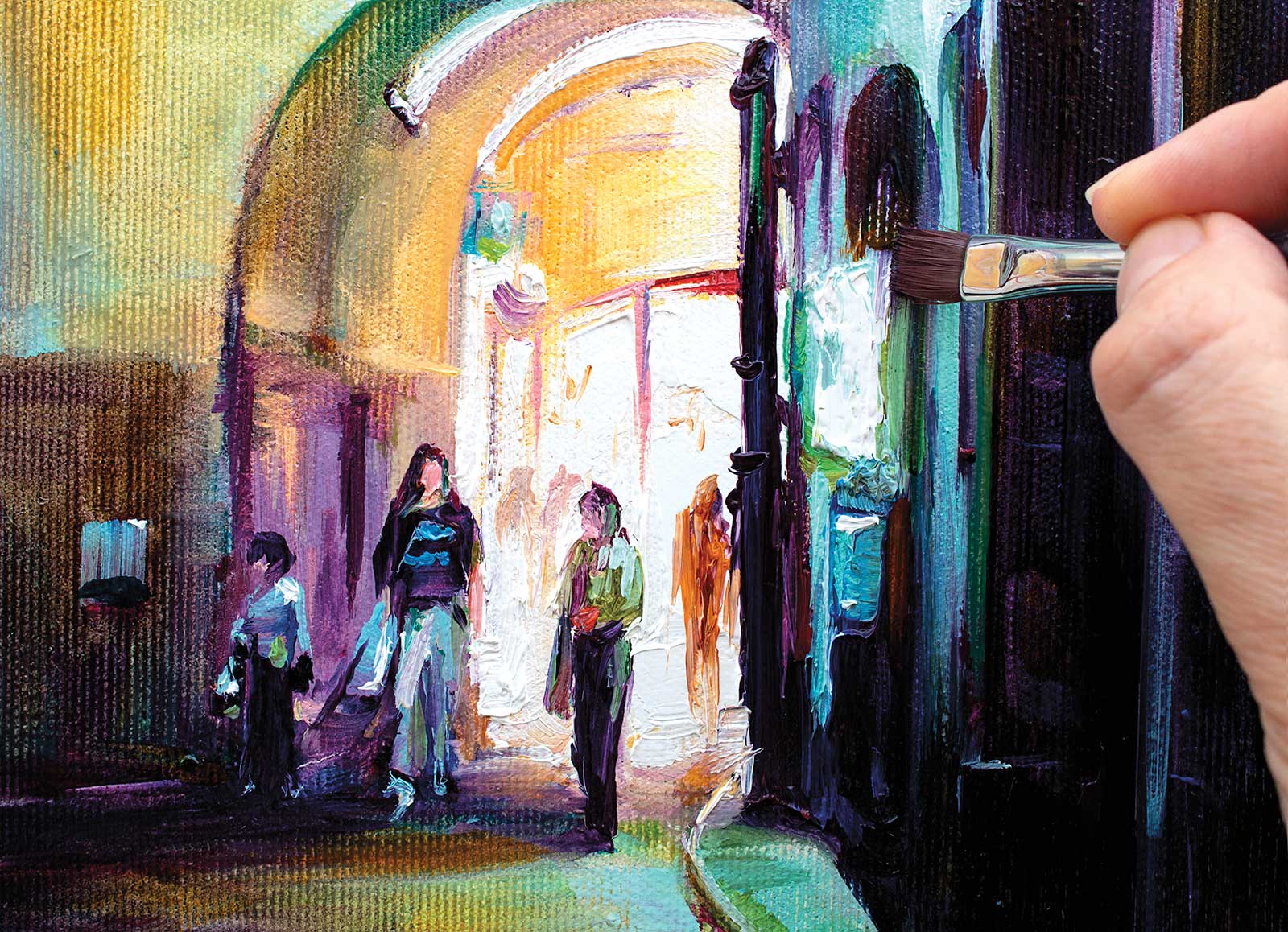 Stage 10
Stage 10 Finishing Touches
Here I am developing edges and blending the paint where glare is showing, keeping focus on the final vision of the painting.
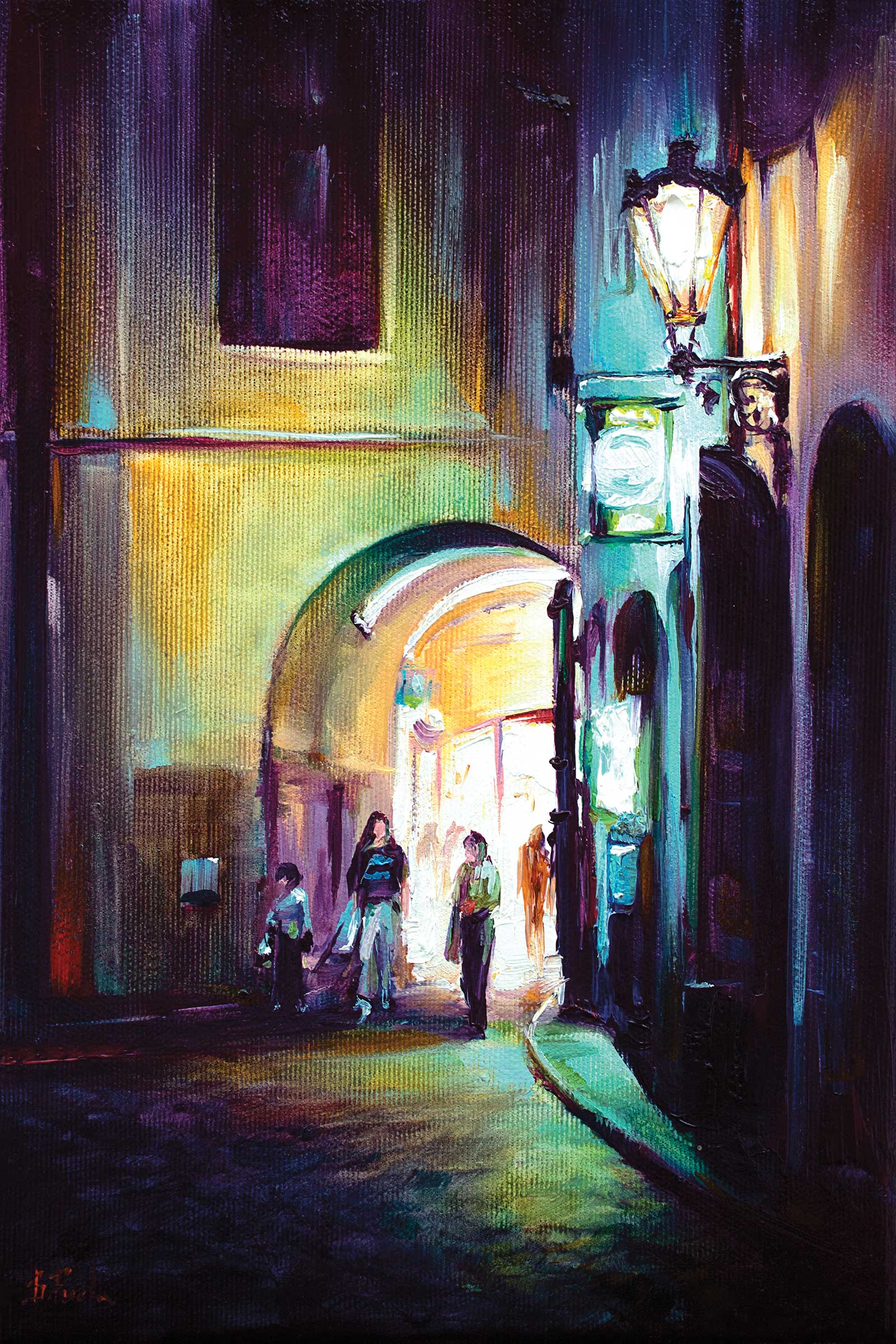 Stage 11
Stage 11 Finished Artwork
Bar 1401 Praha, oil on canvas, 12 x 8" (30 x 20 cm)
I love how Indian red makes the wall and sidewalk shine through the layers of paint no matter what color we see.
About the Artist
 Bozhena Fuchs
Bozhena Fuchs is an artist currently living and working in Prague, Czech Republic.
She gains inspiration from the beauty of untouched nature and the power of civilization. Using intense brushstrokes and movement, she strives to capture the vitality of a singular moment in time. Her goal is to evoke a sense of energy and life in her paintings, which come from combining rationality, experience and spontaneity.
Fuchs’ work hangs in private collections around the world, including Europe, North America, Canada, Australia and Japan. She was a jury member of the European Art Awards 2021.
Represented by
Cotswold Contemporary, Cotswolds, UK www.cotswoldcontemporary.co.uk
Soho Fine Art, Guildford, UK www.sohofineart.co.uk
VAN GOGH Art Gallery, Madrid, Spain www.vangoghartgallery.es
SINGULART Online Art Gallery www.singulart.com