


Conducting workshops is a lot of fun. As well as adding a social side to what is a solitary pursuit, it always amazes me the numerous solutions, tips and ideas that are offered up by many of the participants. In this article we will examine a number of these interesting solutions to sometimes difficult problems.
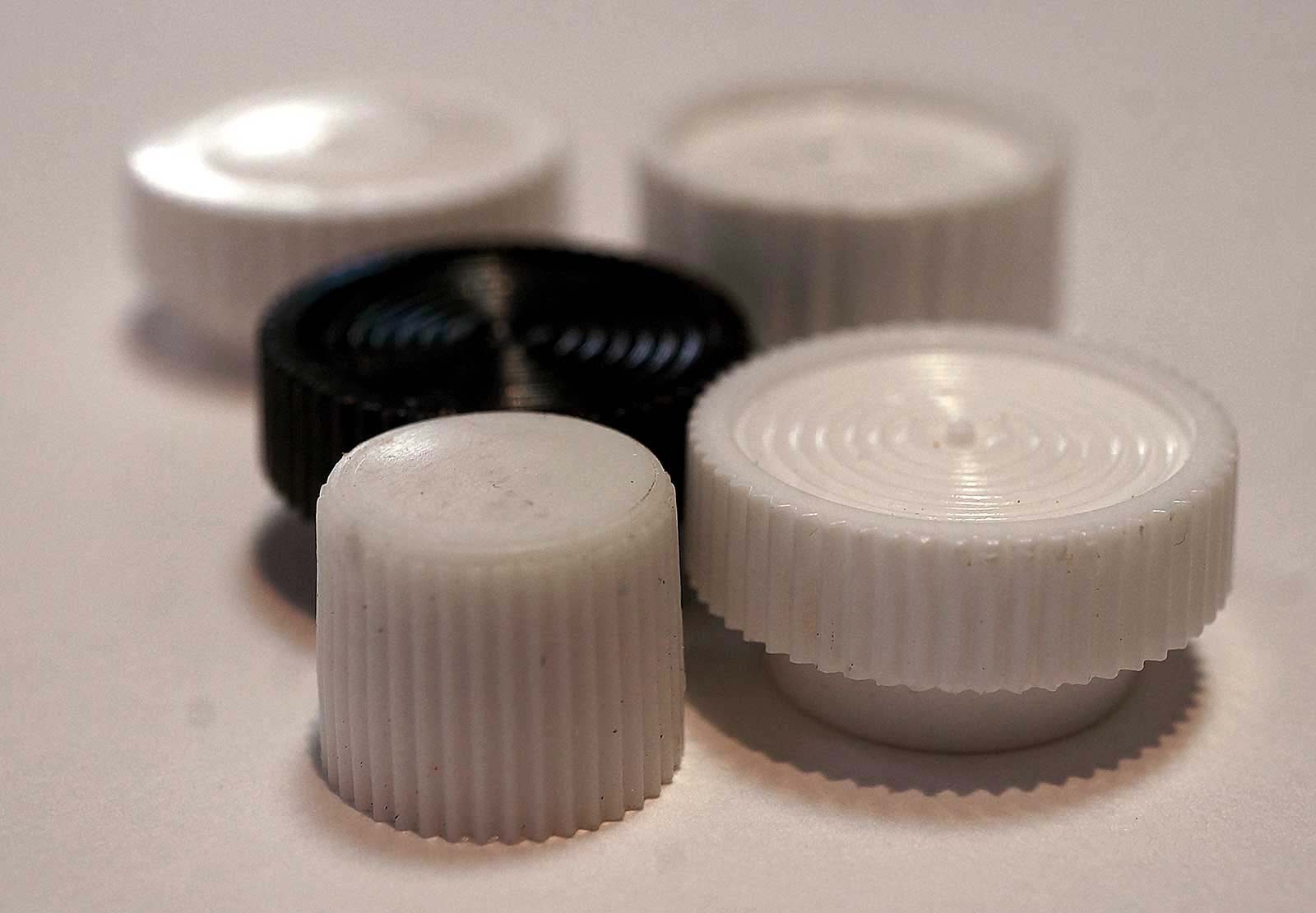
Don’t throw away your old tube caps.
Tube Lids
A lady attending a workshop had half a dozen paint tube lids of various sizes in her box of watercolors. When I asked her where all the lids came from, she said they were spares. She often lost lids or they would get old and split, forcing her to empty out the contents of the tube onto her palette. Now, before she disposes of an empty tube she washes out the lid and keeps it to replace lost or broken ones.
Brush Care
Brushes eventually wear out, so replacing them as soon as you notice any wear will keep your work clean and crisp. Here are a couple of tips to help your brushes last a little bit longer.

Pigment in the ferrule can cause bristles to separate.
Split Bristles
Occasionally pigment works its way down into the metal ferrule causing the bristles to part. This problem can often be fixed by thoroughly washing the brush with baby soap, rinsing it out, then shaping the bristles before allowing the brush to dry. (Baby soap is acid free so any residue won’t harm your paper—use it to wash all your brushes.)
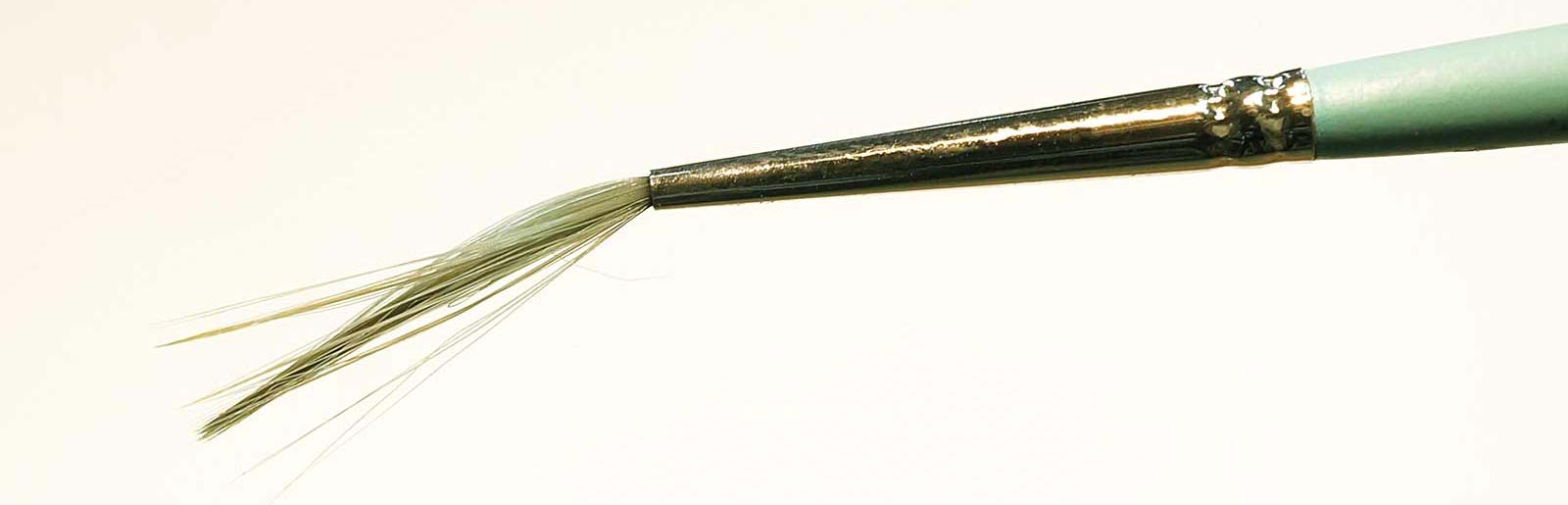
Bent synthetic bristles can be straightened perfectly in the steam of a boiling kettle.
Bent Bristles
This is a problem with smaller brushes—if the wet bristles press against something then dry out they will retain the bent shape. If the brush has synthetic bristles, holding the bristles in the steam of a boiling kettle will straighten them out in a few seconds.
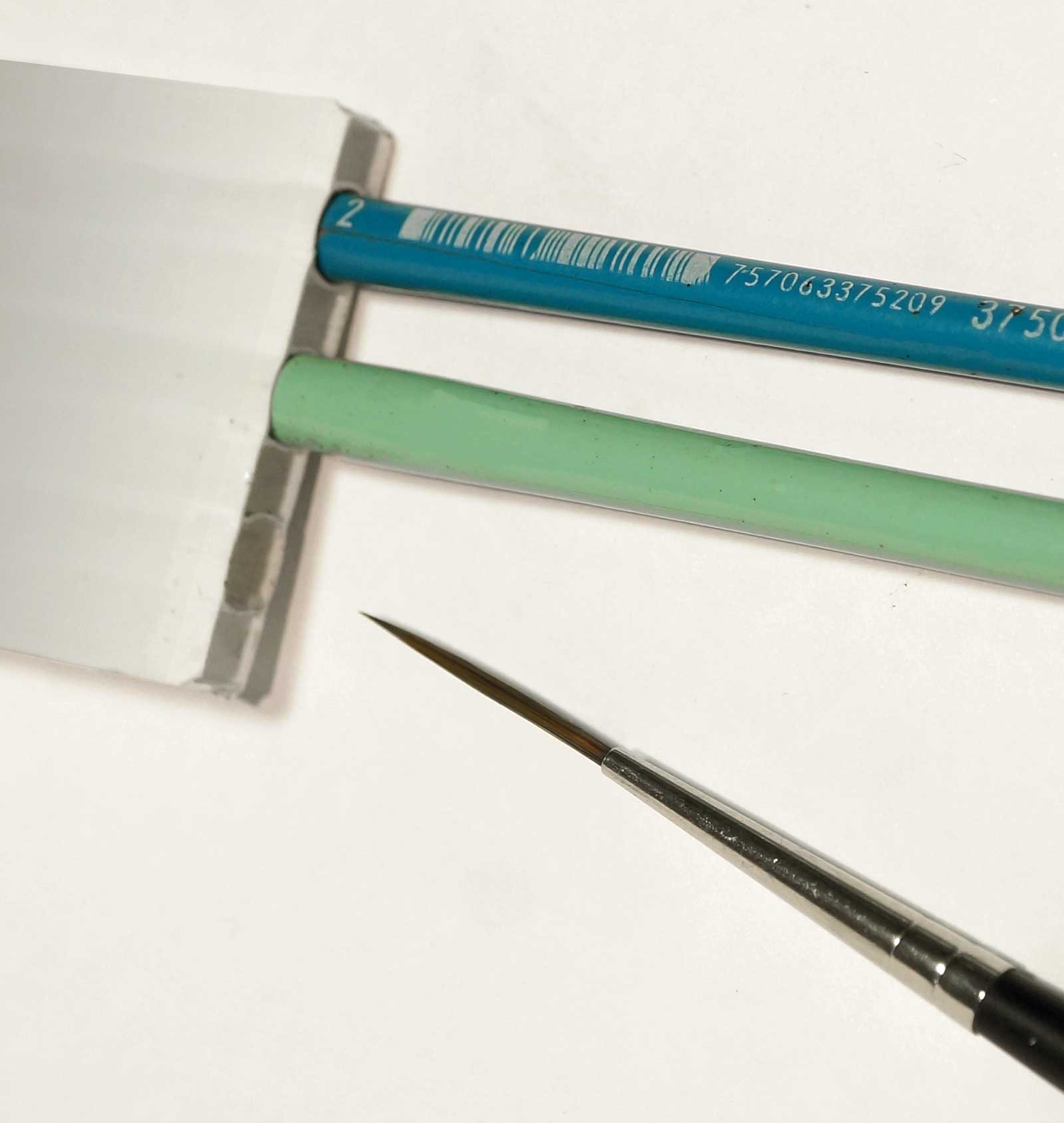
A small piece of corflute protects the bristles of fine brushes.
Brush Transport
To protect rigger and 1⁄8-inch brushes while traveling, carefully insert the bristles into the end of a small piece of corflute.
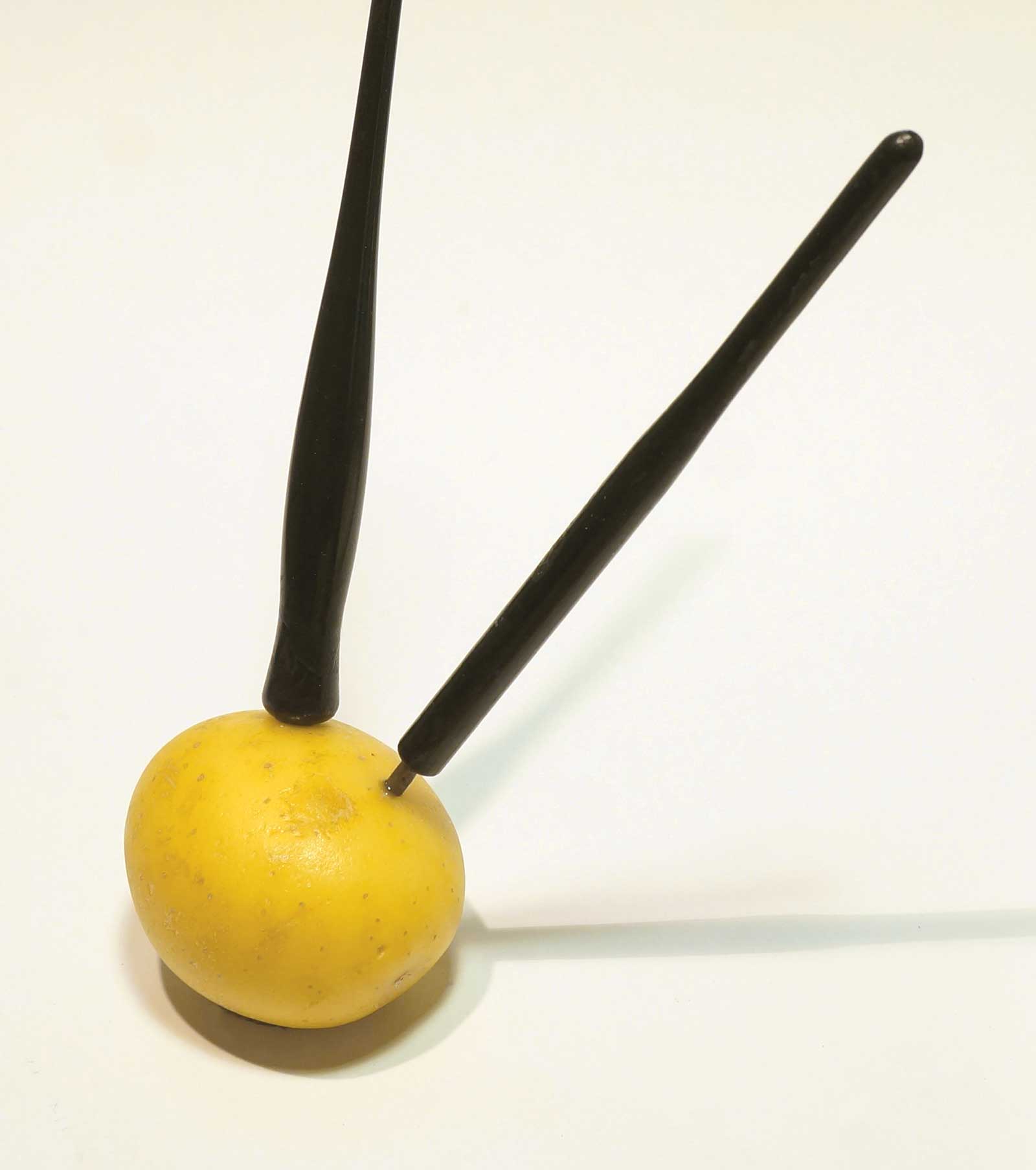
Cleaning nibs with a potato.
Nib Cleaning
At a recent workshop we were discussing the best way to clean a dirty pen nib. One lady said she had the perfect solution. Next day she arrived with a potato. Everyone inserted their dirty nibs and after an hour or so they could be extracted and wiped beautifully clean!
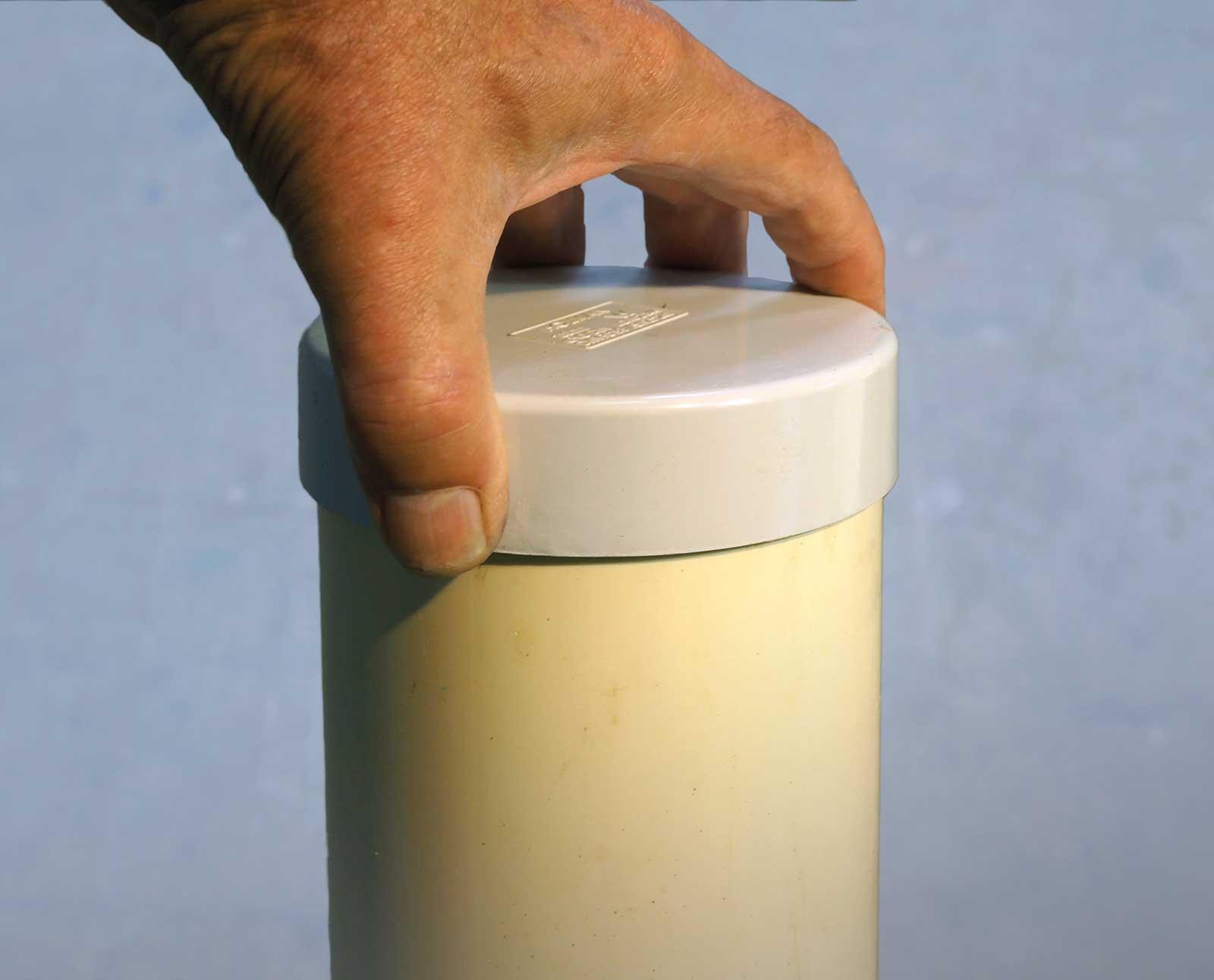
Safe storage for roll paper.
Paper Storage
Watercolor paper is expensive stuff and the last thing we want to do is waste it. The best way to keep full sheets of paper in good condition is to keep them in the big plastic envelopes the packs are sold in. Avoid storing paper against anything acidic. This includes next to cheap paper or cardboard or on MDF or chipboard shelves. When traveling with half or quarter sheets, vibration can be a problem, wearing the surface as the sheets move against one another. I always clamp my smaller sheets between two sheets of corflute so nothing can move. If you use roll paper the best storage solution is a length of plastic plumbing pipe with a press on cap on either end.
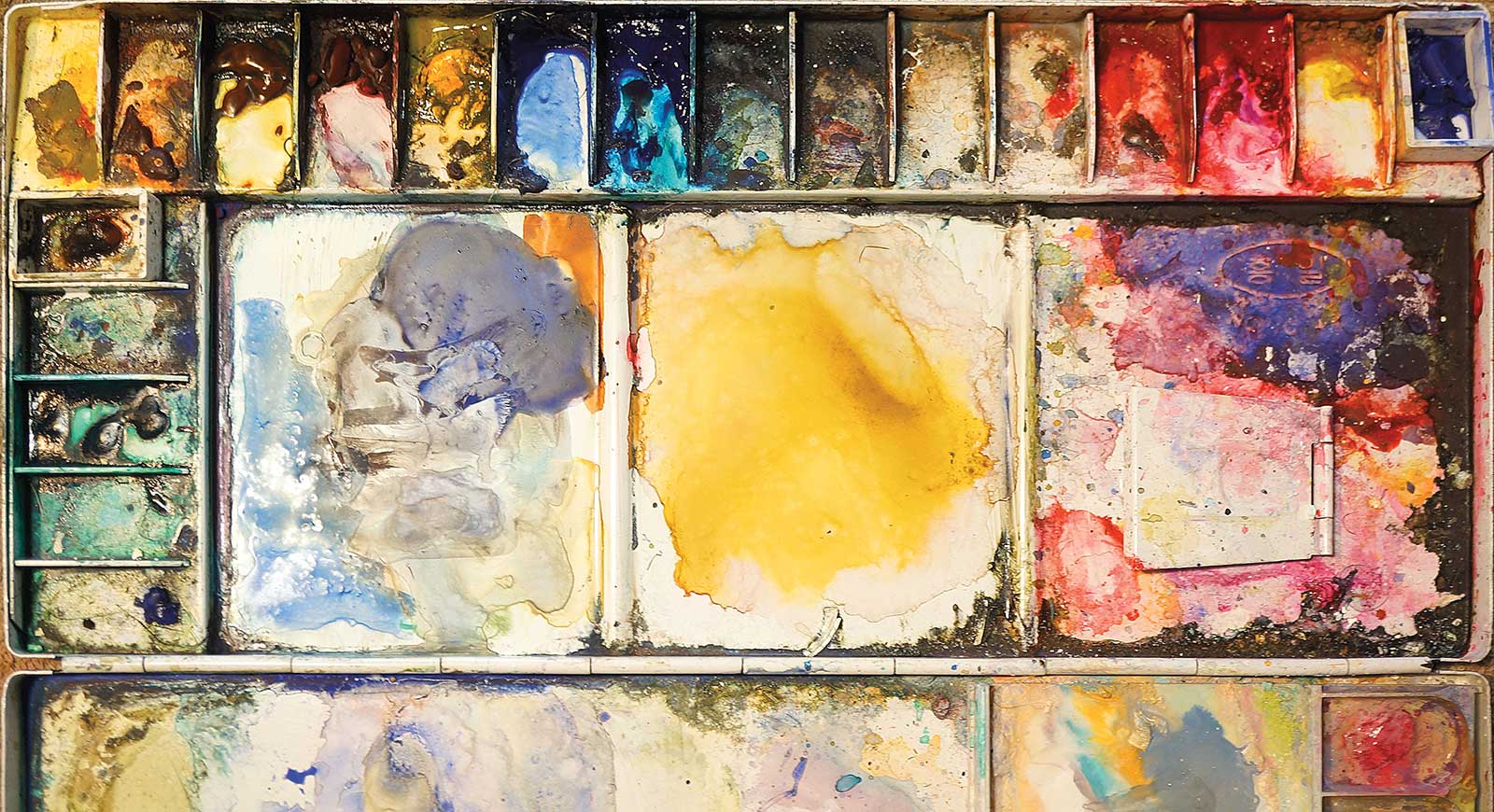
It looks a mess, but why waste all that premixed pigment?
Dirty Palette
A lot of students like to wash their palette clean at the end of everyday painting. I’m a little reluctant to tell them not to waste time and paint doing this, as I think there is possibly a psychological benefit to the practice. However, I rarely wash my palette as the leftover sludge from the previous day always seems to be a good start to the next day’s wash.
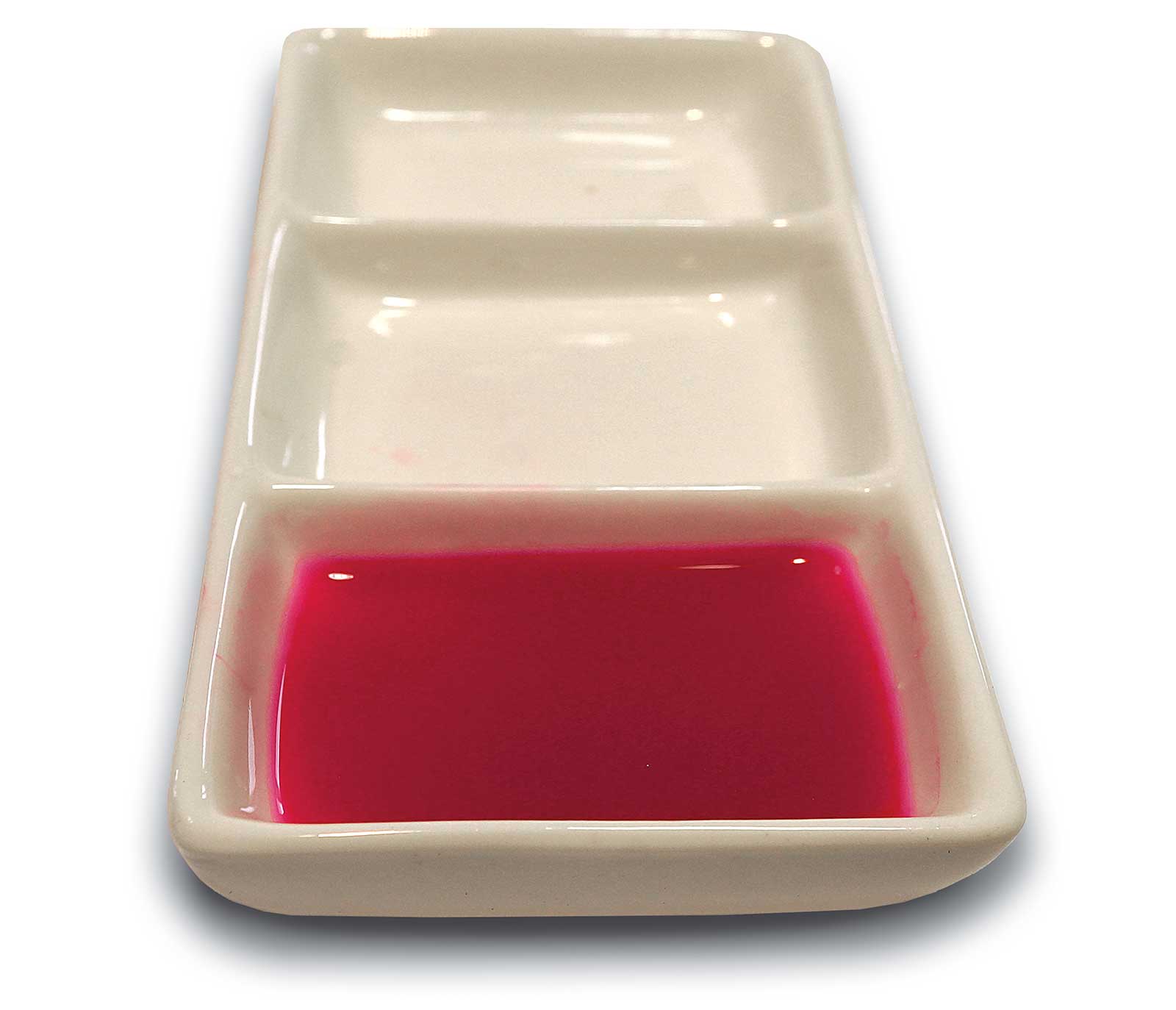
Sushi trays are ideal for mixing washes and glazes.
Mixing Glazes and Washes
I used to use those little plastic soy sauce containers to mix up glazes and washes. One day a student had a great little porcelain tray divided into three shallow wells. She told me it was a sushi tray available for a couple of dollars at the local junk shop. They are much better than plastic to mix in, and I’m not throwing away plastic cups all the time.
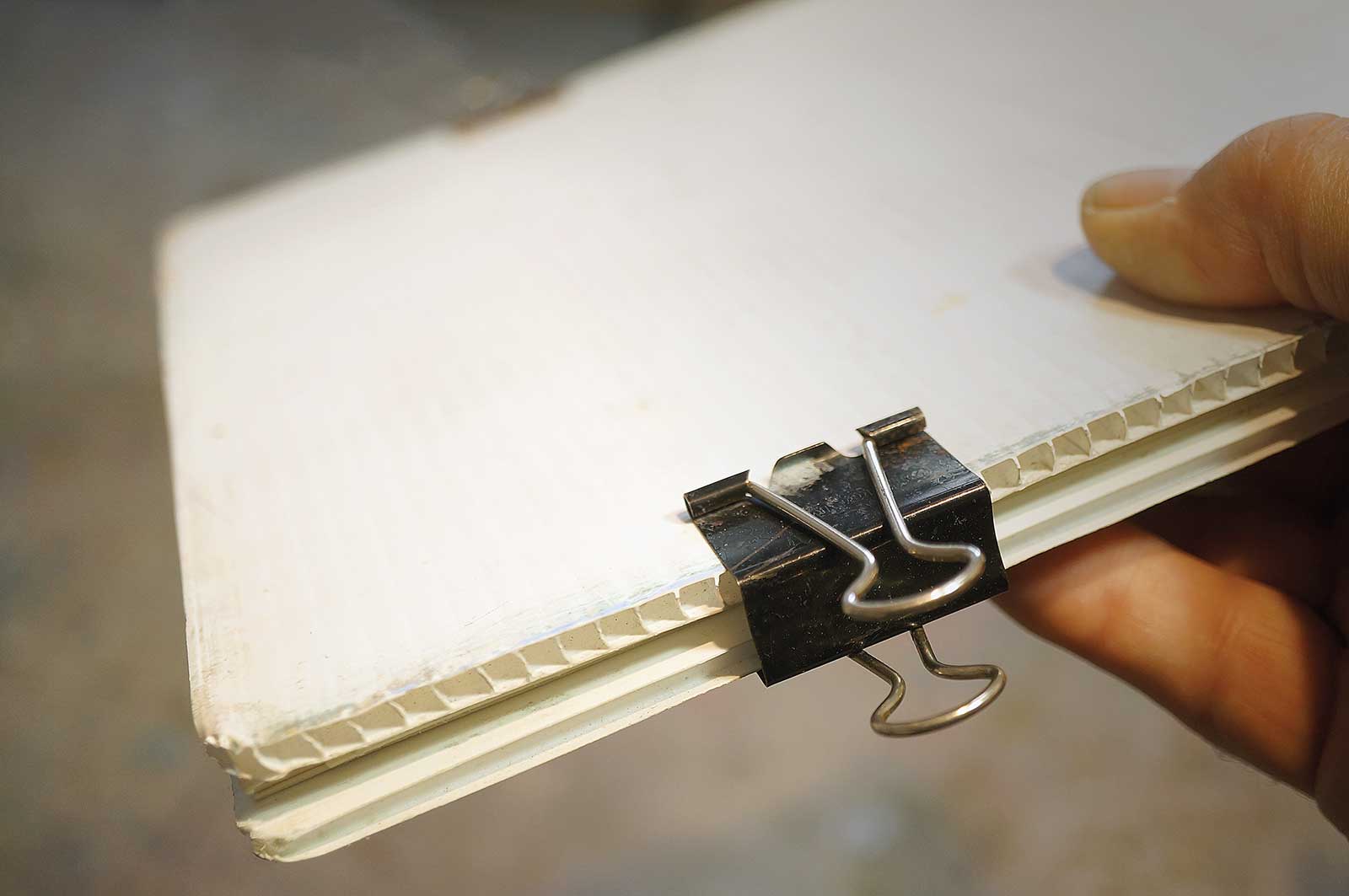
Transport paper between corflute backing boards held with spring clips.
Backing Boards
I have found corflute is ideal for a backing board for up to a half sheet. It is acid free and very light weight for traveling. I cut it to around ½ inch larger all round than the paper I use then round off the corners so it slips into my painting bag without catching. Transporting paper this way stops any vibration abrading the sheets. For larger sheets I use a 12 millimeter ply painted with a couple of coats of water-based primer/sealer. This stops any acid leaching out into the paper.
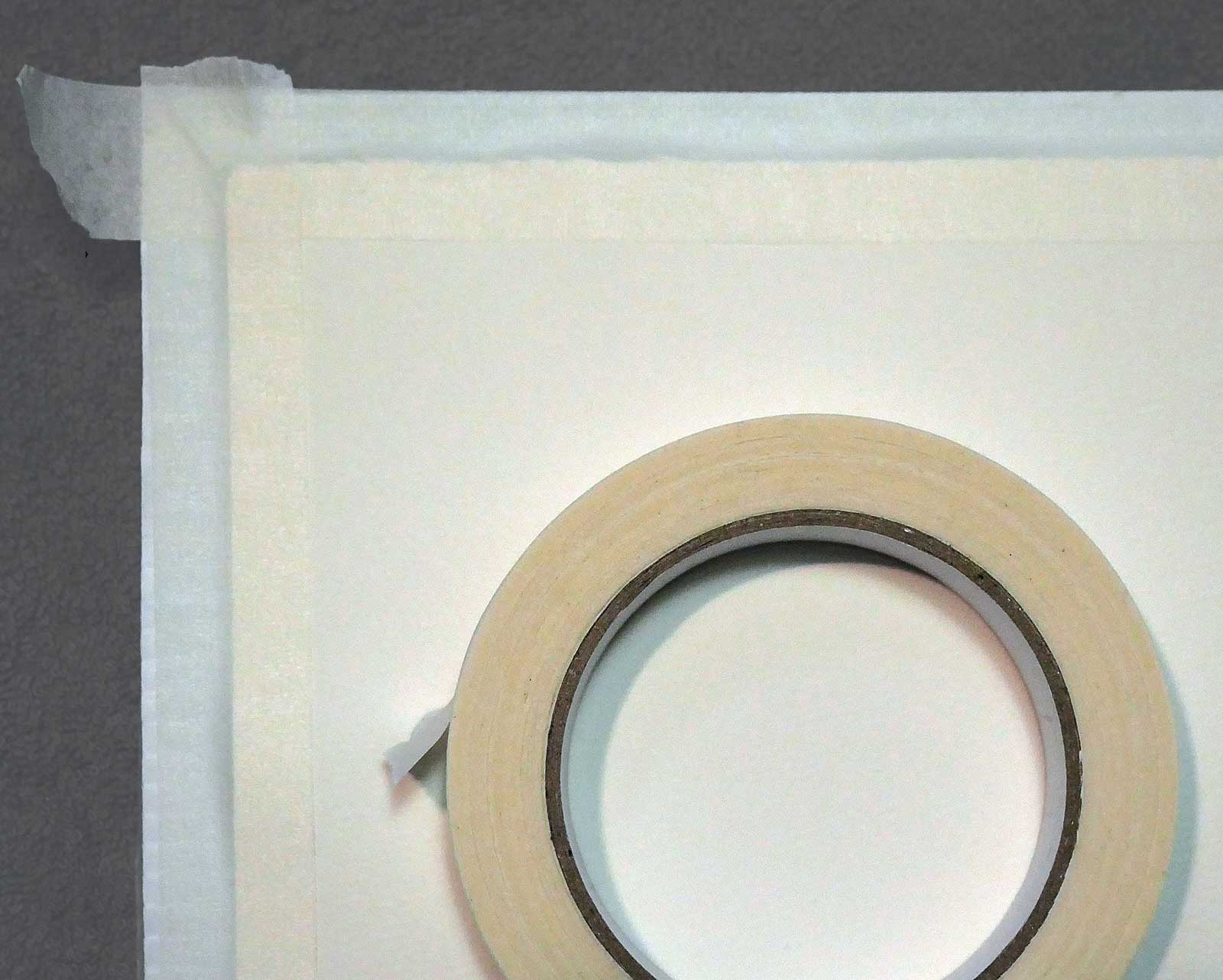
The lack of contrast between the edge of the painting and the masking tape makes it much easier to see what’s happening with your work.
Masking Tape
It’s hard to find masking tape with the right amount of stickiness. I have tried everything from expensive automotive masking tape which tore the paper when I tried to remove it, to cheap junk store masking tape which barely stuck to anything and definitely didn’t mask what was underneath! So if you find a good one, write down the brand so you don’t forget.
The masking tapes to avoid are the brightly colored (green, blue, purple) used by house painters. They seal well and are removable, but really make it hard to see what is going on with your painting.
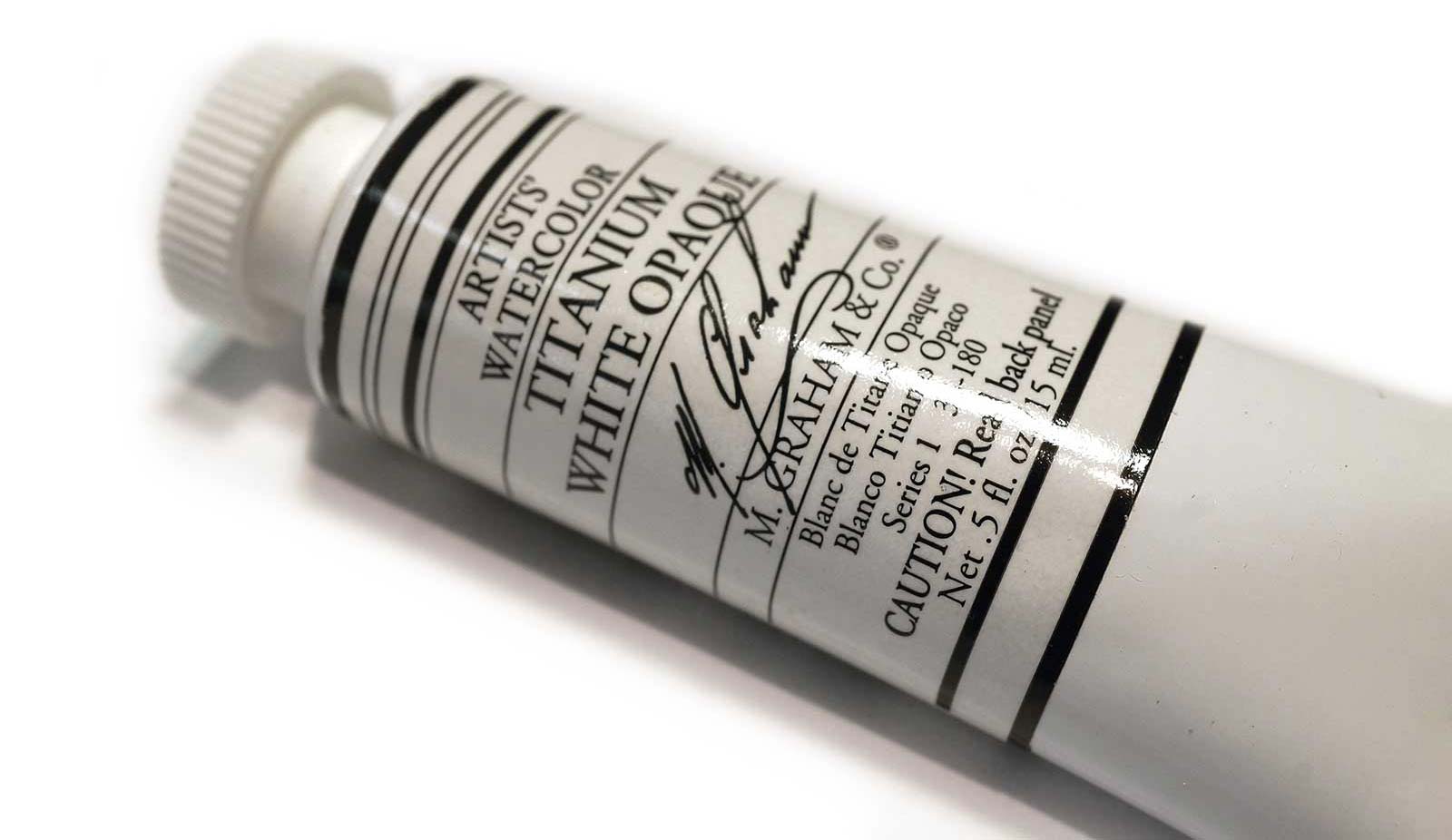
Opaque titanium white.
White Gouache
White gouache is great stuff, as it really broadens the scope of watercolor. I have used the same old stuff for years, until someone at a workshop gave me a tube of titanium white opaque watercolor. It has the same flatness and covering power as white gouache but does not dry to a hard, crumbly consistency. This is a real bonus when traveling. I have had dry white gouache break up and invade all my wells of watercolor on numerous occasions. This titanium white stays intact, so you don’t have to remember to clean it off each time before packing up. Titanium white gouache (or opaque watercolor) is made by most manufacturers.
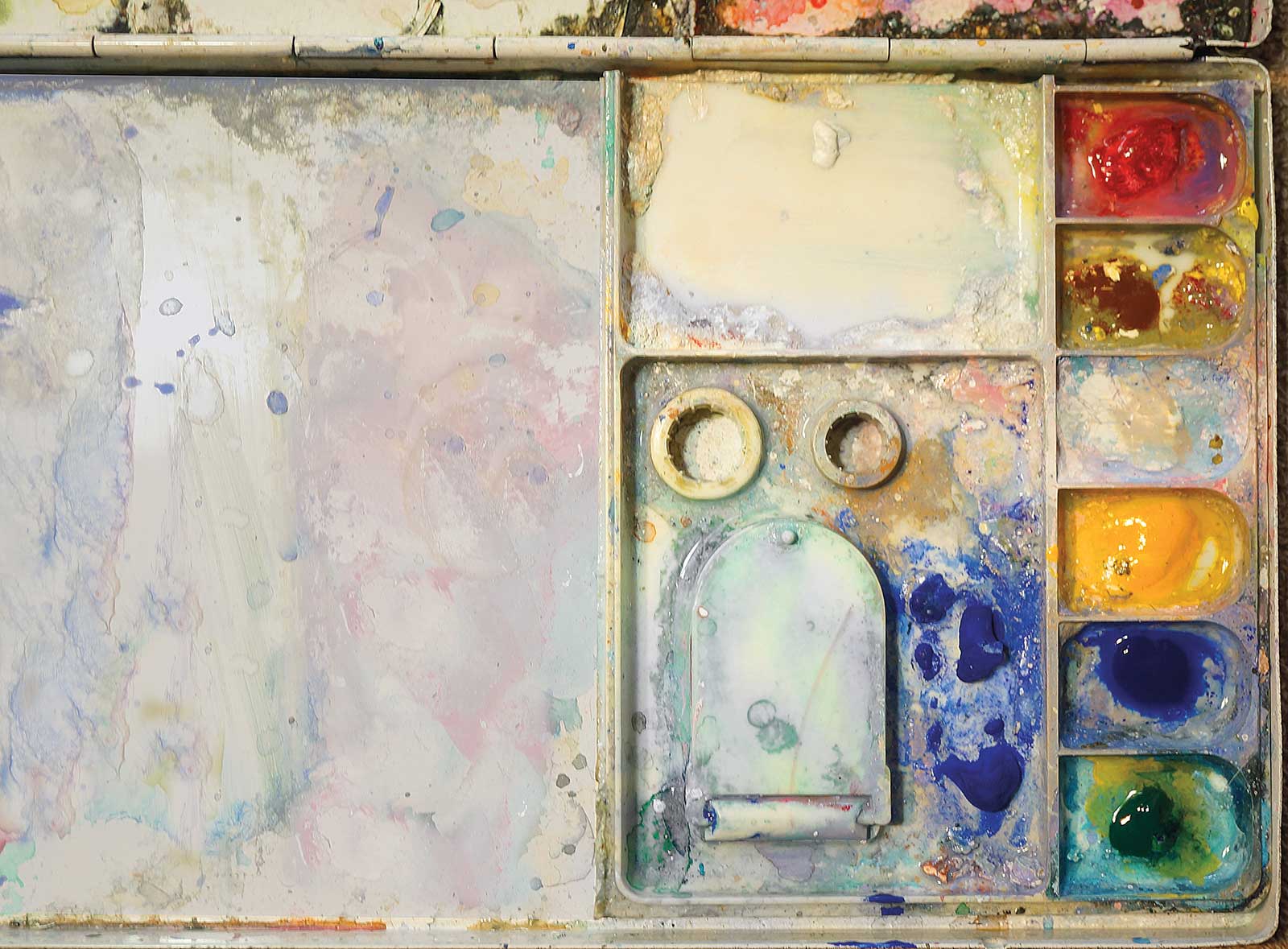
Small plastic palette attached to main watercolor palette for mixing gouache.
Gouache Palette
Another handy tip to keep gouache from polluting your watercolors is to cut a section out of an old plastic palette and fix it to your watercolor palette. I squeeze a small amount of my regular watercolors onto the gouache palette and use these for tinting the white gouache. This keeps the white gouache away from all my regular watercolors.
I love learning these handy little tips and hope some of them will help you with your painting. —
Contact at www.johnlovett.com