
I mainly paint marine and oceanic themes with acrylics and have been doing so for several years now. I studied at an art school for seven years in my hometown in Ukraine. I learned the basics of painting, which in the future became very useful to me. I remember falling in love with these waves. I was on vacation in the Crimean Peninsula on the Black Sea coast. My friend and I went to the Aivazovsky Museum, and I saw something divine and exciting at the same time. I remember an almost dark room and huge canvases backlit with dim light. These waves were like an emerald that shimmered through the rays of the sun. I thought that I could never draw these waves.
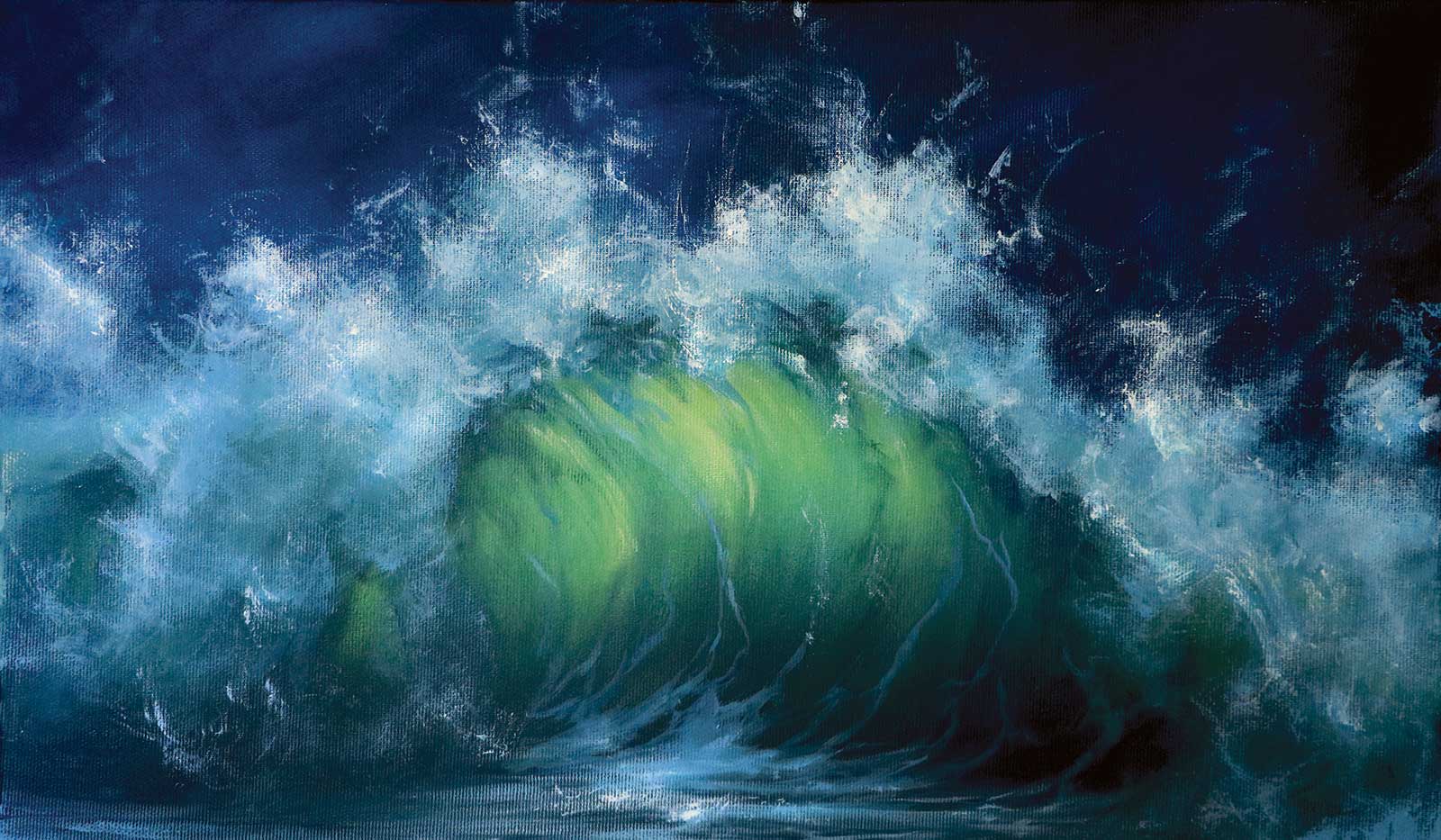 Night wave, acrylic on canvas, 12 x 19½” (30 x 50 cm) I spend a lot of time on foam and splashes. I paint from dark to light, so there is volume.
More than 10 years have passed, but these pictures remain in my memory. I thought, “why don’t I try it?” I was looking for materials on how to draw with acrylic, and over time, I figured out how to do it. Then I thought that it was necessary not only to paint beautiful pictures, but also to carry a message to this world. I want to tell everyone about the global pollution of the oceans and waters of our planet—about what a wonderful world we have, which we can save by paying more attention to this global problem.
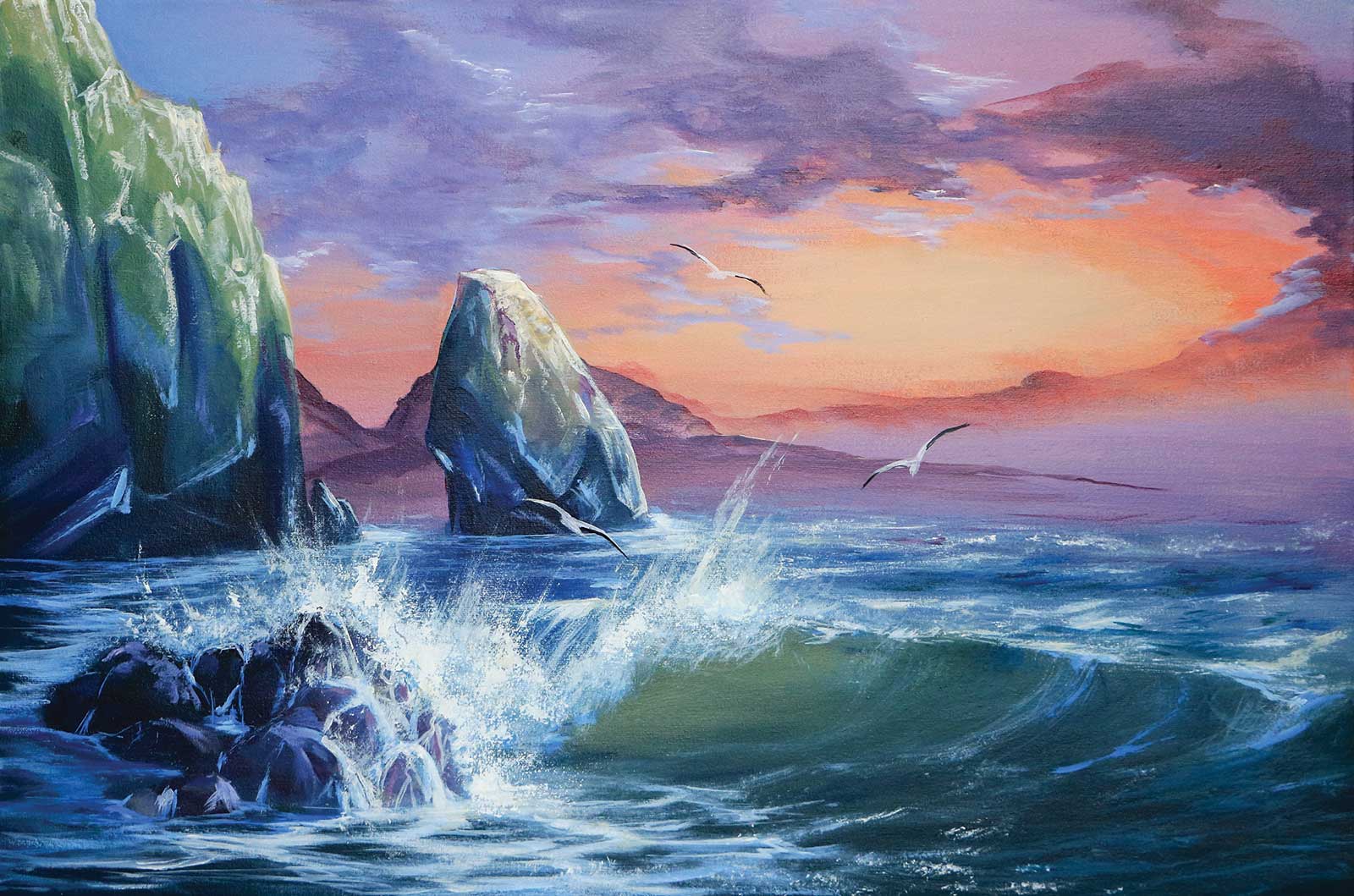 Fantastic landscape, acrylic on canvas, 15½ x 23½” (40 x 60 cm) This is my first time using bright saturated colors. The sky is drawn from light to dark. Water and rocks are drawn from dark to light.
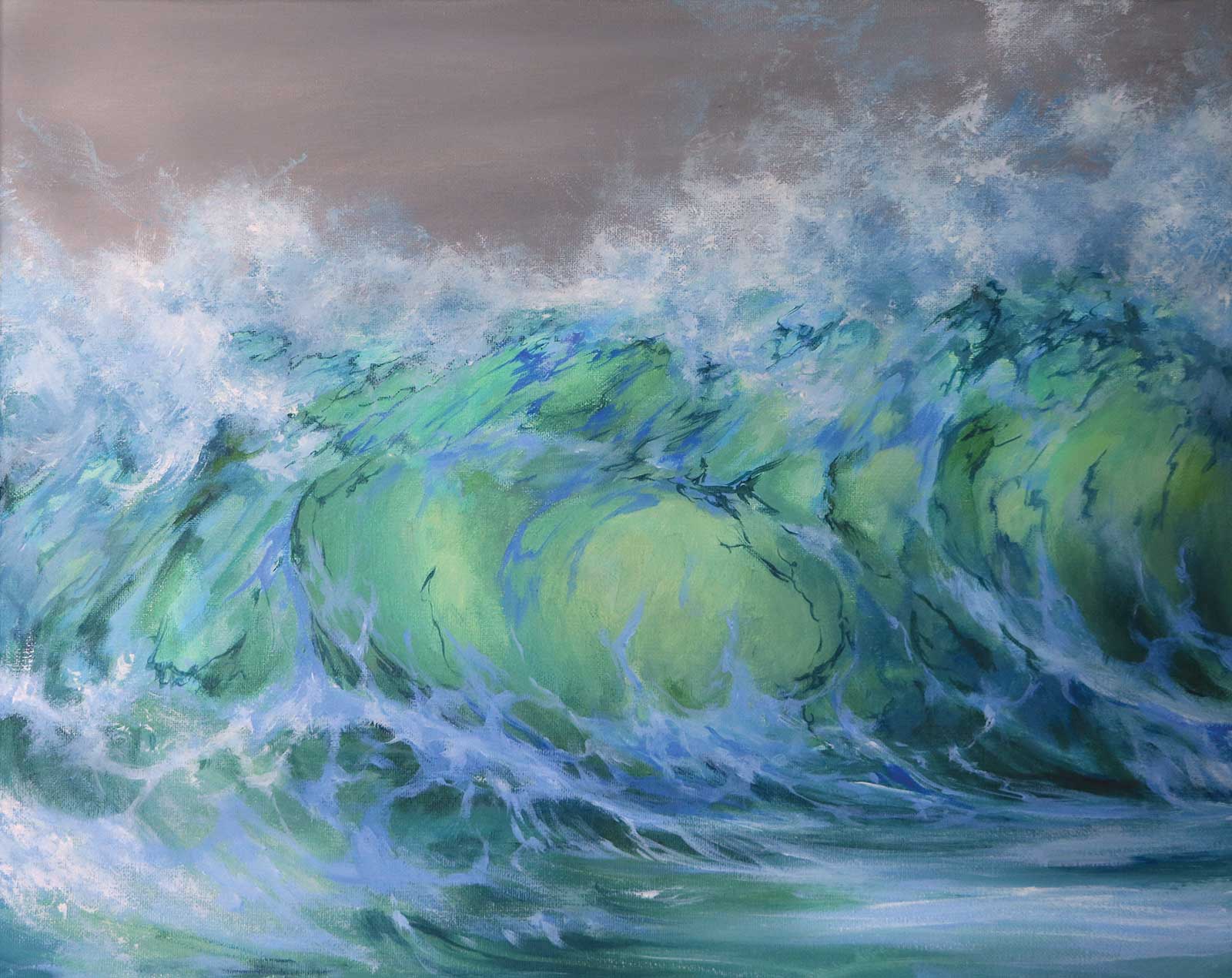 Abstract wave, acrylic on canvas, 15½ x 19½" (40 x 50 cm) The lightest white paint creates highlights and splashes. This is the last element of the painting.Acrylic is a difficult material, as it dries very quickly without giving much time to think. I gained my experience by drawing on paper. Drying speed on paper is maximum, which does not allow you to relax. On the canvas, I paint in stages, according to the principle from far to near. First, I begin with the sky and the horizon. The next step is the waveform and the foreground. I paint smooth transitions on a wet-on-wet basis. Since acrylic dries quickly, I try to do it quickly by keeping the paint wet, using sprays of water. The second step is to take some time to foam and splatter using a flat fan brush. I paint in tonality from dark to light so that it doesn’t seem flat. The paint at this stage is mostly dry, which makes the painting three-dimensional. The last stage is the glare. I would say that I ultimately work in mixed media, as I like to experiment with drawing as well. I also use several techniques to get a good end result.
My Art in the Making Wave number 15
 Stage1
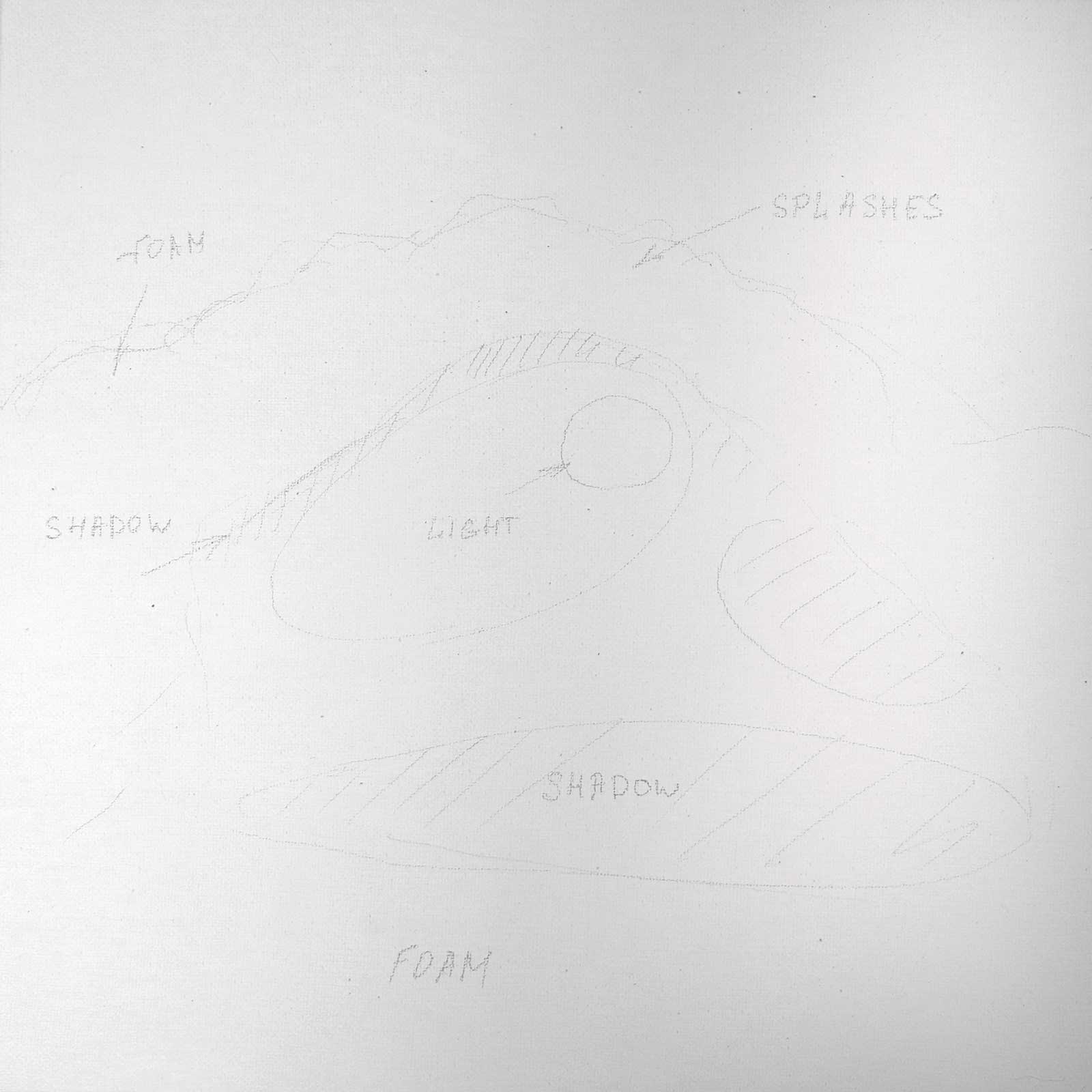
Stage 1 Sketch
I use my own reference. I outline the lines and define the overall composition—that is, the movement of the wave, where there will be light and shadow. This is a rough draft. I am not drawing exact lines here.
 Stage 2
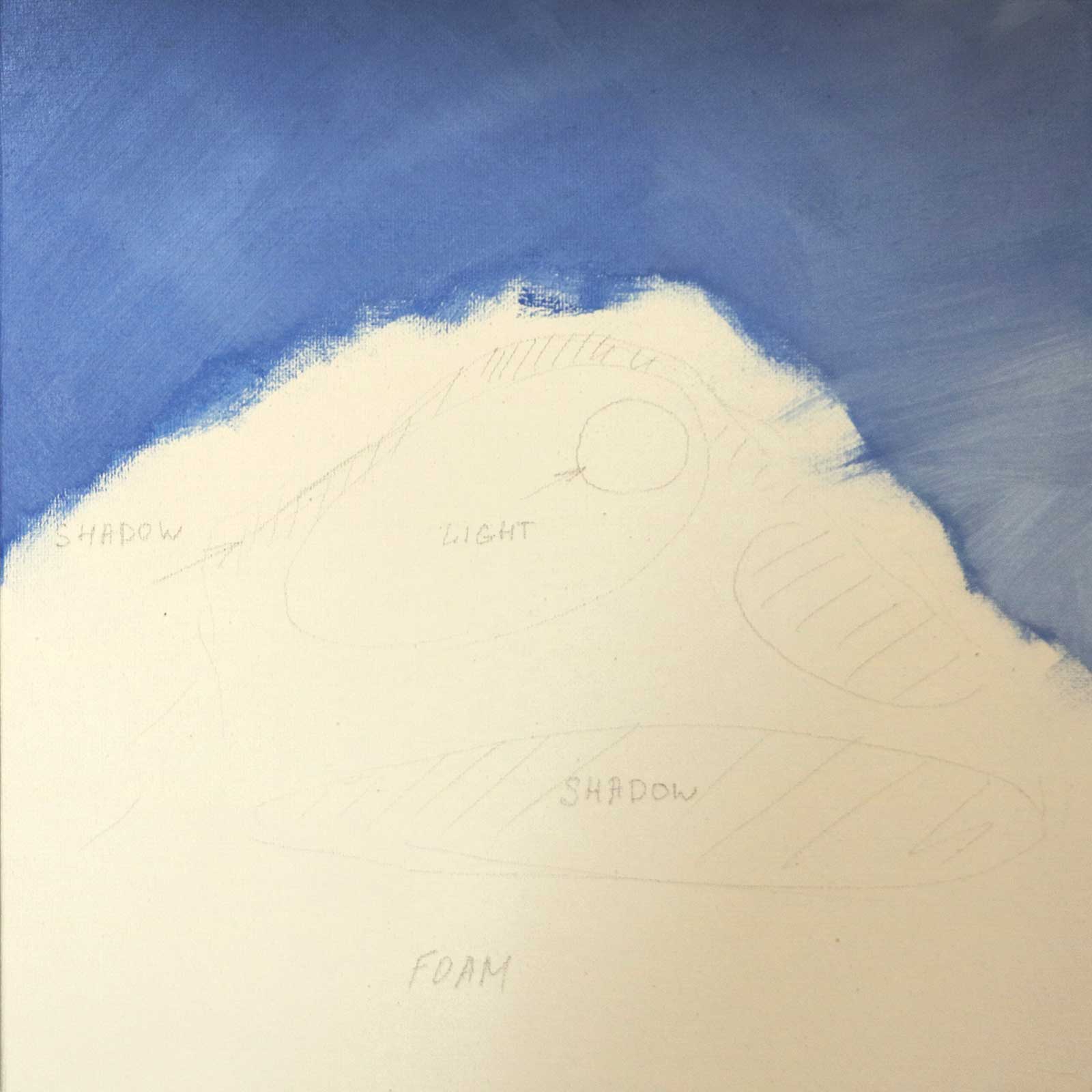
Stage 2 Background Sky
Stage 2Stage 2 Background Sky
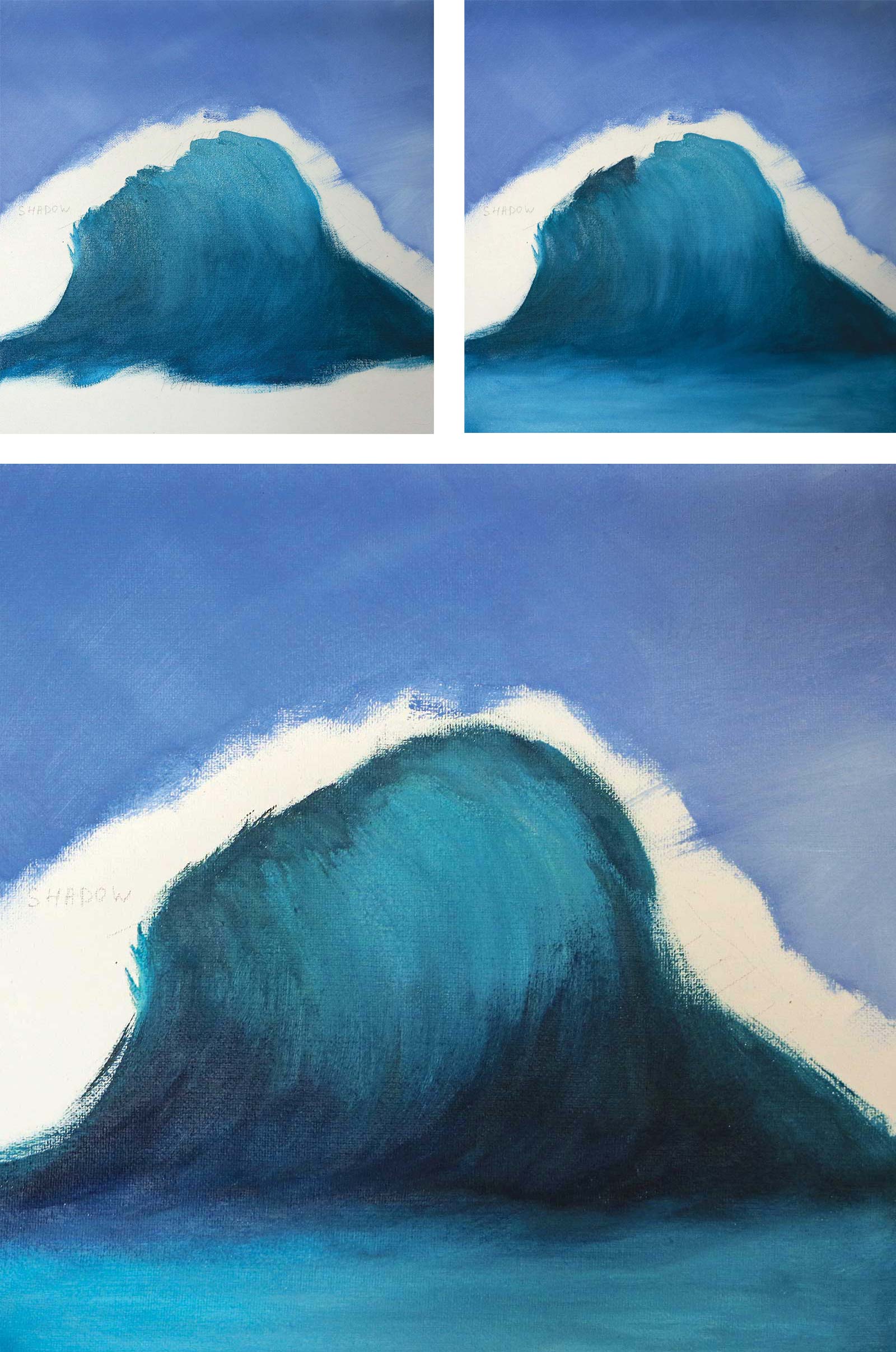
According to my vision of this piece, this is a blue sky. I paint from top to bottom, from dark to light, without letting the paint dry quickly. If the paint does not fit well, you need to reduce the amount of water or wait for the first layer to dry and apply the second layer according to this principle.
 Stage 3
Stage 3 Form of the Wave
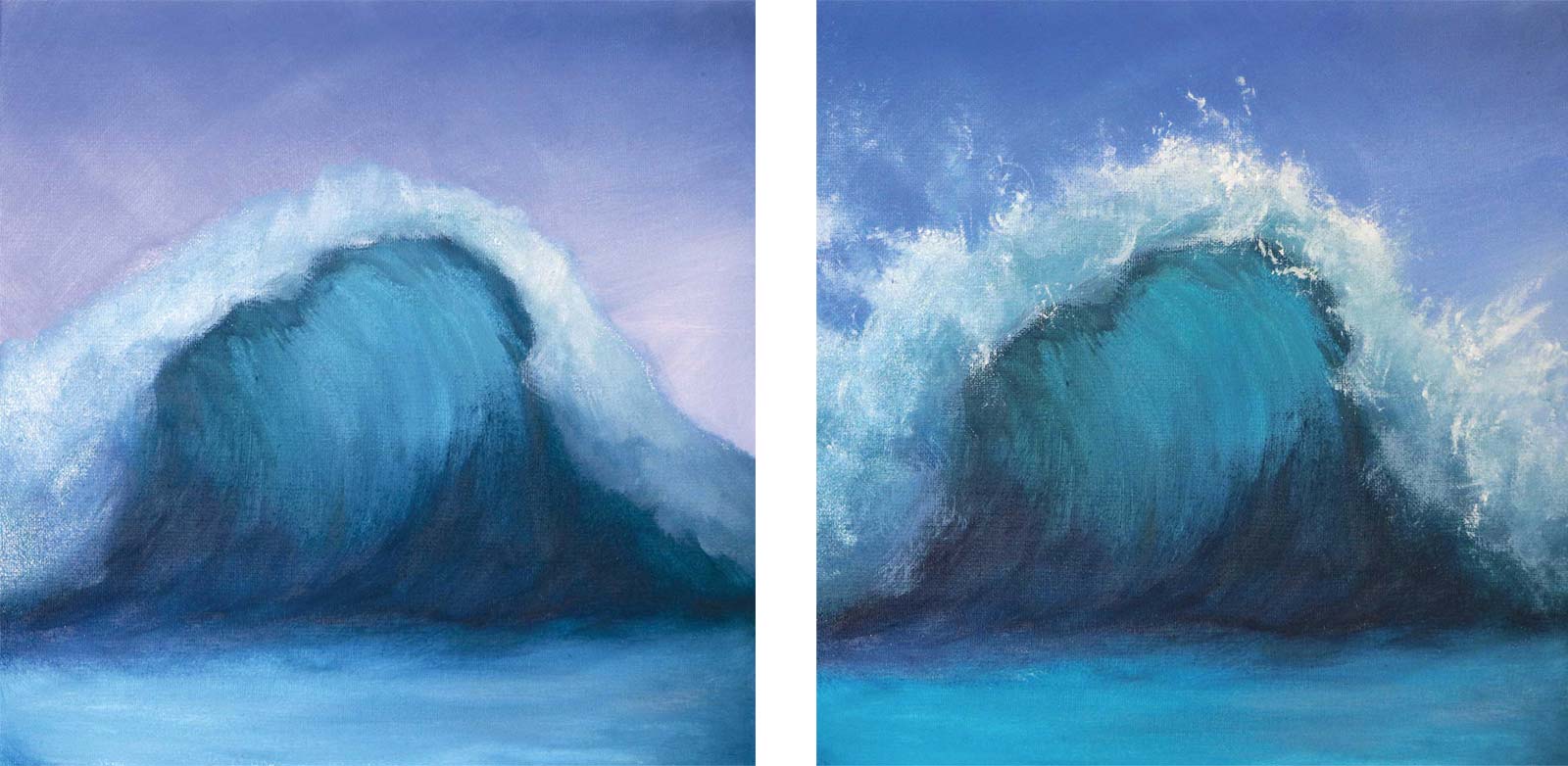
I keep the brush lightly dampened in water. First, I apply the main tone of the wave. Then I apply light and shadow. The movement of the brush should follow the shape of the wave. Don’t be afraid to overlap layers.
 Stage 4
Stage 4 Spray
At this stage, I paint from dark to light. The first layer should be the darkest, then a little lighter. I add white paint. The brush is fan-shaped and slightly moistened with water. I draw in a circular motion.
 Stage 5
Stage 5 Foam
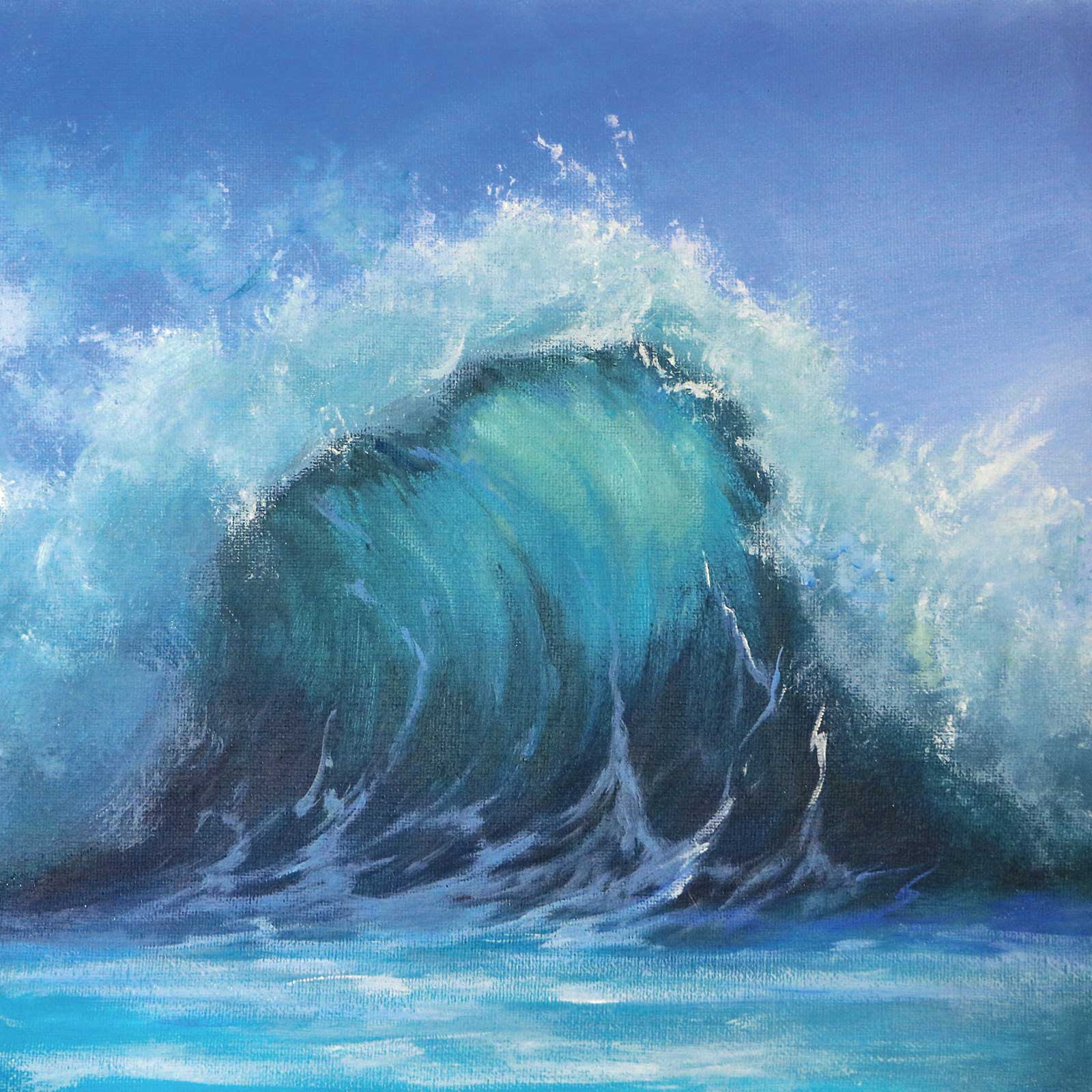
At this point, I am drawing foam on the wave. I do this along the waveform and stick to the smoothness of the lines.
 Stage 6
Stage 6 Foreground
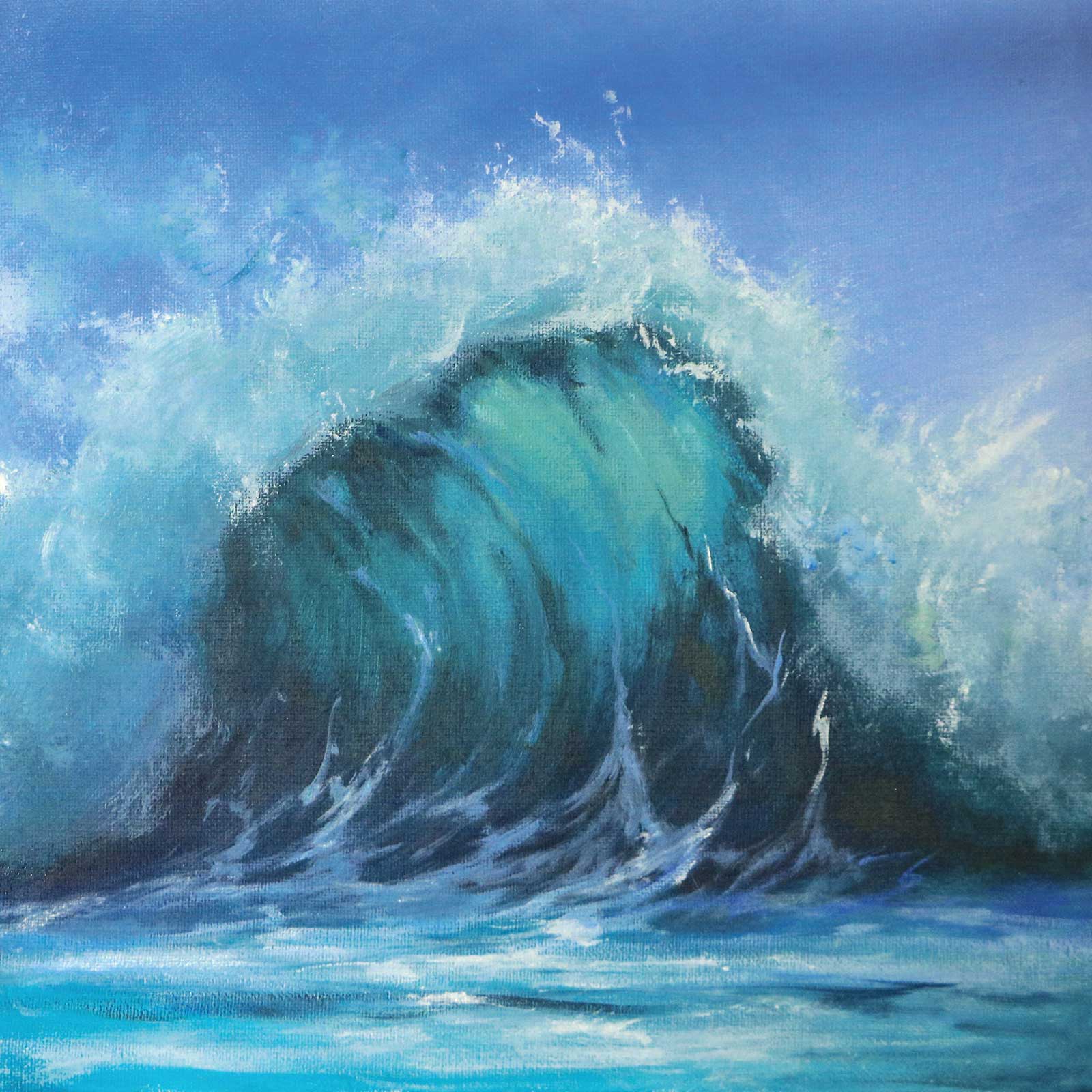
At this stage, I also paint wet-on-wet and from dark to light. Hand movements should be horizontal. Again, don’t be afraid to overlap paint layers.
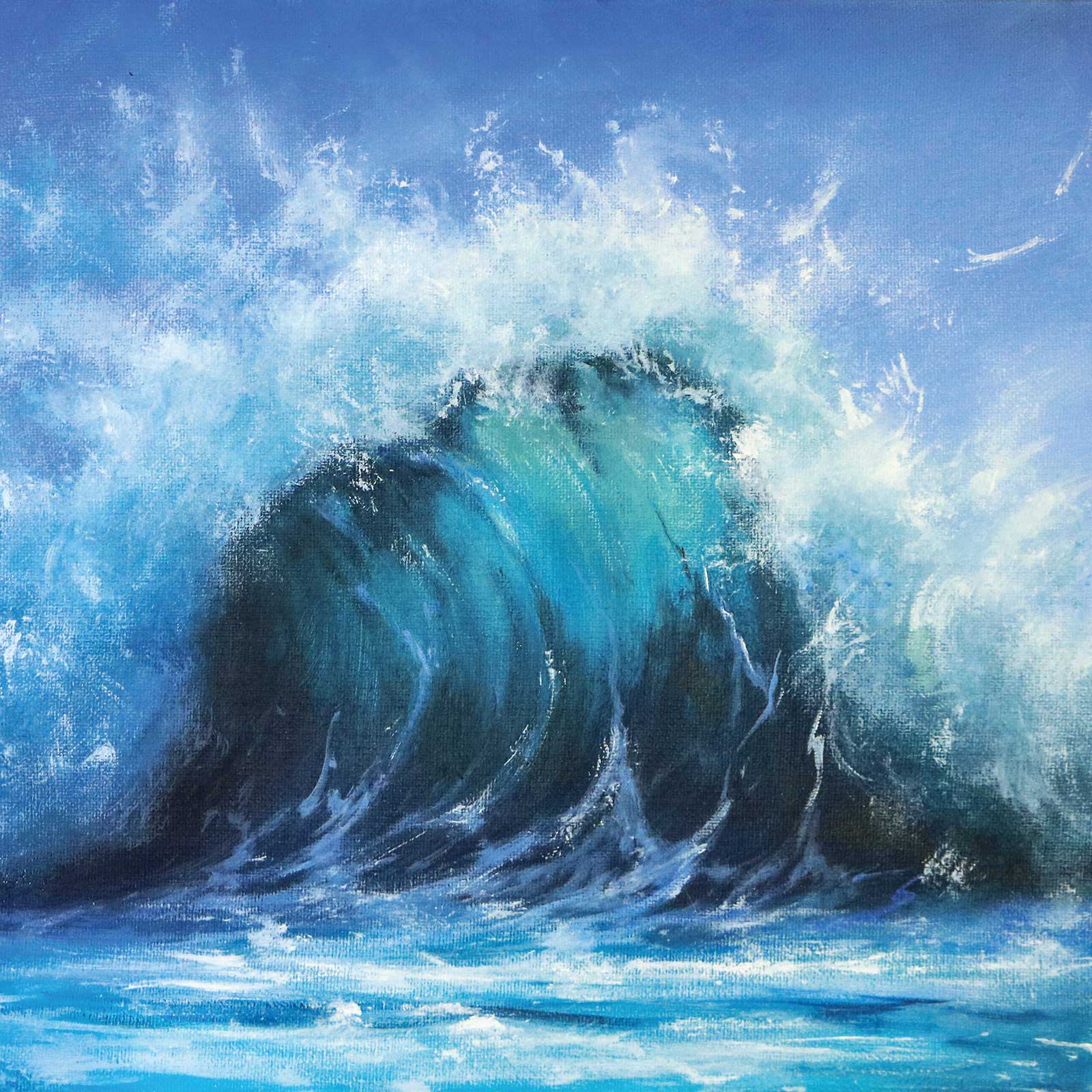 Stage 7
Stage 7 Final Details
Wave number 15, acrylic, 12 x 12" (30 x 30 cm)
Where there is a lack of shadow or light, I add paint to the canvas with a dry brush. I apply the spray by brushing the bristles of the brush with my finger. The brush should be moistened with plenty of water and white paint. This is the main stage of completion.
About the Artist
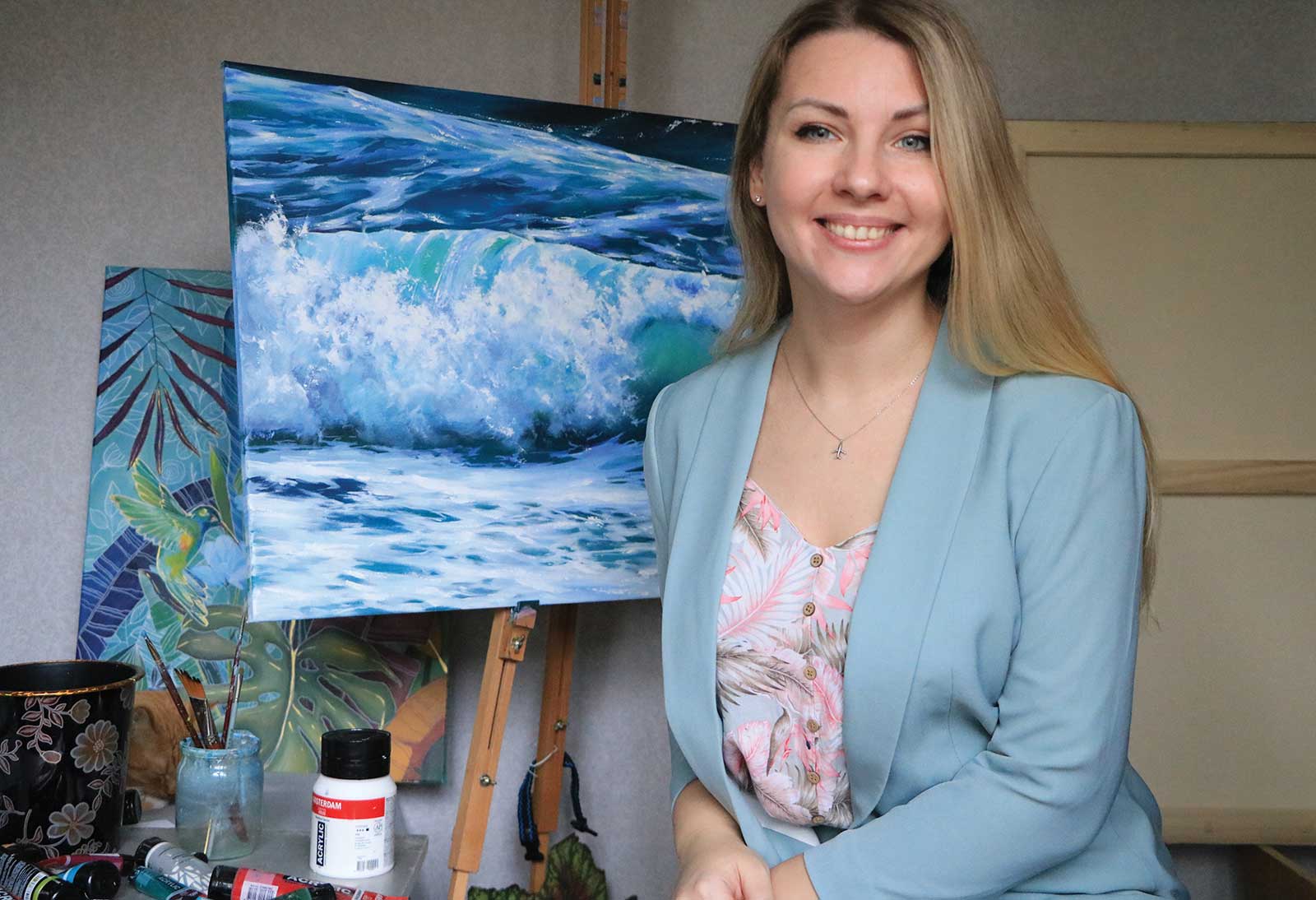 Victoria Kart
Victoria Kart was born and lives in Ukraine. She has devoted her childhood to drawing, and since attending art school, she has been drawing seascapes for a little more than two years. Kart gained popularity through social networking on Instagram and loves the opportunities social media offers to provide inspiration to people across the world.