Charcoal sketching is like yoga for the artist, relaxing the mind and exploring the freedom of movement and expression in the arms. In the following pages, you’ll see the stages I go through in creating a charcoal piece. I’m captivated by the motion and stillness of light and dark. That’s the genesis of choosing a good subject to render. The subjects are friends who have graciously either posed or provided intriguing reference photos.
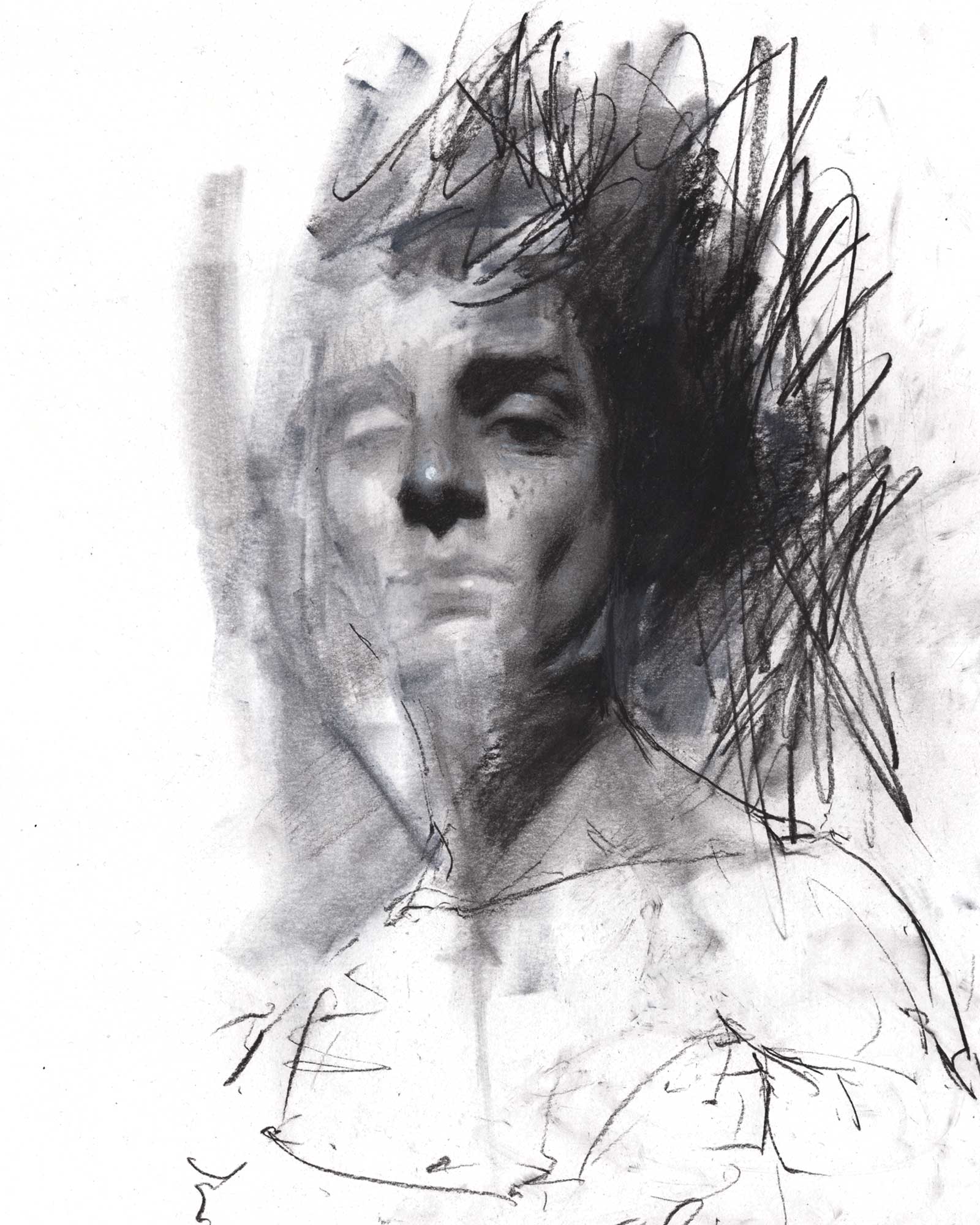
Untitled, charcoal, 14 x 11” (35 x 27 cm) I was greatly influenced by Cézanne and Picasso growing up, both of whom deconstructed what they saw and re-interpreted it by how art should make one feel. My intention is to break down what we already know - the form of the face, as an example - and hold the focus on one area and let the viewer have a feel for what is absent, allowing for individual interpretation.
There was a time I’d work with a live model but as I’m legally blind and my vision deteriorates with time, I tend to work from photos nowadays. However, my plein air work (watercolor or oil), is an important exercise for all artists. There is no replacing the exploration of the landscape and breathing in an ever-changing environment.
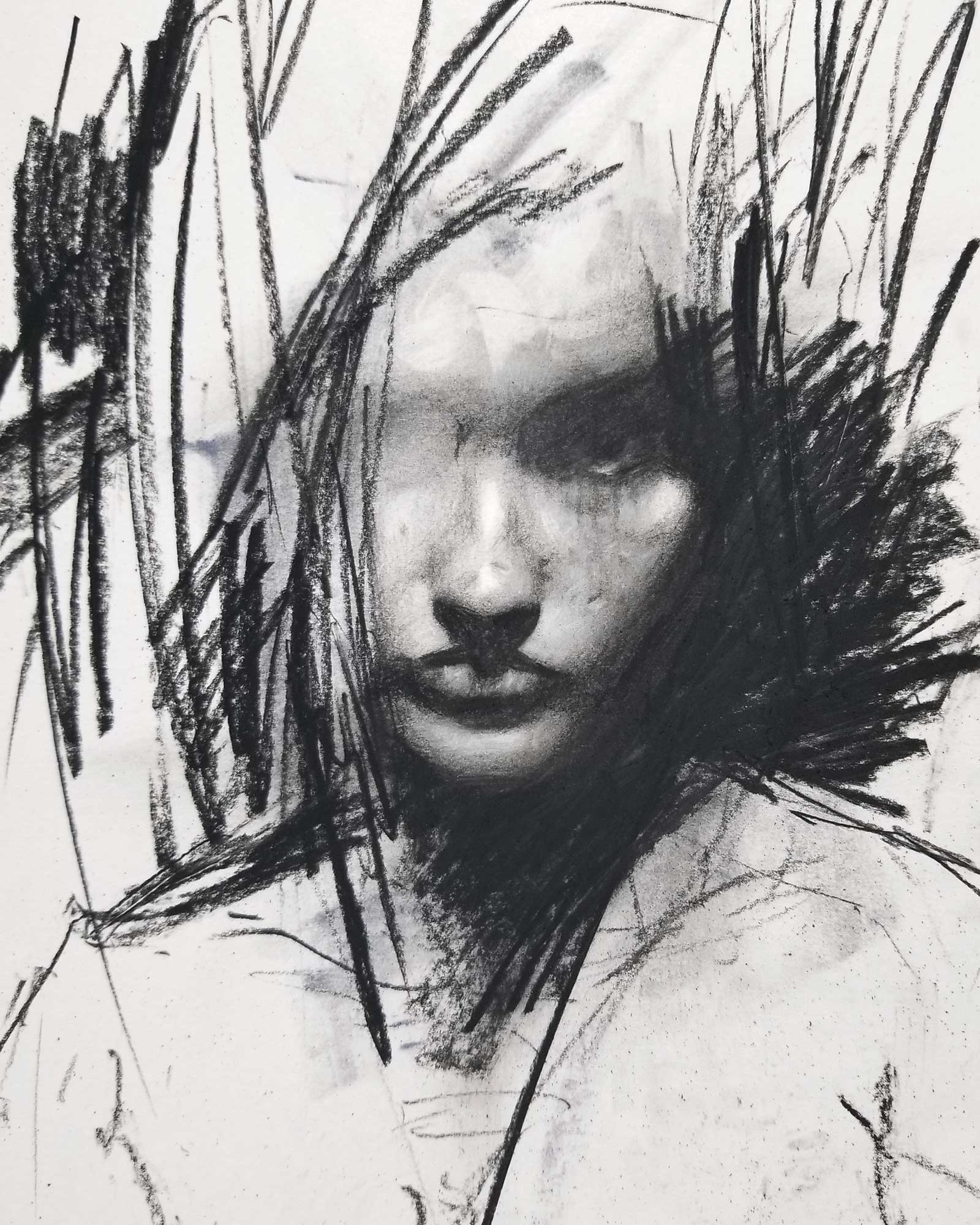
Untitled, charcoal, 14 x 11” (35 x 27 cm) What inspired me to illustrate this piece was maintaining the gaze between viewer and subject without the presence of the artist getting in the way.
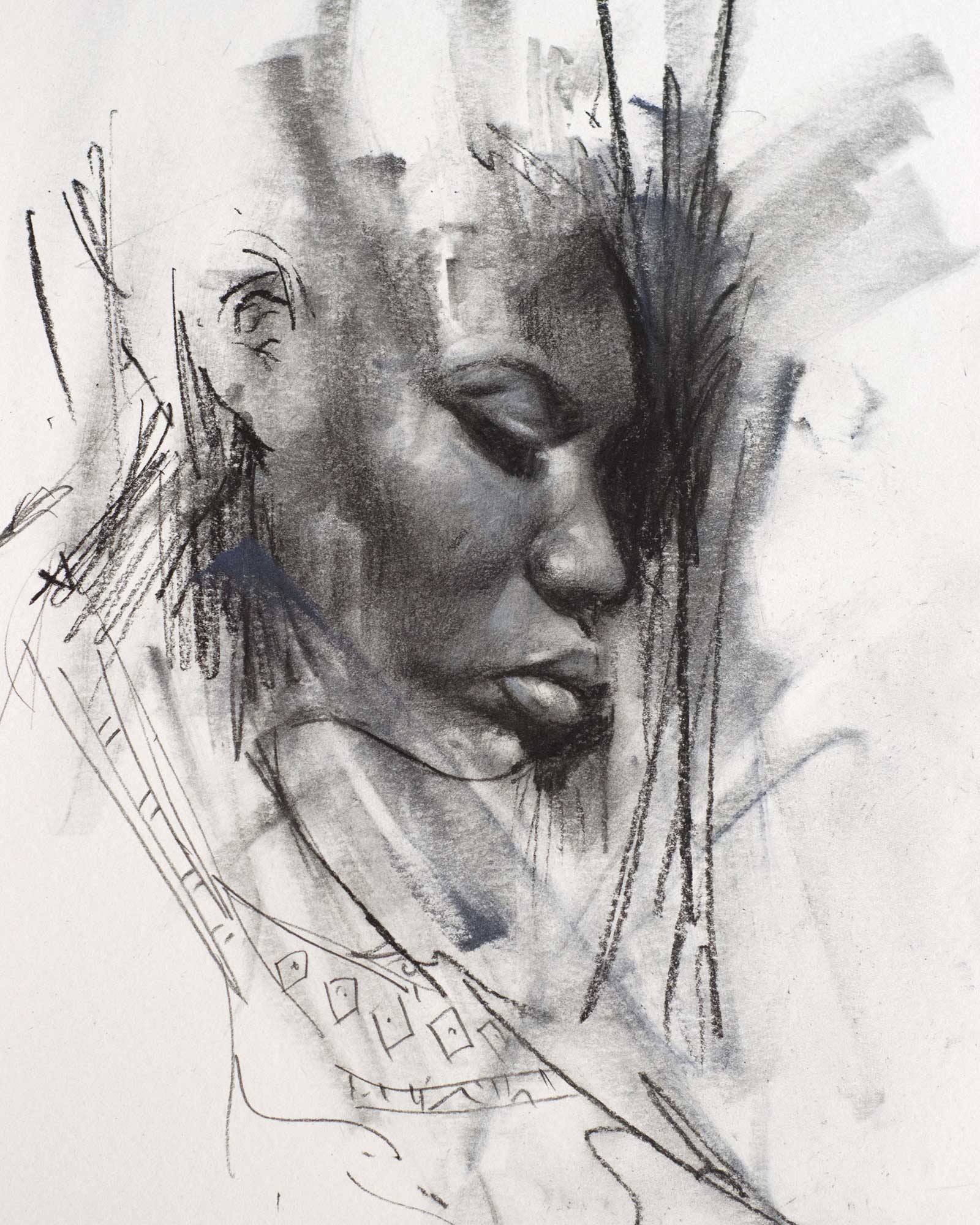
Untitled, charcoal, 14 x 11” (35 x 27 cm) There was an effort to represent the many colors in the skin tone using only charcoal. An artist will strive to achieve the maximum amount of information using the least amount of strokes, but here I’m doing the opposite by using as many free and loose strokes as possible to define the form.
There is no structured way I begin to work with charcoal. What I strive for is avoiding rigidity or formality. Being in the moment and meditating on the “feeling” of the form is like the flavorful awareness of each bite of an apple. It’s not solely for the sake of sustenance but enjoyment as well. For portraits, I’ll begin by blocking in the eyes, forehead and form of the head, hinting at the nose and mouth placement without much commitment using pan pastel and a stump. For a full body, I’ll carve away at negative shapes, loosely sight measuring the overall figure. Details and tight structures are not important to me at this stage.
I may start to lay in dark areas to give some dimensionality to the form and use a kneaded eraser to carve out unnecessary areas. With each stroke, I’m hyper-aware of the light source. What’s the form doing? Half-tone, terminus, core shadow, reflected light—there are rules. They bend but exist in a dimensional world with at least one light source.
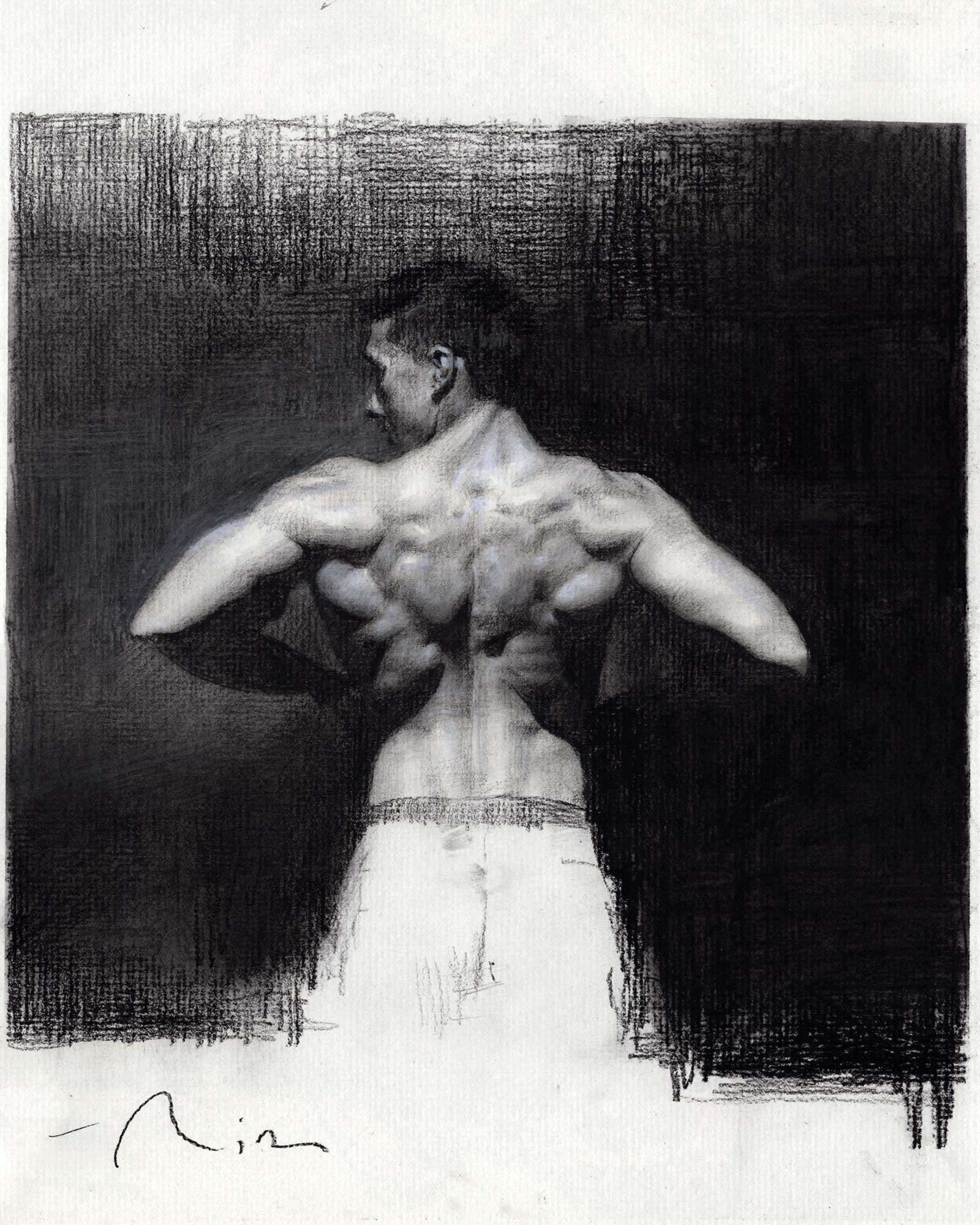
Igor Openshansky, charcoal, 14 x 11” (35 x 27 cm) Igor Openshansky is an internationally renowned bodybuilder and is from my home city, Toronto. I’ve painted and illustrated him a number of times and he’s been a great model over the years allowing me to explore and exploit the form of his back and overall body muscle structure.
I keep the loose strokes to remind myself that there’s a stream of consciousness happening, not aiming to reproduce the role of a camera. It’s important, regardless of the medium, to see that there’s an artist behind the work. Marks, brushstrokes and imperfections all work to create something that’s relatable to everyone. It’s all an attempt to represent the humanity of art.
My Art in the Making Portrait of John Carrasco
This is a portrait of my friend, John A. Carrasco. The steps outlined in the demonstration are not rules, but rather, one of many ways that I create. Everyone finds their own way to develop their art.
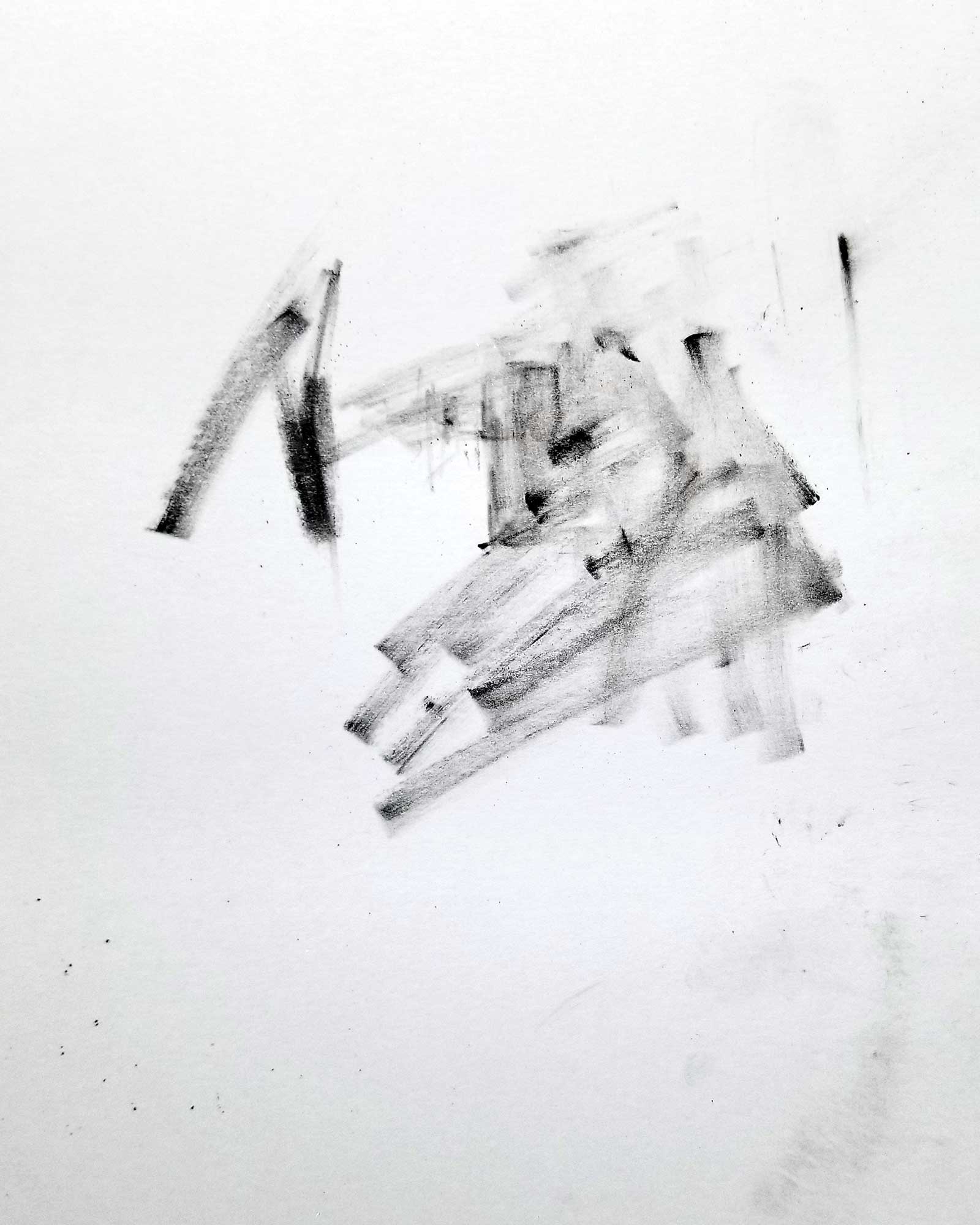 Stage 1
Stage 1 Loose Marks
I start by keeping the marks loose and simplified by laying in darker forms as a guide, without measuring. At this early stage, I’ll use a dark pan pastel with a blending stump to get an overall feel for the form and imagine what I’d like to represent.
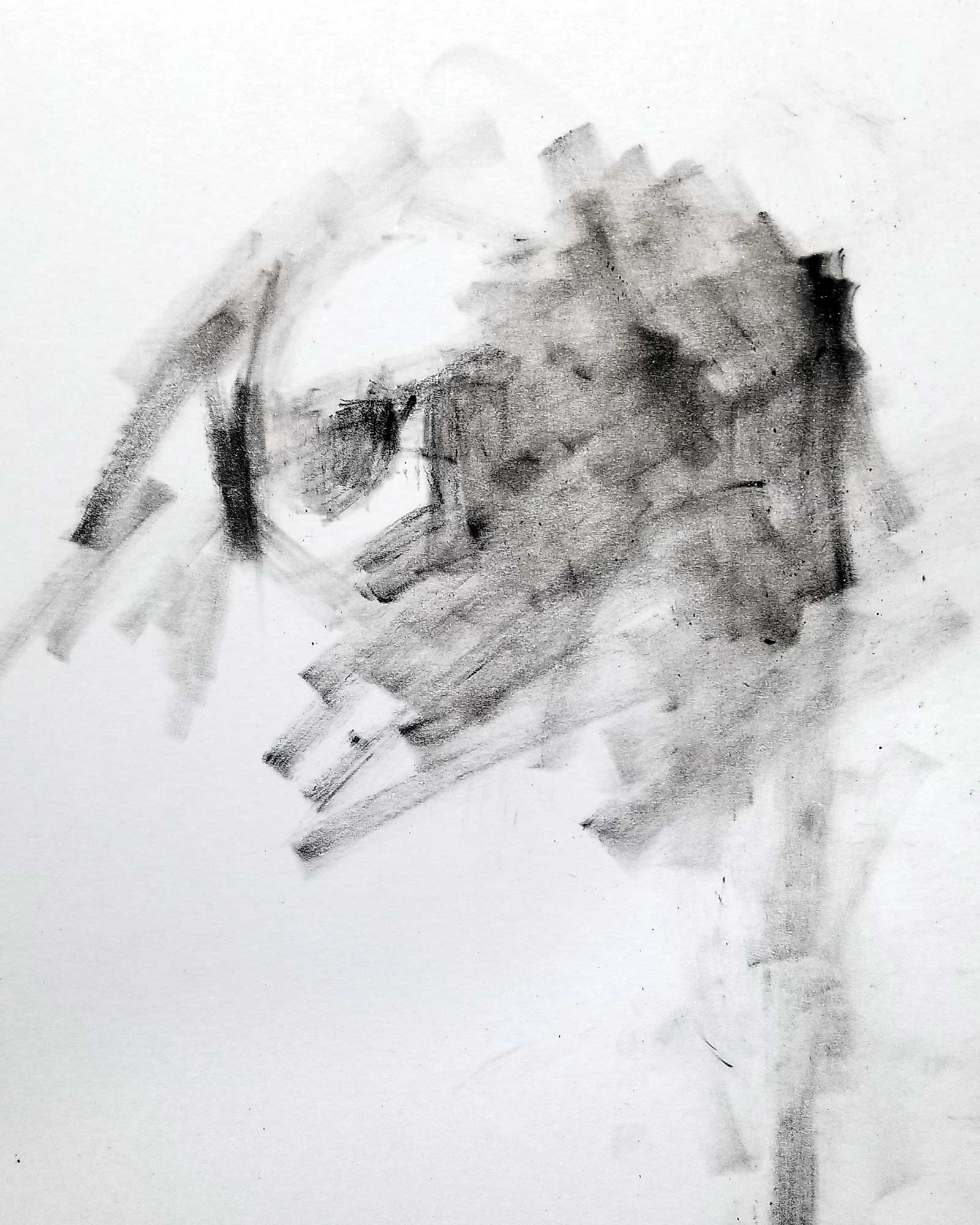 Stage 2
Stage 2 Blocking in Larger Shapes
I expand to block in bigger areas, like the eye sockets, and work with negative shapes to define other areas. Still using the stump, I carve away at the facial structure without committing to details.
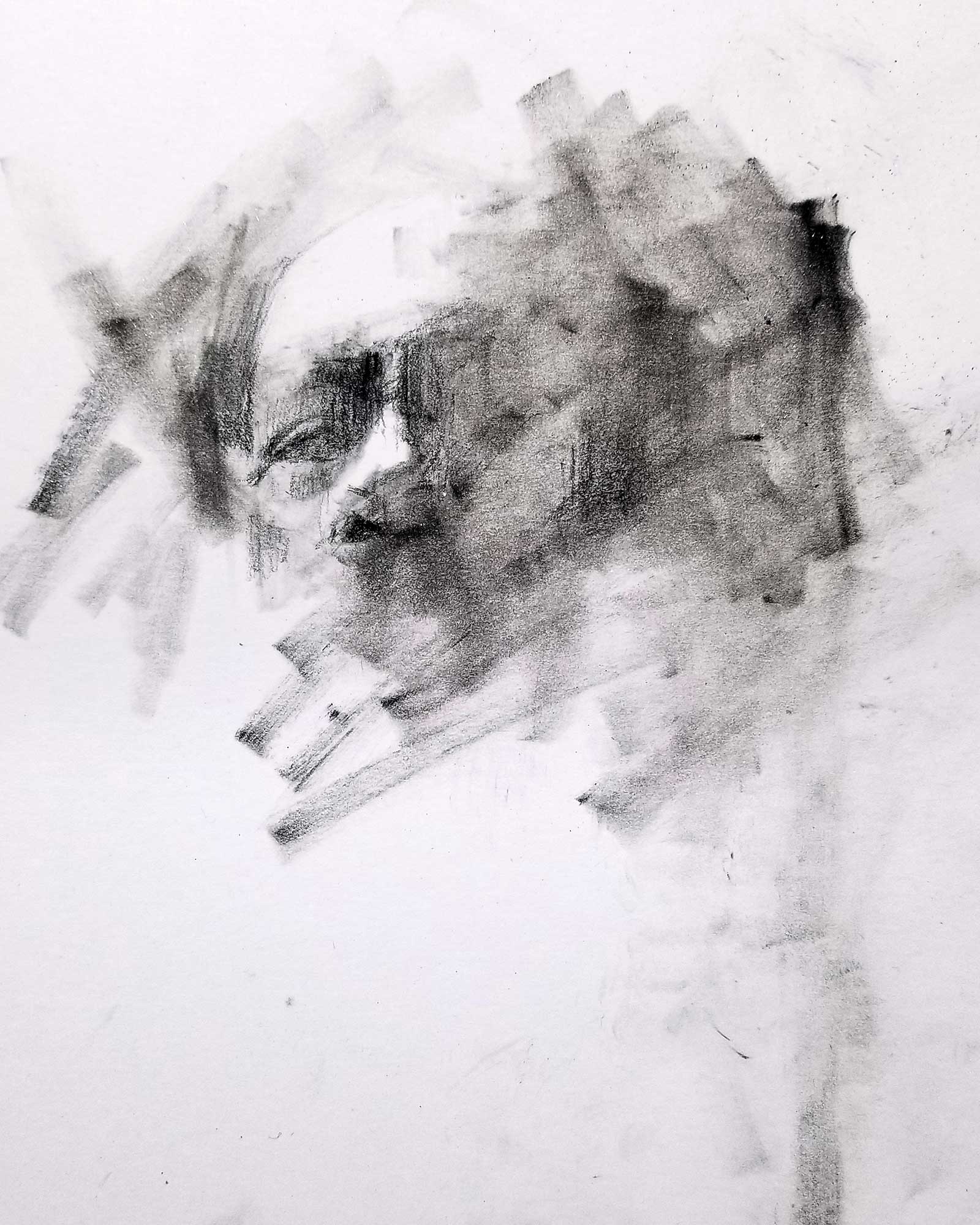 Stage 3
Stage 3 Refining with Charcoal Pencils
At this stage, I’ll switch to charcoal pencils. When drawing, I always use the darkest value because I can get a light value from a dark medium as opposed to a dark value from a light medium. Here I’m using the darkest value in General’s charcoal pencils. I’ll slow down and refine the focal area (the left eye) and pay more attention to the likeness using the sight-size method. Knowing when to slow down and when to move on greatly depends on what you’d like to achieve.
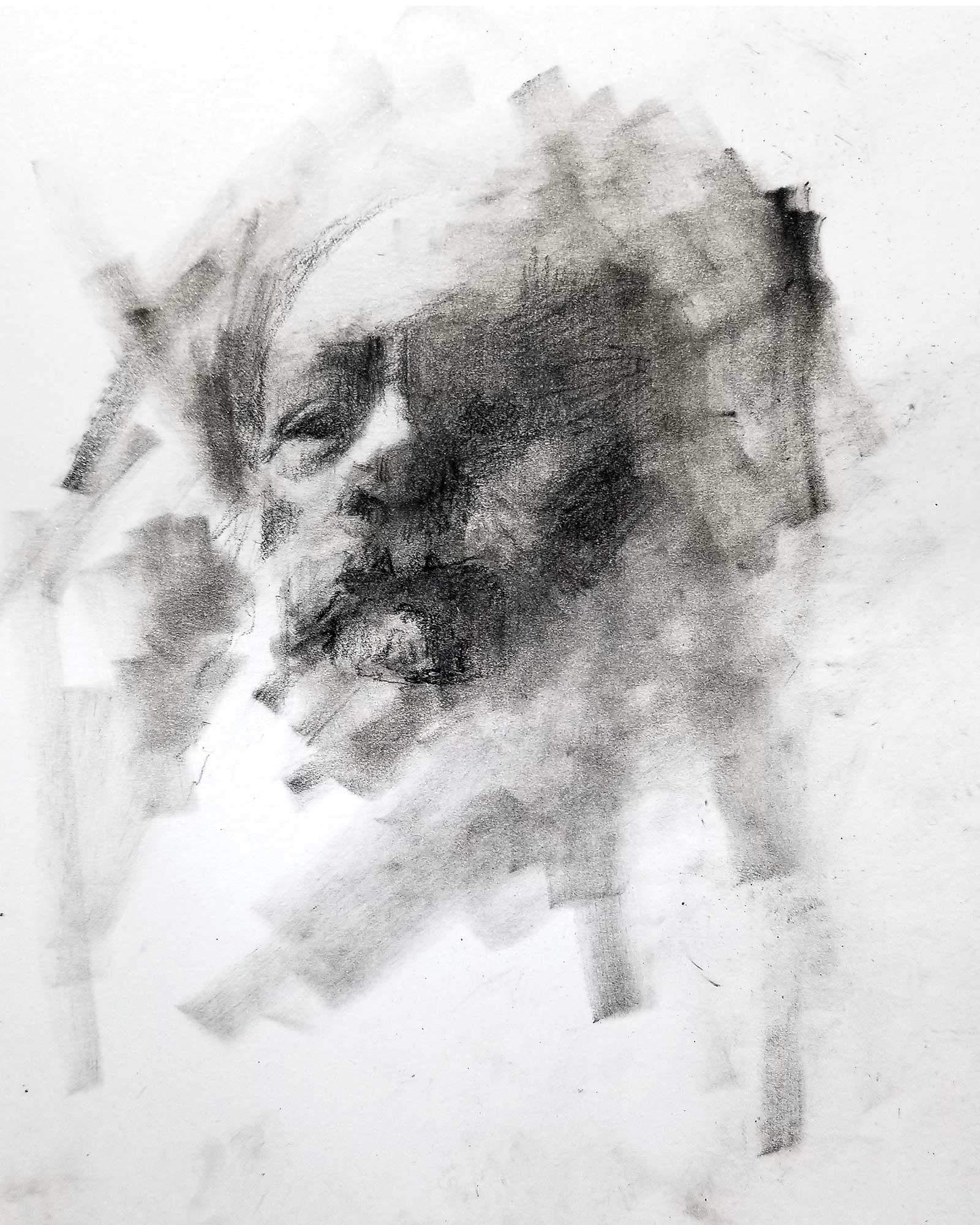 Stage 4
Stage 4 Capturing Likeness
I’ll be using the charcoal pencil from here until the end, occasionally blending with the stump. In this last step, between getting a likeness to the subject and developing the forms, there is knowing when to stop. That’s an area I’ll forever be in search of, as it’s a creative choice of what I’d like to convey. Perhaps the eyes will remain blurred out and detail everywhere else. It’s what your spirit is guiding you to do. This is a personal decision that may never make sense to the viewer, or even the artist, but you know it when you feel it.
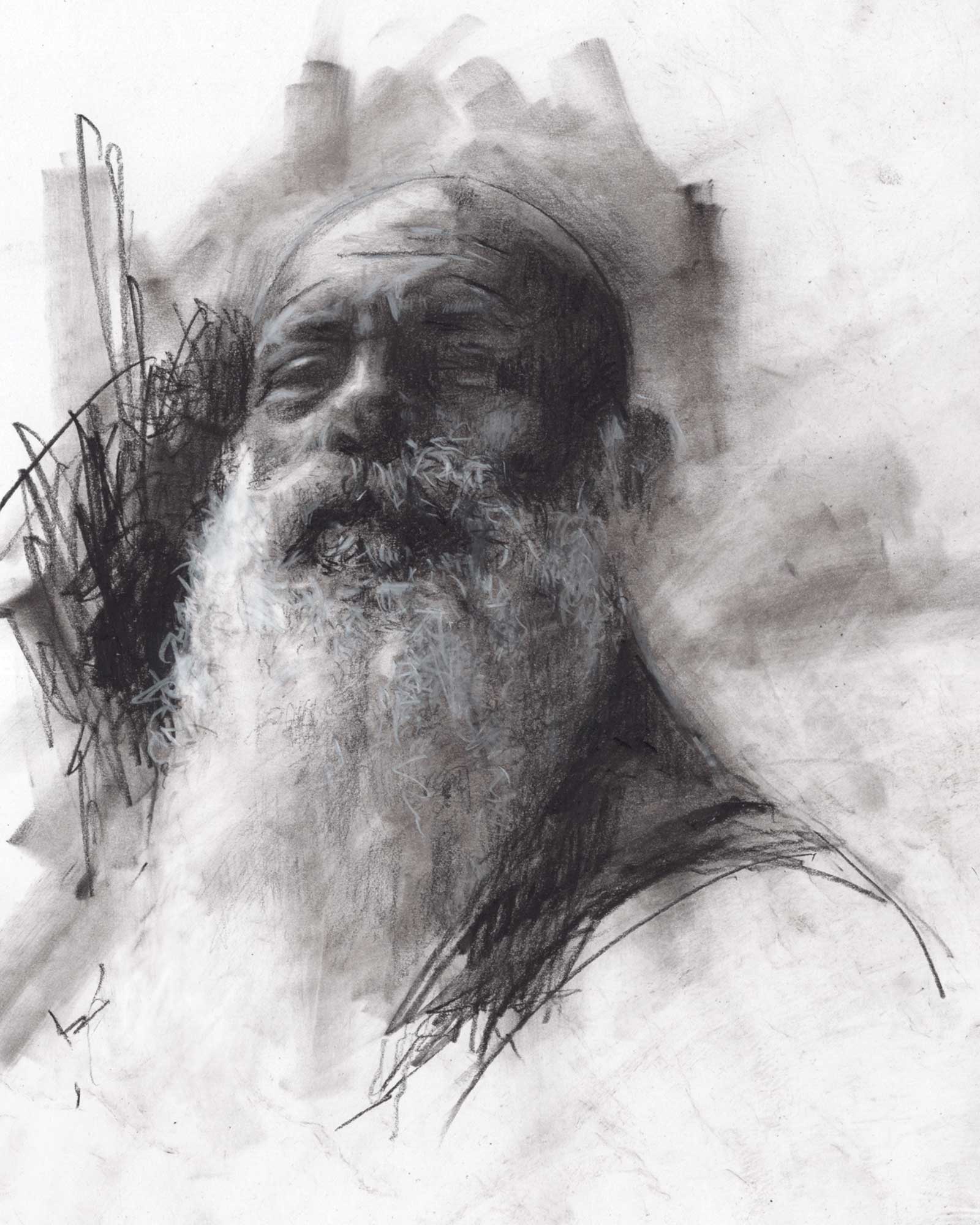 Stage 5
Stage 5 Finished Artwork
Portrait of John Carrasco, charcoal, 14 x 11” (35 x 27 cm)