In our everyday life, our unique experience, our exposure to change and mistakes are what forge us into a more knowledgeable and, arguably, better person. As with anything, new painting experiences usually end with a less than desirable result. Failure is good, it makes you grow, experiment and improve your skills to conquer.
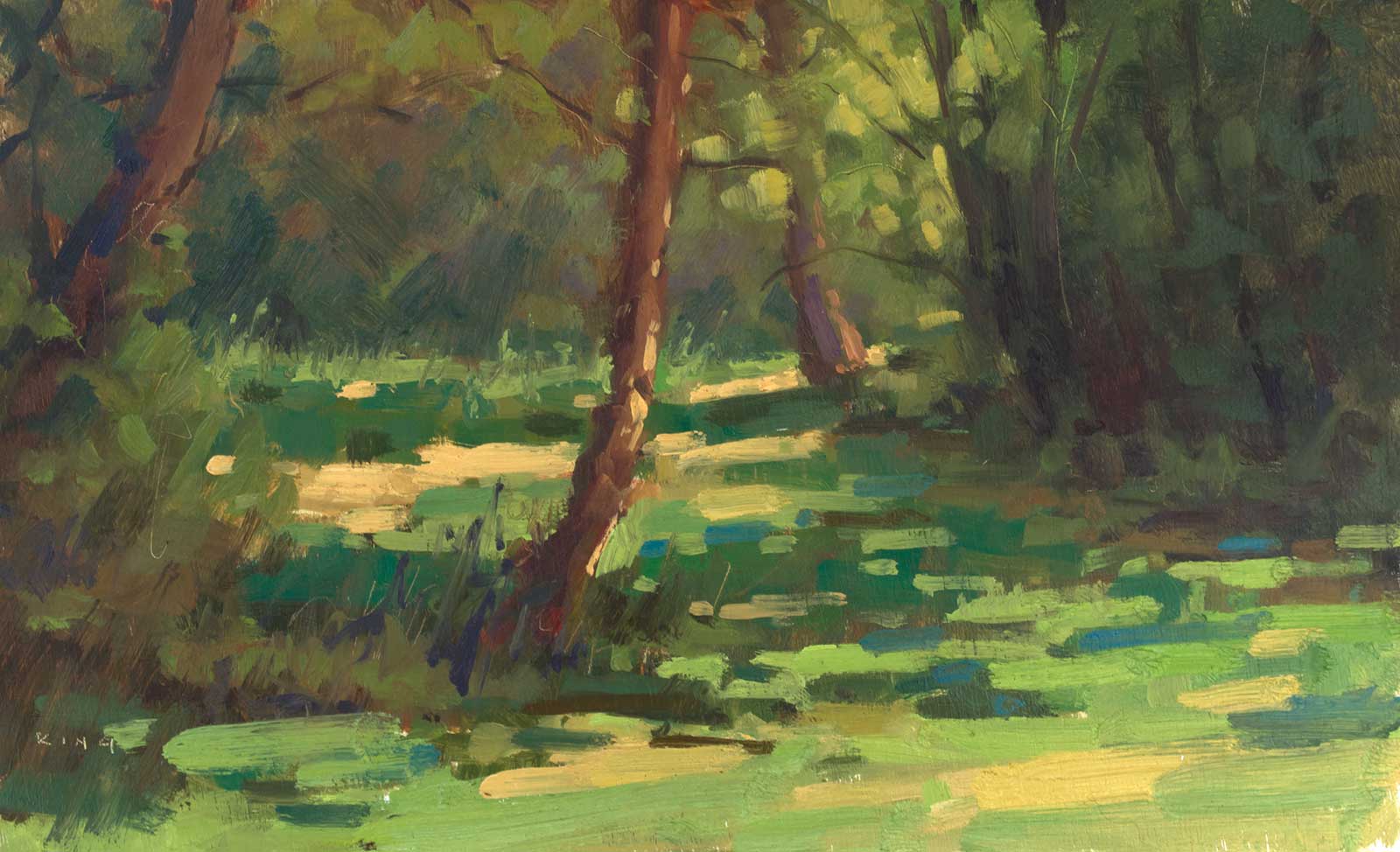
Dappled Light, oil on panel, 8 x 13" (20 x 33 cm)
Anyone who has painted for any length of time has been told at some point, “There is nothing like painting from life,” usually in the form of a still life or portraiture. Now take everything you’ve experienced or heard about painting from life and turn it up to 11—that is plein air painting.
Painting from life is great, as you see the true colors, the true values, the true shadows, the true light. In my opinion, it’s needed to grow as a representational or impressionistic painter. However, it doesn’t necessarily give you the full experience. The experience of changing light, moving shadows, undulating water, shifting winds, along with moving subjects and clouds. Not to mention other activities outside of what you are trying to focus on, like distractions provided by an off-leash dog or hovering bystanders.
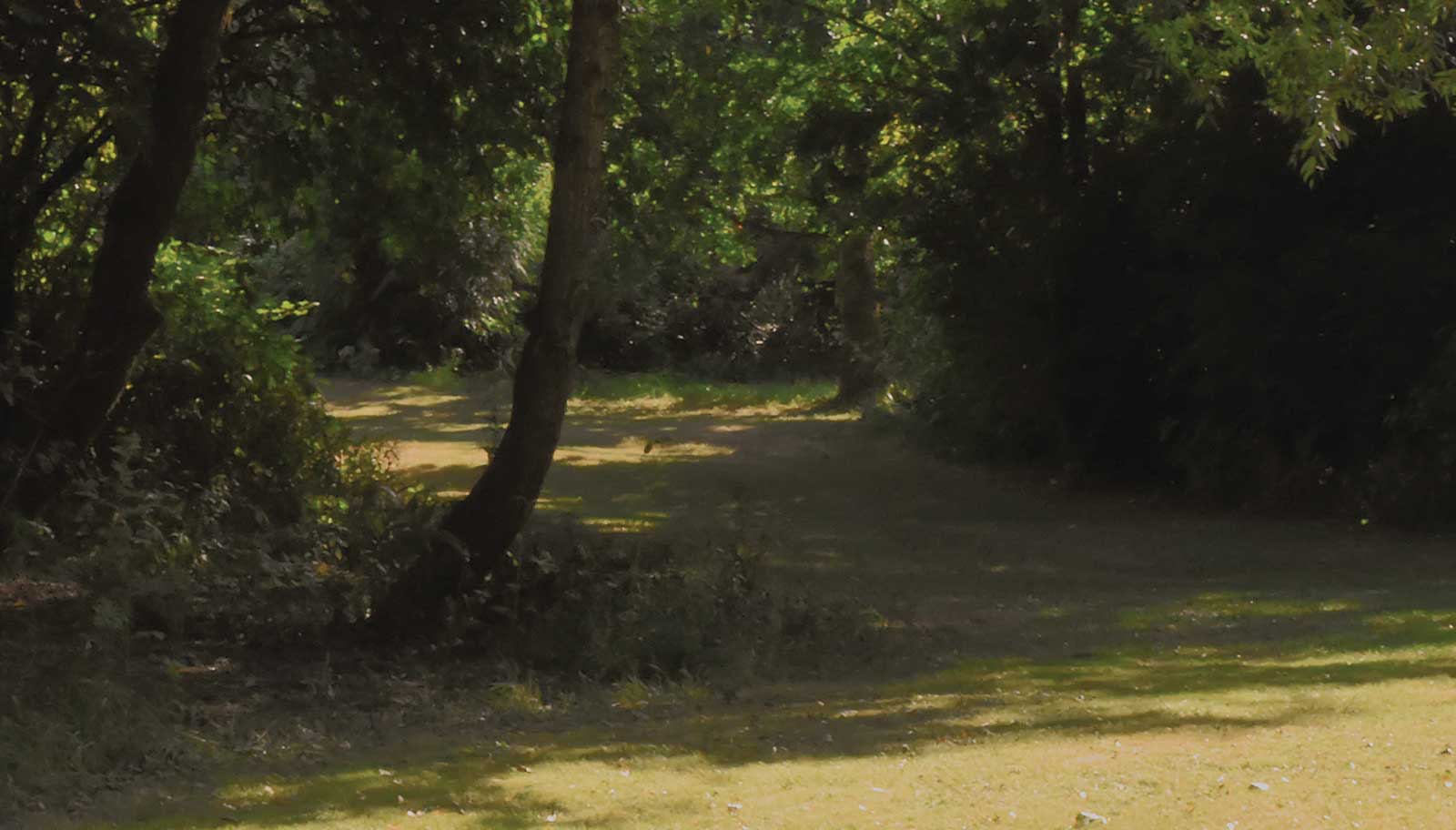
Figure A1
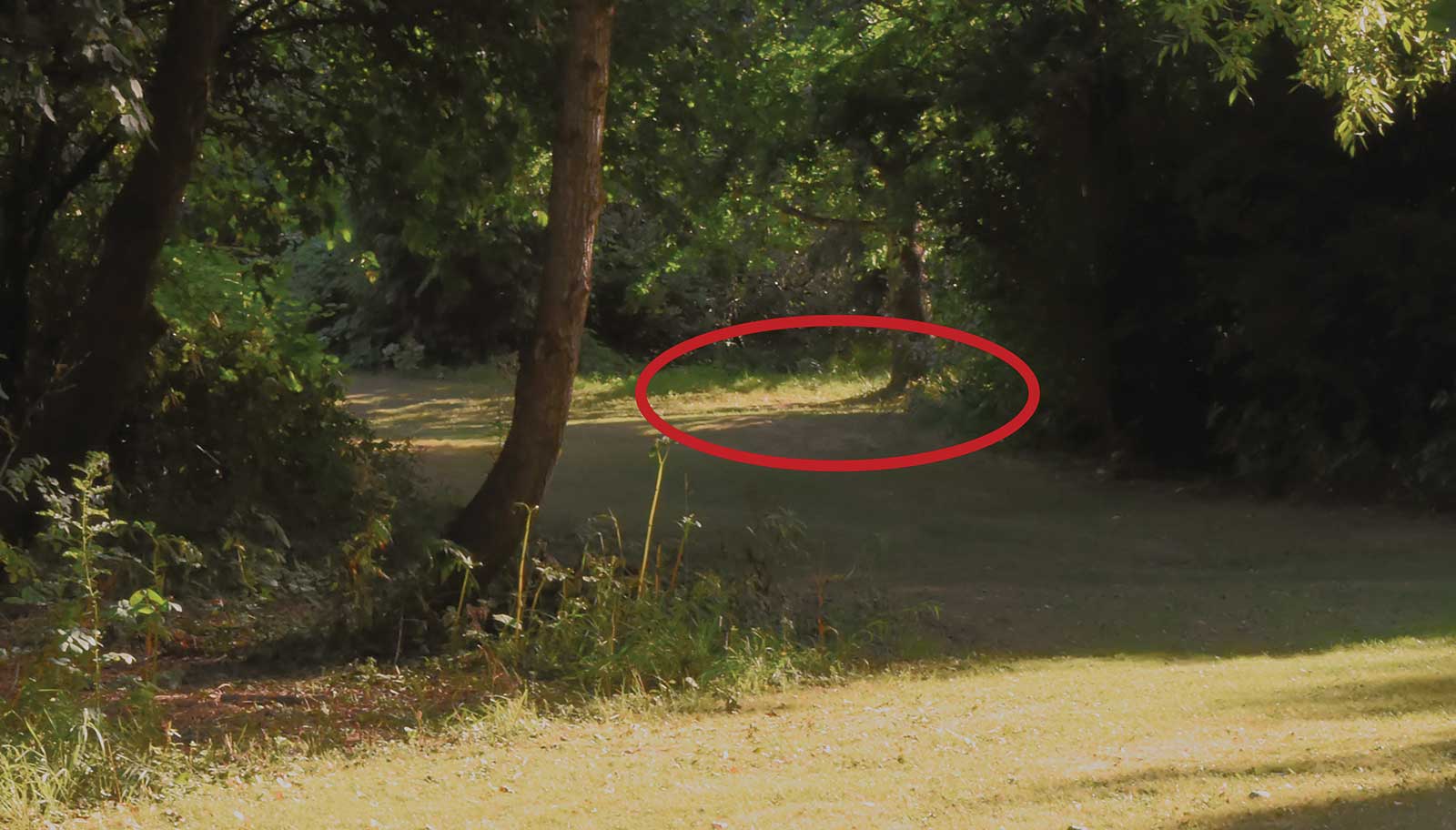
Figure A2
What I love the most about plein air painting, though, is how it can all change. In any moment of time, the sky, the grasses, or the water may seem lifeless, but wait 10 minutes and everything transforms. The sky builds an amazing array of clouds, the grasses are gleaming with a wash of warm light and the water now sparkles. This also applies in reverse; if you see something that is amazing, get it in before it disappears.
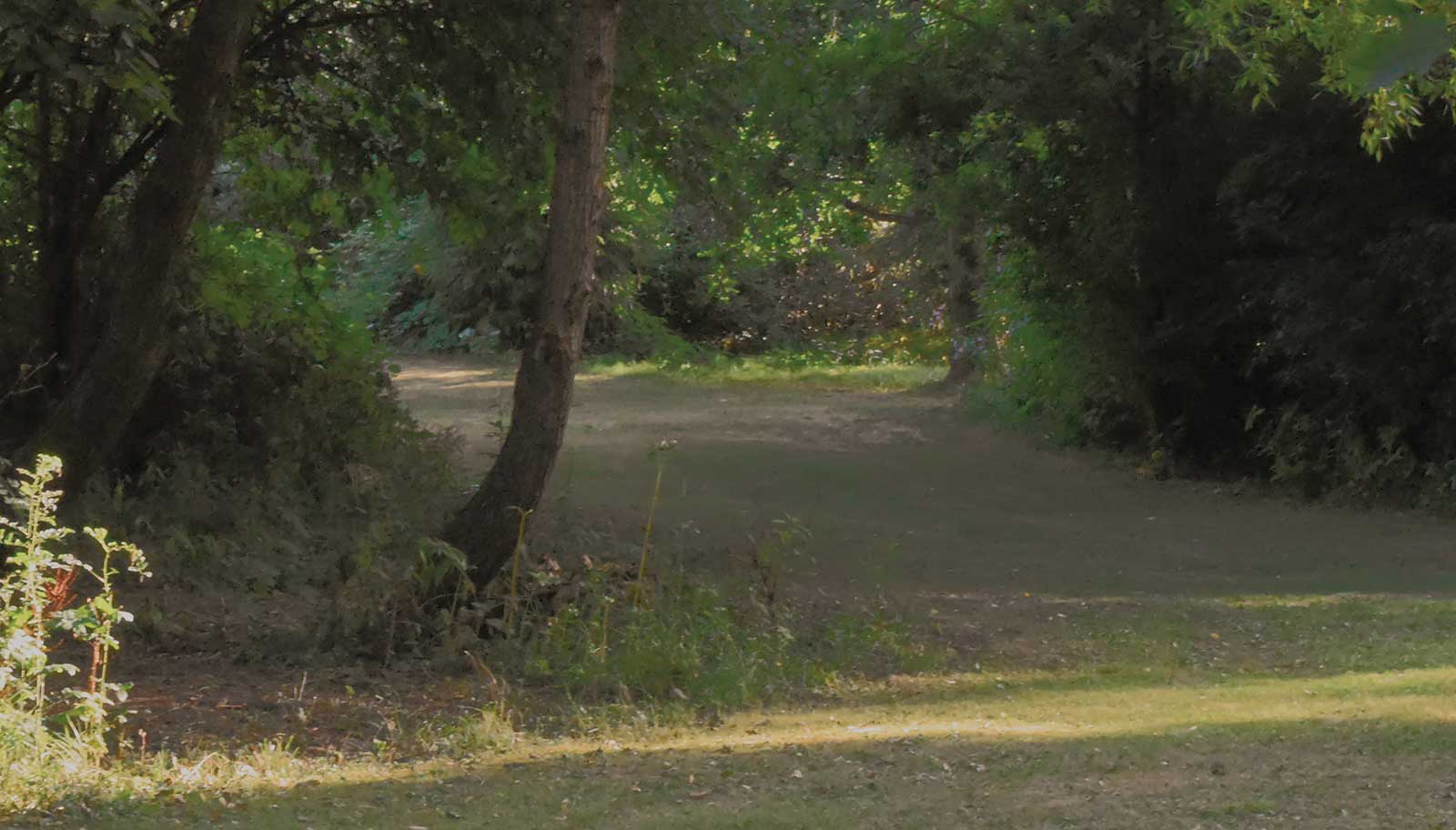
Figure A3
With plein air you are not just painting a landscape, you are painting the multitude of changes, curating your visual experience over the duration of the session. Nothing a single photo can ever convey.
Lights First: Painting Late Afternoon Dappled Light
I came up to a location late afternoon, in my case 4 p.m., that was full of life and had me in awe with dappled light in the midground (see Figure A1). After setting up and painting for an hour, wham! That magical dappled light disappears. Fortuitously, experience has told me to lay the lights in ahead of time knowing it can shift drastically. The key now is to remember to leave it alone.
Excitingly, with the passage of a few more minutes, it was now 5 p.m., and the sun had shifted to reveal a patch of light in the background, seen in Figure A2. I was hoping this would happen so I would be able to draw the eye into the distance. After I placed those touches of light, I finished off with a few temperature shifts in the shadows and by the time 5:30 p.m. rolled around, the scene was all in shadow and quite dead (Figure A3). It was all about timing, and I got lucky that day. During that hour and a half, my hands were racing and my mind was trying to stay three steps ahead. That excitement is one of the many reasons I paint plein air.
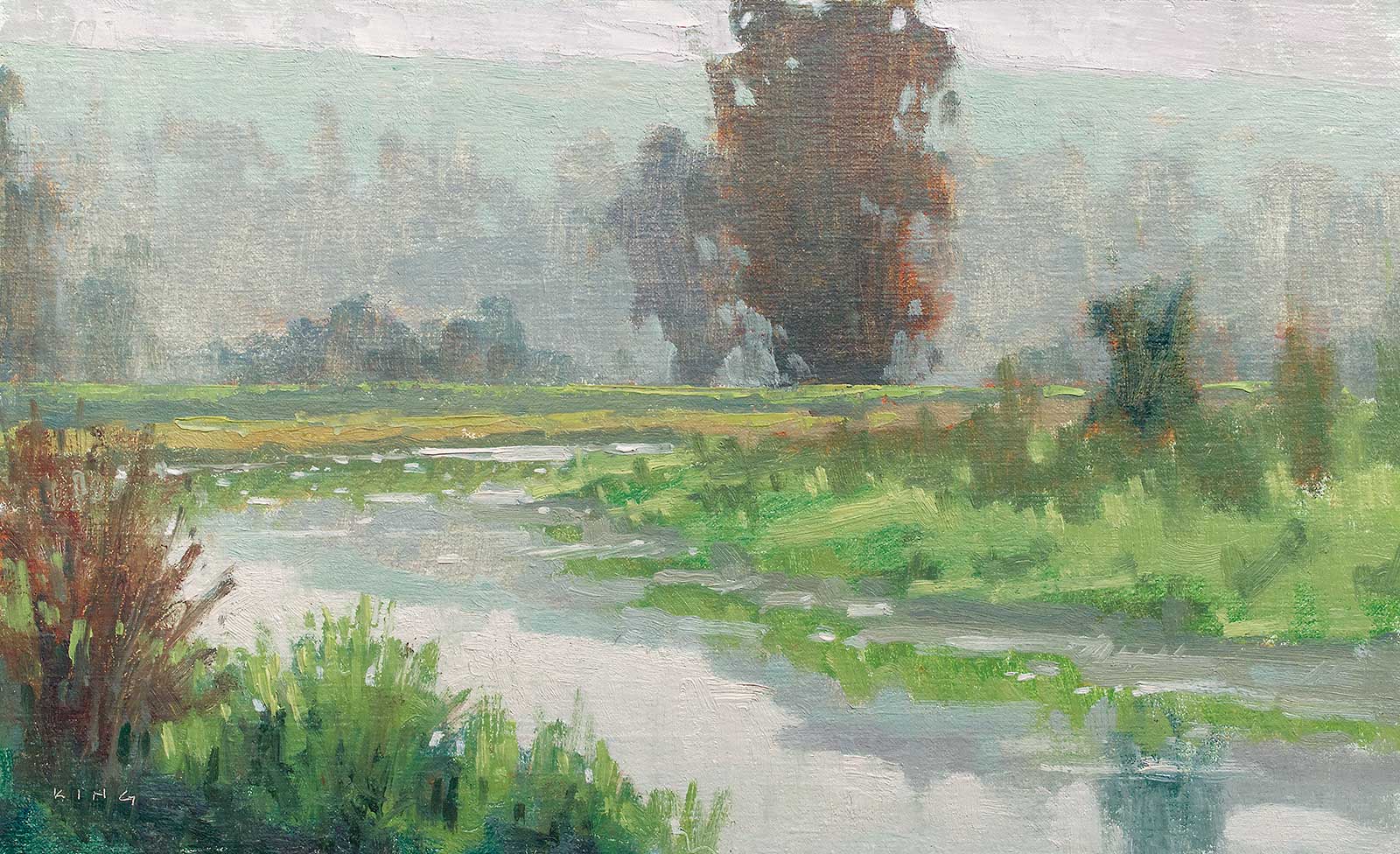
Early Morning Fog, oil on panel, 8 x 13" (20 x 33 cm)
Foggy Days: Pitt Meadows
Foggy days allow you to take your time as the sun’s movement is diffused, but they still provide you options throughout the session. In my case it was the water. Besides the aerial perspective created by the fog, the ripple pattern created by the wind at the start of the painting is what I really liked as it gave the water an increased interest while reducing the reflections I had to paint. This can be observed in the reference photo in Figure B1. Later into the session the ripple pattern changed, of course, but I kept it because that is what the painting needed.
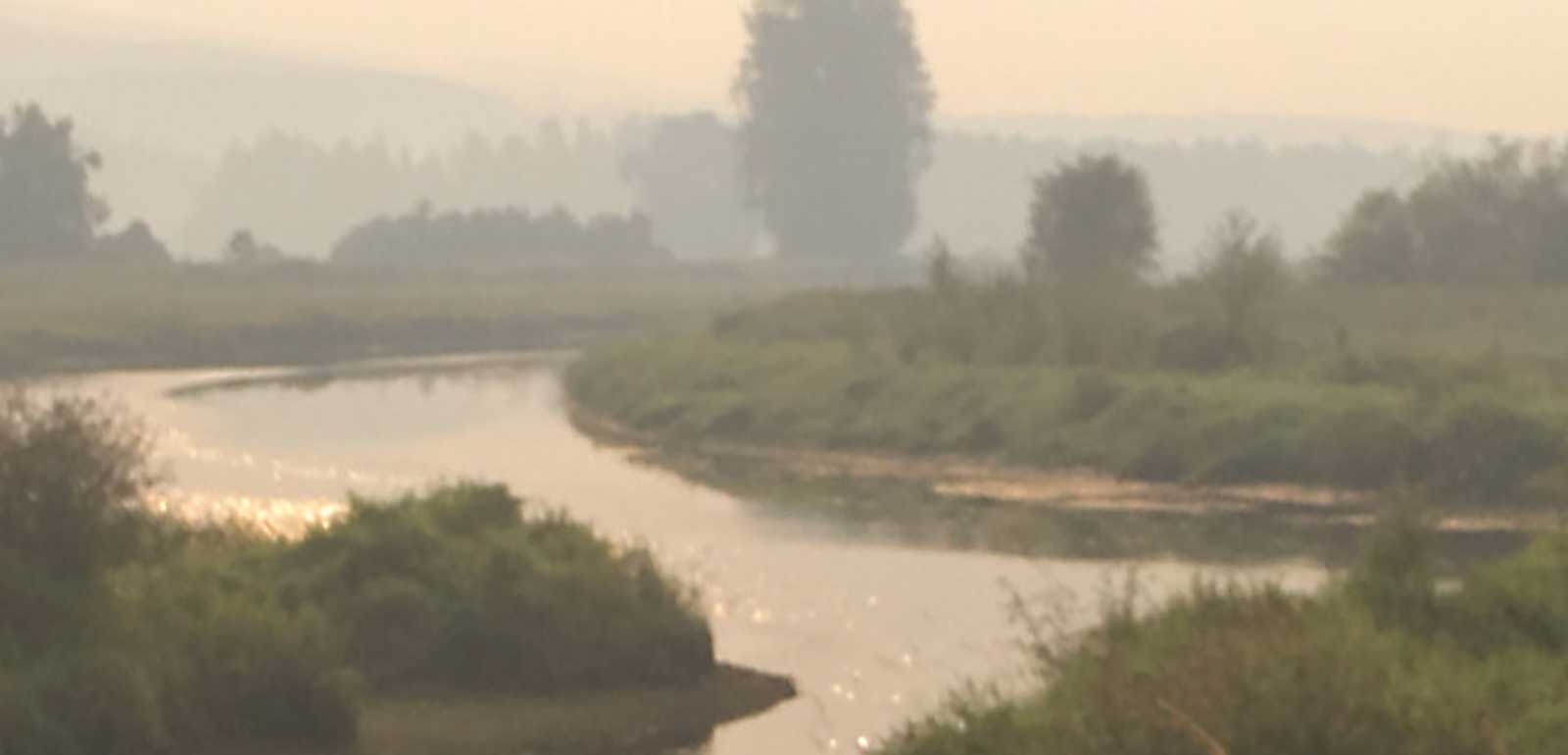
Figure B1
I continued to add as much information as I could in the shortest amount of time to capture the aerial perspective the fog was giving me. As the sun rose higher in the sky the water got brighter where it met the reflections, so I used this information to push the brightness on the water, specifically where it meets the ripple line. This allowed me to increase the contrast between the ripples and the water for more impact between the two values, demonstrated in the finished painting. I love when this happens, being able to capture the frequent fleeting moments into one cohesive composition.
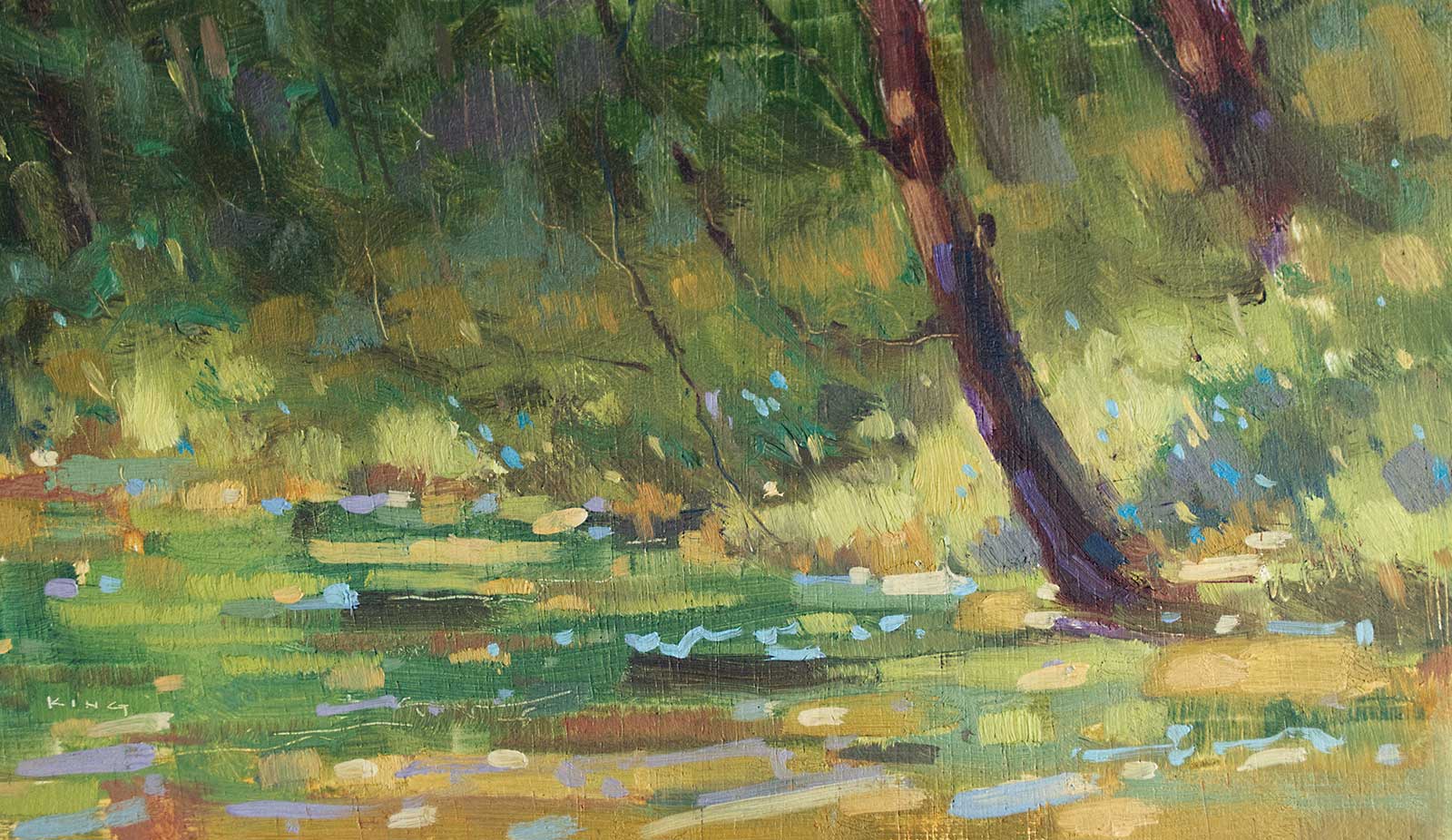
Tranquil Light, oil on panel, 6 x 9¾" (15 x 24 cm)
Dark First: Coquitlam River
Alternatively, it is early morning and this location is mostly in shadow (see Figure C1). While it has a nice composition, it is missing the star of painting—light and contrast. I set up knowing what will come as I discern how the sun is going to track across the sky. These photos were taken a few months after this painting was complete as the area is now more overgrown and the water level is lower, but they still show how the light moves through the scene.
As I start to sketch the composition onto my canvas, I take my time knowing the light won’t move to where I want it for a few minutes at least. With the sketch in, I lay in the darkest values to establish a base value for comparison as I work through the piece. From here I start laying in the mass of mid values throughout, keeping each mix on the cool side, knowing the warmth is to come, but still shifting temperature in these areas to keep them interesting.
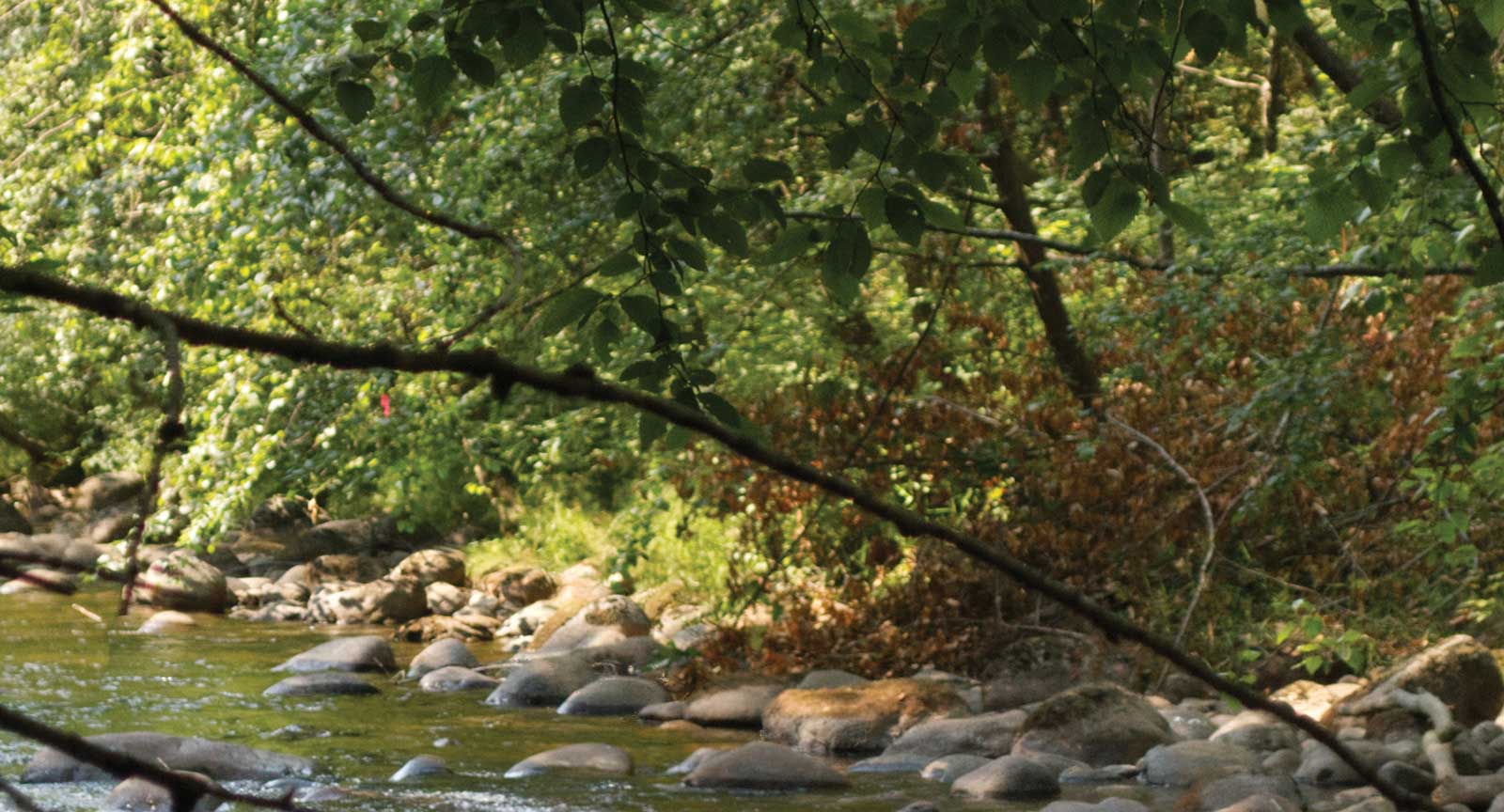
Figure C1
As the light starts to sweep through, I carefully pick and choose what areas I want to accentuate, as indicated in Figure C2, taken at 10 a.m. This is where having a plan in your head, or on paper, ahead of time helps with the decisions. When and at what stage the changes come is unknown, but it is exciting when it does. My goal was to capture Mother Nature’s narrative over the hour and a half, knowing it will never be repeated exactly the same again.
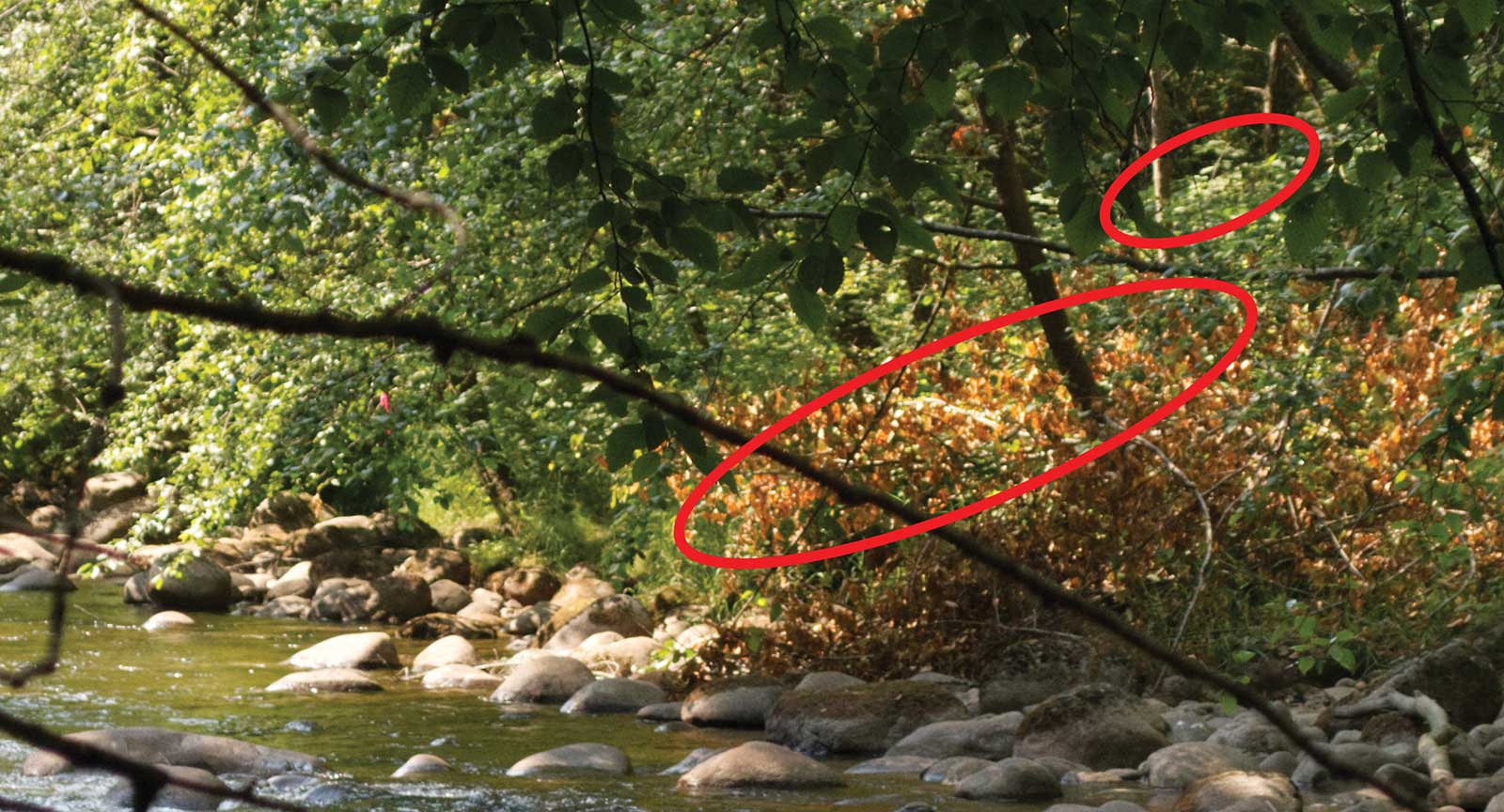
Figure C2
At this point you’re probably thinking, “With all this potential anguish, why bother with plein air?” The answer is simple: growth and understanding. The more time you put in, the more you understand. The more you understand, the easier the process. The easier the process, the more enjoyable painting becomes. For me, a final plein air painting provides a sense of accomplishment by capturing a scene that is more than an arrangement, but a painting of change, of life, of light and of time. It’s an experience you will relive every time you look back on that piece, win or lose. No photo will ever give you that.
Plein air also gives you some great stories to tell, like that time your easel was blown over, your pochade box was flooded with water by rain, you ended up knee deep in water due a fast-rising tide or you were painting in a farmer’s field when the tractor came by spraying fertilizer everywhere without a care if you were in the way or not. Yes, all of those have happened to me.
I encourage you to pack up a few supplies, head to a local river, park or even your own backyard and give it a try. While a great result is a nice reward, ultimately it’s about learning from the experience. It may become your new addiction! Besides, we all need an excuse to buy more art supplies. —
About the Artist
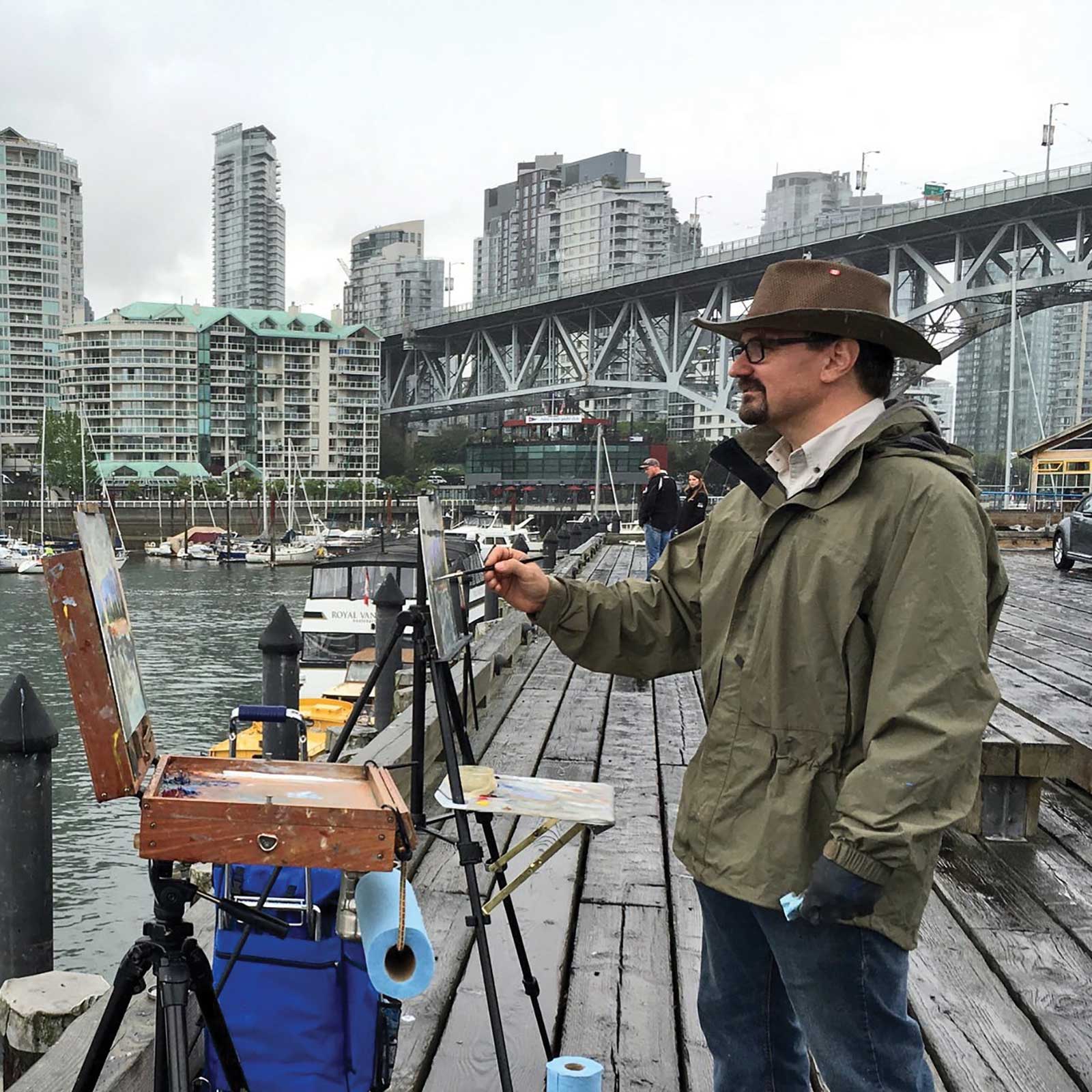 Michael King
Michael King is a contemporary Canadian painter and art instructor based in Port Coquitlam, British Columbia. He works primarily as an oil painter and is known for his soft plein air landscapes, but he also enjoys painting modern still lifes and portraits. With an eye for how light, shadow and color temperature form the fundamental elements of a scene, King’s practice blends representation with impressionistic aesthetics. This juxtaposition of technique and intuition creates paintings that are poised between observational realism and abstraction.
Contact at
www.michaelking.ca