


What you paint is a reflection of what you notice, and what you notice is a consequence of your conscious and unconscious visual strategies, some learned and some automatic. In the previous issue’s article we looked at how images are constructed in the brain, both from the information that comes from the eyes, and from the predictive models handed down from the brain. We considered how vision is different from the camera and whether artists see differently from other people.
Now let’s look at how image processing actually happens in the brain, and how we can recruit our eyes and brains to give us what we need to produce a painting.
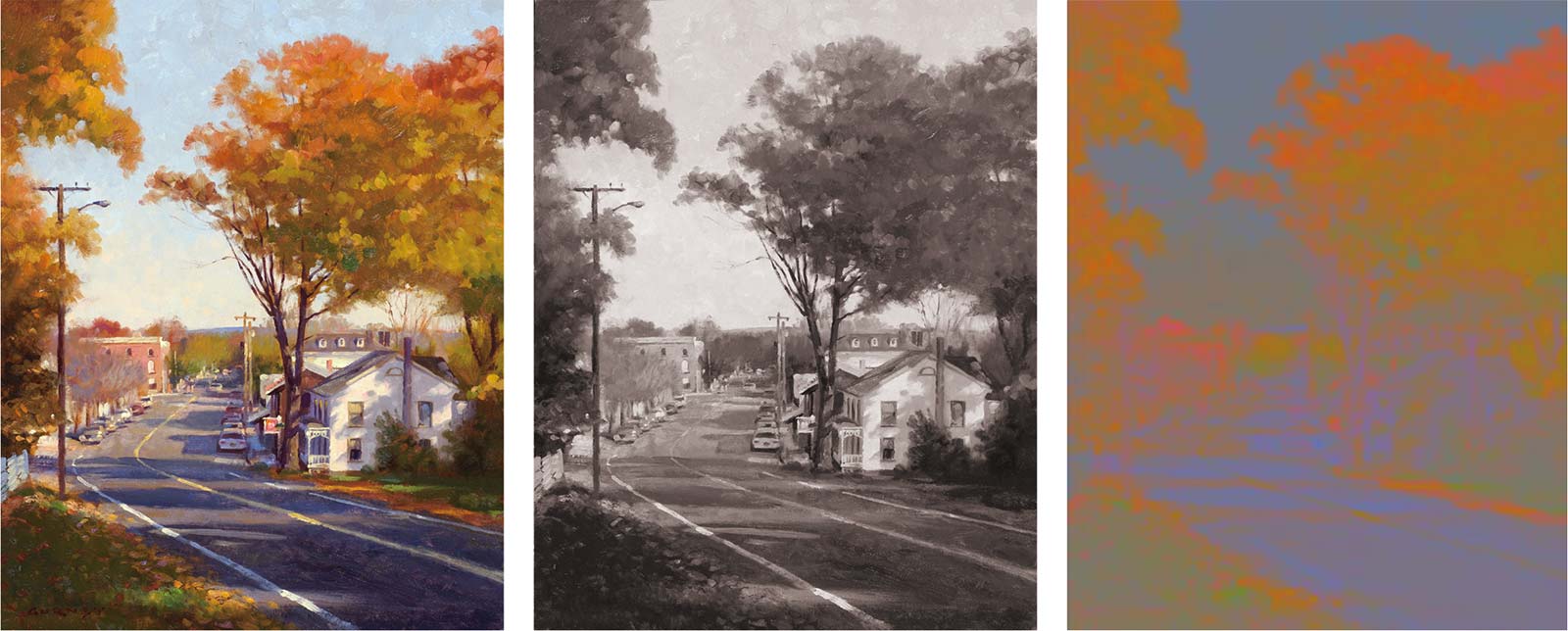
Rhinebeck from West Market, oil, 16 x 20" (40 x 50 cm). The image in the middle shows relative tonal values (or luminance), but the one on the right has color information with luminance removed.
Tone and Color Are Processed Separately
According to Dr. Margaret Livingstone, the visual brain processes luminance (or tonal information) separately from color information. The two streams originate in the retina, which begins with low-level processing such as recognition of edges and contrasts. The information pathways continue to the optical cortex at the back of the brain. Although there is some crossover and interaction, the two streams—luminance and color—are largely kept separate, from the level of the retina all the way to the higher-level vision centers of the brain.
The area of the brain that interprets tone is several inches away from the area that interprets color, making the experience of tone and color distinct physiological experiences, as distinct as sight and hearing. The color stream is also called the ventral stream or the “what” stream. It is more concerned with recognizing and identifying objects. Color processing through the ventral stream is a capacity that is shared only by higher primates, not the bulk of other mammals.
The difference between these two streams may explain why classically trained artists plan their compositions by solving problems of tonal organization separately from the color arrangement.
This idea of vision being decoded along a series of brain structures is called the hierarchy of features theory. The problem with the theory is that it presents vision as if it were a static or passive experience, when in fact, we’re very actively tilting our heads, turning objects in our hands, and moving our eyes around the scene at a rate of three times per second. This movement completely changes the pattern of light and shadow on the retina. As neuroscientist Jeff Hawkins describes it, “Vision is an interactive process, dependent on movement.” The solution to this mystery appears to be that neural structures in the cortex do more than assemble 2D images; instead, they create viewpoint-independent models of objects that predict what we’re going to see as our eyes move around.
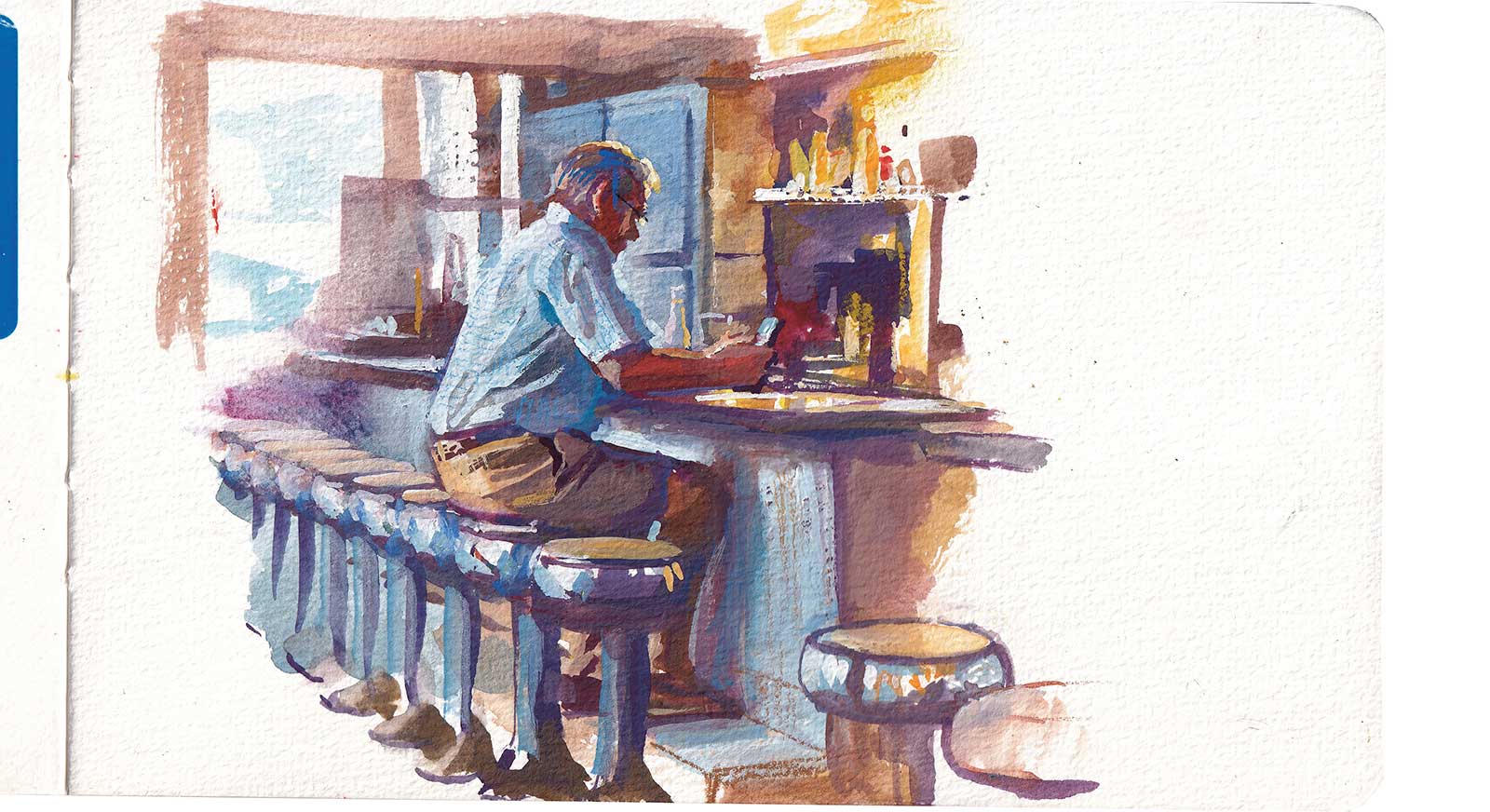
As I started painting this person at the counter of a diner, I shifted my attention, starting first with the shapes and boundary lines, then the tones, and finally the relationship between the cool light coming from the left and the warm light coming from the right.
Look and You Will Find
From my experience, what makes artistic vision different from ordinary perception is that we train ourselves to focus on different categories of visual phenomena to suit our needs at each stage of the picture-making process.
Typically, we look first for the outlines, then the big shapes, the broad relationships of tones and hues, and finally the finer details and textures. At each stage we recruit a different search image to try to select what we’re looking for. As neuroscientist Iain McGilchrist puts it: “The qualities of the world that come to your attention depend on the quality of attention you bring to [the task].”
What makes artistic vision special is not that we have any higher sensitivity to color or detail than non-artists do, but that we can recruit modes of attention that are normally unconscious and make them conscious and deliberate.
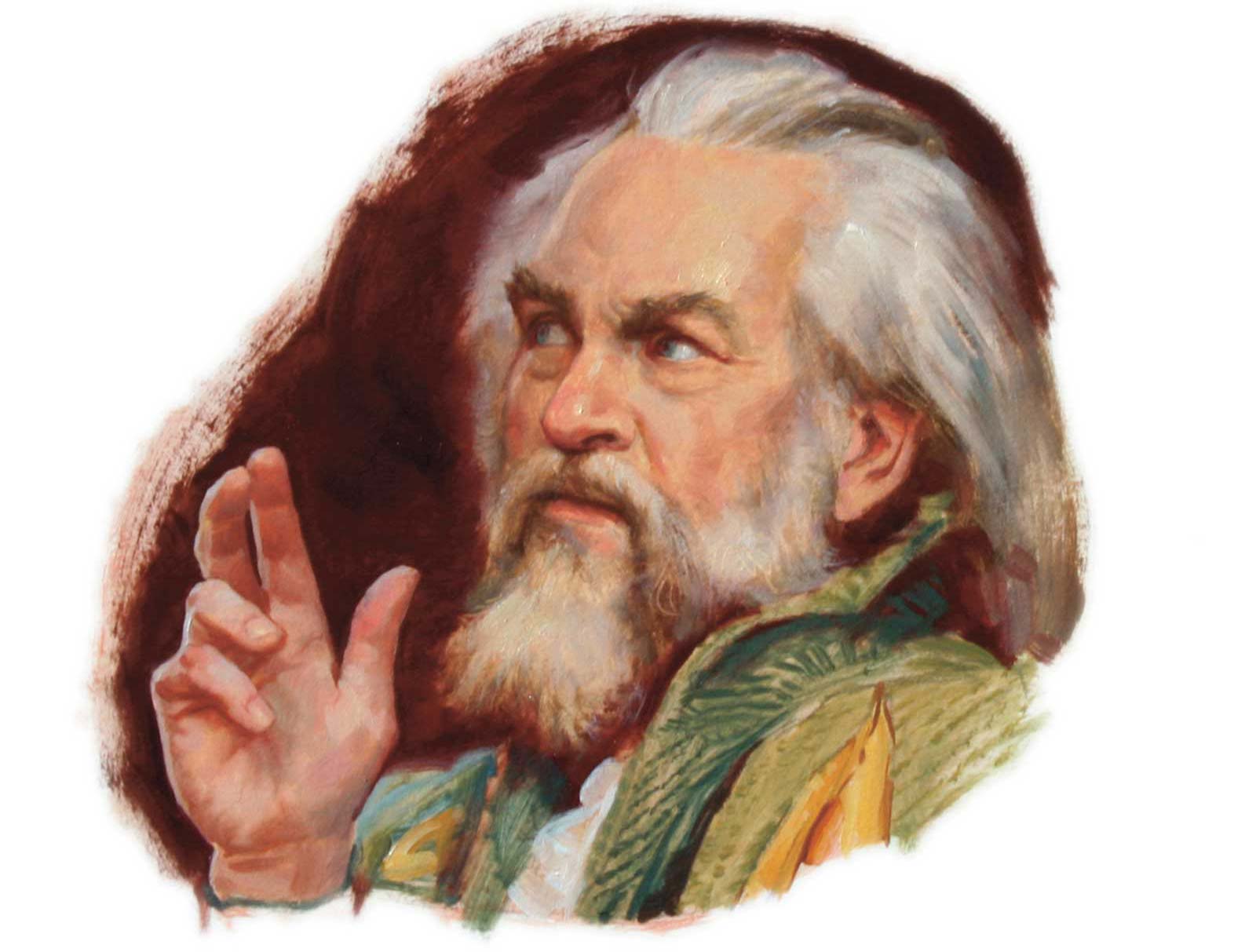
Cornelius Mazurka, oil, 5 x 6" (12 x 15 cm). Illustration from Dinotopia: Journey to Chandara. Painting a face requires a kind of focused attention that activates particular regions of the brain.
Right Brain vs. Left Brain
Many artists are familiar with the method of drawing instruction based on the lateralization of the brain into right and left hemispheres. The method was inspired by scientific studies from the 1970s, which proposed that the right and left sides of the brain employ different styles of information processing. The left side (which controls the right side of the body) tends to specialize in language, certainty, categorization and fragmentary parts, while the right hemisphere tends to regard the world in a more holistic and metaphorical manner.
Researchers have learned a lot since then, and neuroimaging studies have demonstrated more clearly what parts of the brain are activated with certain tasks. While there is some truth to the claims of lateralized functions, and while the method can be useful for many beginning artists, some of the more extreme claims aren’t supported by evidence.
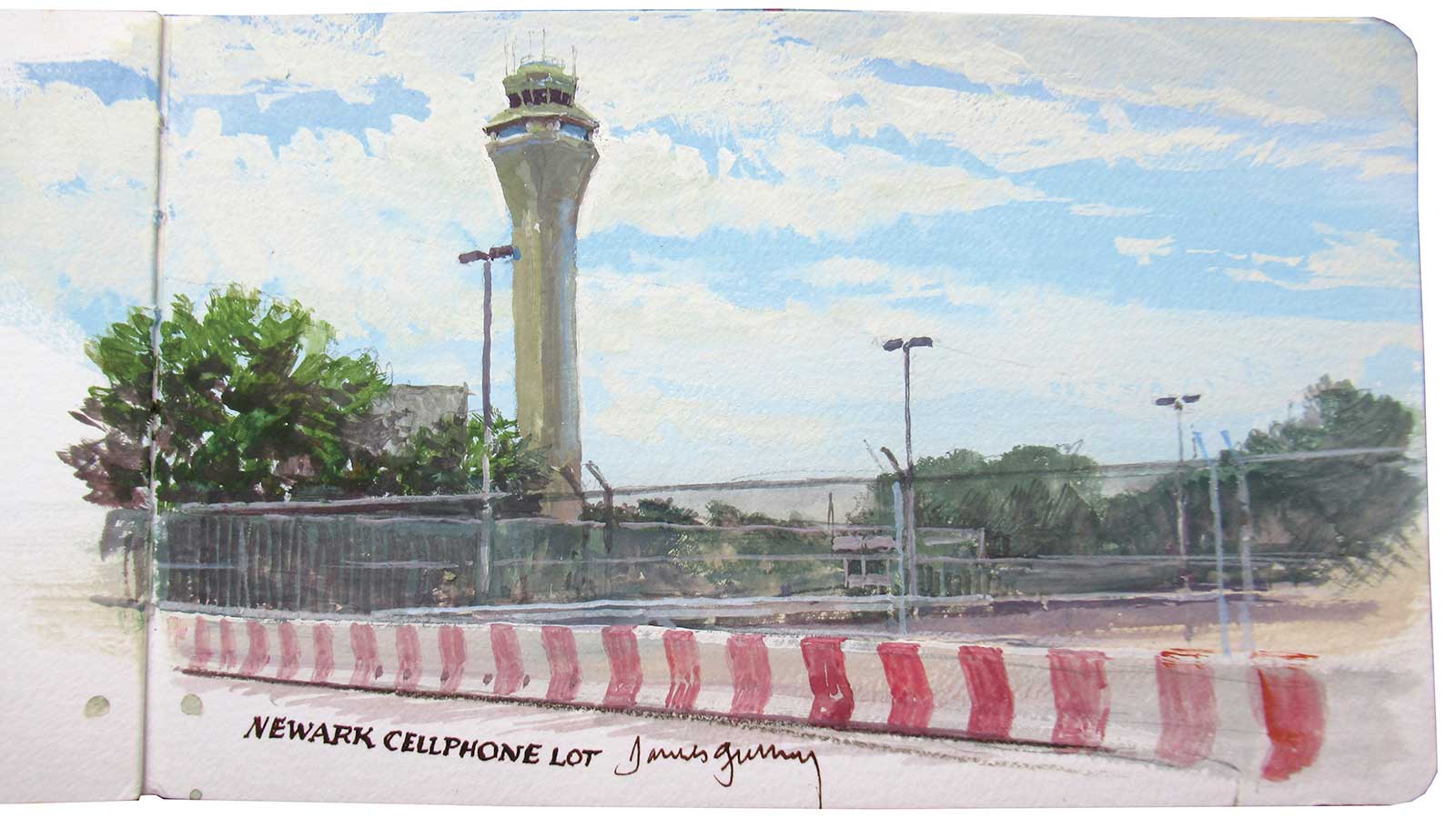
Newark Control Tower, gouache, 5 x 8" (12 x 20 cm). By focusing my attention sequentially on different layers of the scene, I was able to complete this painting in about half an hour.
For example, some argue that certain individuals are “right-brained” and others are “left-brained,” or that one hemisphere exclusively handles a given task. Neuroimaging studies show that in a normal brain, the two hemispheres are deeply interconnected, and they work together to solve most drawing or painting tasks, whether it’s analyzing shapes, measuring proportions or representing contours.
What Happens in Your Brain When You’re Drawing?
What do we know about the neural activity inside the brain during the act of drawing or painting? What structures in the brain come into play? Is the activity in those structures different for experienced artists compared to non-artists?
Neuroscientist Robert Solso, who headed the Cognition Lab at the University of Nevada-Reno, asked an experienced portrait painter to draw a picture of a face while his brain was being monitored by an fMRI (functional magnetic resonance imagery) scanner. As a control, he had a graduate student with no particular experience at drawing do a similar task.
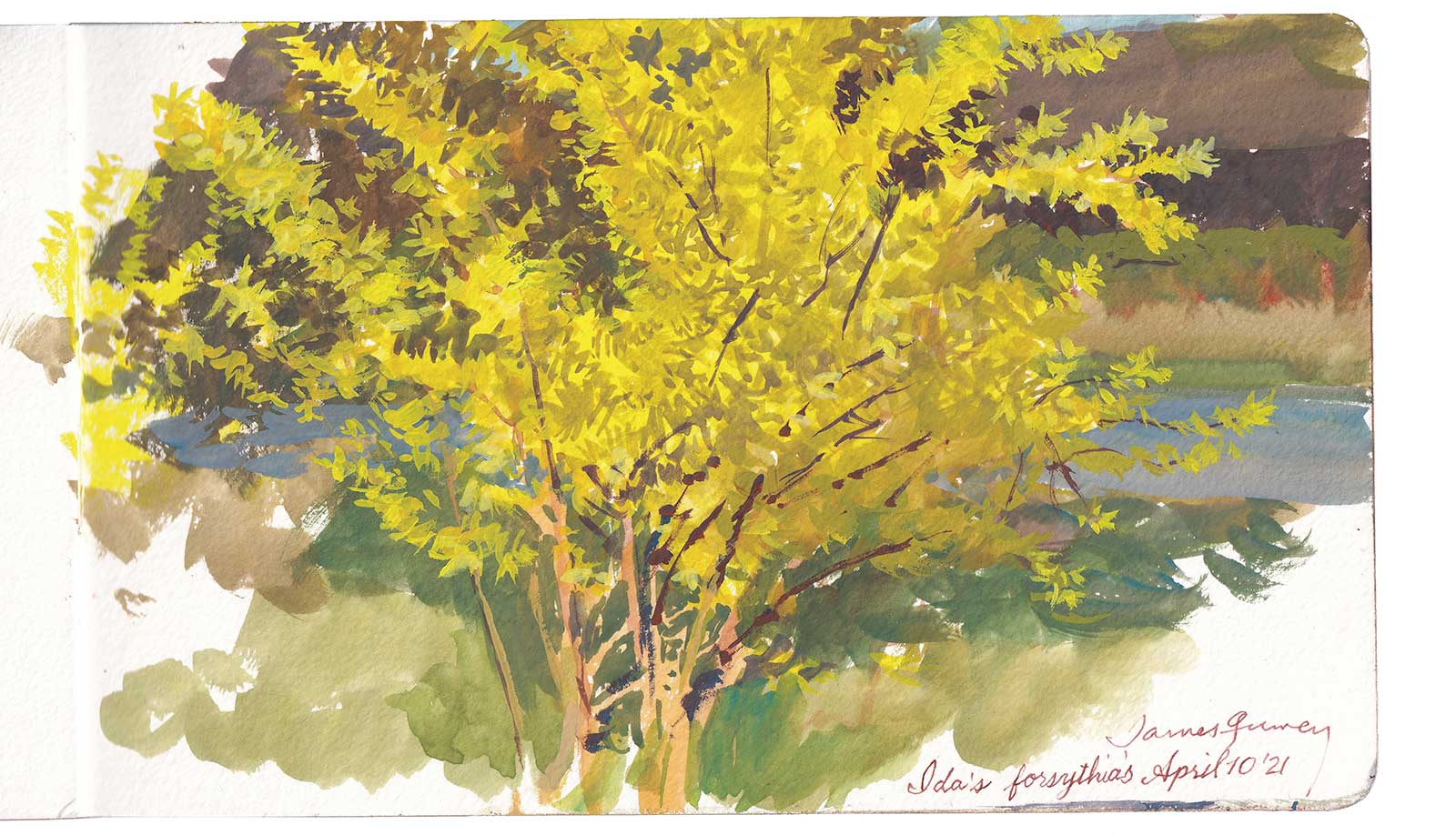
Forsythia, gouache, 5 x 8" (12 x 20 cm). Painting requires a particular kind of attention that can switch back and forth from small details to big areas.
The resulting brain scans showed that the inexperienced artist is “stuck” in the region of the brain specialized in face recognition. By contrast, the experienced artist’s brain shifts activity to the right frontal area, a part of the brain that is active when we consciously analyze visual problems and enlist more complex strategies. Solso says that the experienced artist “showed greater activation in the right frontal area than did the novice painter, which suggests that the expert painter used higher order cognitive processing. In effect, he could be ‘thinking’ a face, as well as ‘seeing’ it.”
Bringing Art and Science Together
Solso says, “Art and cognition have always stood as two convex mirrors each reflecting and amplifying the other. Yet surprisingly, in spite of monumental recent developments in both aesthetics and cognition, the connection between the two disciplines has not been studied systematically.”
Hopefully the dialogue between practicing artists and research scientists will continue to yield new insights. Studies that look into the neuroscience behind making art are just in their infancy, and there’s much more to learn. —
About the Artist
 James GurneyJames Gurney is the author and illustrator of the New York Times bestselling Dinotopia book series, which was published in 32 countries and 18 languages. He designed the World of Dinosaurs stamps for the U.S. Postal Service and has worked on over a dozen assignments for National Geographic magazine. James and his wife Jeanette met as sketching buddies in art school and are still avid outdoor painters.
Contact at
gurneyjourney.blogspot.com