

It can be difficult sometimes trying to find a suitable painting subject. A trick that always works for me is to simply walk outside and look at the ground. Tiny patches of stones, plants, weeds, ferns, etc. can all make great painting subjects. What we need to do is take the time to look carefully and consider what we are looking at as simply an abstract arrangement of shapes, colors, lines, tones and textures. You don’t need to be in an exotic location—a suburban front yard, vacant block or council park all have small patches of interesting elements.
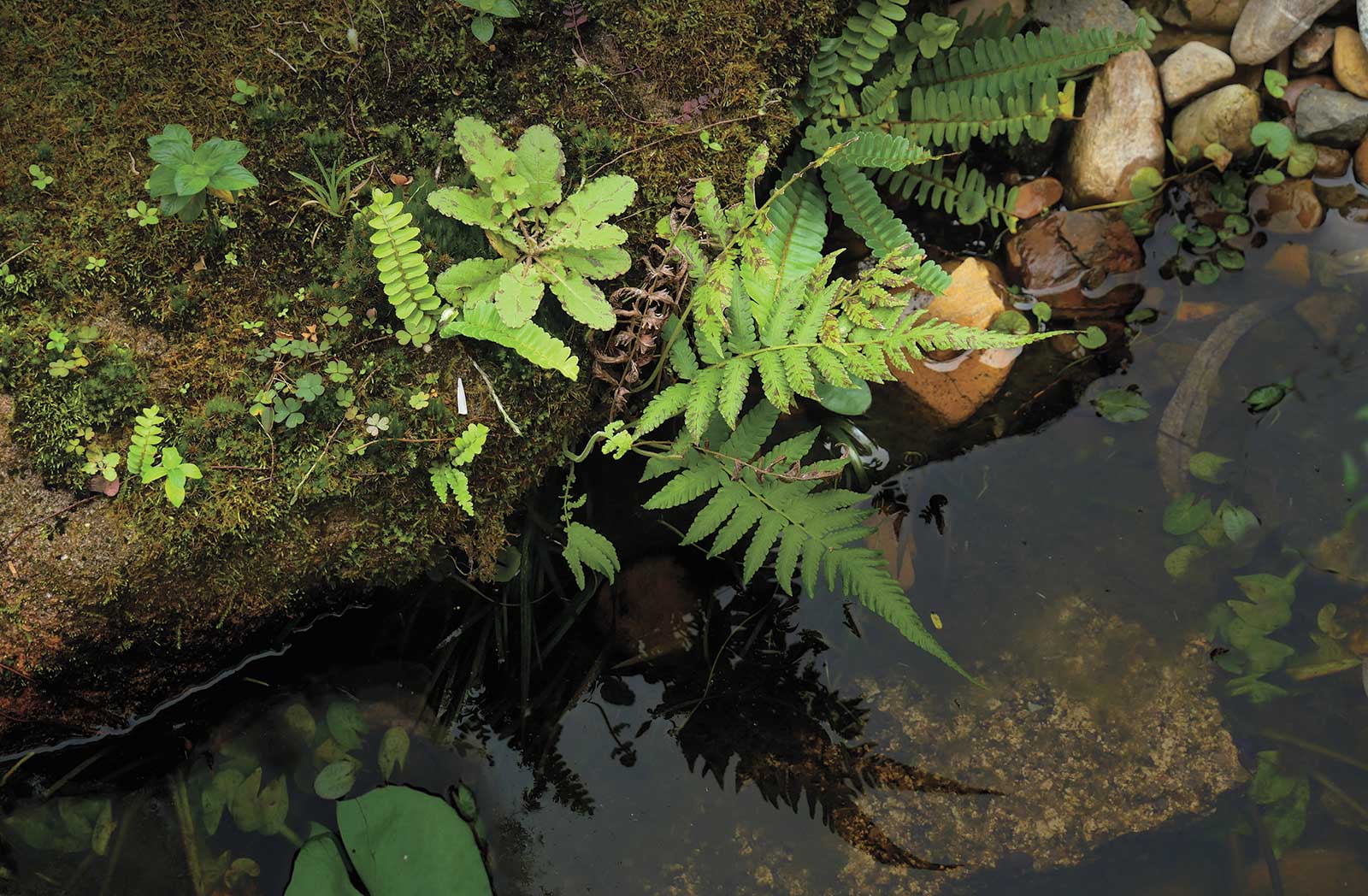
I found these rocks and ferns beside a small garden pond. What appealed to me was the variation in shapes, textures and colors. I also liked the subtle hint of blue sky reflected in the water.
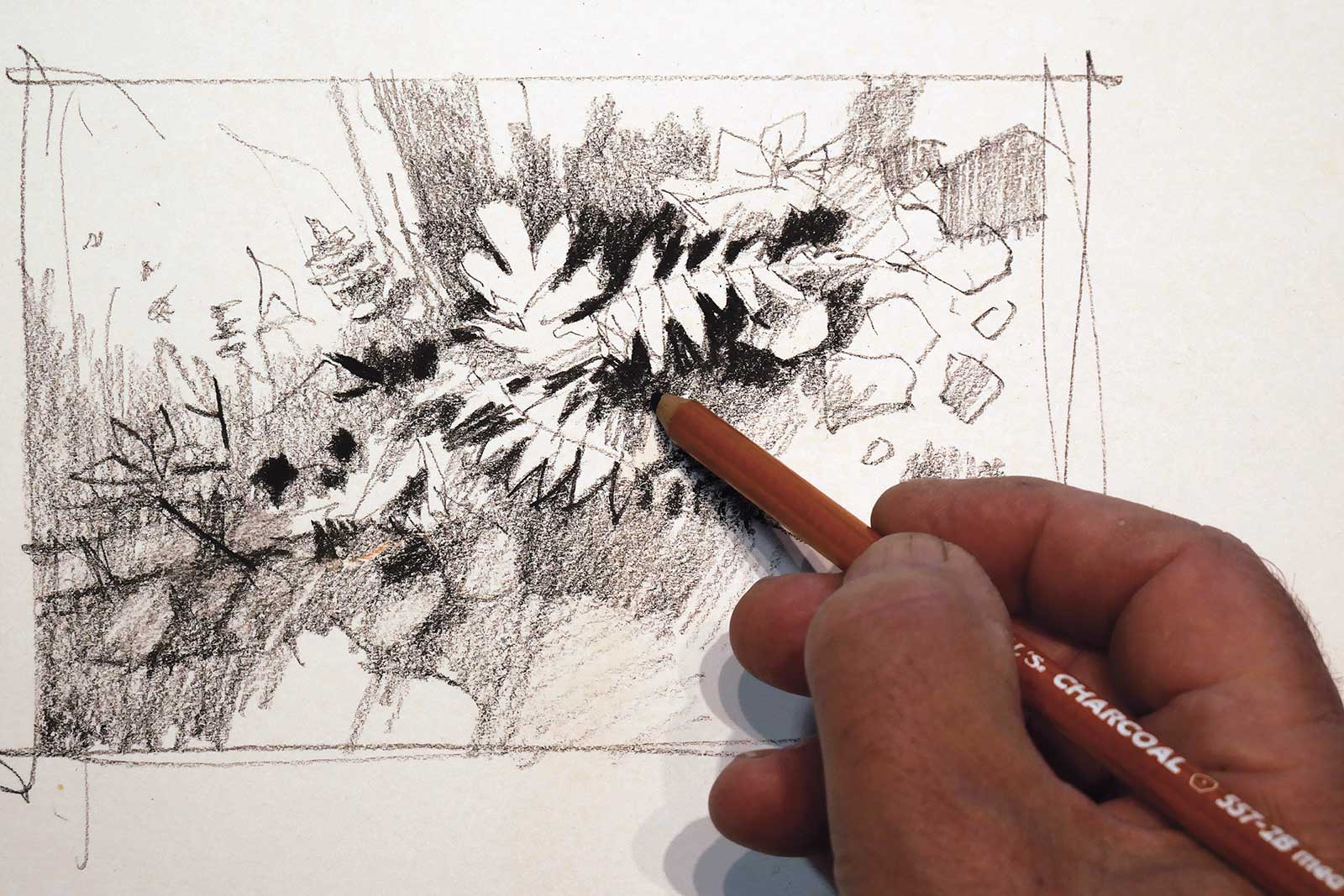
Before I start to paint I always do a quick thumbnail sketch to shuffle around the various elements and establish a suitable area to focus attention on.
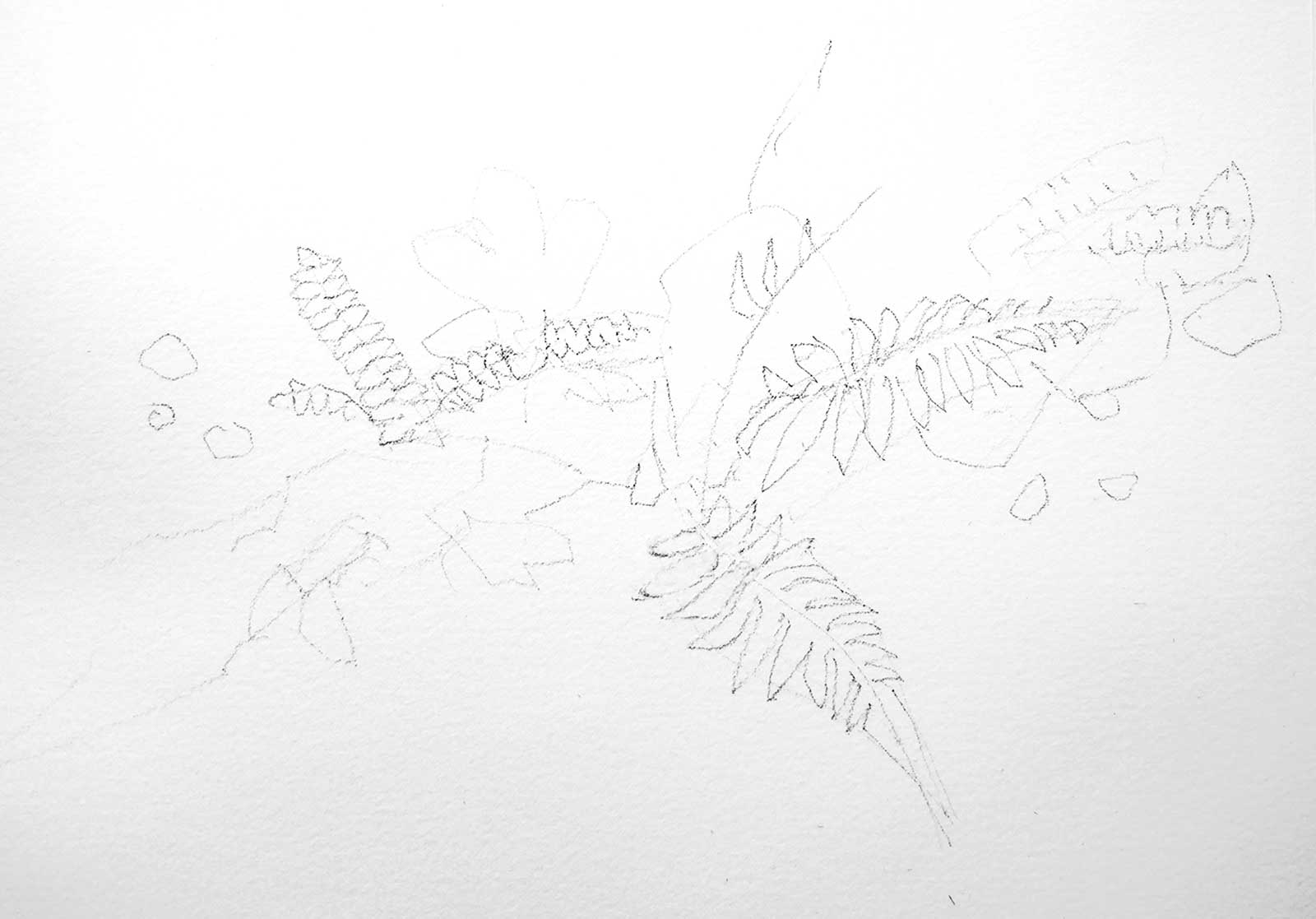
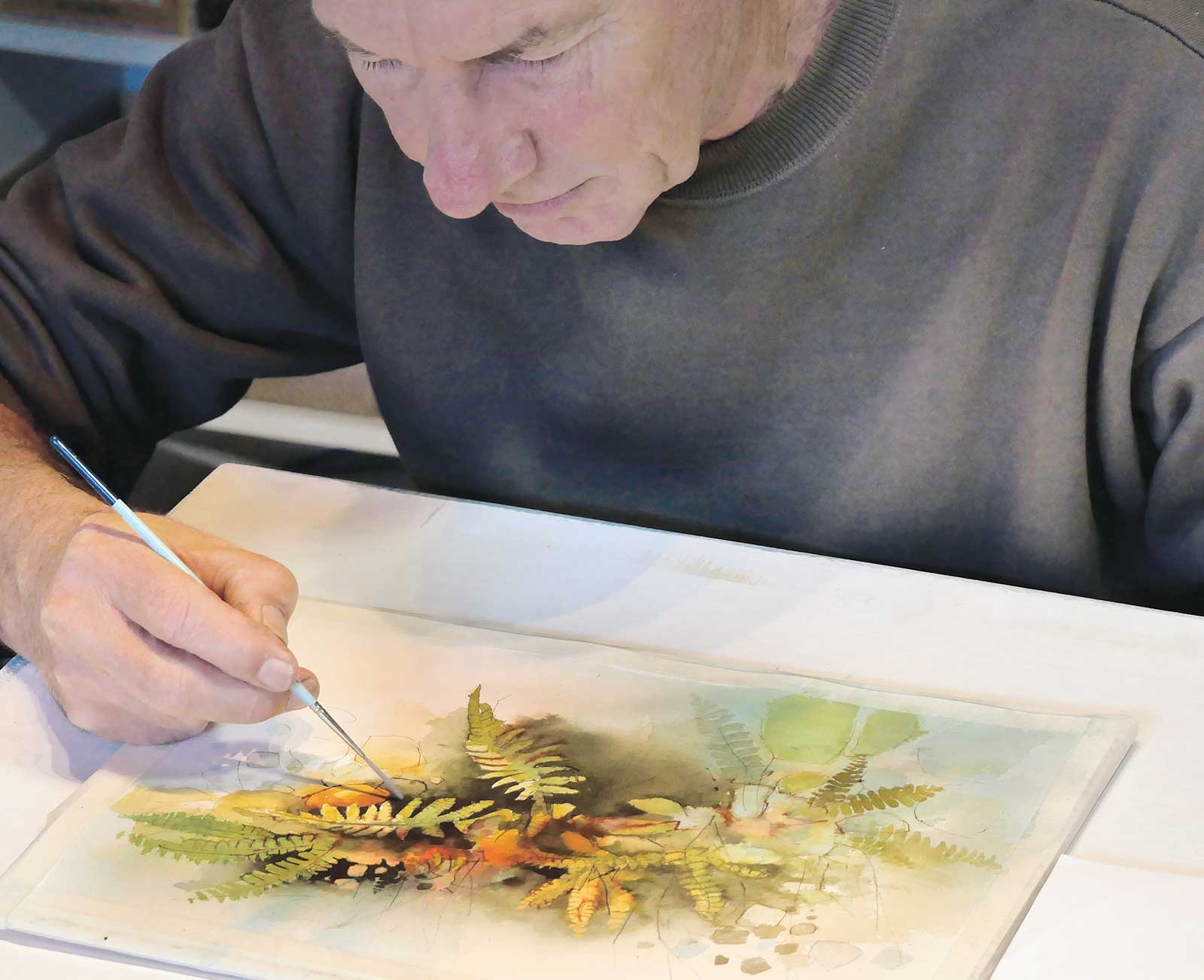
Once I’m happy with the arrangement in the sketch I lightly draw that onto my watercolor paper (in this case 300gsm medium cold pressed). I like a medium charcoal pencil for this initial drawing—it can be left as part of the finished painting without being shiny and obvious like graphite.
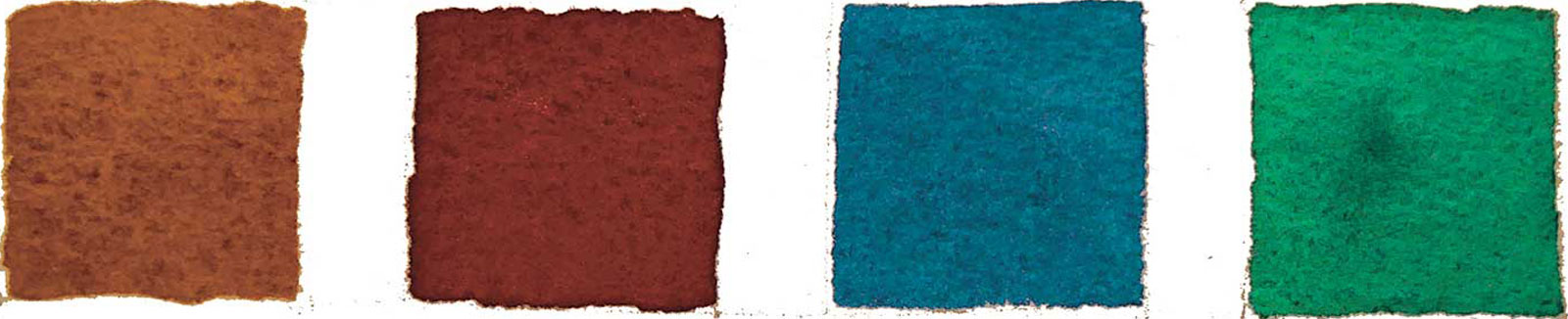
The colors I chose for this painting were quinacridone gold, permanent alizarin crimson, phthalo blue and phthalo green.
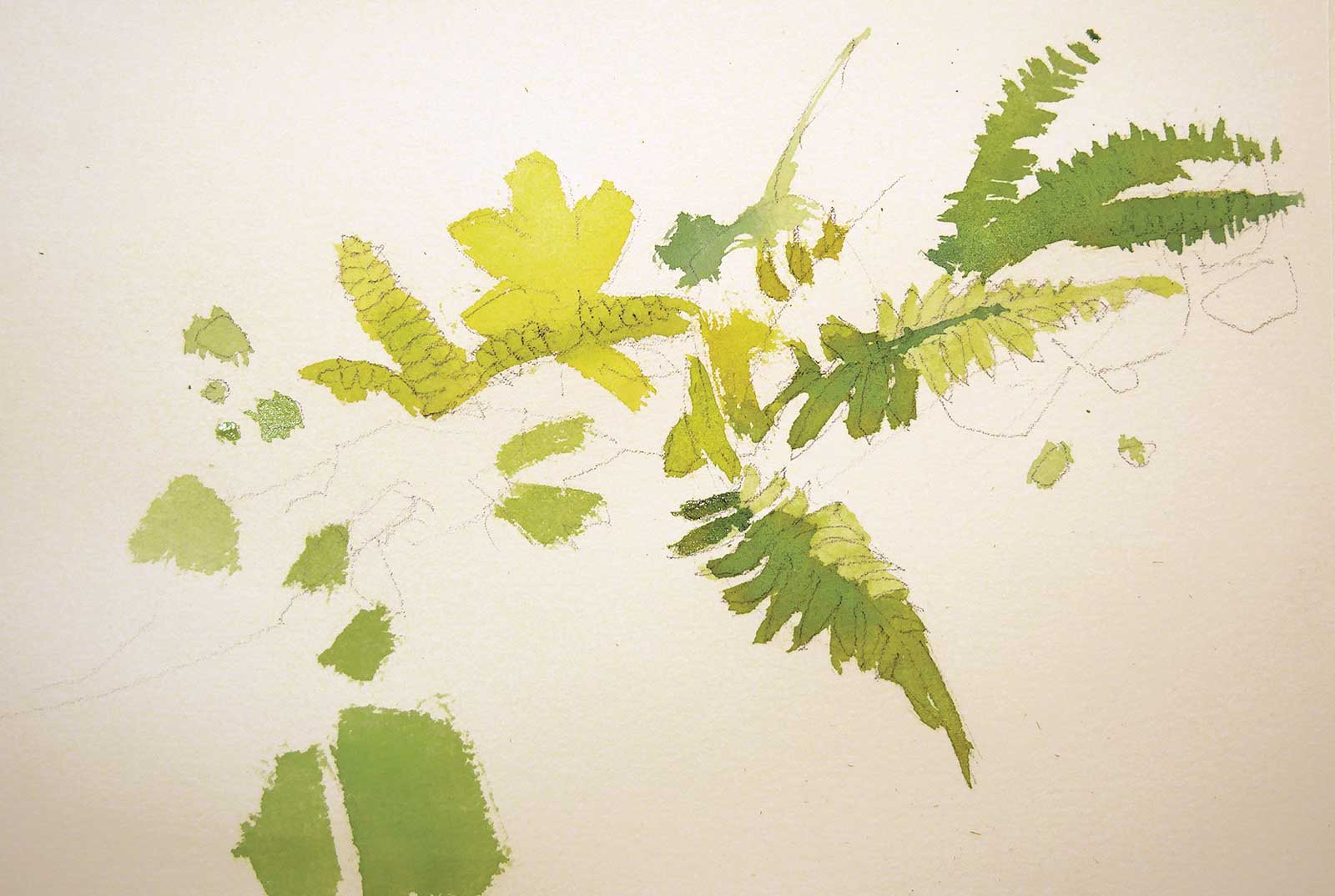
Onto dry paper varying mixtures of quinacridone gold, phthalo blue and phthalo green were applied with a ¼-inch long flat brush.
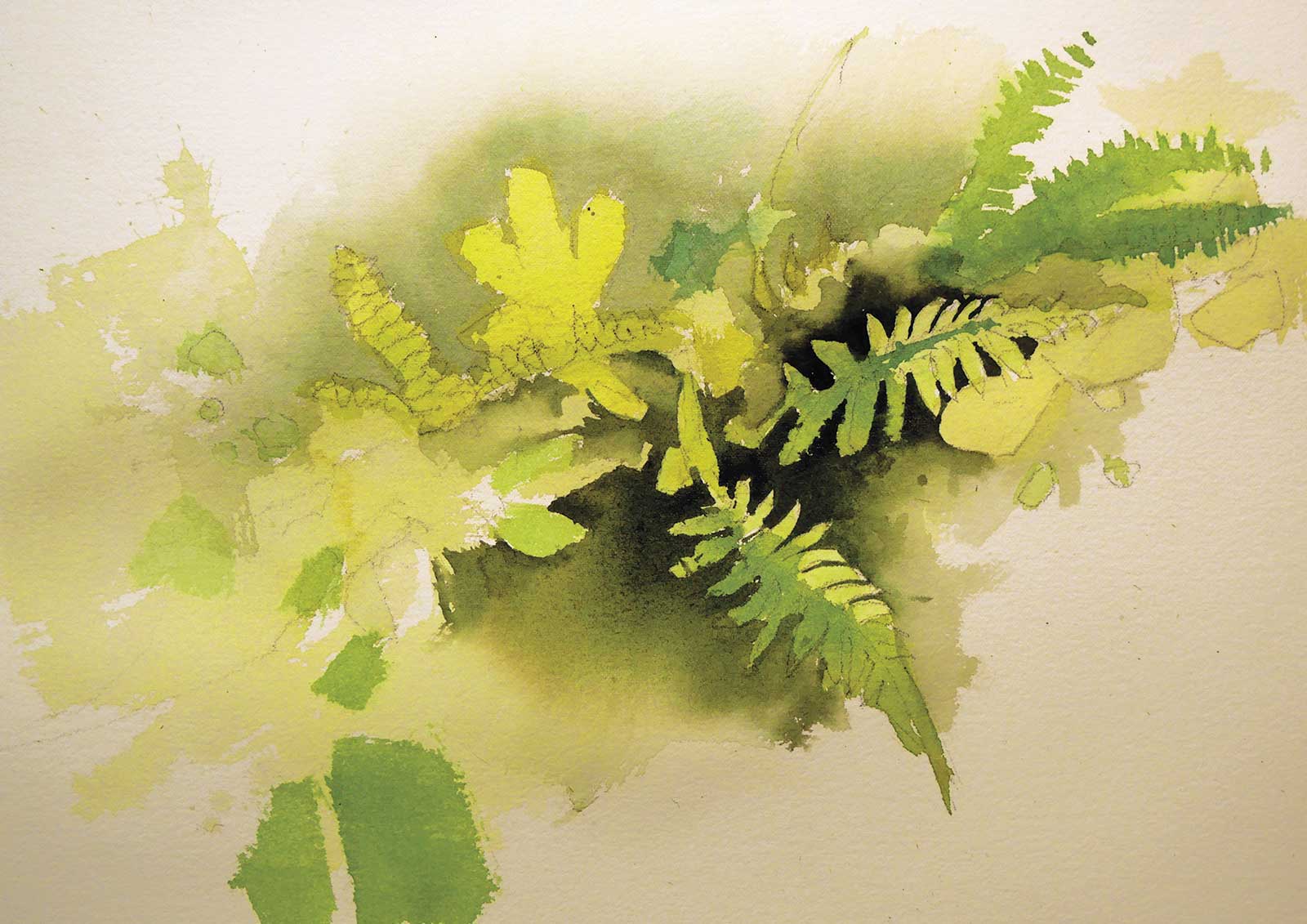
After the first washes had dried a small brush was used to cut clean water in around the fern fronds. This water was spread out across the paper with a 1/2-inch bristle brush, avoiding the leaves and fronds. Into the wet area I applied a soft green/gray background. While the background was still wet, a dark mixture of quinacridone gold, phthalo blue and alizarin crimson was dropped in behind the leaves at the focal area.
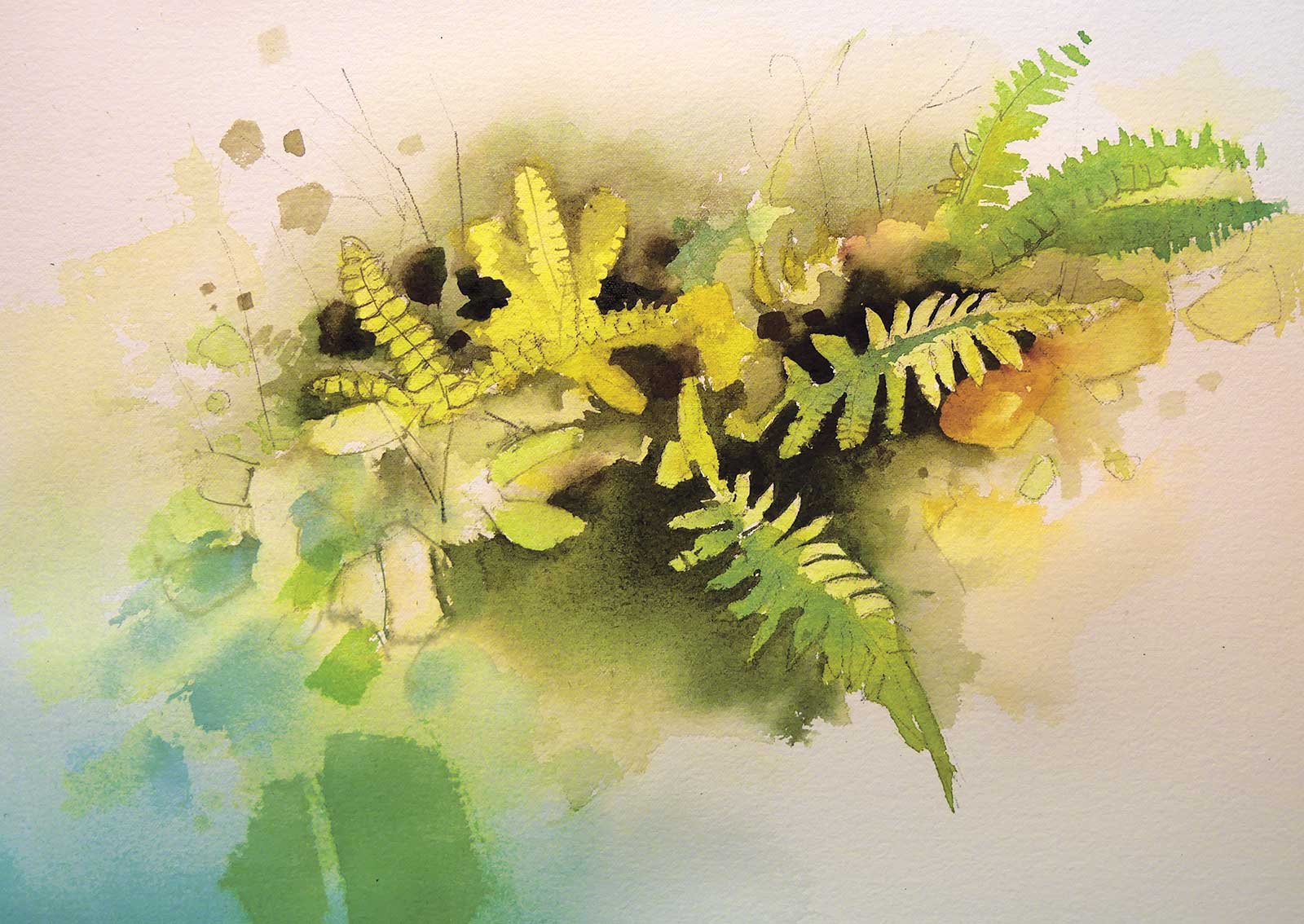
A small area of the dark mixture was extended over to the left. While the dark mixture was drying a wash of phthalo blue was worked over the bottom left and top right corners to suggest the reflected sky. Some more warmth was introduced into the stones on the right-hand side.
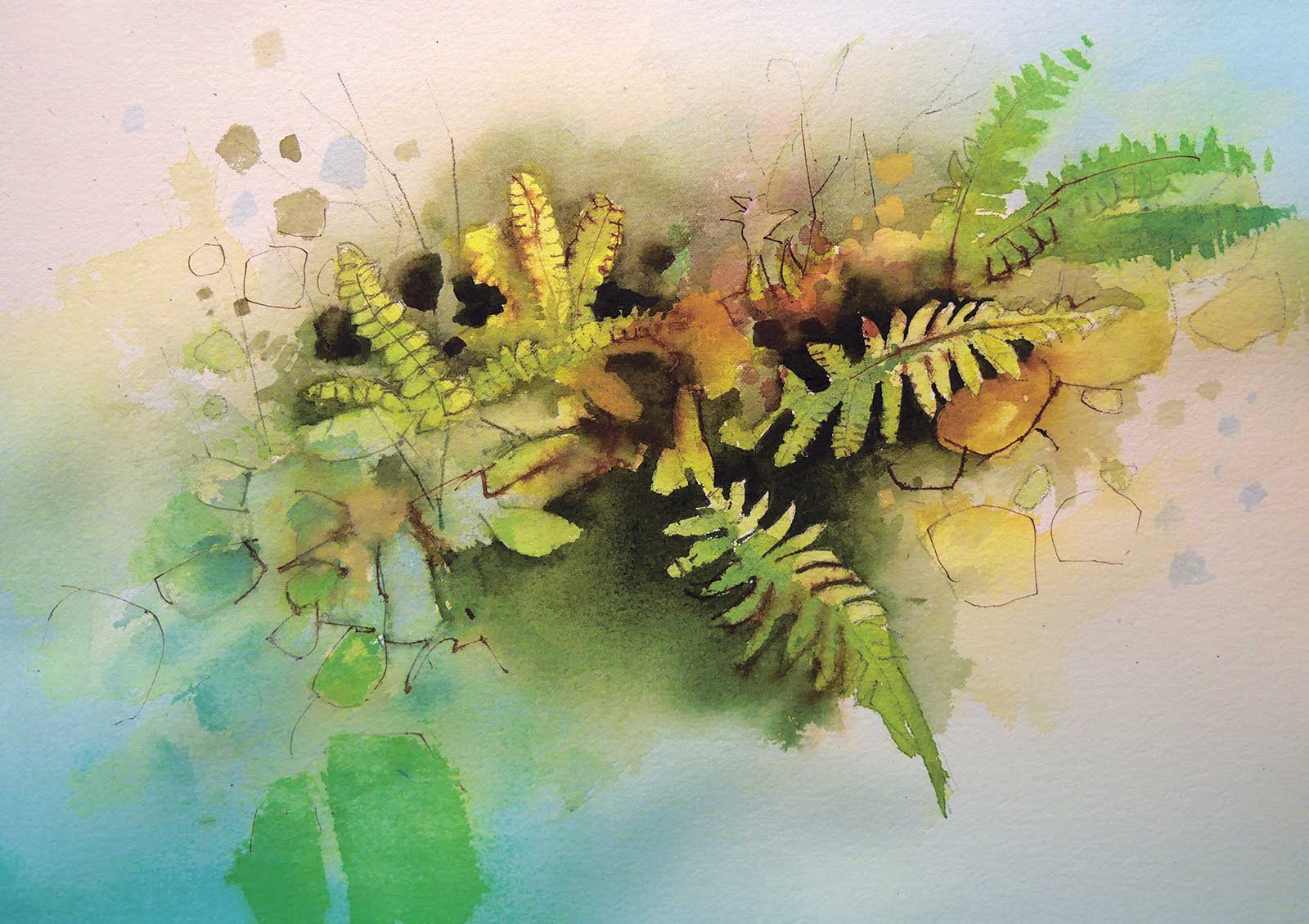
The warmth in the stones was carried through the focal area with a wash of Quinacridone Gold mixed with Alizarin Crimson. As this was drying, pure Alizarin was splashed onto that part of the painting. Once everything had dried some Burnt Sienna ink lines were scratched over the surface and sprayed lightly with a mist of water to make them bleed.
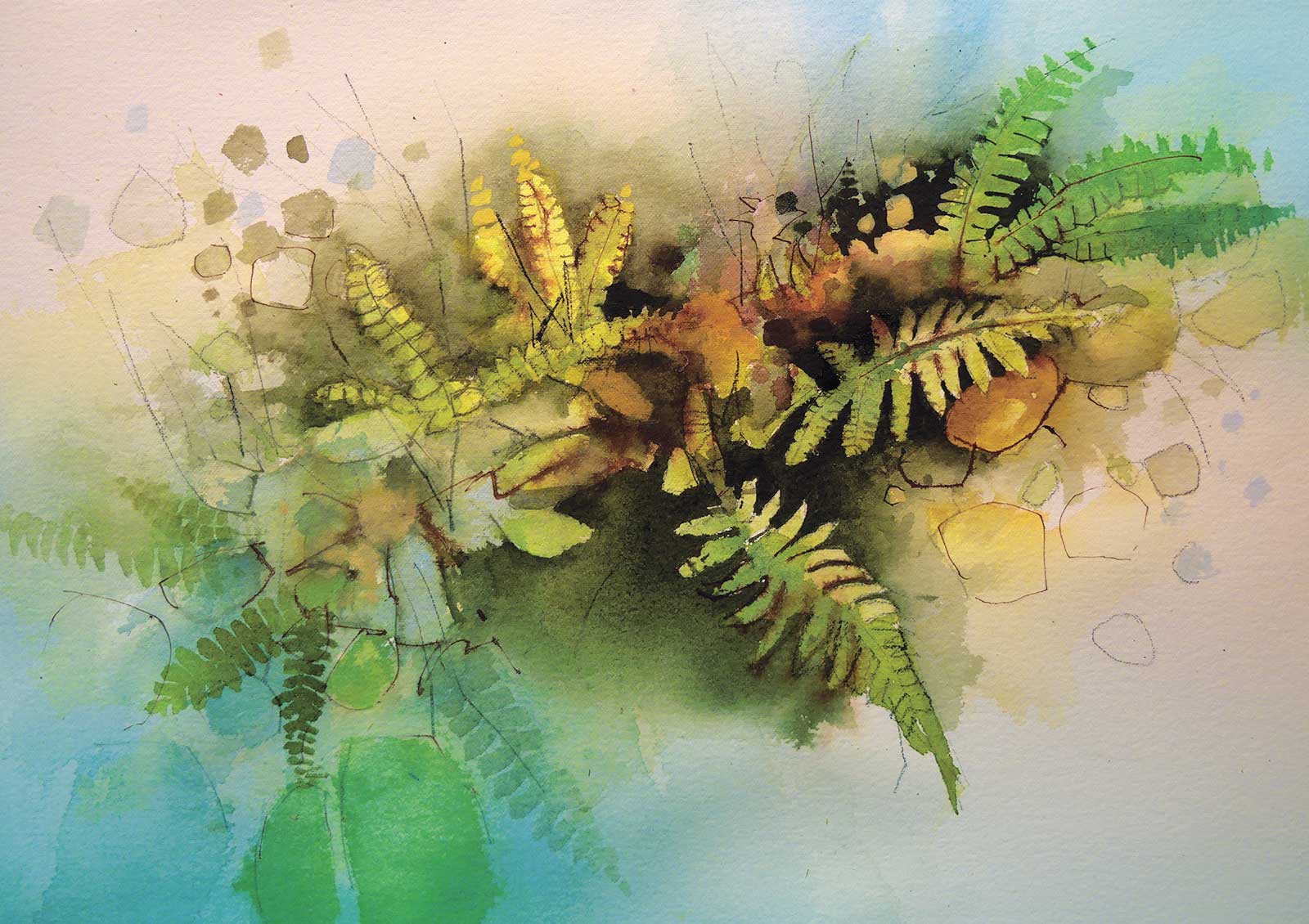
Finally, some of the dark areas were adjusted and more subtle details of fronds and stones were added.
Although this is a simple subject, the suggestion of subtle fronds, stones and twigs build up interest and give the appearance of intricate detail. The great thing about these subjects is that you can rearrange, add or leave out as much or as little as needed to gain the result you are after. Next time you are stuck for something to paint, wander outside and have a careful look around. You will be surprised what you can find right under your feet. —