I was born and brought up in the early ’70s in the city of Glasgow, Scotland. From an early age I enjoyed artwork involving wildlife. When the weekend came or during the school holidays I could happily be found in the natural history section of the city museum painting the birds and animals in the collection, and if I wasn’t there I would be at the Glasgow Green Stables sketching the city’s famous Clydesdale horses.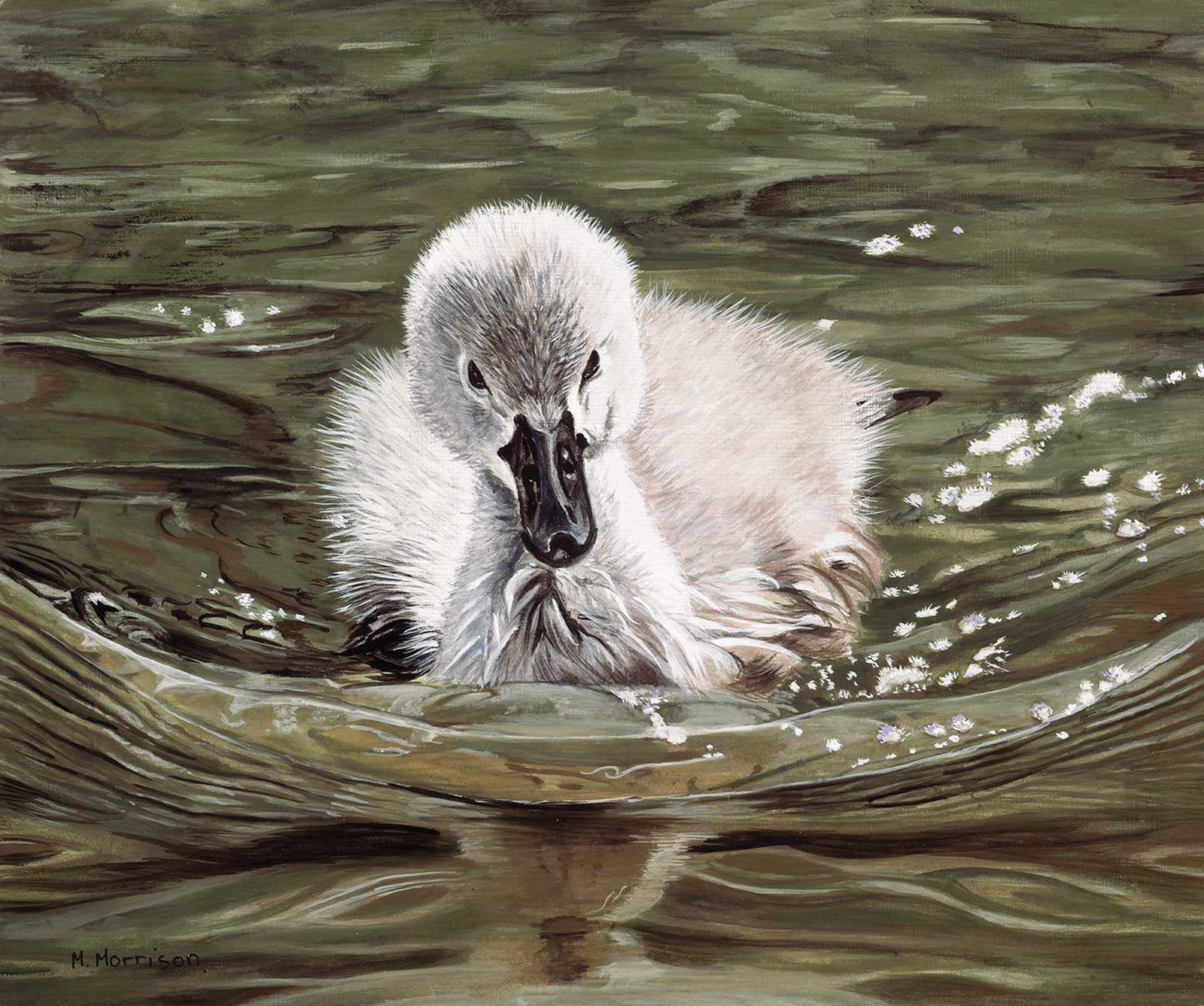 On a mission, gouache, 10 x 12" (25½ x 30 cm) I had the great pleasure of watching this little fellow and his siblings hatch from their eggs and grow up into beautiful swans.
Like so many other artists I had another creative passion in my life, that of music, and especially stringed instruments. So much so when I completed my formal education I trained to become a professional violin restorer. This career I followed for 15 years, and during this period of my life artwork took a back seat, that is until the recession forced a lifestyle change and I rediscovered my love of painting wildlife and animals.
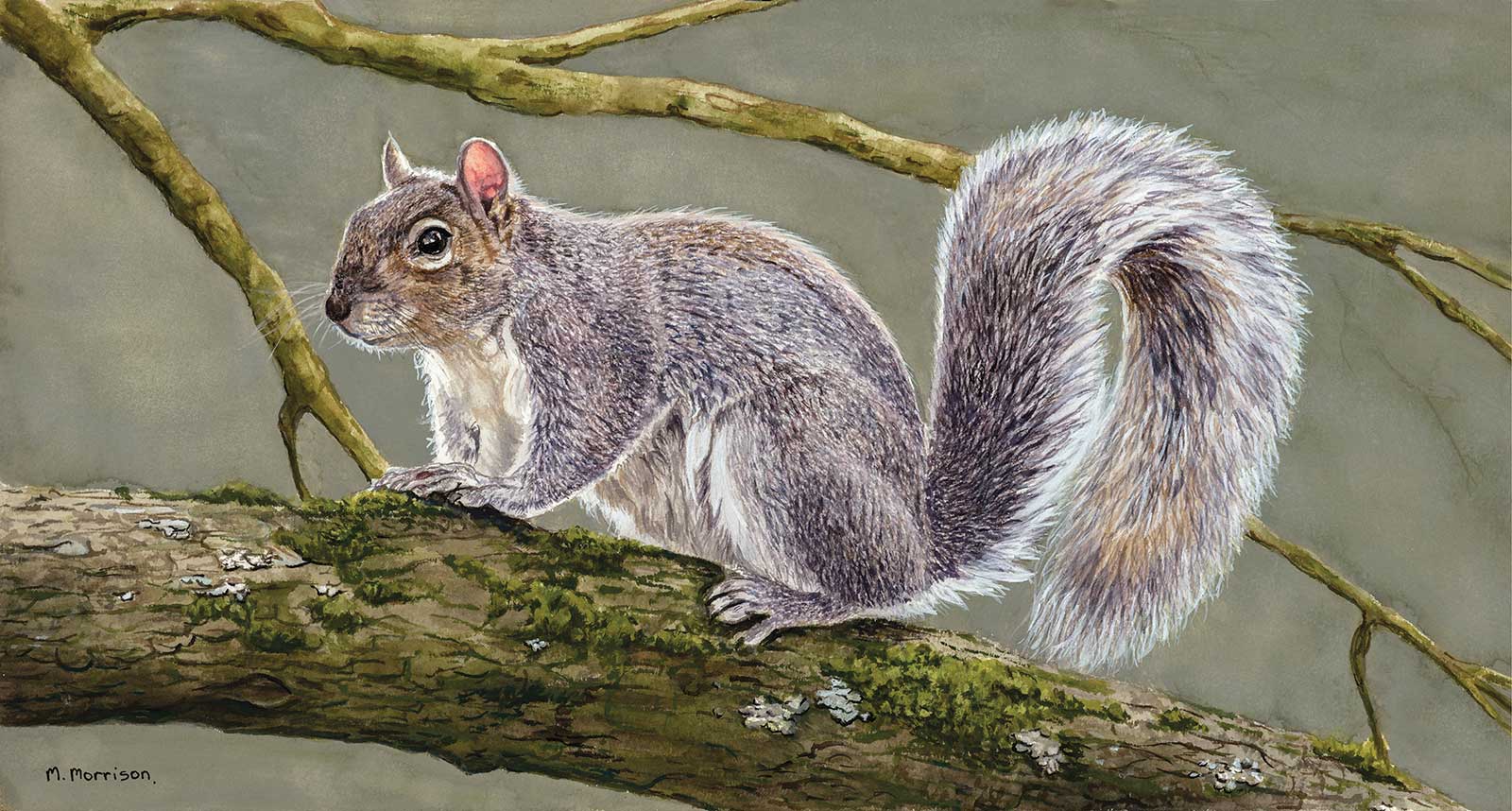 Grey squirrel, gouache, 9 x 17" (23 x 43 cm) As I was out with my camera searching for inspiration for my next painting. I saw this gray squirrel running across a branch on a tree, looking glorious with the sunlight shining along its head, back and tail.I believe that my career as a violin restorer greatly influenced and changed my style and approach to my artwork in many ways. As a lot of violin repair work would involve fitting and shaping small intricate pieces of wood to the instrument, this taught me to have the patience to spend time, observe and study the finer detail that previously I would have overlooked. It also taught me the importance of color mixing and matching, as working with varnishes you only have a very limited choice of color extracts in which to create your varnish color for retouching your repairs, so that it would become invisible to the naked eye. In turn it also made me aware of the difference it makes to your colors in a painting by working only in natural daylight.
I now spend most of my time living in the beautiful Avon Valley in North Somerset on a Dutch Barge. This great position enables me to have closeness to wildlife subjects where I can sit for hours sketching and observing, looking closely at the detail of feathers and fur and getting to understand the subject so I can then portray their characters into my paintings. If I am composing a painting from many reference photographs I will firstly make a rough sketch of my intended layout, however if I am already happy with the layout in one of my photographs I will start by drawing an outline pencil drawing straight onto a watercolor board. As to how I start a painting varies from painting to painting. Mainly if it is a large, undetailed background area I will completely paint in the background first, however if it is more like my demonstration picture then I will start by painting in each little area subject by subject.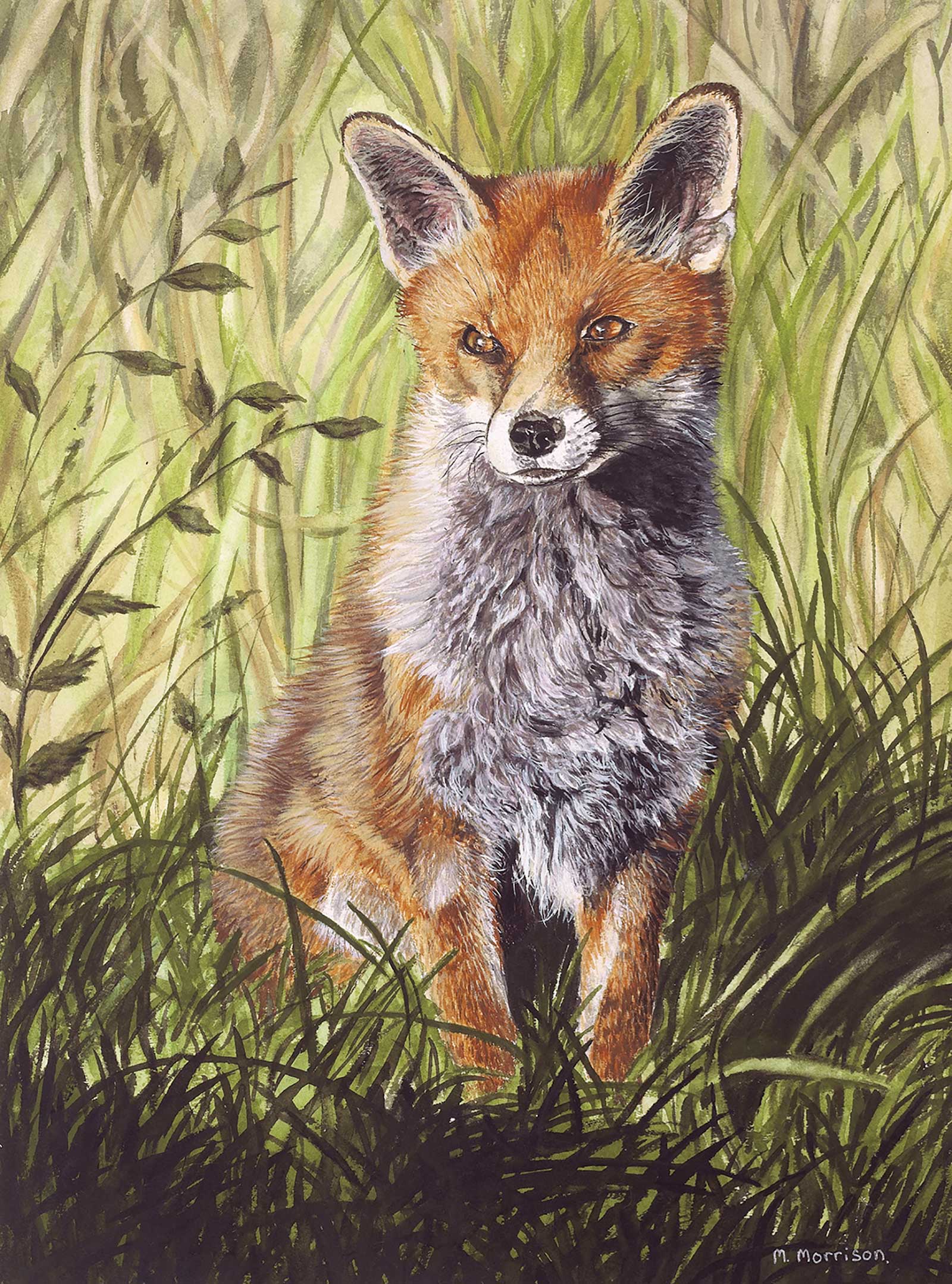 Fox, gouache, 15½ x 12" (40 x 30 cm) Being a lover of wildlife, I visited a local wildlife rescue center. When I saw a beautiful fox sitting in the sunlight I couldn’t resist taking some photographs of him for a painting.
I tend to concentrate on one painting at a time, normally working for five to six hours per day in good daylight. As I use gouache paints on a watercolor board I can sit the painting on my lap with my paints by my side, therefore viewing my work mainly close up, but not necessarily the right way up—often I turn the painting upside down, viewing and painting like that. Occasionally I will also prop the painting up at the other side of the room so that I can view it from a distance. Living where I do, when the weather is good, I will sit outside on the back deck of the boat and paint in the glorious sunshine.
My Art in the Making Wren
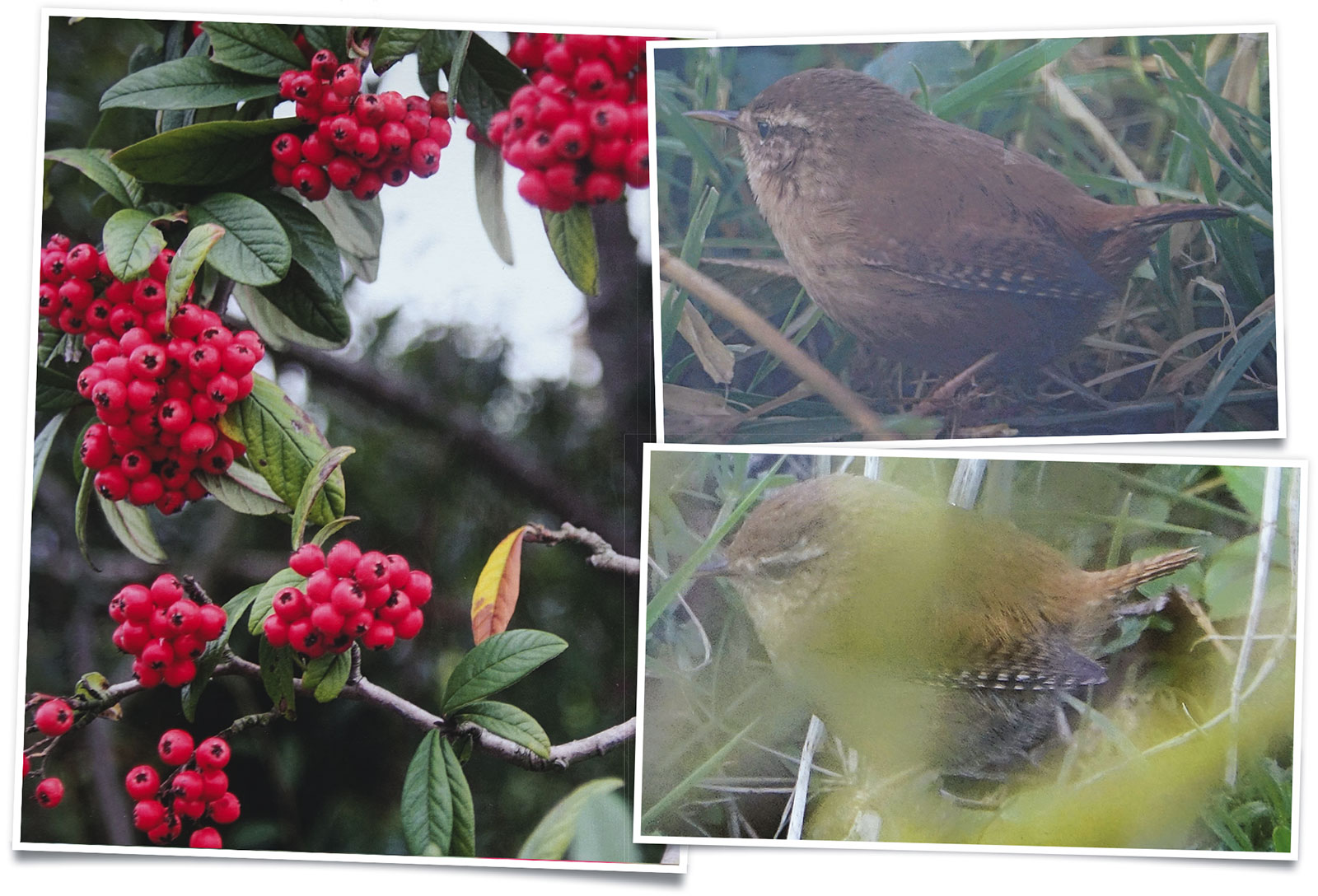 Reference Photos
Reference Photos
Upon seeing this beautiful tree covered in red berries, I decided that it would make the perfect setting for a painting with a small bird in it. I didn’t want to choose a colorful bird as there were already enough colors in the tree. I had quite often seen a wren in the hedgerow outside my window, so I decided upon that and sat patiently waiting. Eventually I got a couple of photographs of the wren. Unfortunately, not of great quality, but good enough that I could work from.
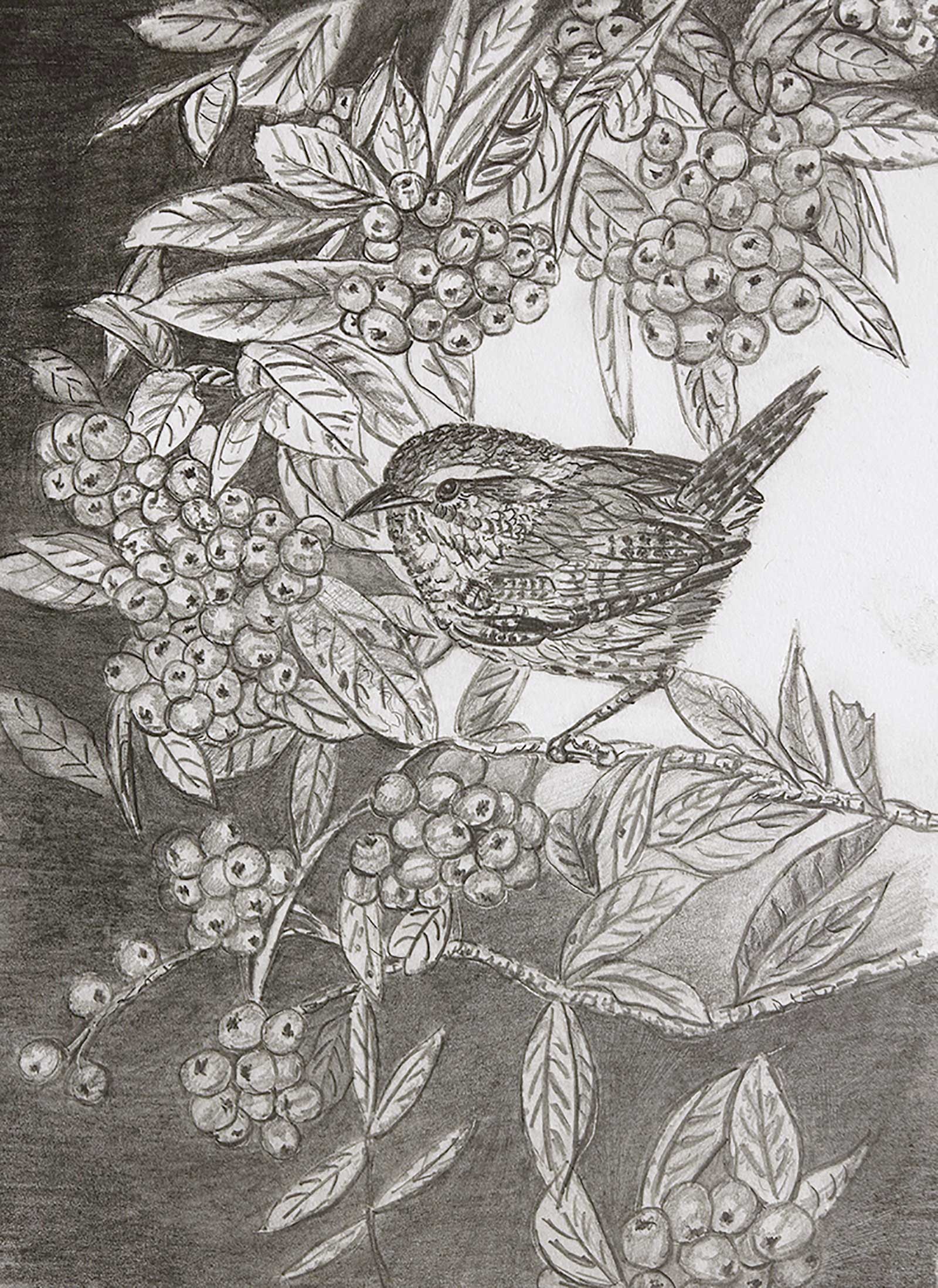 Stage 1
Stage 1 The Sketch
First using my many reference photographs, I created a detailed pencil drawing sketch onto watercolor paper of what I intended to portray in my final painting.
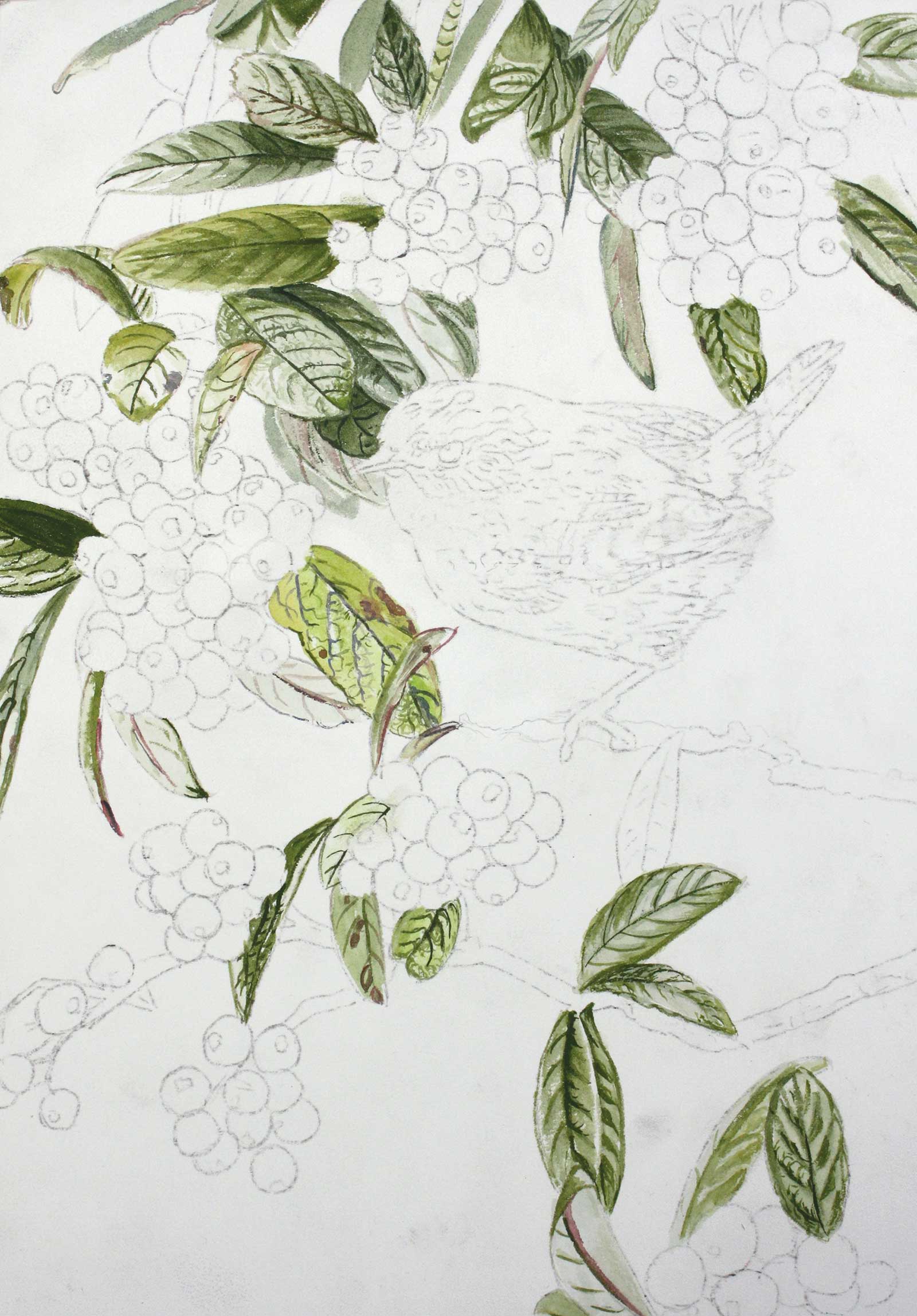 Stage 2
Stage 2 The Drawing
Once I was happy with the composition of my sketch, I then used it to create an outline pencil drawing onto watercolor board.
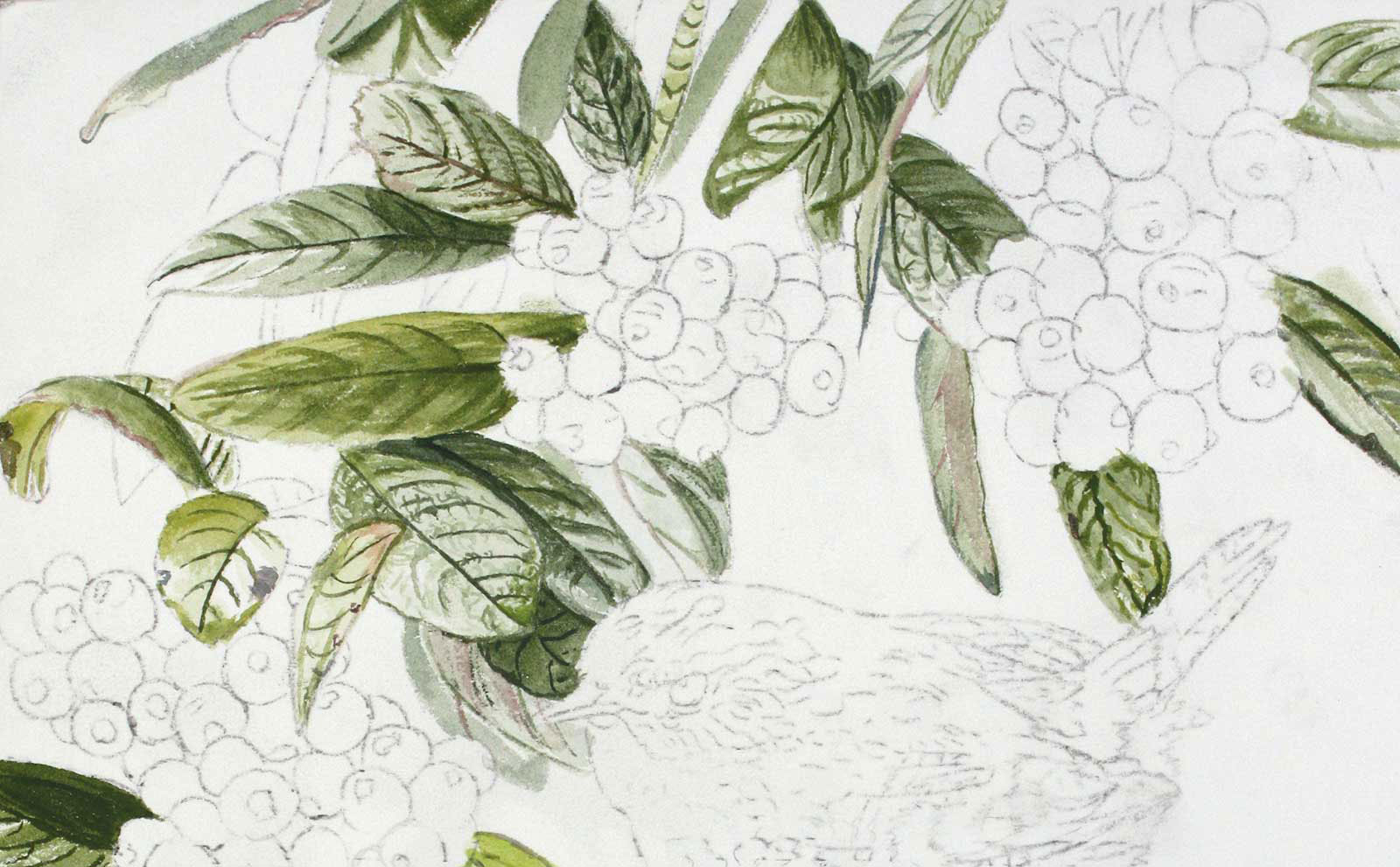 Stage 3
Stage 3 Moving Onto the Leaves
By placing my reference photograph right beside the leaf I was painting, I began by using a size 5 brush and painted in a basewash of its colors with shading. I let it dry for a few minutes before then using a size 2/0 brush and painted in all of the leaves’ markings and details, completing each leaf before moving onto the next.
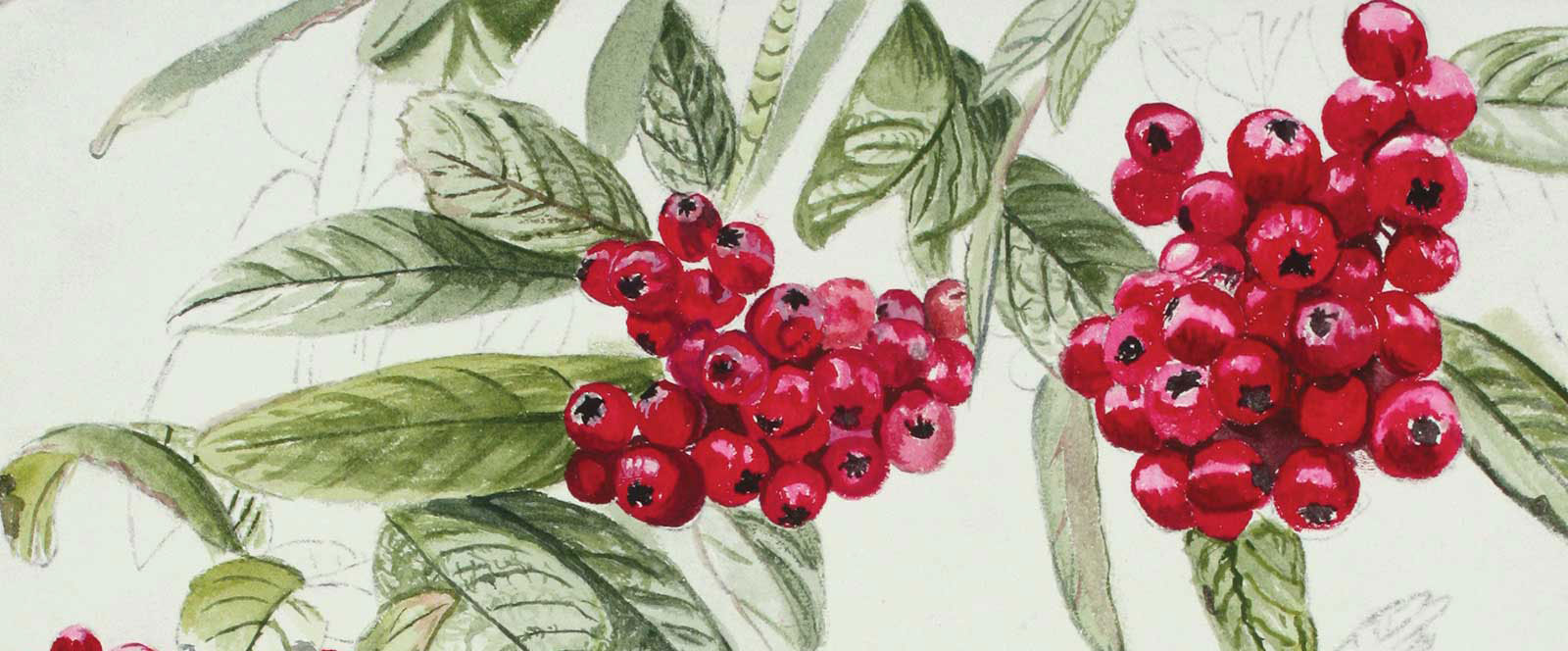 Stage 4
Stage 4 Painting the Berries
I began by painting each berry one at a time. I first painted in the white highlighted area, then the different tones of red with the shading. I then applied a wet brush to soften and blend the red paint into the white highlighted area. After it had dried, I painted in the dark area at the bottom of the berry.
 Stage 5
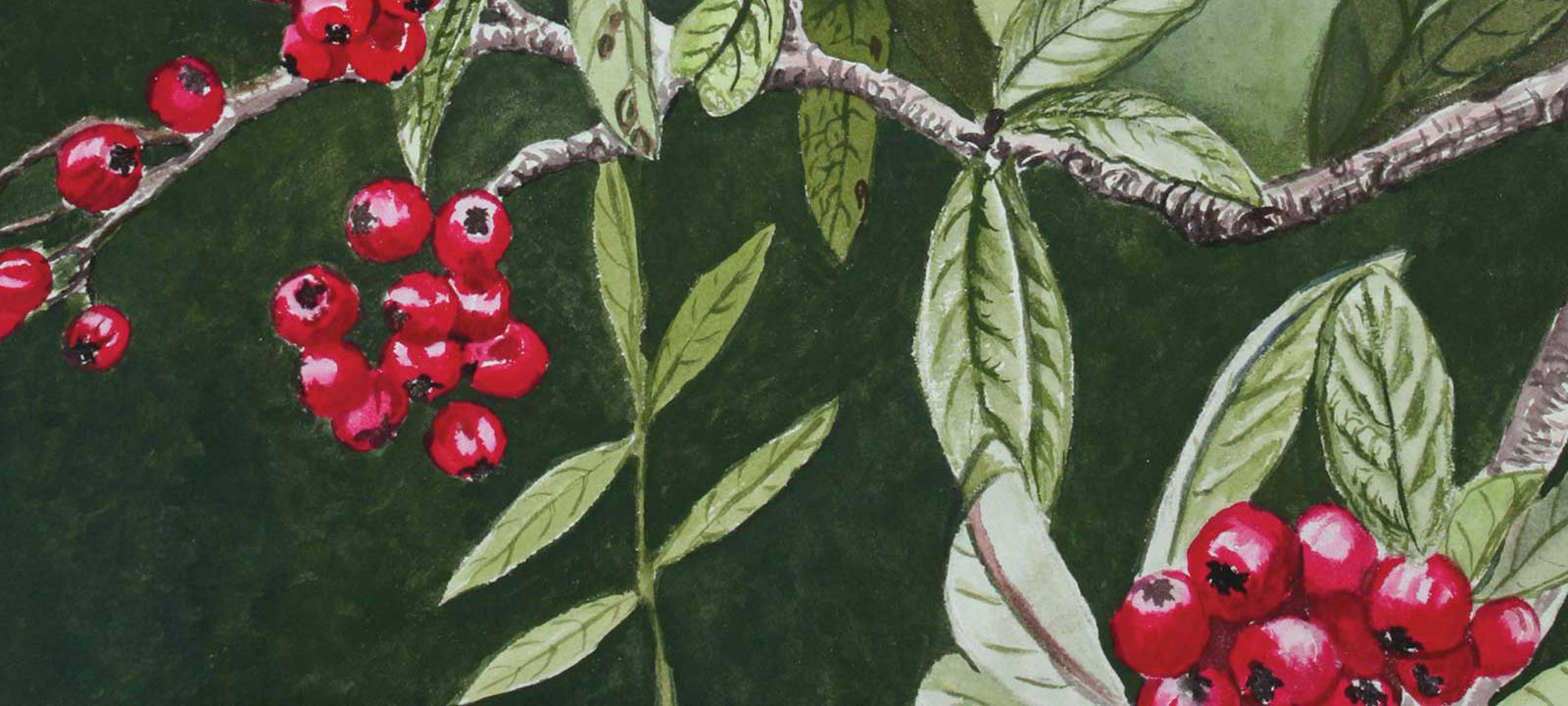
Stage 5 The Dark Background
For the dark area of the background, I used a number 5 brush and a mixture of ultramarine blue and olive green paint and carefully went around all of the leaves and berries, filling in the background with a dabbing effect, making some areas darker than others to give the effect of distant leaves.
 Stage 6
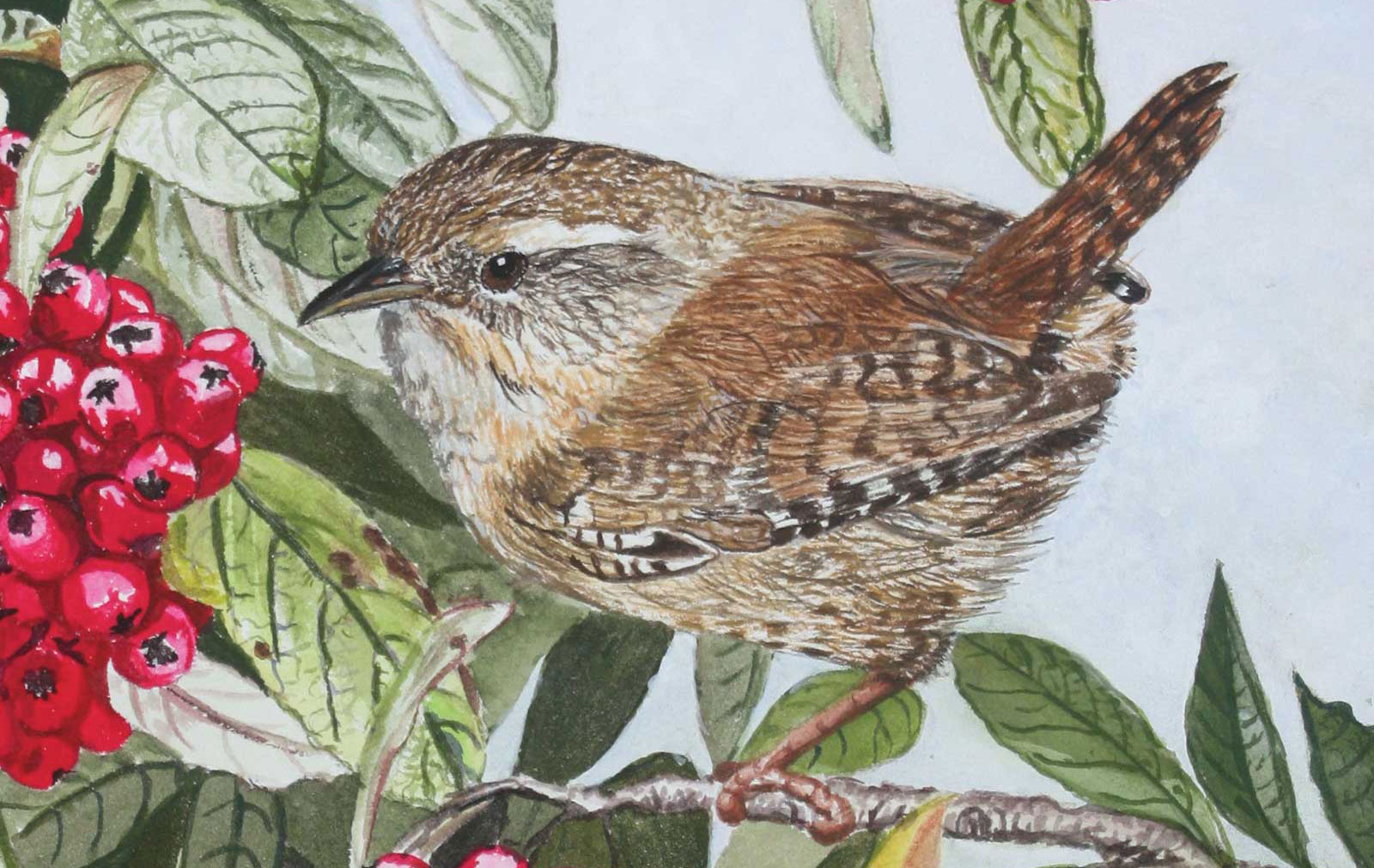
Stage 6 The Wren
Using a 2/0 brush, I started with the wren’s eye, then its beak, painting them both in full detail. Then I moved onto the head and body, for which I used a number 5 brush and applied a base color wash with shading. I then let it dry before I followed through the whole bird by painting in the fine details of all the feathers, using a 2/0 brush and painting in one tiny brushstroke at a time.
 Stage 7
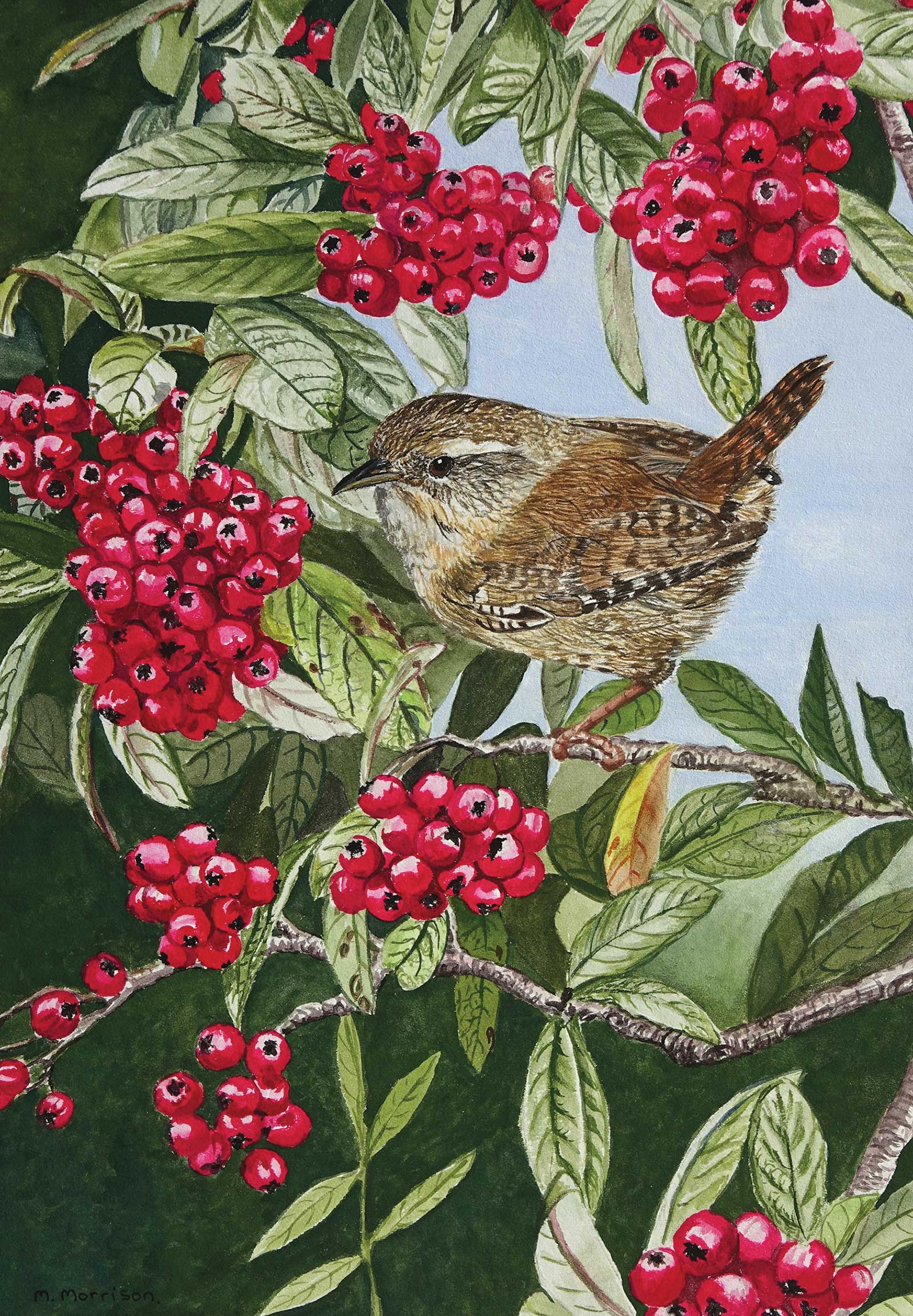
 Stage 7 Finished Artwork
Wren, gouache, 13½ x 10" (35 x 25 cm)
Next I painted in the blue sky around the remaining leaves and wren. After it had dried I went back to the wren and added any protruding feathers onto the background. Lastly, I looked at the completed painting and made any adjustments I felt were needed.—