At first glance, one of Italian artist Marco Grassi’s oil paintings might leave the viewer with an overwhelming sense of astonishment combined with a feeling of hesitation. His art unites an extreme hyperrealism with a touch of surrealism. Natural and lifelike human figures—full of emotional burden with the emptiness of inanimate materials, such as marble or pottery—provoke an uncomfortable feeling of ambiguity.
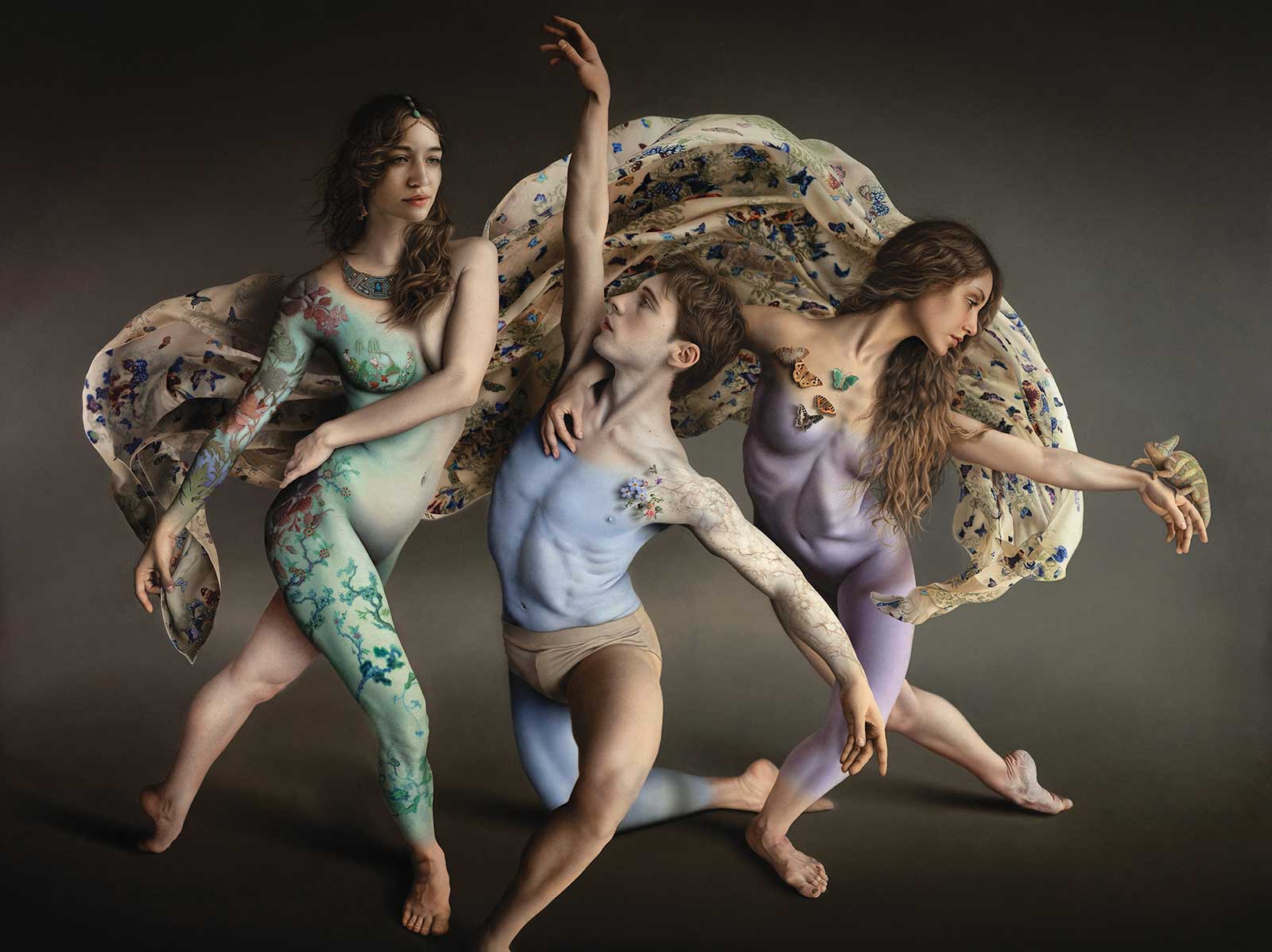
Paradox of Evolution, oil on canvas, 94½ x 126" (240 x 320 cm) This painting was created in over three years and depicts the bond between man and his surroundings, an allegory of our existence on this planet. In our weaknesses and imperfections we always found the possibility to evolve and get stronger, but eventually the balance between those two worlds has been compromised. Frantic pace of recent progress has put the whole system in danger, humanity included. And that’s the paradox. On the run of perpetual improvement, or what we consider so, we have forgotten that we are not metaphorically the center of the universe, but only a small fraction which needs to adapt to it and not vice versa.
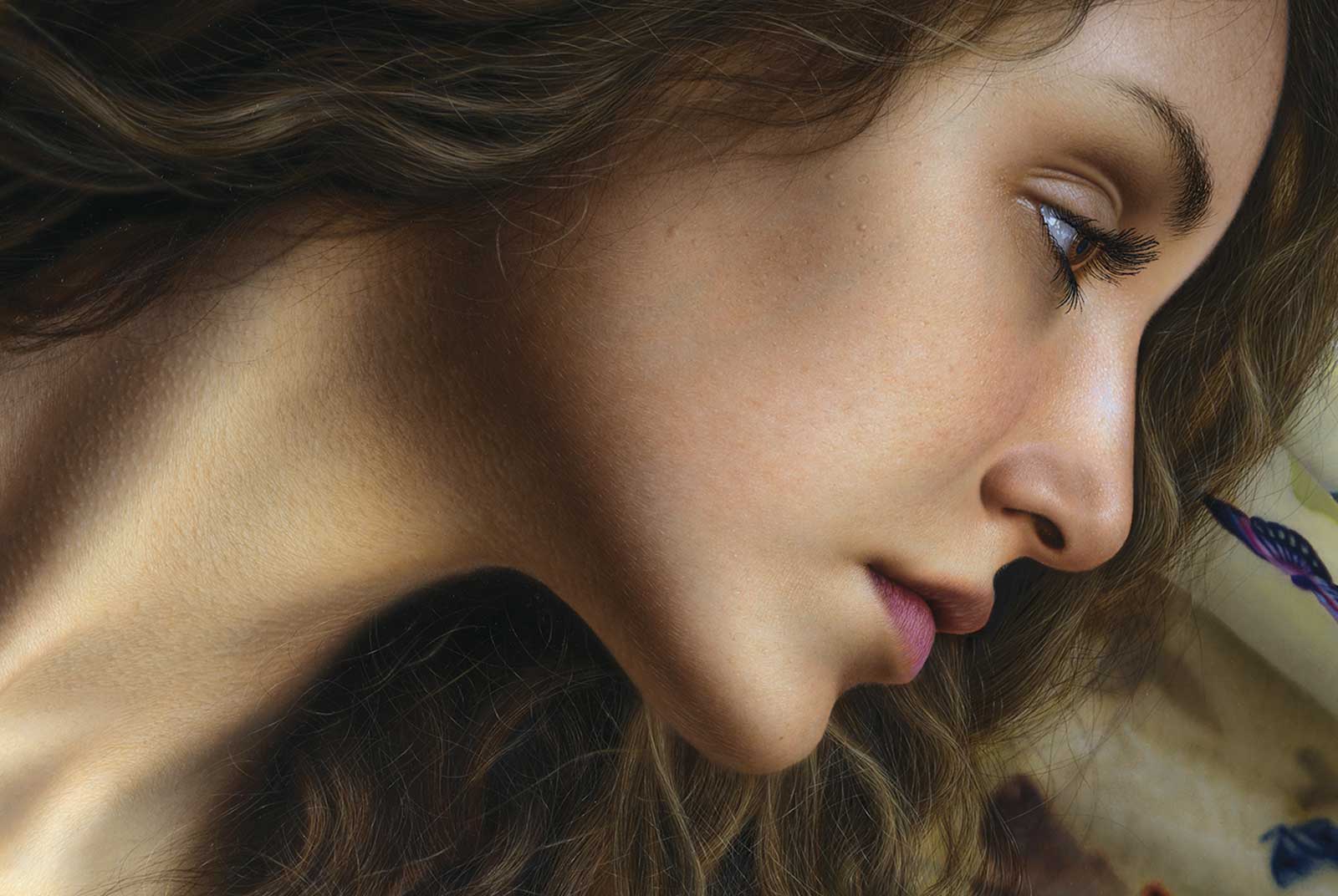
Paradox of Evolution, (detail), oil on canvas, 94½ x 126" (240 x 320 cm) This figure symbolizes nature, innocent and almost unaffected by cultivated refinements. This theme is accentuated by the inclusion of animal references: butterflies and a chameleon (seen in the full version of the painting). Both underline the metamorphosis and the cycles in nature. The chameleon transforms by changing color to camouflage in a new environment, while the butterfly assumes several divergent shapes during its life cycle. There is, nevertheless, one artificial butterfly, painted as a piece of jewelry, that shows human contamination into the pure animal world.
Grassi’s paintings have the power to constrain the viewer to reflect upon human nature, full of contradictory and antithetical elements. In fact, the characters seem almost alive, with their natural skin tones and texture, a twinkle in their eyes and delicate poses, yet their bodies are transfiguring into cold and inanimate alter egos, without any spirit nor personal expressions, unavoidably transformed into a shell, beautiful on the outside but empty on the inside. This ongoing metamorphosis can as well reflect the strange relationship between humans and their surroundings, the animal kingdom. It becomes an allegory of our existence and of our role on this planet, since, as hard to acknowledge as it may be, we are part of nature, not above it.
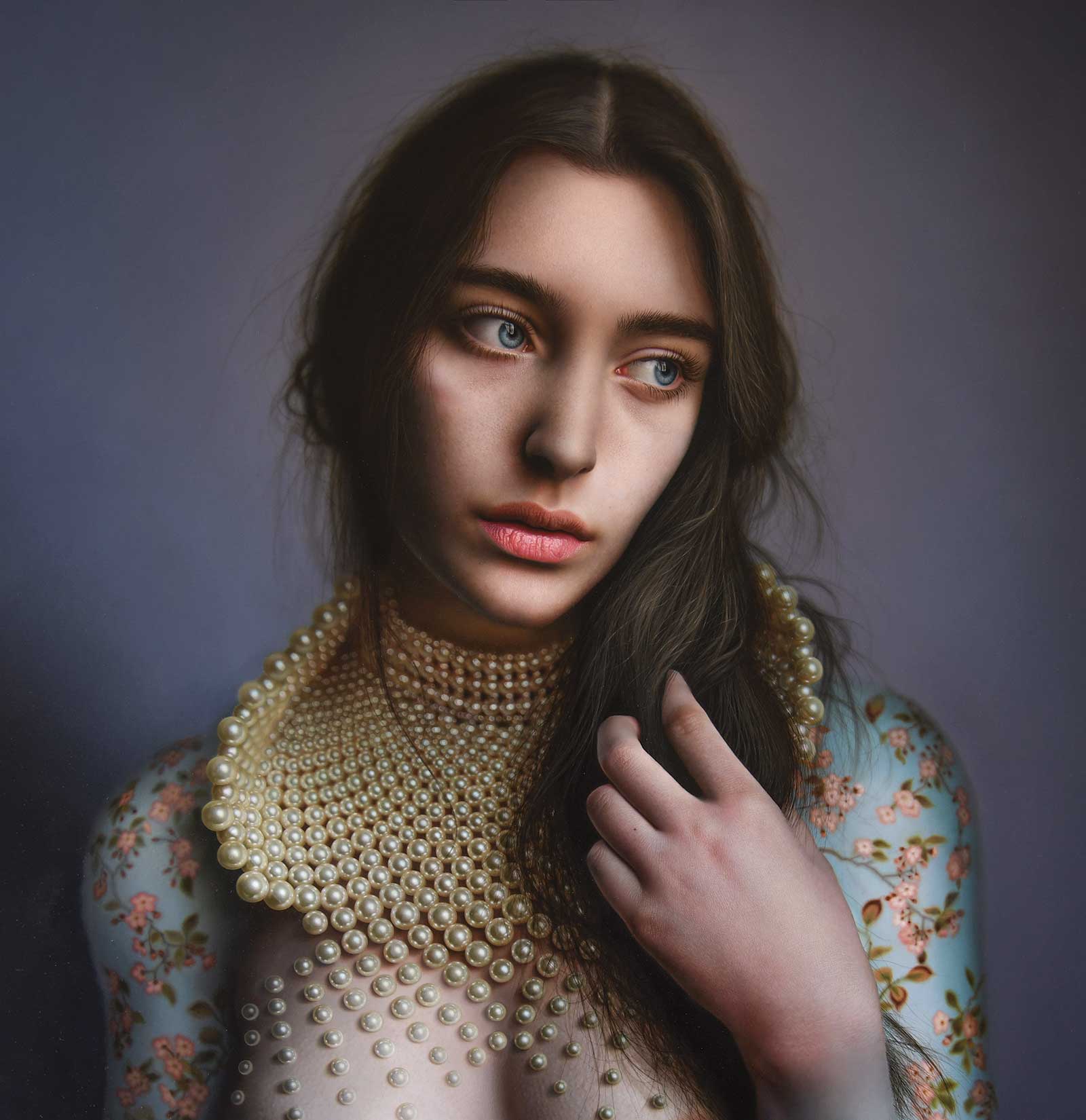
Mother of Pearl, (detail), oil on canvas, 35½ x 47" (90 x 100 cm) This painting was born as a missing link to the “Paradox of Evolution” and symbolizes nature’s resilience. The Mother of Pearl recalls different meanings under the delicate silhouette of a young woman. Pearls should be considered a natural element, but in this case, as they are cultured commercially and turned into jewelry, they represent human artifacts and the arrogance with which we take over the planet. However, the pearls are evolving to their original state, sinking into the woman’s body, Mother Nature, who slowly embodies them from the artificial necklace through an act of resilience.
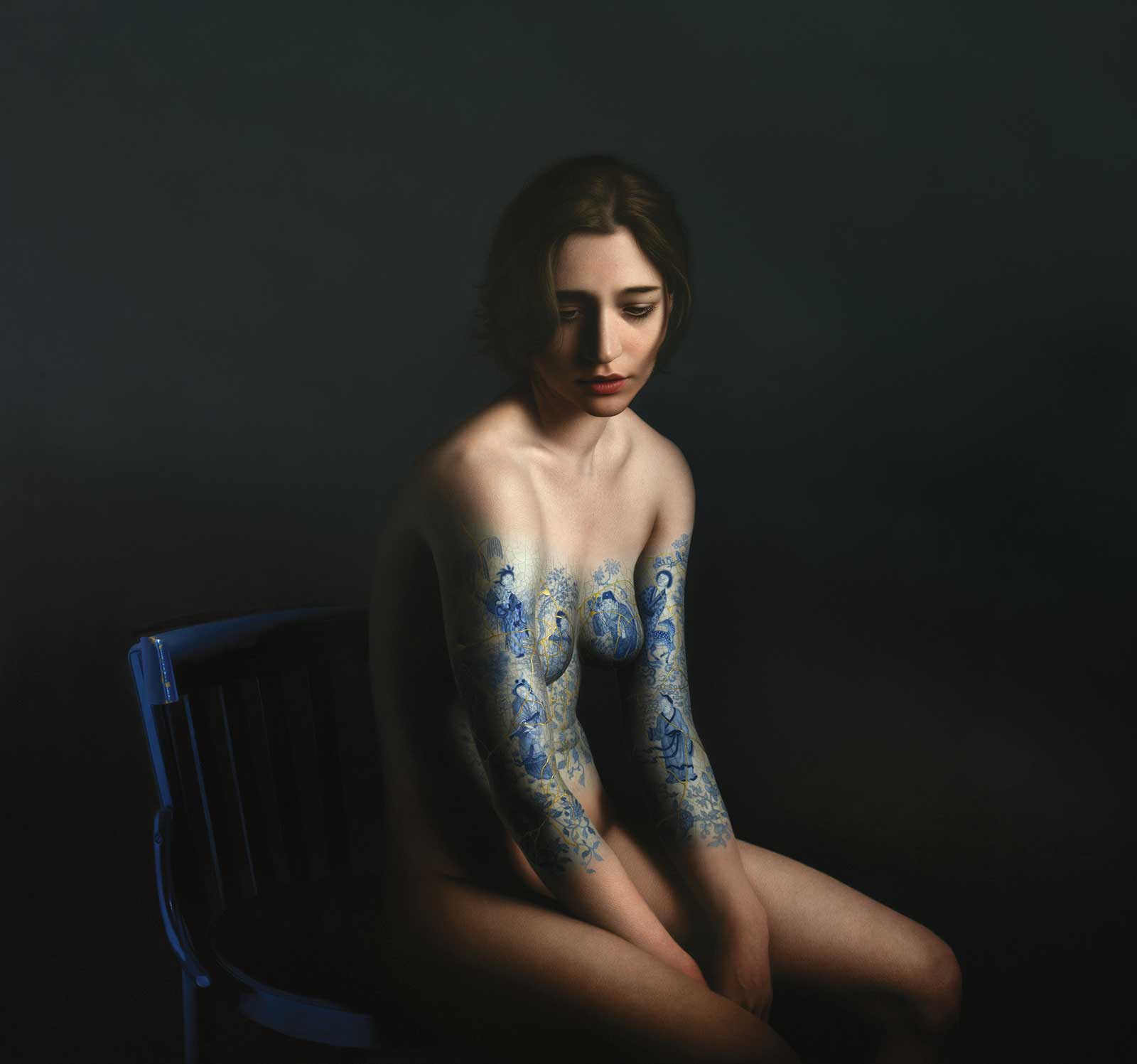
The Secret Room, oil on canvas, 71 x 71" (180 x 180 cm) In this particular case the pottery that constitutes a substantial part of the body has been broken into plenty of pieces. The character represents a sensitive human being who is hiding from all the evil of the world in her inner “Secret Room.” In this case, resilience is represented by “kintsugi,” the Japanese art of repairing pottery with gold, giving value to the broken pieces. The characters depicted on the pottery show people endowed with gentle and kind gestures.
The whole painting process contains hundreds of steps, from the specific preparation of the canvas to the very last details, which are probably one of the most recognizable elements of Grassi’s artwork. But there is something else that characterizes his paintings, easier to overlook. That is the so-called “sfumato,” a technique mastered in the Renaissance by Italian painters and applied in a new way in the 21st century with soft transitions of color between light and dark tones. This technique is carried out through a long series of semi-transparent layers of color which enable the painter to achieve delicate and natural transitions of shades. Maybe it is the extreme realism that causes the audience to immediately stop and enchain their attention to the painting, nevertheless, defining Grassi’s art only as hyperrealistic would definitely be reductive. —
About the Artist
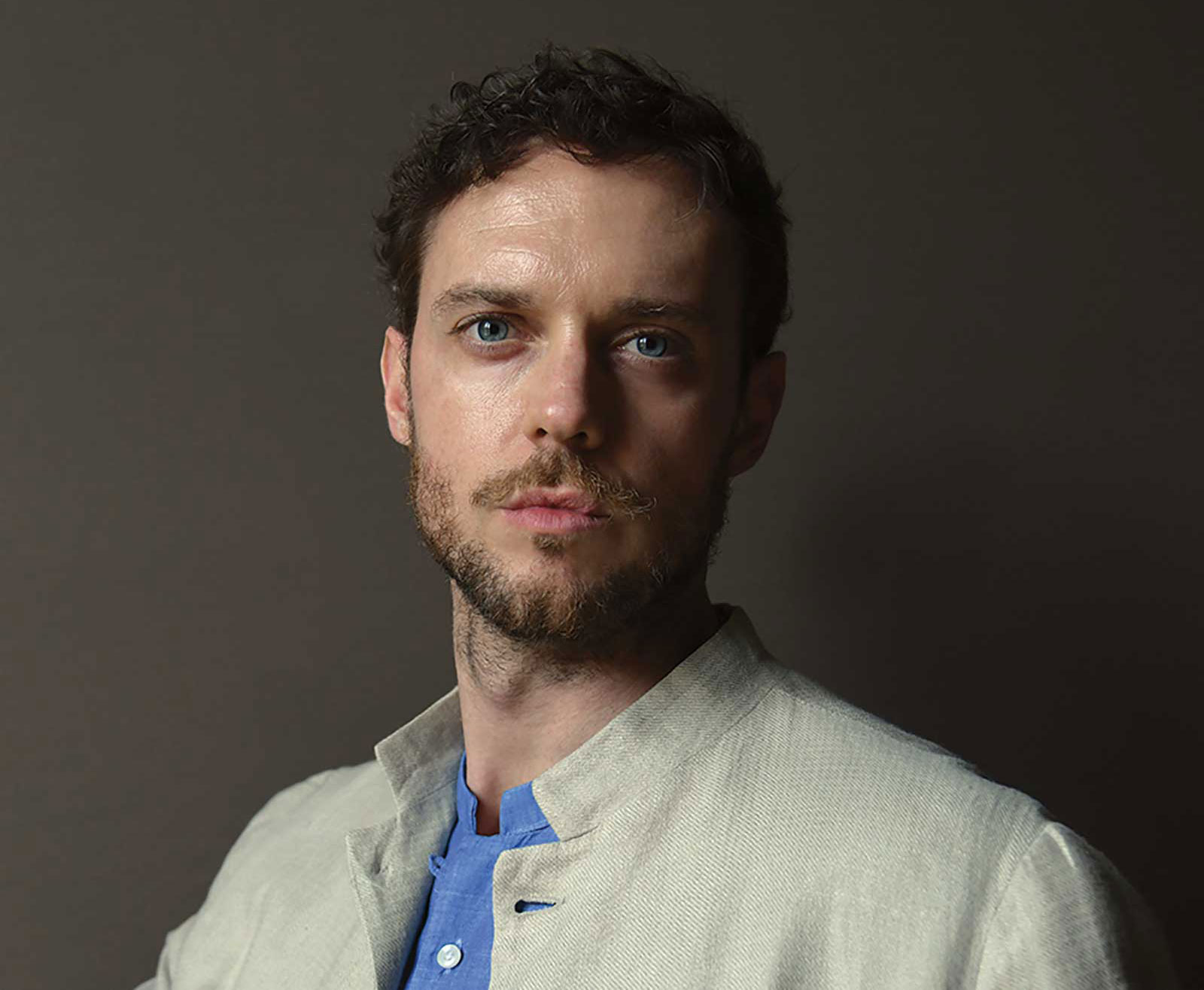 Marco GrassiMarco Grassi was born in 1987, and lives and works in Reggio Emilia, Italy. He has been surrounded by art from his early childhood and grew up among the paintings and Chinese pottery gathered through the years by his grandfather, a small collector from Northern Italy. Despite the strong fascination with fine arts, he decided to follow his passion and turn it into a career during his university studies. As he was attending his restoration course in Bologna, he decided to change his path. His paintings are now in private collections all over the world.
Contact at
marcograssipainter@gmail.comwww.marcograssipainter.com