I paint landscapes because everywhere I go, views of this world astonish me. By painting them, I expand on that astonishing experience and can also share it with others. I do not copy what I see, but focus on creating a parallel experience on canvas. A strong painting has internal coherence, and formal matters—the intricacies of color interactions, for instance—take precedence over representation for me. My studio, equipped with a large palette, consistent light and tons of paints, brushes and easels, is best for this work.
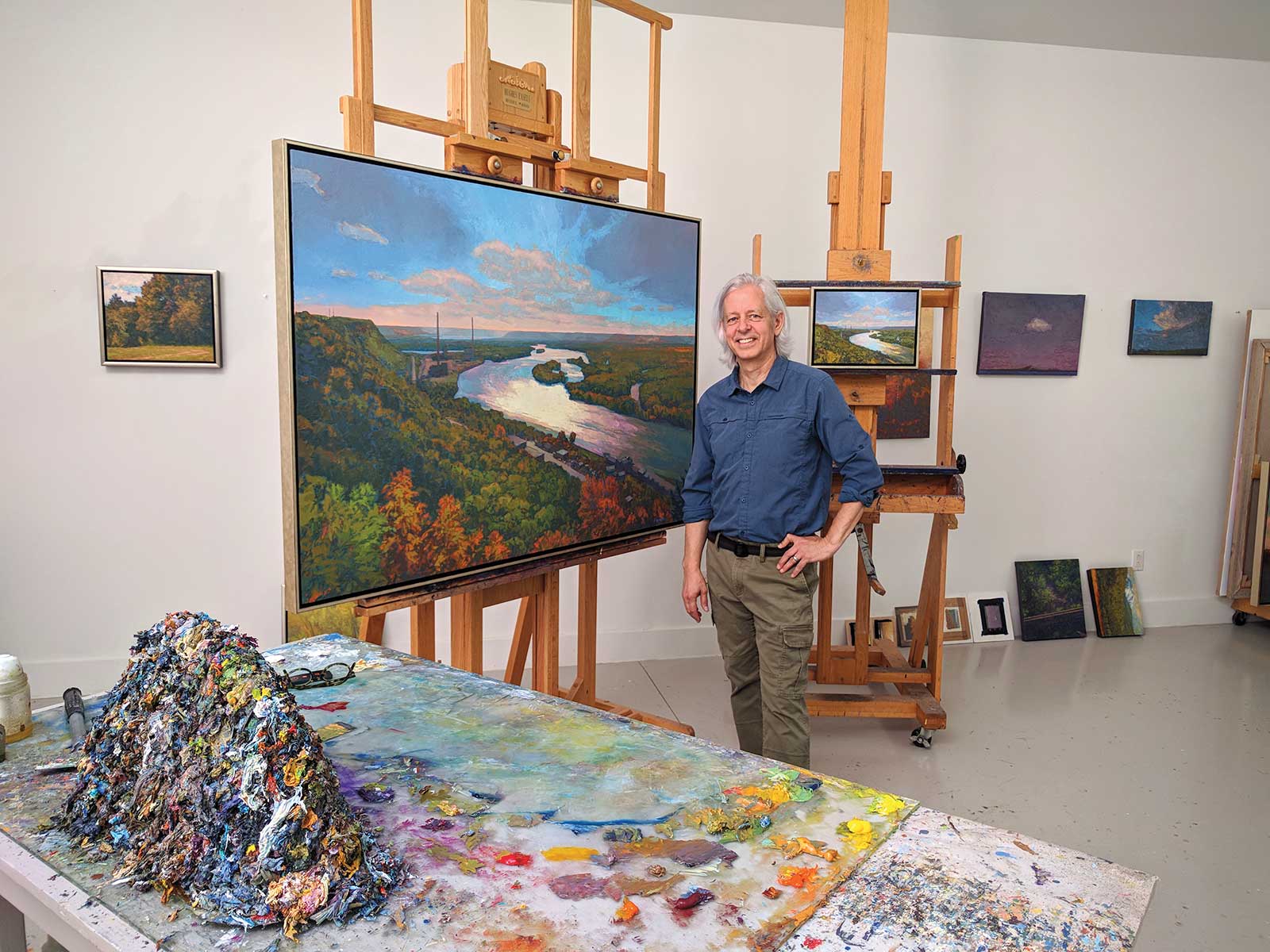 Thomas Paquette in his studioOn site, gouache paints and camera come into play first. While photos save details that may be useful later, my tiny gouache paintings clarify my interest. These little paintings, as the hundred of them in my book, Gouaches, attest, are not just studies or simply means to an end. They are often finished in my studio sometimes months or even years later, far from the landscapes that inspired them. For me, that absence intensifies memory.
Exploring possibilities and variations, I sometimes paint a few gouaches based on the same composition. And, because gouache and oil paints are so different in execution and mixing characteristics, I also make small oil studies before going large. No matter the amount of preparation, however, the key principle when facing each new blank surface is to allow something fresh to happen, something that parallels the original astonishment of that particular place. Any plan or expectation might be buried by new paint in pursuit of the truest expression.
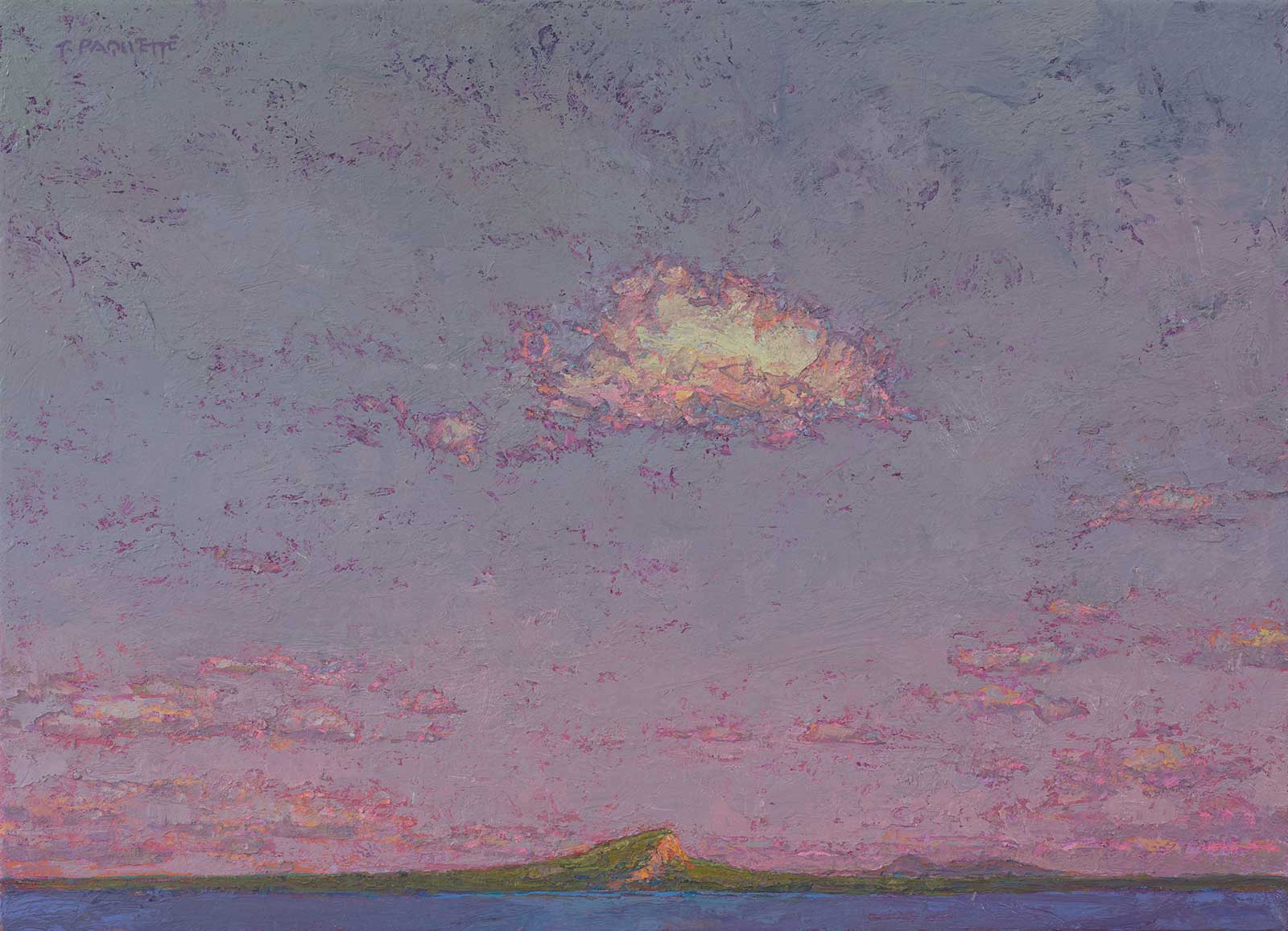
Mt. Kineo from Rockwood, IV, oil on linen, 16 x 22" (41 x 56 cm) This painting and others (see lower right) show how I move through ideas and between media. Before any of these studies were made, I had completed the larger canvas of Mt. Kineo to a point where it most resembled the small gouache on the left. Years later, I reworked some ideas in gouache and oil in order to convey more poignancy, changing the size and shape of elements, and gave the painting several more layers of paint, using a different spectrum of light. This iteration is Mt. Kineo from Rockwood, IV.
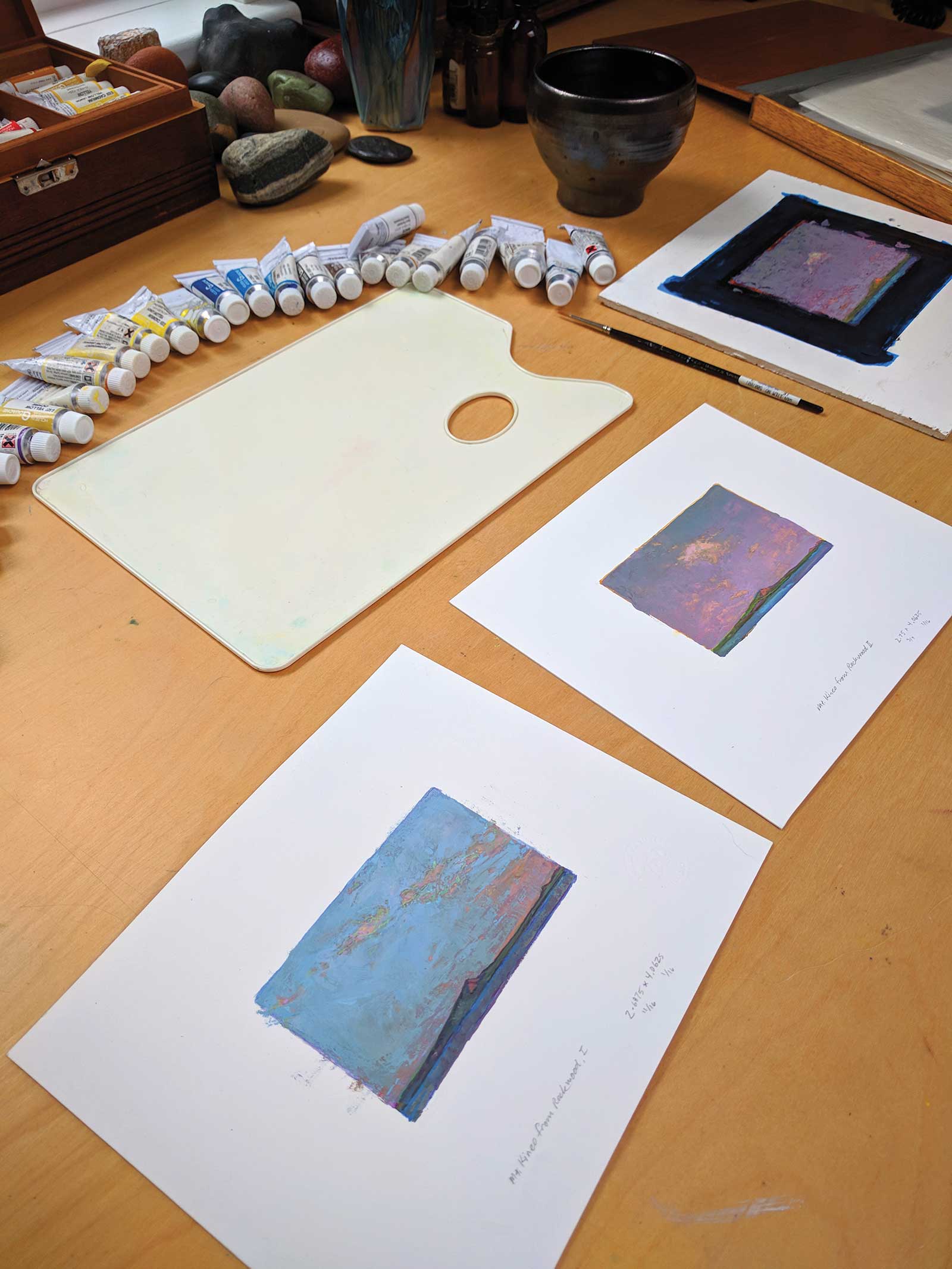
Left to right: Mt. Kineo from Rockwood, I, gouache on Bristol board, 2¾ x 4" (7 x 10 cm); Mt. Kineo from Rockwood, II, gouache on Bristol board, 2¾ x 4" (7 x 10 cm); Mt. Kineo from Rockwood, III, oil on linen, 3 x 4" (7½ x 10 cm)
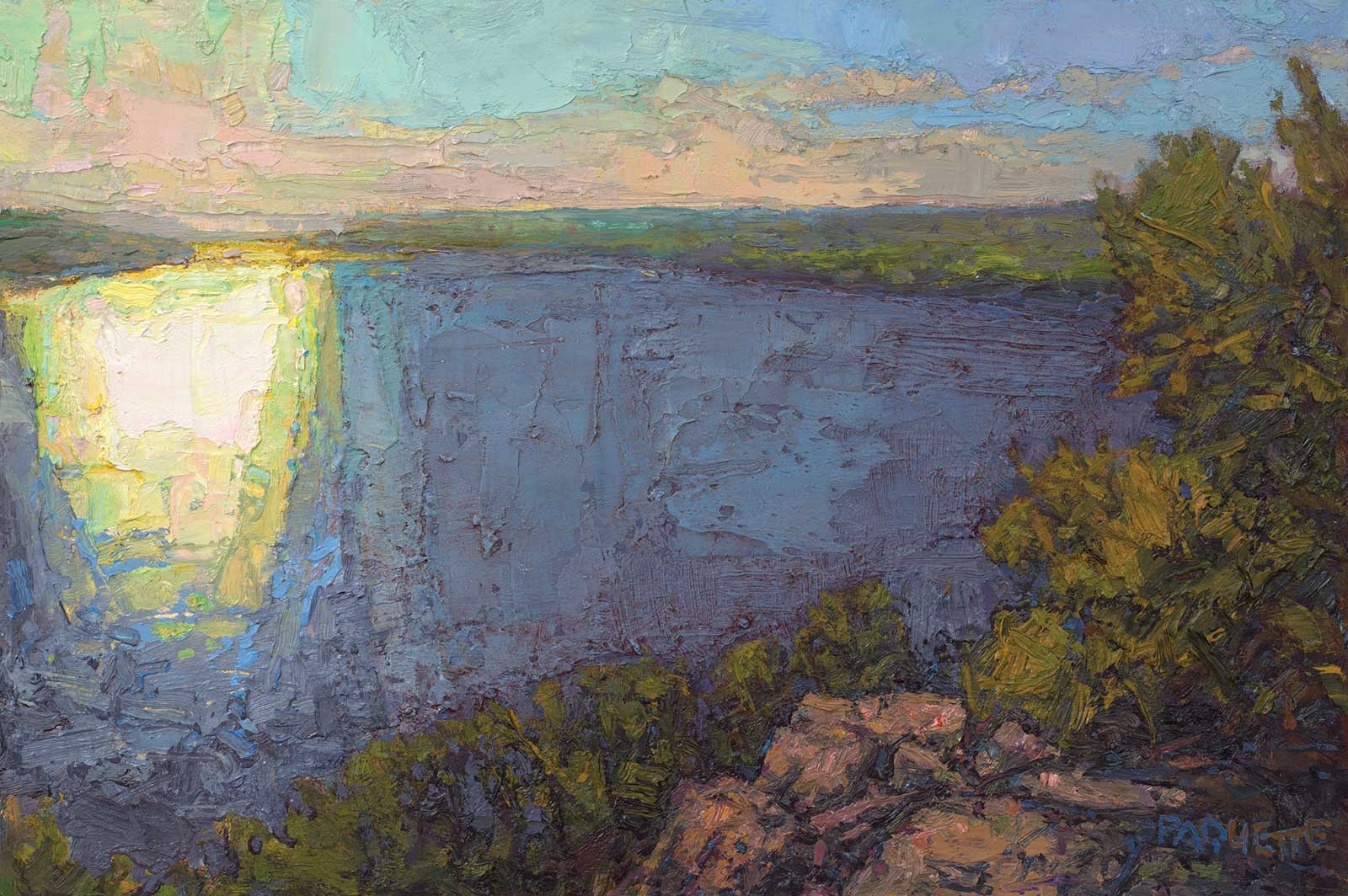
Border Aerie Study, oil on oil paper mounted on wood panel, 6¾ x 10" (17 x 26 cm)
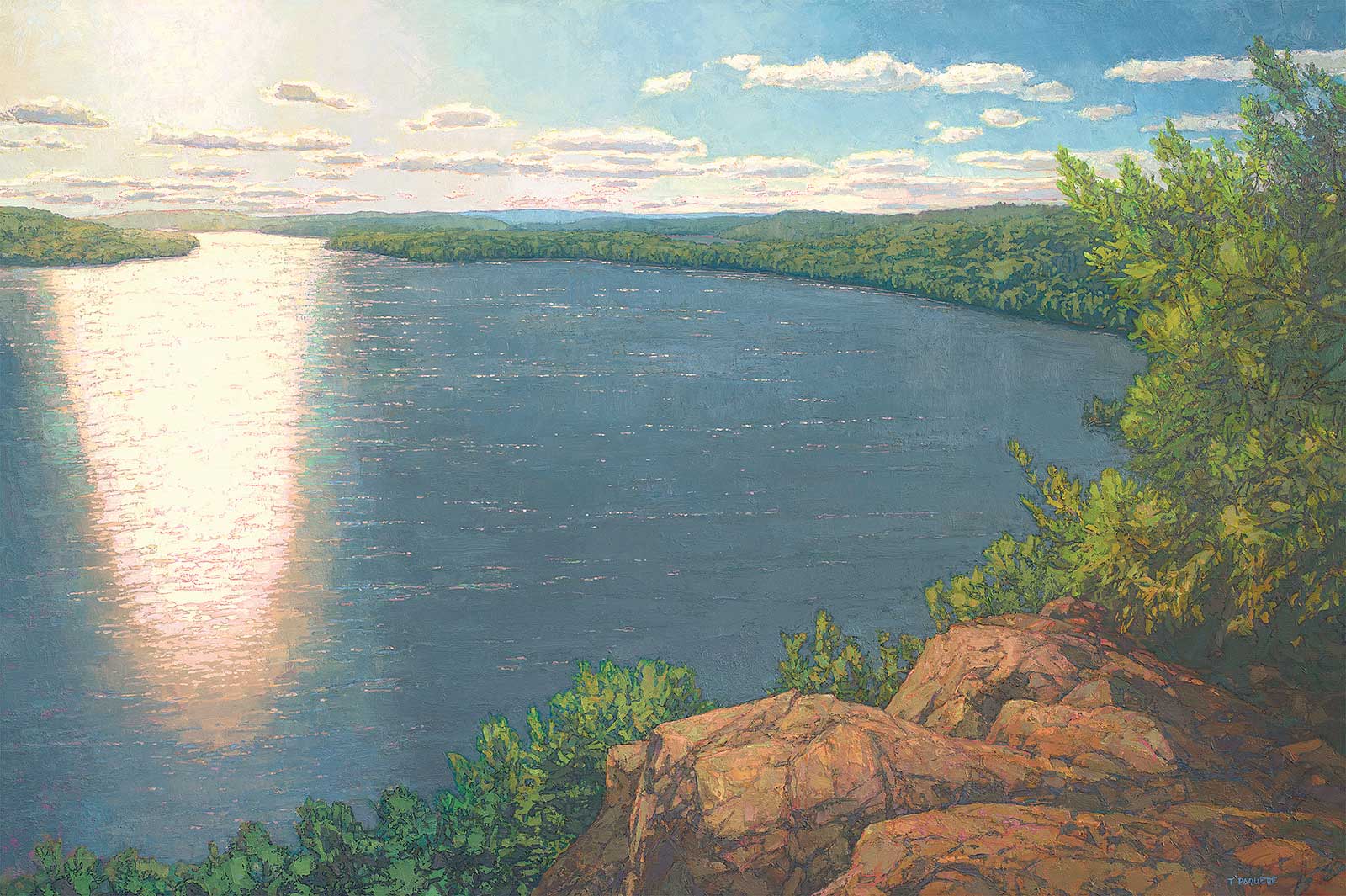
Border Aerie, oil on linen, 40 x 60" (102 x 152 cm) I traveled many thousands of miles to paint wilderness areas for one of my traveling exhibitions. Border Aerie shows a high vantage point in the Boundary Waters Canoe Wilderness Area. The larger painting traveled to several museums for a show, but I kept working on the study, looking to intensify the reflected sunlight. Those reworkings suggested some changes I then made to the large version a couple years later when it returned from touring. Whenever they are in my studio, no canvas is immune from such scrutiny and possible revision.
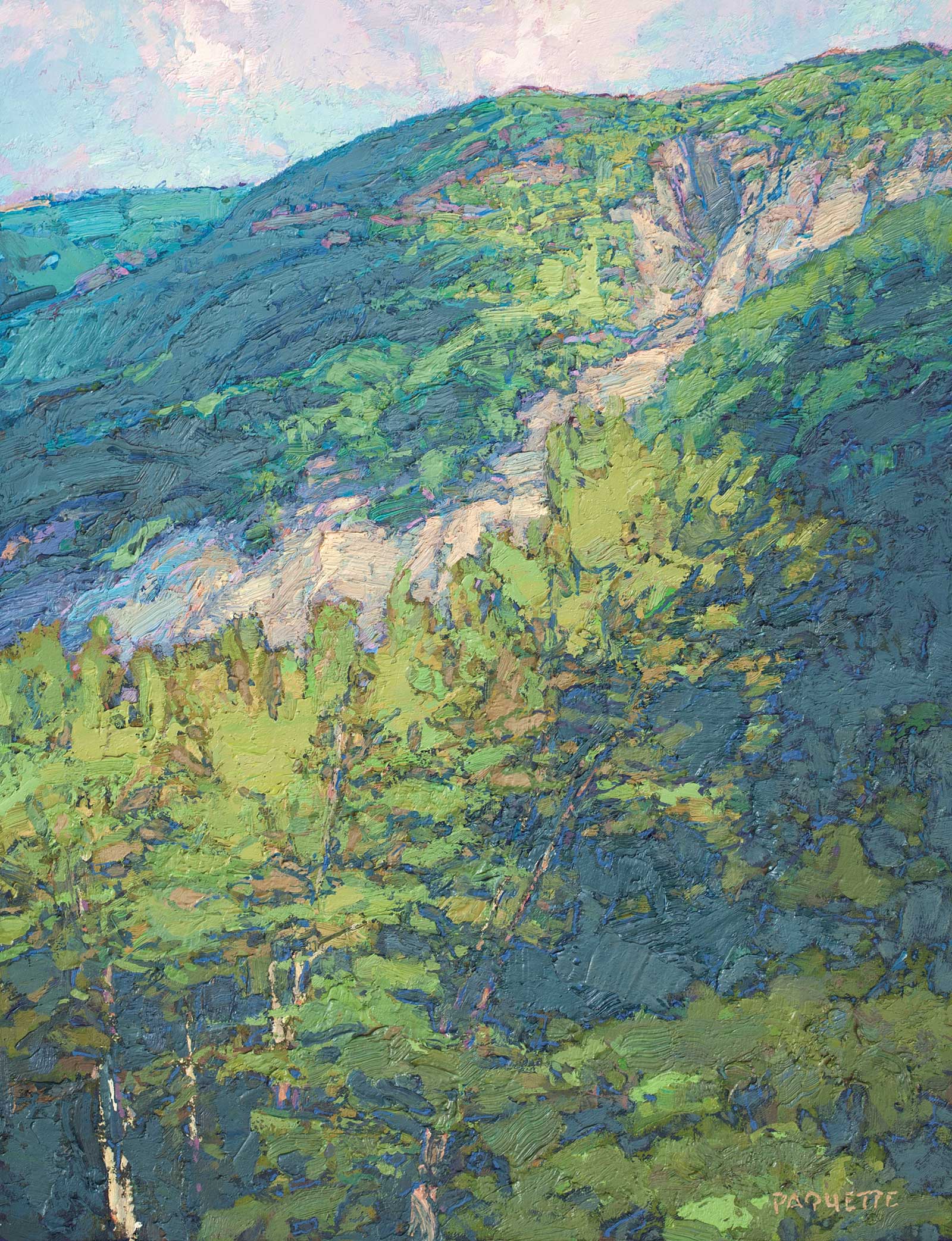
Cleft (study), oil on oil paper mounted on birch ply panel, 14½ x 11" (37 x 28 cm)
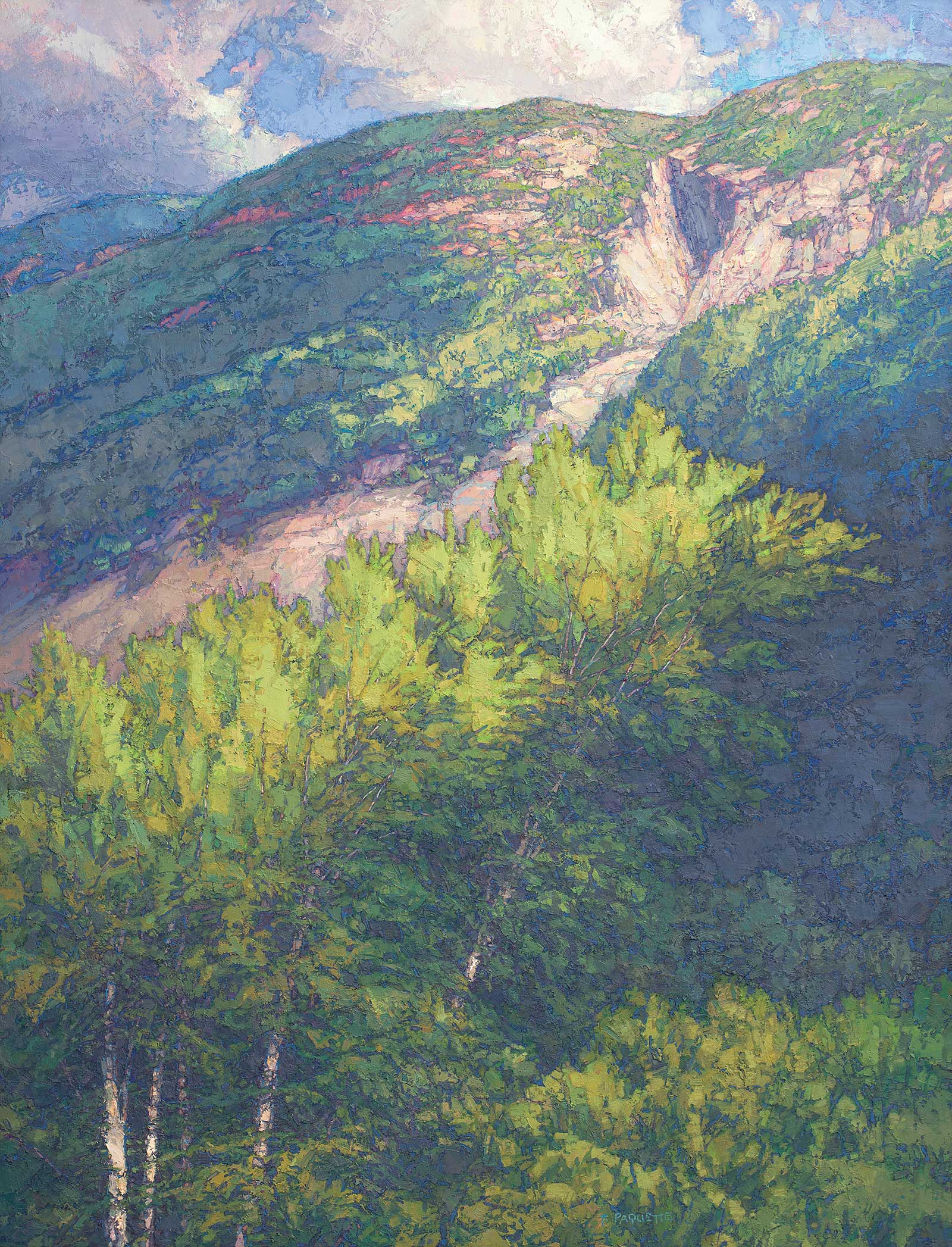
Cleft, oil on linen, 60 x 46" (152 x 117 cm) Inspired by the verticality of the White Mountains, Cleft and its study were conceived to reflect movement in the land as well as the sky and foreground birches. I wanted the paintings to have the monumental presence of those bold mountains. The surfaces on both are thick with paint, using a wide variety of brushes and palette knives.
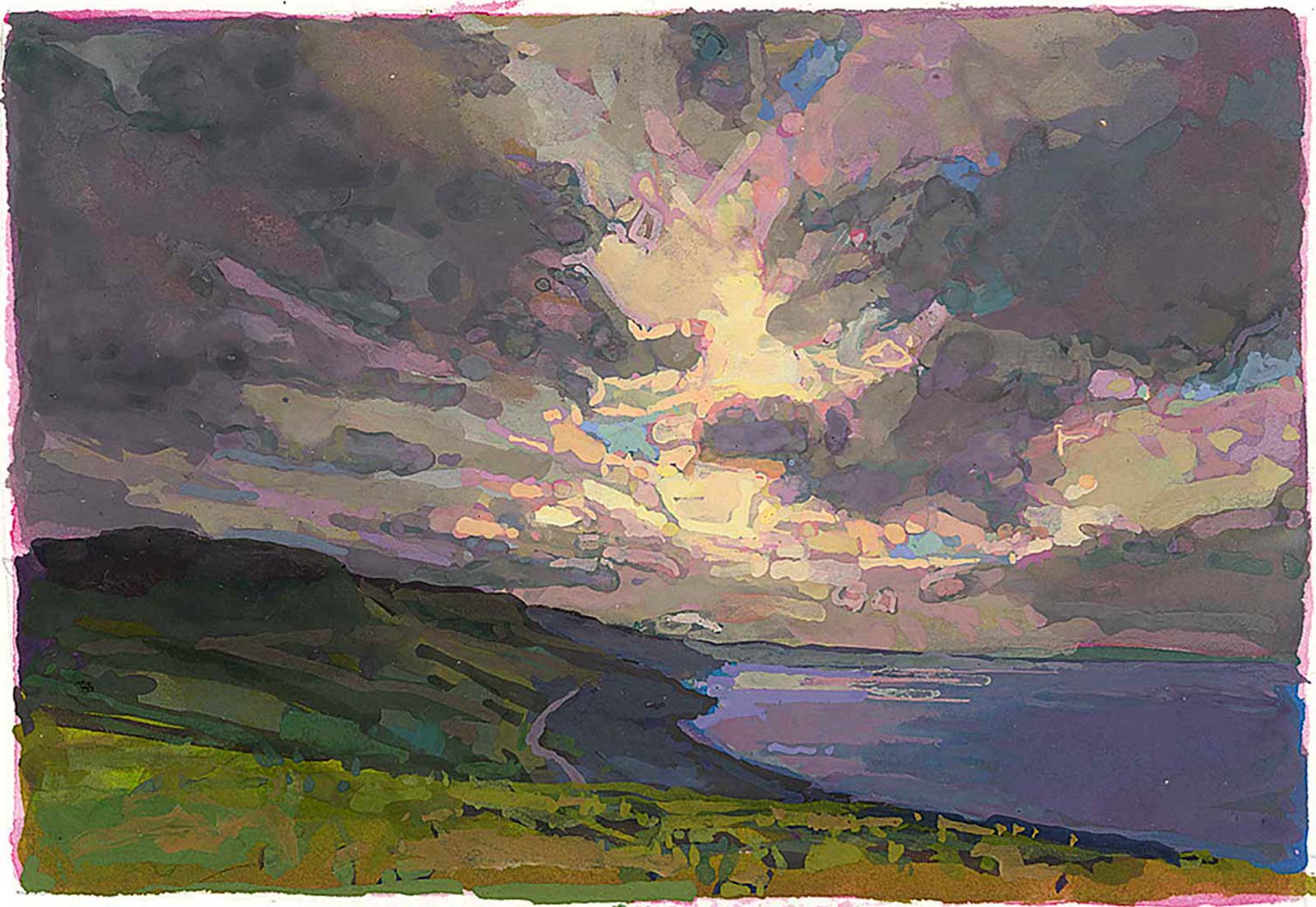
Top of the Peninsula, Skye, I, gouache on Bristol board, 2½ x 3½" (6 x 7½ cm)
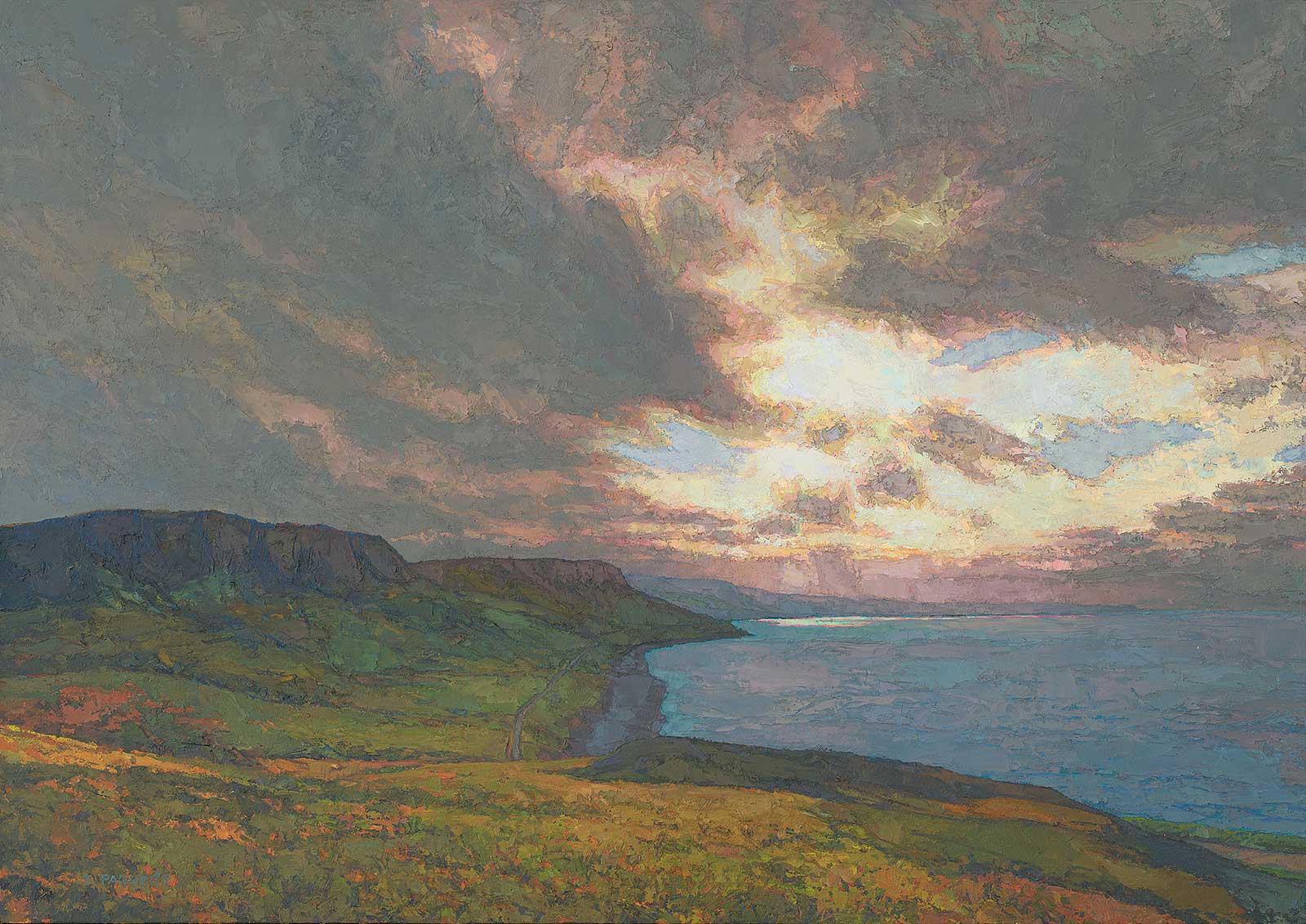
Top of the Peninsula, Skye, oil on linen, 38 x 54" (97 x 137 cm) This larger painting was a long time coming, though it was probably on my easel for only a month. I took photos years ago of this spot on the Isle of Skye in Scotland, but it wasn’t until after recently revisiting the country that I was determined to paint the place. I relied on gouache studies to guide the large oil but did not try to match those small paintings, and the colors gathered more intensity, reflecting something essential about my experience of that place.
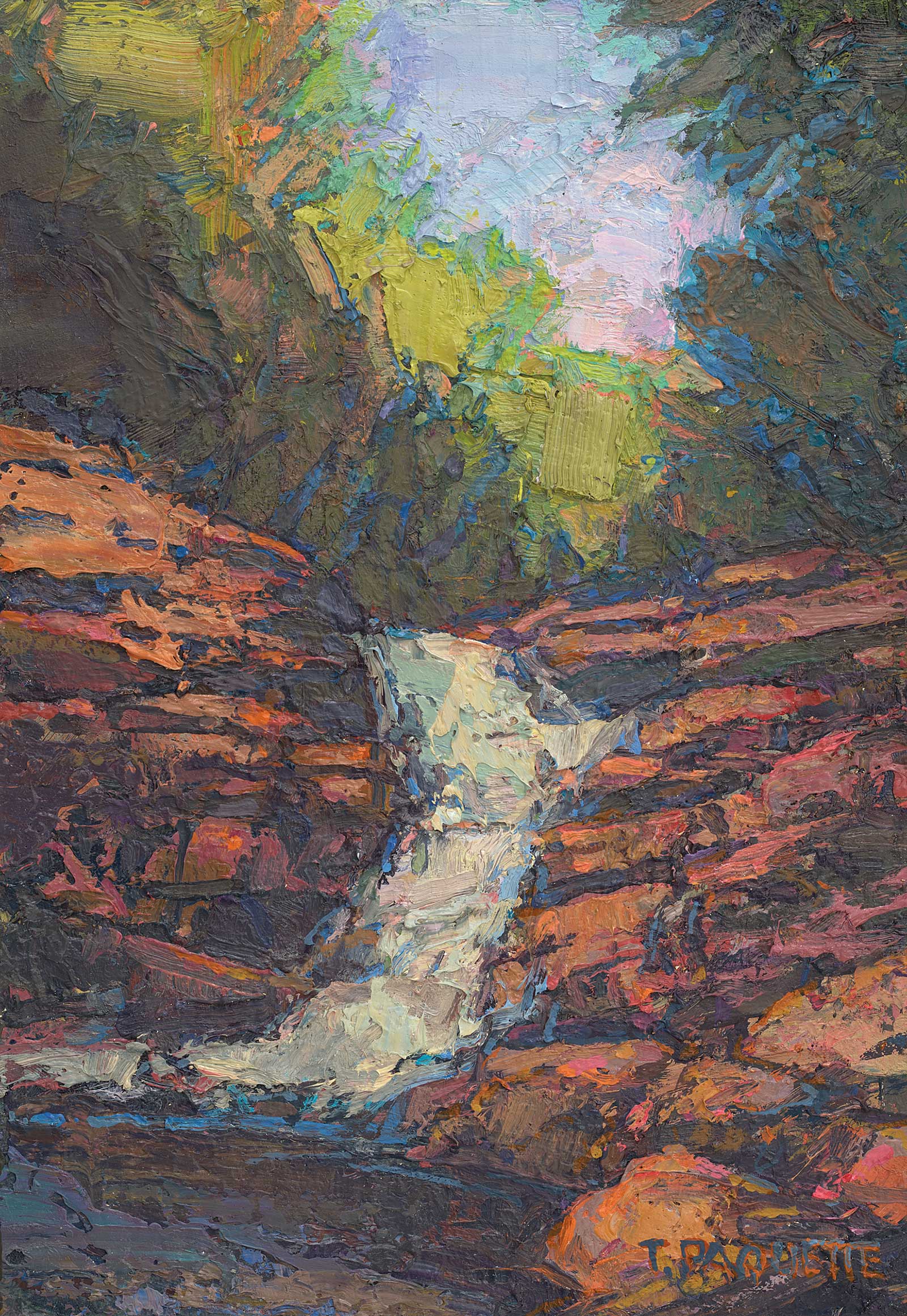
Forbidden Falls, oil on oil paper mounted on birch ply panel, 8½ x 5¾" (22 x 15 cm)
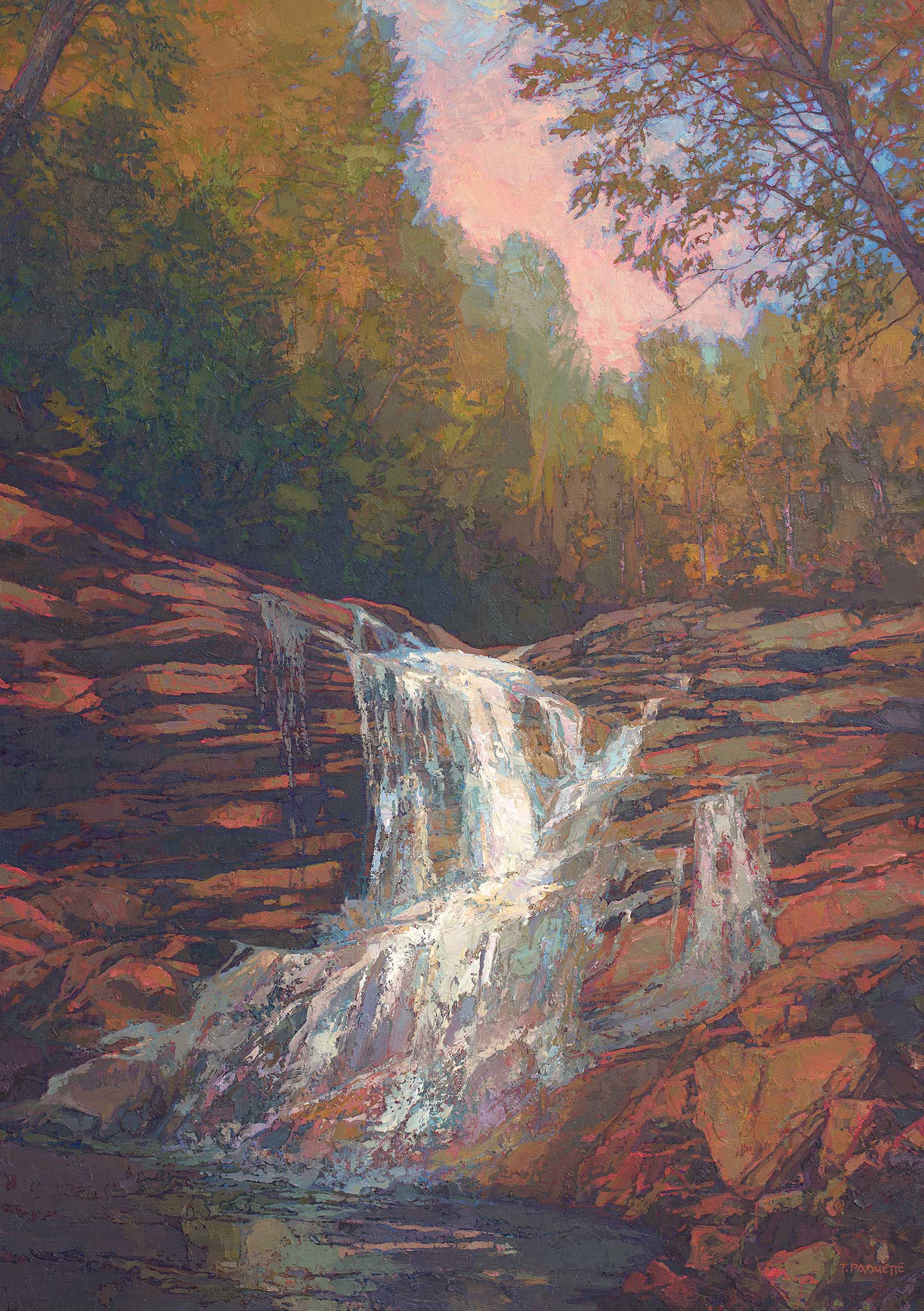
Glen Onoko Falls, oil on linen, 54 x 38" (137 x 97 cm) I was particularly drawn to paint Glen Onoko waterfall in eastern Pennsylvania. It had a reputation for defeating a lot of hikers who either perished or needed to be evacuated. When I was finishing the large painting, I found out that the area had been permanently closed to visitors only a week after I visited—hence the title of the smaller work, Forbidden Falls. Both of these paintings, like virtually all of my works, were repainted several times to get the color and textures calibrated how I wanted them.