In my last chairman’s letter, I wrote about some of the challenges that face an artist painting portraits on commission along with a number of considerations that can be made to help make the process a successful one. Everett Raymond Kinstler was once quoted as saying that anyone entering the profession needs to have the “thick hide of a rhinoceros and a good set of bowels.” He’s not far off! Here are a few more suggestions that may be helpful as you pursue your love of painting people.
Two’s company, three’s a crowd. I have always encouraged a sitter to bring someone with them to see their portrait. A spouse, a loved one, a friend or a coworker can help so much during the unveiling process. None of us really see ourselves the way others see us. Of course, you can have too many cooks in the kitchen. Some of my most challenging commissions have been those with a committee in charge. Sometimes a committee can also arrive in the form of extended family. Try to discourage too large of a group coming to your studio for these progress checks. I have in my commission agreement a place to list the people who will approve the final work.
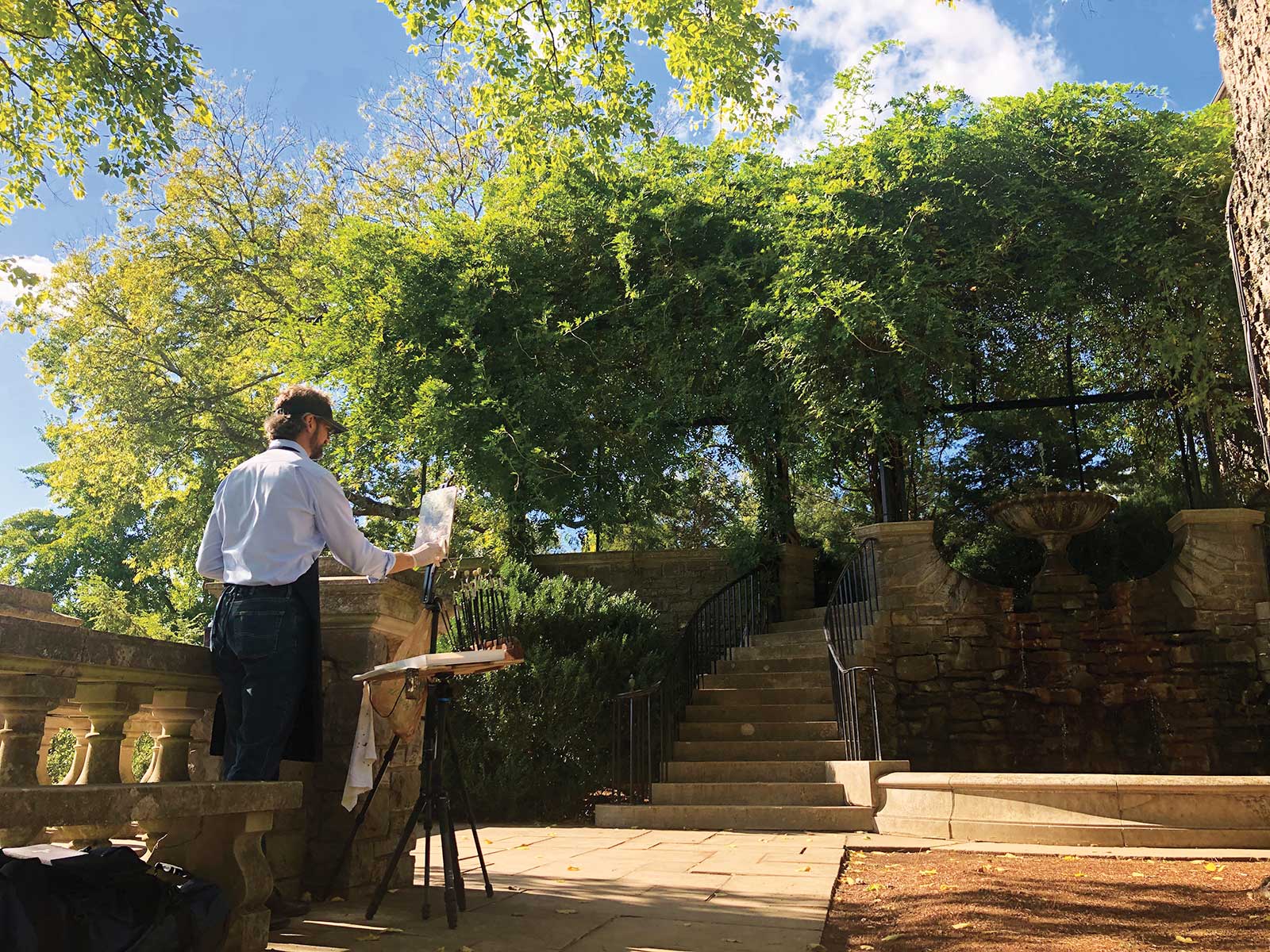
Joseph Daily, whenever possible, takes time to paint landscapes out of doors. It also helps manage the stress that can come with commissioned projects and provide variety on your easel.
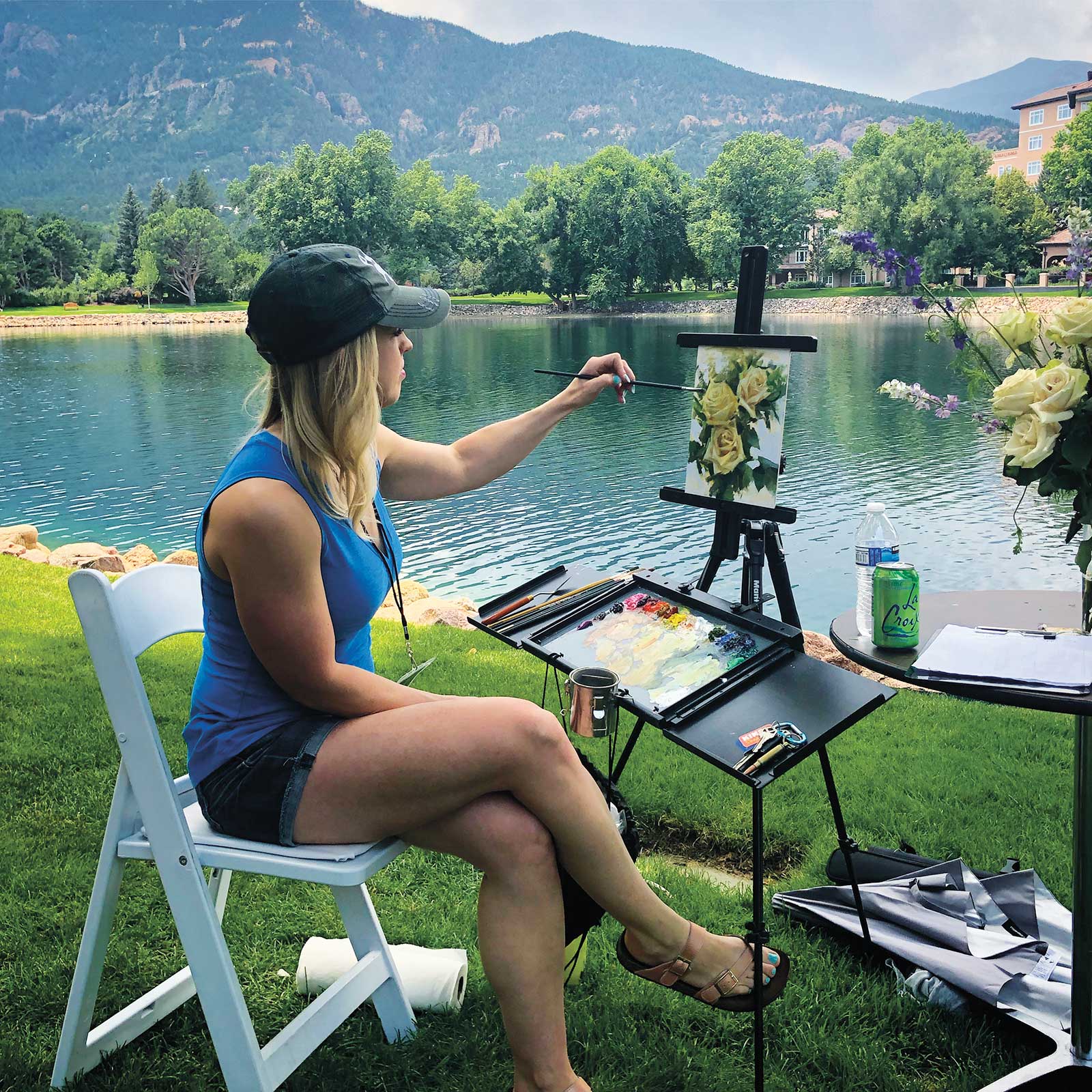
Anna Rose Bain carves out time for non-commissioned work, which can recharge your batteries and prepare you for interesting ideas to include in your next portrait commission.
You’ve reached an impasse. Most commissions are successful when both you and the clients are pleased with the results, but on rare occasions, you may find you have reached an impasse. You have tried to listen carefully, made adjustments, gotten feedback from others and pored over your reference and studies, holding long sessions working from life, only to find your client is still not satisfied. What do you do? I have reached this moment with a handful of clients over the years. The way I chose to address it was to make a new start, and I have never regretted it. It’s a delicate conversation, but if you express to your client in a humble and sincere manner that you feel you can please them if you could only make a fresh start, give it a try. Of course, you may have stumbled on the client that we all hope not to encounter. If that is the case, admit that you have tried your very best, and let the chips fall where they may. If you have done your best, you can’t ask for more.
Your artistic growth. Since my college days, my teachers have universally stressed one important factor when it comes to becoming a better portrait painter: be an artist first, not just a portrait artist. Learning what it takes to be a better artist prepares you for all subjects including the rigor of commissioned portrait work. John Singer Sargent wrote in a letter to an art student in 1901, “You say you are studying to become a portrait painter, and I think you’d be making a great mistake if you kept that only in view during the time you intend to work in a life class, for the object of the student should be to acquire sufficient command over his materials and do whatever nature presents him. The conventionalities of portrait painting are only tolerable in one who is a good painter. If he is only a good portrait painter, he is nobody. Try to become a painter first and then apply your knowledge to a special branch. But do not begin by learning what is required for a special branch or you will become a mannerist.”
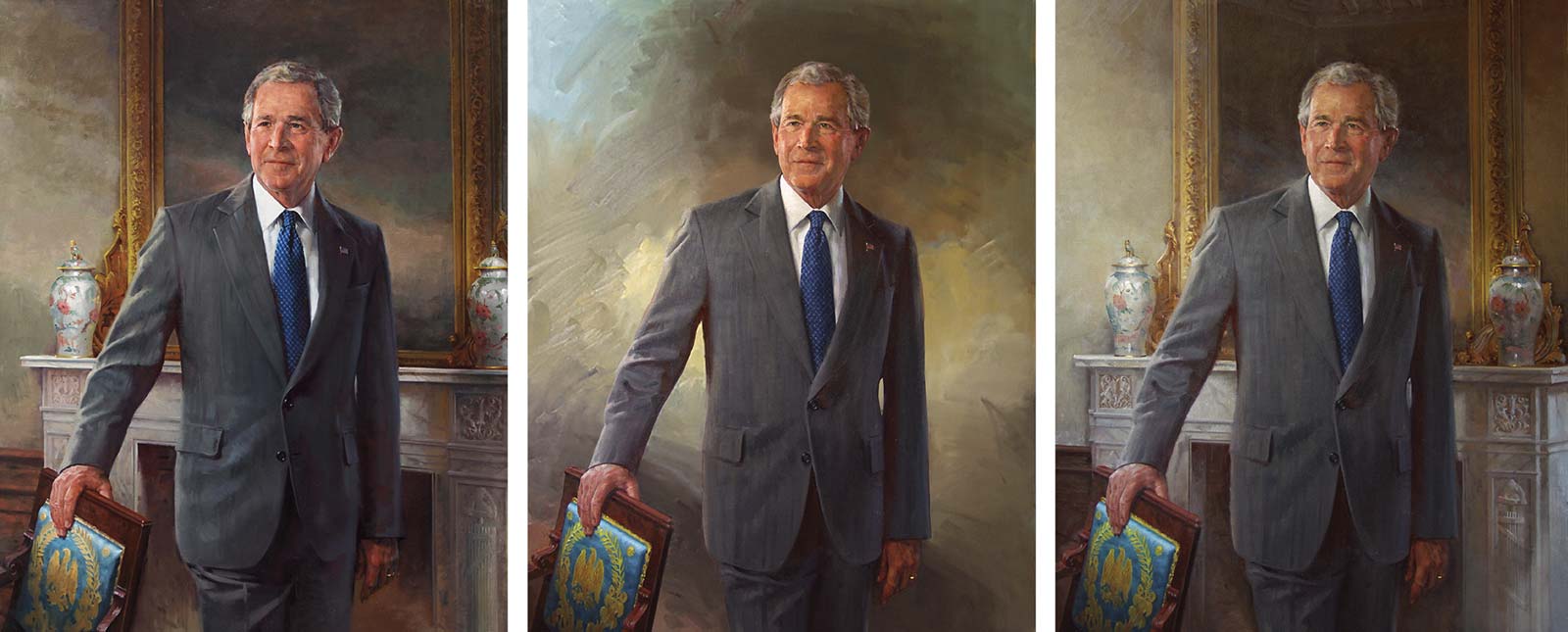
Left: John Howard Sanden, commissioned to paint President George W. Bush, painted a number of versions of the official portrait for the President with the final painting incorporating ideas from the previous versions (Version 1).; Middle: John Howard Sanden’s painting of George W. Bush (Version 2); Right: John Howard Sanden’s painting of George W. Bush (Version 3).
If you apply your study to primarily one subject matter, it’s easy to begin to develop systems or approaches that you over-use. Repeating your choices for lighting, setting, composition, perspective or backgrounds can be deadly. Becoming a “mannerist” might take out some of the unpredictability, but it also takes out some of the excitement and fun. Even worse, it will surely arrest your development and ultimately shorten your career. It’s important to learn the craft of good painting and drawing first, and then apply it to all subject matter.

Asking someone to accompany a meeting with your client can help in the review process. Here Shane meets with Dr. Daniel Smith and his wife, Jonlee Andrews.
I think you will find your commissioned work will improve through a healthy amount of non-commissioned work. The artist James Montgomery Flagg, a prolific illustrator and portrait painter, left his studio in NYC for the country every summer. For the entire month of August, he painted simply for himself. These works were created in a variety of mediums and prepared him to return to the city, re-energized and ready to tackle the commissions waiting in his studio.
I’ve been painting portraits on commission for my living for over 30 years. In that time, I’ve learned a lot, but one thing I know for certain: I’m never quite sure what a client will think about the work until they see it for the first time. There are times I want to predict, but I’m often wrong. Human nature is by nature often unpredictable but not insurmountable. I believe following the tips I’ve suggested will be helpful on your journey as you seek to enjoy the most out of your life painting commissioned portraits and what a privilege it is to paint the people of our time! I’d much rather manage the career of painting portraits than anything else I can think of. If that’s your attitude, too, then you’re in the right profession.
Sincerely,
Michael Shane Neal,
Chairman