I was recently commissioned to paint the portrait of Clarence Eugene Sasser, recipient of the Congressional Medal of Honor, the United States’ highest military award for valor. He was only 21 years old when he received this special distinction for saving the lives of wounded men in the Vietnam War, despite the pain of his own injuries. The Medal of Honor was presented to him on March 7, 1969, by President Richard M. Nixon at the White House.
It was such a privilege to meet Mr. Sasser, and I was given two hours for the portrait sitting at the Texas House of Representative’s office near his home. Before he arrived, I had chosen the room where I would have him pose. Thankfully there was a large north-facing window that provided wonderful light. When he arrived, I spent some time getting to know him and learning more about this courageous and humble man. I then began taking many photos as we continued to visit. I find that my portrait subjects pose themselves better than I ever can, and that was the case with Mr. Sasser.
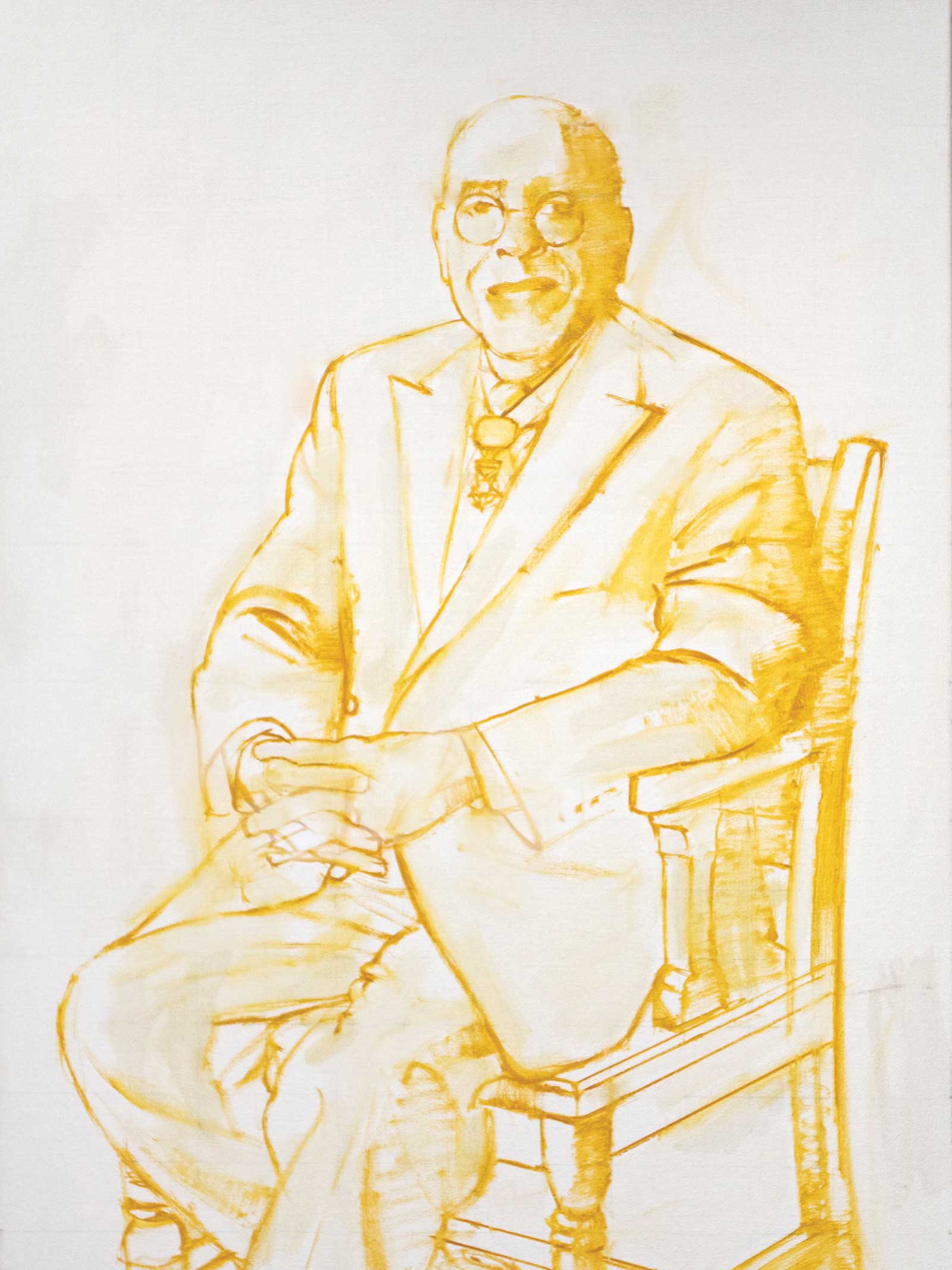 Stage 1
Stage 1
Back in my studio, I started by drawing the composition with a brush and yellow ochre paint on a fine weave oil-primed linen canvas. I spent several hours registering the pose and making sure my drawing and proportions were accurate.
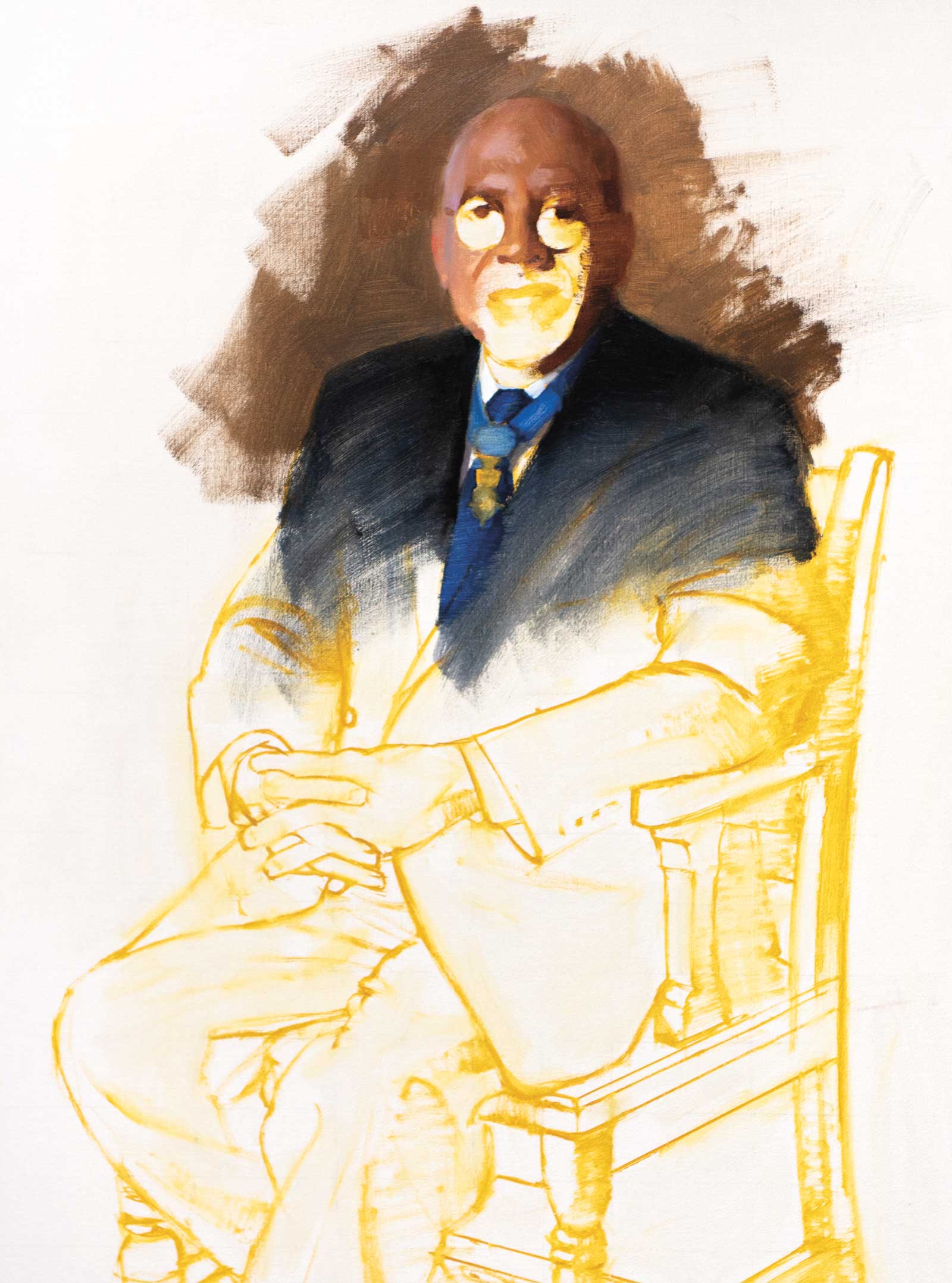 Stage 2
Stage 2
My next step was to begin painting some of the darkest darks, the lightest lights and the brightest color in the portrait. Once these were established, I could more accurately judge my values and color relationships as I continued to develop the painting.
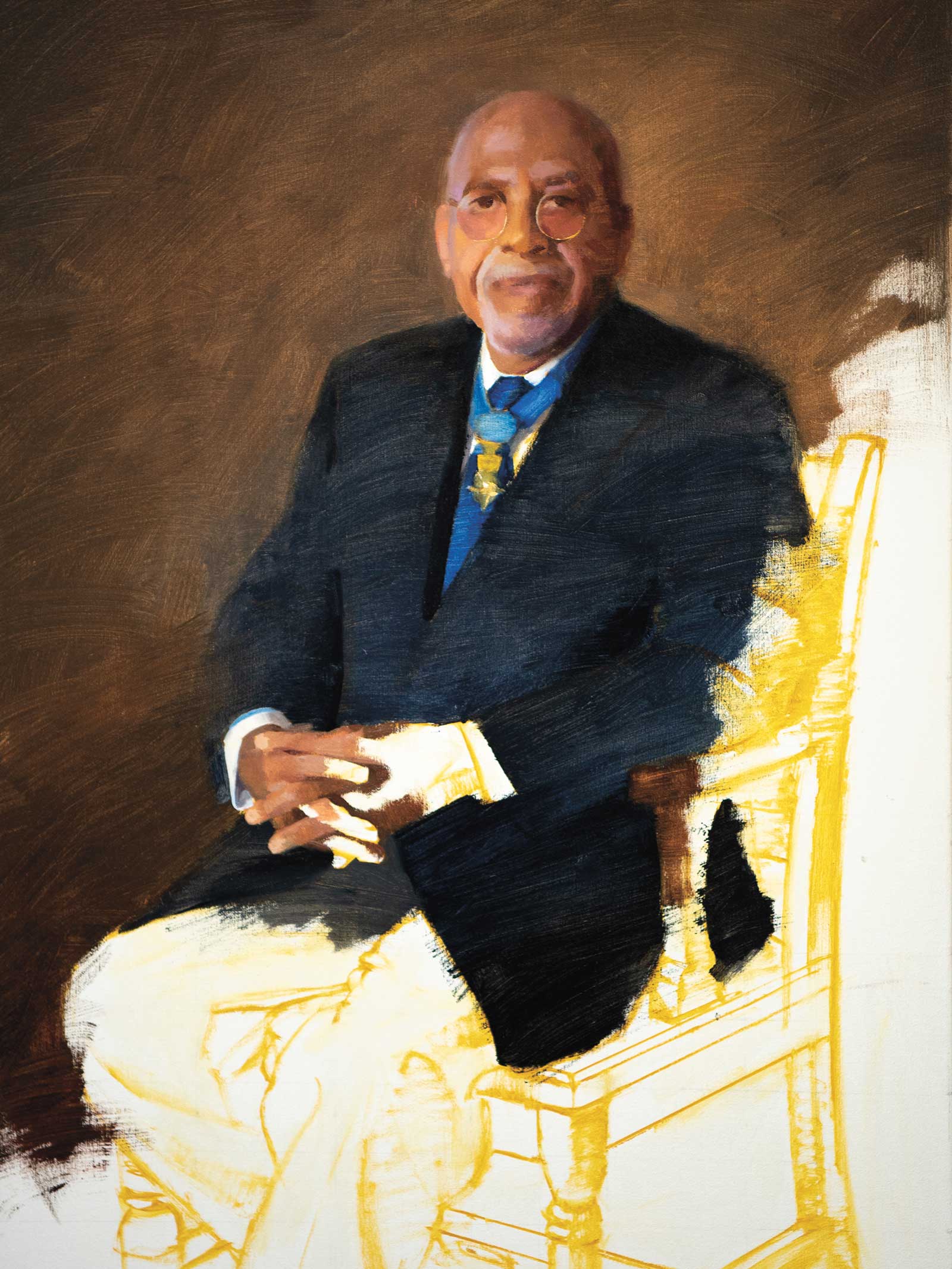 Stage 3
Stage 3
I then proceeded to cover the canvas, working wet into wet and thinning the paint with lavender spike oil to loosen it up and help it flow more freely. At this stage, I was concerned with blocking in the big shapes and keeping my painting to three or four main values. I worked on controlling my edges, varying their hardness and softness and losing some edges. Details would come later.
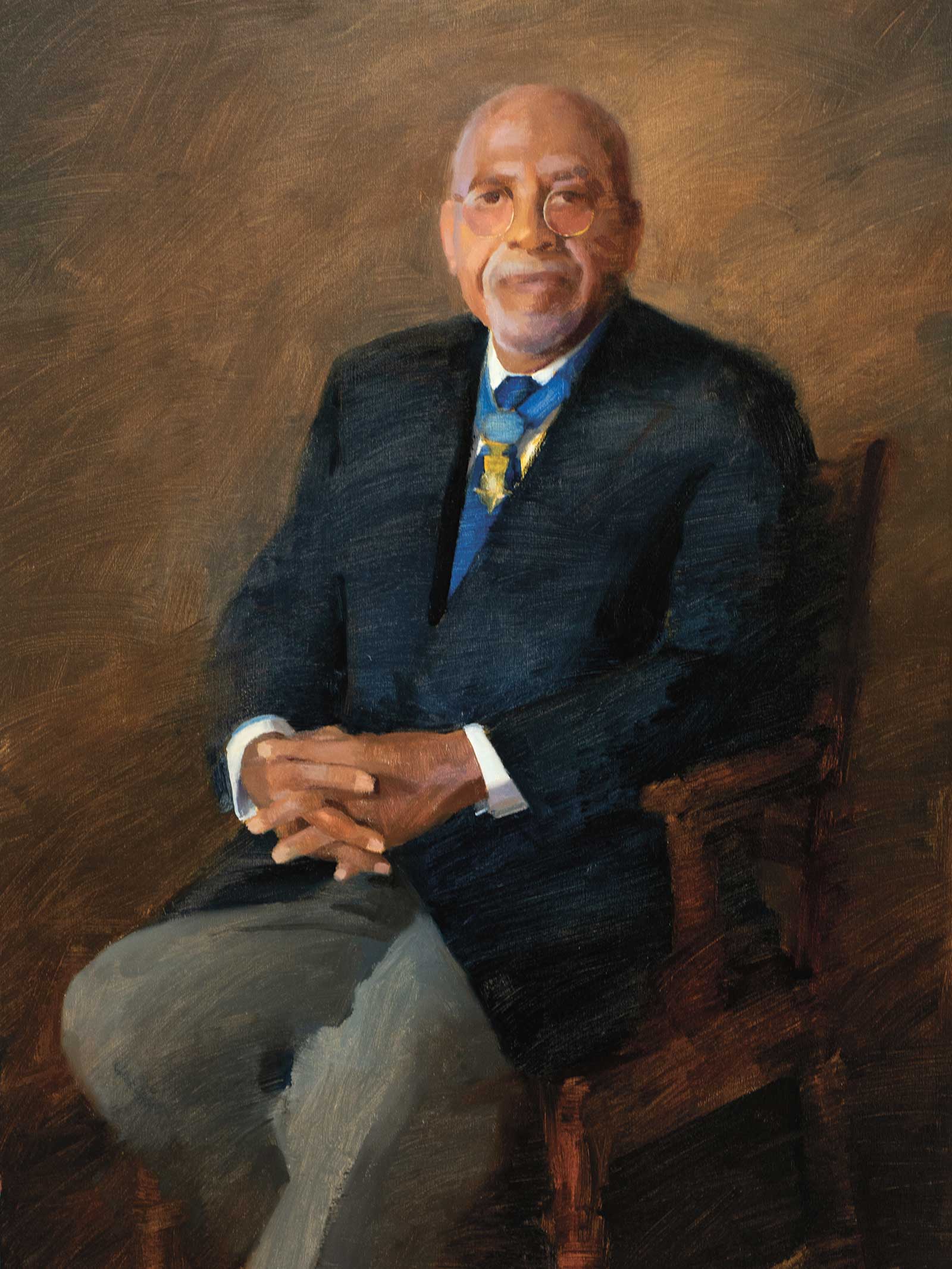 Stage 4
Stage 4
When the canvas was entirely covered, I let this initial paint layer dry for several days before continuing. Once it was completely dry to the touch, I proceeded with the painting. Now I began to refine the painting, thinking in terms of light, halftone and shadow. I squinted often to help simplify my lights and shadows and keep them separate in value. I kept the entire painting progressing at the same rate and tried not to finish one area ahead of another.
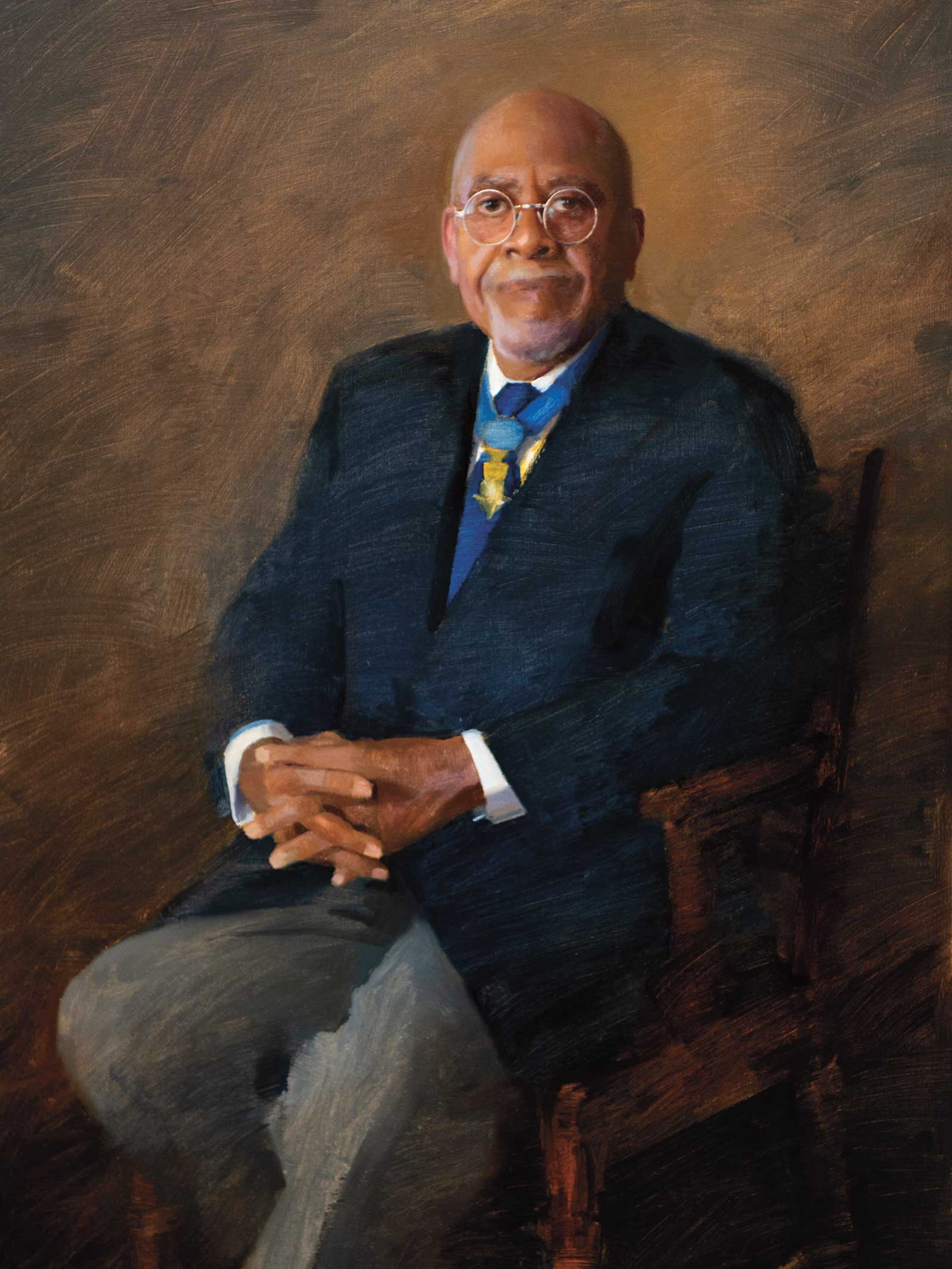 Stage 5
Stage 5
I continued making a series of adjustments, working over the entire canvas and refining the likeness and other details, stepping back often to see the painting as a whole. Viewing the painting in a mirror helped correct any drawing mistakes.
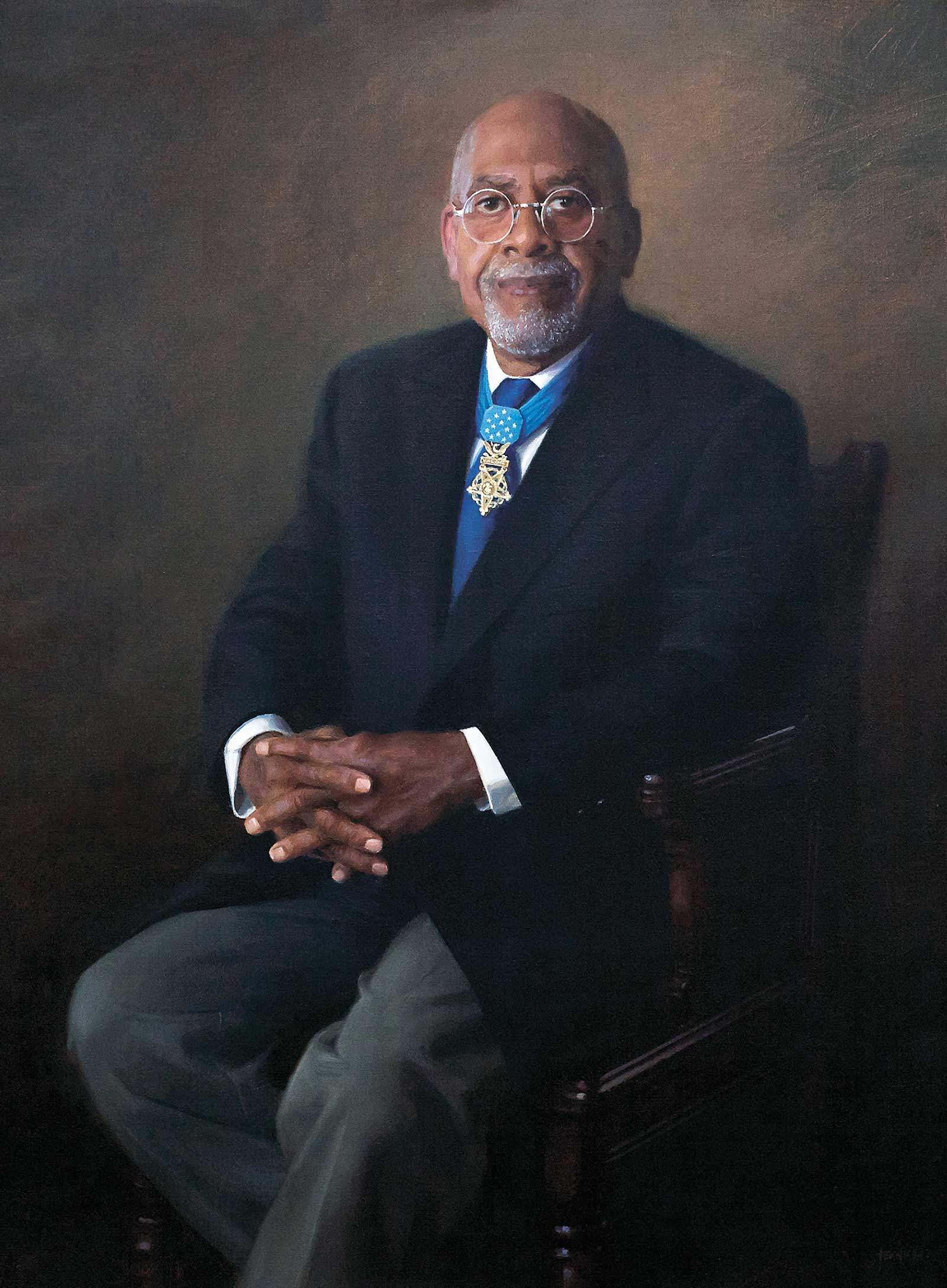 Stage 6
Stage 6
The Finished Portrait Clarence Eugene Sasser, recipient of the Congressional Medal of Honor, oil, 40 x 30" (101 x 76 cm)
At this stage of the portrait, I spend many days of concentrated work, continuing to focus on the details. For example, you can see between stages 5 and 6 I have defined the chair, refined the tie, medal, shirt and jacket and completed painting the hands. After these details are completed, my focus is on checking the likeness as well as the balance of color and values. The portrait now hangs in the Texas State Capitol. —
James Tennison lives and works in Whidbey Island, Washington, painting a variety of subjects including landscapes, animals and commissioned portraits. After receiving his BFA from the Art Center College of Design in Pasadena, California, he spent several years as a freelance illustrator. Tennison eventually made the transition from illustrator to portraiture and fine art. His commissions have taken him across the United States and to England. In addition, his paintings have been exhibited in a number of galleries and museums.