Before a student starts a painting, I recommend they attempt a notan first to help them solve contrast and composition problems. A notan, at its most basic, is a two-value simplification of your subject. Only black and only white; no shades of gray. But it’s also much more than that. The process of making and using a notan is a lot like an hourglass. First, as we make the notan we do the mind-work, where we funnel things down and make the changes necessary to develop compelling shapes and contrasts. Then, as we paint we expand things back out, recomplicating the image but with the earlier patterns and simplification as our guides. All of this is greatly aided by doing a notan.
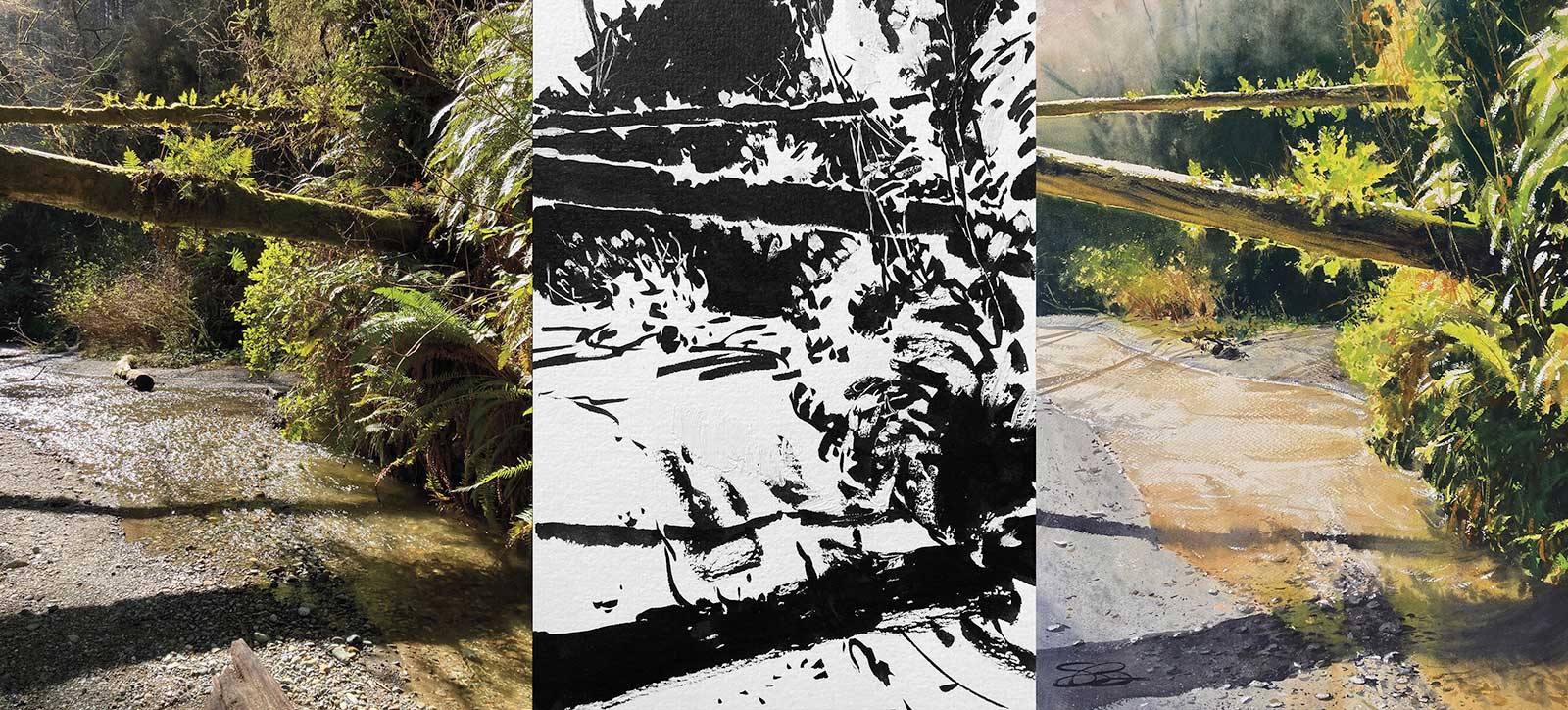 Here you can see the “hourglass” in three steps: from too detailed, to simplified, to recomplicated but guided.
Successfully designing a notan requires us to focus first on simplification. Things have to go through a kind of mental-visual alchemy when we paint, so we can start to see three-dimensional objects (a tree, a car, a house and its shadow on the ground) as two-dimensional shapes that we can connect and bond together on a flat picture plane. This is where the limitation of a notan is its greatest strength. When we start, we can only make black marks or leave areas white. Black shapes naturally connect to adjacent black shapes, and the same is true for negative white shapes. This makes it much easier to weld details together in a flat, graphic manner—an initial step in building strong shapes that can lead the eye.
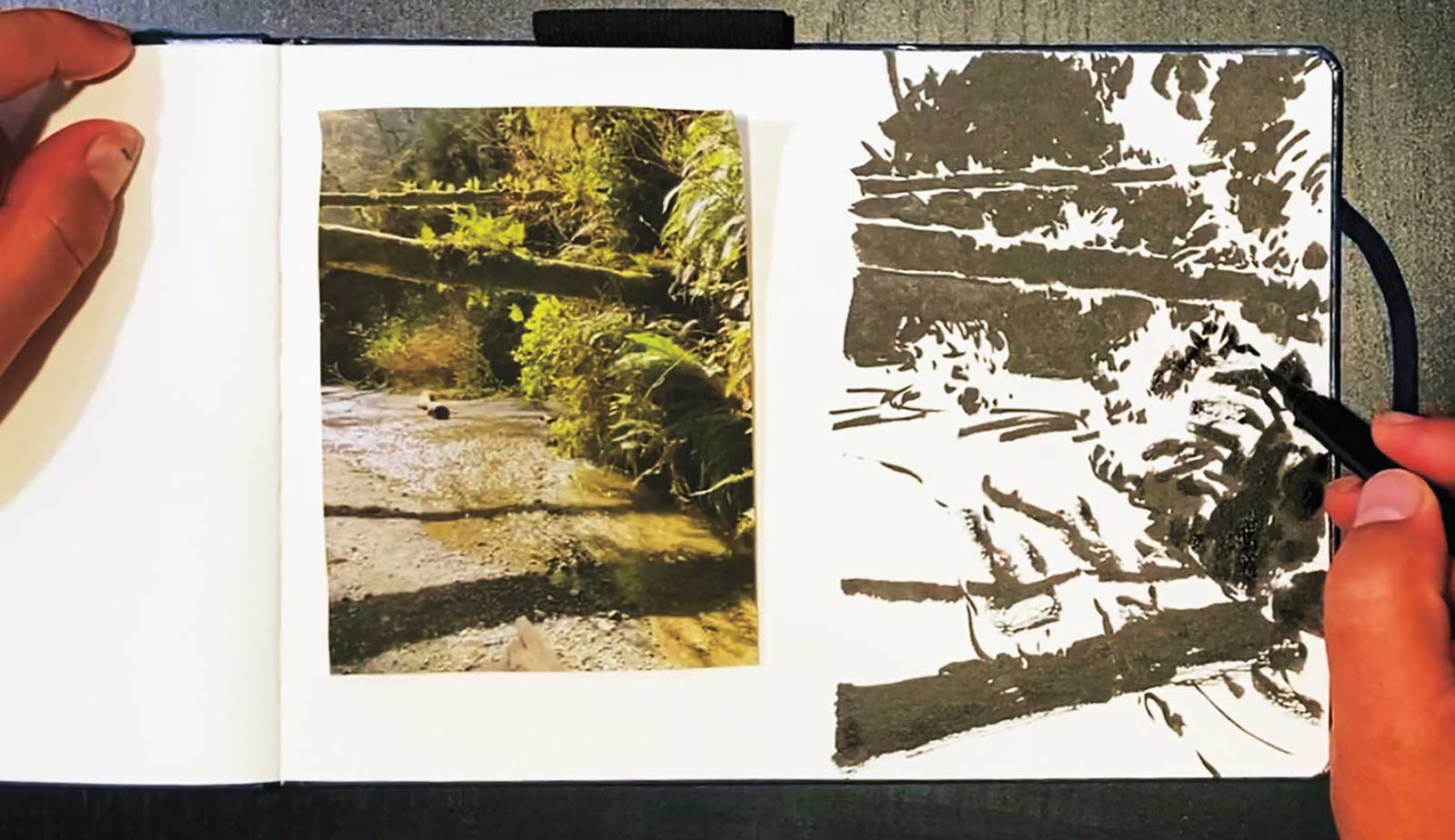 The first part of the process is to simplify the image and bond values and shapes together. Everything is either a black mark or a white shape painted negatively.
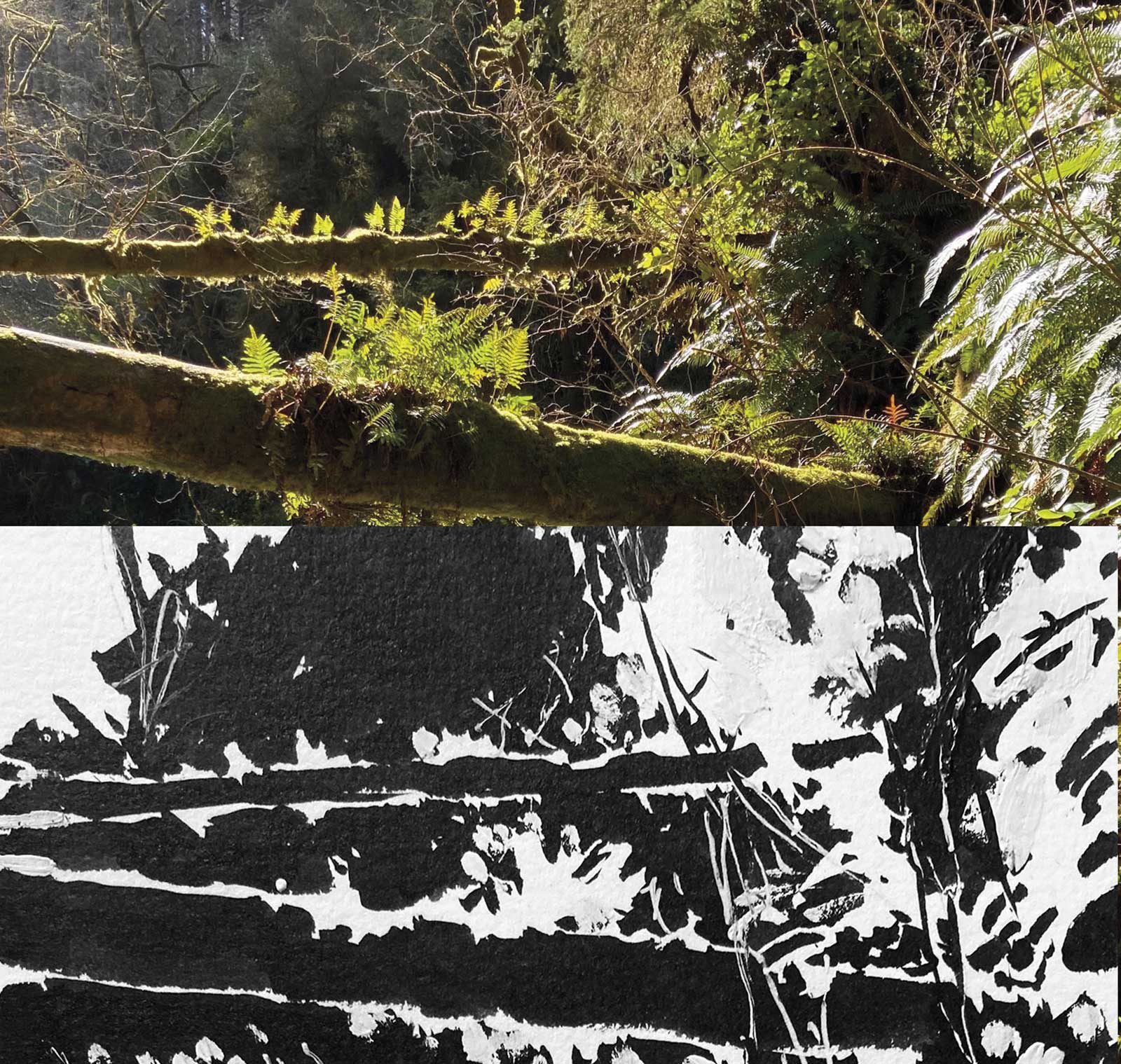 Middle-valued details from the reference photo can go either black or white, depending on context. They are simplified into the black in the background, but the same value is bonded to a white shape in the foreground foliage.
However, assigning the lightest lights and the darkest darks is the easy part. It’s the middle values that are often more difficult to work with. Are they white, or black? What do we do with them? Well, that depends… When you design a shape in a notan, you’ll need to build complex edges to help differentiate shapes. A black shape needs a white edge for us to read it, and vice versa for a white negative shape. Often, out of necessity, a middle value in a reference photo will be white in one area of a notan and a black in another. Building a notan is not about absolute value relationships, but instead about decision making and what I call “contextual contrast.”
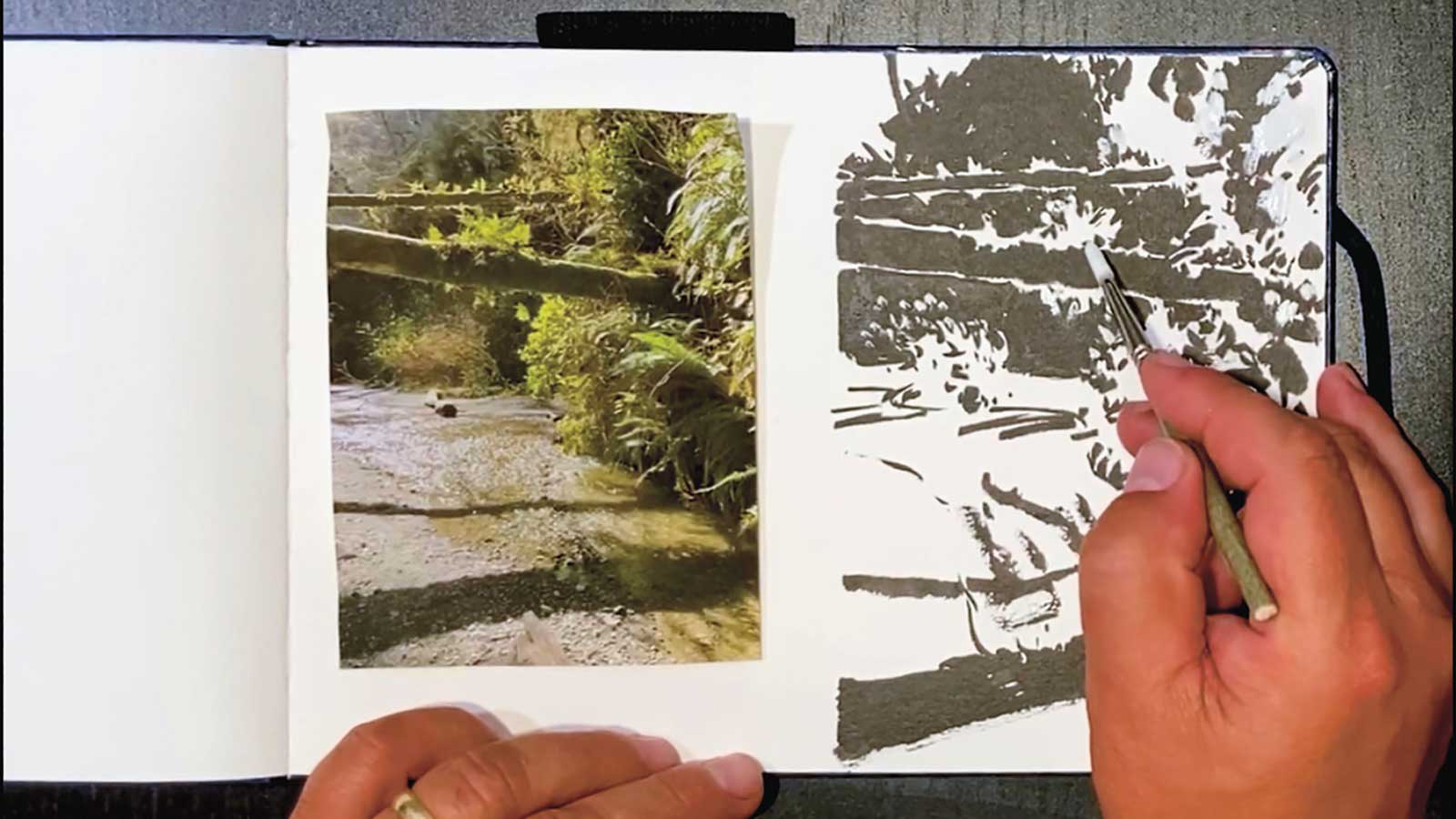 After it’s totally dry, I go in with white mark-making tools to carve contrast and details back out. I also go back in with the black pen, back and forth between light and dark, exploring the image.
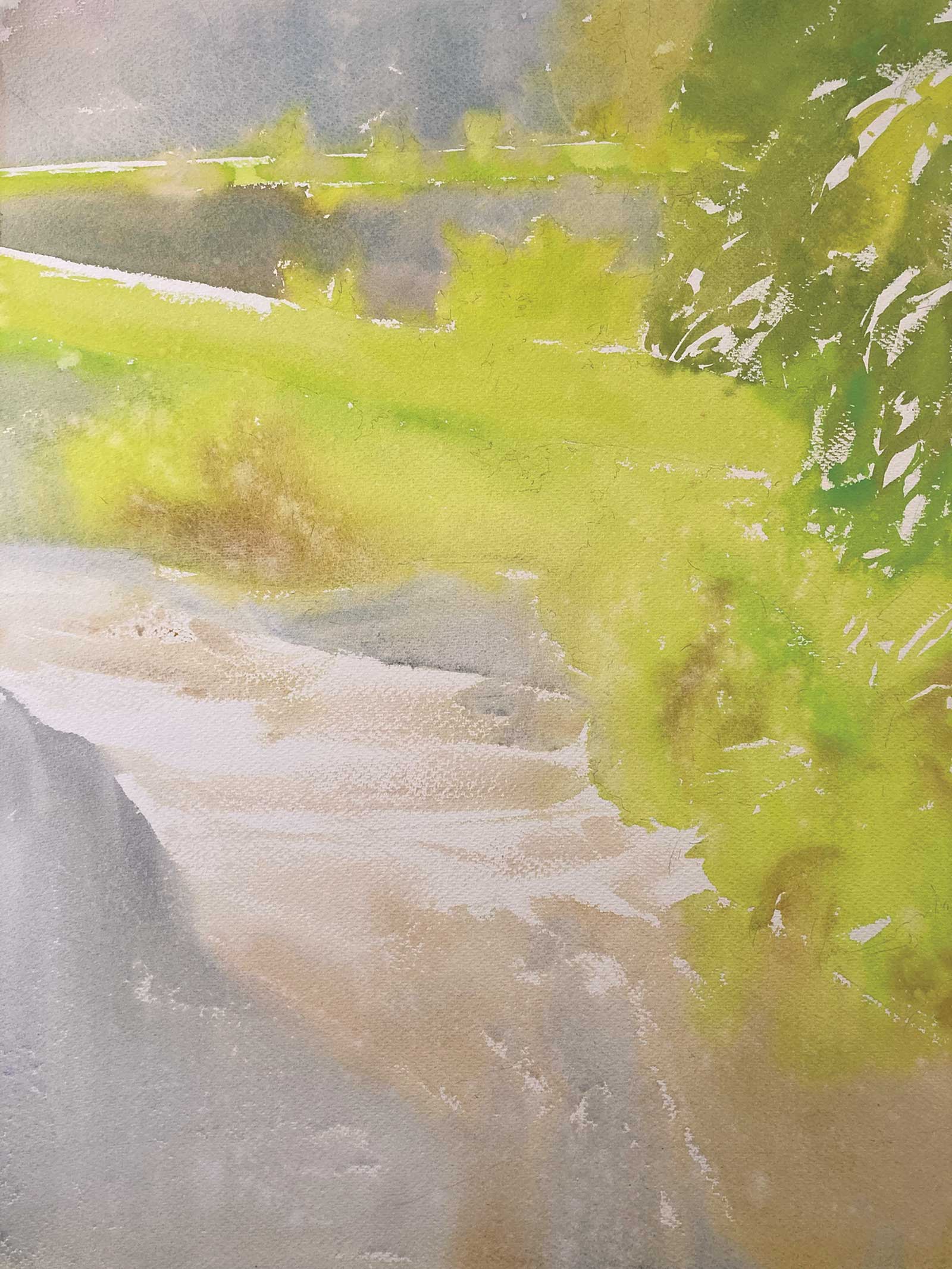 Everything in this wash is based on the “whites” from the notan. Even sections with color can be a “white” from the notan. They’ll just be the palest values in that area.
Once you have your basic shapes in order, you can start to massage the details. At this point, a white mark-making tool is required. What elements are essential and need more contrast to pop? What is distracting and can be edited out? Sometimes, as we become better acquainted with the requirements of the image, this is where those pesky middle values find their home. What we first thought was going to be black, contextually needs to be a white. Notan-making is most definitely a back-and-forth, exploratory process of defining and arranging contrast.
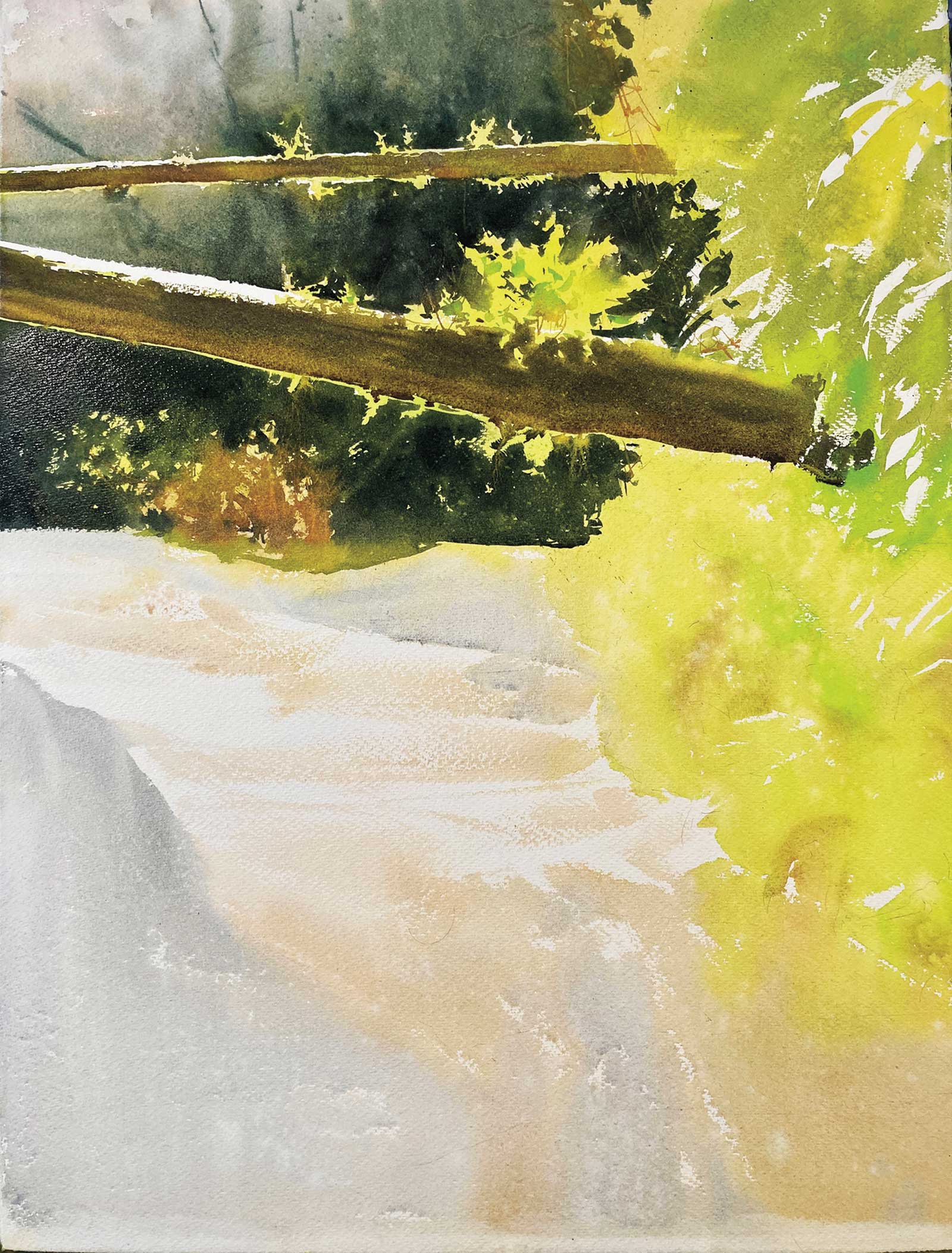 The darks begin to go in. Just like with the notan, I’m painting negatively.
When the notan is complete, it can also act as a guide as we paint. First, and most straightforward, is that a notan can help us understand how to build the sequence of a painting. Whatever is white is, broadly speaking, part of your first wash. The darks are our second wash, with their shapes welded together as much as possible. A notan can help us see what light-valued shapes we need to put in early, wet-into-wet, and what shapes are a local, darker contrast that go in later.
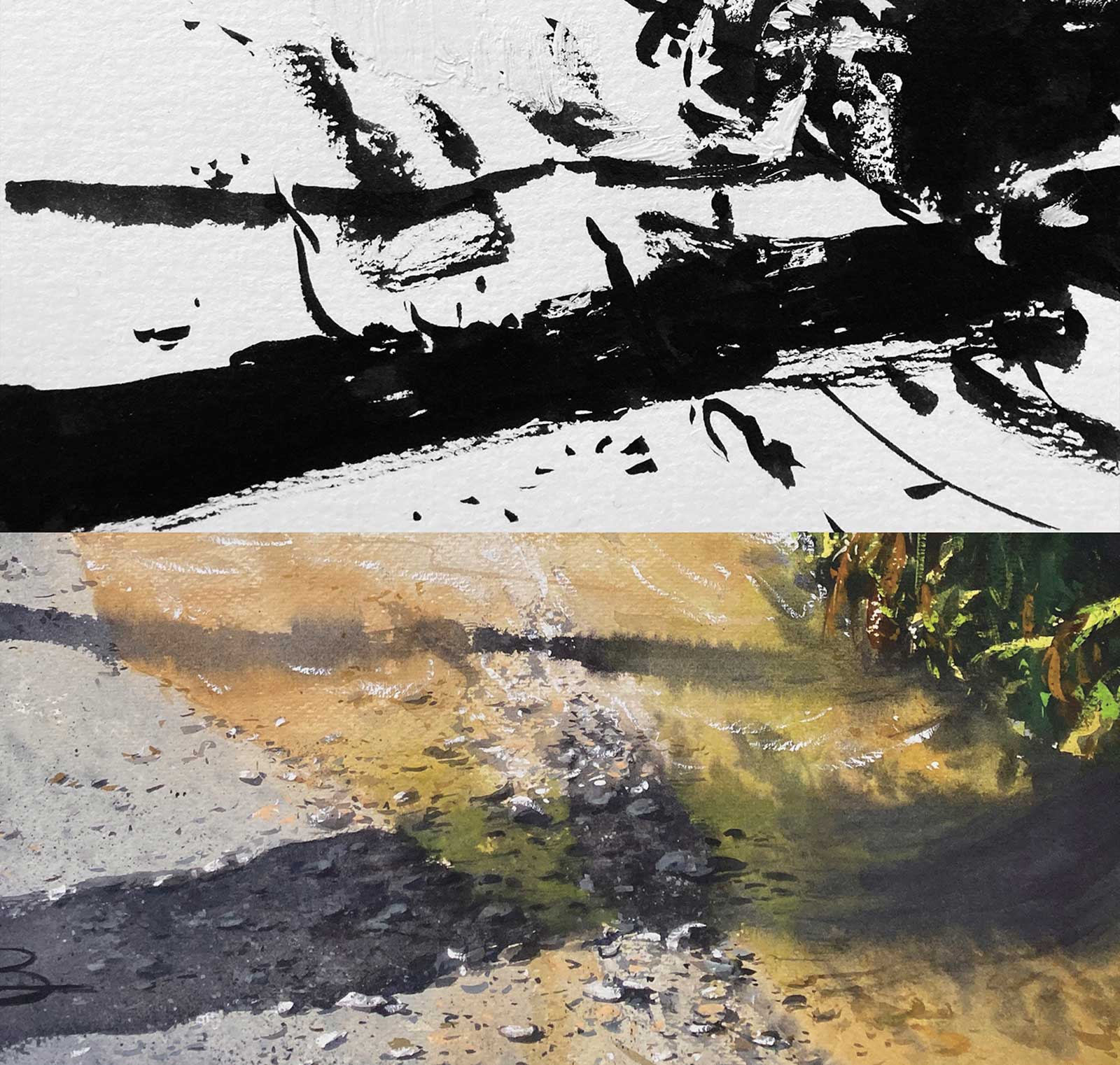 The cast shadow in the notan is 100 percent black, but there are middle values in the painting where the reflections are. However, the contextual contrast of the middle values allows them to read darker than the sunlit stream. The notan still guides us. Squint your eyes to compare the two.
 The cast shadow in the notan is 100 percent black, but there are middle values in the painting where the reflections are. However, the contextual contrast of the middle values allows them to read darker than the sunlit stream. The notan still guides us. Squint your eyes to compare the two.
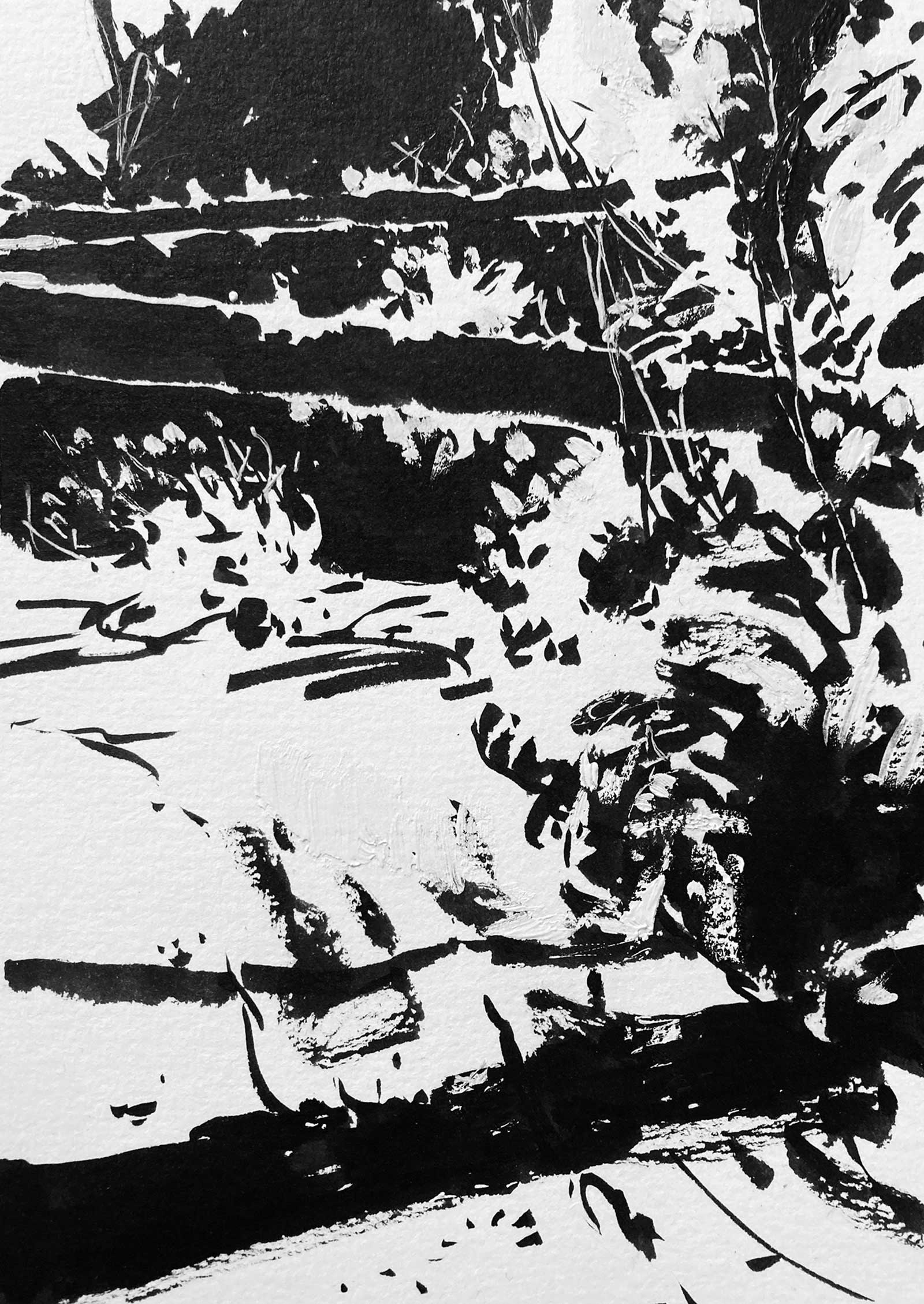 Finished notan
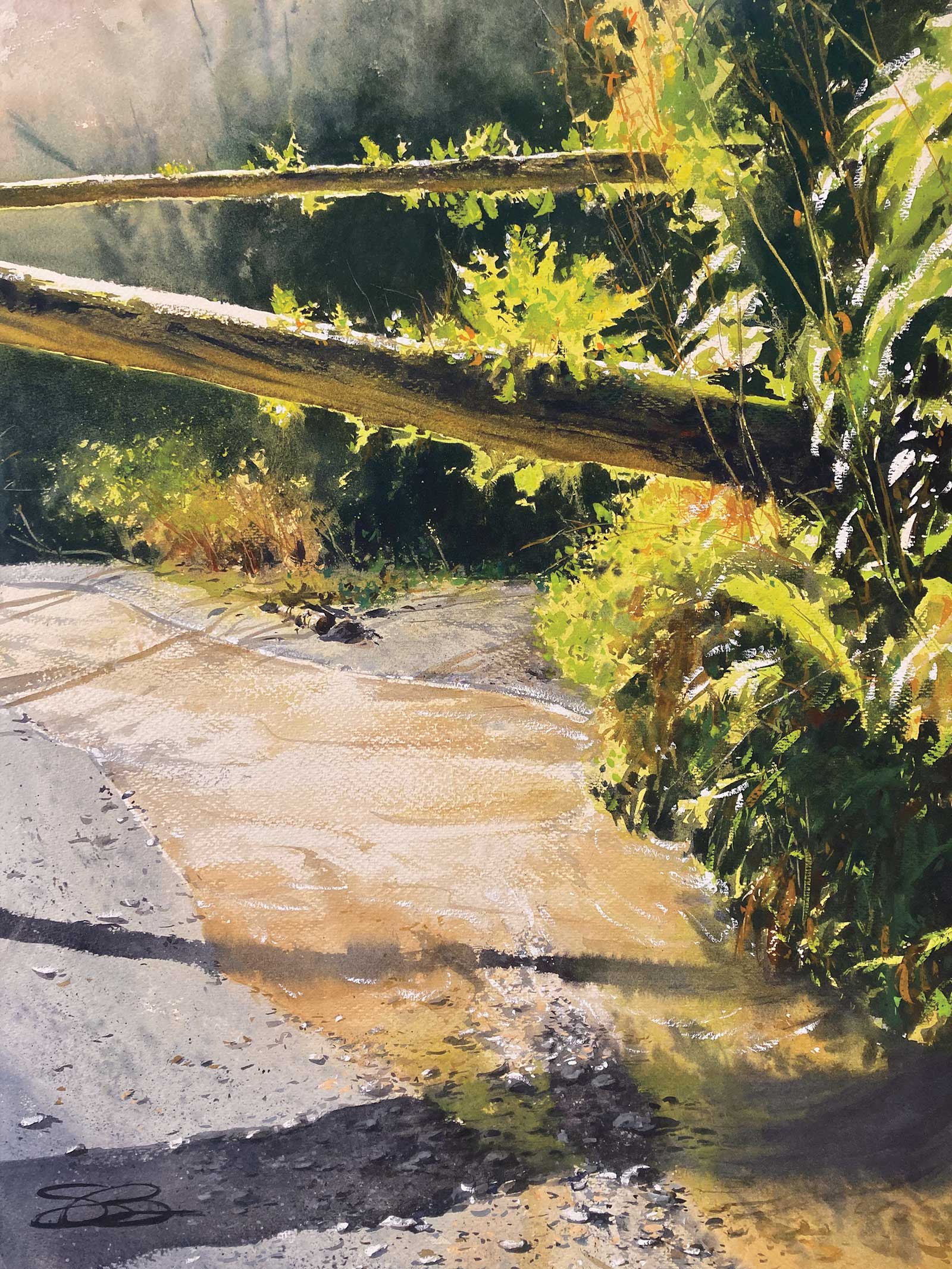
Additionally, the notan can guide us as we recomplicate the image and introduce middle values again. As was noted earlier, making a notan funnels details down, but as we paint, the hourglass opens back up. A finished painting can benefit from more nuance than a notan can provide. And yet— middle values that we assigned to the black should lean that way when we paint them, and the same goes for the lights. Important contrasts that we developed through the notan-making process need to remain readable, even when we utilize middle values. To test if my painting is accomplishing the correct value arrangement, I like to close one eye and let the image go out of focus. This lets me see the shapes and values better, rather than focusing just on detail and color. It lets me read the hidden notan hiding behind the painting, so it can guide me.
I don’t use pencils to create the notan. We need to think in shapes, not lines. A black Pentel brush pen works best, but Sharpies will do too. A tube of white gouache with a small brush is good for reclaiming white areas. I also use a Signo ballpoint pen or Posca marker for fine white details. Something in the 6-by-8-inch range works best for exploring the image but not getting lost in details. —