Power and vulnerability share the space within the frame of Annie Murphy-Robinson’s artwork, both ever-present in her figurative work. “My work allows the viewer to glimpse a private world of the female—hesitant, insecure and often unaware of the power that they hold. My own experience as a young adult was both beautiful and traumatic,” says Annie.
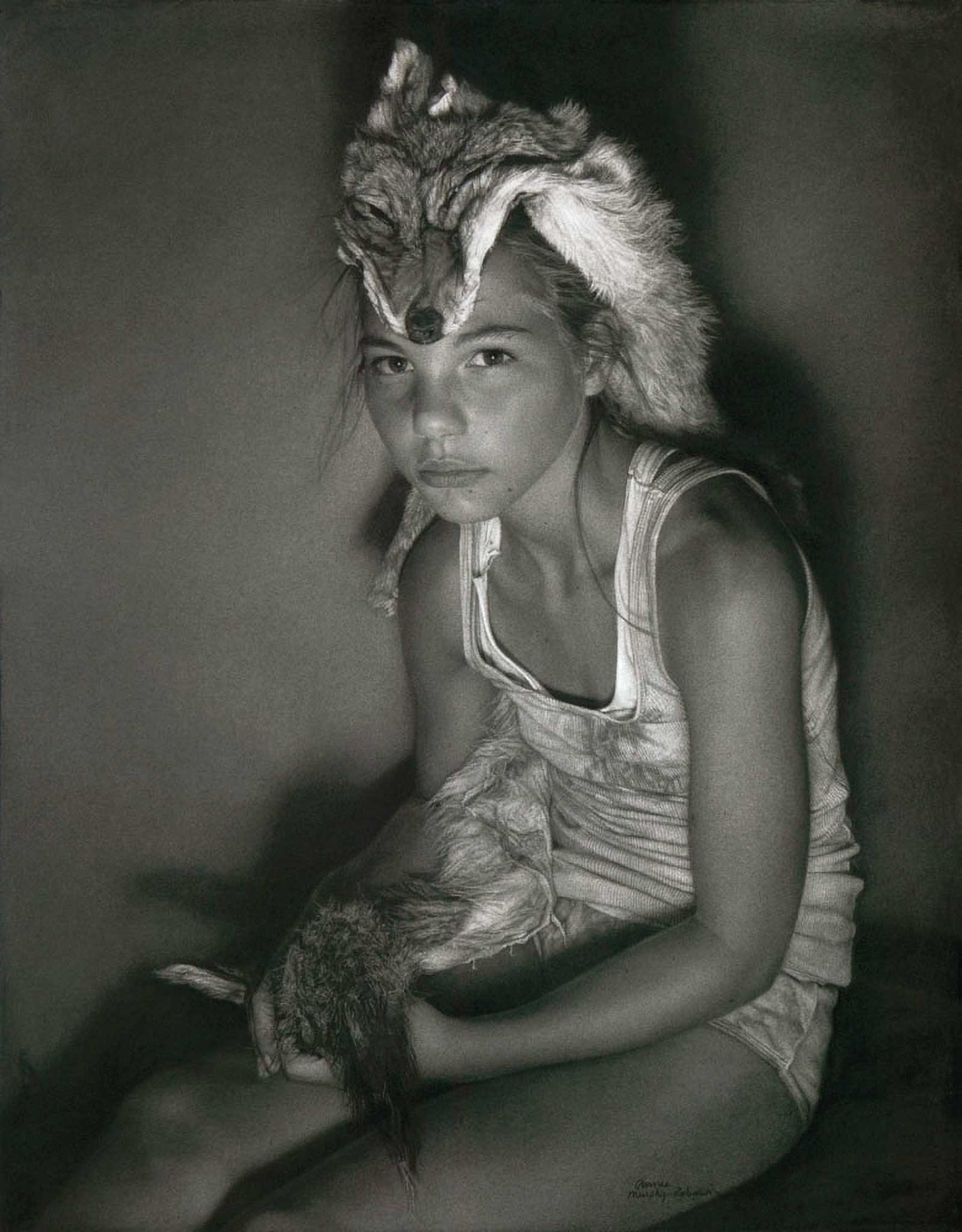
Casey and the Coyote “Animus”, charcoal on paper, 42 x 32" (101 x 81 cm)
As a young girl growing up in Heron, Montana, Annie had a passion for art and spent her hard-earned allowance on art lessons with a local teacher, Mrs. Barbara Mullens. She taught Annie how to draw animals, but it was portraits that Annie longed to create, and so she begged her mom to buy her “How to Draw” books and spent her elementary school years learning how to draw people. During her teenage years, Annie’s family moved first to Tucson, Arizona, then to Phoenix, interrupting her trajectory of a possible career in the arts. In her adolescence, she struggled with substance abuse, eventually running away from home and dropping out of high school. She joined the Army at age 17 and later continued her college education where she majored in art with a concentration in painting.
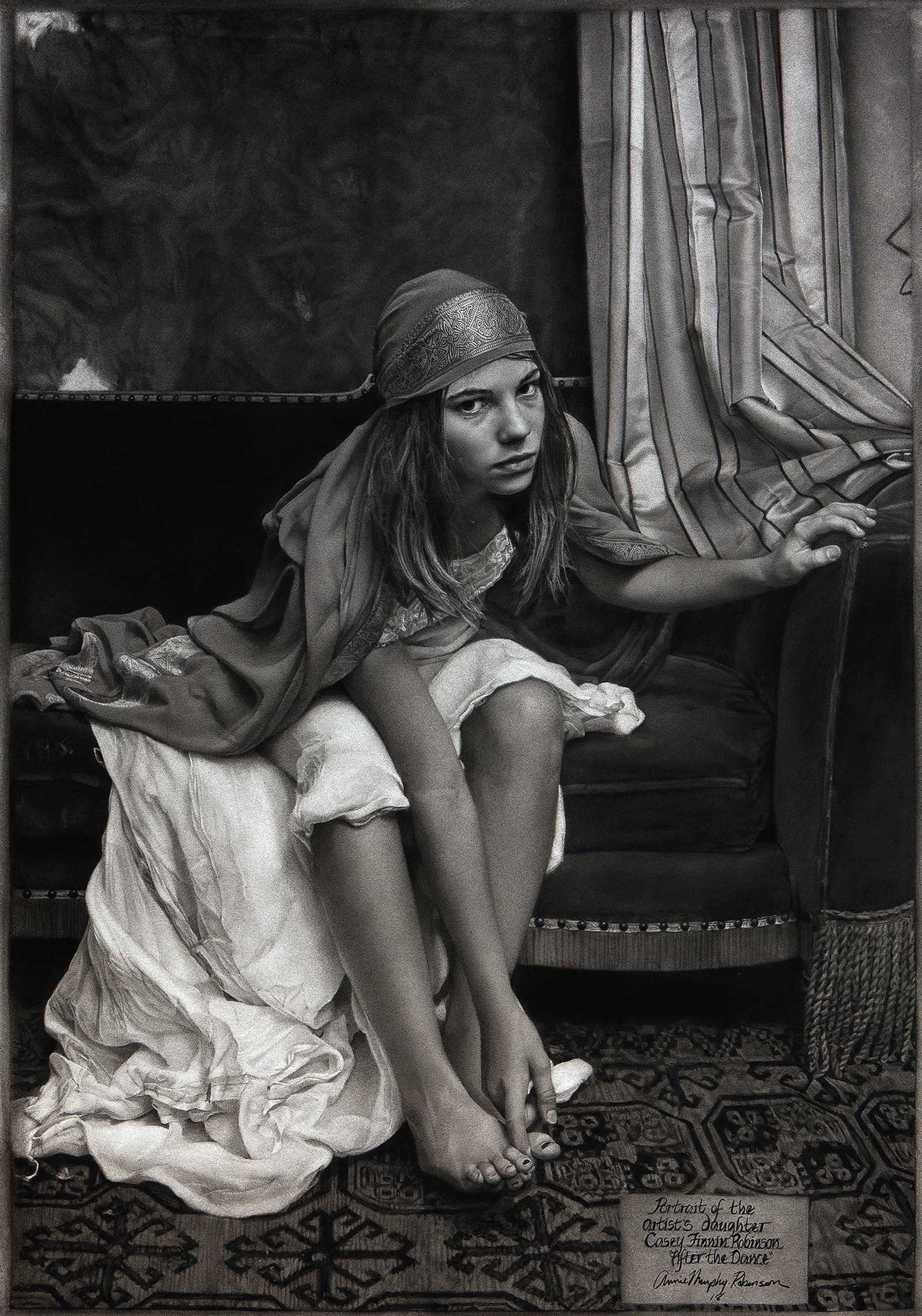
Casey “After the Dance”, charcoal on paper, 59 x 42" (149 x 101 cm)
While trying to figure out who she was and how her art fit into the world, Annie enrolled in graduate school. There she met and was supported by a cohort of female artists. One of whom was a Chinese woman, Hong Chun Zhang, who shared stories of her rich cultural and personal past, including protesting at Tiananmen Square in 1989 and even watching friends die. Zhang’s story had a powerful impact on Annie, and she admired Zhang’s clear and concise vision of who she was through her work. During a visit to Annie’s studio for a critique, a professor made a biting comment about the students “all being a group of middle class women.” The women then poured out their own stories full of struggle and pain. Feeling mislabeled, hurt and angry from the harsh critiques, Annie found herself reevaluating her work. She made the decision to return to realism and in particular figurative work. She purchased three large mirrors from which to start drawing herself from every angle. It was these large, truncated bodies that were the basis of her graduate show.
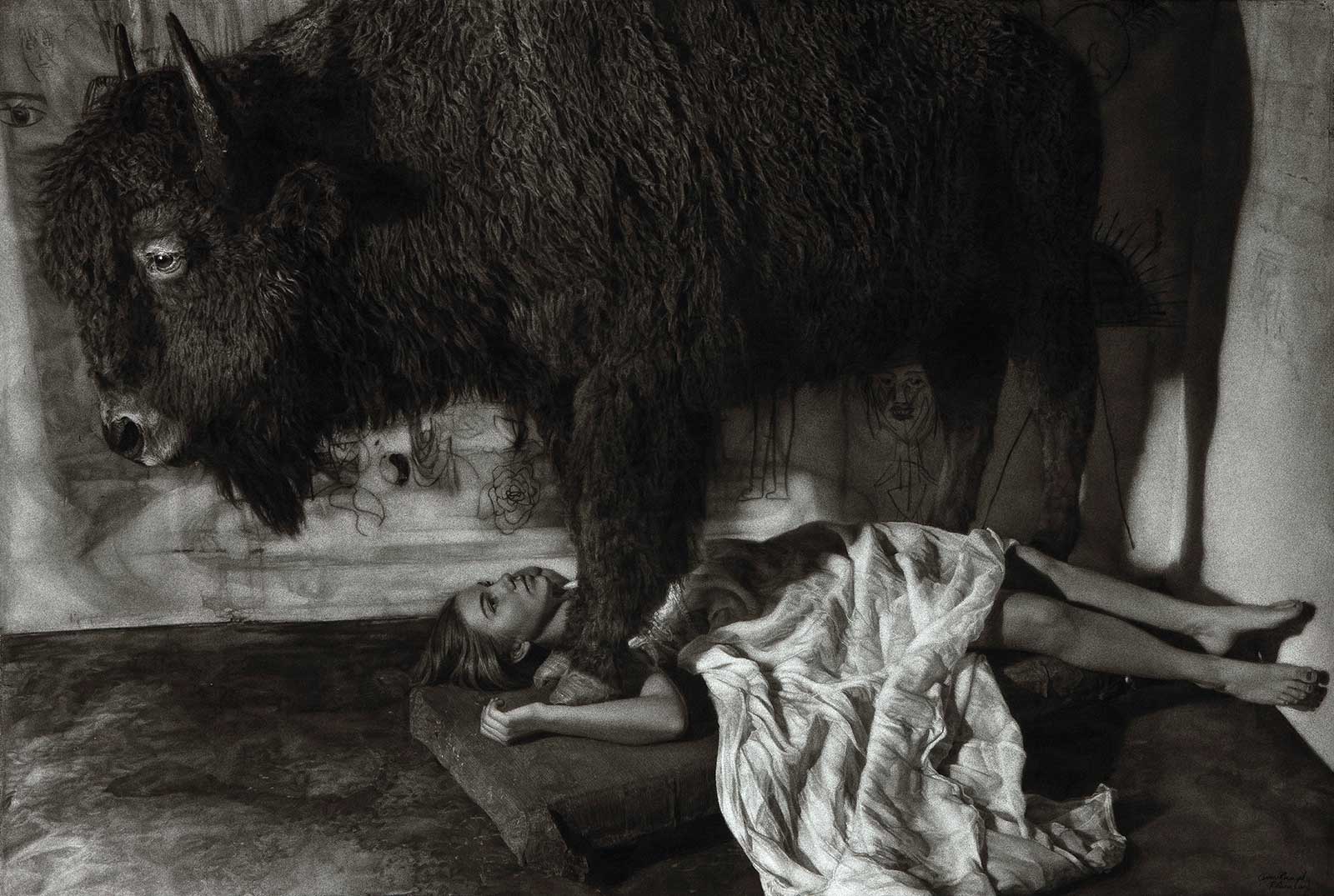
Casey and Buffalo Americana, charcoal on paper, 42 x 66" (101 x 167 cm)
Shortly after that, Annie asked her husband to take a series of nude photographs in the thick woods outside of Tahoe, which she calls her Sasquatch series. They were anti-feminine and not for the male gaze, and in these drawings, she could be seen confronting the camera with distorted hands and feet, creating a powerful and intimidating figure. In creating this series, she had her first realization that she was working through the trauma and abuse she had suffered as a child. Between the ages of 7 to 8 years old, Annie was abused by a family member who threatened her with harm if she told anyone, so she would regularly hide in the woods until her mom and stepfather got home. When she stepped back to view what she created, she felt an overwhelming feeling this was all about her abuse. Annie says, “It made me understand how powerful art can be. I didn’t set out to process that experience through my art, it was a realization of what my art was urging me to do, to look at, both consciously and subconsciously.”
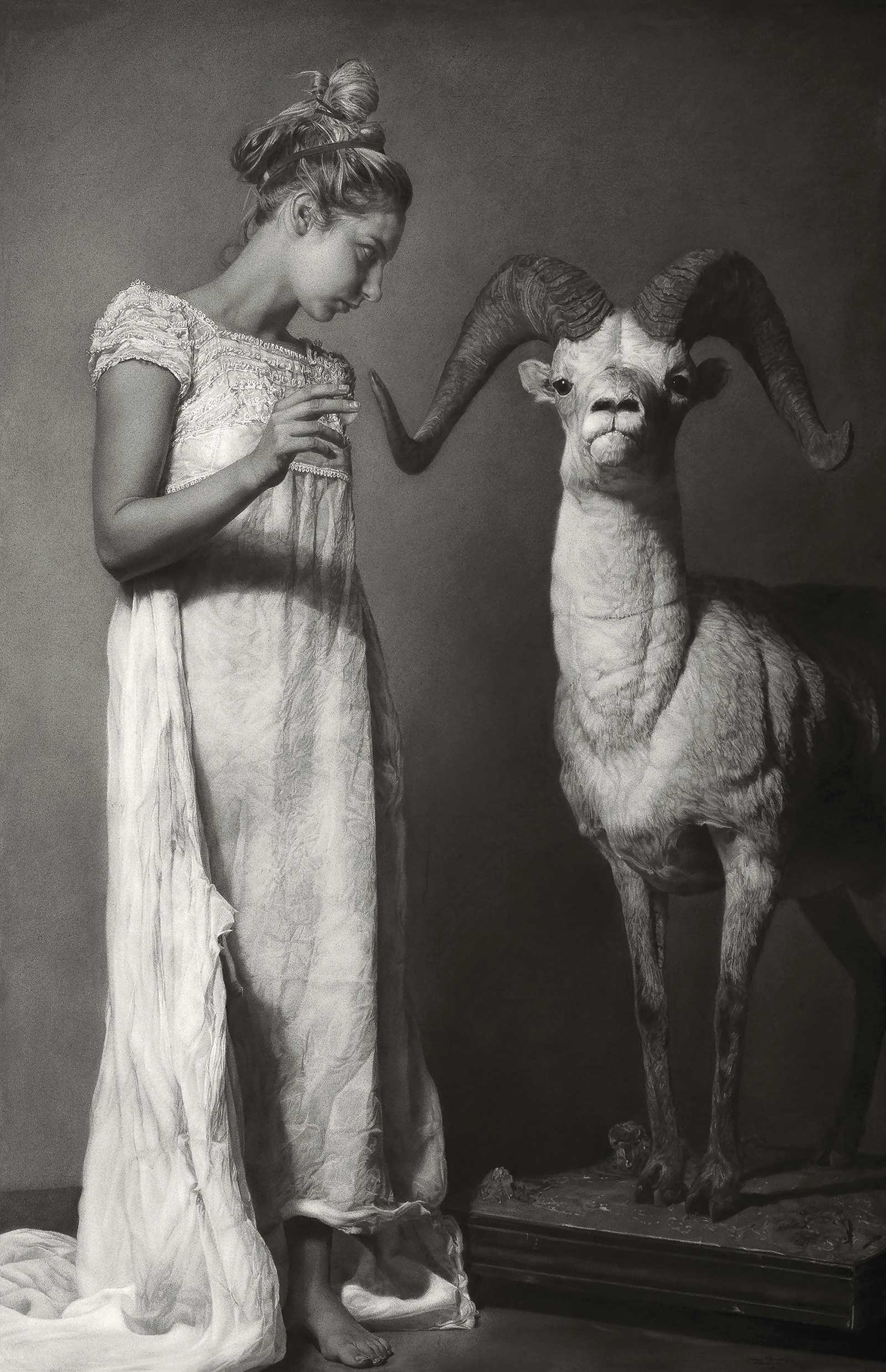
Emily and the Ram “Conjuring”, charcoal on paper, 65 x 42" (165 x 101 cm)
After graduation, Annie met Troy Dalton who would become her mentor. She went to his house on the weekends and drew in his large studio. He was the one who encouraged her to try sanding the charcoal into the paper, and it is the process she still uses today to create her large-scale, detailed drawings. The process is very labor intensive, and the method changes the inherent nature of the paper, creating a light sepia tone with a uniformly smooth surface. At first the process starts off with a mess, but as Annie is sanding, she is getting to know the surface, where the imperfections are, toning it and getting it smooth. It is both a reductive and additive process. She says, “My art, specifically for me, is about removing my darkness, sharing it and connecting with other people that can see that or maybe could feel it.”
Almost all of Annie’s work is figurative, mainly of her two daughters. On this, she says, “My work is about that space of youth where magic unfolds, defining identity through experimentation, the clothing, the gaze and the pose among other things.” She continues, “At the emotional level, my focus is to convey truth and honesty, and for me, the only absolute truth I know is of myself and my children. This truth is filtered through a lens of my own experience, often being bittersweet and questioning.”
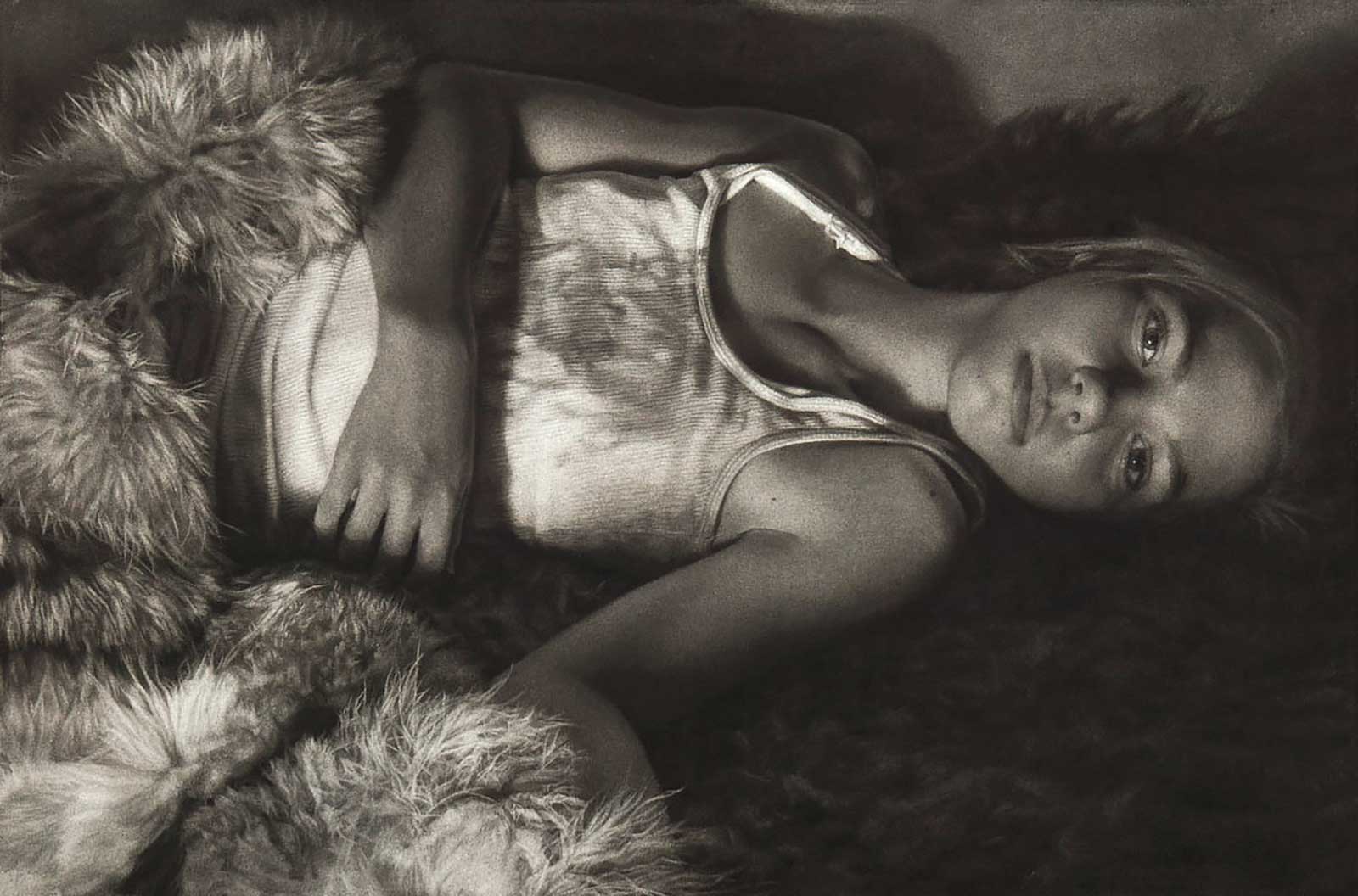
The Firelight, charcoal on paper, 28 x 42" (71 x 106 cm)
Fast forward to this year, Annie was awarded the Draper Grand Prize in the Portrait Society’s premiere International Portrait Competition which features a $25,000 cash prize. After working as a high school art teacher for the last 25 years and as a full-time artist, she is grateful for the opportunity to continue to share her work and looks forward to future projects. Showing exclusively with Arcadia Contemporary in New York City, Annie’s plans include creating a space to hold workshops on a remote and wooded piece of property she purchased to help others to find themselves in their artwork. Focusing on her sanding technique, it would “be like a weeklong graduate school “ which is all-encompassing—clean food, personal reflection, yoga classes and breathing techniques as well as drum and music circles to create a supportive, lifelong community.” Annie says, “Euphoric things happen when you are teaching adults; my dream is to have workshops about moving through difficulties and trauma and making art around that, so this award is my seed money to make that happen.” —