About 20 years ago, I finished the first painting I remember really loving. Having just discovered acrylic paints, I was in a workshop with Mike Svob trying to understand this new medium. My background was in watercolor, so being able to paint light over dark was totally new to me. And the day that I painted my first self-described “good” painting I had started it on a canvas that was completely black.
As I look back on that day, I realize that the success of that painting was a combination of a few things. First, it was the last day of the workshop, and I think Mike’s great instruction had finally begun to sink in. Second, I got lucky and produced something that was beyond my experience and skill at that time. I’ve come to think of those types of paintings as gifts. They thrill us and encourage us to continue moving forward in our personal artistic journey.
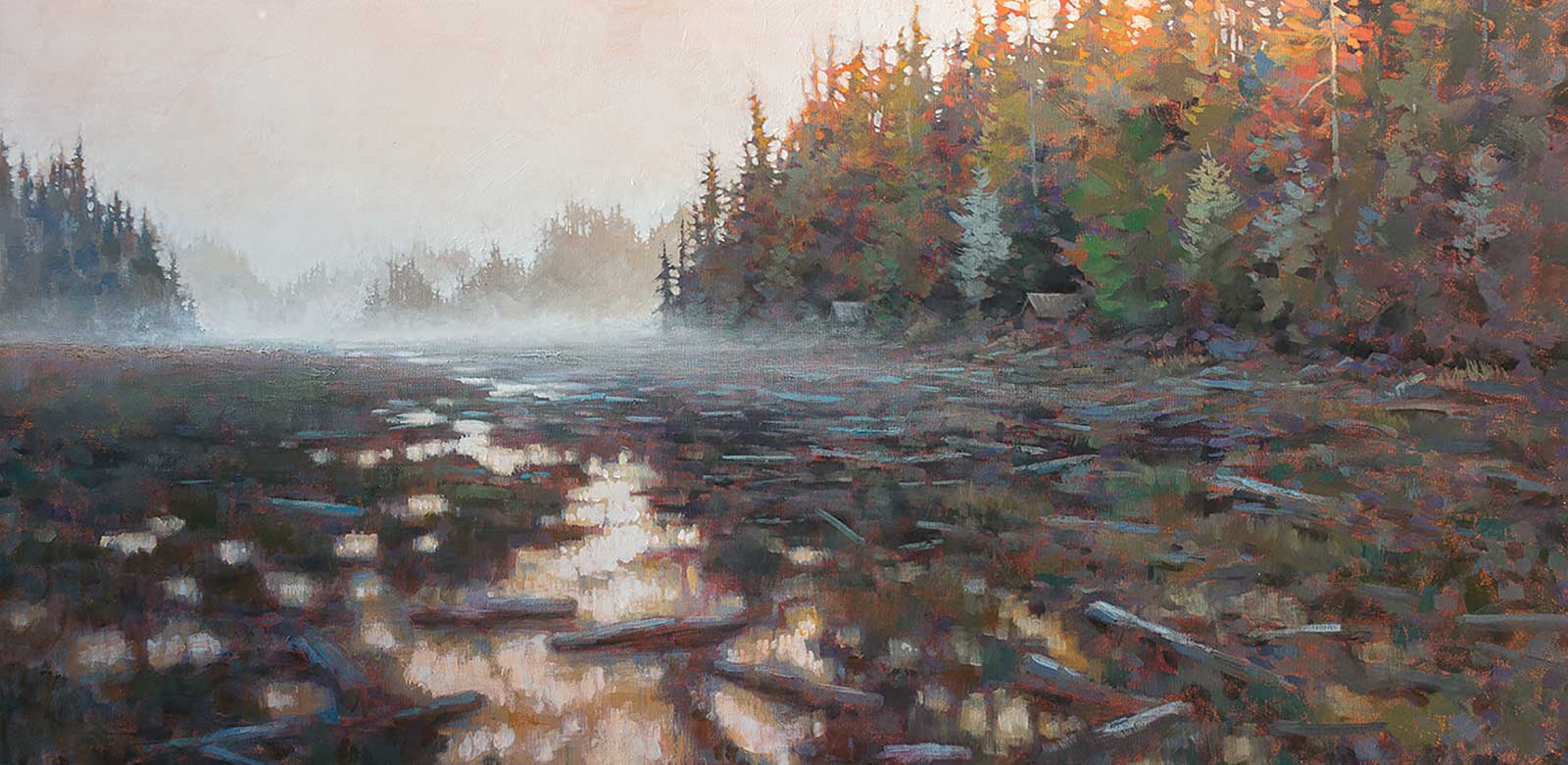
Tucked Away, acrylic, 24 x 48" (60 x 121 cm) To achieve the feel of a silent, misty morning I used a glaze with Zinc White - as it is a transparent white and perfect for glazing.
So, my first “successful” painting was accomplished on a black canvas. And while it wasn’t necessarily the reason, there was a mental connection made. To this day, painting on a dark canvas is still fun for me. Here are a few reasons: I can control where the light comes from. If I start with a light-toned canvas, I need to make sure I cover those areas I don’t want to “shine.” When I paint on a dark canvas, I am intentionally putting in the light.
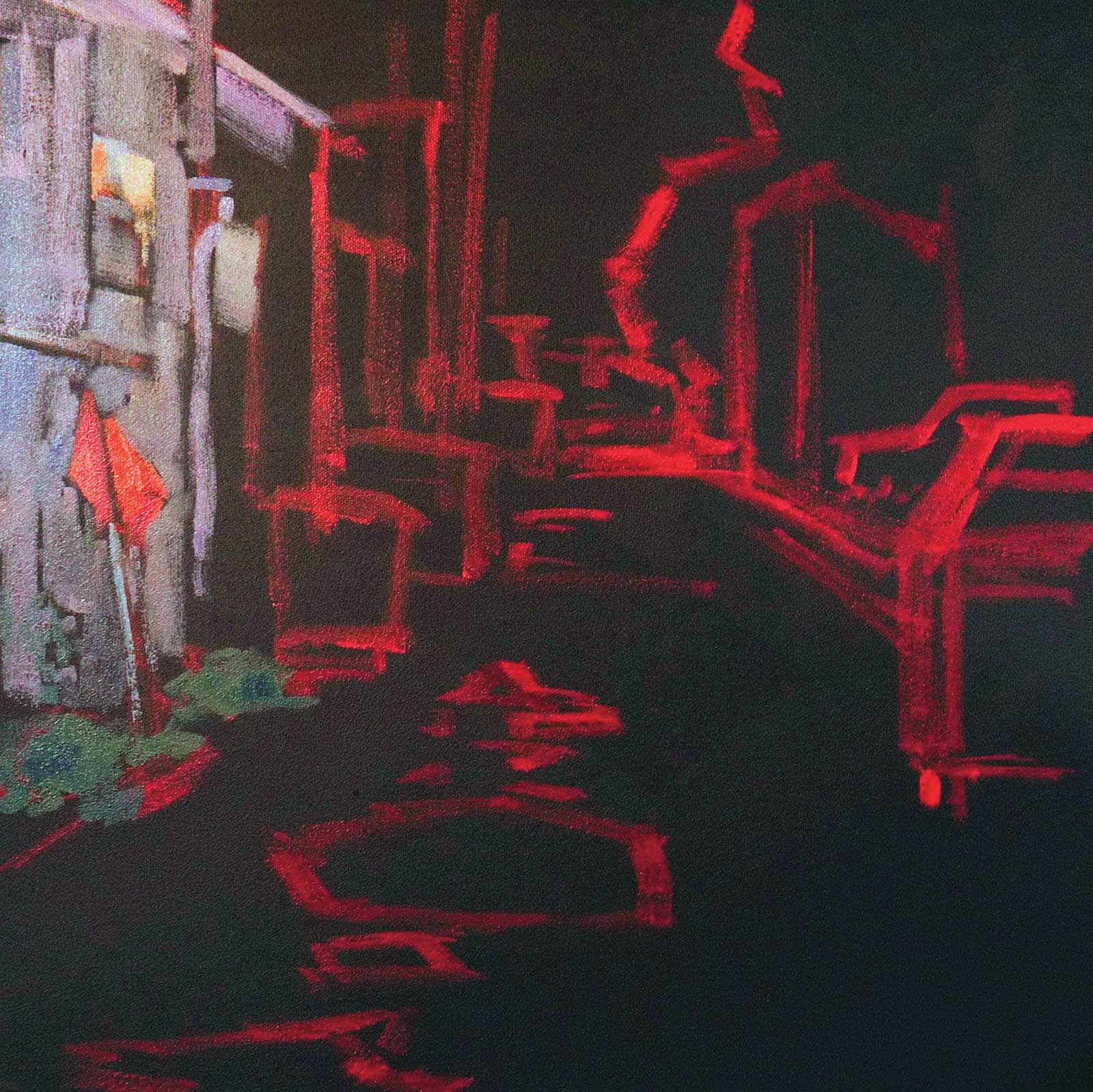
I often do my “drawing” with red or orange paint. This provides some vibrancy to the underpainting and is usually around subject matter. The colorful drawing usually shows up in the end of the painting and adds interest.
It is easy for me to work in layers. I start with my darker colors usually and work toward the highlights. I also anticipate using multiple coats to bring out those lightest values. This process of layering and building toward the highlights is fun for me. I see the values easier. For whatever reason, it’s easier for me to recognize the value of the colors I use when they are against a dark background than a white or light-toned background.
But there’s another reason why I love painting on a dark canvas, and it is more personal to my story. There was a time when I was stuck in addiction. My life was dark, and I felt hopeless. It felt like a black canvas. And one day I found myself painting in my studio alone. I had hurt the people closest to me. I had no one to talk to. So, I painted. And I prayed. And it was there in that dark moment that I felt color and light begin to come back into my life.
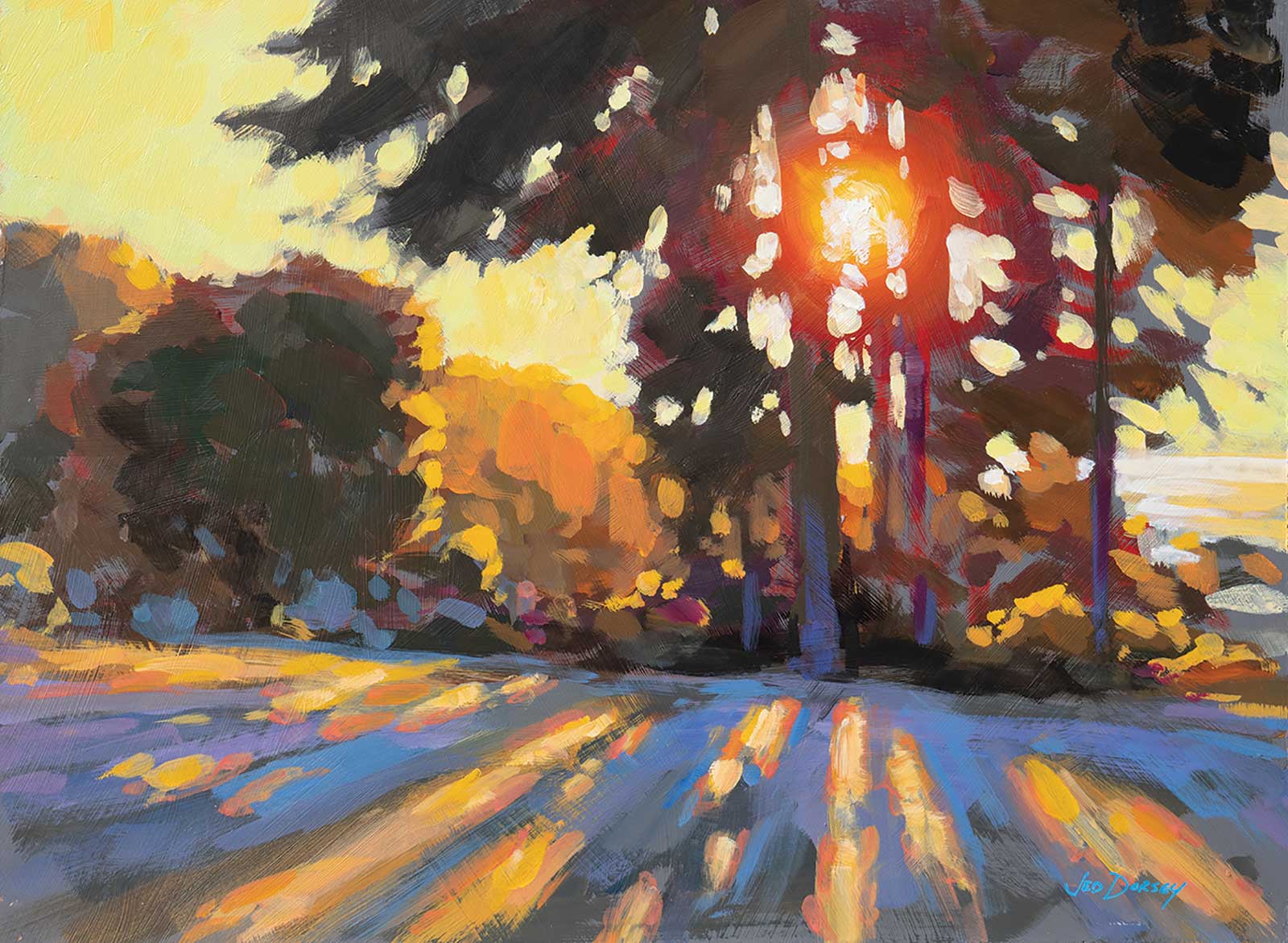
Skyfall, acrylic, 12 x 16" (30 x 40 cm) I used a gray-toned canvas for this and layered everything over a gradiated sunburst using a lot of negative painting.
My life is different now. I have experienced a lot of healing. I have purpose and joy in my life. So, painting on a dark canvas reminds me of hope. It reminds me that I’m not alone. It reminds me that there is a great artist who can create beauty—even in a life that is dark and empty. And in art, it is a well-known truth that the contrast of light and dark is what makes the best paintings shine. As the more-popular-than-ever Bob Ross said, “You need the dark in order to show the light.”
Still, as I’ve painted through the years and taught thousands of students, it seems that for many the idea of painting on a dark or black canvas is a new concept. And while there are always a few people who don’t like it, for many it opens up an approach they end up loving. So, that’s what I’ll be demonstrating here.
Before I show you the process, here are a couple things to pay attention to. First, when using acrylic paints, don’t be surprised if it takes a couple coats to get your highlight colors as bright as they need to be. Like I mentioned before, this isn’t a problem in my eyes. It allows me to add nuance through layering. Second, painting on black can add a graphic element to your painting. If you want to heighten that as a style, you can leave a small amount of the dark showing through around the edges of objects in your subject matter. If you want to lessen that graphic style, you will want to work on removing those black edges. This can be important especially if you want to create depth in your background. —
My Art in the Making Memories of Old Town
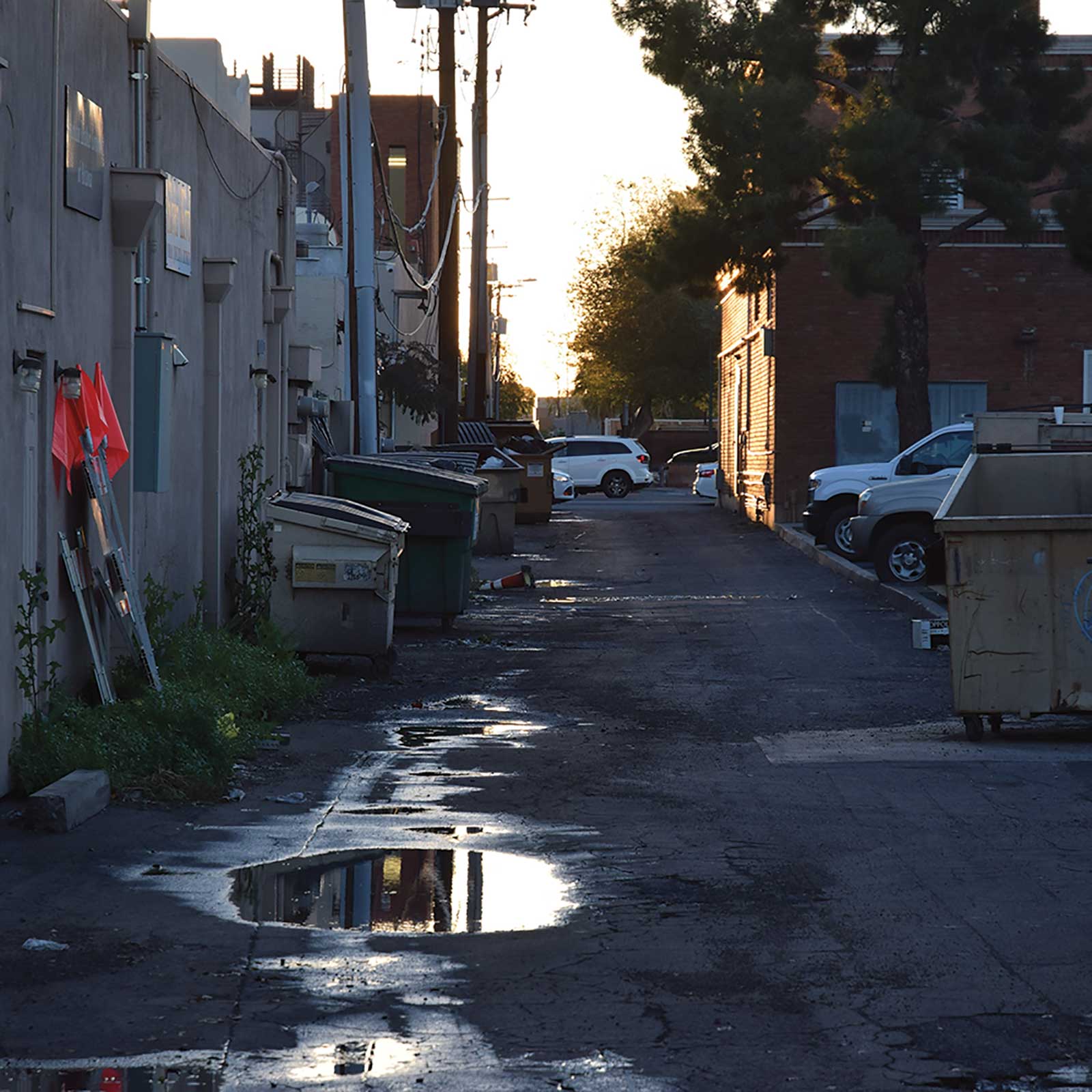 Photo reference
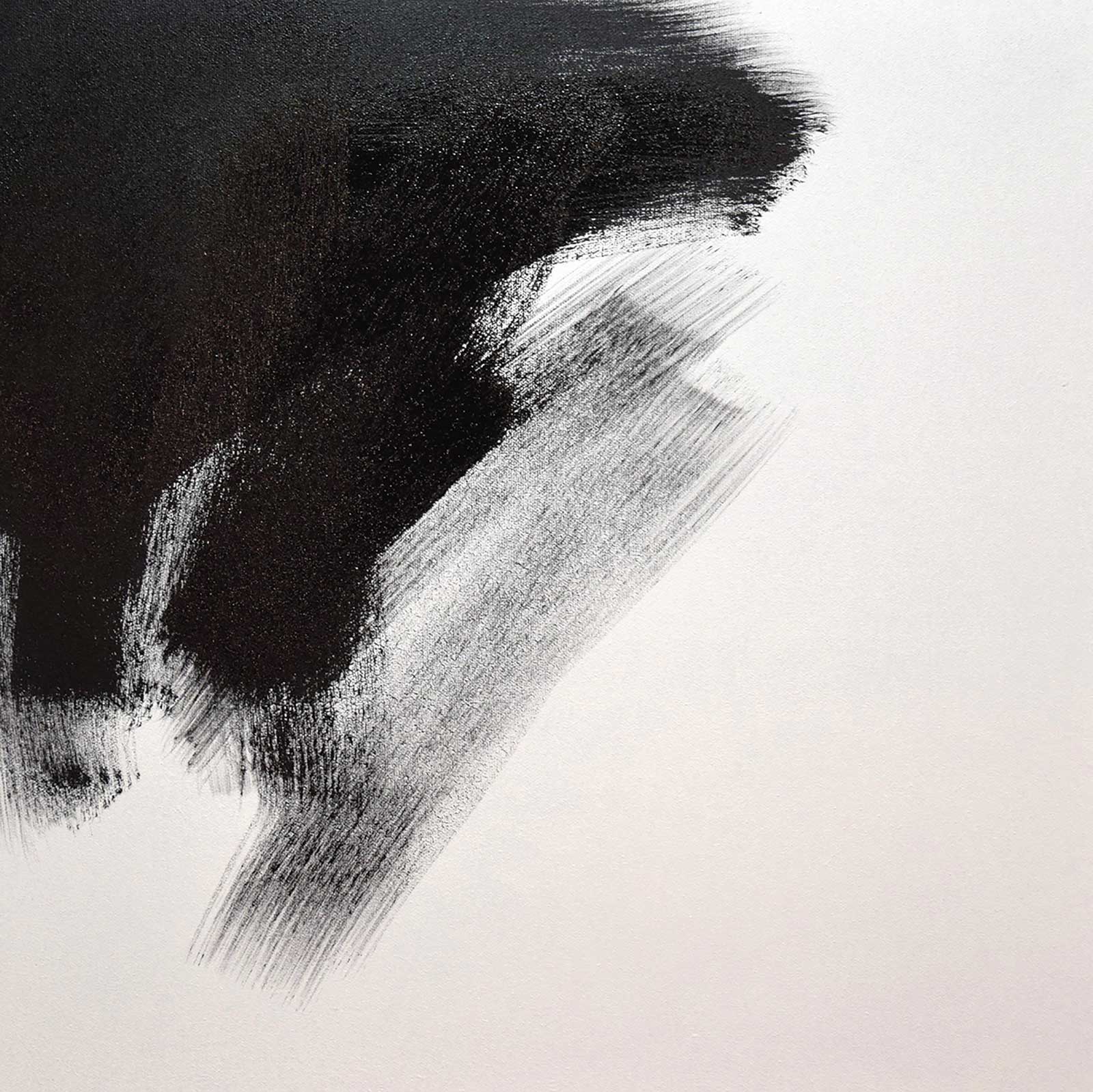
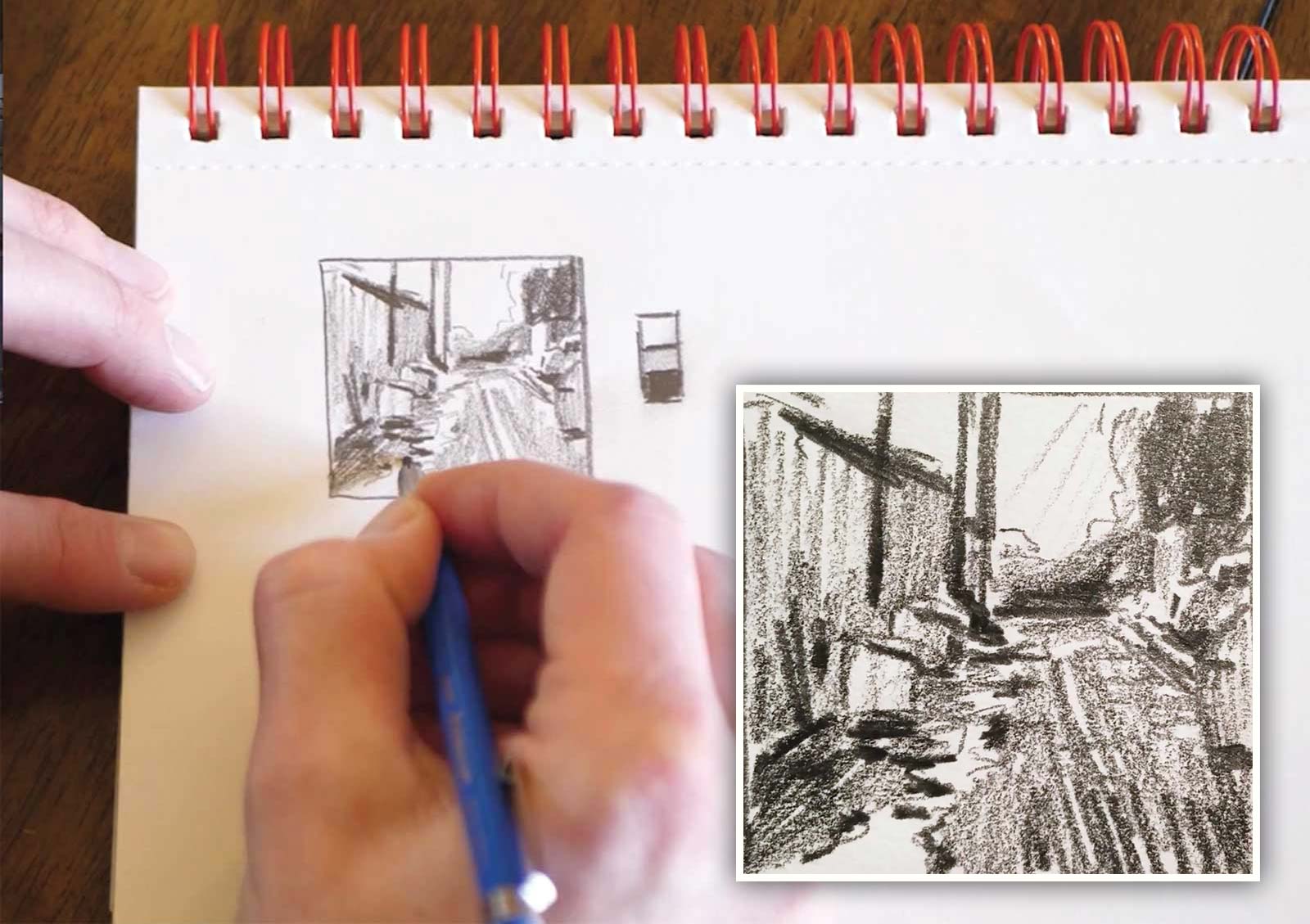 Stage 1 Stage 1 Thumbnail Sketch
I start with creating a thumbnail sketch of a back alley scene. The photo is from a trip to Scottsdale, Arizona. I use the thumbnail sketch to create my design and establish my values.
 Stage 2
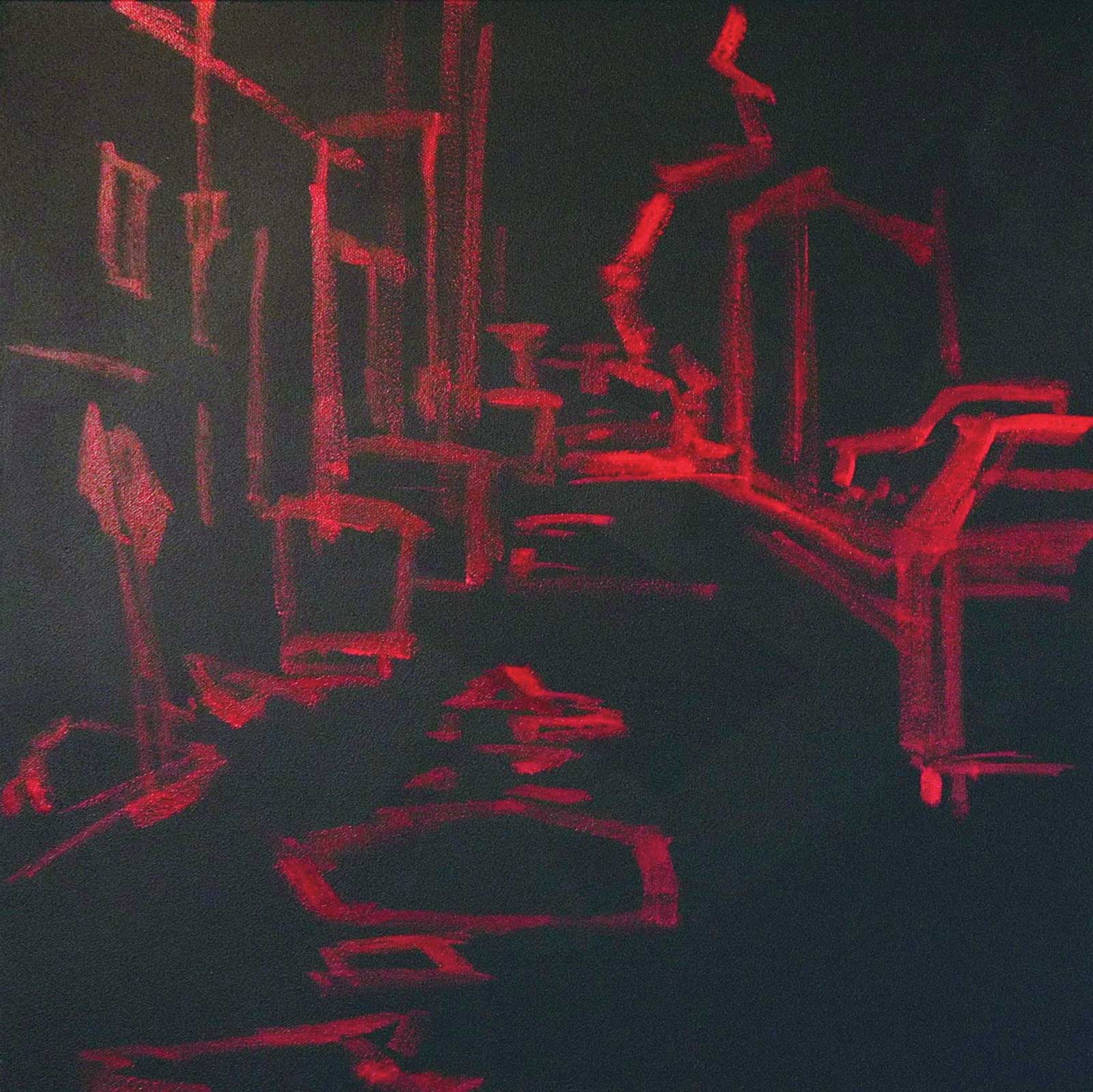
Stage 2 Applying Black Gesso
To start off my painting I brush black gesso onto a canvas that has been pre-primed. You can use acrylic paint when toning the surface black, but gesso is less shiny and a little easier to paint on.
 Stage 3
Stage 3 The Drawing Stage
Next, I transfer the design from my thumbnail sketch onto my canvas. I call this the “drawing” stage, although typically I use a paint brush and paint for it. My goal is accuracy to the design, not adding details.
 Stage 4
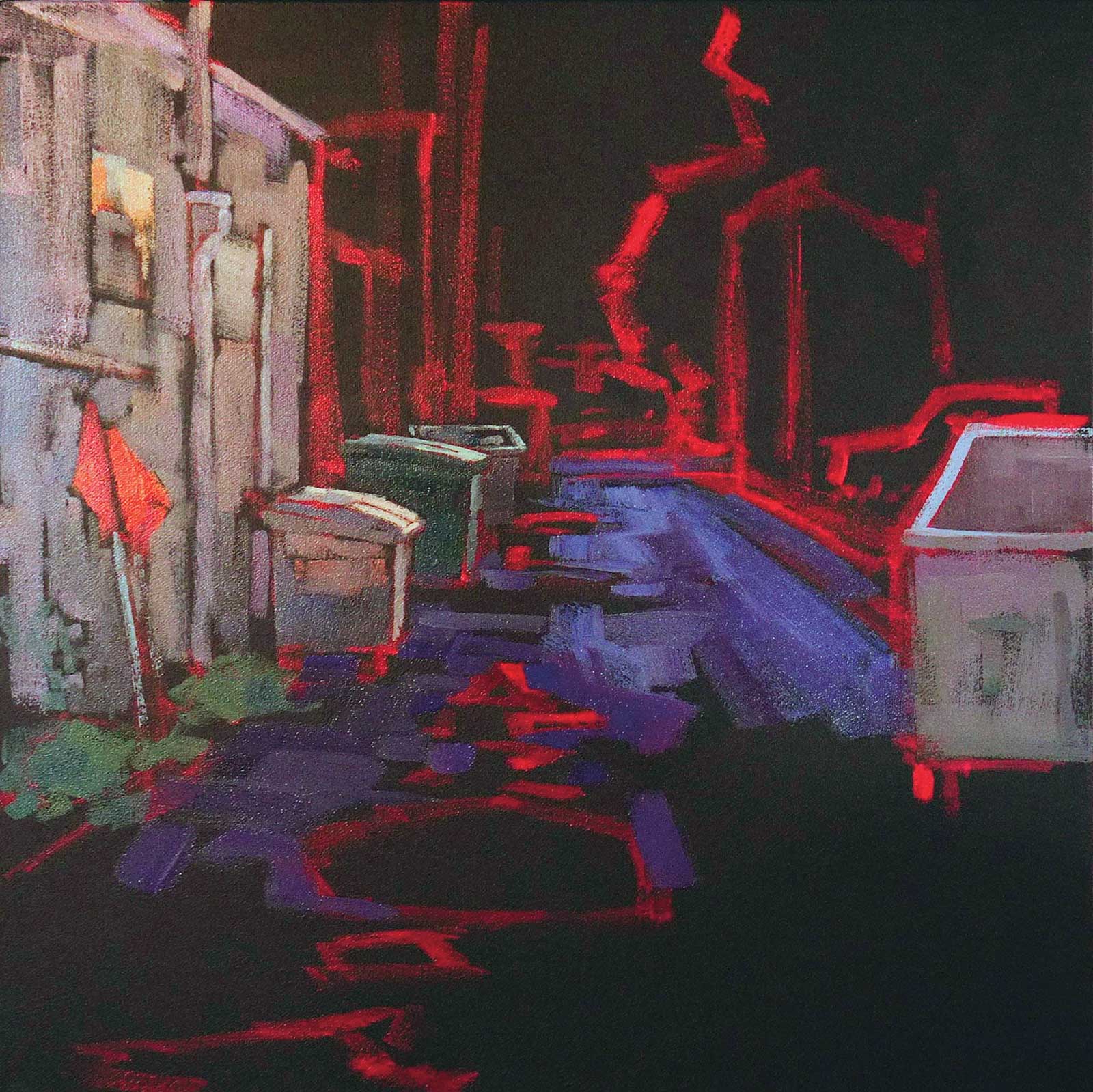
Stage 4 Blocking in Colors
Next, I start blocking in the colors. I almost always start in the foreground and work backward. I like to paint “around” objects once they are in place.
 Stage 5
Stage 5 Painting the Alley
After getting some of the building and dumpsters painted, I begin working on the alley itself. The violet I use initially is stronger than I want, but it gives me a place to start.
 Stage 6
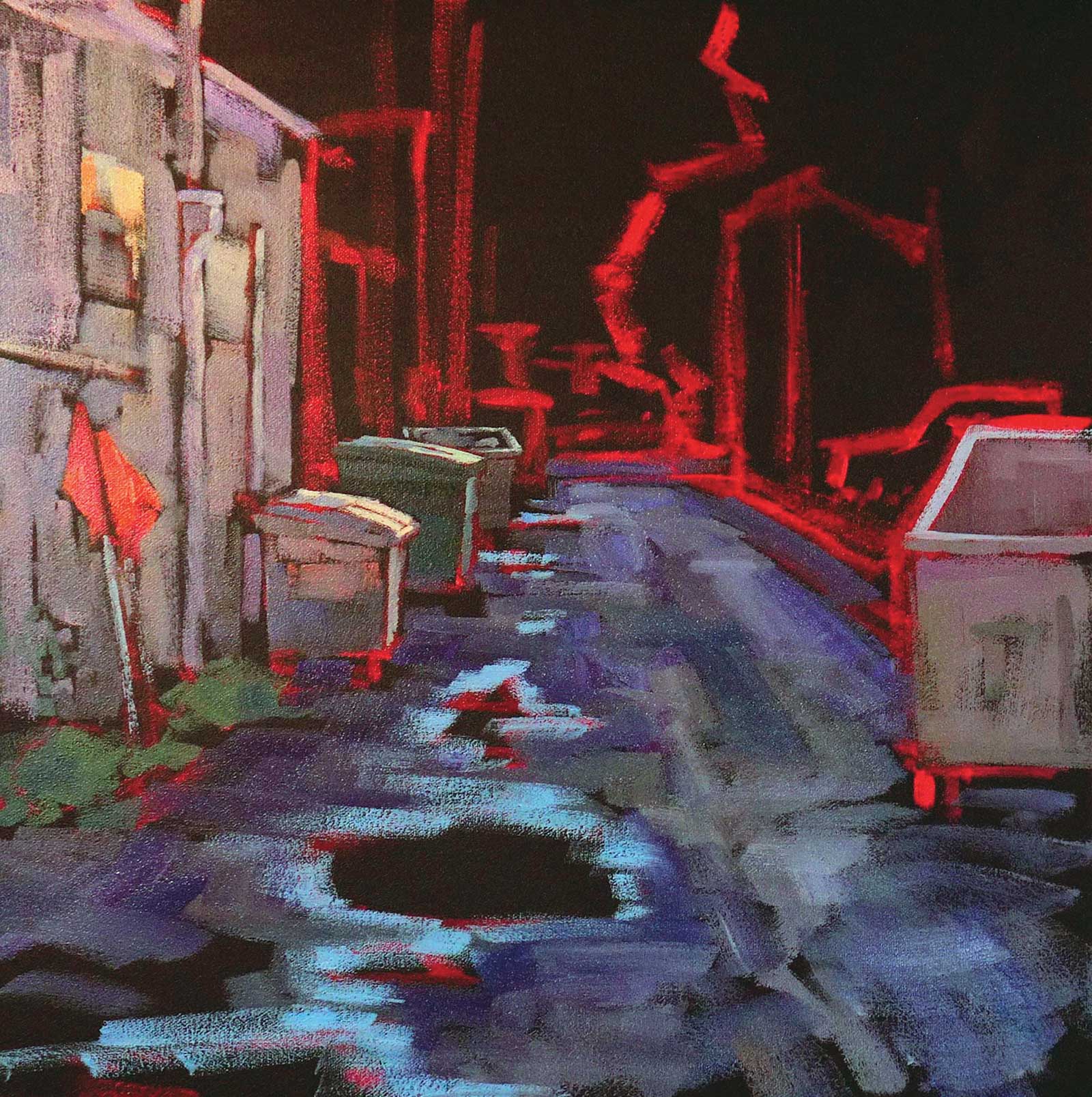
Stage 6 Wet Areas
Next, I start to show the wet areas of pavement around the puddles. These glisten with a cool, reflected sky color, but they are not the main reflections.
 Stage 7
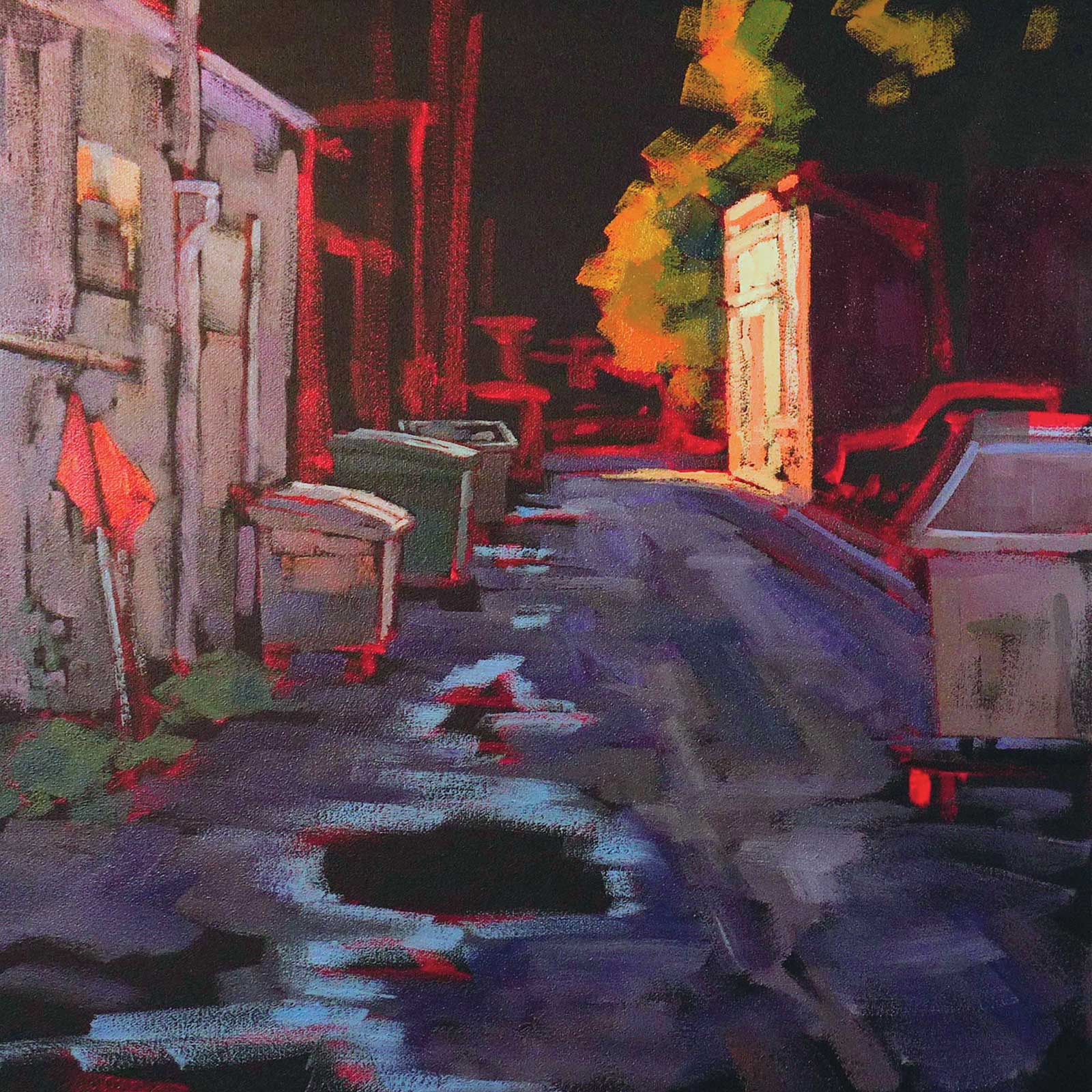
Stage 7 Sunlight
Here, I finally start to paint the sunlight. This is where the work of establishing the mid-tone and darker values starts to pay off. I also change the size of the dumpster on the right.
 Stage 8
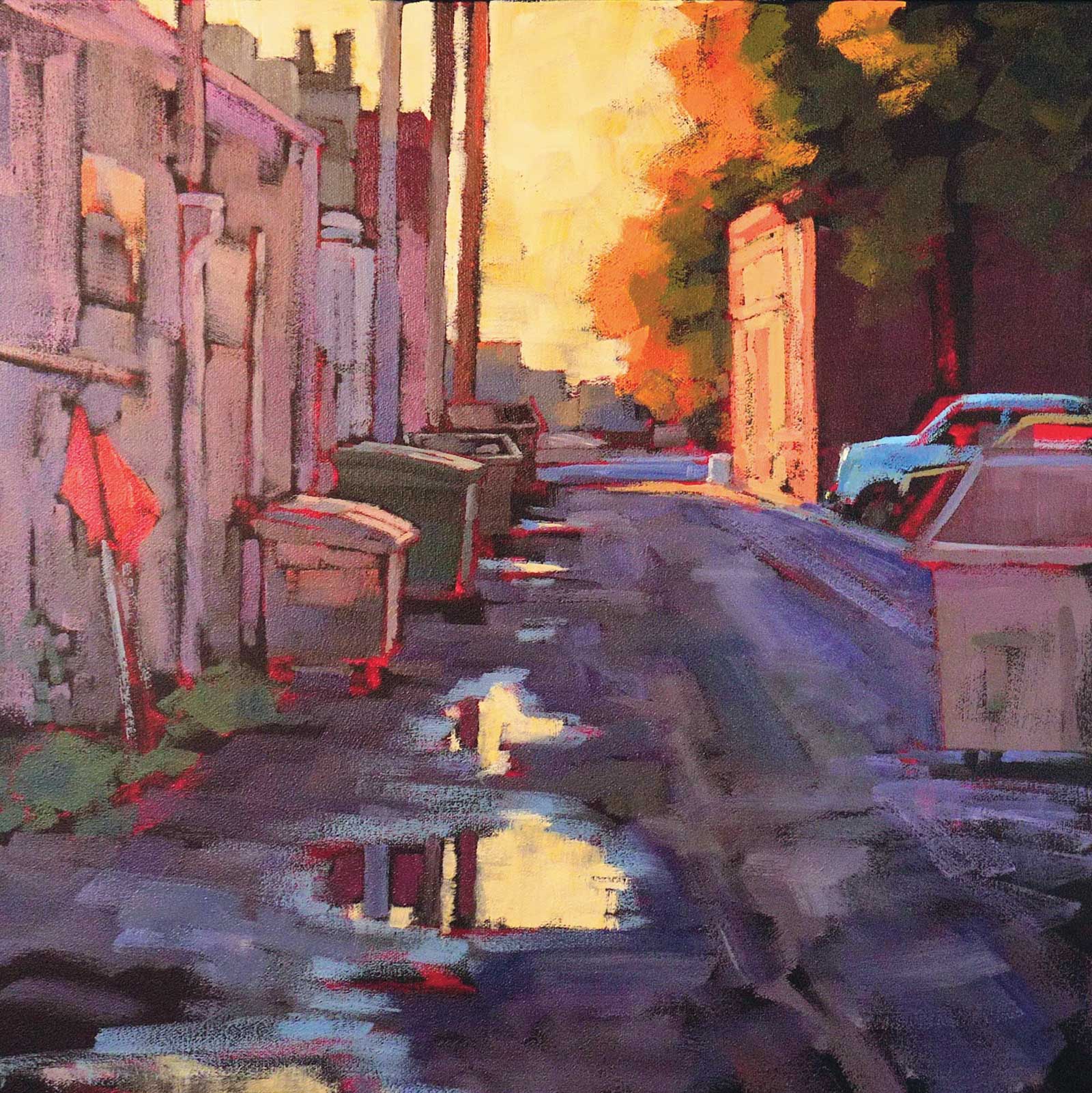
Stage 8 Buildings, Sky and Puddles
I block in the rest of the buildings and add the sky and puddles. I also add the cool blue vehicle, a needed contrast in temperature drawing our eye toward the area of interest.
 Stage 9
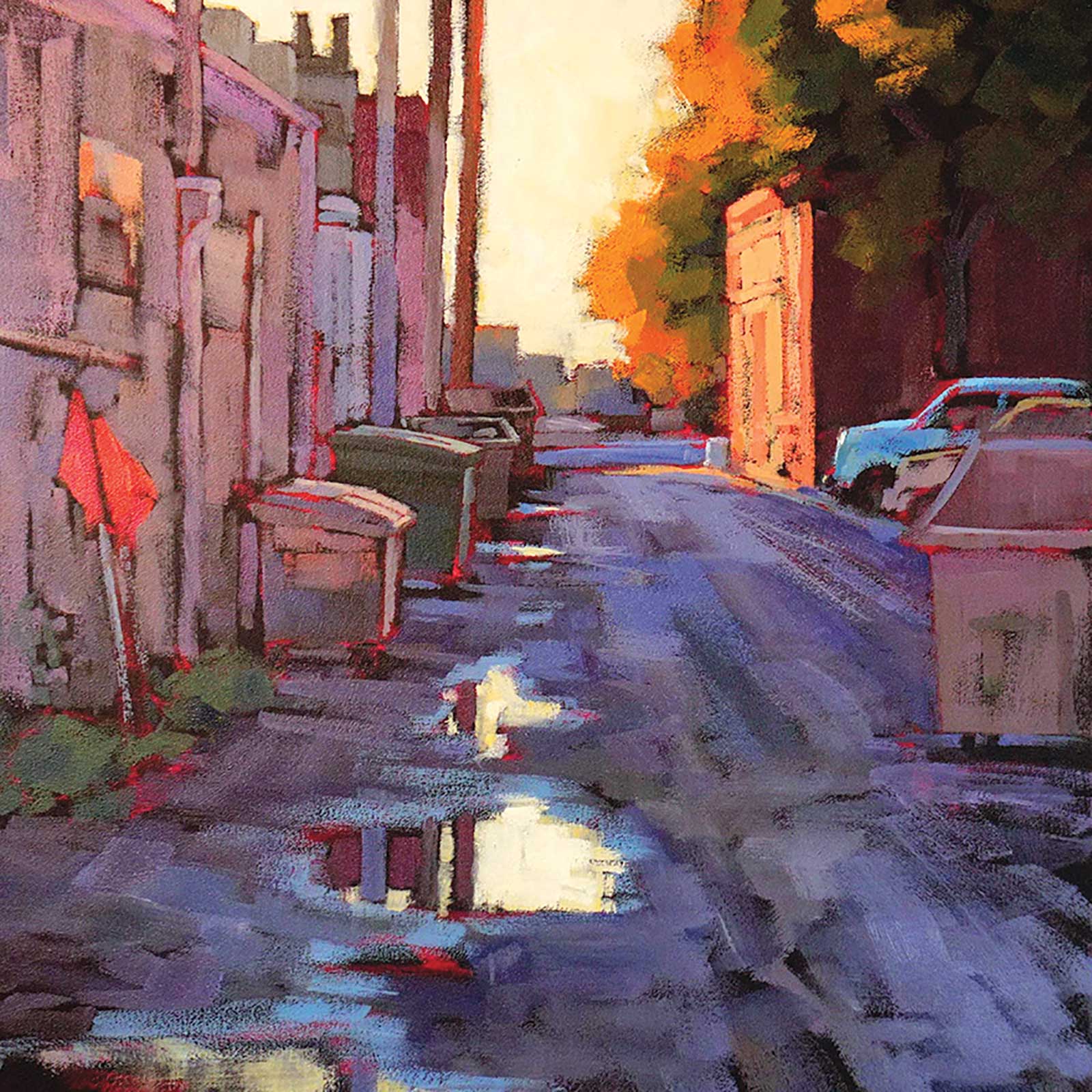
Stage 9 Lightening Values
Now the entire canvas is covered. In the next stage I lighten the values of the sky and highlights. I am also starting to consider what needs to be refined and adjusted.
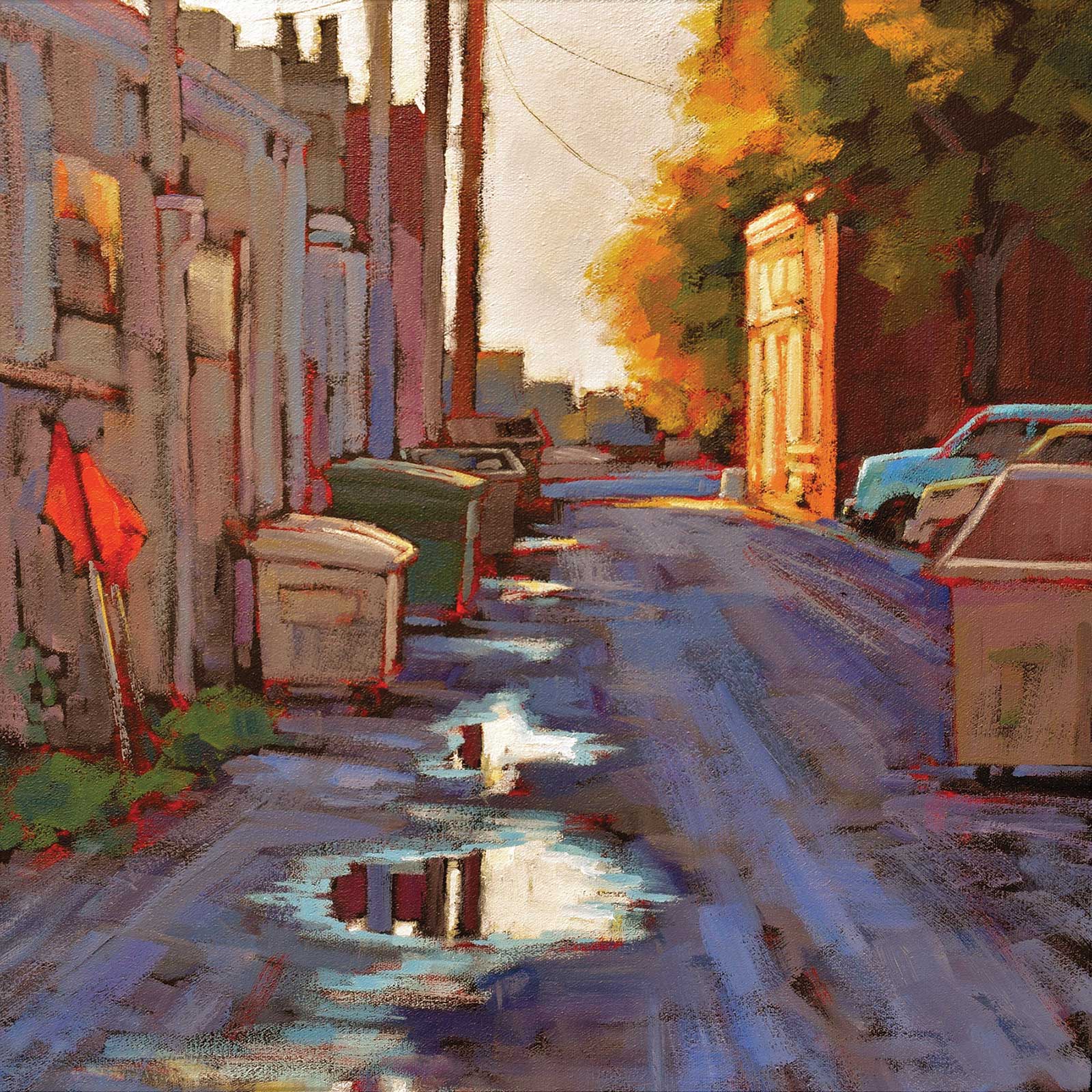 Stage 10
Stage 10 Finished Artwork
Memories of Old Town, acrylic, 20 x 20" (50 x 50 cm)
In this final stage I adjust colors, add sharper edges to the puddles, use directional brushstrokes in the alley, add more highlights and tone down the sky slightly. The painting is complete!
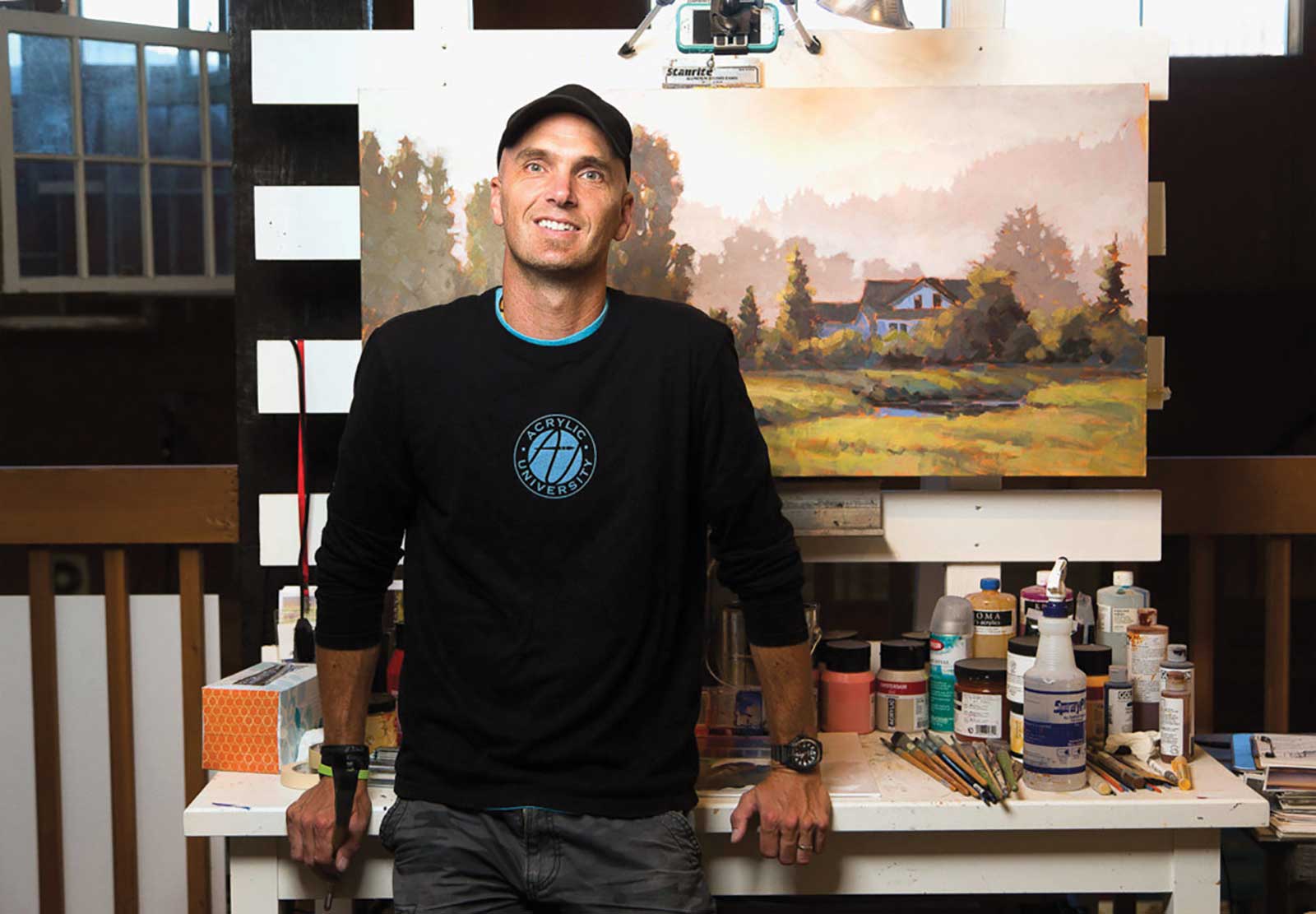 Jed Dorsey in his studio
About the Artist
Jed Dorsey in his studioAbout the Artist
Jed Dorsey is a fourth-generation artist from Camano Island, Washington. He is best known for his radiant, color-filled landscapes and is passionate about acrylics. Dorsey fell in love with this medium after stumbling across some beautiful paintings by artists Robert Genn and Mike Svob in Whistler, BC. He was fortunate to study under these artists during his formative early years as a painter in Vancouver, BC. Since then, Dorsey has studied under other great artists like Ovanes Berberian, John Michael Carter, Carolyn Anderson and John Poon. He has won numerous awards at plein air events around the US and his work has been featured on HGTV.
Dorsey currently lives on Camano Island with his wife and daughter. He never tires of the stunning views of the Pacific Northwest and loves painting and teaching in this coastal, mountain setting as well as nurturing his virtual students through Acrylic University, his online platform where he shares his painting secrets and provides huge doses of encouragement and inspiration.
Represented by
Cole Gallery, Edmonds, Washington, USA, www.colegallery.net
Contact at
jeddorseyart@gmail.com
www.acrylicuniversity.com
www.jeddorseyart.com