It is critically important to the future of the arts to nurture the next generation. Young artists are often the source of new ideas and possess a genuine commitment to applying themselves to hours of study and practice. It is this type of hard work that can result in early success. As a culture, we celebrate and enjoy welcoming young people into a variety of career paths. Venus Williams won her first Grand Slam at the Australian Open when she was only 18 years old. On April 13, 1997, Tiger Woods won his first major tournament, the Masters, in record-breaking fashion and became the tournament’s youngest winner at age 21. John Singer Sargent exhibited his first major portrait of his friend Fanny Watts in his first Salon admission at the age of 21, which set the stage for a career in portraiture.
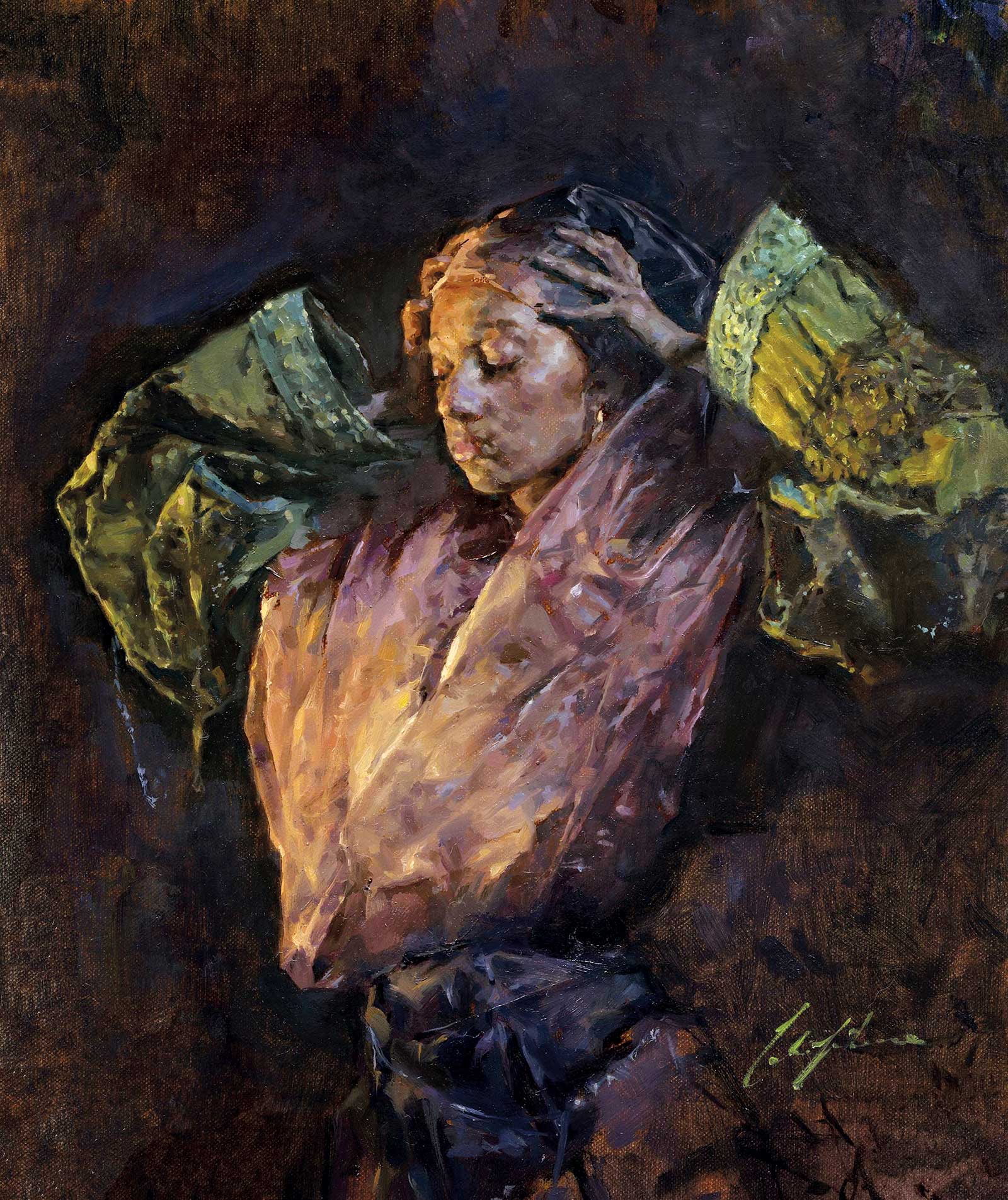
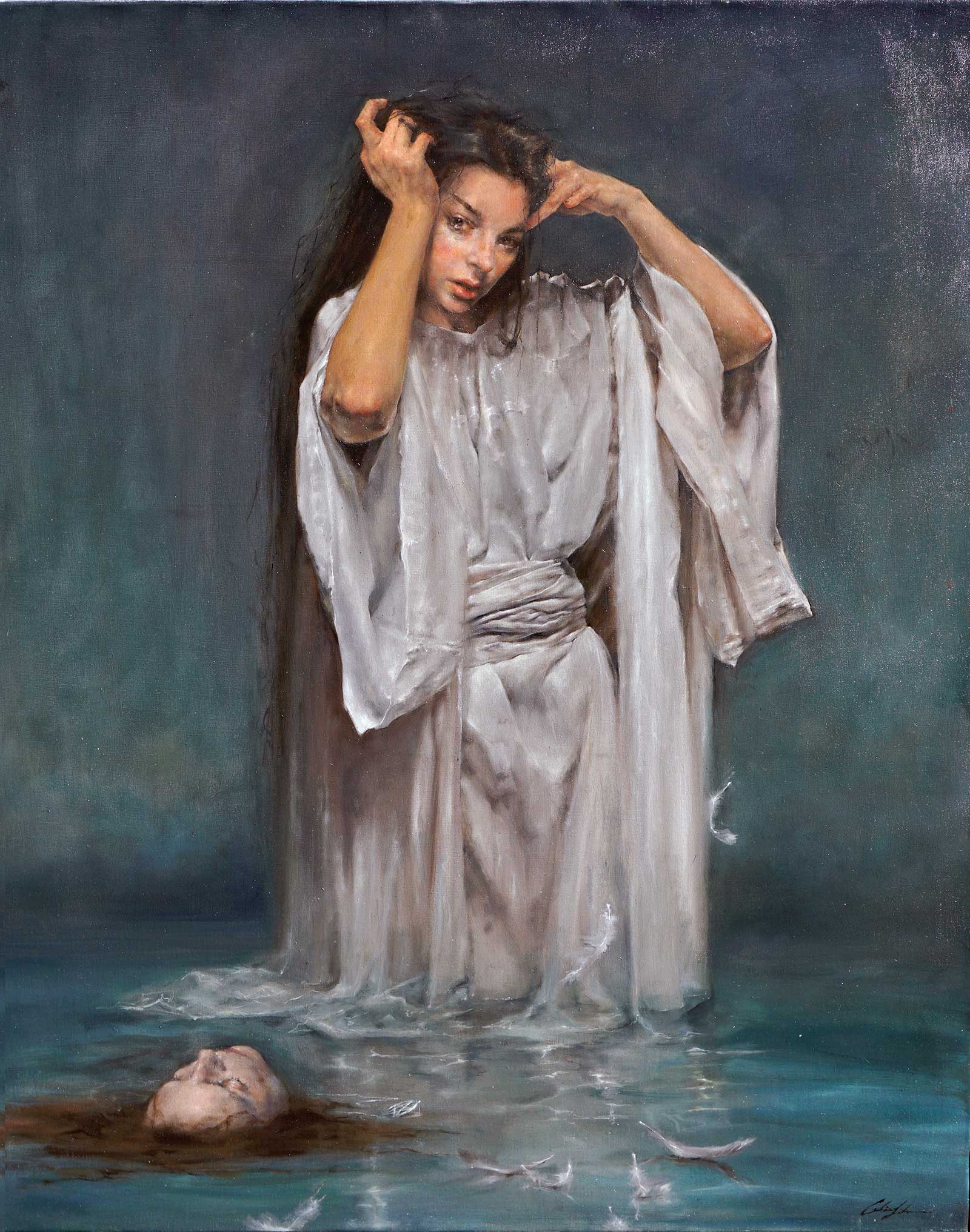 First Place Winner: Celia Liberace, A Broken Curse, oil, 37 x 31" (93 x 78 cm)
The Portrait Society is dedicated to encouraging and nurturing young artists and created The Future Generation Competition. We are pleased to announce the First Place winner is Celia Liberace, a 20-year-old art student who has been drawing and painting ever since she can remember. The following article is from a recent interview I had with her about her work and plans for the future.
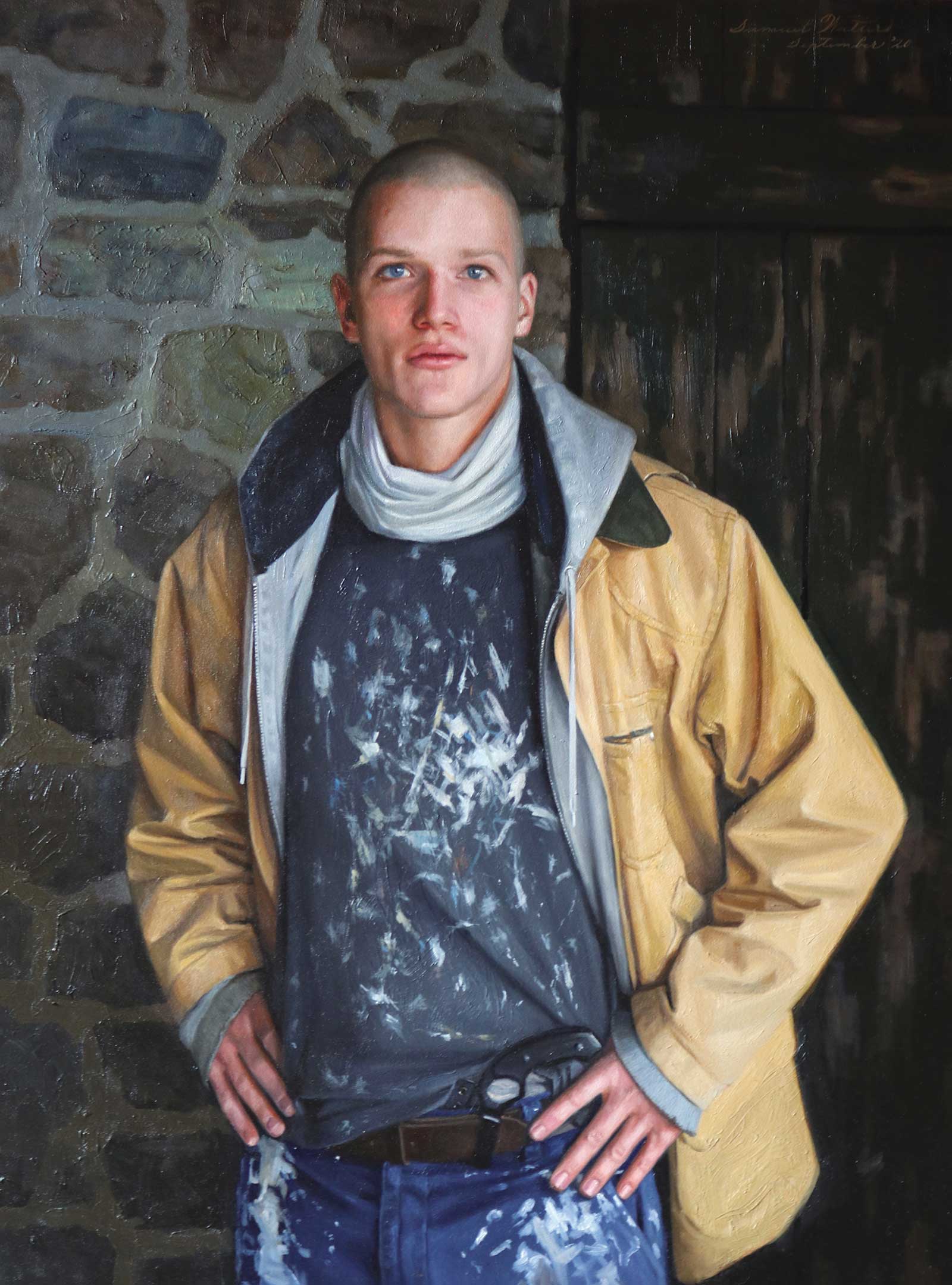
Second Place Winner: Samuel Walter, My Brother, The Handyman, oil, 48 x 36" (121 x 91 cm)
I can imagine your excitement at being selected as the First Place recipient of the first The Future Generation Competition. Can you tell us about your inspiration and the story behind your winning work, A Broken Curse?
I was inspired by Richard Wagner’s play Lohengrin, and this piece depicts the protagonist, Elsa, as she witnesses the transformation of a swan back into her brother, Gottfried. This scene addresses the conversation between Christianity and paganism interwoven throughout the play and captures Elsa’s emotional state moments before she is stricken with grief and passes away. I wanted to capture a transcendental moment; the emotionally charged, liminal space that existed just prior to Elsa’s death and Lohengrin’s dreaded departure.
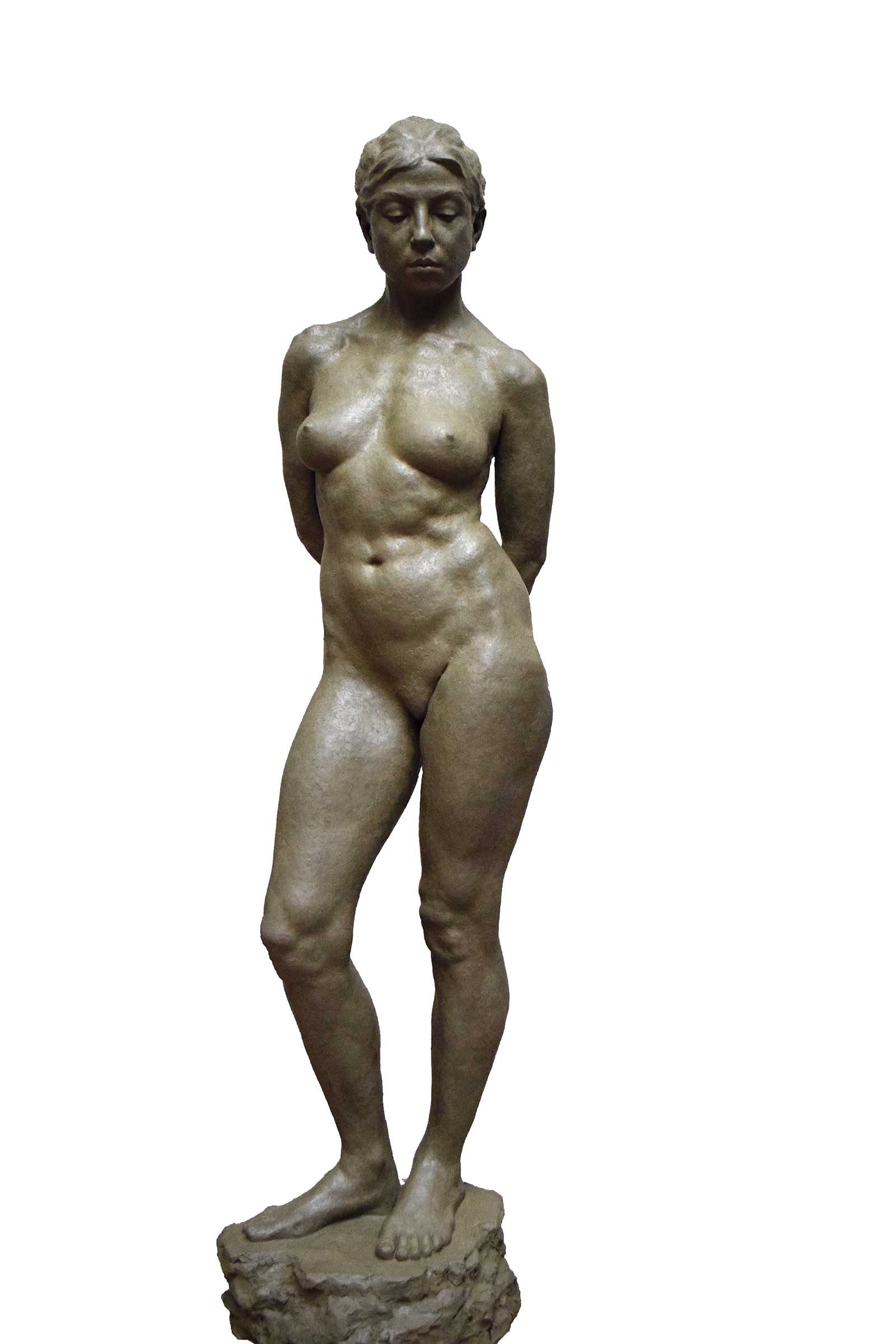
Third Place Winner: Jana Buettner, Light Ray, clay, 67 x 16 x 17" (170 x 40 x 43 cm)
Both of your parents are talented and successful artists; in what ways do you feel that created a solid foundation for your future artistic journey?
I feel very privileged to have been exposed to the classical arts at an early age. Yes, I was raised in a household of artists, my family members praising the works of María Fortuny, Antonio Mancini and Cecilia Beaux, among many other realist painters who cherished technical precision while simultaneously embracing a gripping sense of abstraction. This upbringing has wired my mind to hyper-focus on the minuscule, particularly when it comes to form. In the classical realm, the subtleties of life are to be worshipped through observation and rearticulation. I consider it a sacred act carried out by the artist’s eyes and hands. I have come to admire and cherish a line’s recurrent tremors, the muddling of paint below an eye, the uneven depth of a shadow, all the flickering, unexpected moments of an image. I find them so revealing, these little visual dents that reflect the impurities and hiccups of our very nature.
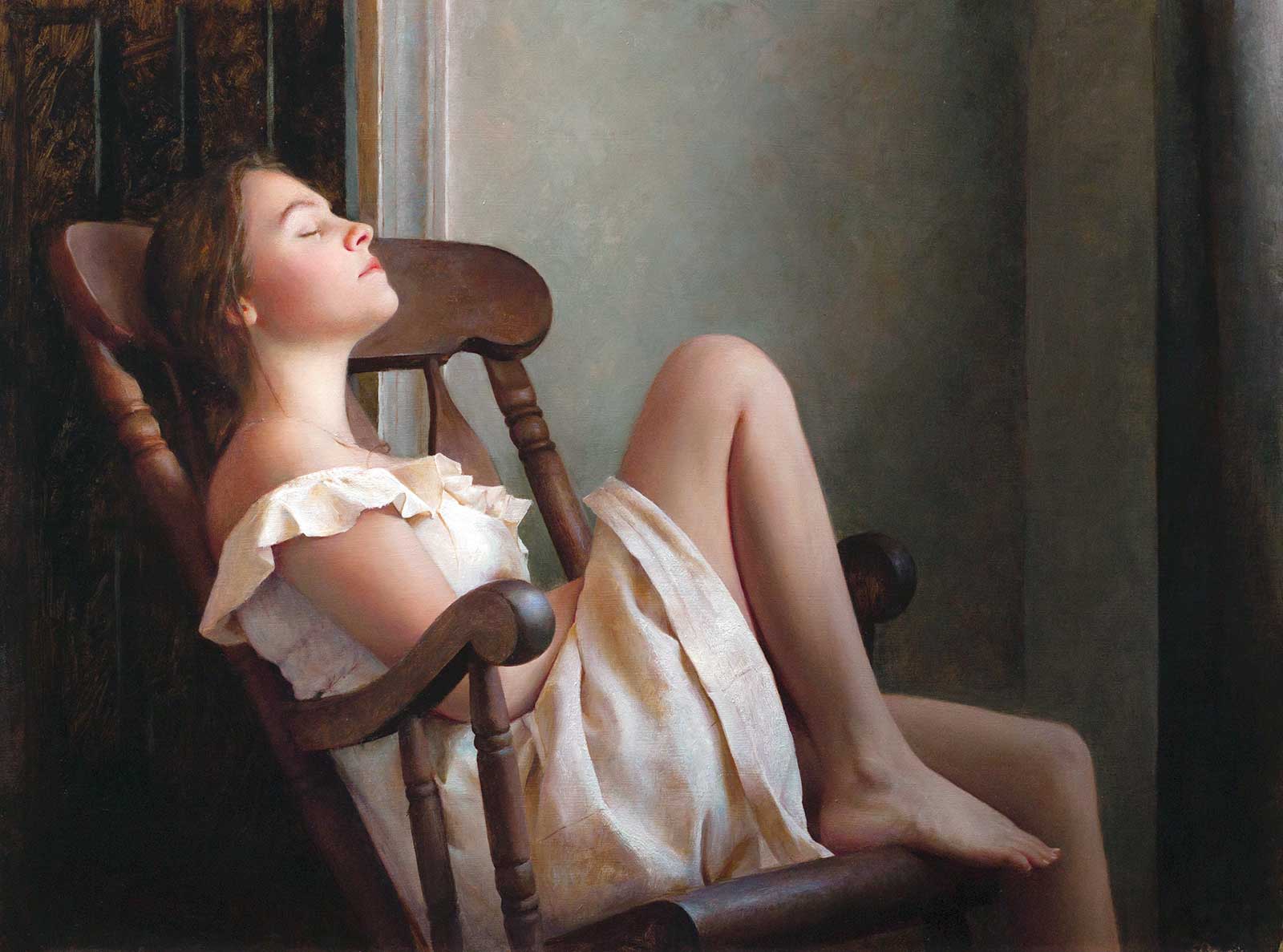
Fourth Place Winner: Kristen Yann, Morning Light, oil on panel, 18 x 24" (45 x 60 cm)
Being exposed at the level you were to great and traditional artists must have created a sensitivity to classical arts. Can you tell us specifically about your art studies?
For the most part, I learned how to draw and paint at home with my parents and younger sister. We drew from Bargue books and studied the symmetry and profound irregularity of human form. I attended public school in Northern Virginia, where I became close to the art faculty there. My art and photography teachers, Mrs. Conley and Mrs. Silva, were so loving and supportive of me, and I am incredibly lucky to have developed such close relations with them at that early of an age.
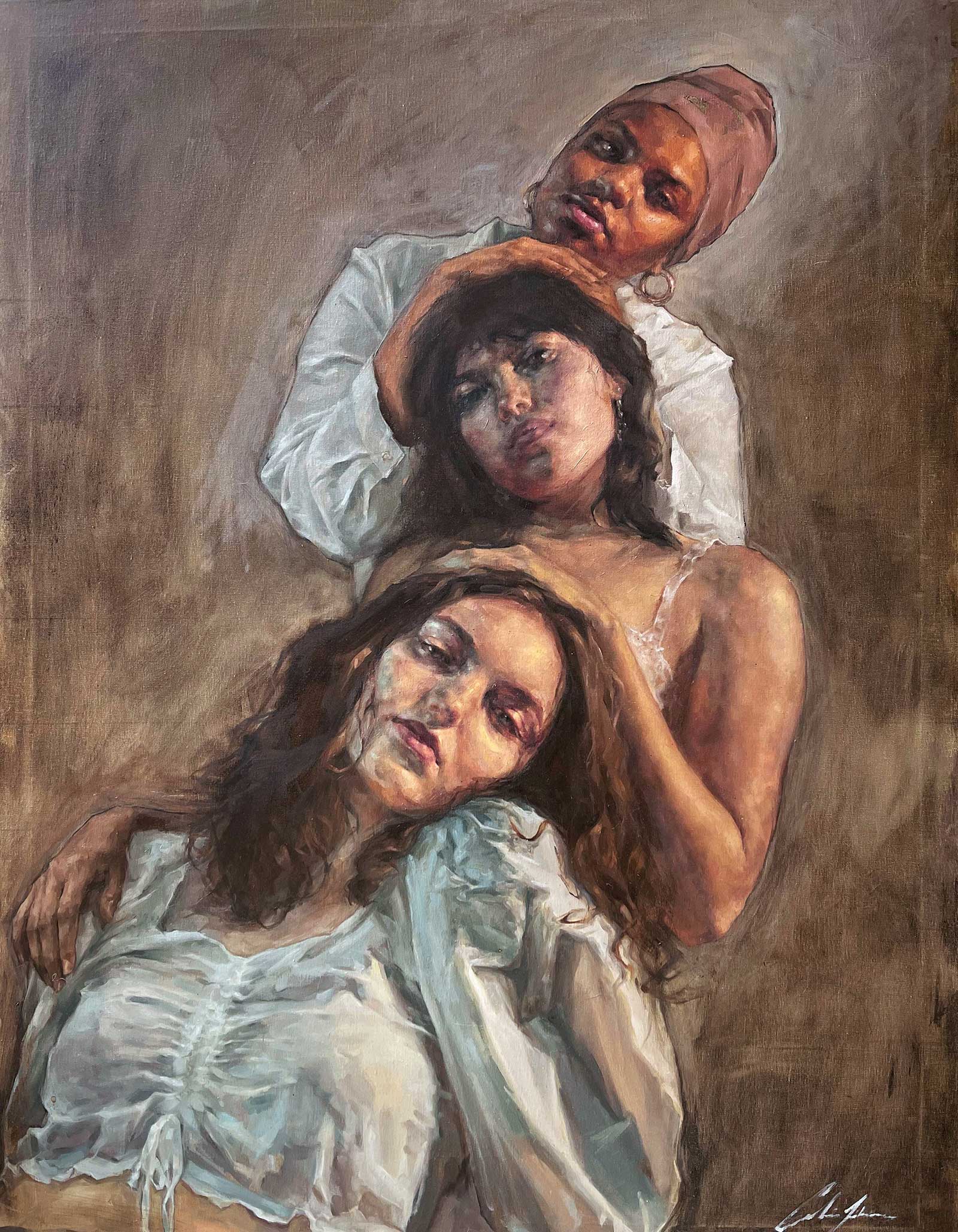
The Three Graces, oil on canvas, 44 x 34" (111 x 86 cm)
You recently completed a painting titled The Three Graces, which seems to be your modern interpretation of the mythical characters grace, beauty and charm that has been reinterpreted by many artists of the past. Can you tell us about your composition and what inspired you to paint the subjects?
My friends Sofia (middle) and Tagwa (top) and my sister Ava (bottom) were my initial inspirations. They each have a story, but when they stand together, they create an entirely new story, separate from their individual identities. It’s almost as if they morph into this singular, all-powerful force. The arrangement, this kind of towering mass, is meant to transcend Western belief systems, ordaining the figures with a spiritual dimension and celebrating the divine feminine. I used both gaze and scale as a means to elicit feelings of either empowerment or intimidation from the viewer. While some may feel equally as powerful in response to their intense gazes and confident dispositions, others may feel intimidated or looked down upon, perhaps if they’re inclined to suppress the feminine characteristics within themselves. I aimed to explore these principles while embracing classical techniques to portraiture.
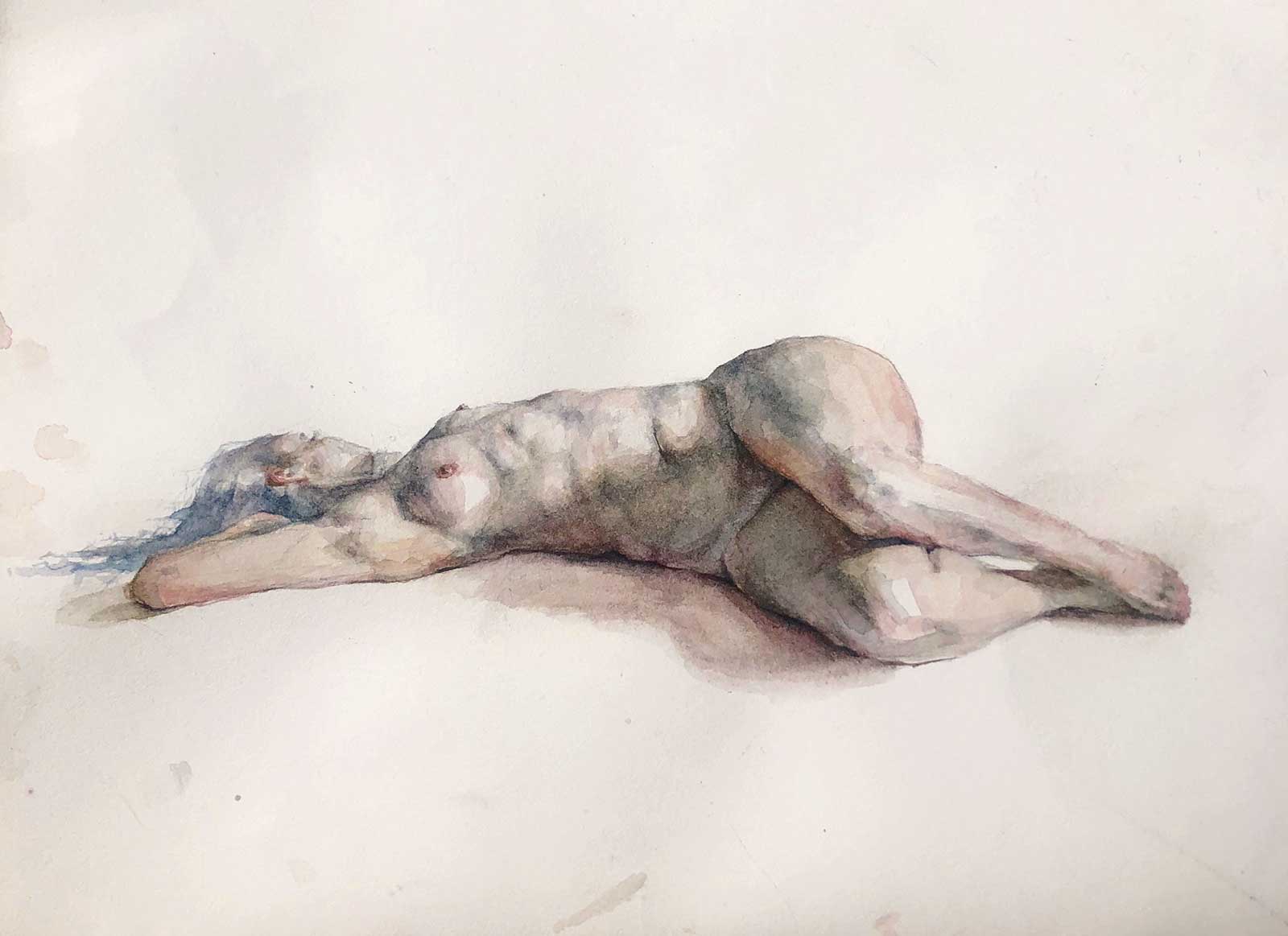
Reclining Female Figure, watercolor, 7½ x 9" (19 x 22 cm)
In the last 30 years it has been challenging to find a solid, skill-based art education, and I know you are attending the Cooper Union School of Art in New York City; what has been your experience so far?
Yes, I was accepted to The Cooper Union, where I found myself solely amongst visual, and largely conceptual, artists for the first time. Though my work is primarily rooted in classical traditions, Cooper’s environment enabled me to attune myself to an amalgamation of artistic genres that both diverge from and inform classicism. Despite this, I really struggled with my confidence. I felt as if the significance I attributed to technique as opposed to concept was somehow faulty and meaningless. Though, my body of work evolved in ways that I could have never expected, for which I am very thankful, as this environment has instilled in me a sort of malleability and open-mindedness as an emerging creator.
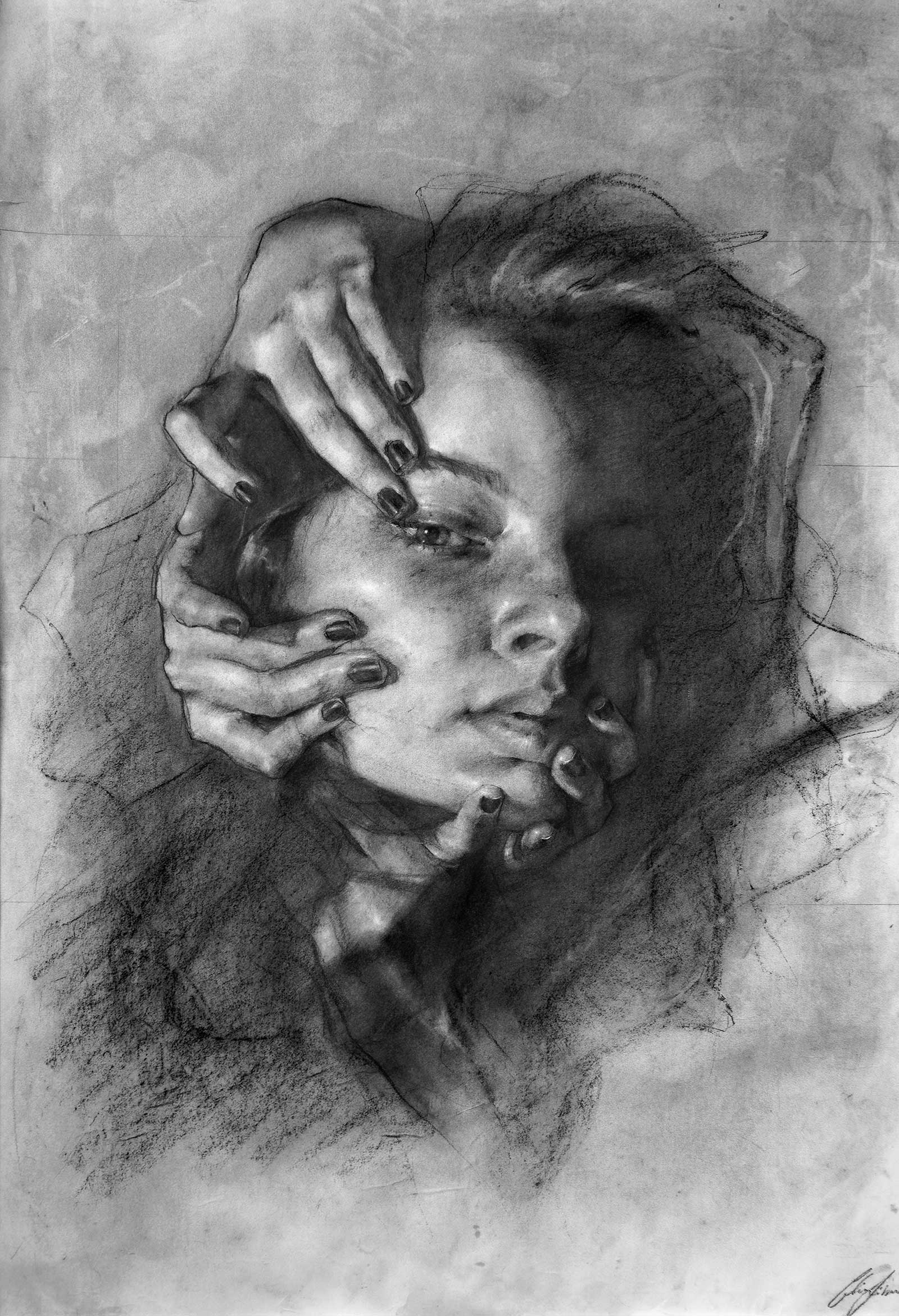
Forager, charcoal on paper, 50 x 40" (127 x 101 cm)
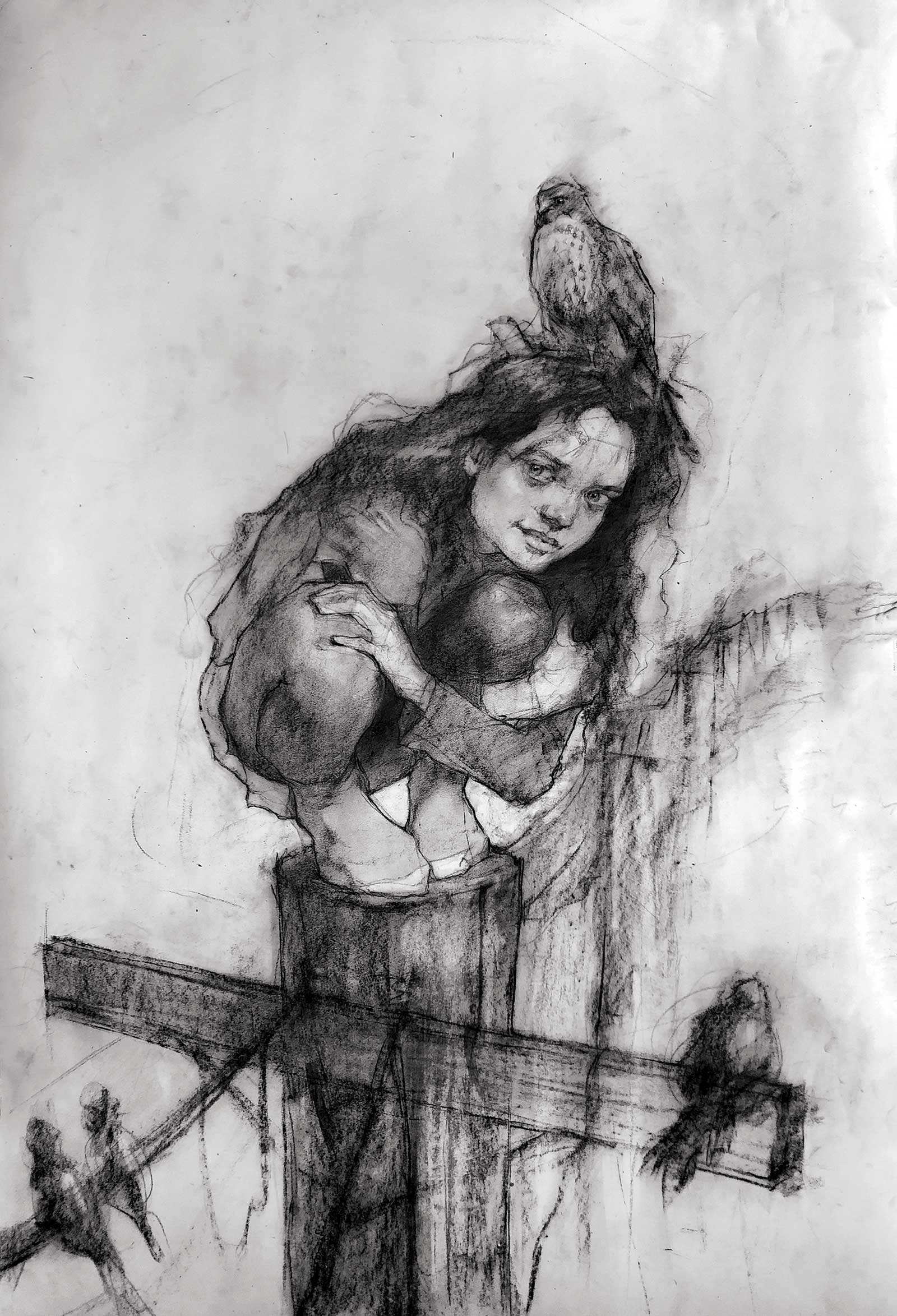
Bird Girl, charcoal, 48 x 22" (121 x 55 cm)
Congratulations, I read where you won First Place in the Da Vinci Initiative category of the Art Renewal Center’s worldwide competition for your self-portrait Forager. Can you explain your inspiration behind the drawing?
This was created at age 18, when I first moved to NYC and during my first semester of college. I was working constantly, and I had very little time to work through the abrupt transition. The creation of this self-portrait served as a meditative experience for me. I worked on it on my dorm room floor (notice the footprints), and I remember becoming one with charcoal dust; I lived my days coated in a film of charcoal and coughing it up between classes. For me, this portrait illustrates the perpetual process of self-discovery. It exhibits my face besieged by a collection of disembodied hands, enveloping the portrait and epitomizing that craving to fully understand the self. I had a skewed perspective of self-actualization, as I believed that my identity was something to be found or arrived at, hence the title Forager. I’d like to believe I don’t place as much emphasis on identity anymore.
Imminent, oil, 12 x 7½" (30 x 19 cm)
Where do you see yourself in the next five years?
I would like to explore a variety of artistic disciplines, including film and printmaking. I also picture myself working on larger, collaborative projects relating to environmental consciousness and human rights issues. I am 20, and so I am very confused all the time. I do know, however, that the fine arts present me with a string of psychological and emotional challenges, and that it renders my inner-world and my surroundings meaningful and beautiful. I am glad to feel myself growing. —