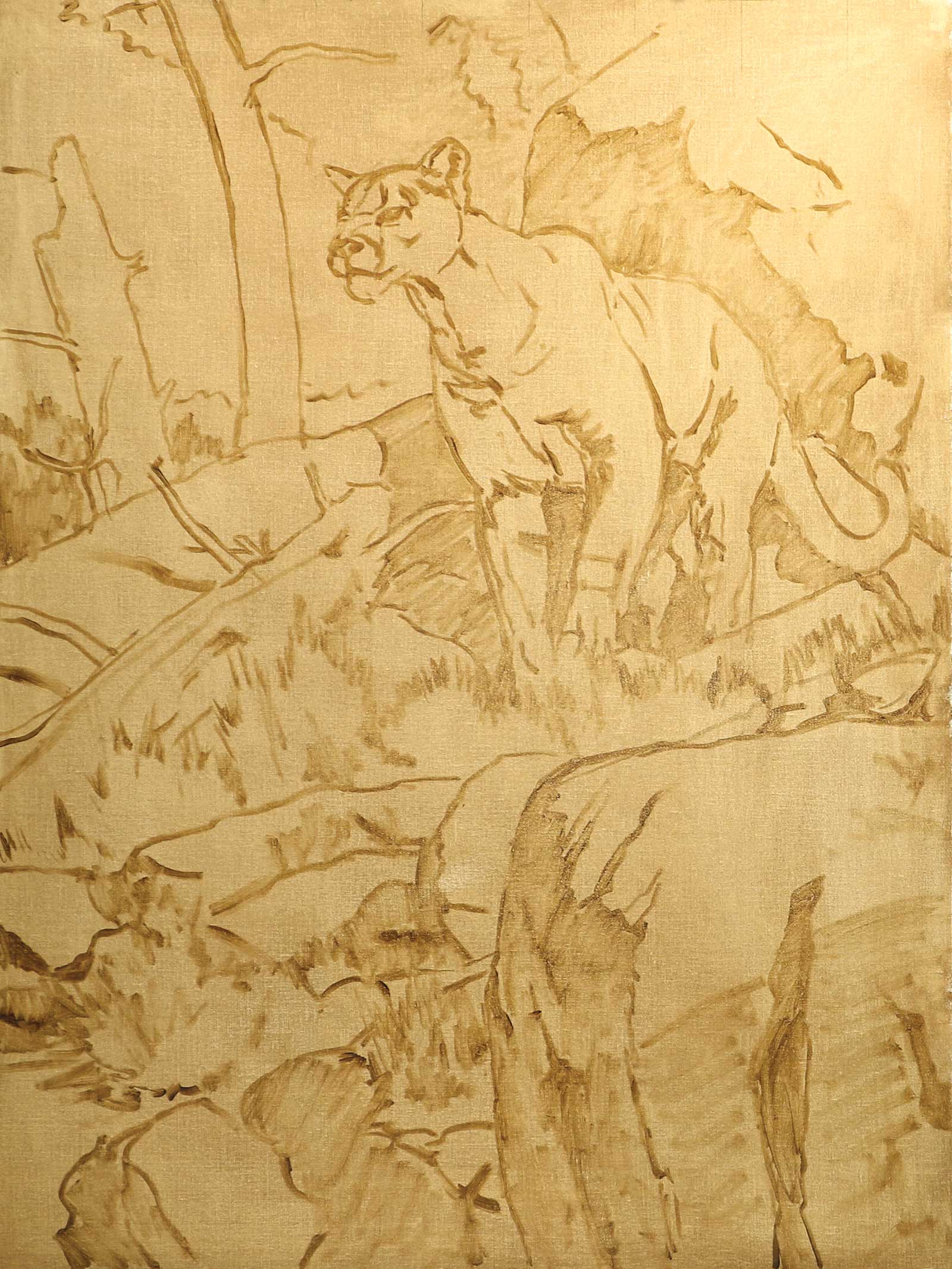
 Stage 1 of Dustin Van Wechel’s oil painting Focused. Scottsdale Artists’ School: How did you transition from a career in advertising to being an oil painter?
Dustin Van Wechel: I treated my design job in advertising as a way to pay the bills while trying to make it as a fine artist. Doing this for almost a decade, I found I seldom had time to create my own work. That led me in 2002 to quit my job and focus all of my efforts on creating a portfolio of paintings I could take to galleries I thought might be interested in representing my work. Fortunately for me, I had the support of my wife who continued working to keep us afloat financially. Then, just a few months after leaving my full-time job, I was introduced to a gallery owner who invited me to do a solo show. That was how it all started.
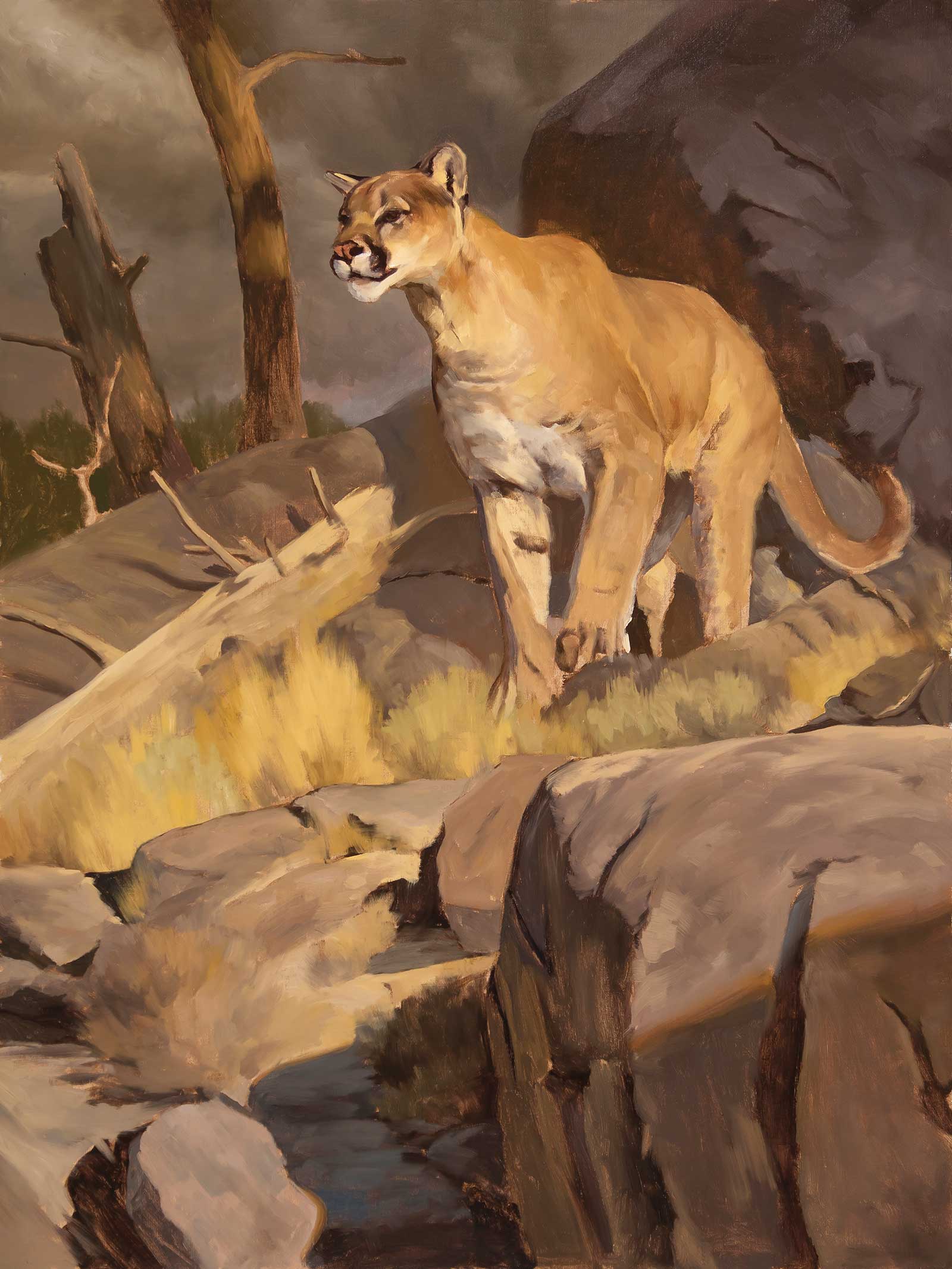
Stage 2
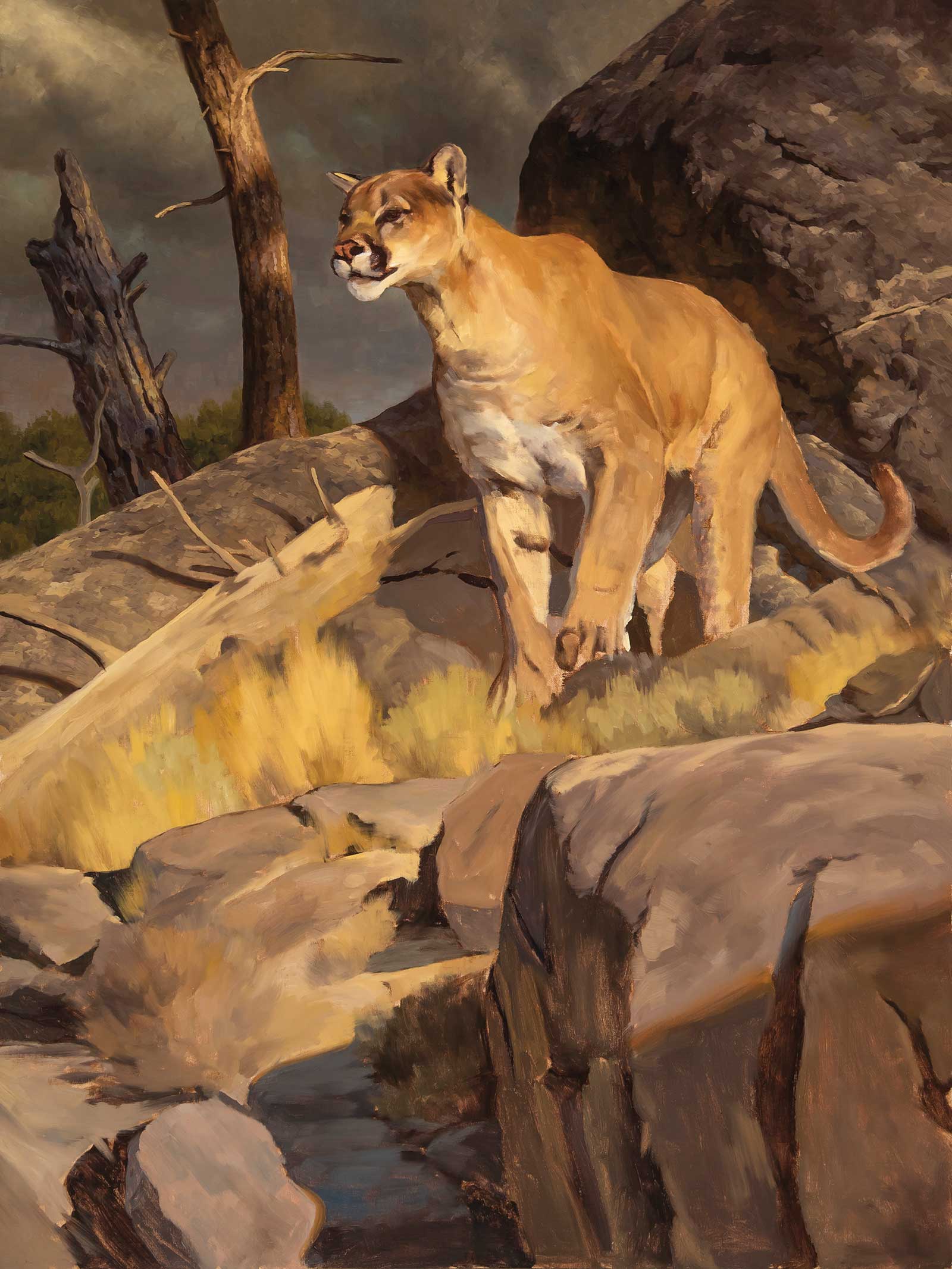
Stage 3
SAS: Who were your greatest influences in the beginning and now?DVW: When I first began my career, I was discovering artists like Carl Rungius, Wilhelm Kuhnert and Bruno Liljefors as well as masters such as Bob Kuhn, Robert Bateman and Raymond Harris Ching. Studying work from artists like these (and many more) helped me find a place to begin. Now that I’ve been painting for a while, I’ve come to realize how those influences gave me the tools I needed to find my own path. I now know the direction I want my work to move in, and I find I have less interest in other artists as influencers. I can now enjoy others work as a lover of art rather than always attempting to analyze and learn from them—though that does still happen occasionally when I see paintings that take my breath away.
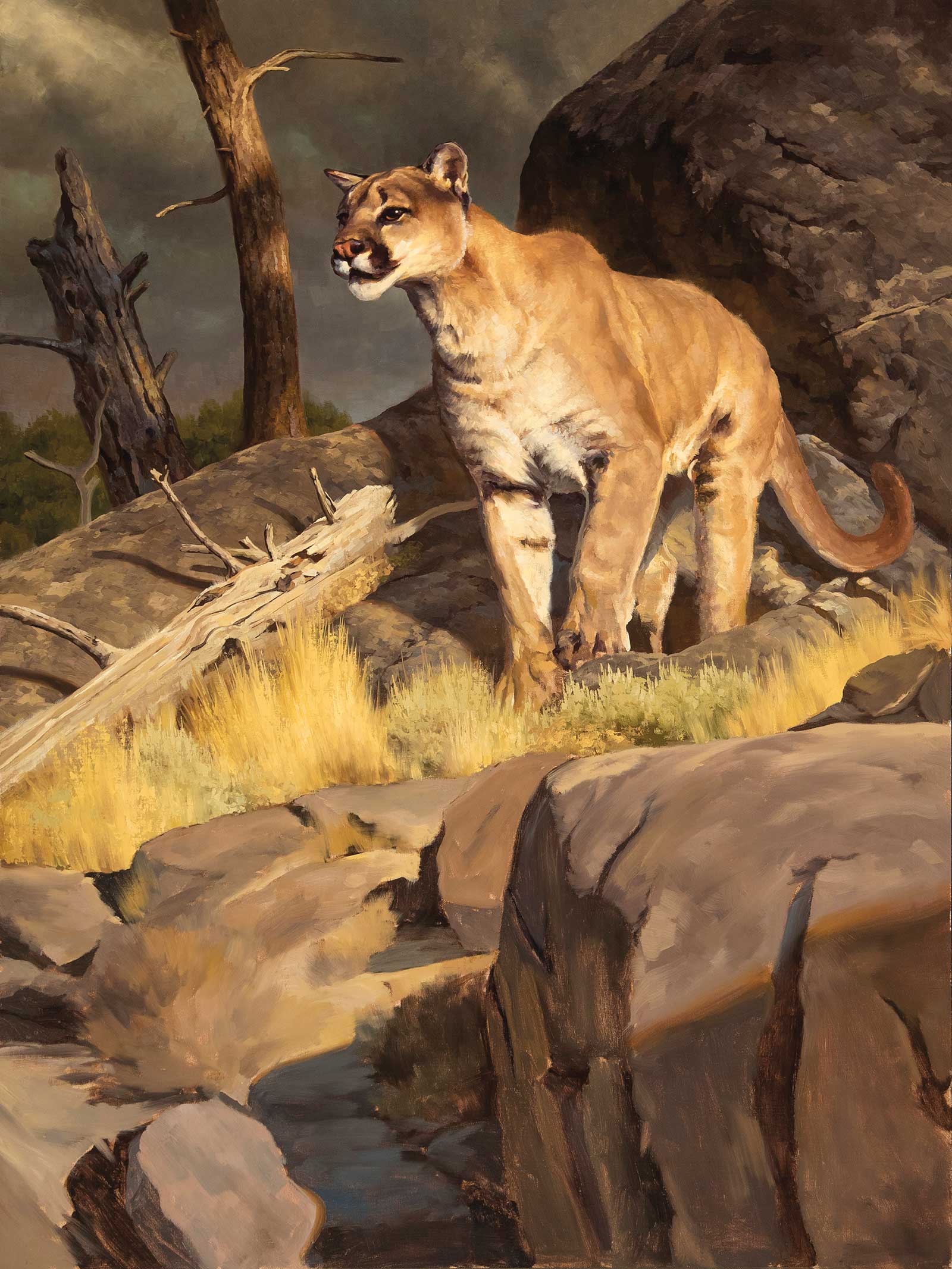
Stage 4
SAS: Why does your work focus on wildlife?
DVW: I suppose my love of nature came from my mother who impressed upon me her love of animals when I was growing up. I focus mainly on western North American wildlife because it’s what I’m most familiar with. I grew up in the West, and it’s those stories I’m most inspired to tell.
SAS: When and why did you start teaching? DVW: I started teaching workshops occasionally early in my career. It wasn’t until I was invited to teach at SAS four years ago that teaching became an important part of my career goals.
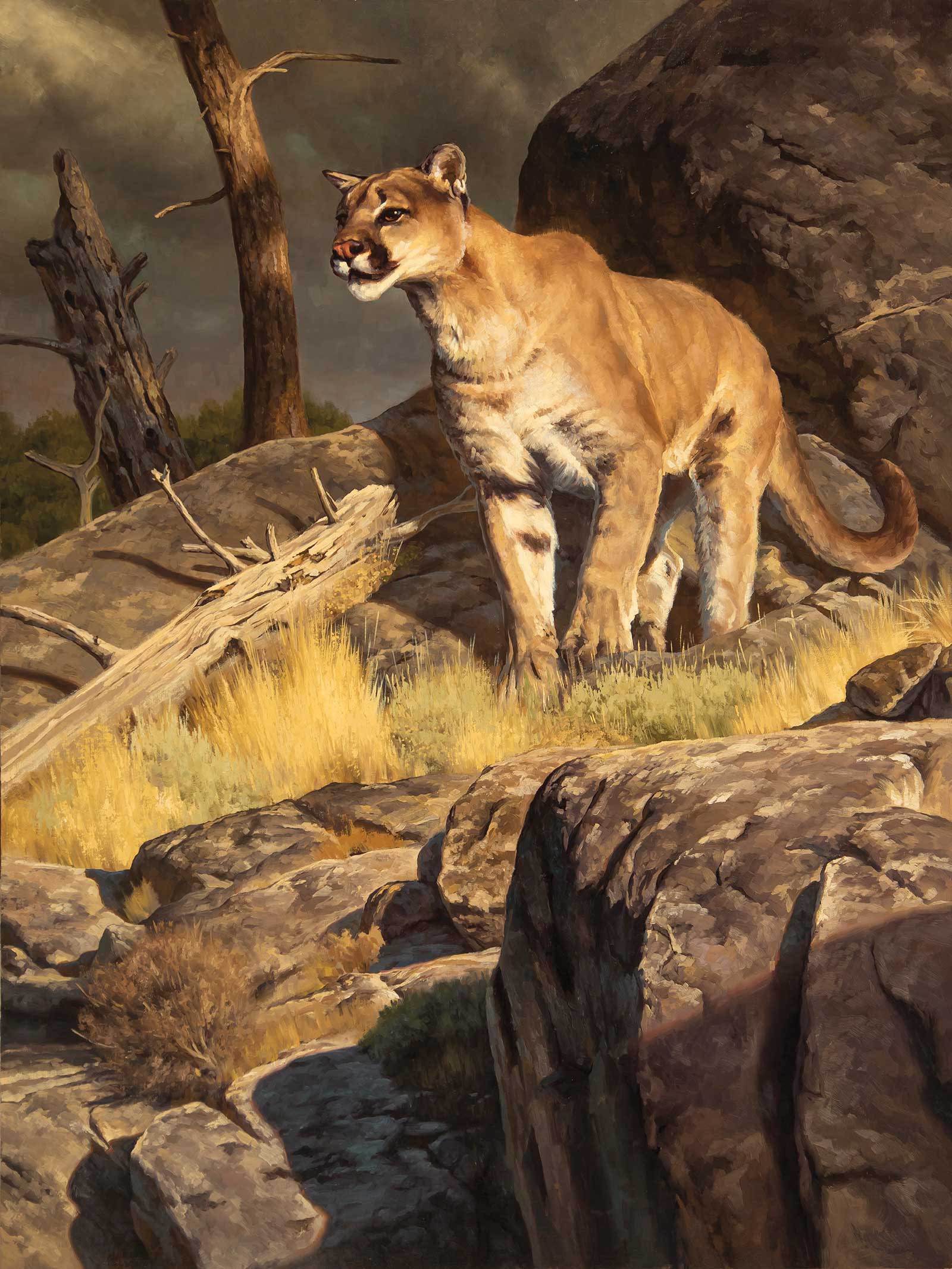
Stage 5
SAS: What is it like being a SAS instructor?
DVW: In short, it’s fantastic! Being included among such an extraordinary group of world-class artists is truly an honor—not to mention the quality of the facilities. It’s just an incredible place to teach and learn.
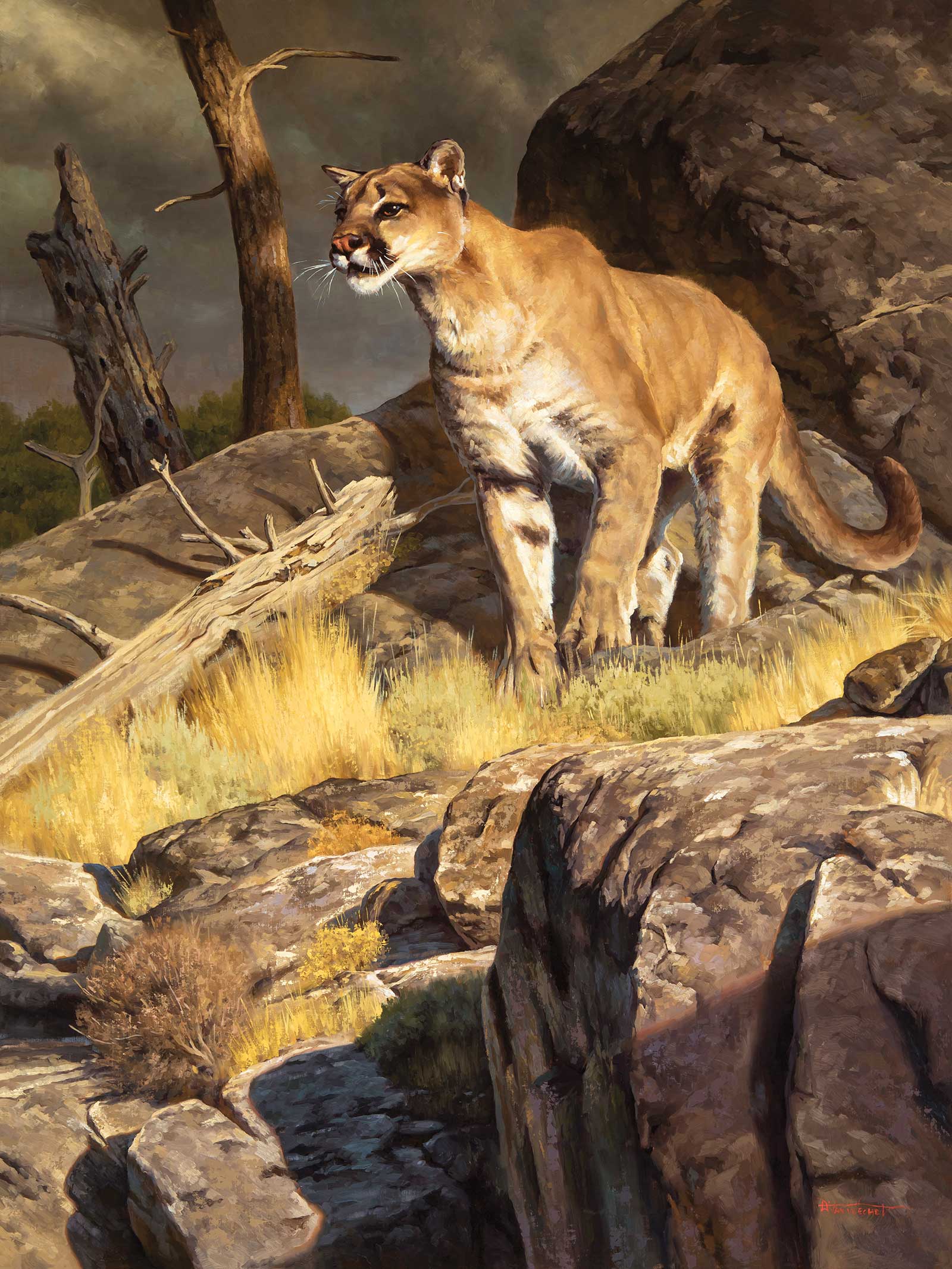
Focused, oil, 48 x 36" (121 x 91 cm)
SAS: What do you hope students take away from the workshop you teach at SAS?
DVW: Workshops can dump an overwhelming amount of information on a student in a short period of time. If the student can hold on to just a few things that help them move their work forward, then for me, the workshop has been a success. —
Visit www.scottsdaleartschool.org for more information on the school and its upcoming workshops.