We know what painting “in plein air” means. The practice of painting outdoors, of capturing a scene as you see it and feel it directly in that moment and in that environment. What’s more challenging to describe, however, are the emotions it brings forth for artists, the sheer passion it elicits.
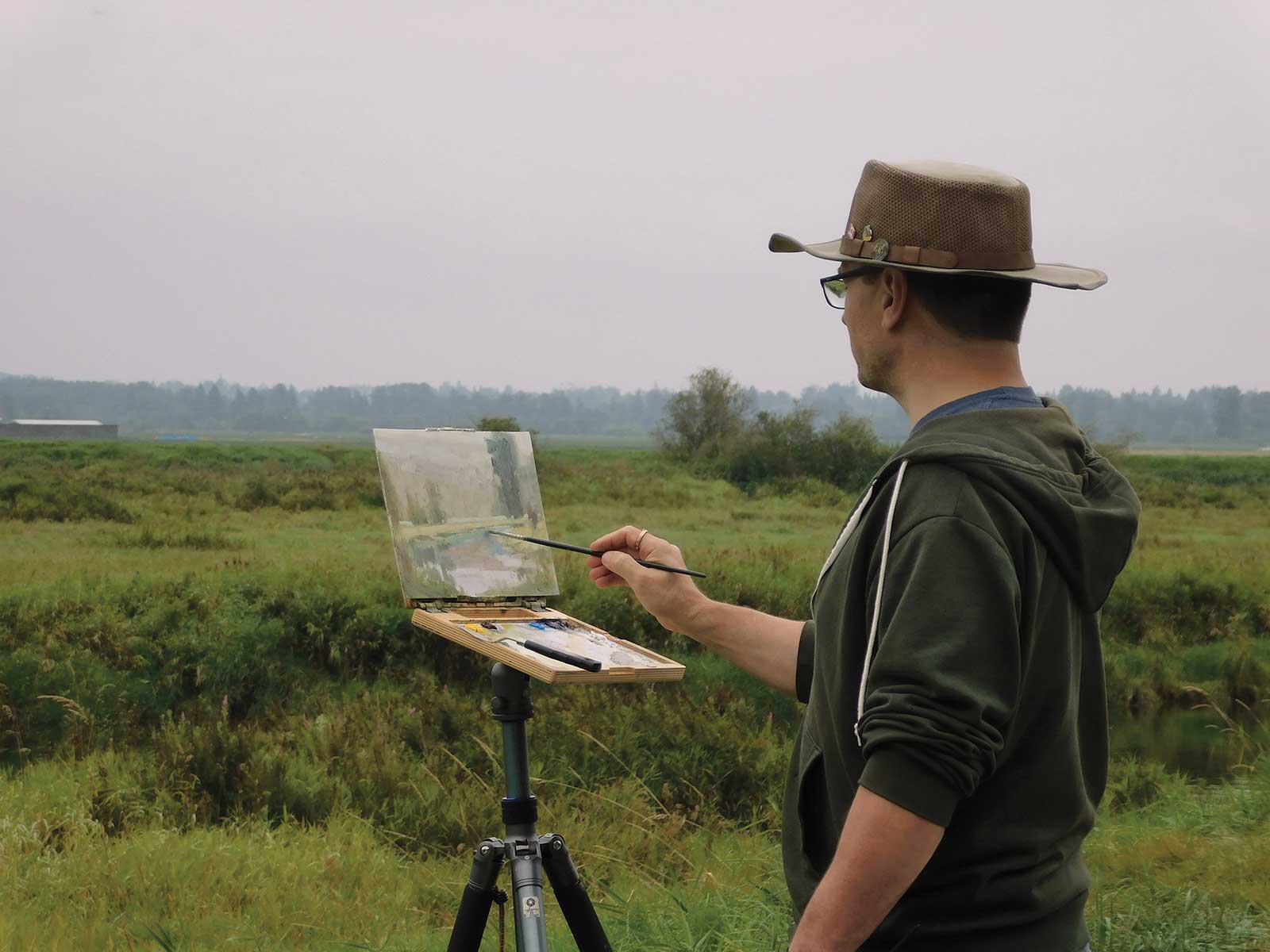
Michael King painting Pitt Meadows Dyke in BC, Canada.
The practice has roots in France with impressionist powerhouses like Claude Monet and Pierre-Auguste Renoir moving from a hybrid outdoor/studio practice to a full plein air experience, due in part to the invention of the portable tin paint tube. The movement continued to gain traction throughout the 19th century with the help of British landscape painters John Constable and J.M.W. Turner, as well as American impressionists and members of the Old Lyme Art Colony. “Way too much emphasis is put on the metal paint tubes and the impressionists,” artist Jill Carver counters, a board member of Plein Air Painters of America. “I think the tradition of working outside has been going on for a long time…[For a time], John Constable and other artists mixed their pigments and used pig bladders to hold the pigments so they were transportable. I don’t think people weren’t painting outdoors because metal tubes weren’t invented yet, I think they were getting by just fine.” In Carver’s eyes, plein air painting became more popular as the landscape genre gained recognition in its own right in the 19th century—when what was viewed as legitimate artwork moved away from the necessity to portray figures or insert religious connotation into every painting. “Prior to that, all of the decent landscape painters had to put figures in,” she says. But, like most aspects of human history, the evolution of plein air painting is long, storied and complicated, and this isn’t a history lesson.
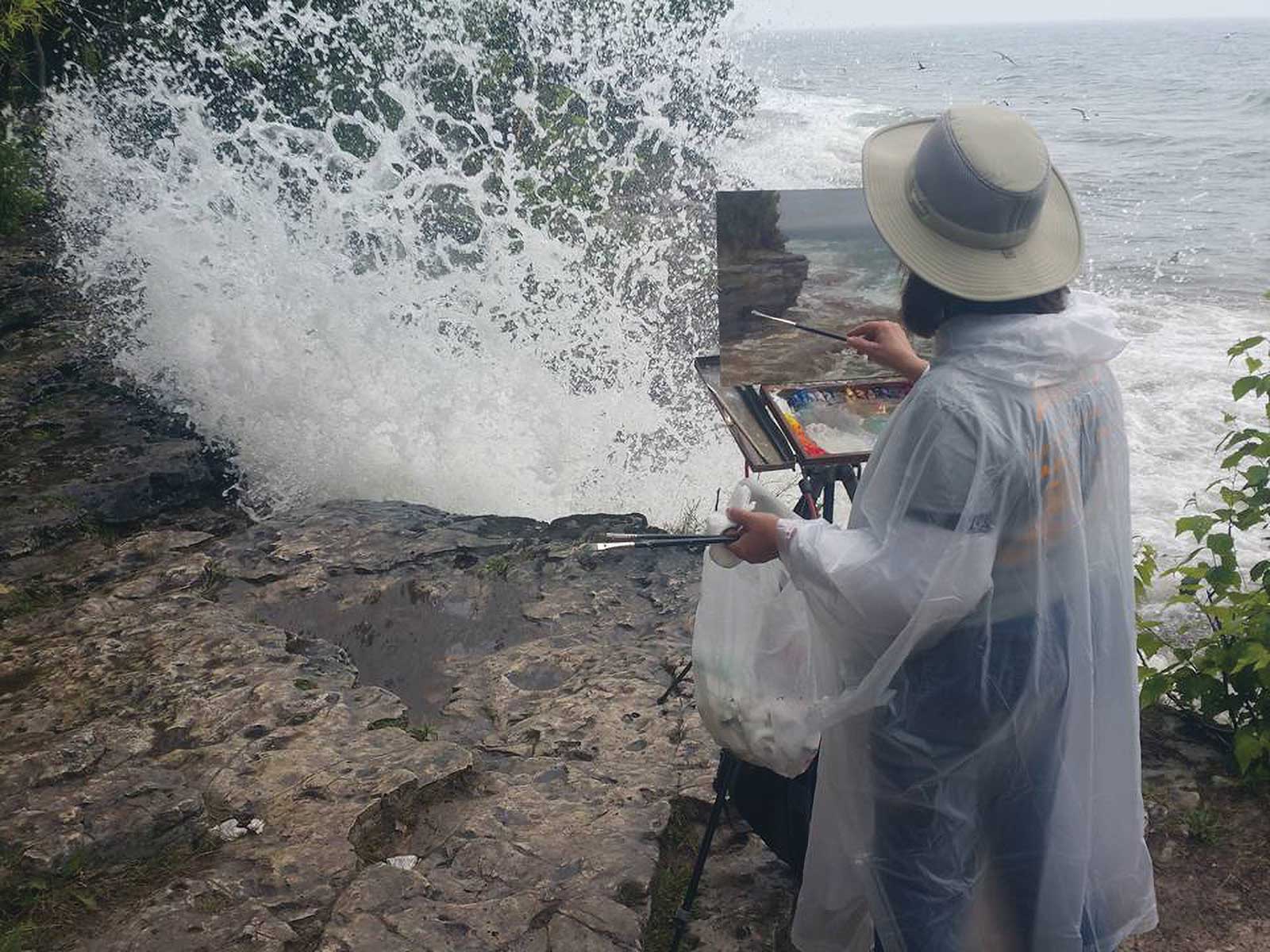
Debra Joy Groesser painting at Cave Point County Park in Door County, Wisconsin.
Today, the term “plein air” continues to be more than mere words and more than just a fascinating, complex part of art history. It’s a way of life. It’s fuel for the soul.
“It has made all the difference in my career,” says Debra Joy Groesser, president of the American Impressionist Society and Master Signature member of Plein Air Artists Colorado. “You capture light, color and atmosphere the way you just can’t from a photograph.” As a child, Groesser’s father always took her out fishing and hiking in the woods and to national parks throughout the United States. “So I love, love, love the outdoors. When I figured out plein air, a light bulb went off. I get to be outside, I get to do what I love. It was perfect.” Groesser creates seascapes, coastal scenes, mountain views, creeks and lakes across America’s great outdoors.
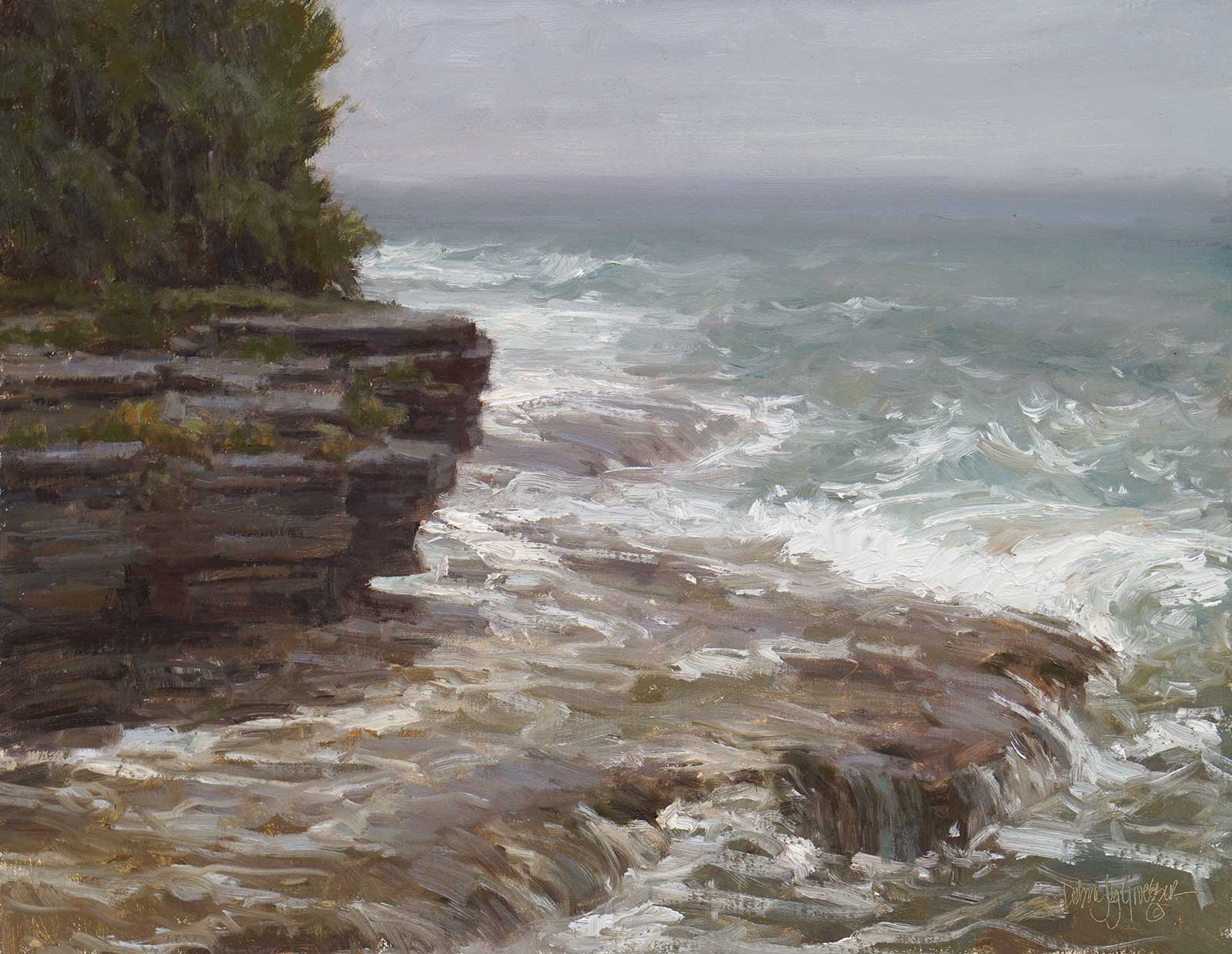
Debra Joy Groesser, Wondrous Wild, oil, 14 x 18" (35 x 45 cm)
For Carver, her affinity for nature also began as a child with her father. Originally from London, the artist says she and her dad embarked on many camping and fishing trips in Scotland. “I think the love of the outdoors and nature came to me first,” she says. “When it comes to painting, you need the real thing in front of you...There’s a real logic to that. If you’re a painter, you need to be outdoors studying it. I think the term ‘plein air’ really took off as we understand it now, finishing the painting on site, but for me I think I’m [part of] the prior kind [of artist] where you simply study nature.” Carver explains that she’ll often take “color notes” and then complete her works back in the studio. “I’ll set up in front of something, but the light changes every hour, easily, so if you’re aiming for a finished piece you’re looking at two to three hours tops. So you’re chasing the light.” But when she spends that time outdoors taking her color notes, the “pure observation leads to a pure color record of what you saw.” Until refining them in the studio, “they look pretty rough and raw,” she says. “I think that’s probably how Constable and Turner worked. They were just gathering info and learning.” At times, Carver’s studies in the field can lead to several different finished paintings, each with a unique aesthetic.
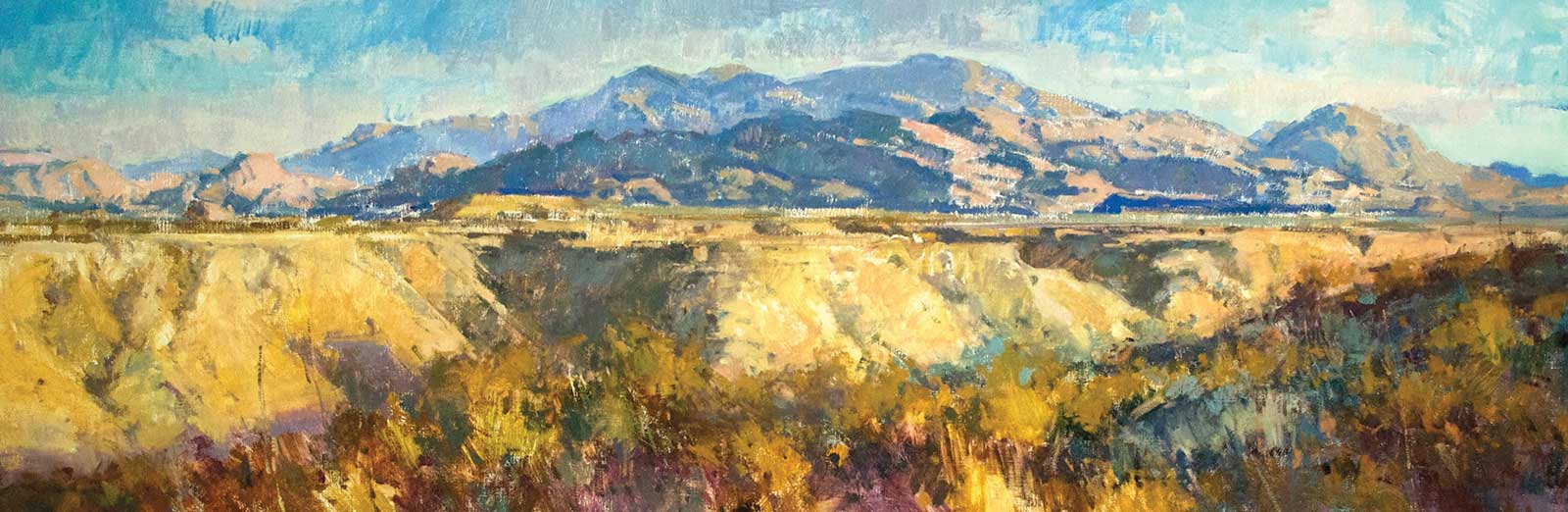
Jill Carver, Big Bend Morning, oil on canvas, 20 x 60" (50 x 152 cm). Studio piece created from study.
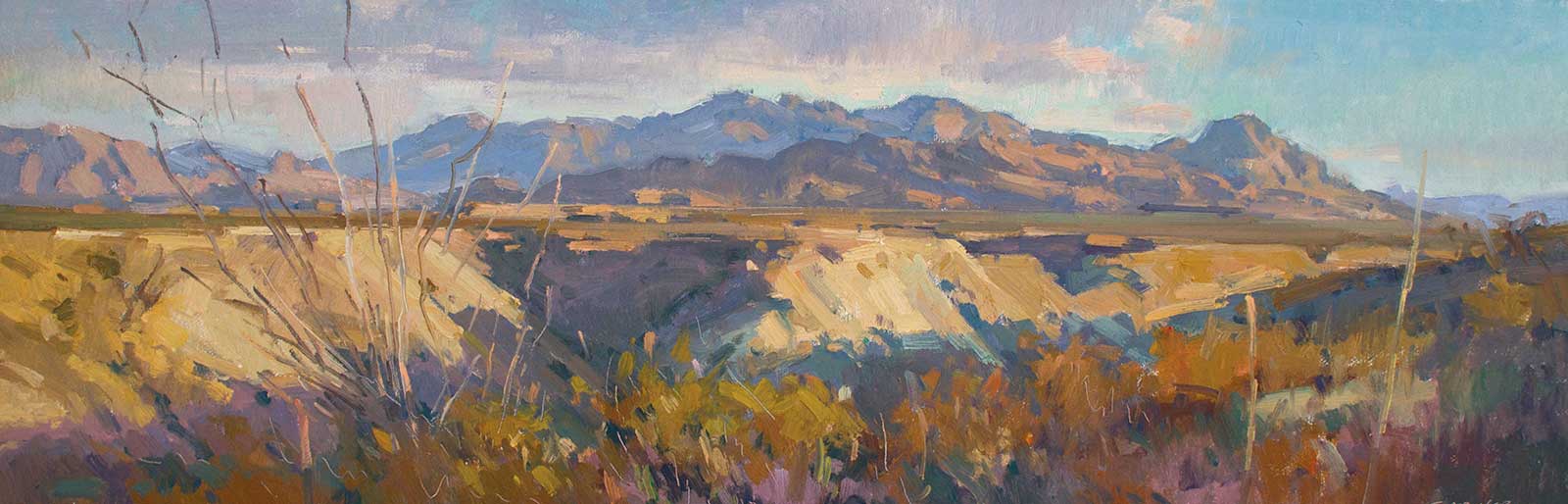
Jill Carver, Big Bend Sunrise, oil on panel, 9 x 27" (22 x 69 cm). Plein air study.
“There are definitely challenges. You’re racing against the light,” Groesser echoes. “Sometimes the clouds come and go, and that drives you crazy. Sometimes a big fog will roll in and obliterate everything right in front of you. I was painting a series of boats on a dock and then all three boats sailed away,” she recalls, laughing. “You have to work fast so you have an immediate reaction to the scene that’s in front of you. I tell my students, everything you experience out there goes into that painting. Every painting I look at, I can remember how it felt that day. If it was windy, I can feel the wind. I can smell the ocean air if it was near the ocean. It brings it all back and that’s pretty cool.”
Groesser recounts a stint in France completing a mentorship with Kevin Macpherson, accomplished American impressionist and plein air painter. They were in Belgium, and Groesser was in an alley working on a painting of a group of buildings ahead, one of which was pastel green and the other pastel yellow. When she got home and looked at her photographs, however, both buildings appeared white. “When you paint from photos, you have to know the camera will darken the shadows. You have to know what to adjust in your painting,” she says.
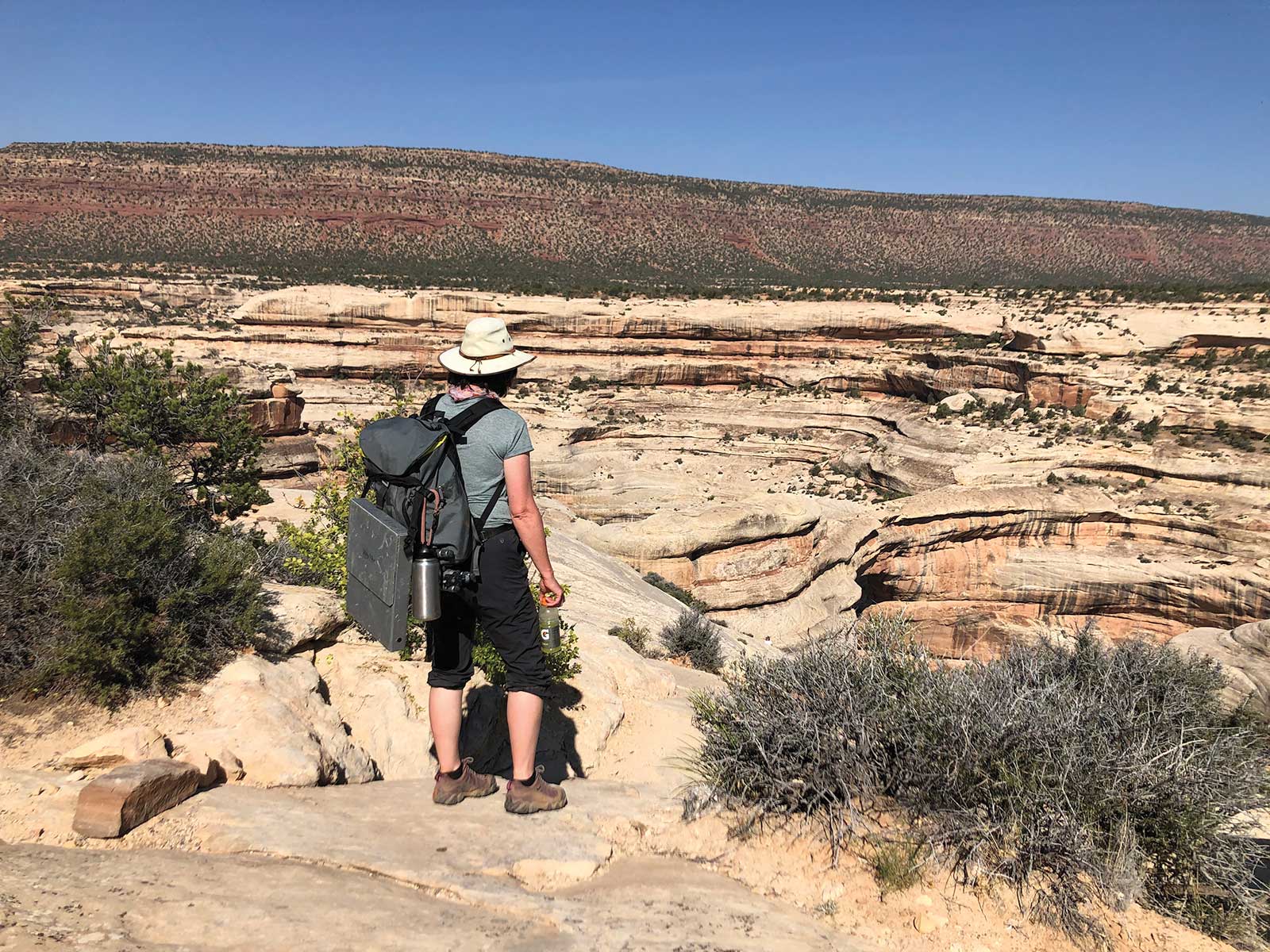
Jill Carver at Natural Bridges National Monument in Utah.
“[The especially talented artists] can distill an image down to a few strokes that really mimic the time of day. As a plein air painter, how can I express all that I’m looking at in a few strokes but also get the sense of detail in an area?” says Gil Dellinger, president of Plein Air Painters of America. “The textures, the smells, the sounds, all of that sensory stuff that has to be implied. And if I take a plein air painting into my studio, if it’s an ocean piece, I’ll play the sound of the ocean. Sometimes I’ll take a piece of sage or some of the greenery around big surf and take that into my studio, because I want to remember what I saw. I don’t think I’ll ever paint something that I haven’t experienced firsthand,” he says. “My own sense of what it smells like and felt like—the time of day, heat, smell of forest or ocean—are my illusions, but I try to put down something that is so convincing that people can almost smell it, almost hear it.”
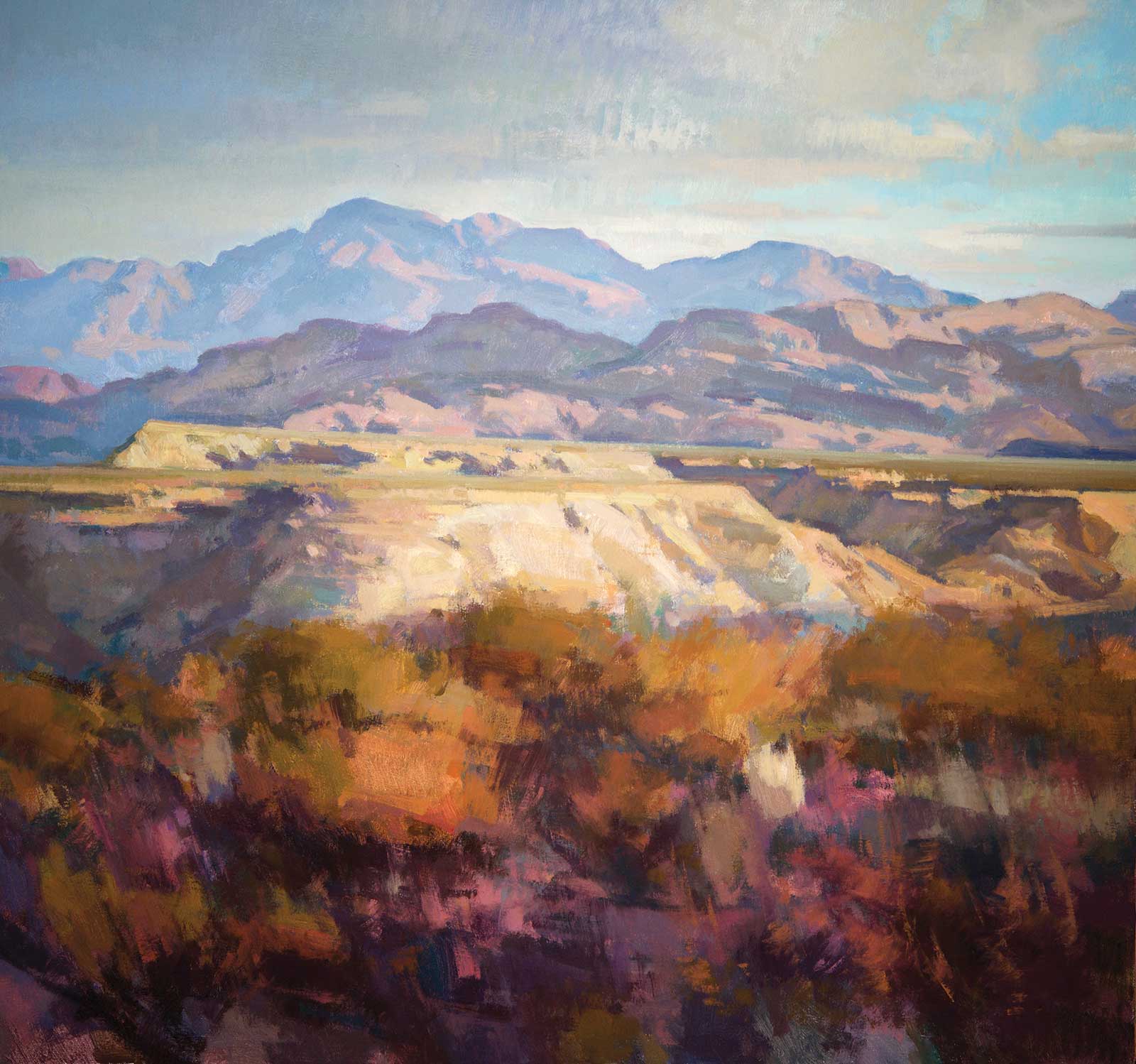
Jill Carver, Big Bend Geology, oil on linen panel, 29 x 31" (73 x 78 cm). Studio piece created from study.
As president of PAPA, Dellinger is particularly passionate about the growth of the modern-day plein air movement. He dives into an abridged overview of how the current practice in America evolved. Around the mid-1990s, on both the east and west coasts, plein air painters were working on their own. On the East Coast, you had artists painting extremely realistically, and in the West, the style was more impressionistic. “Both styles were so different but were both so right on...In the late ’90s, I had a dream of getting them all together. I was on the board of a fabulous museum called the Haggin Museum in California,” says Dellinger, who was not yet a member of PAPA at this point. The Haggin had a collection of 19th-century on location artists, “and I approached the museum and asked if we could do an event that would bring the East Coast and West Coast together.” This led to an incredible year in Yosemite National Park with 25 artists that Dellinger himself invited, a two-part adventure, once in the winter and once in late summer/autumn.
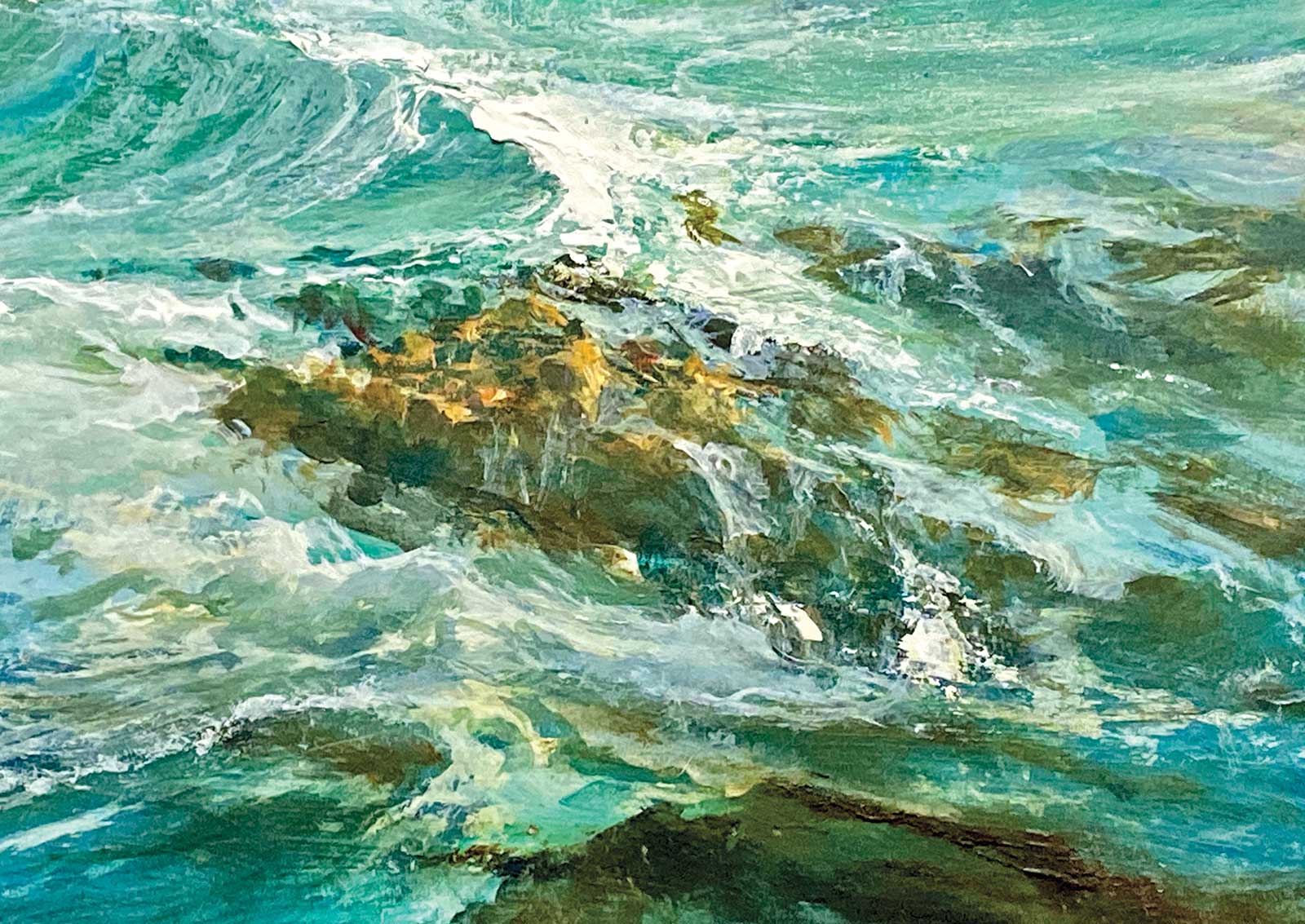
Gil Dellinger, sight study at Laguna Beach, California, vanished gouache, 9 x 12" (22 x 30 cm)
“East Coast and West Coast people came, and it was like working with a who’s who of contemporary landscape painters. They were so good and kind and worked well together. Some of them were from PAPA and some were East Coast painters not affiliated with any group, but all of them had a passion for working outdoors,” says Dellinger, with a hint of nostalgia in his voice. He cites artists like Joseph McGurl, Clyde Aspevig, T. Allen Lawson, Chris Blossom and Joe Paquet as some of those who attended. “Artists were painting those incredible formations. It was just off the charts fun. I watched these West Coast and East Coast painters just meld, and now they all have elements of each other in their work. The plein air movement is just wondrous. There are so many talented artists, young people who out-paint the rest of us. We get wiser, they get better.” Paintings created that fateful year in Yosemite were later shown in two rooms at the Haggin Museum in an exhibition called The Yosemite Show, and in another room, historic paintings by Thomas Moran, Albert Bierstadt and others.
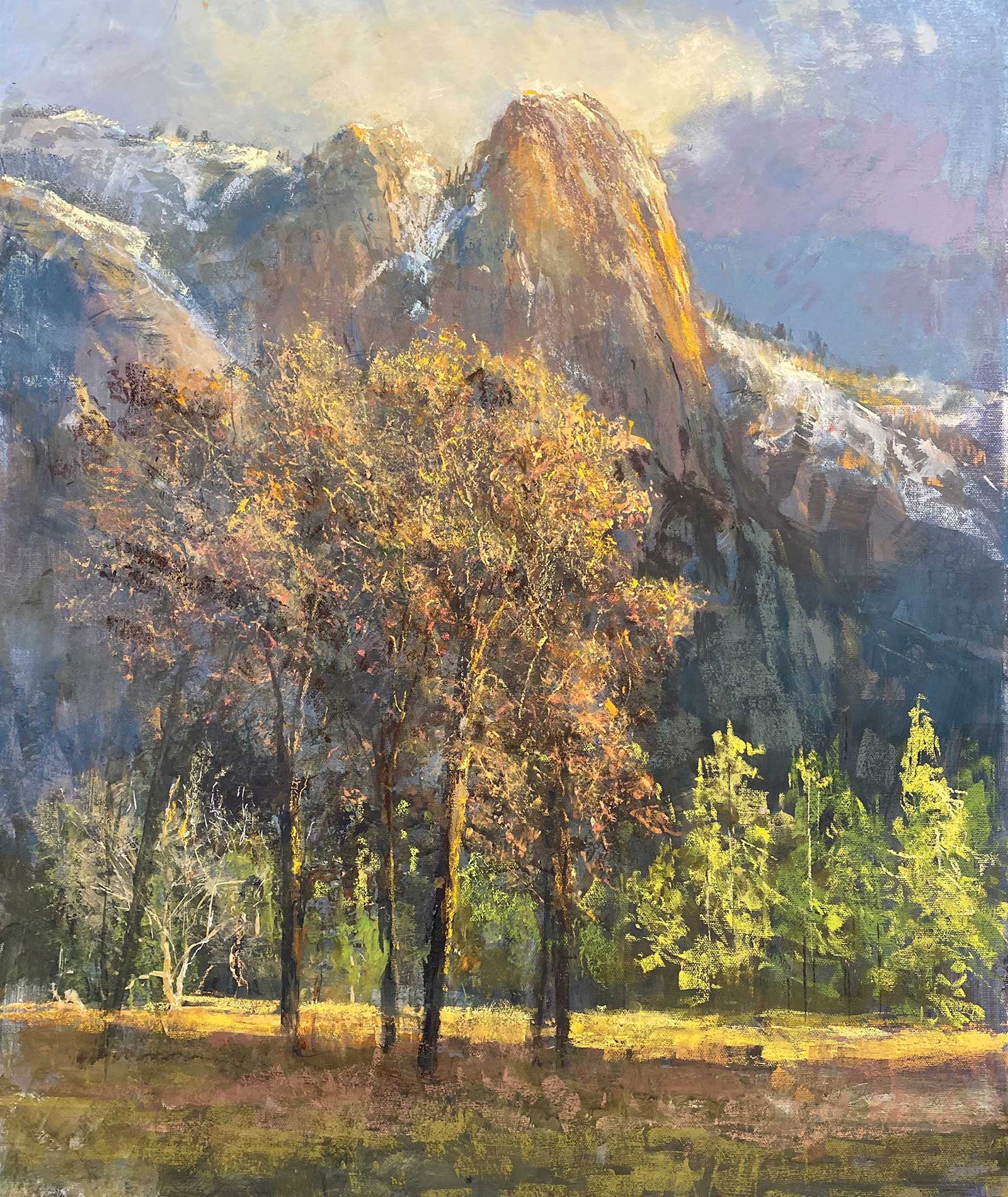
Gil Dellinger, Sentinel Dome in Yosemite National Park, pastel, 24 x 20" (60 x 50 cm)
Canadian painter Michael King, art instructor and founder of Plein Air BC in British Columbia, says the plein air scene in Canada is healthy, but also recognizes the considerable focus on studio works. But still, for King, the experience of immersing oneself in the great outdoors is unparalleled. “If one doesn’t paint from life or plein air, I feel one doesn’t truly understand what they are painting and how the environment and time affects the subject,” he says. “Plein air teaches one to embrace the change in light and atmosphere. You can start painting something on a foggy or cloudy morning and be entrenched in the wonderful aspect of the atmospheric perspective, but within an hour, you may have a kiss of light on a tree or a patch of grass that transforms the scene into something much more than it was. You get to see this change in beauty firsthand and experience how it impacts your senses, the environment and the subject you are painting.” King travels to stunning locales throughout British Columbia, and the rest of Canada, including Coquitlam River and Salt Spring Island. “Plein air is an expression of your experience over time,” he says. “It is more of a narrative of an artist than a painting of something.”
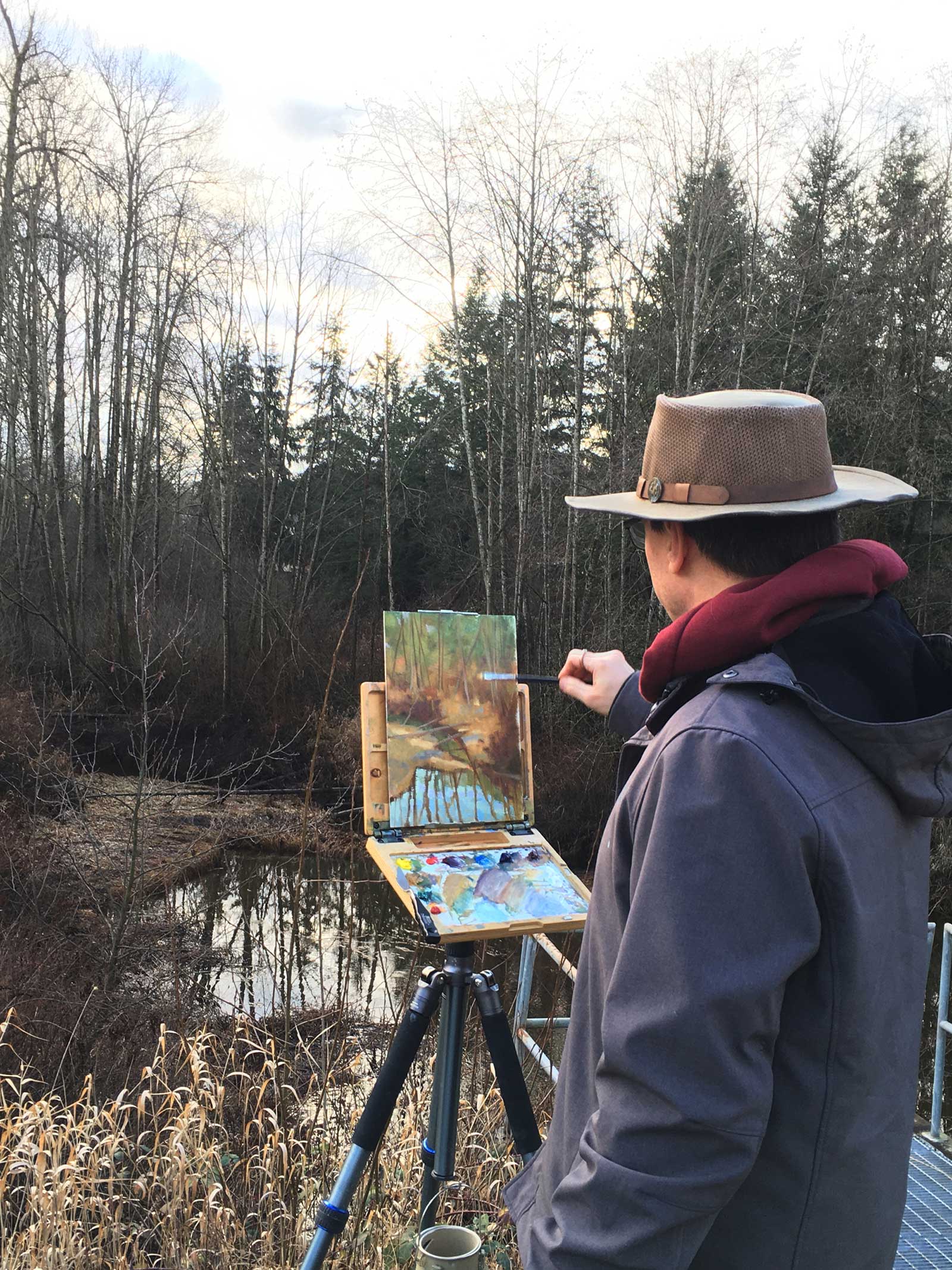
Michael King works on a painting of a marsh.
Daisy Sims Hilditch, based in London, is a figurative and landscape painter working in oils, and a member of the British Plein Air Painters. “I am greatly inspired by the impressionists and the great tradition of painting ‘en plein air,’” she says. “It is light that excites me and drives me to pick up my brushes and paint. My paintings are a celebration of light, and I am fascinated by exploring tonal relationships in order to express the particular light effect before me.” The challenges and inspiration of capturing natural light, it seems, is a commonality amongst many plein air painters. “I get a real buzz from painting outdoors in the elements,” she adds.
“The changing light is a constant stimulant. I can see why Monet chose to paint his haystack pictures again and again, because he was interested in the changing light, so the subject never got dull,” says Hilditch.
Over the years, Carver says she has grown deeply in touch with noticing what’s right in front of her. Because her content is more clarified, the goal, nowadays, is no longer to produce a framable piece. “That’s not how I judge my day…Success is that you witnessed something for the first time, or managed to capture it—that renewed enthusiasm for painting and capturing things outdoors,” she says. “The job of the artist is to create an artistic, poetic statement, where you’re really reaching people.” —