Most of my drawings and paintings are representational. My inspiration comes from many sources— reading literature, walking in nature, talking with others. When I decide to paint something such as a bird, I like to thoroughly research the subject. Part of the reason is that the information helps with creating the painting, but also it is just to satisfy my curiosity.
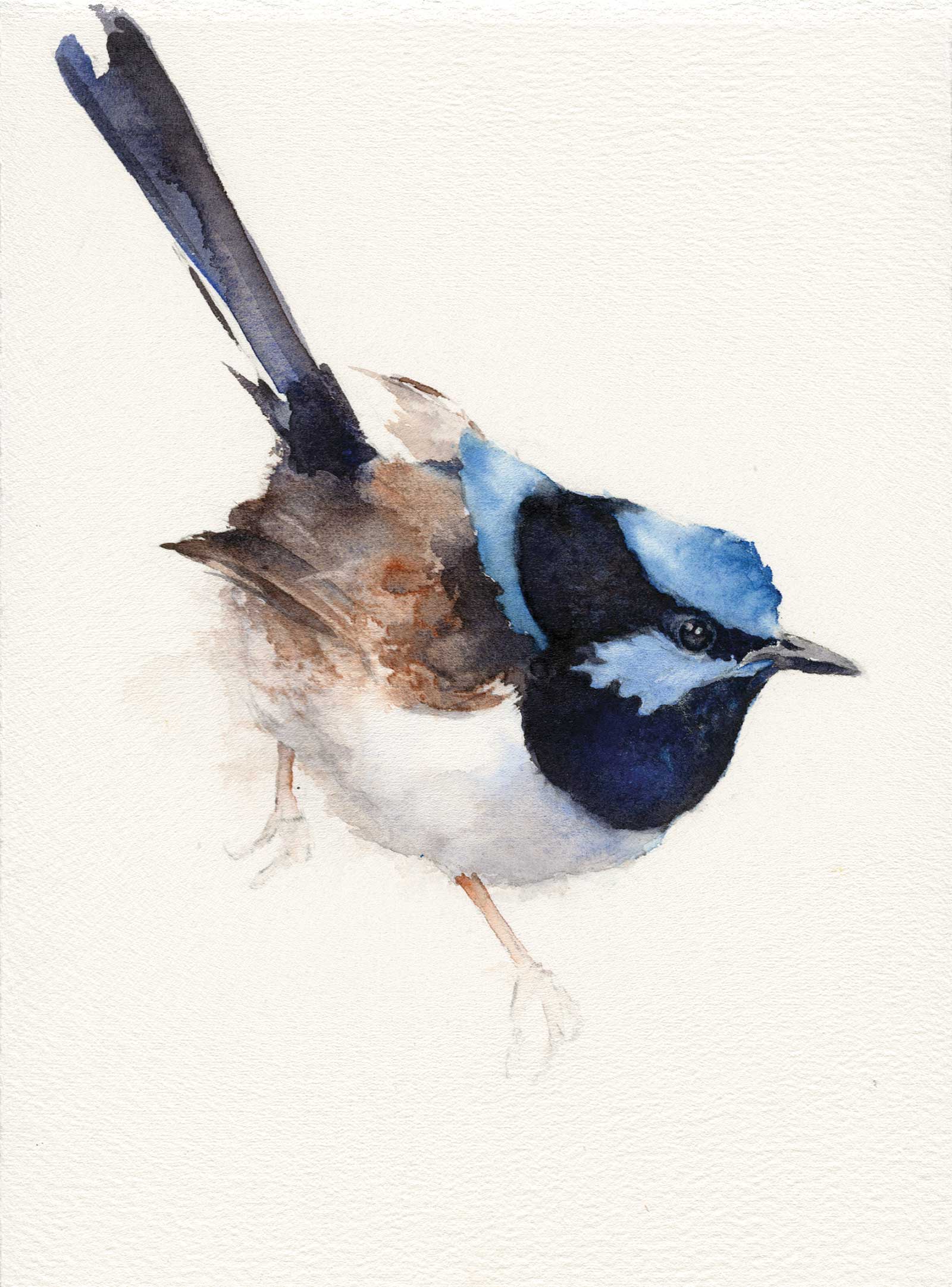
Superb Fairy-wren male, watercolor on paper, 8 x 6" (21 x 15 cm). The superb fairy-wren is a much-loved small bird in Australia. No matter how many times I’ve seen them, whenever I set my foot in nature and spot a blue wren, my heart skips a beat. When working on this small painting, the first attempt wasn’t successful so days after I changed the design a little bit and made the other wingtip visible above the body. I painted the eye in focus and to catch the light, in contrast with the feather textures. There are lessons learned from failed paintings.
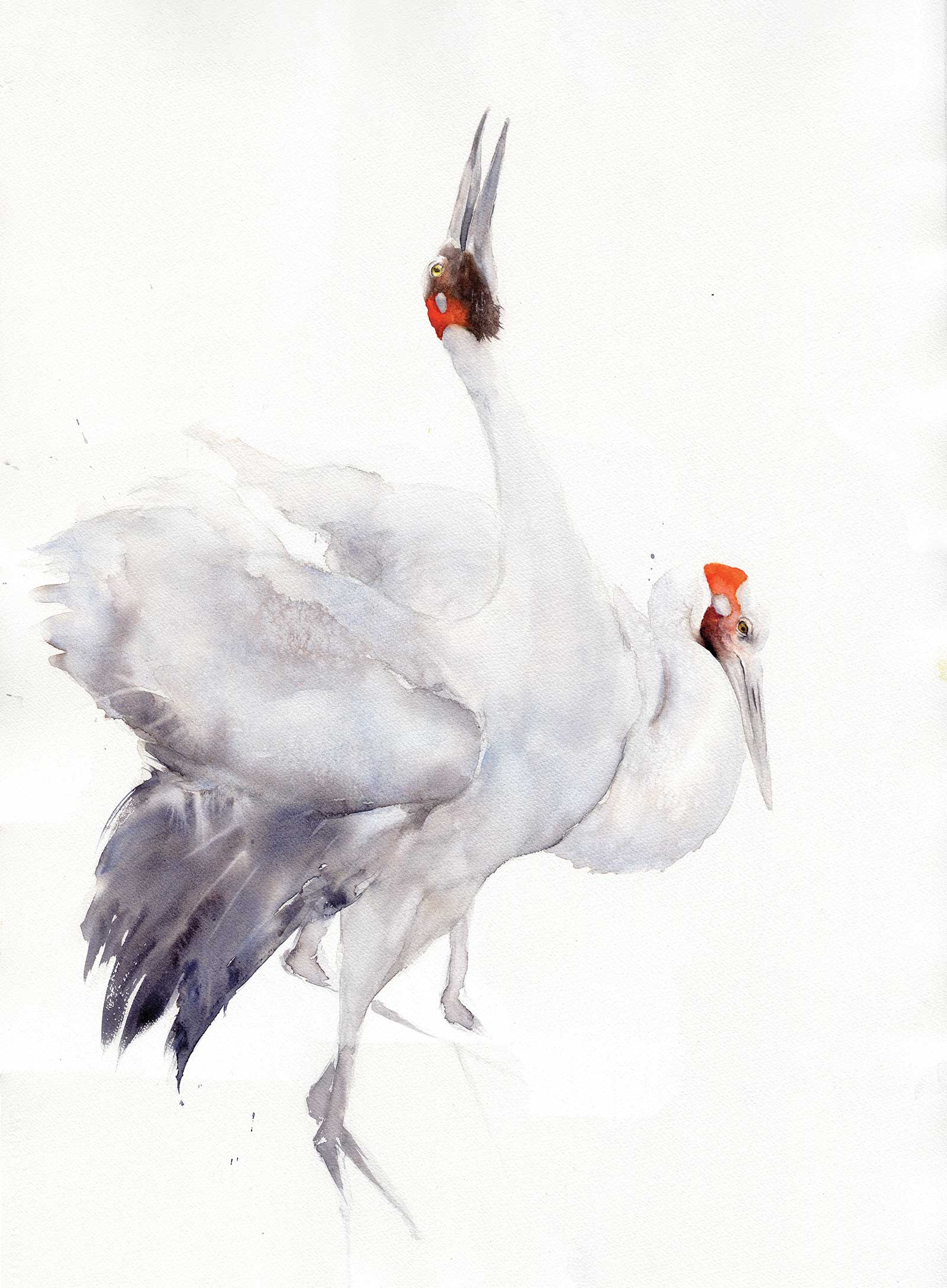
Brolgas, watercolor on paper, 30 x 22" (76 x 56 cm) These days I frequently visit wetlands to see the waterbirds. When researching more on the subject I came across the Brolga (also named Australian Crane). They are a graceful bird, especially when they dance—I imagine asking a brolga “what do you dance for?”, and the answer would be “for joy.” I added another bird after drawing my “finalized” design on paper for more interest, and a better composition. The second bird is poised, opposed to the buoyant partner. I painted wet-in-wet, enjoying watching how the water carries the pigment and flows on the paper, like brolgas dancing.
I do a lot of studies before painting. They are usually quick sketches, helping me to see the composition and tonal values. Sometimes I spend a greater amount of time studying the important details. Through these studies I learn about the subject itself, and even more importantly, about my feeling towards it. At some point they become clear to me, and I am ready to paint.
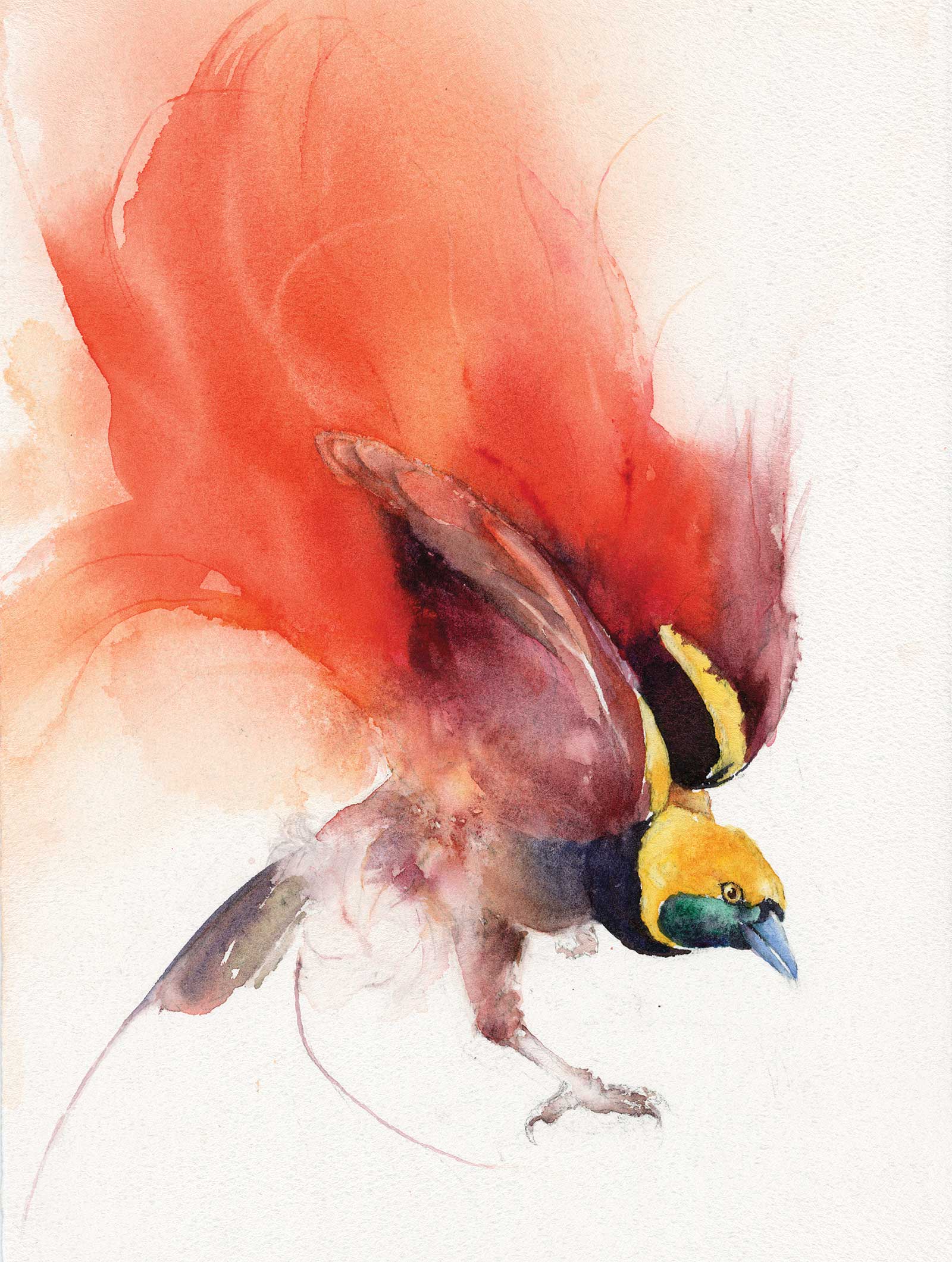
Raggiana Bird-of-Paradise, watercolor on paper, 12 x 8" (30 x 20 cm) After reading the book The Meaning of Birds by Simon Barnes, I grew interested in birds-of-paradise and started my research. Not able to travel to New Guinea and see the birds in person, I watched documentaries such as Dancing with the Birds. I felt compelled to paint the amazing species especially the Raggiana bird-of-paradise. When I started painting, my priority was to paint the extremely expressive tail feathers, so I made sure that I did that first and painted on a very wet surface, before moving on to the body and lastly, the face.
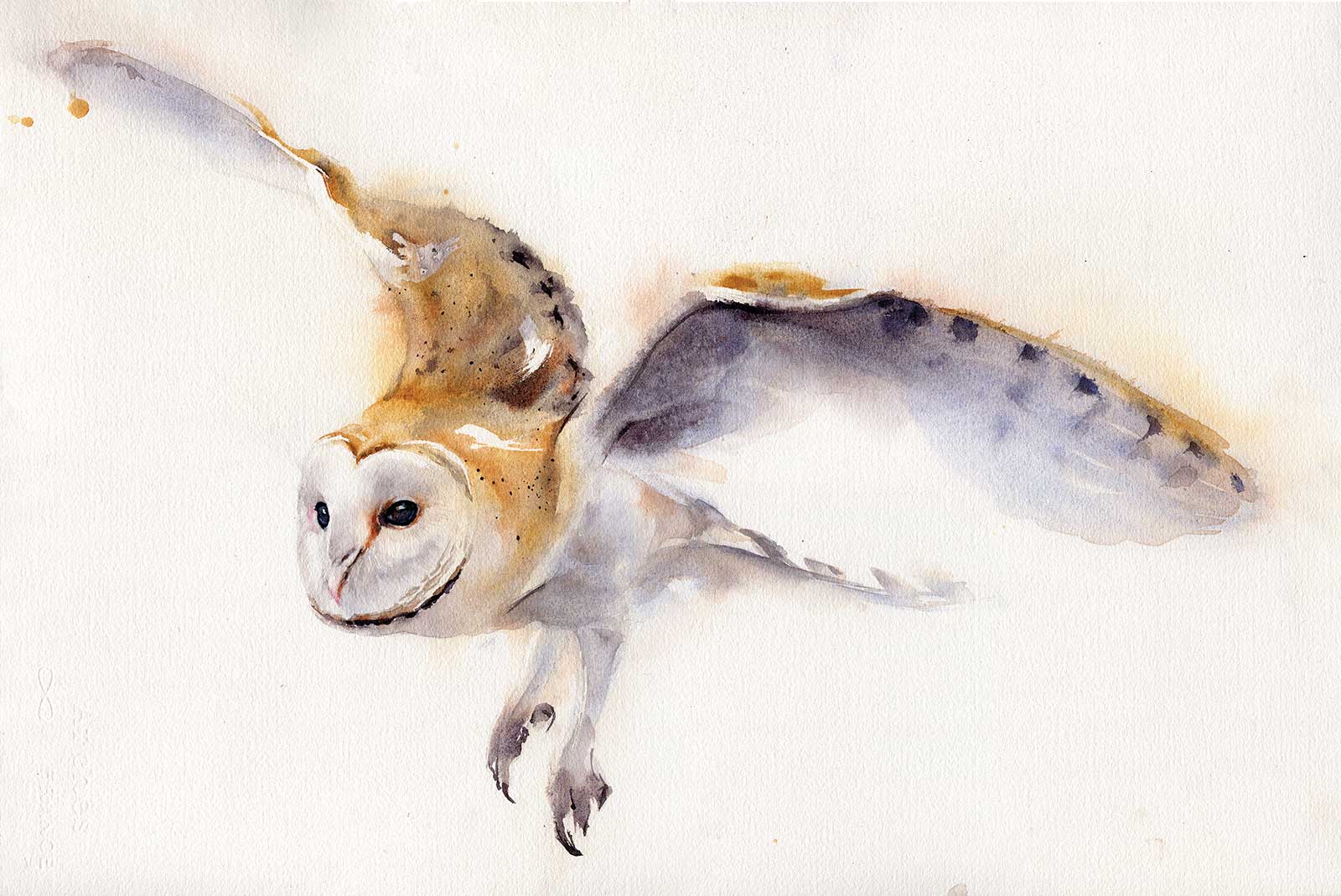
Barn Owl 5, watercolor on paper, 15 x 22" (38 x 56 cm) I find the barn owl’s silent flight very poetic. I knew I wanted an atmospheric painting; in order to add more interest, I took an old brush and applied masking fluid where I thought the highlights could be. After the masking fluid was dry, I soaked the paper and started to paint. I used a spray bottle to assist the paint to flow and to wash off the excess paint. Watercolor is not as “unforgiving” as many believe. It was a wet day so I waited till the next day to work on a few more details, wet on dry.
I draw with a 2B pencil lightly on watercolor paper and use a kneaded eraser to fix my freehand drawing.
I prefer to do it this way rather than tracing a “finished” drawing onto the watercolor paper. Painting in watercolor requires me to be fully present. I have a plan of attack, but
I don’t have sole control. I give my full attention to the real masters here: water, paper and paint. Following the lead of what’s happening on the paper, I seize the opportunity whenever I can. The decisions can only be made in the moment. You can never really predict how watercolor behaves and working with a medium with endless possibilities makes me feel most alive. —
About the Artist
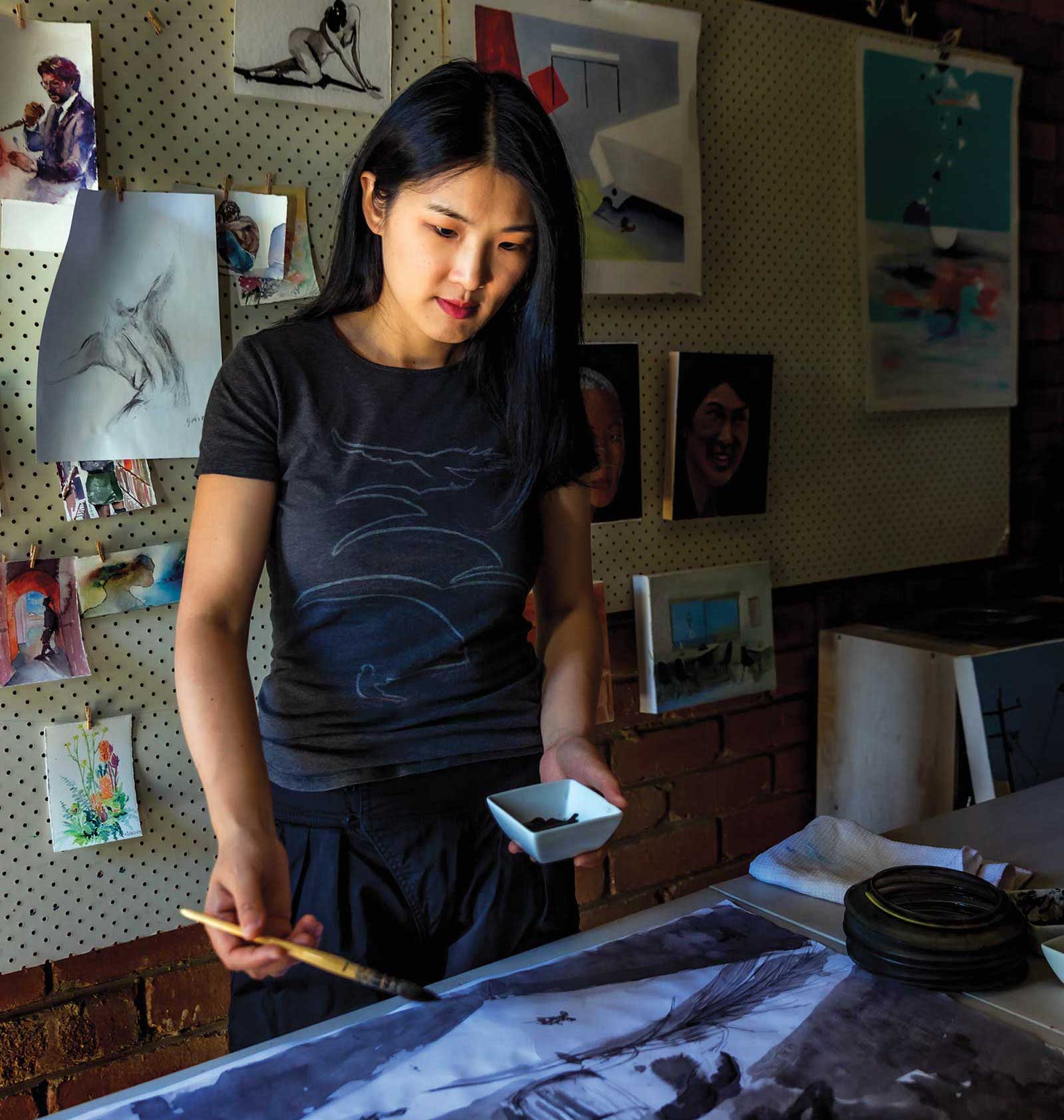 Qing Zhang
Qing Zhang was born and grew up in a small town in China and has loved drawing since she was able to hold a pencil. Reading was also a great interest of hers, and her favorite book was one about art history. Becoming an artist has been a dream since then. However, it didn’t happen for at least 20 years. Art as a career option was not encouraged, and since Zhang also liked science and was quite good at it, she studied environmental science and graduated from Fudan University. Drawing was still in her life, but only as a hobby. In 2012, she moved to Melbourne, Australia, and started to work as an analyst shortly after. While working full time, Zhang took a painting technique course at Victoria College of the Arts, and after that enrolled in a Diploma of Visual Arts program at Royal Melbourne Institute of Technology University. At that point, she had quit her corporate job, knowing that her calling is to be an artist. Art teachers have told her that artists are also business owners, so Zhang learned to become one. She found a government-funded program that provides business set-up training and mentoring assistance. Zhang registered her business and started to sell her art under the business name “Choose Arts”—“Art is my choice, my commitment, one that I am finally able to make,” she says. “I wish that it had been a less devious journey, but I’m glad that I am finally here.”