 Stage 1
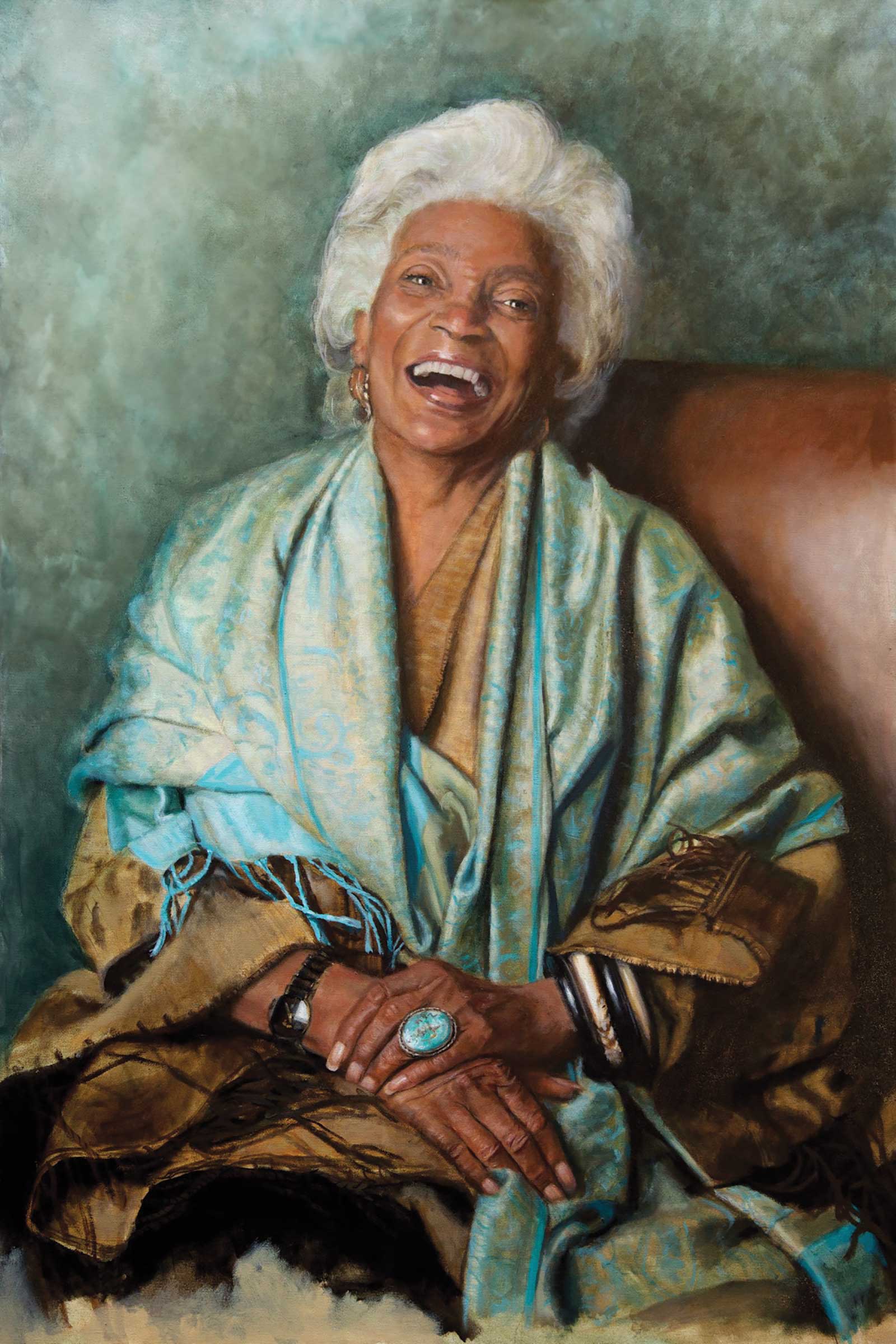
Stage 1 The pose and pHotograph The process always begins, for me, with who I am painting and what I want to convey about who they really are. In this case, Nichelle Nichols is the beloved 84-year-old actress who is most well known for her role as Lt. Uhura on Star Trek. In working with Nichelle, I wanted, of course, to capture her extraordinary beauty and agelessness, but I was more interested in capturing the private side of who she is in person—her joyous, infectious spirit. In this second painting of her from a single photo session, she has thrown back her head and is laughing her big bawdy laugh. This is a side of her personality she shares one-on-one off camera. I wouldn’t normally do a painting with the subject laughing, but in this case, it conveyed a side of her that most do not have the opportunity to see.
I was a professional photographer before I started painting. I knew that I wanted a strong set of shadows to work with so I photographed her with a single softbox to one side that gave me window-like catchlights in her eyes and also caught the beautiful sheen on the scarf. I love painting hands, and I wanted to showcase hers, so I had her sit with them front and center.
Also, drawing additional focus to her hands is a very large turquoise ring that she has worn as long as I have known her. It is a gorgeous color that compliments her skin tone. I decided to use that color as a running theme. Before she arrived, I painted a backdrop on fabric using viridian green, gray and turquoise.
I painted the portrait from a photograph the same size as the canvas which I printed on my large format printer. The large print acts as my “model” and allows me to see every detail of the subject without interpolating size and aspect ratios.
 Stage 2
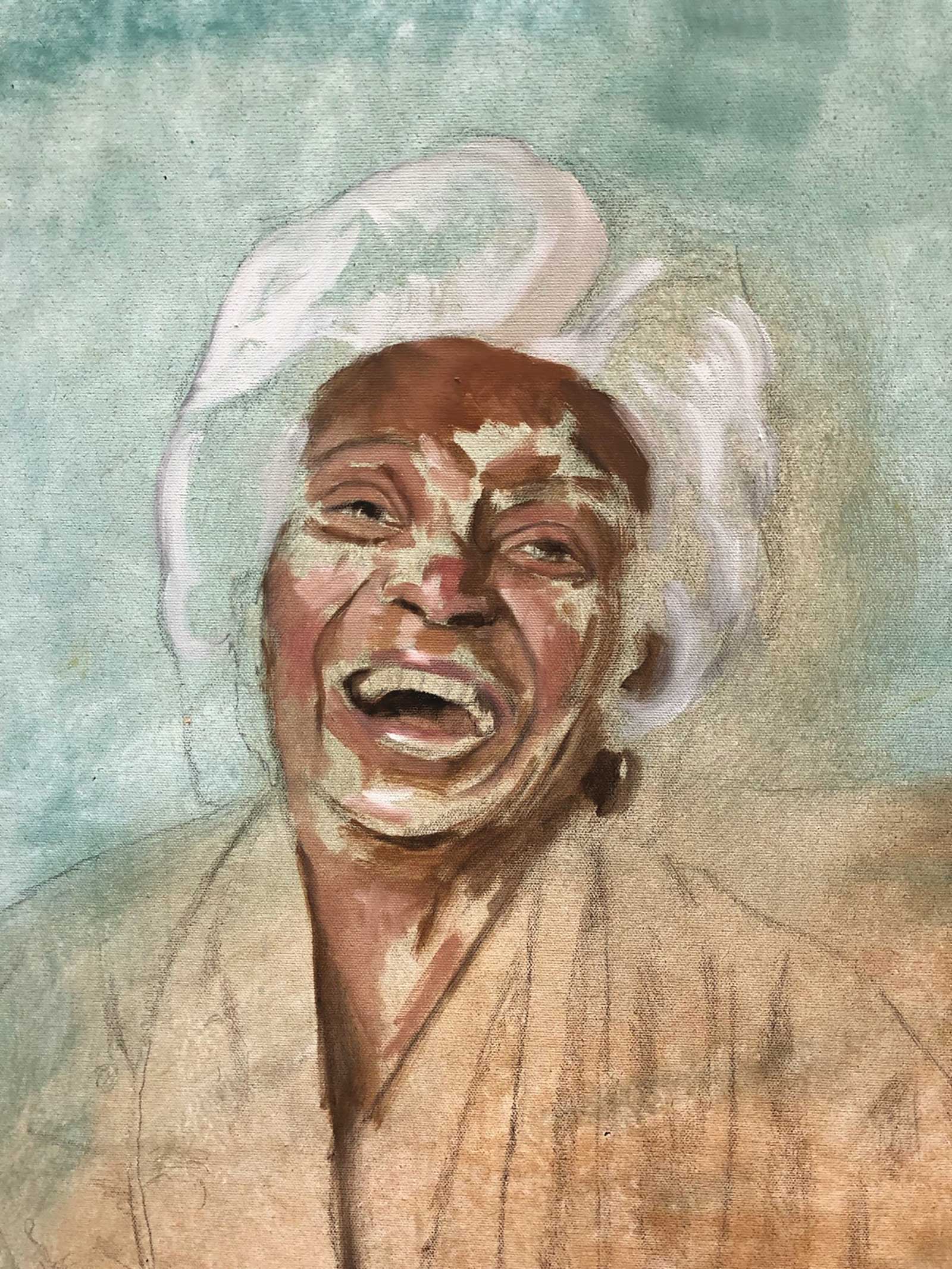
Stage 2 I used a Masterpiece Portrait Smooth canvas and toned it first with a combination of raw umber and viridian before I did the initial drawing on the canvas. With a completed drawing, I began painting the head. For her skin tones I used raw umber, alizarin crimson, rosebud, titanium white, burnt sienna and rose madder.
 Stage 3
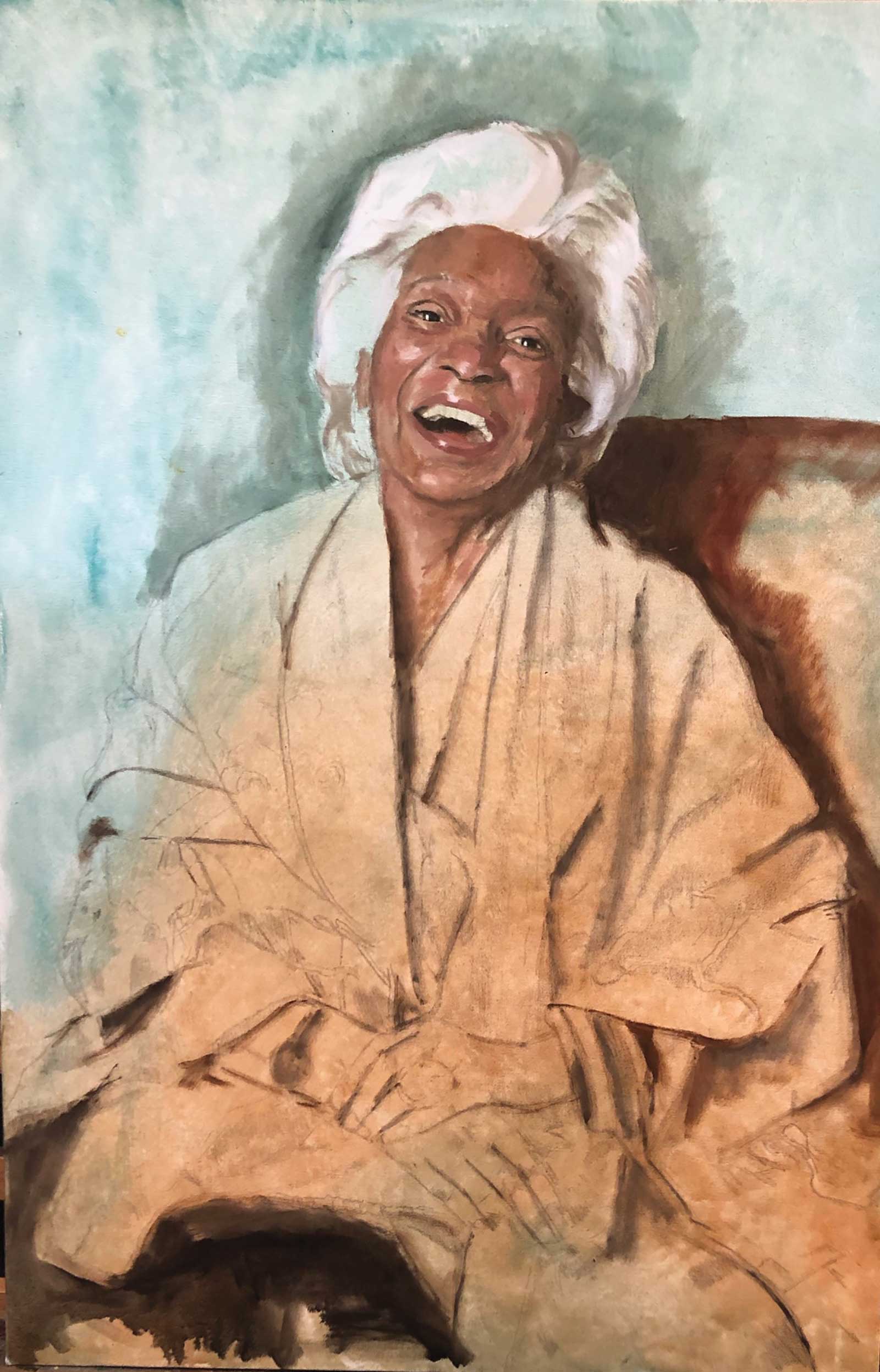
Stage 3 I laid in her white hair along with a beginning of the background in viridian green and some of the leather chair so I could make sense of the reflections of green from the background in her hair and to create contrast between the figure and the background. I also began drawing in raw umber into the folds of the fabric and the jewelry.
 Stage 4
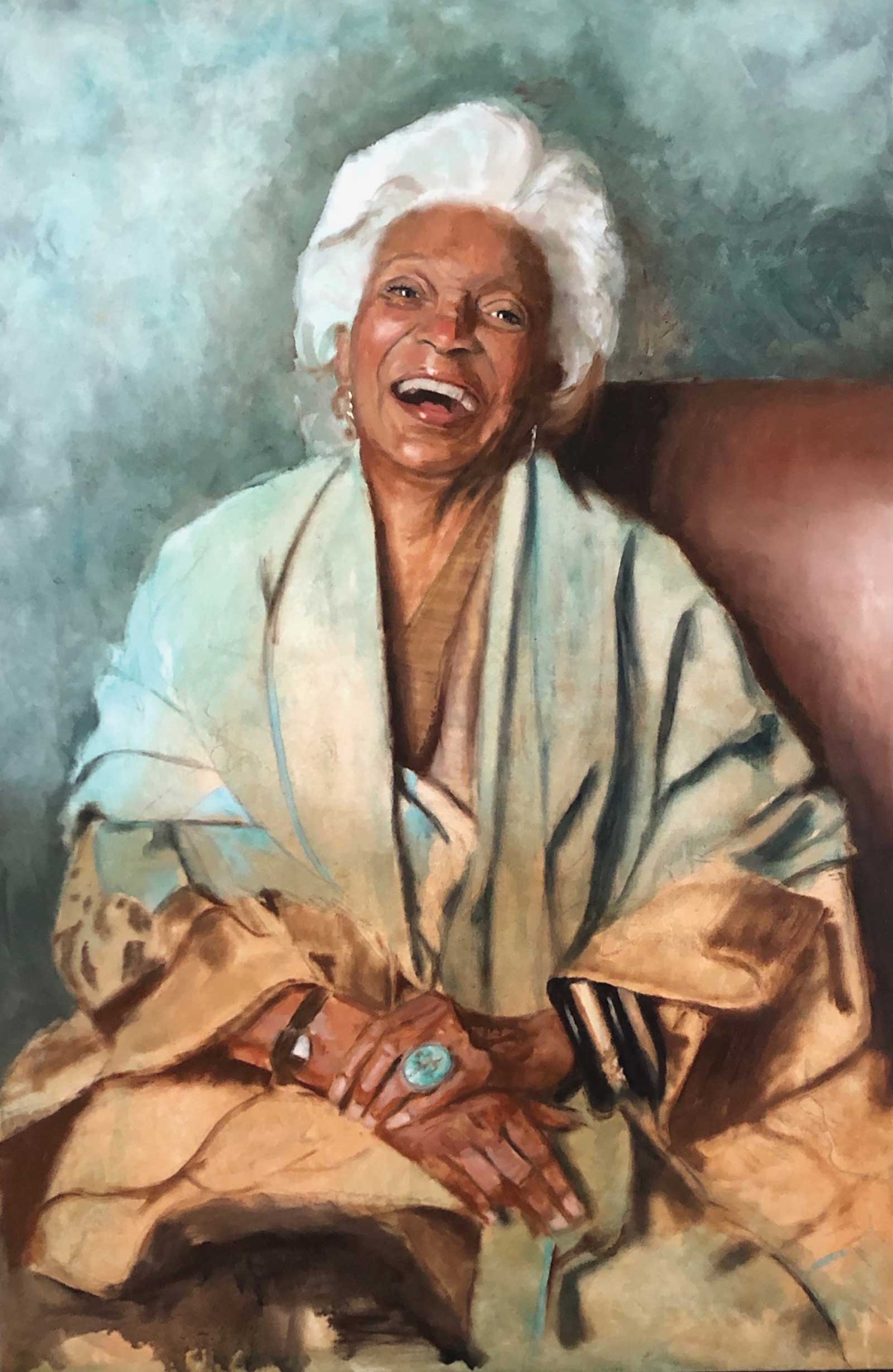
Stage 4 I added more definition to her jewelry and the folds of fabric. Adding color and depth, I wanted the fabric to shine and look rich, regal and fine, which takes multiple layers.
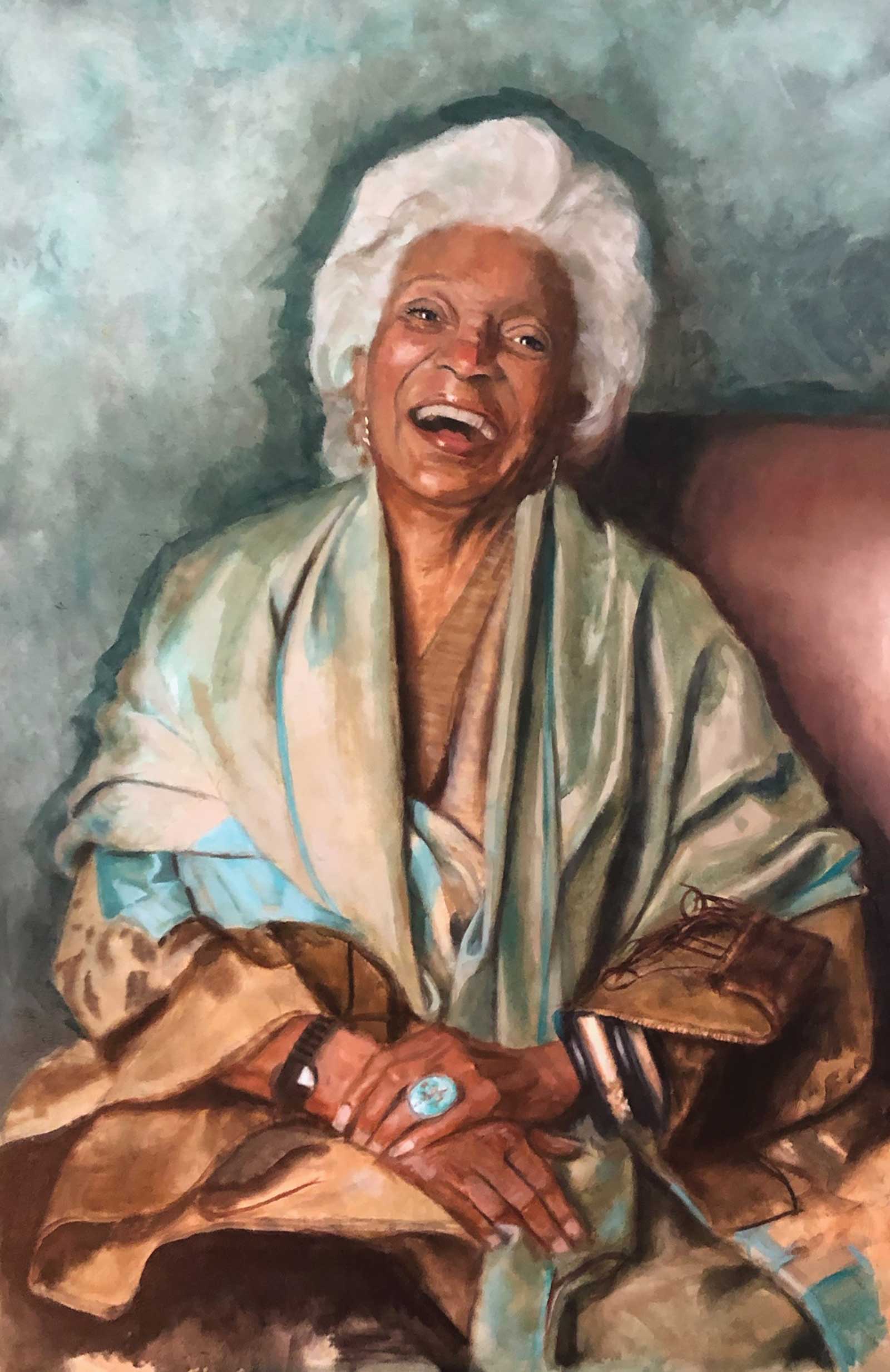 Stage 5
Stage 5 I always enjoy working through the layering process necessary to create a finished fabric that falls correctly and to allow the color to get more saturated as it flows into shadow. I constantly returned to her head and hair as I saw places for improvement. I softened her shoulder on the left as it fell away from the light, and I refined details in her hands. I darkened the background around her and used the same brush to add shadow to the scarf on the right side. Once the shadows were in, I added highlights that began to define the “tubes” of fabric folds and took the cast shadows on the fabric darker.
 Stage 6
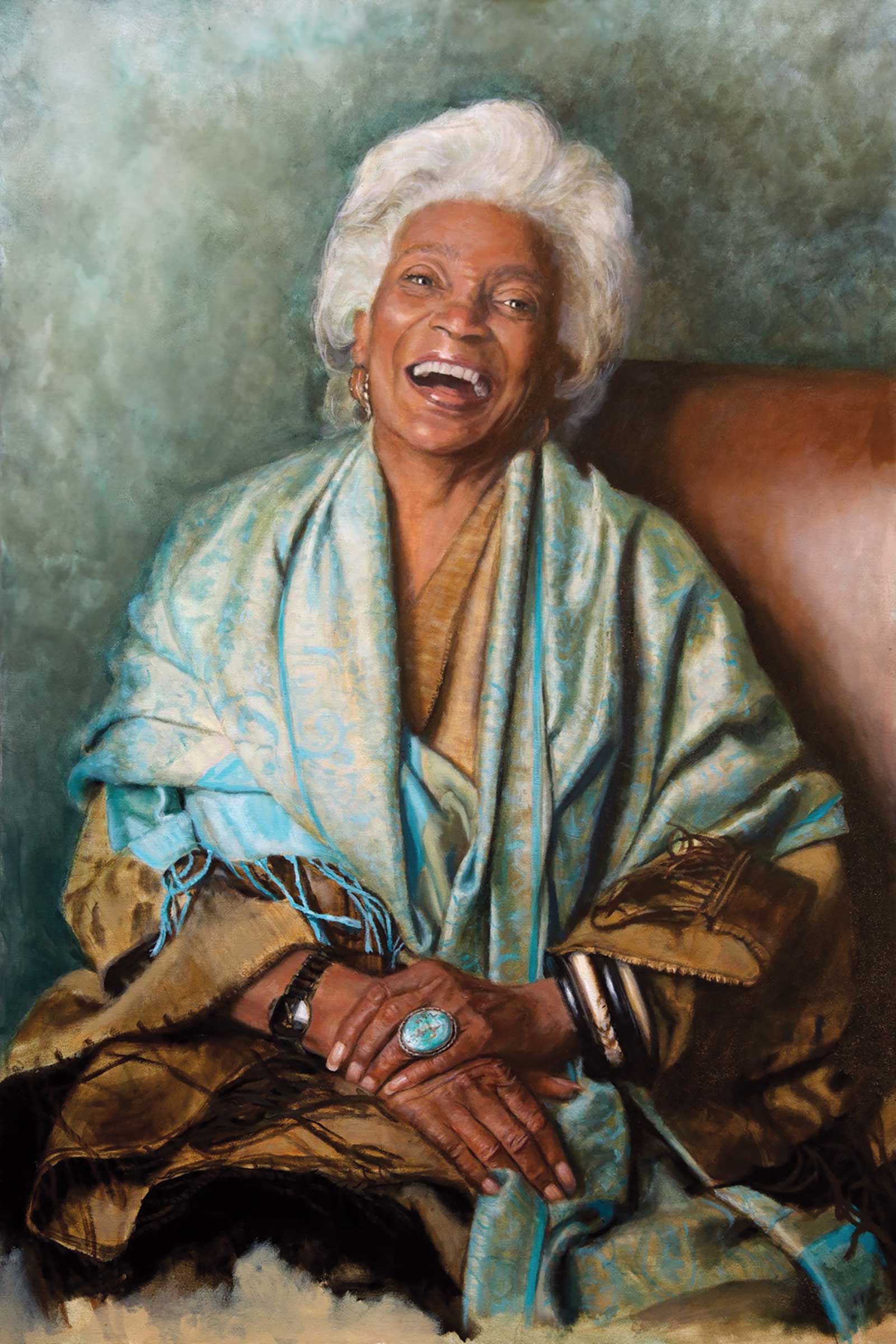
Stage 6 - The Finished Portrait Joy and Inspiration, Nichelle Nichols - Star Trek’s Lt. Uhura at 84, oil on canvas, 36 x 24" (91 x 60 cm) I used the tassels on the gold scarf and the blue scarf to show movement, contrast and cast shadows. There is a very intricate pattern on the scarf, but it is hard to see from even a few feet away, so I squinted at my photograph and did a very abstract interpretation of the print. I made marks that followed the folds of the fabric and used different shades of the turquoise and gold depending on how the light played on it. I decided to vignette the bottom of the painting because I wanted the contrast with the very finished fabric and the unfinished texture of the raw paint.
People often ask me, “How do you know when it is done?” The answer is tricky because, for me, a portrait is only done when I can see both an accurate form of my subject—a true likeness—and feel their spirit within the painting. I believe portraits should radiate the spirit of the subject, their humanity. I once had a meditation teacher who was renting my space in the evenings tell me she couldn’t hold classes there anymore because there were too many spirits in my paintings, and it was confusing them. Woo-woo? Maybe. I know a painting is done when there is something intangible beyond the physical captured on the canvas. For Nichelle’s painting it was done when I could feel her indomitable zest for life, a life full of “joy and inspiration”—the title of this painting.
See more of Robin Damore’s work and her teaching schedule at www.robindamore.com.